Home Blog Page 615

Baha’i Citizens Pejman Nikounejad and Sharareh Kashani Arrested

June 9, 2011

RAHANA : The officials who arrested them introduced themselves with a false identity and entered the house after the door was opened.

According to the Human Rights House of Iran, they have been arrested for organizing a religious ceremony at their residence. The ten security agents who entered the house hit one of the individuals in the house and got the signature of the other people present promising that they would not participate in a religious ceremony.

During the arrest, the faith related books, computers, satellite and some of the belongings were confiscated. The couple was arrested and there are no reports as to their whereabouts.

The Intelligence Ministry agents in Northern Iran had also arrested 3 Baha’i citizens by the names of Misagh Laghaei, Mahvand Laghaei and Nadia Farhadi who organized a religious ceremony, in the recent days.


Source

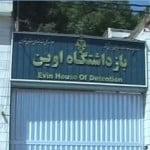
Those arrested during the mourning ceremony of Nasser Hejazi transferred to ward 350 and the women’s ward of Evin prison.

June 9, 2011

RAHANA: According to Kalame, the prisoners are now spending time in an unknown situation while being held in ward 350 as they wait for their trial. On May 25, 2011 those who had been held in ward 209 of the Intelligence Ministry were immediately transferred to ward 350 after their interrogations were complete.

Also according to news by Kalame, a number of the women who had been arrested during the funeral for chanting pro Green Movement slogans have been transferred to the women’s ward of Evin prison.


Source

Jailed journalist moved to solitary again

Wed, 06/08/2011

Mehdi Mahmoudian, the jailed Iranian journalist who recently exposed the prevalence of sexual abuse in Iranian prisons, has been transferred to solitary confinement again.

The Tahavol-e Sabz opposition website reports that officials at Rejai Shahr Prison transferred Mahmoudian yesterday without any explanation.

The jailed journalist was held in solitary for more than 10 days last month when his letter to Ayatollah Khamenei, Iran’s Supreme Leader, was published on opposition websites, describing the rape and sexual abuse that goes on in prison.

Mahmoudian was arrested last year in connection with the protests that followed the disputed re-election of Mahmoud Ahmadinejad in 2009. The journalist was sentenced to five years in prison for the charge of “collusion against the regime.”

After the controversial presidential election of 2009, dozens of journalists were arrested in the crackdown on protesters. Reporters Without Borders refers to Iran as the biggest jailor of journalists in the Middle East.

In an announcement published yesterday, several Iranian political prisoners, including Mahmoudian, called on opposition forces to join a march of silence on June 12, the anniversary of the 2009 election.

Joining in the call for the June 12 march is the Coordination Council of the Green Path of Hope, the group that speaks for opposition leaders MirHosein Mousavi and Mehdi Karroubi, who are currently under house arrest and cut off from any public contact.

Chief among the council’s demands are “the release of the leaders of the movement and all political prisoners, free elections and immediate and effective action against inflation and unemployment.”


Source


Mashad’s Prison Is Hell, Says Political Prisoner’s Wife

8th June 2011

Hashem Khastar, leader of the Mashad Teachers Union and prisoner at Mashad’s Vakilabad Prison, was transferred to the ward for murder and drug trafficking convicts after publishing a letter exposing the inhumane conditions and secret executions at Vakilabad. In an interview with the International Campaign for Human Rights in Iran, Sedigheh Maleki, Khastar’s wife, expressed concern about his conditions. “Two days after Mr. Khastar was transferred from the ward of prisoners of conscience to Ward 5 which is where murderers and other hardened criminals are kept, I went to the Revolutionary Court to find out the reason for his transfer. One of the officials told me that because he wrote letters about the conditions at Vakilabad Prison, he was transferred to another ward so that he can directly experience the other things that happen in this prison. He told me to leave and that they would transfer Mr. Khastar back to the ward of prisoners of conscience, which has not happened so far.”

Hashem Khastar, a former teacher at the Agriculture Technical High School, is an agricultural engineer and Head of the Mashad Teachers Union. He was arrested on 16 September 2009 while taking a walk in a park and was transferred to Vakilabad. Khastar was sentenced to six years in prison. An appeals court later reduced the prison sentence of the lower court to two years. He has written three letters to Head of the Judiciary regarding the dire and inhumane conditions and secret executions at Vakilabad Prison.

“Mr. Khastar says Ward 5 is very crowded and that he sleeps on the floor. Sixty inmates are kept in a room with 15 beds; so 15 people sleep on beds, eight people sleep on the floor, and the rest sleep in the hallways. With this many inmates, the ward is always noisy and its environment is filthy and full of smoke. There is always a line for its bathroom and showers. What can I say?!  If you have heard a description of hell, you could use it for Mashad’s Vakilabad Prison,” said Maleki.

“When the ward is so crowded, there are scuffles for sure. He knows we are very worried for him, so he doesn’t say anything and always just says ‘don’t worry, everything is O.K.’ But someone who was previously imprisoned in that ward told us that the ward is so crowded that prisoners continually step on each other’s feet, or sometimes someone just gets up and throws his drinking glass across the room and a lot of fights break out. Many inmates in that ward are either on death row or have life sentences, therefore they are stressed out and I don’t know if, God forbid, something should happen to my husband, how the authorities would be accountable,” continued Maleki.

“I worry for his health. He is seriously weak. Before he went to prison he weighed 87 kilograms, but he now weighs about 60. Though he was healthy before he went to prison, he is sick now. He has high blood pressure. During our visits, when I ask about his health he says that he has not yet recovered since his operation. Despite our requests after his surgery, he has not been given one day of furlough.”


Source


Committee to Protect Journalist denounces prisoner abuse

06/08/2011

Iranian authorities continue to punish unjustly imprisoned journalists when they demand basic rights. They also retaliate when these journalists speak out about their mistreatment and the substandard conditions in prison, the Committee to Protect Journalists said today.

“Apparently, it is not sufficient for the authorities in Iran to be the world’s leading jailer of journalists,” said CPJ Middle East and North Africa Program Coordinator Mohamed Abdel Dayem. “Prison, security, and judicial officials regularly harm and punish journalists who demand their rights or shed light on rampant prison abuse. These journalists should not be in prison in the first place but while they are there the authorities have a duty to ensure their safety and well-being.”

Mehdi Mahmoudian, a freelance journalist and blogger who is serving a five-year prison sentence at the Rajaee Shah prison in Karaj, about an hour west of Tehran, has been suffering from medical complications since late May, multiple reformist news websites have reported. The reformist news website Human Rights House of Iran (RAHANA) published on May 8 a letter from Mahmoudian to Iran’s Supreme Leader, Ayatollah Ali Khamenei, detailing torture at the prison. The letter also highlighted drug abuse, forced and consensual sex among prison inmates, verbal abuse and other forms of degrading treatment, and coerced confessions there.  The RAHANA report states that the letter was written in September 2010, but was made public only recently.

The reformist news website Kaleme reported on May 14 that following publication of the letter, prison authorities transferred Mahmoudian to solitary confinement for 10 days and banned him from having visitors for three months. Mahmoudian embarked on a dry hunger strike soon after, along with a handful of other journalists and political prisoners, the reformist news website Rooz Online reported. The journalist’s health has sharply deteriorated during his incarceration: his lungs collapsed and he has developed epilepsy in 2010, CPJ research shows.

Houshang Mahmoudian, Mehdi’s father, told Rooz Online that during his hunger strike, his son’s condition had deteriorated so much that he “didn’t recognize him. He has lost so much weight, I couldn’t recognize my son.  I was waiting for him to come; and only when he waved at me did I realize that this is my son who has come to look like this…” Mahmoudian and the two other journalists, Issa Saharkhiz and Kayvan Samimi, ended their hunger strike on Monday after a number of clerics called for them to do so, news websites reported.

In 2010, Mahmoudian was found guilty of “mutiny against the regime” for his role in documenting complaints of rape and abuse of detainees at the now-defunct Kahrizak Detention Center in 2009. Mahmoudian is one of many journalists who have been transferred to Rajaee Shah prison, infamous for housing many violent criminals who abuse drugs and spread communicable diseases, CPJ research shows.

In another retaliatory move in Iranian prisons, on Thursday, guards repeatedly bashed the head of imprisoned journalist Massoud Bastani into a wall, Kaleme reported. Bastani worked for the reformist newspaper Farhikhtegan and the reformist news website Jomhoriyat until his arrest in July 2009.The assault took place when Bastani’s visit with his family members went a minute longer than the allotted time, according to the same report. On the same day, a tearful Massoumeh Maloul, the journalist’s mother, told the U.S.-funded Radio Farda that “Massoud told the prison guard to allow him to say goodbye for a few more minutes. He slightly pushed the soldier aside with his hand when the soldier grabbed him by the collar and kept hitting his head against the wall.”

In the same interview, Bastani’s mother recounted how the journalist, in a brief visit after the assault, told her that he thought that he had a concussion. Journalist Mahsa Amrabadi, Bastani’s wife who was imprisoned in 2009 herself, told the International Campaign for Human Rights in Iran on Sunday that her husband called home and told her that he had been sent to a hospital in Karaj for a CT scan, X-rays, and other medical tests. She added that Bastani told her that he felt weak and disoriented.

Bastani, also being held at the Rajaee Shah prison in Karaj, is serving a six-year prison sentence for “propagating against the regime and congregating and mutinying to create anarchy.” He was arrested in July 2009 when he ‎went to a Tehran court seeking information about his wife. Amrabadi, arrested ‎with two other journalists in June 2009, was released the in August.

And in a third instance of intimidation, Mohammad Davari, editor-in-chief ofthe reformist news website Saham News who is serving five years in prison on charges of “propagating against the regime,” and “disrupting national security,” was summoned to the Evin Prison Court in late April, Kaleme reported.  Davari was interrogated about published statements and open letters that he signed. Prison and intelligence officials asked him to publicly deny having signed the statements attributed to him or face a new criminal case and trial, according to Kaleme.

Davari has signed a significant number of statements and open letters for political prisoners over the past year, CPJ research shows. Prisoners inside Ward 350 including Davari believe that judicial and intelligence authorities use summonses, threats, and new interrogations to create more limitations and deprivations and ultimately longer prison time for political prisoners.

In November 2010, CPJ honored Davari with its International Press Freedom Award.


Source

Three Kurdish Political Prisoners on Hunger Strike in Rajai-Shahr Prison

WEDNESDAY, 08 JUNE 2011

HRANA News Agency – Since a week ago, three Kurdish political prisoners have been on hunger strike in Rajai-Shahr Prison to protest being locked up amongst ordinary criminals such as rapists, murderers and drug traffickers.

According to a report by Kalame News, Alnor Khaziri, Kamran Shakhi and Seyed Ebrahim Seyedi have been illegally transferred from Ward 350 of Evin Prison to Rajai-Shahr Prison in violation of their basic rights. While ordinary prisoners only spend one day in the quarantine ward of Rajai-Shahr Prison in order to determine whether they are addicted to narcotics or not, these three political prisoners spent 50 days in the same ward which lacks basic health and sanitary conditions. After this time, they were transferred to Ward 6 of Rajai-Shahr Prison instead of the political prisoners’ cell block.

These three political prisoners are currently locked up amongst inmates convicted of violent crimes and also prisoners with dangerous communicable diseases. According to the principles governing the separation of prisoners based on their crimes, these three individuals must be kept in the cell block allocated to inmates arrested for political reasons.

While these three individuals are even denied basic rights extended to other prisoners, their families are deeply concerned about their physical and emotional well-being. These three political prisoners demand to be transferred to the ward housing other political prisoners.


Source

Iran: Green Coordination Council calls for demonstrations on 12 June anniversary

WEDNESDAY, 08 JUNE 2011

Payvand.com – Just days ahead of the second anniversary of the 2009 presidential election, the Green Movement has called for fresh demonstrations to demand the release of movement leaders Mir Hossein Mousavi and Mahdi Karroubi.

In a statement published on Tuesday, the Coordination Council of the Green Path of Hope, the Green Movement’s most important decision making body, invited Iranians to take part in silent protests on 12 June [1] to mark the second anniversary of the 2009 presidential election which was overshadowed by widespread vote rigging and unprecedented post-election crackdowns.

According to the Council, the main march will commence at 6pm and in “absolute silence” on the pavements of Tehran’s Vali-Asr Avenue. The protest route will stretch from Vanak Square to the important Vali-Asr Square.

The path is reminiscent of the 20-mile “Green Chain” of Mousavi supporters on Vali-Asr avenue during the 2009 presidential race, cutting across regions and class lines.

The Coordination Council of the Green of Hope also called on Green Movement supporters to chant “Allah-O-Akbar” (God is greatest) on rooftops at 10pm on the same day.

“The Council strongly cautions the hardliners in power that holding peaceful protests is a human right in accordance with article 27 of the constitution, and the government has a duty to guarantee the security of the participating citizens. The enforcement of any type of restriction or hostility by the intelligence and security agents as well as the oppressive forces whose links to the authoritarians is undeniable, will bring them nothing but further liability and humiliation on the domestic and international fronts and will expose their untruthfulness and double-standards towards the pro-democracy movements of the region.”

Iran’s rulers have been supporting the pro-democracy uprisings in countries such as Tunisia, Egypt and Yemen, while at the same time continuously suppressing their own population and siding with the Syrian dictator Bashar Assad in his violent clampdowns against demonstrations calling for change.

In its statement, the Council said it would soon release further statements outlining its plans for the coming weeks.

“Protesters will shout these demands with their sealed lips,” the council continued. “The release of movement’s leaders and political prisoners; holding free elections; immediate and effective action for resolving the problem of high prices and unemployment.”

More than a hundred days ago, the leaders of the opposition movement Mir Hossein Mousavi and Mahdi Karroubi were placed under house arrest after calling on Iranians to demonstrate in solidarity with protesters in the Arab world. The leaders and their spouses have been held under house arrest without any official charge or trial, resulting in the outpouring of worldwide condemnation against their continued captivity.

[1] This day coincides with the 22nd of Khordad in the Iranian calendar.


Source


Impunity continues to claim victims

8 June 2011

Shirin Ebadi & 4 human rights organisations call for end to impunity and visit of Special Rapporteur to Iran

On the eve of the second anniversary of the widespread crackdown on public protests in Iran, Shirin Ebadi, 2003 Nobel Peace Prize Laureate and four human rights organizations called on the United Nations High Commissioner on Human Rights and the Human Rights Council to take a more serious stance in protecting the security and human rights of the Iranian people. The four human rights organizations are: Reporters without Borders, the International Campaign for Human Rights in Iran, the International Federation for Human Rights (FIDH), and its affiliate, the Iranian League for the Defence of Human Rights (LDDHI).

“The United Nations Special Rapporteur for Iran should be named as soon as possible and his mission to Iran expedited. The country’s situation is deteriorating day by day. Arbitrary arrests and imprisonment of citizens, systematic torture and executions with no legal basis continue. People are not only denied the right to peaceful assembly, but government forces and “plain-clothed agents” even prevent them from holding private mourning ceremonies and violently attack them,” said Nobel Peace Laureate and human rights lawyer Shirin Ebadi.

On 1 June 2011, political prisoner and women’s rights activist Haleh Sahabi was attacked during the funeral procession of her father, Ezzatollah Sahabi, a prominent Iranian politician, who had died of natural causes two days earlier. According to credible eyewitnesses, Haleh Sahabi died as a direct result of this physical assault. So far, the Islamic Republic authorities have not taken any steps to investigate the circumstances surrounding her death. Some officials have announced the reason for her death as “heart attack” in government media. Under pressure from security officials, Haleh Sahabi’s body was buried at night without any investigation into the cause of her death.

Ever since the disputed 12 June 2009 presidential election and the onset of public protests, thousands of people have been arbitrarily arrested and tried in unfair trials without access to their basic legal rights, and received long sentences. According to testimonies by prisoners and their families, many of them were subjected to torture and cruel, inhuman treatment, and insulting abuse during their interrogation and while serving prison terms. Some of these prisoners have published collective letters formally filing complaints against the Islamic Revolutionary Guards Corps, the Intelligence Ministry, and judicial authorities for psychological and physical torture.

The Iranian Judiciary lacks independence. According to Article 110 of the Iranian Constitution, the Head of the Judiciary is appointed by the Supreme Leader of the Islamic Republic of Iran. Although Article 156 of the Iranian Constitution stipulates the head of the Judiciary’s responsibilities to include “ensuring the rights of all, and promotion of justice and legitimate liberties,” Ayatollah Amoli Larijani, the incumbent head of the Judiciary, not only fails to adhere to those provisions, but by failing to prosecute violators of the rights of the people and the officials who carry out and order the commission of torture and serious crimes, he further encourages them in their violent acts of violence in the society at large and against prisoners in particular.

Shirin Ebadi said: “Considering the deteriorating state of the Iranian judicial system, the Iranian citizens have grown hopeless about the implementation of justice. They are no longer prepared to file their complaints with the courts. Political prisoners and their families have boycotted the Tehran Prosecutor to protest the Judiciary’s negligence. They have declared that henceforth they would not make any requests to the judicial authorities. The international community is obligated to help the Iranian people have access to justice.”

Haleh Sahabi is not the only woman who has fallen victim to violence and impunity of those who commit violence. During the past three decades, hundreds of women have been murdered on the streets or inside the prisons. For instance, in July 2003, an Iranian-Canadian journalist, Zahra Kazemi, was beaten by the judicial authorities inside Evin prison, and died shortly thereafter as a result of head injury. The body of Zahra Kazemi was hurriedly buried in Shiraz against the wishes of her son, Stephan Hachemi, who lives in Canada. Zahra Kazemi’s mother has said in an interview that she was under immense pressure from the Iranian authorities to agree to her daughter’s burial in Iran. Zahra Kazemi’s family lawyers repeatedly criticised the pertaining judicial proceedings. During the lower court and appeals court proceedings, the lawyers were not allowed to call witnesses to trial, some of whom were high-level judicial officials, including Saeed Mortazavi, then Tehran General and Revolutionary Courts Prosecutor, who was personally involved in Zahra Kazemi’s interrogation and, according to several witnesses, was directly involved in beating her.

The limitations imposed on independent lawyers who defend prisoners of conscience are in part the outcome of their relentless pursuit of the institutionalised impunity within the Iranian judicial system. Mohammad Seifzadeh, a prominent Iranian lawyer and a member of the Human Rights Defenders Centre, who also represented Zahra Kazemi, has been arbitrarily and illegally arrested and imprisoned. He was sentenced by Branch 15 of Tehran Revolutionary Court to nine years imprisonment and a 10-year ban on legal practice on charge of “cooperating to establish the Human Rights Defenders Centre.” Nasrin Sotoudeh, lawyer to Haleh Sahabi, was arrested on 4 September 2010, and was later sentenced to 11 years imprisonment. A witness to the Iranian Judiciary’s injustice, Sotoudeh has forfeited her right to appeal the court’s decision.

The United Nations Special Rapporteur for human rights must investigate all cases of gross and systematic human rights violations in Iran. We, the signatory human rights organisations, believe that the institutionalised impunity is one of the main reasons for the increased violence and commitment of tragic crimes such as the murder of Haleh Sahabi, continued practice of systematic torture, and the cruel and inhuman treatment inside prisons and arbitrary arrests in Iran. We urge that the UN Special Rapporteur be appointed and visit Iran as soon as possible. We are committed to cooperate with the Special Rapporteur in providing documents and introducing eyewitnesses to gross human rights violations in Iran.


Source

Iranian police to tighten security over public dress code

Tue, 06/07/2011

Islamic Republic police has announced they will heighten the enforcement of dress-code laws all across Iran.

Mehr News Agency quotes Ahmadreza Radan, the deputy commander of the security forces, saying: “Those with a history of violating the hijab [Islamic dress code] and the manufacturers of inappropriate clothing will be dealt with.”

“Tight clothing for men or women, head scarves that do not properly cover the hair, short and inappropriate outfits, and symbols of deviant movements and satanic groups will be targeted by the officials,” Radan added. Even the distributors of inappropriate clothing will be pursued, he said.

Tehran’s police chief has also recently announced the creation of local security centres to address public dress-code violations by both women and men. He added that tourists are not exempt from these regulations, and travel agencies are responsible for informing their clients about Islamic Republic laws.


Source


Prison guards attack and beat young prisoners in Rajayi Shahr Prison

TUESDAY, 07 JUNE 2011

Freedom Messenger – According to reports, the Rajayi Shahr Prison guards attacked young prisoners in cellblock 5 and beat them under the excuse of conducting a search and destroyed their personal belongings.

On Thursday June 2, at about 10 am, prison guards violently took Cellblock 5 prisoners to the prison courtyard beating them with batons and then destroyed and broke their personal belonging under the excuse of conducting a search.

Cellblock 5 is so overpopulated that prisoners can only lie down in turns. Five prisoners are kept in every cell which is more than double its capacity. The cells do not have beds and prisoners sleep on the ground. One of the methods in which prison guards use to put pressure on prisoners is to transfer them to the courtyard where they force them to take their clothes off and then beat them with batons for a prolonged amount of time.

Currently more than 400 prisoners, between the ages of 19 to 26 are detained in cellblock 5. Narcotics are widely brought into the cellblock and a high number of prisoners are addicts.

Narcotics are smuggled in by prison officials and are put in the hands of prison gangs. (Human Rights and Democracy Activists in Iran – Jun. 4, 2011)


Source