Home Blog Page 64

Iran accelerating enrichment of uranium to near weapons-grade, nuclear watchdog says

0

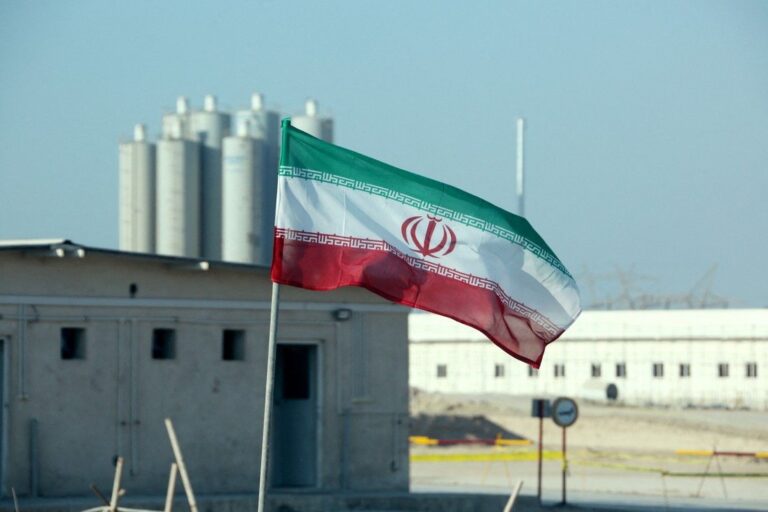
Iran has accelerated its enrichment of uranium to near weapons-grade, the UN atomic watchdog said in a report on Tuesday seen by Reuters, a move raising tensions with the West as both sides seek to resume talks on reviving Tehran’s nuclear deal.

Iran increased the purity to which it is refining uranium to 60 per cent fissile purity from 20 per cent in April in response to an explosion and power cut at its Natanz site that damaged output at the main underground enrichment plant there.

Iran has blamed the attack on Israel. Weapons-grade is around 90 per cent purity.

In May, the International Atomic Energy Agency reported that Iran was using one cascade, or cluster, of advanced centrifuges to enrich to up to 60 per cent at its above-ground pilot enrichment plant at Natanz. The IAEA informed member states on Tuesday that Iran was now using a second cascade for that purpose, too.

The move is the latest of many by Iran breaching the restrictions imposed by the 2015 nuclear deal, which capped the purity to which Tehran can refine uranium at 3.67 per cent. The United States and its European allies have warned such moves threaten talks on reviving the deal, which are currently suspended.

Following Reuters’ report, Iran reiterated that its nuclear programme is peaceful and said it had informed the IAEA about its enrichment activities.

It added that its moves away from the 2015 deal would be reversed if the United States returned to the accord and lifted sanctions, Iranian state media reported.

“If the other parties return to their obligations under the nuclear accord and Washington fully and verifiably lifts its unilateral and illegal sanctions … all of Iran’s mitigation and countermeasures will be reversible,” Foreign Ministry spokesman Saeed Khatibzadeh was quoted as saying by state media.

Source: SCMP

Also Read: U.S. Threatens Iran With New Sanctions If A Nuclear Deal Is Not Reached
Suspect in Iranian Kurdish opposition official murder escaped to Iran

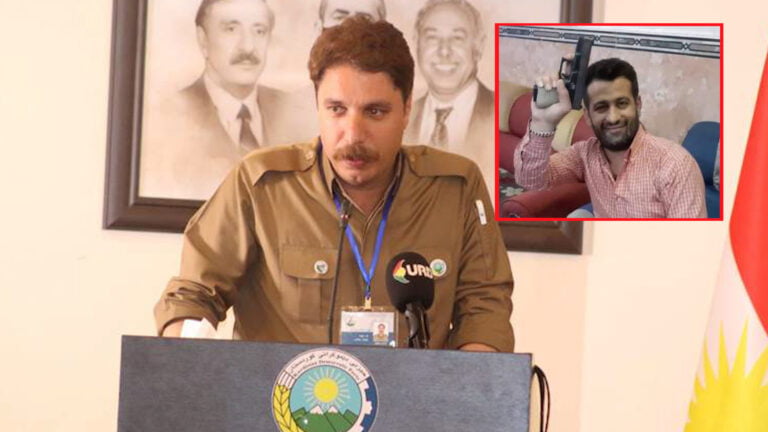
The Erbil Security Directorate in the Iraqi Kurdistan Region has issued a statement saying that the prime suspect in the murder case of Musa Babakhani, a member of the Central Committee of the Kurdistan Democratic Party, escaped to Iran after the murder.

According to the report published on the website of the Iraqi Shafaq newspaper, the main suspect is someone called Sarmad Dawood Abd Ali, also known as “Saman Ilami,” who left Erbil for Iran through the border city of Khanaqin, on the afternoon of August 6, after the murder of Mr. Babakhani.

The Kurdistan Democratic Party (KDP) announced the “assassination” of Musa Babakhani, a member of the party’s central committee, in the Iraqi city of Erbil on Saturday, August 7th.

The party said that Mr. Babakhani had been abducted on Thursday, August 5, by “forces affiliated with the Islamic Republic of Iran,” and that “his lifeless body,” on which many traces of torture could be seen, was found in a hotel room on Saturday morning, August 7.

According to this report, “Saman Ilami” lived in the Kurdistan region for about a year and was acquainted with Mr. Babakhani. Before his assassination, they even walked together in Erbil Bazaar for several hours. “Sarmad has been staying at Guli Sulaimani hotel for one year and four months in Erbil on the pretext of doing business, he was friends with the victim (Mousa Babakhani) and they were constantly together and have visited each other a lot,” they added.

This is not the first targeting of an official in the party. A senior commander of the party, Qadir Qadiri, was found dead in March 2018 in Hartal village, Ranya district, near Sulaimani’s border with Iran. He had been shot 21 times. The KDP-I claimed Qadiri’s killing was ordered by Iran’s Islamic Revolutionary Guard Corps (IRGC).

Source: Radio Liberty
Also read: Iran and Hamas congratulate Taliban for victory in Afghanistan

Iran and Hamas congratulate Taliban for victory in Afghanistan

In response to the Taliban re-conquest of Afghanistan, Palestinian Hamas and Iran’s president congratulate Taliban for “defeating” the US military and Afghanistan’s government.

“America’s military defeat and its withdrawal must become an opportunity to restore life, security and durable peace in Afghanistan,” Iran’s state TV quoted Ebrahim Raisi, Iran’s newly appointed president as saying.

“We congratulate the Muslim Afghan people for the defeat of the American occupation on all Afghan lands, and we congratulate the Taliban movement and its brave leadership on this victory, which culminated its long struggle over the past 20 years,” Hamas said in a statement.

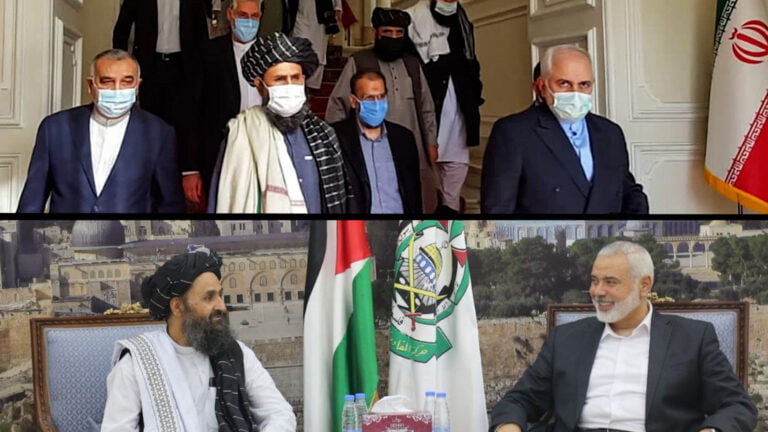
Shi’ite Muslim Iran has been a foe of the extremist Sunni Muslim Taliban for decades, but for the past few years, it has been openly meeting Taliban leaders. In July, Tehran hosted a meeting of then-Afghan government representatives and a high-level Taliban political committee.

Recently, Hamas released photos of a meeting between its leader, Ismail Haniyeh, and a Taliban delegation. The meeting reportedly took place in the Taliban office in Doha, Qatar, where Haniyeh has been based for the past two years.

Iran says it promises safe haven for Afghans fleeing the Taliban, this is despite evidence showing Afghan refugees being returned at borders and Iran’s Islamic Revolutionary Guards Corps (IRGC) recruiting Afghan immigrant children, teenagers, and adults living in Iran as refugees to fight for Iran’s proxy group Liwa Fatemiyoun in Syria, Iraq, and Yemen.

Taliban insurgents took control of the Afghan capital Kabul on Sunday following a rout of the U.S.-backed Afghan army as foreign forces withdrew from Afghanistan.

Three days before the Taliban took over Afghanistan’s capital Kabul, Iran was the first country to legitimize the terror group by referring to them as the Islamic Emirate of Afghanistan.

Source: Anadolu Agency | Reuters
Also read: The relationship between Iran and Afghanistan

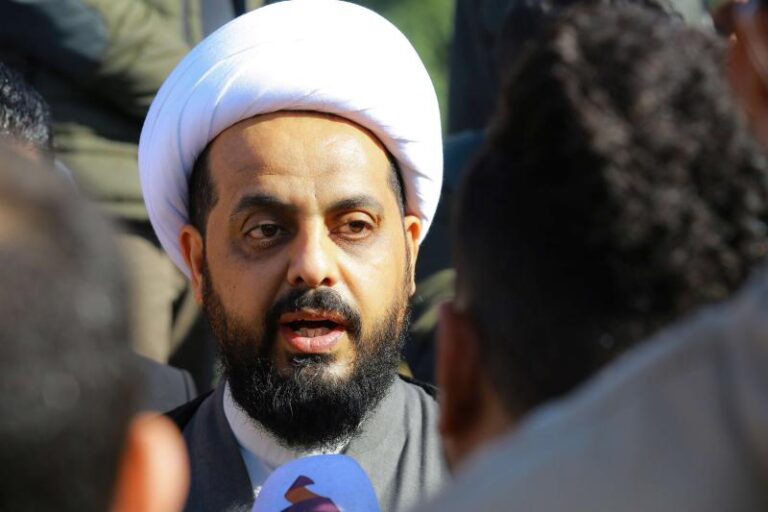
Shia cleric lashes out at Iran’s interference in Iraq

An Iraqi Shia cleric close to Grand Ayatollah Ali Sistani launched a veiled criticism of Iranian influence in the country, sparking a backlash Sunday from a senior pro-Iran figure.

Iran has bolstered its influence over its neighbour in recent years. Iraq’s state-sponsored Hashed-al-Shaabi paramilitary network, which is dominated by pro-Iran groups, now wields major political and military sway in the country.

Critics have accused the Hashed of being Iran’s armed wing in Iraq, and protesters who took part in a popular uprising in late 2019 blame it for a wave of assassinations and kidnappings of activists.

During a religious event on Saturday, Sheikh Hamid al-Yassiri appeared to lash out at the Hashed, without naming it or Iran directly.

Revered Shia figure “Imam Hussein taught us that whoever is not loyal to his homeland is a traitor and an imposter,” Yassiri said.

“All counsel, all voices and positions that come from beyond the borders have nothing to do with the doctrine of Imam Hussein.”

The comments sparked the ire of Qais al-Khazali, who heads a powerful Hashed faction known as Asaib Ahl al-Haq.

Khazali in a tweet accused “certain religious figures who hide behind nationalism” of “trying to pass off their projects by linking their ideas to Imam Hussein.”

Sistani, the highest religious authority for Iraq’s Shia Muslims, is highly reclusive and rarely breaks his silence to intervene in politics.

In June 2014, he issued a historic edict calling on Iraqis to take up arms against the Sunni jihadists of the Islamic State (ISIS) group who had swept across swathes of the north, a ruling that spawned the creation of the Hashed al-Shaabi.

Iraq, long an arena for bitter rivalry between the US and Iran despite their shared enmity towards ISIS, has seen growing numbers of attacks and assassinations in recent months.

Source: The Arab Weekly

Also Read: Iran loses Iraqi militias as Qasem Soleimani’s successor proves too weak

U.S. Adds More People And Businesses To Iran Sanctions List

0

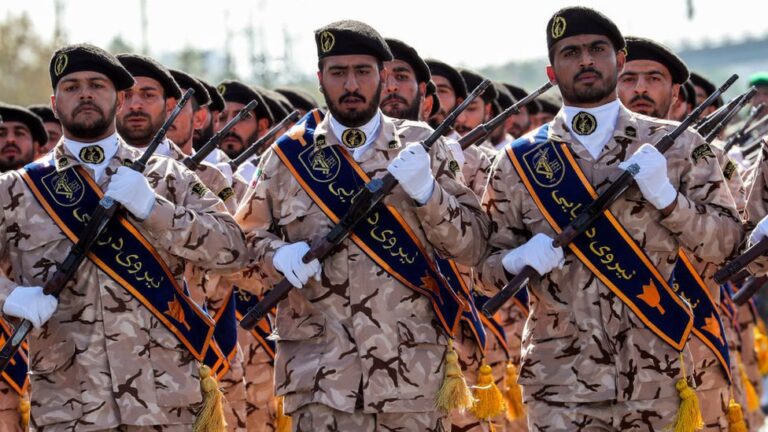
The U.S. Office of Foreign Assets Control (OFAC) has added several people and businesses to its Iran sanctions list, alleging that they were involved in an oil smuggling network that worked to fund the Islamic Revolutionary Guard Corps’ Quds Force, or IRGC-QF.

“The IRGC-QF is using revenues from its Iranian petroleum sales to fund its malign activities at the expense of the Iranian people,” the Director of the Office of Foreign Assets Control Andrea M. Gacki said in a statement. “These sales rely on key foreign intermediaries to obscure the IRGC-QF’s involvement, and Treasury will continue to disrupt and expose anyone supporting these efforts.”

One of the individuals added to the blacklist is an Omani national, Mahmood Rashid Amur Al Habsi, who, according to the Department of the Treasury, “facilitated the sale and shipment of Iranian oil through his companies to obscure the IRGC-QF’s involvement.  Al Habsi’s companies have transported shipments worth tens of millions of dollars.”

Moreover, “As part of his oversight of shipping operations, Al Habsi has tampered with the automated identification systems that are onboard vessels, forged shipping documents, and paid bribes, circumventing restrictions related to Iran.”

Obscuring the positioning devices on tankers carrying Iranian oil is a common practice to hide the destination of the shipments, which is most often China. In July, the Wall Street Journal reported that the U.S. was considering ways to choke off Iran’s crude exports to its biggest customer by targeting the shipping networks that were assisting Iran with its China oil sales, U.S. officials said.

The latest move comes as indirect talks between the United States and Iran on a revised nuclear deal continue to stall. The Hill reported recently that besides the new additions to the sanction list, Washington also planned to target Iran’s missile and drone programs to bring Tehran back to the negotiating table.

Source:  Oil Price

Also Read: US Hits IRGC Qods Force Network With Sanctions
 

The relationship between Iran and Afghanistan

In the last two decades, the relationship and approach of the officials of the Islamic Republic of Iran with the Taliban terror group have had many ups and downs; From the period when the killing of Iranian consulate staff in Mazar-e-Sharif by the Taliban pushed things to the brink of military conflict, to recent months and years, when Taliban leaders travel to Iran secretly and sometimes even openly.

With Taliban forces defeating the government in Afghanistan, the role of Iran, which has had a troubled past with the group, has become increasingly important.

Three days before the Taliban took over Afghanistan’s capital Kabul, Iran was the first country to legitimize the terror group by referring to them as the Islamic Emirate of Afghanistan.

Iran now claims to be the defender of the Shiite minority in Afghanistan, but uses the millions of Afghan refugees in Iran as pawns in its proxy wars by sending the Hazara Shiites to Iraq and Syria, under the banner of Liwa Fatemiyoun and has reportedly returned thousands of Afghan refugees at borders to be slaughtered by Taliban.

Twenty-two years ago, Taliban forces captured the city of Mazar-e-Sharif for the second time. Following the fall of the city of Mazar-e-Sharif by the Taliban, the headquarters of the Iranian consulate in the city was attacked and eight of the country’s diplomats disappeared. It was later reported that the Iranian diplomats and journalists had been killed.

Following the assassination of Iranian diplomats, Iran who seemed determined to go to war, stationed a force of 70,000 troops at the border. The Taliban continued to close the Helmand River dam and drastically reduced the amount of water entering Iran during the drought.
Drought and water cut by the Taliban severely damaged the habitat of Lake Hamoon.

Iran’s pervasive border with Afghanistan has somehow defined the country’s relations with the Taliban. The pores of this border are a place for migrants, drugs, armed groups, and water to cross.

Source: Radio Liberty
Also read: Iran embraces Taliban by calling terror group the Islamic Emirate

Iran arrests six lawyers for intention to sue officials mismanaging pandemic

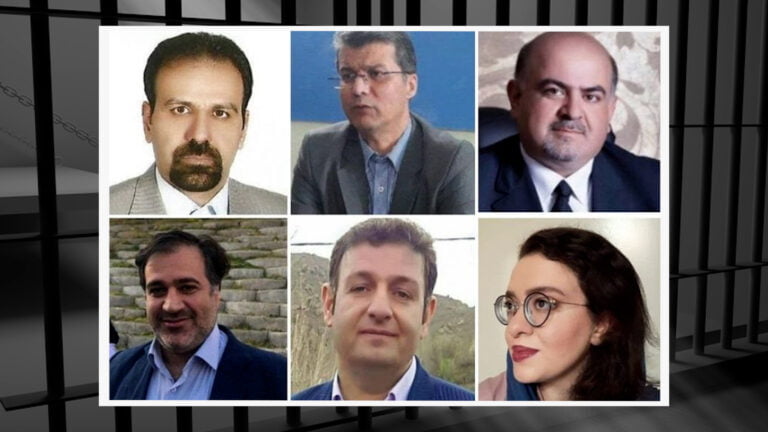
Iran’s security forces arrested five lawyers and a civil rights activist Saturday evening. Some sources claim that the group was detained during a meeting on taking legal action against authorities for mismanagement of the pandemic and delay in mass vaccination. Apparently Judicial and security officials wanted to prevent them from filing a lawsuit.

Some activists in recent days have said that the delay in vaccination in Iran has caused the unlawful deaths of thousands of Iranians and called for the prosecution of those responsible. Iran hit another record high in Covid-19 deaths from Saturday to Sunday with 620 casualties in the fifth wave of the pandemic, the health ministry announced on Sunday. In recent days health and hospital officials have been warning of a total breakdown in the healthcare system.

Supreme Leader Ali Khamenei is being held responsible for the current crisis. In January, Khamenei banned US and UK-made vaccines, the only internationally approved vaccines at the time and claimed the pandemic is not a serious issue. Khamenei this month took back what he had said regarding the pandemic and vaccines without acknowledging his poor decisions making has caused thousands of Iranians to die senselessly.

One of the other officials blamed for the situation is Mohammad Mokhber, director a state entity that has developed the only homegrown vaccine approved for emergency use in Iran. Critics say by promising to make millions of vaccines, which have not been delivered, he has caused huge delays in the procurement of foreign vaccines and the vaccination program.

Security forces arrested lawyers Arash Keykhosravi, Mostafa Nili, Mohammad-Reza Faghihi, and activists Mehdi Mahmoudian, Maryam Afra-Afraz, and Leila Heydari while holding a meeting and took them to an unknown location without offering a reason or citing charges, Human Rights News Agency (HRANA), the news website of a group of human rights activists in Iran, and other lawyers reported Sunday.

In Twitter posts Sunday, lawyers Saeed Dehghan and Ali Mojtahedzadeh suggested a possible connection between the arrests and the detainees’ intention to file a lawsuit against the authorities for what Dehghan called the “Covid disaster”. “Arrests before filing a lawsuit is an indication of an increasing fear of [people’s] demand for justice,” he wrote.

Vahid Herovabadi, a pro-Ahmadinejad cleric and activist, also suggested in a Twitter post that the arrests could be in connection with filing a lawsuit against Khamenei and the National Coronavirus Combat Taskforce over their alleged responsibility for the delay in mass vaccination of Iranians.

Source: Iran International
Also read: More Than 500 Women Human Rights Defenders Unjustly Imprisoned In Iran

US Hits IRGC Qods Force Network With Sanctions

0

On Friday, the US Treasury Department levied sanctions on an international oil smuggling network that supports Iran’s Islamic Revolutionary Guard Corps’ (IRGC) Quds Force. It charged that senior Quds Force officials use proceeds from their involvement in Iranian oil exports to help fund Iran’s destabilizing regional activities. The sanctions targeted Mahmood Rashid Amur Al-Habsi, an Omani national, who has entered into partnerships with senior Quds Force officials, as well as Oman-based, Liberian-registered, and Romania-based entities.

These sanctions designations are noteworthy for several reasons. First, they come amid stalled nuclear negotiations in Vienna between Iran and world powers. The Biden administration has been signaling in the media its growing impatience with the prolonged gap between the sixth and seventh rounds of nuclear negotiations over reviving the 2015 Joint Comprehensive Plan of Action (JCPOA). US officials have recently suggested to media outlets that they are prepared to crack down on enforcement of sanctions, which have been lacking given China’s importation of large quantities of Iranian oil in recent months. The inclusion in Friday’s announcement that Al-Habsi facilitated shipments of Iranian oil to foreign customers, including buyers in East Asia, was thus likely a signal of the Biden administration’s readiness to more aggressively enforce US sanctions.

Second, the sanctions designation, while meant to send a message to Tehran, was also narrowly-tailored in the authorities it employed to sanction these individuals and entities. The measures were levied pursuant to Executive Order 13224—which is a counterterrorism authority—and the Quds Force’s subsequent sanctioning in 2007 pursuant to this authority. Even if the United States and Iran manage to find their way back into compliance with the JCPOA, Executive Order 13224 and the Quds Force’s terrorism designation will likely remain on the books.

Source: Iran International

Also Read: Iran terrorist designated IRGC takes full control of new government

More Than 500 Women Human Rights Defenders Unjustly Imprisoned In Iran

On August 5, 2021, several human rights organizations sent a joint submission to the U.N. Commission on the Status of Women warning about the increasing persecution and prosecution of women human rights defenders in Iran. The Raoul Wallenberg Centre for Human Rights (RWCHR), International Bar Association’s Human Rights Institute (IBAHRI), Iran Human Rights Documentation Centre, Center for Human Rights in Iran (CHRI), Abdorrahman Boroumand Center for Human Rights (ABC) in Iran and PEN America produced a report shedding light on the dire situation of women human rights defenders in Iran that include “arbitrary prison sentences, torture in detention, banishment to harsher prisons far from their families, and added sentences on the verge of release.”

According to these organizations, more than 500 women human rights defenders, including lawyers, journalists, educators, among others, are unjustly imprisoned in Iran today. Who are these women human rights defenders?

Among them there are human rights lawyers, including Nasrin Sotoudeh and Soheila Hejab. Nasrin Sotoudeh is a tireless defender of human rights and of those most persecuted in Iran, including religious minorities and opposition leaders. This work resulted in her being arbitrarily detained and sentenced on several occasions.

For example, on March 11, 2019, she was sentenced to 33 years in prison and 148 lashes on seven charges, in addition to another five-year sentence in absentia. The charges included membership in a group peacefully advocating against the death penalty, interviews with foreign media, participating in peaceful gatherings, giving a speech outside of a U.N. office, and appearing in public without the hijab.

In 2020, this sentence was reduced to 27 years and no lashes. Soheila Hejab was sentenced for her political and women’s rights activism, most recently in March 2020 for “propaganda against the state,” “forming a group for women’s rights,” and “demanding a referendum for changing the constitution.” She received 18 years in prison for advocating for human right.

Source: Forbes

Also Read: Iran: Security forces use ruthless force, mass arrests and torture to crush peaceful protests

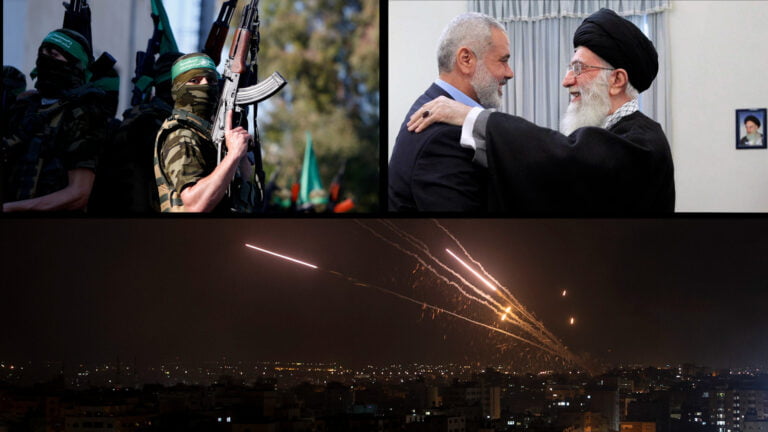
Human Rights Watch: Iran-backed Hamas attacks on Israel are war crimes

Human Rights Watch on Thursday said the thousands of rockets fired by the Palestinian Iran-backed militant group Hamas during the 11-day war with Israel “violated the laws of war and amount to war crimes.”

HRW investigated Iran-backed Hamas rocket attacks that killed 12 civilians in Israel, as well as a misfired rocket that killed seven Palestinians inside the Gaza Strip.

HRW has repeatedly come under fire by Israel and its supporters over reports accusing Israel of war crimes against the Palestinians as well as apartheid and persecution. But in this report, it agreed with most legal experts — and Israel itself — that indiscriminate rocket fire from Palestinian population centers directed at civilian areas is a violation of international law.

“Palestinian armed groups during the May fighting flagrantly violated the laws-of-war prohibition on indiscriminate attacks by launching thousands of unguided rockets towards Israeli cities,’’ Human Rights Watch acting Middle-East and North Africa director Eric Goldstein said in a statement.

Hamas, founded in the 1980s and backed by Iran, rejects Israel’s existence, is responsible for scores of deadly attacks on Israeli civilians, and is considered a terrorist group by the US, EU, and Israel.

“We do say this loud and clear … Iranians are the ones who support us with weapons, money, and food,” a senior Palestinian Islamic Jihad official, Ramez al-Halabi, told an Iraqi TV channel on the eve of the fight. 

After the battle, Hamas political chief Ismail Haniyeh said in a televised speech that Iran “did not hold back money, weapons, and technical support.”

Human Rights Watch in July interviewed 12 people in Israel and Gaza who witnessed a Palestinian rocket attack or are relatives of civilians killed. Human Rights Watch examined two rocket strikes in Israel that killed three civilians: Leah Yom Tov, 63, who was killed by metal fragments from a Palestinian rocket at her home in Rishon LeZion, south of Tel Aviv, on the evening of May 11; and Nadine Awad, 16, and Khalil Awad, 52, killed in front of their home in the Palestinian village of Dahmash in central Israel, about 20 kilometers from Tel Aviv, in the early morning of May 12.

Source: Human Rights Watch
Also read: Iran embraces Taliban by calling terror group the Islamic Emirate (iranbriefing.net)