Home Blog Page 63

Hostile to Arabs and Kurds, Iran’s eyes are set on Arab regions

Washington’s contentment with merely voicing its “concern” about Iran’s behavior and support for terrorism only serves to encourage the Wilayat al-Faqih (Guardianship of the Jurist) state to further interfere in the internal affairs of states in the region, as if its blatant occupation of several parts of Iraq, Syria, Yemen, and Lebanon is not enough.

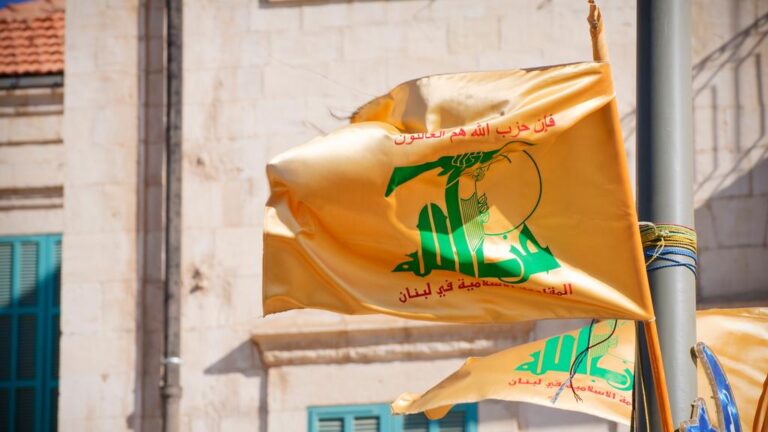
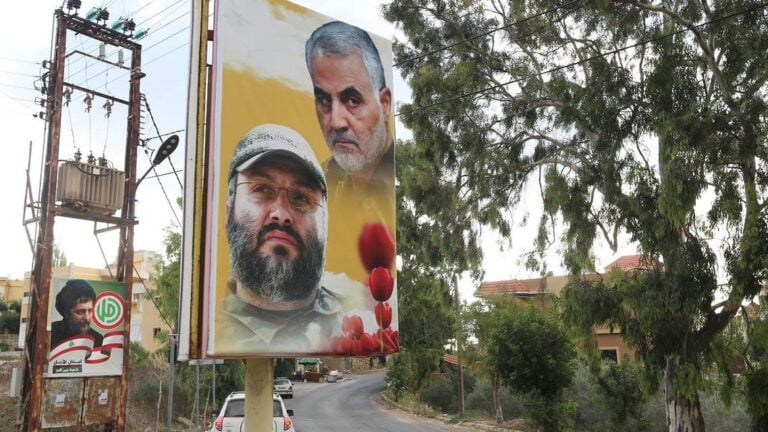
The Iranian “invasion” of Lebanon, where Iran’s proxy Hezbollah controls the entire country, including Sunni, Christian, and Druze regions, should have been stopped before the country became another subordinate, occupied Arab nation. In Iraq, for instance, the Popular Mobilization Forces (PMF) is an Iranian proxy that superseded Iraq’s national army. In fact, PMF Commander Faleh al-Fayyad once said in a meeting with Iranian Revolutionary Guard Corps Commander Hossein Salami: “We are proud of the Revolutionary Guard model and of the Islamic Revolution.” The same goes for Syria, a big part of Yemen, and even some North African Arab states.

This Iranian influence has become clear as day. If no practical efforts are made to contain it, the Khomeinian Revolution, currently headed by the Wali al-Faqih Ali Khamenei, will continue to seek to achieve what Shah Mohammad Reza Pahlavi could not.

The current Supreme Leader of Iran is not Persian, though. He is an Azeri, and some even say he is of Arab origins. He also claims to be one of the People of the Prophet’s House. His father, Javad Khamenei, was one of Mashhad’s prominent scholars. His grandfather, Hossein Khamenei, an Azeri scholar in Najaf, was a descendant of Ali bin Zain al-Abidin bin Husayn bin Ali bin Abi Taleb.

The problem is that Khamenei has no heir. Should he resign, or when he eventually passes, he will most probably be replaced by the non-consensual current President Ebrahim Raisi. The contract that Khomeini had begun in 1979 will surely collapse, and the revolution will end just like the Shah regime did. In fact, some people assure that the contract will collapse, and the old era will be revived.

Soon after Saddam Hussein’s Iraq won the eight-year Iraq-Iran war, Tehran opted for a different kind of confrontation. With US arrangement, the Iraqi President was put on death row, and Iraq slid into the abyss of war. The Baath party was definitively ousted, and three Iraqi Kurds took the reins of power in the country: President Barham Saleh, Prime Minister Mustafa al-Kadhimi, and Foreign Minister Fouad Hussein. Surely, there is no objection to that. The three leaders are all Iraqis and entitled to occupy these positions in their country, for which their ancestors fought and gave many martyrs, just like their Arab compatriots.

Source: Alarabiya

Also Read: Iran’s influence in Africa poses a serious threat

What will the regime of murderers do to Iran protests after Ebrahim Raisi takes office?

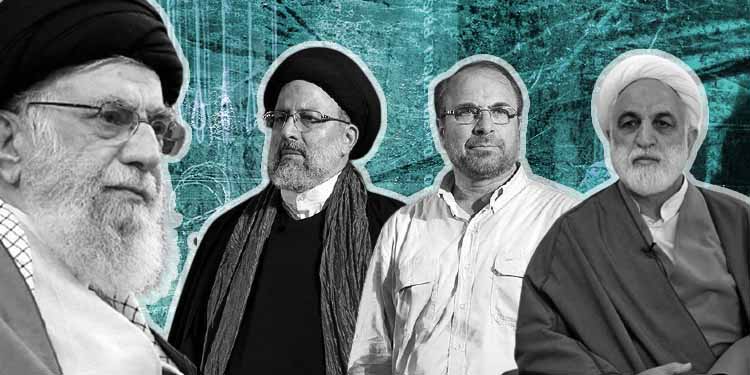
The appointment of Ebrahim Raisi, Mohseni Ejeii and Mohammad Baqer Qalibaf, major human rights violators, at the key positions of the power in Iran reflects the regime’s “new aggressive and repressive posture” which aims to intensify repression to stifle dissent. A regime of cannibals

Khamenei favors all three men for their roles in the judicial and security systems for four decades and their record of violent repression and human rights abuses.

Band of murderers in charge of the system

Ebrahim Raisi has been one of the key figures of repression in the Iranian judiciary.

He has been referred to as “Ayatollah of massacre” given his role in the mass executions of political prisoners in 1988. He was part of a so-called “death committee” – one of four judges who oversaw secret death sentences for thousands of political prisoners in jails near Tehran during the 1988 massacre. He played a decision-making role in the extrajudicial executions of more than 30,000 prisoners that time when he was 27 years old.

Mohseni Ejeii has been Khamenei’s most trusted judicial director in the Ministry of Intelligence for many years. He has been named the world’s most anti-women judge. In the last four decades, his name has been a reminder of murder, repression, and corruption for the Iranian people.

Brigadier General Mohammad Baqer Qalibaf was elected as the Speaker of Iran’s parliament (Majles) in May 2020. He is best known for being implicated in major financial corruption cases. He was the first IRGC general who became the Mayor of Tehran. Now, he is the first general who serves as Majles Speaker, and the first IRGC commander who leads one of the three branches of government. He has openly defended his record of violent repression as a “club wielder” and said that he was proud to have wielded the stick against dissidents.

Now, they have handed over the executive branch to a mass murderer, the judiciary to a professional assassin, and the legislative branch to a club wielder.

Source: Iran HRM

Also Read: Iran: Security forces use ruthless force, mass arrests and torture to crush peaceful protests


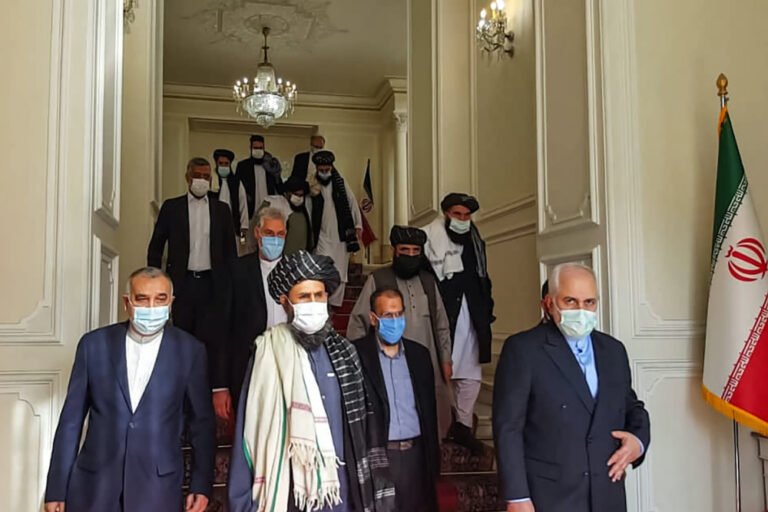
Iran returns Afghan refugees at borders in partnership with Taliban

Iran’s interior ministry has ordered border guards on Wednesday to turn away Afghan refugees trying to cross the border from Afghanistan after the Taliban victory led many Afghans to try to leave the country.

Hossein Ghassemi, the general director of the interior ministry’s border affairs told local media that all along Iran’s eastern border with Afghanistan, involving three provinces, border guards have been ordered to prevent possible entry by refugees.

Mehdi Mahmoudi, Director General Bureau for Aliens and Foreign Immigrants Affairs of the Iranian Ministry of Interior, called the establishment of new camps for Afghan refugees along Iran’s borders a rumor and asked for Afghans to ignore such news.

In making the announcement, Ghassemi stressed that the internal situation in Afghanistan seems to be moving toward stability. This is despite the fact that several reports from inside Afghanistan indicate the terror group continues with its backward ways to oppress women and kill those who oppose its rule or previously worked with international governments or news agencies.

Iran previously used many of its Afghan refugee population as cheap mercenaries, such as the Liwa Fatemiyoun militia group, trained, armed and funded by Iran’s Islamic Revolutionary Guard Corps, for its proxy wars in Iraq, Syria and Yemen. After the Taliban takeover in Afghanistan Iran sees the partnership with Taliban as a higher priority since it enables the Islamic Republic to expand its regional influence similar to what it has done in Syria and Iraq.

The Director General of Border Affairs of the Ministry of Interior of Iran said on Sunday that some Afghans who sought refuge in Iran and were rejected following the Taliban attacks had responsibilities in the government, parliament, and provinces of Afghanistan or military personnel who had turned to the Iranian border with military equipment.

It is vital for the Taliban to not lose valuable people working in the government for now as its members are mostly illiterate and unable to run the country. Once more Taliban members learn how to manage things, they will no longer need previous government employees and staff.

Source: Iran International
Also read: Iran Intelligence and media collusion to execute Kurd political prisoner

Iran’s influence in Africa poses a serious threat
In the context of the attempts to revive the nuclear agreement with Iran, little attention is given to the Islamic Republic’s meddling beyond the Middle East — especially in Africa. The Iranian regime, as well as its main proxy Hezbollah, is a growing presence there.

The Shiite Lebanese group’s entrenchment in Africa takes its roots from the existing ties between Hezbollah and Shiite communities based there. Through these, Hezbollah established a foothold from which to operate on behalf of the Islamic Revolutionary Guard Corps (IRGC), a branch of Iran’s armed forces, and the Quds Force, an elite IRGC unit.

In the Central African Republic (CAR) for example, Hezbollah operates along with the Quds Force’s Unit 400 in order to recruit and train members of the terrorist group Saraya Zahra. This strategy is the model through which the Iranians aim to establish similar offshoots in Cameroon, Ghana, Niger, and the Democratic Republic of the Congo (DRC), all with the intention of undermining Western interests and those of Sunni-Arab nations in these areas.

In February, Ethiopia’s intelligence services dismantled a terror cell established by Iran that was meant to gather intelligence about the US, UAE, and Israeli embassies. Then in April an Iranian national was arrested and deported by Uganda’s security forces over a planned IRGC terrorist attack in that country. Such activities are funded directly by the IRGC. For instance, the IRGC transferred $100,000 to an alliance of rebel militias in CAR, called Séléka, intended for recruitment and attacks against Westerners.

The modus operandi is to operate under the cover of diplomatic missions, often through cultural attaché postings. Iranian organisations such as the Islamic Culture and Relations Organization (ICRO) are used as a facade for the Quds Force’s covert activities.

Source: The JC

Also Read: In a Dangerous Game of Cat and Mouse, Iran Eyes New Targets in Africa

Human Rights Watch Blames Iran’s Government For Covid Crisis

0

Iranian authorities’ prohibition on United States and United Kingdom-produced Covid-19 vaccines, a lack of transparency, and mismanagement have all exacerbated the impact of the pandemic in Iran, Human Rights Watch (HRW) said Thursday(link is external).

“Iranian authorities should urgently redouble efforts to respond effectively to the crisis, including by using all resources necessary to secure lifesaving vaccines,” the international rights organization said, adding that officials have blamed sanctions and delays in importing vaccines, as well as each other, for the slow roll out of the vaccination problem, without providing clear evidence.

In a televised speech August 11, Iran’s Supreme Leader Ali Khamenei called for swift, decisive action to contain the pandemic and stressed that vaccines should be imported “in any possible way.” The head of Iran’s Food and Drug Administration (FDA), Mohammad-Reza Shanehsaz, said Monday that a permit had been issued to import Pfizer and Moderna vaccines made outside the United States – thereby easing a ban set by Khamenei in January on US- and UK-made vaccines, a time when these were the only ones internationally approved.

Escalating health crisis

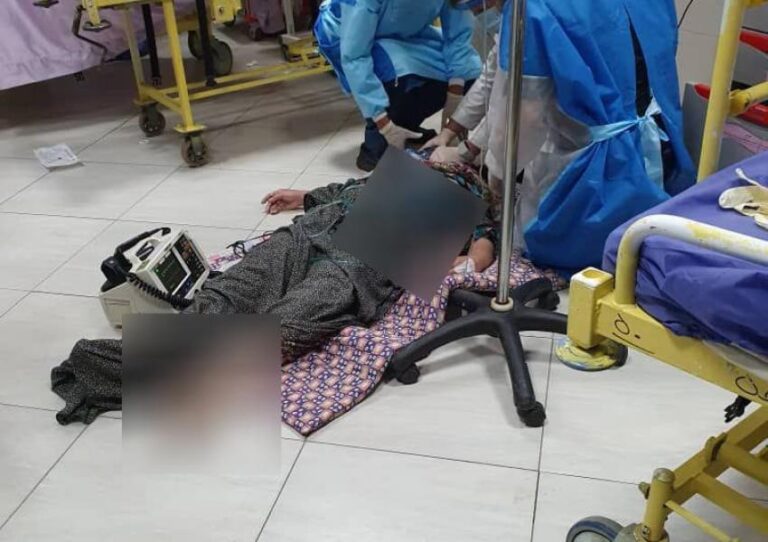
Iran faces an escalating health crisis. As of Thursday, Iran had reported more than 100,000 deaths and 4.6 million Covid cases, but from almost the onset of the pandemic many health experts and officials have said the health ministry’s numbers do not reflect reality, with some estimating the real number of deaths 2.5 times higher. With nearly 7,500 patients in hospital, many officials say health care is under a burden that it may not be able to handle if the situation further deteriorates.

According to the Revolutionary Guards (IRGC)-affiliated Tasnim news agency, Iran imported 22.6 million doses of Covid-19 vaccines as of August 15, of which 2.2 million doses came through the World Health Organization’s Covax program. Iran has purchased 16.8 million doses from Covax but has refused delivery of US-made Pfizer and Moderna vaccines. Iran has received over 2.9 million doses of Japanese-made AstraZeneca and has also bought South Korean- and Italian-made AstraZeneca purchased through Covax.

Source: Iran International

Also Read: Lawyers, Activists Arrested as they Attempt to Sue State for Failed COVID Response

How Iran’s Supreme Leader sacrificed humans for a failed display of power

0

How Iran’s Supreme Leader sacrificed lives for a failed display of power

In December 2020, the first coronavirus vaccines were introduced by the United States; “Pfizer” and “Moderna”. In January of 2021, the Supreme Leader of the Islamic Republic, Ali Khamenei, banned the import of “western vaccines.” A decision he stood by for nearly a year and after tens of thousands of Iranians died. The communities that were waiting for treatment and were happy that the world had found a way to prevent further deaths were left in shock.

The Iranian Red Crescent announced that the arrival of more than 100,000 doses of Pfizer, which was supposed to save Iranians, had been canceled and even the voluntary team of Doctors Without Borders, which had gone to Iran to help, were returned.

The Islamic Republic even refused to accept donated vaccines, and at the behest of Khamenei tens of thousands of Iranians died, only for a failed display of power. Iran announced that it was developing several vaccines, and most importantly, introduced the Iranian “Barakat” vaccine, the nature of which no one is aware of yet, and which has not been approved by the World Health Organization. Following the recklessness of Ali Khamenei, the then Minister of Health, with contradictory statements and negligence, left the medical community, patients, and citizens with a shortage of medicine and necessary equipment in pharmacies and hospitals.

The Islamic Republic was so high on its unobtained achievements that the following sentence was published in the ninth-grade book “Social Sciences”: “The Islamic Republic of Iran, with its advanced health facilities and equipment as well as specialized, compassionate and hard-working medical staff, was able to be one of the top countries in the world in the fight against the coronavirus.” However, based on official and global statistics, Iran has the highest Covid infection and mortality rate in the Middle East.

August 16, 2021, The highest daily death toll of Covid-19 was announced by Iran’s government; 655 people, which prompted the Human Rights Defenders to send a letter to the UN Special Rapporteur on the Right to Physical and Mental Health, informing the UN about the “deplorable state of health of the Iranian people” and urging the government to hold Iran accountable for its negligent actions and also work to vaccinate the Iranian people.

Two days before the letter, however, seven lawyers and civil activists were arrested by Iran’s security forces; They sought to sue the government for decisions that cost people their lives, and according to lawyers, their detention is illegal; Especially since the reason of detention is filing a lawsuit against the officials of the Islamic Republic, even Ali Khamenei, is legal.

Source: Iranian UK
Also read: Iran Intelligence and media collusion to execute Kurd political prisoner

Iran Intelligence and media collusion to execute Kurd political prisoner

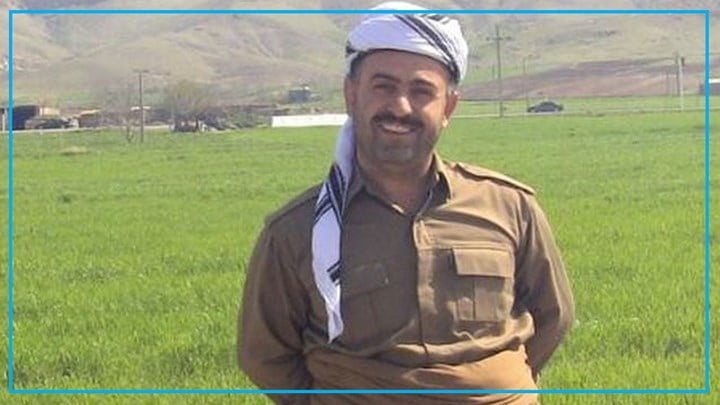
Amnesty International issued a statement calling for immediate action to halt Heidar Ghorbani’s death sentence, saying the Kurd political prisoner had been forced to confess under severe pressure and torture.

Heidar Ghorbani has been accused by the judiciary of being involved in the murder of three Basijis in the clashes that took place in September 2016.

Prior to the trial of this defendant, Press TV, an English-language state-run news outlet of the Islamic Republic, broadcasted a video of the political prisoner’s coerced confessions which provided grounds for the trial and the issuance of the death sentence.


Mr. Ghorbani has repeatedly stated that the only evidence in the case for the death sentence is the same confessions under torture. Even the indictment issued by the prosecutor’s office and finally the verdict of the court stated that the accused was not armed.

Heidar Ghorbani is from one of the villages of Kamyaran in Kurdistan province. In a documentary about the political prisoner, the Islamic Republic National Television said that the father of the prisoner had been killed 40 years ago in the Kurdistan conflict. It is not clear what the killing of his father has to do with the case of this Kurd political prisoner.

In its letter, Amnesty International called for the immediate abolition of the death sentence of this political prisoner and for a fair trial. According to reports, this prisoner is in serious danger of execution.

The Islamic Republic of Iran Broadcasting (IRIB), which holds a monopoly over TV and radio broadcasts, has been actively involved in the systematic production and broadcast of forced confessions, the theft of private data, and the publication of defamatory content. The IRIB, in collaboration with the security apparatus of the Ministry of Intelligence and the Intelligence Organization of the Islamic Revolutionary Guard Corps (IRGC), has become a means of mass suppression and prepares grounds for Iran’s judiciary to execute activists without evidence of any crime commited.

Source: Radio Liberty
Also read: Iran’s Rising Trend of Executions Indicates Further Rights Violations

Lawyers, Activists Arrested as they Attempt to Sue State for Failed COVID Response

0

The unlawful arrests of six prominent lawyers and civil rights activists in Tehran as they were preparing to file a lawsuit against state officials for their gross mishandling of the COVID-19 pandemic is an indication of the worsening human rights situation under the newly inaugurated President Ebrahim Raisi and new Judiciary Chief Gholam-Hossein Mohseni Ejei.

“Instead of addressing the skyrocketing numbers of COVID-19 infections and deaths amid the lack of safe vaccines, the state focuses on crushing attempts to hold officials responsible for their calamitous pandemic response,” said Hadi Ghaemi, executive director of the Center for Human Rights in Iran (CHRI).

“The Iranian government should be focused on immediately importing as many vaccines as possible,” said Ghaemi. “And the international community should urgently condemn these latest arrests and call on the government to stop trying to muzzle criticism of its policies.”

The arrests took place against a backdrop of the judiciary’s escalating campaign to prevent independent lawyers from seeking justice within the judicial system, which has included dismantling the Iranian Bar Association as well as imprisoning independent lawyers on trumped-up charges.

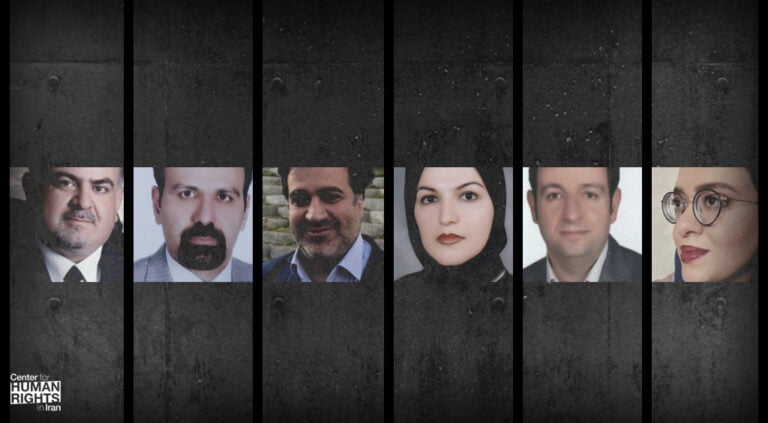
Arash Keykhosravi (lawyer), Mehdi Mahmoudian (civil activist), Mostafa Nili (lawyer), Leila Heydari (lawyer), Mohammad Reza Faghihi (lawyer), and Maryam Afrafaraz (civil activist) were arrested in Tehran on August 14, 2021, and their phones and other personal belongings were confiscated without a warrant. Heydari was released the following day.

CHRI calls for the immediate release of the lawyers and activists, whose detention is a violation of Article 34 of the Constitution, which states that it is an “indisputable right of every citizen to seek justice by recourse to competent courts. All citizens have right of access to such courts, and no one can be barred from courts to which he has a legal right of recourse.”

Officials who violate Article 34 are subject to punishments listed in Article 570 of the Islamic Penal Code, stipulating that “Any official and agent associated with State agencies and institutions who unlawfully strips members of the public of their personal freedom or deprives them of their rights provided in the IRI Constitution shall be sentenced to two months to three years’ imprisonment, in addition to dismissal from the service and prohibition of employment in state offices for one to five years.”

Source: Iran Human Rights 

Also Read: Iran arrests six lawyers for intention to sue officials mismanaging pandemic
 

Why Iran Will Welcome the Taliban Takeover in Afghanistan

0

“He travels with Iranian bodyguards,” a tribal elder and local police chief alleged about a Taliban commander from his home district of Shah Wali Kot.

“He has traveled back and forth from Iran for decades. He was previously a commander near Herat” during the Taliban rule over Afghanistan between 1996 and 2001, the police chief—who requested anonymity for security purposes—told me in an Aug. 2 interview held in a secluded location for on the outskirts of the city of Kandahar.

After the former Taliban capital fell once again to the Taliban on Aug. 12, the man I interviewed was reportedly hanged.

When the Taliban took Afghanistan’s key Islam Qala border crossing with Iran on July 9, locals reported that Iranian officials on the other side welcomed them. When on Aug. 6 it seemed the capital of Nimroz province in western Afghanistan was about to fall and many of those afraid of the Taliban rushed toward the border to escape, Iranian officials instead reportedly refused entry to most of those fleeing.

Iran has a long history of hosting both key al Qaeda members as well as Taliban leaders. As Foreign Policy reported in May 2016, “Taliban chief Mullah Akhtar Mohammad Mansour was killed in Pakistan by an American drone last weekend after leaving Iran, where his family lives. U.S. officials say that Mullah Mansour regularly and freely traveled into and out of Iran.”

Several sources I spoke to on the ground across the country during a monthlong reporting trip between July and August this year said that Iran has played a major role in the conflict.

While I was reporting from Kandahar, multiple security officials told me that Iranian weapons had been found in the hands of killed Taliban fighters in the area.

They added that they had received information on Iranian fighters operating in Nimroz, Herat, and Helmand provinces in western and southwestern Afghanistan near the border with Iran.

Source: Foreign Policy

Also Read: Iran and Hamas congratulate Taliban for victory in Afghanistan

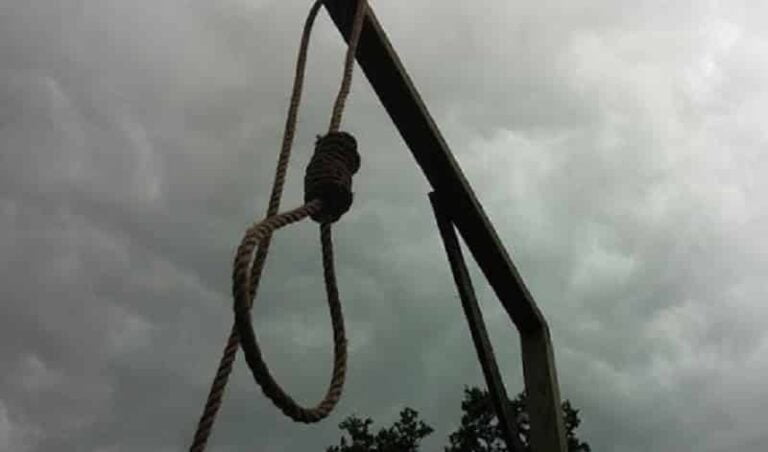
Iran’s Rising Trend of Executions Indicates Further Human Rights Violations

The National Council of Resistance of Iran has reported that the Iranian regime has yet again added more executions to their longstanding trend of carrying out the highest rate of executions per capita across the world.

Just three days after Ebrahim Raisi was inaugurated as the regime’s new president on August 8, the clerical regime carried out nine executions at three prison facilities across Iran. With the latest hanging that took place on Monday, the total number of deaths has reached 22 for the month of August alone. This now takes the year-to-date total to over 200.

The NCRI said, “At times, the regime’s judiciary has delayed the implementation of death sentences or even publicly vowed to re-examine politically motivated cases under intense international pressure. But in almost every case, the regime proceeds with the pre-determined punishment soon after the outcry has died down.”

According to the regime’s supposed human rights official, if international human rights principles are not in line with a country’s own laws, or in this case the regime’s harsh interpretation of Shiite Islam, they are not required to adhere to them.

Many activists have suggested that the continued acceleration of the pace of executions recently is a result of the emerging influence of the regime’s new president, Ebrahim Raisi.

The NCRI said, “Ebrahim Raisi was selected to that position on June 18 following by Supreme Leader Ali Khamenei, the ultimate authority in the regime. But the vast majority of the population boycotted the sham election in protest over Raisi’s more than 30-year history of severe human rights abuses.”

Raisi became a major figure in the Tehran ‘death commission’ in the summer of 1988, where he oversaw the massacre of around 30,000 political prisoners. In recent years, he has played a leading role in the crackdown of protests nationwide. Most notably, the November 2019 uprising saw the murders of 1,500 protests over the course of a few days. Thousands of other victims were tortured over a number of months.

Source: Iran Focus

Also Read: Iran: 10 Prisoners Hanged In Two Days, 37 Executions In The Past 18 Days