Home Blog Page 62

Iran’s New Cabinet Includes Two Fugitives Wanted in Connection With 1994 Bombing Atrocity at Buenos Aires Jewish Center

0

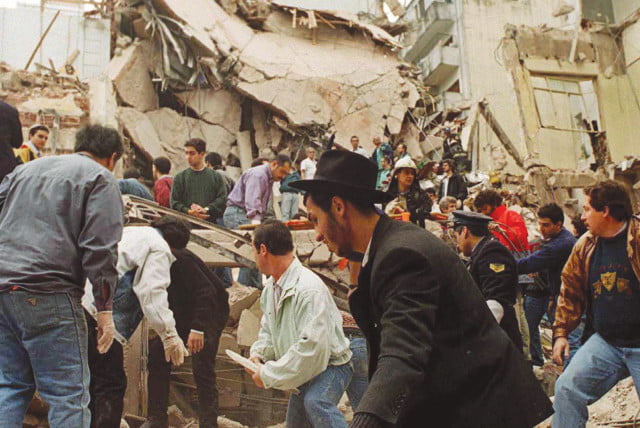
Iran’s new crop of political leaders includes two individuals wanted by international law enforcement authorities for their roles in the 1994 terrorist bombing of the AMIA Jewish Center in the Argentine capital Buenos Aires, in which 85 people lost their lives and more than 300 were badly wounded.

Both men — Defense Minister Ahmad Vahidi and Vice-President for Economic Affairs Mohsen Rezaei — were among the cabinet nominees of newly-installed hardline President Ebrahim Raisi who were approved on Wednesday by the regime’s consultative assembly, the Majlis.

Vahidi and Rezaei were the subjects of two of the six “red notices” issued in 2007 by Interpol, the international law enforcement agency, for the Iranian and Hezbollah operatives sought in connection with the AMIA atrocity. No person has ever been convicted in connection with the bombing, which has been the subject of a series of judicial and political scandals in Argentina, including an initial sham trial that resulted in the impeachment of the presiding judge in 2005, and the unsolved murder in 2015 of Alberto Nisman, the federal prosecutor appointed a decade earlier to take over the AMIA investigation, whose efforts led to Interpol issuing its red notices for the main executors of the attack.

A veteran of the 1979 Islamist revolution, Vahidi is returning to the Defense Ministry for the second time in his career, having served in the Minister’s post between 2009-13 under former President Mahmoud Ahmadinejad. Rezaei, meanwhile, served as commander of Iran’s Islamic Revolutionary Guards Corps (IRGC) between 1980 and 1997, a period that witnessed the bloody eight-year war between the Islamic Republic and the Ba’athist regime in neighboring Iraq.

Toby Dershowitz, a Washington, DC-based analyst who has written extensively on the AMIA case, told The Algemeiner that the appointments of Vahidi and Rezaei signaled Iran’s determination to “normalize mass murder.”

Source: Algmeiner 

Also Read: Iran’s Raisi Forms Cabinet Including Terror And Corruption Suspects
Lebanese struggle against Iran-backed Hezbollah and IRGC

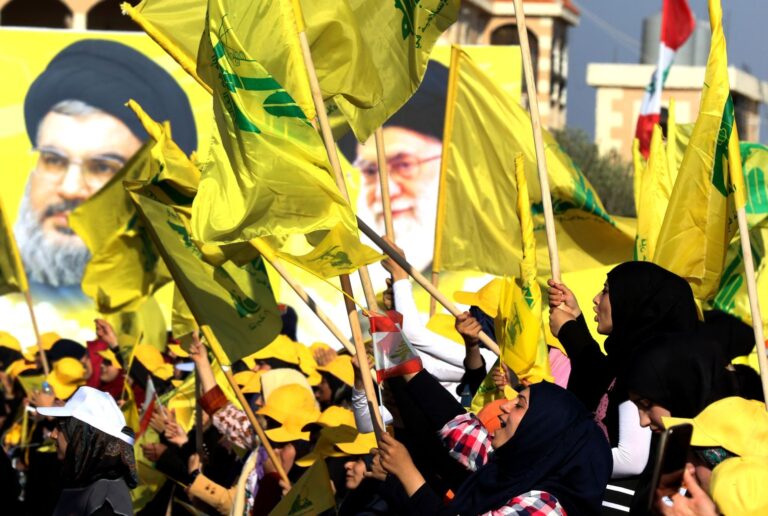
Hezbollah and its backer Iran made a serious mistake by assassinating political activist Lokman Slim, even though investigations remain stalled and justice has yet to be served, Lebanese politicians and journalists said.

The assassination and related events have fueled growing opposition to the Iranian axis, even in areas where Hezbollah wields influence such as al-Adousiya in southern Lebanon, where Slim was shot to death on February 4.

Iran’s self-described “Axis of Resistance” has been used over the years to refer to an alliance between Tehran and its state-funded terror groups, including Kataib Hizbullah and Asaib Ahl al-Haq in Iraq, Hezbollah in Lebanon and the Houthis in Yemen.

In the aftermath of the assassination, protesters have been calling for the full implementation of United Nations (UN) Security Council Resolution 1559 and have stressed the need to liberate Lebanon from Iran’s clutches and restore Lebanese sovereignty.

Slim, a leading secular voice in the Shia community and an outspoken critic of Iran and its militia group Hezbollah, was found dead in his car near the southern town of Tefahta.

Slim’s assassination is akin to the killings of journalists and activists by Iran-backed militias in Iraq, he said, most notably the killing of Iraqi academic Hisham al-Hashemi, who exposed the Iraqi and regional media cell run by the Islamic Revolutionary Guard Corps (IRGC) from Baghdad.

“His murder is part of an effort to silence all those who call loudly for the implementation of Resolution 1559 and the disarmament of armed militias,” he said.

“The Iranian project can be countered only with a national project that brings everyone together under the roof of citizenship, commitment to the constitution and Arab and international legitimacy,” he said.

Iran’s proxies are working on several fronts to impose the Islamic Republic’s hegemony and expansionist policies in the region. In return, Tehran provides its “axis” partners with all the money, weapons and support they need.

Source: Al-Mashareq
Also read: Iran’s Next FM: A Diplomat With An IRGC Attitude

Gantz: Iran is two months away from nuclear bomb

Tehran is two months away from nuclear weapons capacity, warned Defense Minister Benny Gantz as he called for the international community to create a new prevention plan that did not involve reviving the 2015 Iran deal.

“Iran is only two months away from acquiring the materials necessary for a nuclear weapon,” Gantz told a gathering of 60 ambassadors in Tel Aviv.

He spoke just one day before Prime Minister Naftali Bennett is scheduled to present such an alternative plan to US President Joe Biden at the White House on Thursday.

Biden has been in favor of reviving the 2015 Joint Comprehensive Plan of Action designed to curb Iran’s nuclear ambitions, which the US exited in 2018.
 
Indirect talks brokered by the European Union have faltered and have allowed for Tehran to ramp up its uranium enrichment needed to produce nuclear weapons.
 
“We do not know if the Iranian regime will be willing to sign an agreement and come back to the negotiation table – and the international community must build a viable ‘Plan B’ in order to stop Iran in its tracks toward a nuclear weapon,” Gantz said.

The preferred option, he said, is a diplomatic one.

“At the end of the day, the goal is to reach a ‘longer, stronger and broader’ agreement than the previous one,” Gantz said. An “Iranian nuclear program could incite an arms race in the region and the entire world.”
 
Nevertheless, he hinted at military action if needed. “The State of Israel has the means to act and will not hesitate to do so – I do not rule out the possibility that Israel will have to take action in the future in order to prevent a nuclear Iran,” Gantz said.
 
At present, the “Iranian threat is land-based,” with Tehran operating “via its proxies in Iraq, Yemen, Syria, Lebanon and Gaza,” he said.

Source: JPost

Also Read: Iran accelerating enrichment of uranium to near weapons-grade, nuclear watchdog says
 

US-Based Writer Says She Was Target Of Iran Murder Plot

0

In an article published Monday by the New York Review, writer and rights activist Roya Hakakian revealed that she was informed by two FBI agents visiting her home in rural Connecticut in August 2019 that she might be killed by Iranian agents in the United States, where she has lived since leaving Iran in 1985.

“They said that they knew nothing concrete or specific beyond a vague danger; they relied on me, with my knowledge of Iran’s past dealings with dissidents, to surmise that it could mean an assassination plot,” Hakakian wrote(link is external).

Hakakian suspected she was being targeted due to her collaboration with Masih Alinejad, another US-based activist, who she calls “the most formidable thorn in the [Iranian] regime’s side.” Hakakian and Alinejad were among the August 2019 signatories of the Statement of Fourteen Female Activists Abroad issued after the publication of a statement by 14 female civil rights activists in Iran.

The statements called on Supreme Leader Ali Khamenei to resign, and for “civil and non-violent measures” against the regime and for a new Iranian constitution. By September 2019, 16 of the 28 signatories of the statements in Iran had been arrested. Some, such as retired teacher Hashem Khastar, are still in prison.

Assassination in Berlin

Hakakian, a co-founder of the Connecticut-based Iran Human Rights Documentation Center, is the author of Assassins of the Turquoise Palace, a ‘factional’ account of the 1992 assassination of three leading Kurdish politicians − including Sadegh Sharafkandi, General-Secretary of the Kurdistan Democratic Party of Iran, which was committed to Kurdish autonomy − and a Persian interpreter at Berlin’s Mykonos restaurant.

Two Iranians, including an intelligence officer, and three Lebanese were found guilty of involvement in the assassinations by a German court in 1997, with the intelligence officer and one Lebanese sentenced to life in prison, although Iran has always denied any role. Iranian intelligence allegedly assassinated the previous KDPI general-secretary Abdulrahman Ghassemlou in Vienna in 1989, former prime minister Shapour Bakhtiar in Paris in 1991, and other dissidents including royalist singer and poet Fereydoun Farrokhzad in Berlin in 1992.

Source: Iran International

Also Read: Feds charge 4 in Iran plot to kidnap activist in US, others

Iran’s Next FM: A Diplomat With An IRGC Attitude

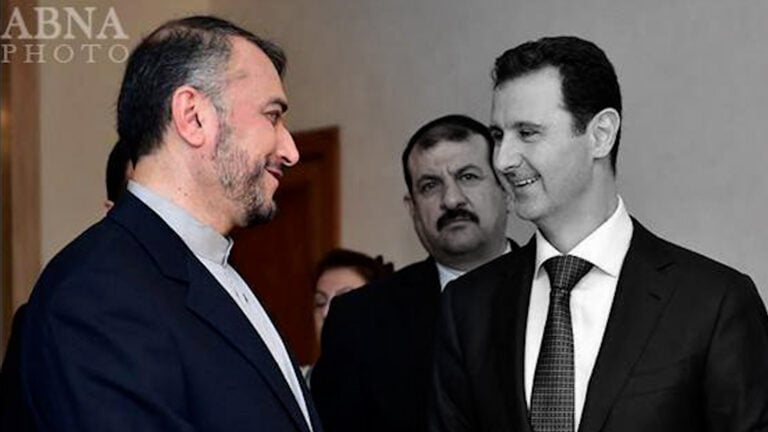
Hossein Amir-Abdollahian, nominated as foreign minister by Iran’s newly appointed president, Ibrahim Ra’isi , stressed in a parliamentary review that Iran’s foreign policy should be absolutely “Asia-oriented.” In defense of Amir-Abdollahian, some deputies compared him to Qasem Soleimani, the commander of Iran’s terrorist designated IRGC Quds Force.

Abdollahian has been the Deputy Foreign Minister for Arab Affairs since the presidency of Mahmoud Ahmadinejad. He is one of the figures very close to the “Quds” force, the overseas branch of the Islamic Revolutionary Guard Corps (IRGC); As described by a Quds Force agent at the Foreign Ministry.

Although not yet approved by parliament, Abdollahian met with the Japanese foreign minister as “special assistant to the speaker of the parliament for international affairs.” Explaining his plans and ideas, Abdollahian defended a “balanced” foreign policy, saying: “A balanced policy means that we must consider the foreign policy priorities of the government of Ibrahim Ra’isi, which is centered on neighborhood policy and Asia-centered policy.” “Because the 21st century belongs to Asia.”

According to Abdollahian, Iran in West Asia will “seek to institutionalize the field achievements of the resistance” and in East Asia will aim to develop economic and trade relations with “emerging economic powers.”

A representative in the parliament, who spoke in defense of the proposed minister, stressed that Abdollahian does not believe in the “duality of the field and diplomacy” and gives priority to the “field”.

The term “field and diplomacy” was coined after the publication of the controversial leaked interview with Iran’s ex-foreign minister. Referring to the role of Qassem Soleimani, he said that in Iran’s foreign policy, the “field” (military operation) overpowers diplomacy. Abdollahian himself had previously announced that he would continue the interventionist path of Qasem Soleimani in foreign policy.

Source: Radio Liberty
Also read: Iran IRGC military adviser dead after coalition airstrikes in Yemen

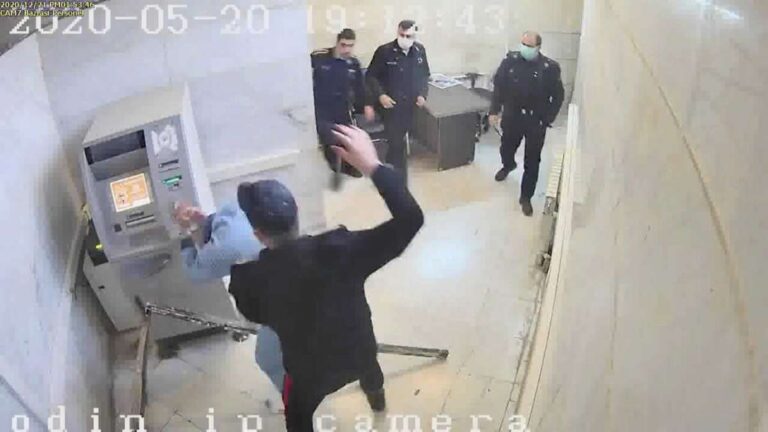
Iran confirms leaked footage of harsh conditions in Evin Prison

A top Iranian prisons official has confirmed the veracity of footage leaked by hackers that shows the harsh conditions inmates of Tehran’s Evin Prison suffer.

The surveillance camera footage, leaked on Monday, has no sound but shows clearly the pain some prisoners go through at Evin.

Mohammad Mehdi Haj Mohammadi, head of Iran’s prisons organisation, said in a tweet on Tuesday he accepts responsibility for the “unacceptable behaviours” depicted in the footage and vowed the perpetrators will face repercussions.

“I also apologise to God, our dear supreme leader, the great nation and the honourable prison guards, whose efforts will certainly not be ignored due to these errors,” Mohammadi wrote.

One video showed a gaunt man being dropped in the courtyard and dragged through the prison semi-conscious while guards and staff watch unfazed. At one point, a cleric passes by the injured man.

Several videos show inmates being beaten by prison guards. An image shows a tiny solitary confinement cell, blank walls and a squat toilet.

Most of the videos are timestamped 2020 and 2021, with guards wearing masks in some of them as the COVID-19 pandemic impacted Iranian prisons.

The hackers also managed to gain access to the prison’s control room. A clip shows a guard spring to his feet when the many monitors in front of him flash red and then go black one by one. Guards storm in, some taking out their phones to film the situation, while others make hurried phone calls.

The group that carried out the hack calls itself Edalat-e Ali, or “Ali’s Justice”. It is a reference to the son-in-law of the Prophet Muhammad, an imam revered by Shia Muslims.

Evin Prison, which houses political prisoners and dual national inmates who are mostly imprisoned on spying and propaganda charges, has for years been criticised for human rights abuses, including by the UN special rapporteur for human rights. It is also blacklisted by both the US and the EU.

Source: Aljazeera

Also Read: Leaked footage shows grim conditions in Iran’s Evin prison

Iran IRGC military adviser dead after coalition airstrikes in Yemen

0

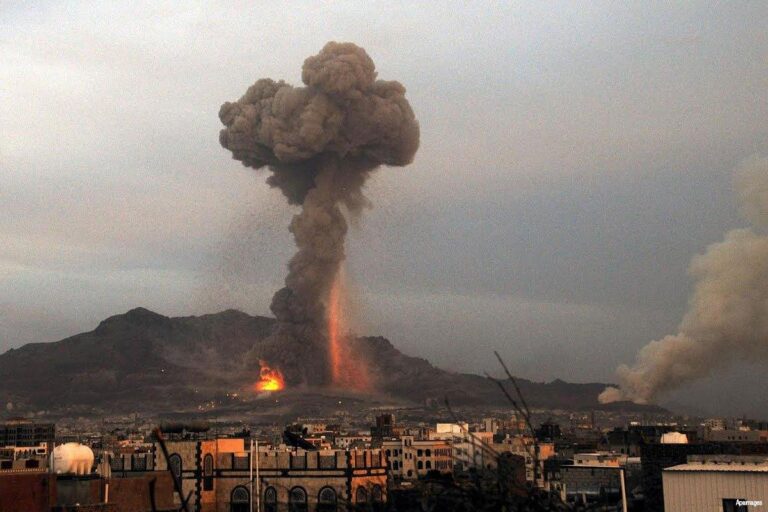
Arab coalition airstrikes have killed an Iranian IRGC military adviser to the Iran-backed Houthis during their deadly offensive on the central province of Marib, Yemen’s Information Minister, Muammar Al-Eryani, said on Saturday.  

“Iran has sent hundreds of Revolutionary Guards experts, led military operations in the field and smuggled various types of weapons, including ballistic missiles and drones, confirming the nature of the battle as an extension of Iranian expansionist and influence project in the region,” the minister said on Twitter.

“We urge the international community, UN, and permanent Security Council members to adopt a firm stand against Iran’s blatant interference in Yemeni affairs, its role in escalating military operations and undermining peace efforts, responsibility for bloodshed, and exacerbation of humanitarian suffering of Yemenis,” Al-Eryani said.

The Houthis, who have long denied receiving military support from Iran, recently admitted they received some military know-how from Iranian military experts. 

“We benefited from Iranian experiences in the military field. We do not deny that. We thank Iran for that support,” Houthi spokesman Mohammed Abdul-Salam told Iran’s Al-Alam television early this month.

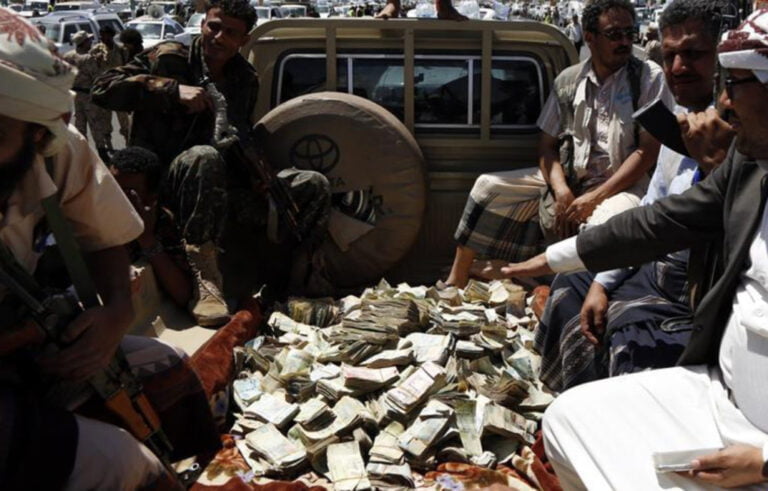
Col Abdul Basit Al-Baher, a Yemeni army spokesman in the southern city of Taiz, told Arab News that Iran appointed a Revolutionary Guard official as its envoy in the Houthi-controlled areas, provided them with smart weapons, communication technology, reconnaissance and espionage systems, funds and even sought to spread its ideologies in Yemen. 

“Iran supplied the Houthis with experts and all weapons from rifles to ballistic missiles and drones,” Al-Baher said.

Iran’s Ministry of Foreign Affairs on Saturday denied that the country’s military adviser was killed in Yemen.

Foreign Ministry spokesman Saeed Khatibzadeh dismissed the recent remarks by a member of Yemeni President Abd-Rabbu Mansour Hadi’s government as “false” concerning the killing of an Iranian citizen in Yemen’s conflicts.

Source: Anadolu Agency
Also read: HOW IRAN HELPED HOUTHIS EXPAND THEIR REACH

Leaked footage shows grim conditions in Iran’s Evin prison

The guard in a control room at Iran’s notorious Evin prison springs to attention as one by one, monitors in front of him suddenly blink off and display something very different from the surveillance footage he had been watching.

“Cyberattack,” the monitors flash. Other guards gather around, holding up their mobile phones and filming, or making urgent calls. ”General protest until the freedom of political prisoners” reads another line on the screens.

An online account, purportedly by an entity describing itself as a group of hackers, shared footage of the incident, as well as parts of other surveillance video it seized, with The Associated Press. The alleged hackers said the release of the footage was an effort to show the grim conditions at the prison, known for holding political prisoners and those with ties abroad who are often used as bargaining chips in negotiations with the West.

In one part of the footage, a man smashes a bathroom mirror to try to cut open his arm. Prisoners — and even guards — beat each other in scenes captured by surveillance cameras. Inmates sleeping in single rooms with bunk beds stacked three high against the walls, wrapping themselves in blankets to stay warm.

“We want the world to hear our voice for freedom of all political prisoners,” read a message from the online account to the AP in Dubai.

Iran, which has faced criticism from the United Nations special rapporteur over its prison conditions, did not immediately respond to a request for comment sent to its U.N. mission in New York. Iranian state media in the country have not acknowledged the incident at Evin.

However, several embarrassing hacking incidents have struck Iran amid ongoing tensions over its accelerated nuclear program and as talks with the West over reviving the atomic accord between Tehran and world powers remain on hold.

Source: ctpost

Also Read: British-Iranian Evin jail inmate Anoosheh Ashoori attempted suicide after IRGC ‘mind games’

HOW IRAN HELPED HOUTHIS EXPAND THEIR REACH

0

Since 2015, when Saudi Arabia launched its intervention in Yemen, the Houthi movement has deepened its ties with Iran and grown more powerful on the ground. As a result, the impact of the Iranian-Houthi partnership will increasingly be felt beyond Yemen’s borders. As I have argued elsewhere, the Houthis are now developing their own foreign policy, forming direct ties with other Iranian partners in the region and presenting a growing risk to rivals like Saudi Arabia and, eventually, Israel. In recent years, some of the most alarmist coverage of the Houthi movement has presented the group in simplistic terms as an Iranian proxy inside Yemen. In fact, the partnership is more complex than a patron-proxy one, but it still carries real risks for regional security.

A Mutually Beneficial Partnership

While the Houthi movement emerged as an insurgency in northwestern Yemen in the 1980s and 1990s, it most likely began receiving Iranian support around 2009. Yet this initial support was marginal, as Yemen at the time was far from an important priority for Iran. Relations ramped up after 2011 as street protests and elite infighting caused an already fragile Yemeni state to weaken even more. Exploiting this vacuum, the Houthis expanded their power and eventually took over the capital, Sanaa, in 2014. These evolving local dynamics piqued Iran’s interest: Saudi Arabia was increasingly anxious at the prospect of mounting insecurity on its vulnerable southern border, while the Houthis were becoming more powerful. Nevertheless, through 2014, Iran’s role in the growth of Houthi power remained limited.

The major turning point came in March 2015 when Saudi Arabia launched a military intervention in Yemen, officially to roll back the Houthis and return the internationally recognized government of President Abdrabbuh Mansour Hadi to power. The intervention has since become an unmitigated disaster: It is a quagmire from which Saudi Arabia has proved unable to extricate itself, even as the Houthis emerged as the dominant actor in Yemen.

Source: War On The Rocks

Also Read: Iran sending more weapons to Yemen’s Houthis amid cease-fire effort: Pentagon

Iran incoming Foreign Minister reiterates support for regional terror groups

Presenting his plans as foreign minister at a parliament session to review proposed cabinet members Sunday, President Ebrahim Raisi’s candidate for the post, Hossein Amir-Abdollahian, told lawmakers that the government will strive to strengthen Iran’s allies in the region.

“The resistance movement is Iran’s allies that were freely formed to ensure sustainable security in the region and in their countries and are a great potential for establishing national security in regional countries,” Amir-Abdollahian, a former deputy foreign minister and Raisi’s foreign policy advisor told lawmakers. “We will support [our] allies and the resistance movement with pride and strength to help maximal security and cooperation in the region.”

‘Resistance movement’ is a term coined by the Islamic Republic to label its regional allies, such as Syria’s Bashar al-Assad, and a number of militant movements in neighbouring countries including Iraq, Yemen, Afghanistan, Syria and Palestine, all funded, armed and trained by Iran’s terrorist designated Islamic Revolutionary Guards Corps (IRGC) such as Lebanon’s Hezbollah, Houthis of Yemen and Palestinian Hamas.

Lebanon’s Hezbollah and Palestinian Hamas have openly admitted to being funded by Iran, while Shiite paramilitary brigades in Iraq have frequently been visited by the Iranian army and security officials. Meanwhile, a UN report recently found that Iranian missiles were being provided to Houthi militias to launch attacks on Saudi Arabia. Liwa Fatemiyoun, composed of Afghan refugee recruits, has been fighting in Syria for years, said Zohair Mojahed, a cultural official in the brigade.

It is noteworthy that Hossein Amir Abdollahian was Deputy Foreign Minister in Mahmoud Ahmadinejad’s government for Arab affairs, and after his dismissal in 2017 by Mohammad Javad Zarif, Iranian media wrote that he was close to the Quds Force, Iran’s extraterritorial operations arm of its Islamic Revolutionary Guard Corps.

Source: Iran International
Also read: Why Iran Will Welcome the Taliban Takeover in Afghanistan