Home Blog Page 61

Iran’s new nuclear chief affiliated with IRGC and nuclear weapons program

0

The appointment of Mohammad Eslami as the head of Iran’s Atomic Energy Organization of Iran indicates that Khamenei intends to accelerate the process of building a nuclear bomb.

Mohammad Eslami has a long history of service in Iran’s terrorist designated Islamic Revolutionary Guard Corps (IRGC), especially in the field of weapons. The Iranian regime has always claimed that its nuclear program is for peaceful use, and Khamenei has claimed that he described the production of an atomic bomb as “haram and un-Islamic.”

For the past two decades, Mohammad Islami has been in charge of obtaining Pakistani nuclear equipment and experience in building a nuclear bomb.

It was previously reported that the Iranian regime had paid hundreds of millions of dollars to purchase the equipment, including old Pakistani P1 centrifuges.

Sixteen years ago, the People’s Mojahedin Organization of Iran wrote in a report that Mohammad Eslami had met in Pakistan with two key figures in the production of nuclear bombs and assistants to Abdul Qadir Khan, the father of Pakistan’s atomic bomb.

Mohammad Eslami was placed on the sanctions list by the UK government during his time as Deputy Secretary of Defense and was accused of playing a major role in the Iranian regime’s nuclear weapons program. The United Nations also included him in the sanctions list.

Despite Persian language and international media focusing on Eslami’s academic background, his lacking scientific qualifications in the nuclear field, coupled with the designation by the United Nations for his role in the regime’s “nuclear weapons program,” an in-depth look might reveal that his appointment isn’t that way off after all. He might not possess the credentials, but he certainly does know more about the Iranian nuclear program than you might think.

Source: RADIS
Also read: Iran arrests financial reporter Amir-Abbas Azarmvand on security charges
Iran arrests financial reporter Amir-Abbas Azarmvand on security charges
Washington, D.C., September 1, 2021 — Iranian authorities should immediately release journalist Amir-Abbas Azarmvand, drop the charges against him, and let him work freely, the Committee to Protect Journalists said today.

Today, Azarmvand, a financial reporter for the state run Iranian economic newspaper SMT, was arrested at 8:30 a.m. at his parents’ home in Tehran by security agents of the intelligence ministry, according to the exile-run news website IranWire and the Human Rights Activists News Agency, a U.S.-based outlet that covers news in Iran.

Azarmvand was charged with “spreading propaganda against the system,” IranWire reported, citing the journalist’s colleague, who spoke to the outlet on the condition of anonymity due to the fear of reprisal.

According to the source, the agents presented Azarmvand with an arrest warrant citing recent critical reporting for SMT on the “difficult economic situation of union workers and some of the new economic decisions by the government.”

“Iranian authorities must free financial reporter Amir-Abbas Azarmvand immediately and unconditionally,” said CPJ Middle East and North Africa Program Coordinator Sherif Mansour. “Iran’s continued jailing of journalists for doing their jobs is an outrageous form of censorship that must end.”

According to the report in IranWire, security agents searched the house and confiscated Azarmvand’s laptop, cellphone, and some books and transferred him to ward 209 of Evin prison, which is run by the intelligence ministry.

Both reports stated that Azarmvand had also been arrested in the fall of 2018 and 2020 for his journalistic work, but provided no further details.

CPJ emailed SMT’s managing director but did not receive an immediate response.

CPJ also emailed Alireza Miryousefi, the head of the media office of Iran’s mission to the United Nations, for comment, but did not receive any reply.

Source: CPJ

Also Read: Sexual Harassment And Torture: Amnesty Verdict On Iran Prison Videos

Taliban Reportedly Deliver American Military Hardware To Iran

0

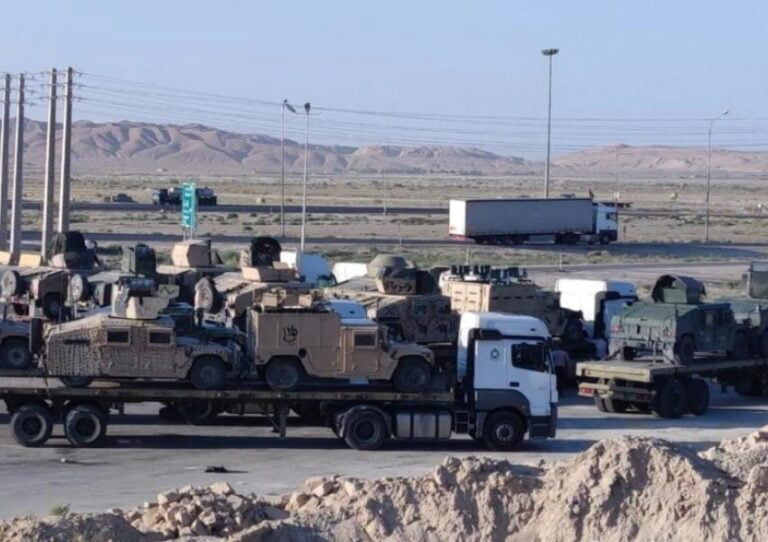
Reports and images on social media received from Iran indicate that tanks and military vehicles which belonged to the Afghan army were seen in Tehran and other parts of Iran.

Photos have emerged showing armored Humvees being transported from the eastern parts of the country toward Tehran, on the Semnan-Garmsar road.

Besmallah Mohammadi, a former Afghan defense ministry official published one of the photos referring to Iran as a “bad neighbor” and saying Afghanistan misfortune will not last forever.

Iran had promised to resume fuel deliveries to Afghanistan last week, which the Taliban need to prevent a collapse in the economy. Tehran has adopted a friendly posture toward the Taliban, unlike past relations which were marked by tensions.

Iranian officials have not yet reacted to the news. However, if Iran has made a deal with the Taliban to receive some of the American military hardware given to the Afghan army or left behind, it would claim a big victory against the United States.

The reports received so far are brief and there is no information about the kind and quantity of hardware delivered to Iran.

Source: Iran International

Also Read: Why Iran Will Welcome the Taliban Takeover in Afghanistan


Reports and images on social media received from Iran indicate that tanks and military vehicles which belonged to the Afghan army were seen in Tehran and other parts of Iran. Photos have emerged showing armored Humvees being transported from the eastern parts of the country toward Tehran, on the Semnan-Garmsar road. Besmallah Mohammadi, a former Afghan defense ministry official published one of the photos referring to Iran as a “bad neighbor” and saying Afghanistan misfortune will not last forever. Iran had promised to resume fuel deliveries to Afghanistan last week, which the Taliban need to prevent a collapse in the economy. Tehran has adopted a friendly posture toward the Taliban, unlike past relations which were marked by tensions. Iranian officials have not yet reacted to the news. However, if Iran has made a deal with the Taliban to receive some of the American military hardware given to the Afghan army or left behind, it would claim a big victory against the United States. The reports received so far are brief and there is no information about the kind and quantity of hardware delivered to Iran.

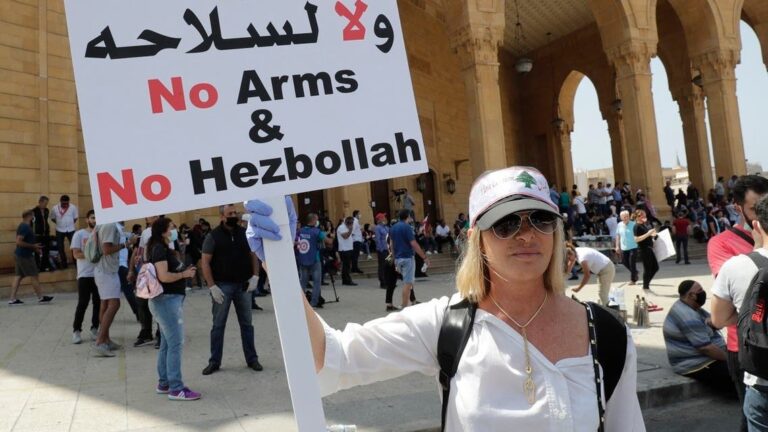
Lebanese continue the fight to weaken Iran-Hezbollah influence

Hezbollah and its backer Iran made a serious mistake by assassinating political activist Lokman Slim, even though investigations remain stalled and justice has yet to be served, Lebanese politicians and journalists said, speaking against Iran-Hezbollah ever-growing influence in Lebanon.

The assassination and related events have fueled growing opposition to the Iranian axis, even in areas where Hezbollah wields influence such as al-Adousiya in southern Lebanon, where Slim was shot to death on February 4.

Iran’s self-described “Axis of Resistance” has been used over the years to refer to an alliance between Tehran and its state-funded terror groups, including Kataib Hizbullah and Asaib Ahl al-Haq in Iraq, Hezbollah in Lebanon and the Houthis in Yemen.

“The Iran-Hezbollah project can be countered only with a national project that brings everyone together under the roof of citizenship, commitment to the constitution and Arab and international legitimacy,” he said.

Iran’s proxies are working on several fronts to impose the Islamic Republic’s hegemony and expansionist policies in the region. In return, Tehran provides its “axis” partners with all the money, weapons and support they need.

Slim, a leading secular voice in the Shia community and an outspoken critic of Iran and its militia group Hezbollah, was found dead in his car near the southern town of Tefahta.

Slim’s assassination is akin to the killings of journalists and activists by Iran-backed militias in Iraq, most notably the killing of Iraqi academic Hisham al-Hashemi, who exposed the Iraqi and regional media cell run by the Islamic Revolutionary Guard Corps (IRGC) from Baghdad.

Lebanese politicians and journalists claim “His murder is part of an effort to silence all those who call loudly for the implementation of Resolution 1559 and the disarmament of armed militias.”

Source: Al-Mashareq
Also read: Iranian Kurd citizen tortured into false confession of murdering IRGC agent

Iranian Kurdish citizen tortured into false confession of murdering IRGC agent

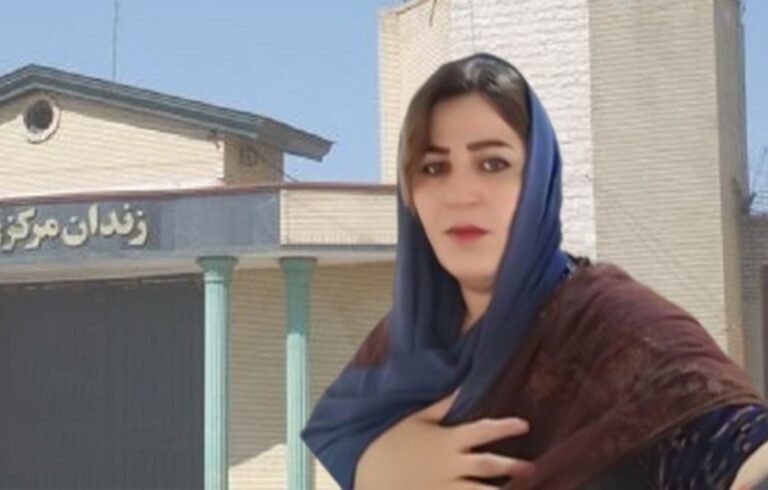
According to a report by the Hengaw Human Rights Organization, four months after the arrest of Golaleh Moradi, a Kurdish citizen from Iran’s Piranshar, she is still being held in the women’s ward of Urmia Central Prison and is denied access to an attorney.

According to a source familiar with Urmia Prison, Golaleh Moradi has been sent back and forth from prison to secret services detention center for interrogation and has been tortured and forced to sign a false confession, otherwise they will detain her two sons, who they had detained with her initially and threatened if she does not confess to what they want, her sons will face heavy consequences.

Golaleh Moradi was arrested by IRGC intelligence forces on Saturday, April 17, 2021, in connection with the killing of Osman Haji Hosseini a ranking member of the IRGC in Piranshahr, and transferred to Urmia. After 45 days of detention and interrogation she was transferred to the women’s cells of Urmia Central Prison.

Both sons of Golaleh Moradi, Taher Bazzazi (son-in-law of Osman Haji Hosseini) and 14-year-old Matin Bazzazi, were also arrested initially, but they were later released.

Osman Haji Hosseini was killed on Friday evening (April 16th) on Ziwieh Road, and shortly after a Kurdish opposition group called the “Eagles of the Zagros” took responsibility for the killing.

Iranian authorities continue to systematically deny individuals facing national security-related charges access to a lawyer at the investigation stage. In some cases, access is even denied at trial. Some defendants are tried in their absence because authorities fail either to notify them of their trial dates or transfer them from prison to court.

Many trials take place behind closed doors. Revolutionary Court judges show hostility towards defendants during court proceedings and treat the accusations of intelligence and security bodies as pre-established facts.

Forced “confessions” obtained under torture and other ill-treatment are broadcast on state television prior to trials and are consistently used as evidence by courts to issue convictions, even when defendants retract them.

Source: Hengaw Organization for Human Rights
Also read: Sexual Harassment And Torture: Amnesty Verdict On Iran Prison Videos

Iran appoints new atomic chief, darkening prospects for reviving nuclear pact

0

Injecting fresh uncertainty into stalled efforts to restore the Iran nuclear deal, Iran’s new president has appointed Mohammad Eslami, a U.N.-sanctioned engineer, as the nation’s top atomic official. He replaces Ali Akbar Salehi, a Massachusetts Institute of Technology–trained nuclear scientist who led the Atomic Energy Organization of Iran (AEOI) for the past 8 years.

Salehi and former U.S. Energy Secretary Ernest Moniz were the chief architects of the 2015 agreement, formally called the Joint Comprehensive Plan of Action (JCPOA), which restrained Iran’s efforts to produce the enriched uranium or plutonium needed for a nuclear weapon in return for relief from economic sanctions. “Salehi was such a crucial figure in getting the deal done that I can’t see any upside in his departure,” says Jeffrey Lewis, director of the East Asia Nonproliferation Project at the Middlebury Institute of International Studies at Monterey.

The Trump administration pulled out of the JCPOA in May 2018, after which Iran took several steps to resume nuclear activities prohibited under the agreement, including experimenting with advanced centrifuges to enrich uranium, reaching higher enrichment levels, and working uranium metal—a skill needed to build a bomb. U.S. President Joe Biden has vowed to rejoin the pact, but Iran remains at odds with the United States and other signatories, including China, France, Germany, Russia, the United Kingdom, and the European Union. The last round of talks in Vienna aiming to restore the JCPOA ended in June and Iran has not signaled whether it will commit to another round.

Iranian President Ebrahim Raisi replaced Salehi as part of a broader purge of moderate voices in the previous administration. (Raisi also replaced another key figure in JCPOA negotiations, Minister of Foreign Affairs Mohammad Javad Zarif.) Raisi appointed Eslami as AEOI’s president on 29 August; Eslami will also serve as one of Raisi’s vice presidents. Eslami, who earned civil engineering degrees from the University of Detroit and Ohio University, served as housing and transport minister in Iran’s previous administration.

Source: Science.org

Also Read: Gantz: Iran is two months away from nuclear bomb

Iran Defies U.S. Sanctions Sending Fuel To Lebanon

0

Iranian officials confirmed this week that they will send more fuel to Lebanon as needed, in spite of U.S. sanctions, to help alleviate Lebanon’s extreme fuel shortage. On Sunday, Lebanon’s Hezbollah leader, Hassan Nasrallah, said the first vessel shipping Iranian fuel had already sailed from Iran.

Yet, those who oppose Hezbollah, a Lebanese Shia Islamist political party and militant group deemed a terrorist organization by the European Union, are concerned about the potential for sanctions to be imposed as a result of the deal.

Lebanon’s economy has already endured exponential decline over the last two years, and would be further exacerbated by sanctions. “We will continue this process as long as Lebanon needs it,” argued Nasrallah in response to opposition. “The aim is to help all Lebanese, [not just] Hezbollah supporters or the Shia,” he added.

The fuel crisis has crippled Lebanon, leading to multiple eruptions of violence and severe power outages. In one case, a struggle over scarce fuel supplies descended into chaos involving guns, knives and a hand grenade, which left three men dead, Al Jazeera reports. Lebanon’s army has recently gone so far as seizing fuel from petrol stations in an effort to curb hoarding amid shortages.

Meanwhile, hospitals across the nation, which rely on private generators for power, may be forced to close on account of diesel scarcity. Amid the global COVID-19 pandemic, the consequences of hospital shutdowns will be dire.

Moreover, the national electric company has turned to rolling blackouts to minimize fuel consumption. According to Al Jazeera, it now delivers only one hour of electricity per day to homes and businesses. Lebanon’s economy is collapsing; the price of a gallon of fuel has increased 220 percent in the last year, yet the Lebanese pound has lost more than 90 percent of its value on the black market, and 78 percent of the population lives below the poverty line. “The situation is very hard, and we can’t handle it much longer,” Fadi Abu Shakra, a spokesman for fuel distributors, told a local station.

Source: The OWP

Also Read: Iran’s expansionism is the biggest threat to Lebanon’s sovereignty

IRGC Iron Fist in Iran Expedites The Collapse of Islamic Republic

Dissatisfaction with the sharp collapse of the Islamic Republic of Iran’s economy, the regime’s response to the Coronavirus crisis, the prevalence of unemployment, water shortages, and permanent blackouts in recent months have sparked protests across Iran.

While Iranians are protesting for their rights and pushing for their demands to be met, the security forces of the Islamic Republic have been mobilized to suppress protests and exercise their power by force.

According to Amnesty International, in the protests that began in November 2009 after a sudden and sharp rise in fuel prices across the country, the regime only carried out a brutal crackdown that left at least 304 people dead.

Recently, security forces shot dead at least 20 people during protests in Khuzestan on July 15. The protests spread to Tehran, Islamshahr, Karaj, Tabriz, and Isfahan, and were accompanied by smaller protests in several other cities.

The regime has relied heavily on the IRGC as well as the IRGC-affiliated Basij resistance force in recent and previous protests to suppress popular opposition.

However, observers have pointed out that the IRGC is under increasing pressure and that its arm abroad, the Quds Force, has almost reached the point of failure following the Iranian regime’s expansionist policies.

The IRGC’s Quds Force struggles with budget deficits as it tries to advance the regime’s agenda in Iraq, Syria, Yemen, Lebanon, and beyond, making it unable to pay affiliated militias adequate salaries or, in some cases, pay them at all.

Analysts, meanwhile, have questioned the effectiveness of Tehran’s military strategy and the overall readiness of Iran’s armed forces, calling Iran’s approach to military funding “problematic.”

The regime pays very little attention to the conventional armed forces, the army, and pays little respect to it, and the budget allocated to this force is much less than that of the IRGC, especially the Quds Force.

The Iranian regime’s prioritization of the IRGC has also led it to seize a large share of the country’s military budget, which is paid for by the Iranian people.

Observers say the issue has begun a vicious cycle that makes the regime’s poor priorities poorer and dissatisfaction increases. They added that until something changes, this cycle of opposition and repression will continue, which will exhaust the IRGC and weaken its ability to maintain order.

They added that this could eventually destabilize or even overthrow the Islamic Republic of Iran.

Source: Al-Mashareq
Also read: Sexual Harassment And Torture: Amnesty Verdict On Iran Prison Videos

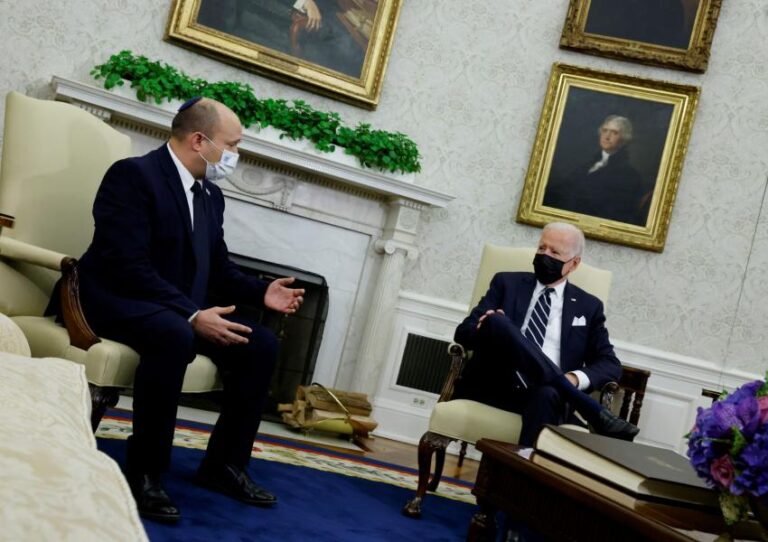
Biden Tells Bennett Diplomacy First, But ‘Other Options’ Exist With Iran

Delayed from Thursday because of the bombing at Kabul airport, the meeting of United States President Joe Biden and Israeli prime minister Naftali Bennett − the first of the two men in office − appeared a muted affair with neither willing to acknowledge differences over Iran.

While Bennett sought to move on from the assertive public style of predecessor Benjamin Netanyahu, he maintained an insistence on the threat from Tehran. “Iran is the world’s number one exporter of terror, instability and human rights violations, and as we sit here right now, the Iranians are spinning their centrifuges [enriching uranium] in the [atomic] plants in Fordow and we’ve got to stop them and we both agree,” Bennett said.

Bennett shares Netanyahu’s antipathy to Iran’s 2105 nuclear agreement with world powers, which the Biden wants to revive while continuing ‘maximum pressure’ sanctions introduced by President Donald Trump as he withdrew 2018 from the agreement, the JCPOA (Joint Comprehensive Plan of Action).

But difficulties in Vienna talks between Iran and world powers designed to revive the JCPOA have given Israel’s leadership the chance to seek common ground with the US.

Bennet claimed that he and Biden were developing a strategy based on two goals. “The first goal is to stop Iran on its regional aggression and start rolling them back into the box,” he said. “And the second is to permanently keep Iran away from ever being able to breakout a nuclear weapon.”

Biden spoke less in public about Iran than about Afghanistan, extending sympathy to the families of the 31 US servicepeople killed in Kabul. Chaotic scenes from the airport followed by Thursday’s carnage have dented Biden’s approval ratings.

Biden said he and Bennett were discussing “the threat from Iran and our commitment to ensure Iran never develops a nuclear weapon… We’re putting diplomacy first and we’ll see where that takes us. But if diplomacy fails, we’re ready to turn to other options.”

Source: Iran International

Also Read: Gantz: Iran is two months away from nuclear bomb

Sexual Harassment And Torture: Amnesty Verdict On Iran Prison Videos

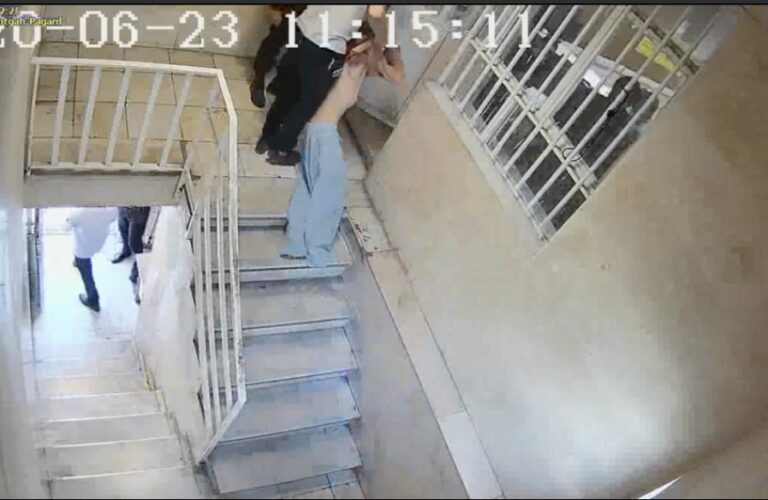
Hacked videos from security cameras at Tehran’s Evin prison offered “shocking visual evidence of beatings, sexual harassment, and deliberate neglect and ill-treatment of those in need of medical care,” Amnesty International said in a statement Wednesday. The footage offered a “rare glimpse of the cruelty regularly meted out to prisoners in Iran.”

Amnesty said it had analyzed 16 of the video clips, which were acquired by hackers and distributed this week to media outlets. “It is shocking to see what goes on inside the walls of Evin prison, but sadly the abuse depicted in these leaked video clips is just the tip of the iceberg of Iran’s torture epidemic,” said Heba Morayef, Amnesty’s Middle East and North Africa Regional Director.

Despite assurances of an investigation by Mohammad-Mehdi Haj-Mohammadi, head of Iran’s Prisons Organization, and Chief Justice Gholam-Hossein Mohseni-Ejei, Amnesty called the videos a “chilling reminder of the impunity granted to prison officials in Iran who subject those in their custody to torture and other cruel, inhumane, and degrading treatment.”

Morayef said that Haj-Mohammadi’s apology for any abuse and expression of appreciation for Iran’s “decent” prison officers gave the wrong impression that the guards’ behavior in the videos were “exceptional and the work of a few.” She insisted that “torture and other ill-treatment are far too widespread and systemic in Iran’s prisons and detention centers to be presented as the work of a few ‘bad apples’.”

Morayef urged Iran to immediately allow international monitors, including the United Nations Special Rapporteur on the situation of human rights in Iran, to conduct independent inspection of Evin and other prisons. Iran accuses UN of ‘double standards(link is external),’ including a suggestion that a previous rapporteur misjudged groups like Pejak, an armed Kurdish party that Tehran calls ‘terrorist’ and since 1992 has not allowed visits by

Of the 16 video clips reviewed by Amnesty International, seven show prison guards beating or otherwise ill-treating prisoners; three show overcrowded prison rooms; three show assaults on inmates by other inmates; two show incidents of self-harm; and one shows a solitary cell.

Many former and current prisoners have alleged more serious ill-treatment than shown in the videos. This includes physical and psychological torture, sexual abuse, and forced confessions in prisons including Evin, where the Revolutionary Guards runs its own wards for political and security prisoners.

Source: Iran International

Also Read: Iran confirms leaked footage of harsh conditions in Evin Prison