Home Blog Page 60

Meet Hossein Amir-Abdollahian, a Qassem Soleimani Acolyte, and Iran’s New Foreign Minister

0

Iran might have appointed its most powerful foreign minister to date. Hossein Amir-Abdollahian is a strong admirer of Qassem Soleimani, the former commander of the Quds Force of the Islamic Revolutionary Guard Corps who presided over Iran’s foreign policy in the Middle East for two decades. He is also close to Ali Khamenei, Iran’s supreme leader, and the IRGC. Abdollahian could usher in a new era of Iranian foreign policy.

Abdollahian is a diplomat and academic both in practice and theory with a long career in Iran’s foreign ministry, especially in the Middle East. Iran’s national TV has called him a distinguished diplomat in the axis of resistance. He is known as the new Soleimani in Iran. He has publicly expressed his admiration of Soleimani, as he has frequently venerated the commander on many occasions. Similar to Soleimani, his expertise is in the Middle East. Unlike his predecessor, Abdollahian is a Tehran-educated diplomat known for his aggressive attitudes towards the West.

Abdullohian enjoys the support of Iran’s supreme leader, President Ebrahim Raisi, and the IRGC. Foreign ministry candidates, while chosen by the president, are vetted first by the supreme leader. This gives you an indication of the direction Iran plans to follow regarding its foreign policy.

Abollahian has pledged to carefully follow in the footsteps of Soleimani and to devise Iran’s foreign policy in accordance with Soliemani’s way. Abdollahian is known for his uncompromising nature which makes him a natural fit. However, unlike Soleimani, who kept a low profile, Abdollahian is fond of the spotlight. His first foreign visit was to the site where Qassem Soleimani was killed near Baghdad’s airport. He has usually opposed Western intervention in Iran’s neighboring countries. He had also called the U.S. presence in Iraq and Syria a source of conflict and instability.

Abdollahian was more than a friend to Soleimani. He was Soleimani’s point-man at the foreign ministry when he was the deputy foreign minister for Arab and African Affairs from 2011 to 2016. When Javad Zarif became foreign minister, Soleimani asked him to keep Abdollahian in his position. However, in 2016 a squabble between Zarif and Soleimani led Zarif to fire Abdollahian. However, he was kept in policy loops when he became an advisor to Ali Ardeshir Larijani.

Source: International Policy Digest
Also Read: Iran’s New Cabinet Includes Two Fugitives Wanted in Connection With 1994 Bombing Atrocity at Buenos Aires Jewish Center

UN nuke watchdog: Iran pressing on with uranium enrichment

0

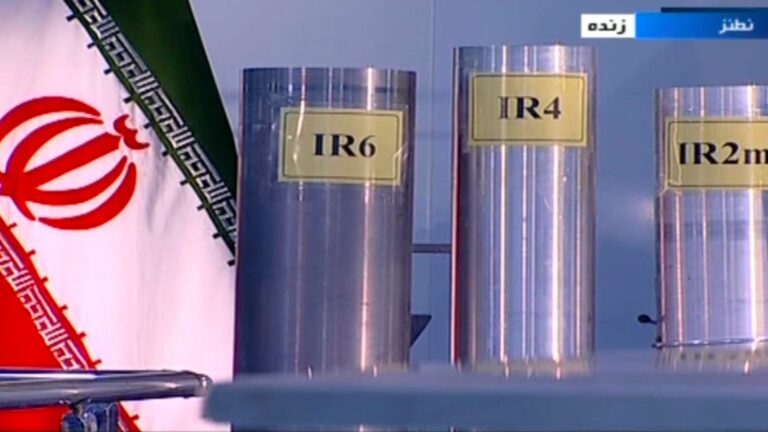
The U.N. atomic watchdog said on Tuesday that Iran has continued to increase its stockpile of highly enriched uranium that could be used to make nuclear weapons in contravention of a 2015 accord with world powers that was meant to contain Tehran’s nuclear program.

The International Atomic Energy Agency also told member states in its confidential quarterly report Tuesday that its verification and monitoring activities have been “seriously undermined” since February by Iran’s refusal to let inspectors access IAEA monitoring equipment.

The Vienna-based agency told members that its confidence in properly assessing Iran’s activities – what it called the “continuity of knowledge” – was declining over time and that would continue “unless the situation is immediately rectified by Iran”.

The IAEA said certain monitoring and surveillance equipment cannot be left for more than three months without being serviced. It was provided with access this month to four surveillance cameras installed at one site, but one of the cameras had been destroyed and a second had been severely damaged, the agency said.

Its director-general, Rafael Mariano Grossis, said he was willing to travel to Iran to meet the recently elected government for talks.

The agency said it estimates Iran’s stock of uranium enriched to up to 60% fissile purity at 10 kilograms, an increase of 7.6 kilograms since May, while the country’s stockpile of uranium enriched to up to 20% fissile purity is now estimated at 84.3 kilograms, up from 62.8 kilograms three months earlier.

Iran’s total stock of uranium is estimated at 2441.3 kilograms as of Aug. 30, down from 3241 kilograms on May 22, the agency said.

Tehran is only permitted to stockpile 202.8 kilograms of uranium under the nuclear deal known as the Joint Comprehensive Plan of Action, or JCPOA, which promises Iran economic incentives in exchange for limits on its nuclear program, and is meant to prevent Tehran from developing a nuclear bomb.

Source: The Baytown Sun

Also Read: U.S. Threatens Iran With New Sanctions If A Nuclear Deal Is Not Reached

Yemeni Houthi rebels admit Iran supplies missiles used to attack Saudi Arabia

0

A spokesperson for the Iran-backed Houthi forces in Yemen confirmed that all three missiles fired into Saudi territory on Sunday, causing serious damage, were made by the Islamic Republic of Iran.

Thus, it is proved once again that the Houthis in Yemen are fighting on behalf of the Islamic Republic of Iran, and their goal is to weaken the regime of Saudi Arabia and perhaps even overthrow them.

The Iranian regime continues to send missiles to the Houthis while the Islamic Republic’s ministry of foreign affairs has been trying for several months to improve its relations with the Riyadh government. The effort is now being pursued by Iran’s newly appointed foreign minister, Hossein Amir-Abdollahian, who is said to have had at least three secret talks with the Saudi foreign minister.

Upon his return to Iran, Amir-Abdollahian stated that one of the goals of the newly appointed Iranian president’s government is to continue providing assistance to the regime’s terrorist organizations across the region.

The Yemeni Iran-backed Houthi spokesman confirmed that the latest attack on Saudi territory was by Badr and Zulfiqar missiles, as well as Iranian drones called Samad.

The civil war in Yemen has been going on for more than four years now and may have cost the Iranian government more than $1 billion, but the Iran-aligned Houthis have not been able to gain control of much of Yemen.

Ruhollah Khomeini, the founder of the Islamic Republic of Iran, wrote in his book Kashf al-Asrar twenty years before he came to power, that the real Muslims should overthrow the Saudi family, who hold the key to Mecca and Medina, because they have a deviant Wahhabi religion and are a puppet of the United States of America.

Source: radis.org
Also read: Iran’s false claims about its role in Iraq debunked – IranBriefing

Iran’s false claims about its role in Iraq debunked

0

During his participation at the Al-Rafidain Center for Dialogue Forum held in Baghdad last week to discuss the volatile political and economic situation in Iraq, Iran’s ambassador to the country blatantly attempted to mislead global experts regarding Iranian policies there.

Ambassador Iraj Masjedi caused outrage because of his pompous attitude and false claims about Iran’s activities in Iraq. One Iraqi interlocutor expressed his contempt with frosty diplomatic politeness, saying: “We wish Iranian policy reflected what your excellency claimed.”

Two of Masjedi’s outrageous false claims, in particular, stunned and angered participants due to his sheer dishonesty. First, he insisted that Iran has not interfered in Iraqi affairs and has no proxies present there; and, second, he said that Iran is the only country expressing solidarity with Iraq and standing with it during difficult times.

In another ludicrous claim, Masjedi again attempted to mislead the participants, who were all experts fully aware of Iraq’s realities, by claiming that Iran provides Iraq with gas and electricity despite receiving no payment from Baghdad. Despite the presence of experts on Iraqi affairs, Masjedi spoke as if they had no idea about the tragic situation in Iraq, which Iran contributed to by turning it into a weak and divided country on all levels.

There is no better way to refute Masjedi’s ludicrous claims than citing the constitutional articles of the Velayat-e Faqih regime he represents and the official remarks made by its key figures.

Concerning Iran’s alleged non-interference in Iraq, some, if not most, of the participants were familiar with several Iranian constitutional clauses that permit interference in other countries. These include Paragraph 5 of Article 2, along with Articles 152 and 154, all of which legitimize “exporting the revolution” worldwide, and Articles 3 and 154, which legitimize “helping the vulnerable.”

The current commander-in-chief of Iran’s Islamic Revolutionary Guard Corps, Maj. Gen. Hossein Salami, stated in 2015, while he was deputy commander of the IRGC, that: “Officials in Iran never expected the rapid spread of the revolution beyond borders into Iraq, Syria, Lebanon, Bahrain, Palestine and Afghanistan.”

Source: Arabnews

Also Read: Shia cleric lashes out at Iran’s interference in Iraq

France demands Iran answer questions about ‘undeclared nuclear material’

0

France demanded Iran provide a full explanation about the presence of “undeclared nuclear material” in the country, the foreign ministry said on Monday.

“Iran must immediately provide the necessary full and technically credible explanations to the questions the Agency is asking about the presence of undeclared nuclear material in Iran,” a ministry spokesman said.

“We call on Iran to confirm to the International Atomic Energy Agency the continued implementation of temporary measures under the technical understanding reached between them. Any interruption would compromise the IAEA’s knowledge of Iran’s nuclear activities. Iran must immediately resume full cooperation with the IAEA,” the official added.

The IAEA had said in a report last month that Iran increased the purity of its refined uranium from 20 percent to 60 percent in April.

Uranium can be used to make the core of a nuclear bomb. Weapons grade uranium is approximately at 90 percent purity.

The move to enrich uranium to higher purity is a violation of the 2015 nuclear deal, which set a maximum limit of uranium purity enrichment at 3.67 percent.

Nuclear negotiations between Iran and the US and its Western allies have stalled under the presidency of Ebrahim Raisi who was sworn in last month.

The hardline president said on Saturday Iran was ready to hold talks regarding reviving the nuclear deal but not “under pressure” and with the ultimate goal of sanctions on his country being lifted.

Source: Alarabiya

Also Read: Iran’s new nuclear chief affiliated with IRGC and nuclear weapons program

The move to enrich uranium to higher purity is a violation of the 2015 nuclear deal, which set a maximum limit of uranium purity enrichment at 3.67 percent. Nuclear negotiations between Iran and the US and its Western allies have stalled under the presidency of Ebrahim Raisi who was sworn in last month. The hardline president said on Saturday Iran was ready to hold talks regarding reviving the nuclear deal but not “under pressure” and with the ultimate goal of sanctions on his country being lifted.

Iranian IRGC smuggling cultural antiquities to fund regional terrorism

0

Iran’s Islamic Revolutionary Guard Corps (IRGC) terrorist designated armed forces have become the central power of the smuggling mafia in the region, from smuggling drugs and fuel to weapons and antiques.

The presence of IRGC terrorist forces in the Middle East, from Syria and Iraq to Yemen and now Afghanistan, has led the terrorist force to expand its smuggling activities and use the proceeds to fund and spread terrorism in the Middle East.

As Iraqi cultural heritage experts clearly point out, terrorist groups affiliated with the Islamic Republic of Iran are involved in the smuggling of antiques in Iraq.

Euronews has published a report on the smuggling of antiques by groups supported by the IRGC terrorist forces, quoting Iraqi experts; The city of Amara, near the Iranian border, has become a hotbed of Iraqi historical artifacts, and Iraqi officials say the smuggling money goes to organized crime networks and terrorist groups affiliated with the Islamic Republic and IRGC.

Mojtaba Falahati Marvast, an archaeologist and former cultural heritage expert at the Kish Island Free Zone Organization, while pointing out that the IRGC’s presence in antiquities theft and smuggling projects in Iran has been raised many times, added; Direct theft from archeological excavation sites and museums, as well as smuggling of historical objects abroad and selling them to Gulf countries, are among the activities of this mafia terrorist organization to earn money through the illegal smuggle of antiques.

With the Taliban terrorist group taking control of Afghanistan, one of the group’s main sources of funding will certainly be the sale of historical artifacts and monuments, and the IRGC terrorist organization, which has had good and extensive relations with the Taliban for the past several years, will play an important role in smuggling Afghanistan’s cultural heritage out of the country.

Source: AvaToday
Also read: Iran’s ‘Axis of Resistance’ is more akin to ‘Axis of Terrorism’

Iran Charges Lawyers Protesting COVID-19 Negligence With ‘Disrupting Order’

Iran’s Judiciary spokesman said in a press conference on August 31 that lawyers who were detained in mid-August are charged with “disrupting order”.

According to a state-run judiciary website, the lawyers and civil activists were charged with “disrupting order” and other opposing state security charges. The spokesman said there were nine lawyers and civil activist detained, four of which were later released.    

On August 14, the Human Rights News Agency reported Arash Kikhsarvi, Mostafa Nili, Mehdi Mahmoudian, Mohammadreza Faqihi, Mohammad-Hadi Arefian Kaseb, Maryam Afrafaraz, and Leila Heidari were detained by security forces in Tehran. Their personal belongings including their smartphones were confiscated. Mehdi and Mostafa were detained in their office.

According to reports, the arrests were carried out without a warrant. Ali Mojtahedzadeh, an Iranian lawyer, said in a tweet on August 15 that the lawyers planned to sue Iranian officials for negligence related to the COVID-19 pandemic. Some reports said they planned to sue Iran’s Supreme Leader, Ali Khamenei.

Amnesty International also said in a tweet that they were arbitrarily detained for holding a meeting to discuss possible legal action in support of people’s right to lifesaving COVID-19 vaccines and that they must be immediately released.

The Human Rights News Agency wrote that Arash Kikhsarvi, Mostafa Nili, and Mehdi Mahmoudian were kept in Section 241 of Evin Prison and were banned from phone calls from the first day.

This is while Iranians are fed up with the COVID-19 mismanagement and negligence and are openly blaming Khamenei for the deaths of COVID-19 victims, who could have been saved if he had not banned the reputable US and UK-made vaccines.

On August 9, the CEO of Tehran’s Behesht Zahra cemetery said there were 41,591 COVID-19 victims buried in the cemetery, which accounts for 40% of the state-announced death toll.   

Iran’s Health Ministry put the death toll at 108,393 for yesterday. The National Council of Resistance of Iran, an opposition group that accuses the regime of lying about the number of deaths, said that the actual death toll was well over 399,000.

Source: Eurasia Review

Also Read: Human Rights Watch Blames Iran’s Government For Covid Crisis
 

NGO Calls For Release of Iran Journalist Arrested On Security Charges

0

In a statement Wednesday, the New York-based Committee to Protect Journalists (CPJ), an NGO, urged the Iranian authorities to release arrested journalist and labor activist, Amir-Abbas Azarmvand, and drop the security charges against him.

“Iran’s continued jailing of journalists for doing their jobs is an outrageous form of censorship that must end,” said Sherif Mansour, the CPJ’s Middle East and North Africa Program Coordinator.

CPJ in its statement said(link is external) it had emailed Alireza Miryousefi, head of media relations at Iran’s United Nations mission asking for a comment but had not received a reply. Iran Wire, a web-based news forum, cited Wednesday “an informed source” that intelligence ministry agents who arrested Azarmvand at his father’s house had a court order citing a charge of  ‘propaganda against the regime’ and had taken Azarmvand to Evin prison in Tehran.

Azarmvand, who has worked on labor stories for the SMT, an economics newspaper affiliated to the ministry of industry, mines and trade, has often criticized government policy. He was arrested in 2018 and 2020 over participating in labor protests.

In a statement Wednesday, the Syndicate of Workers of Tehran and Suburbs Bus Company (SWTSBC), one of Iran’s oldest trade unions and which has over 17,000 members, condemned Azarmvand’s arrest. Iran was ranked 174 out of 180 countries for the current year in the World Press Freedom Index compiled Reporters Without Borders (RSF).

Source: Iran International

Also Read: Iran arrests financial reporter Amir-Abbas Azarmvand on security charges

Iran’s ‘Axis of Resistance’ is more akin to ‘Axis of Terrorism’

The “Axis of Resistance” is a term used by the Islamic Republic of Iran for militias under its control, which are mainly funded, armed and directed by Iran’s terrorist designated Islamic Revolutionary Guard Corps (IRGC) Quds Force branch, the country’s extraterritorial operations arm.

Iran’s self-described “Axis of Resistance” however, is more akin to an “Axis of Terrorism” as it pursues policies that are detrimental to both regional and global security.

The term has been used over the years to refer to an alliance between Tehran and its affiliates, which most recently include Kataib Hizbullah and Asaib Ahl al-Haq in Iraq, Hizbullah in Lebanon and the Houthis in Yemen.

Such proxies are working on several fronts to impose the Islamic Republic’s hegemony and expansionist policies in the region. In return, Tehran provides its “axis” partners with all the money, weapons and support they need.

All this comes at the expense of the Iranian people, who are reeling from a severe economic crisis.

The threats posed by the Islamic Republic and its affiliates will likely become more serious under the presidency of new Iranian President Ebrahim Raisi.

The drone attack in late July on oil tanker Mercer Street in the Arabian Sea, near the coast of Oman that coincided with Raisi’s inauguration is a clear indication that the Iranian regime’s intent is to continue disturbing regional stability.

The Iranian regime insists on igniting wars and conflict in the region through its lackeys, and its people pay the price for its aggressive policy against its neighbours.

The Iranian public is livid today. Demonstrations are expanding across Iran to protest repression, discrimination, stifling economic conditions and neglect in providing public services.

The countdown for the downfall of the Iranian regime has started — a fall that will happen at the hands of its people, and it is now only a matter of time until it happens.

Source: Al-Mashareq
Also read: Lebanese continue the fight to weaken Iran-Hezbollah influence

Dozens of human rights violations reported in Iran’s Kurdish areas in August

At least one kolbar was killed and 13 wounded by Iranian forces in August, and at least 47 people were arrested, a human rights organization monitoring Kurdish areas of Iran said on Wednesday in their monthly report.

“In August, the Islamic Republic of Iran military forces killed at least one kolbar and wounded 13 in the western border areas of Kurdistan, Kermanshah, and West Azerbaijan provinces,” read the report from the Paris-based Kurdistan Human Rights Network (KHRN).

Two other kolbars died in a road accident and nine were injured “either in a road accident or falling from mountain heights.”  

Kolbars are semi-legal porters who transport untaxed goods across the Kurdistan Region-Iran border and sometimes the Iran-Turkey border. They are constantly targeted by Iranian border guards and are sometimes victims of natural disasters. Iran’s Kurdish provinces are among the poorest in the country and many kolbars are pushed into the profession by poverty and a lack of alternative employment.

In a recent report on the human rights situation in Iran, the United Nations raised concern over the “excessive use of force” against kolbars. “Reports estimate that around 70,000 Iranians, mostly of the Kurdish minority, depend on being a kolbar for sustenance, including women, many of them women heads of household,” the report read.

According to the UN, approximately 60 kolbars, including children, were killed and more than 170 injured in 2020.

KHRN also reported dozens of arrests in Kurdish provinces.

“Iranian police, Ministry of Intelligence, and the Islamic Revolutionary Guard Corps (IRGC) arrested at least 47 Kurdish civilians, activists, and former political prisoners in various cities in Kermanshah, Kurdistan, and West Azerbaijan provinces on political charges,” it stated. “Reportedly, security forces also detained three children in Javanrud, Kermanshah province. They were then released after several hours in detention.”

The monitor also reported the murders of three women in the cities of Mariwan, Sanandaj, and Saqqez, Kurdistan Province.

Source: RUDAW

Also Read: Iranian Kurdish citizen tortured into false confession of murdering IRGC agent