
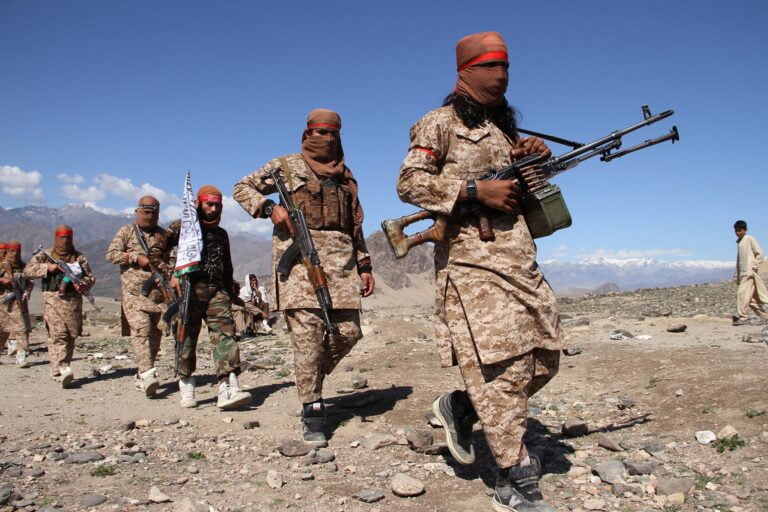
Following the Taliban’s capture of two more cities in Afghanistan on Thursday night, Iran’s Assistant Foreign Minister for South Asian Affairs tweeted that the Taliban is an “Islamic Emirate” and said they were committed to maintaining the security of the Iranian consulate.
The Islamic Emirate of Afghanistan refers to an Islamic state established by Taliban in September 1996, when they began their governance after capturing Afghanistan’s capital, Kabul.
Rasoul Mousavi, Iran’s assistant foreign minister for South Asia, said that ” Herat has come under the control of the Islamic Emirate [Taliban] forces.” I am in regular contact with them. “The [Taliban] governing forces are committed to the full security of the consulate, its diplomats and staff.”
The Ministry of Foreign Affairs of the Islamic Republic of Iran, as well as Mohammad Javad Zarif, have hosted Taliban leaders in Tehran several times before, and Ahmad Naderi, a member of Iran’s Islamic Consultative Assembly, referred to the Taliban as a “noble movement”. “The Taliban is one of the few noble movements in the region with a pure Pashtun background, and working with them can lead to the spread of stability in Afghan society and the prevention of the influence of groups such as ISIS,” he said.
The Iranian consulate in Mazar-e-Sharif is the same consulate where Taliban forces entered in August 23 years ago and killed eight diplomats of the Islamic Republic of Iran, as well as IRNA correspondent Mahmoud Saremi. However, the Ministry of Foreign Affairs of the Islamic Republic of Iran did not even mention the name “Taliban” in its statement on the anniversary of the massacre at the Iranian consulate in Mazar-e-Sharif this year.
Earlier, during the Taliban’s takeover of Nimroz province, a number of troops and several thousand people from Zaranj had sought refuge in Iran, but five days after their arrival, an Iranian newspaper reported that the Islamic Republic of Iran had repatriated all Afghan refugees.
According to the newspaper, after the fall of Zaranj city in Nimroz province, a group of Afghan government troops entered Iran through the border with military vehicles and equipment. Iran kept their equipment and vehicles and returned the refugees back to the Taliban against their will.
Source: Iran International
Also read: Iran fuming over British-Russian ambassadors restaged WWII image
Iran embraces Taliban by calling terror group the Islamic Emirate
Key Witness in Nouri’s Crimes Against Humanity Trial: Conviction Could Lead to Prosecution of President Raisi
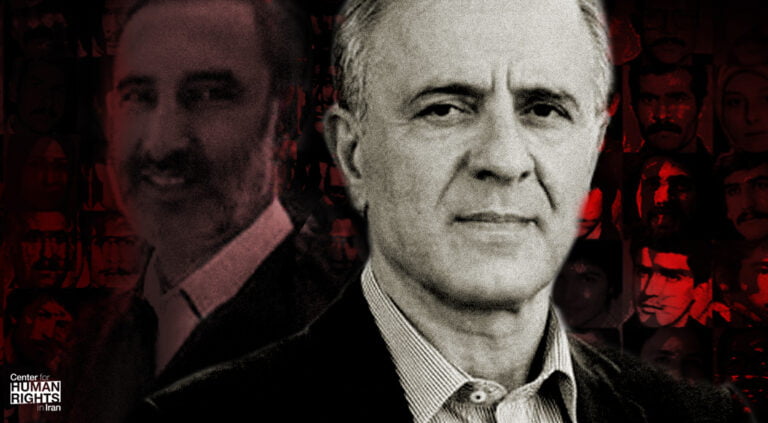
Hamid Nouri, a former prosecutor in Iran, went on trial in Sweden on August 10, 2021, for his alleged role in the executions of thousands of political prisoners in Iran in the 1980s.
According to the indictment brought by Swedish public prosecutors, Nouri, 60, is accused of “intentionally killing, together with other perpetrators, a large number of prisoners who sympathized with various left-wing groups and who were regarded as apostates” as well as “crimes against humanity.”
In July, the UN Special Rapporteur on the Situation of Human Rights in the Islamic Republic of Iran Javaid Rehman called for an impartial inquiry into the state-ordered mass executions, and the role newly inaugurated Iranian President Ebrahim Raisi played in those executions.
The historic trial against Nouri, which will hear testimonies from dozens of witnesses in 72 sessions, will be the first time that one of the worst crimes committed in the Islamic Republic of Iran will be thoroughly examined and exposed in a court of law.
Iraj Mesdaghi, a former political prisoner and key witness, has been instrumental in helping prosecutors bring the case to trial. Following is an interview by the Center for Human Rights in Iran (CHRI) with Mesadaghi that was translated into English from Persian.
Mesdaghi: Based on the principle of universal jurisdiction, Swedish authorities believe they have a duty to investigate this crime. They are very determined.
From the very start, some have unknowingly or maliciously spread doubts about this case and predicted Nouri’s early release. They said there’s not going to be a trial. Or they said those who helped get Nouri arrested will themselves be thrown into prison.
Nevertheless, we knew this was a very, very serious case. We even knew about the plan to arrest Nouri the day before he arrived in Sweden. We had talked with the case lawyer and had contacts with the police, who assured us the arrest would take place.
CHRI: What steps led to the arrest?
Source: Iran Human Rights
Also Read: Iranian official involved in illegal mass executions faces prosecution in Sweden
Iran’s Raisi Forms Cabinet Including Terror And Corruption Suspects
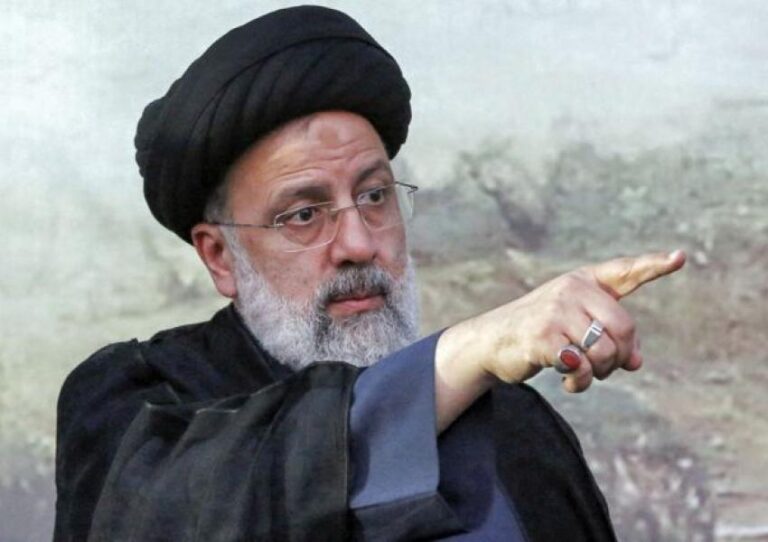
One week after he assumed office, Iran’s new President Ebrahim Raisi has introduced his cabinet ministers to the Parliament (Majles) for vote of confidence. Neary half of the list presented by Raisi were members of former ultraconservative President Mahmoud Ahmadinejad’s government between 2005 and 2013.
Earlier, Raisi had appointed Mohammad Mokhber, a long-time key member of Supreme Leader Ali Khamenei’s office, as his first vice president and Gholamhossein Esmaili as his chief of staff. Esmaili had the same post under Raisi when he was Judiciary chief during the past two years.
Wednesday morning, he introduced Massoud Mirkazemi(link is external), a former Revolutionary Guard officer who had served under Ahmadinejad as Oil Minister and Trade Minister and was (link is external)implicated in a major financial corruption case in the early 2010s, as the chairman of Iran’s Planning and Budget Organization.
Raisi’s Oil Minister Javad Owji was deputy oil minister under Ahmadinejad and has also worked with the notorious Mostazafan Foundation, a nominally charitable organization involved in large-scale commercial ventures. One of his populist ideas as deputy oil minister was laying an “Islamic Pipeline.”
The new Minister of the Interior is IRGC General Ahmad Vahidi, one of the founders of the Ministry of Intelligence and a former IRGC Qods Force Commander. There is reportedly an international arrest warrant against him(link is external) on charges of bombing of Argentine-Jewish Mutual Association in Buenos Aires in 1994. He was Ahmadinejad’s Defense Minister. He is also banned by the European Union for his role in Iran’s nuclear proliferation activities.
The new Intelligence Minister Esmail Khatib was for years the counter-intelligence chief of Iran’s Judiciary and has been a colleague of Raisi for nearly two decades. Khatib, a cleric, was Iran’s chief warden for several years. He has also served at the administration of the holy shrine in Mashad.
Source: Iran International
Also Read: Iran terrorist designated IRGC takes full control of new government
Iran fuming over British-Russian ambassadors restaged WWII image
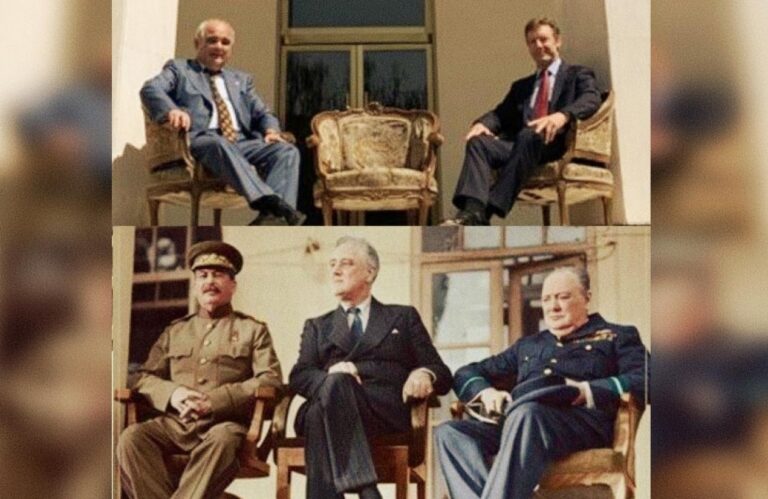
Iranian officials have expressed outrage over the Russian and British ambassadors’ recreation of an iconic WWII image taken during the Soviet-British occupation of the Islamic republic in 1943.
Russia’s Embassy in Tehran posted a photo Wednesday at the site of the Tehran conference where Soviet dictator Josef Stalin, U.S. President Franklin D. Roosevelt and British Prime Minister Winston Churchill met to discuss military strategies against Nazi Germany and Imperial Japan.
“Ambassador Levan Dzhagaryan’s meeting with the new head of the British diplomatic mission in Iran Simon Shercliff on the historical stair where the 1943 Tehran conference was held,” the photo caption said.
The Soviet Union and Britain invaded neutral Iran in 1941 to secure key supply routes amid the Nazi advance in the Caucasus. Soviet, British and U.S. troops withdrew from Iran in 1946.
Users responding to the photo on Twitter called it an “insult,” an echo of “colonialism” and a sign of plans for “regime change” in Iran.
The Iranian Foreign Ministry has summoned Dzhagaryan to protest the photo, Iran’s state-run Press TV broadcaster reported Thursday.
Iranian parliament speaker Mohammad-Baqer Qaibaf warned of “firm” retaliation unless Moscow, which maintains friendly ties with Iran, apologizes.
“Both ambassadors must swiftly issue an official apology, otherwise firm diplomatic action will be necessary,” the Parliament chief,” Press TV quoted Qaibaf as saying.
Iran’s outgoing Foreign Minister Mohammad Javad Zarif derided the Russian-British WWII image reacreation as “extremely inappropriate.”
“Need I remind all that Aug. 2021 is neither Aug. 1941 nor Dec. 1943,” Zarif tweeted. “The Iranian people have shown […] that their destiny can NEVER be subject to decisions in foreign embassies or by foreign powers.”
The Russian Embassy said Thursday that the photo-op did not carry “any anti-Iranian context.”
“We were not going to offend the feelings of the friendly Iranian people,” it said on Twitter.
Source: The Moscow Times
Also read: Iran terrorist designated IRGC takes full control of new government
Iran terrorist designated IRGC takes full control of new government

The names of the proposed ministers in the cabinet of Iran’s newly appointed president, Clergyman Ibrahim Ra’isi, show that almost all key government posts will be filled by people with a background in the Islamic Revolutionary Guard Corps (IRGC) terrorist designated organization.
Raisi’s election as president was a de facto appointment by Khamenei. The presidency is the perfect internship for the supreme leadership – a path Khamenei also followed before assuming the role. This is why expanding the IRGC’s power is in Raisi’s interest: Critically for Khamenei and his successor, the terrorist designated IRGC will play a vital role in smoothing the transition to the next supreme leader. In short, the Guard can be the kingmaker.
IRGC commanders have been slowly dominating Iran’s political scene throughout the years. This is despite the fact that Iran’s first supreme leader, Khomeini, openly spoke against any IRGC members or commanders entering politics.
Given that Ra’isi had said that he considered himself obedient to the Supreme Leader’s orders, now the ministers elected by him are all former IRGC high ranking officials and in close agreement with Khamenei and his announced policies in recent years.
The people nominated for the Ministry of Interior, Foreign Affairs, Roads and Urban Development, and Cultural Heritage and Tourism are all former IRGC commanders.
The nominee for the interior minister is Ahmad Vahidi, a former commander of the Quds Force, IRGC’s extraterritorial operations arm.
Raisi has also nominated a former commander of the Quds Force, Hossein Amir-Abdollahian, as Foreign Minister.
Culture Minister Mohammad Mehdi Esmaili was Raisi’s cultural adviser at the Judiciary and represented him at the state television’s supervisory board. Iranian media close to the IRGC have characterized Esmaili as a “revolutionary” figure.
The health minister proposed by the cabinet, in flattering Ali Khamenei, had spoken out in favor of a ban on the import of vaccines made in the United States and Britain and endorsed the policy set by the Supreme Leader.
Source: Iran International
Also read: Iran terrorist designated IRGC gains power with new hardliner president
Iran sending more weapons to Yemen’s Houthis amid cease-fire effort: Pentagon
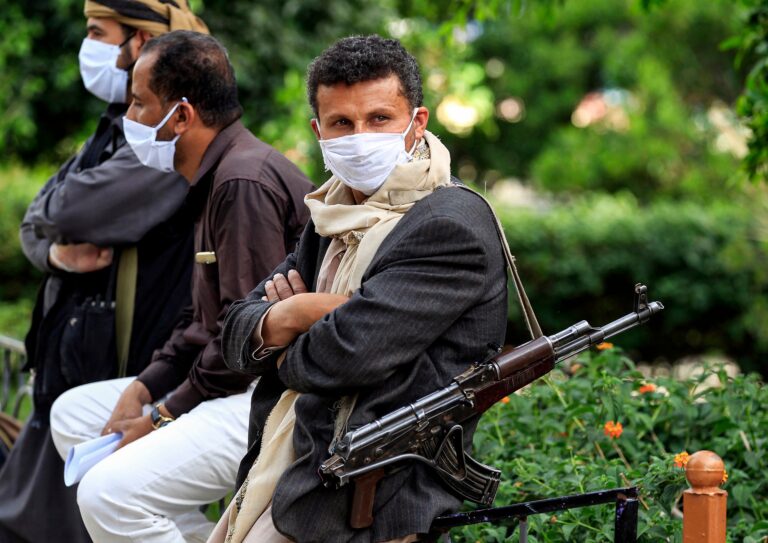
Tehran has been sending increasingly complex weapons to Yemen’s Houthi rebels even as Iranian officials have engaged in separate talks with the United States and Saudi Arabia about reducing tensions in the region, a top Pentagon official said Tuesday.
“In the Yemen context, we have seen more attacks from the Houthis launched at Saudi Arabia in the first half of this year than we have for several prior years,” Dana Stroul, the Pentagon’s top official for policy in the Middle East, told lawmakers on the Senate Foreign Relations Committee on Tuesday.
“Iran is increasing the lethality and complexity of both the equipment and the knowledge it transfers to the Houthis so that they can attack Saudi territory [and] Saudi civilians,” Stroul told lawmakers.
Yemen’s Houthi rebels, whom Western officials say have received support and training from Iran’s Islamic Revolutionary Guard Corps, have continued to launch ballistic missile and drone strikes into Saudi Arabia in recent years in response to the Riyadh-led military campaign in support of the Yemeni government. The technology also comes from Iran, American officials have said.
Stroul’s comments come as top Iranian and Saudi officials are reportedly set to meet in Baghdad along with other regional representatives later this month. Saudi and Iranian officials held preliminary talks focused alleviating tensions between their sides in Baghdad earlier this year.
Meanwhile, the diplomatic push led by the Biden administration to end Yemen’s civil war remains stalled. The Iran-linked Houthi rebels continue to ignore a cease-fire proposed by Saudi Arabia in March, pushing for further territorial gains on the ground after capturing a majority of Yemen’s population centers in recent years.
The Houthis have demanded a complete end to the Saudi-led blockade of Yemen, which rights’ groups say has worsened the war’s humanitarian crisis — the world’s worst, according to the United Nations.
The Biden administration is still counting on the rebels to come to the table for peace talks, Yemen envoy Timothy Lenderking told reporters Monday.
“The Houthis are not winning in Marib,” Lenderking said in reference to a stalemated rebel offensive against one of the last cities under government control.
Source: Al-Monitor
Also Read: US sanctions smuggling network financing IRGC and Houthis in Yemen
Iran: Security forces use ruthless force, mass arrests and torture to crush peaceful protests
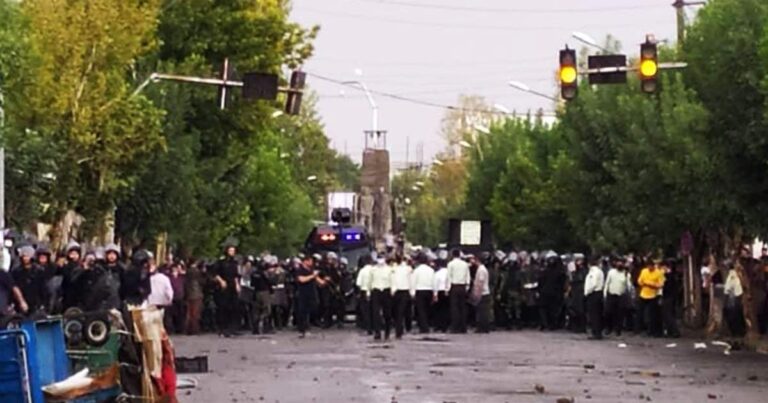
Iranian security forces resorted to unlawful use of force, including birdhsot, and mass arrests to ruthlessly crack down on predominately peaceful protests that have erupted in various locations across Iran in recent weeks, said Amnesty International. Activists, protesters and bystanders swept up in the wave of arrests, including, children have been subjected to enforced disappearance, torture and other ill-treatment.
According to photographs, footage circulated on social media and eyewitness accounts, security forces unlawfully fired birdshot at peaceful protesters from Iran’s Kurdish minority in the city of Naqadeh in Western Azerbaijan province on 7 August, leaving dozens of people injured. Witnesses told Amnesty International that most have refrained from seeking hospital treatment for fear of arrest, torture and other ill-treatment.
“The Iranian authorities have yet again given their security forces free rein to inflict severe bodily injury on protesters to maintain their iron grip on power and crush dissent. The fact that those injured are risking their lives and health by not seeking medical care in hospital due to fear of arbitrary arrest speaks volumes about the authorities’ cruel methods of torture and other ill-treatment used against arrested protesters,” said Diana Eltahawy, Deputy Director for the Middle East and North Africa at Amnesty International.
“It is high time the international community takes concrete action over the Iranian government’s repeated deadly deployment of unlawful force with impunity against protesters, including by supporting the establishment of an investigative and accountability mechanism at the UN Human Rights Council to collect evidence of crimes under international law and facilitate independent criminal proceedings.”
To disperse protests in Naqadeh on 7 August, security forces also fired tear gas and beat peaceful protesters with batons. Mohammad Alizadeh, a 27-year-old man, was also shot dead by a person in civilian clothes during the events.
Source: Amnesty International
Also Read: Iran cracks down on protesters demanding basic rights
Iran’s Khamenei says pandemic is top priority after banning western vaccines
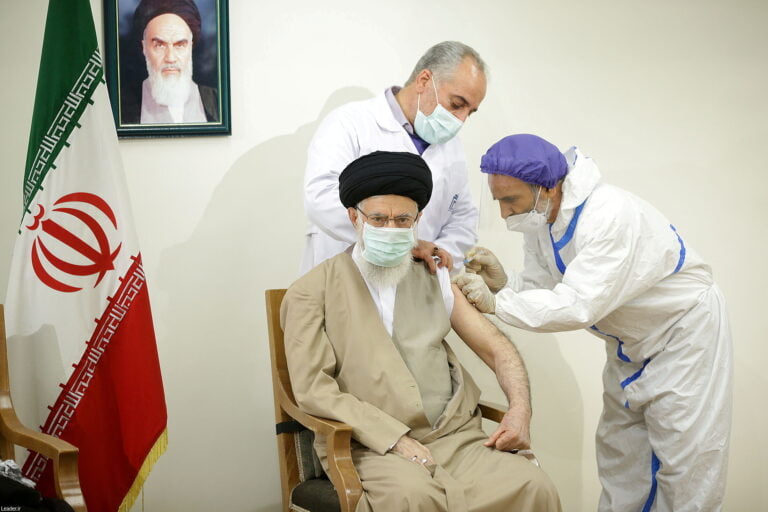
Iran’s supreme leader, Ali Khamenei, said on Wednesday the COVID-19 pandemic was the country’s “number-one problem” and must urgently be curbed.
Khamenei, who in January banned imports of U.S.- and British-made vaccines, said the government should “increase efforts to both import and to produce homegrown vaccines”.
Since the start of the pandemic, Iran has recorded nearly 4 million COVID-19 cases and more than 91,000 deaths as more than 500 people die daily — the highest numbers across the Middle East.
Dr. Mohammad-Reza Zafarghandi, chairman of Iran’s Medical Council, indirectly criticized the ban on U.S. and U.K.-made Covid-19 vaccines and wrote: “Will those who said vaccine imports should be restricted be accountable today?”
Iran has blamed U.S. sanctions for hampering purchases and deliveries of vaccines from other nations but food, medicine, and other humanitarian supplies are exempt from U.S. sanctions reimposed on Tehran in 2018 after then-President Donald Trump abandoned Iran’s 2015 nuclear deal with six world powers.
Authorities have said daily deaths might reach 800 in the coming weeks. Khamenei urged the nation to observe the ministry’s health protocols.
Iranian state media carried pictures of hospitals in several cities that have run out of beds for new patients. State TV said most of Iran’s 31 provinces have moved from the lower-risk orange level to red alert.
On January 8, 2021, Ayatollah Ali Khamenei, Iran’s supreme leader, said in a speech that “import of (Covid-19) vaccines made in the US and UK are prohibited.” In a tweet hidden by Twitter, Khamenei claimed that vaccines made in the US or the UK are “completely untrustworthy. It’s not unlikely they would want to contaminate other nations.” Following his statement, about 200 Iranian parliament members also called for banning the import of Covid-19 vaccines made in the US, the UK, and France.
Source: Reuters
Also read: Iran ex-president signals Trump had good reason to abandon nuclear deal
Israeli defense minister says the world must put an end to Iran
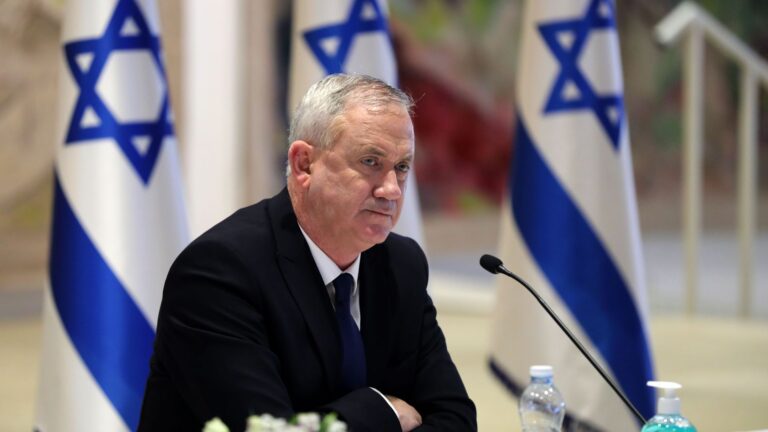
Iran is the greatest threat to the region and the world, said Israeli Defense Minister Benny Gantz on Tuesday.
“It is not possible to remain neutral while Iran is advancing in its nuclear project,” he said.
Gantz added that the world must put an end to Iran and Hezbollah and Israel alone can determine the equation.
The Israeli defense minister made his remarks hours after the Pentagon on Tuesday expressed “US and allied concern” about Iran’s destabilizing behavior as a threat to the region.
Evidence has shown that drones used in the attack on the Israeli-managed tanker off Oman’s coast on Thursday, which took the lives of British and Romanian crew, were made in Iran.
The report added that the tanker was targeted by two unsuccessful explosive drone attacks on the evening of July 29.
Investigators found small remnants of at least one of the drones used in the attack, adding that one of the drones was loaded with a military-grade explosive.
According to the investigating team, the Israeli tanker was attacked twice by Iranian drones.
In turn, Iran completely disavowed responsibility, and the spokesman for the Ministry of Foreign Affairs in Tehran, Saeed Khatibzadeh, described the spreading news as suspicious, denying reports that the ship might be hijacked by Iranian military forces or forces affiliated with Iran.
US Central Intelligence Agency director William Burns held talks in Israel on Wednesday with Prime Minister Naftali Bennett, with Iran high on their agenda, an Israeli statement said.
Announcing Burns’s visit, the statement said he met on Tuesday with David Barnea, the new head of Israel’s Mossad intelligence agency, to discuss Iran’s nuclear program “and other regional challenges.”
Burns, who was sworn in as CIA director in March, was expected to meet Palestinian officials, including President Mahmoud Abbas, in the city of Ramallah in the occupied West Bank.
Source: Al Arabiya
Also read: Iran media claim Israeli submarine, destroyers in Red Sea as tensions rise
Iran: 10 Prisoners Hanged In Two Days, 37 Executions In The Past 18 Days
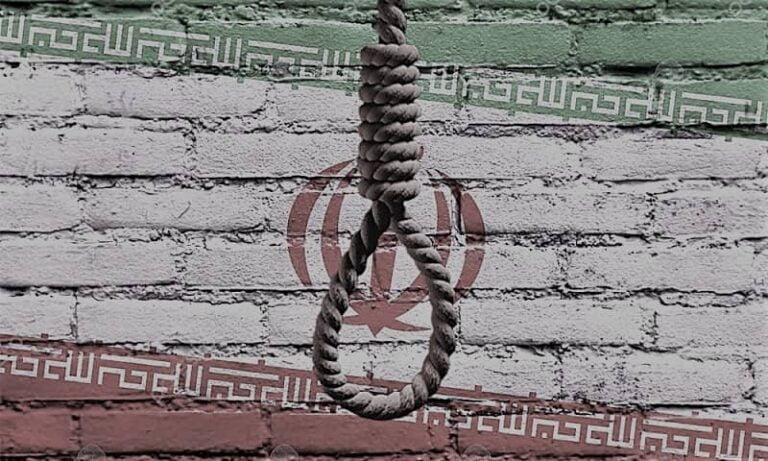
Three days after the inauguration of Ebrahim Raisi, the clerical regime hanged 10 prisoners in Iran. Nine prisoners were executed on Sunday, August 8, and another prisoner was executed on Monday, August 9. The regime hanged Nabi Noti Zehi and Ebrahim Ghanbarzehi, Zabihollah Hormozi, and Majid Goleh Bacheh, Azam Mohammad Hassani (Kiazehi), and Seyed Esmail Kurdtamini, along with three other prisoners in Kerman, Birjand and Isfahan prisons, respectively on Sunday. Afshar Minaei was executed in Dizel-Abad Prison in Kermanshah yesterday.
The mullahs’ regime has thus executed at least 37 people since July 23, 2021. Among those executed, Sajjad Sanjari was 15 years old at time of his arrest and hanged in Dizel-Abad Prison in Kermanshah on August 4, after spending 11 years in prison.
Meanwhile, on Monday, the Revolutionary Guards shot dead one porter and seriously wounded another in the Baneh (Kurdistan) border.
By intensifying repression and increasing executions, the clerical regime seeks to prevent the spread of popular uprisings and public outrage. But these repressive measures will not undermine the people’s resolve to overthrow this criminal regime.
The Iranian Resistance again urges the UN Secretary-General, the UN Human Rights Council, the UN High Commissioner for Human Rights, and European countries to take immediate action to save the lives of death row prisoners. It is time to refer the mullahs’ appalling human rights record of four decades of crime against humanity to the UN Security Council for the adoption of concrete and punitive measures.
Source: NCRI