Home Blog Page 66

US sanctions Iran-backed militias under weapons transfer ban

0

The US State Department issued a notice Monday of new sanctions against major Iran-backed militias in Syria and Iraq for violations of a US law that restricts weapons transfers involving Iran, Syria and North Korea.

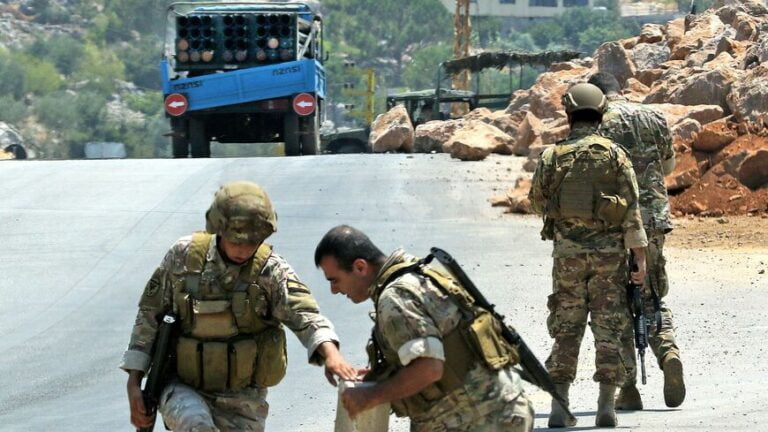
The sanctions target Kataib Hezbollah, Asaib Ahl al-Haq and Lebanese Hezbollah, all three of which receive backing from Iran’s Islamic Revolutionary Guard Corps (IRGC).

Two Syrian entities, Wael Issa Trading Establishment and Ayman Al Sabbagh Trading, as well as three Russian firms, Charter Green Light Moscow, Asia-Invest LLC and NPP Pulsar LLC, were also targeted. The ban forbids US government departments, agencies and personnel from signing contracts with or from providing licenses or government assistance to the organizations.

The State Department said the organizations were sanctioned July 29 under the Iran, North Korea and Syria Nonproliferation Act.

The law was introduced in 2000 to allow Washington to single out individuals and organizations that transfer internationally controlled weapons to or from Iran. The legislation was later updated to include Syria and North Korea.

The sanctions follow a series of drone attacks on sensitive US military and intelligence sites in Iraq in recent months. The attacks have reportedly alarmed US officials.

In the wake of the chaotic multinational war against the Islamic State, Kataib Hezbollah, Asaib Ahl al-Haq and Lebanese Hezbollah have developed into arms of the IRGC’s reach into war-ravaged Iraq and Syria.

Their rise to prominence has raised concerns in the United States, Israel and the Gulf that Iran’s ballistic, drone and cruise missile technology could further proliferate toward the borders of Tehran’s rivals in the region.

In Iraq, a series of sporadic rocket barrages have raised the stakes for the remaining 2,500 US troops in the country. The harassment, believed to be carried out by Iran-linked militias, has killed two US personnel this year and injured several others.

The attacks picked up after President Donald Trump ordered the head of the IRGC’s expeditionary Quds Force, Iranian Maj. Gen. Qasem Soleimani, killed in a drone strike in Baghdad. The assassination also killed the de facto head of Iraq’s Popular Mobilization Front militias, Abu Mahdi al-Muhandis, who had close ties to Soleimani.

Source: Al-Monitor

Also Read: Khamenei sends medical supplies to Hezbollah despite shortages in Iran


weapons transfer weapons transfer
Iran media claim Israeli submarine, destroyers in Red Sea as tensions rise

0

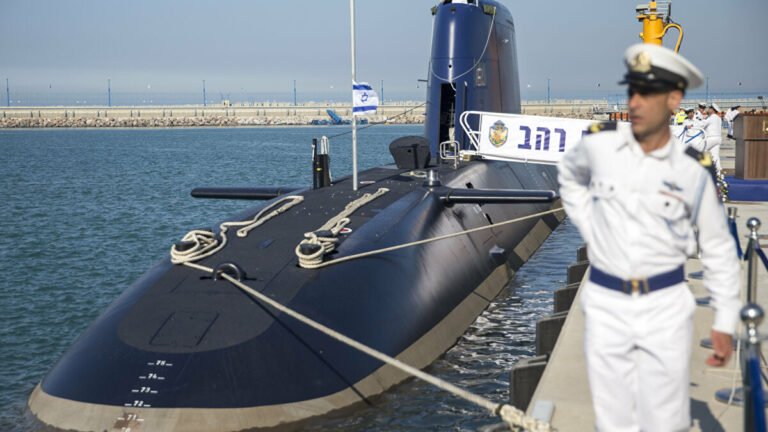
Iranian news portal Nournews, a mouthpiece of the ayatollah regime in Tehran, reported on Monday that an Israeli Dolphin-class submarine with two destroyers escorting it secretly entered the Red Sea last Wednesday, August 4, through the Suez Canal.

NourNews added that the Israeli move detected in the Red Sea was in the wake of “frenzy atmosphere-building over the Israeli oil tanker explosion” in the Sea of Oman.

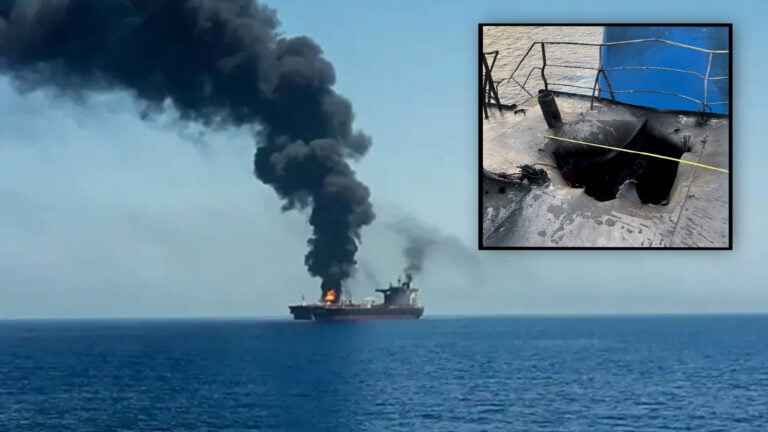
An Israeli-managed tanker, Mercer Street was hit by what appeared to be Iranian suicide drones on July 29, which the United States and Britain have said were Iranian made from fragments recovered onboard.

Israel immediately blamed Iran for the attack, followed by the United States, the United Kingdom and later by the European Union. The three have said there will be consequences for Iran, while Tehran has warned that it will strongly retaliate against any attack.

The Iranian news site interpreted the alleged naval deployment as being part of Israel’s threat to respond militarily to Tehran’s belligerence in the Persian Gulf, and claimed that the purpose of the move was to raise tensions in the region as a means of swaying public opinion in the US against a nuclear deal with the Islamic republic.

So far, an attempt at the Security Council by the UK has not resulted in any condemnation of Iran and it is not clear if what sort of response, if any, Israel is planning.

The NourNews report goes on to say that others are afraid of Iran’s ability to retaliate. “Western realist experts have come to the conclusion that Iran’s warnings of a firm response to any hostile action are not a verbal threat,” but based on Tehran’s will and capabilities, the website said.


Source: Iran International
Also read: Iran ex-president signals Trump had good reason to abandon nuclear deal

Iran ex-president signals Trump had good reason to abandon nuclear deal

0

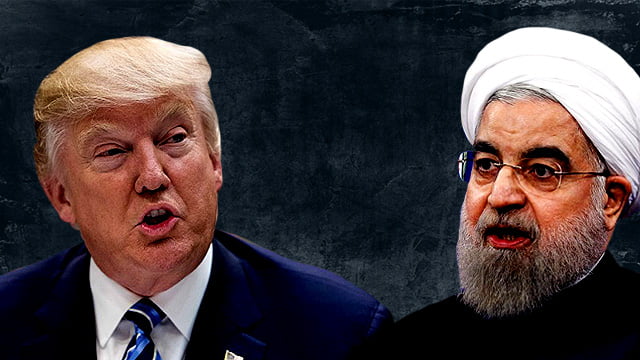
Iranian ex-President Hassan Rouhani’s final speech as the Islamic Republic’s chief executive on Sunday, August 1, 2021, drew negative comments on Iranian media outlets. But what was particularly notable in his speech was a comment about the reason for former US President Donald Trump’s withdrawal from the 2015 nuclear deal with Iran as a significant revelation that was long overdue due to the Iranian politician’s secretive nature.

Rouhani for the first time in two years admitted that Israeli agents stole Iran’s nuclear secrets and handed them over to Trump. Subsequently, he said, Trump pulled out of the deal also called the Joint Comprehensive Plan of Action (JCPOA).

In September 2018, former prime minister Benjamin Netanyahu revealed at the United Nations that Israel had stolen a large secret archive of Iran’s nuclear activities before 2003 that allegedly showed a nuclear weapons acquisition program.

Previously, members of the Rouhani administration, including the foreign ministry spokesmen, Foreign Minister Mohammad Zarif and Deputy Foreign Minister Abbas Araghchi, not only had denied the report about the compromised nuclear secrets, but they also ridiculed -then- Israeli Prime Minister Benjamin Netanyahu and claimed that somebody must have pulled his leg.

The Iranian president on his last day refused to further comment about the information within the stolen documents, but it is speculated they must have indicated that Iran was either not holding up its end of the deal or was dangerously close to achieving a nuclear bomb despite the limitations, hence leaving Trump with no choice but to withdraw from the agreement.

The Iran nuclear agreement, formally known as the Joint Comprehensive Plan of Action (JCPOA), is a landmark accord reached between Iran and several world powers, including the United States, in July 2015. Under its terms, Iran agreed to dismantle much of its nuclear program and open its facilities to more extensive international inspections in exchange for billions of dollars worth of sanctions relief.

Source: Iran International
Also read: EU, G7 condemn Iran attack on ship that killed British and Romanian crew

Dissident Abroad Threatened With Death By Iran Intelligence

Hengaw Iranian human rights organization announced Sunday that the family members of the chief editor of its website Arsalan Yarahmadi were questioned by Iran’s intelligence ministry agents who threatened to kill him if he did not stop his political activities.

Soleiman Yarahmadi and Omran Yarahmadi, father and brother of Arsalan were summoned on Sunday to the local intelligence ministry office in Kermanshah, Western Iran, where there is a large Kurdish population, and threatened for several hours.

Hengaw is an important news source on government arrests and intimidation of mainly Kurdish dissidents. Yarmohammadi lives abroad.

The statement said that agents asked Arsalan’s brother to bring his phone with him so they could call him during the interrogation. After they placed the call, they asked Yarahmadi to report on Hengaw website that a Kurdish political activist Musa Babakhani who was found dead in Erbil the day before, was killed because he raped three women, not by Iranian agents.

Babakhani, from Kermanshah was a member of the Central Committee of the Kurdistan Democratic Party (KDP), whose body discovered in a hotel in Erbil and assumed to have been killed by Iranian intelligence, that has killed or kidnapped hundreds of opponents and dissidents abroad in the past four decades.

Yarahmadi’s brother and father were forced to write a pledge and seal it with their fingerprints that they will “to either persuade him to stop all his activities, or he will lose his life.”

Source: Iran International

Also Read: Dissidents targeted by Iranian hacker Ferocious Kitten in a six-year surveillance campaign

Iran Aims to End Online Freedoms “for Good”

0

On July 31, 19 days into a strike, workers from the Haft Tappe sugarcane processing plant in southwest Iran took to the streets. The focus of their strike was delayed wages and poor working conditions. But they were also protesting against the Islamic Republic’s latest effort for curtailing online freedoms. “They fear the internet [since] they back the corrupt,” marching workers chanted in Khuzestan Province, southwest Iran.

The workers were reacting to the Iranian parliament’s decision to fast-track the introduction of a bill dubbed Cyberspace Users Rights Protection and Regulation of Key Online Services, widely referred to as the Protection Bill. (It’s available here in Persian.) If implemented, the bill—which has been in the making since 2018—is expected to curb access to the internet, invade users’ privacy, infringe net neutrality, and suppress freedom of speech in Iran. For years, Iran has been seen as constantly trying to emulate the more extreme censorship regimes of Russia and China. This bill would help the Islamic Republic set a new standard for other authoritarian states to follow.

Three days before the Haft Tappe demonstration, the Iranian members of parliament voted 121 to 74 in favor of invoking Article 85 of the Islamic Republic constitution to review and experimentally implement the bill. First, a select few MPs will review the legislation for two months behind closed doors, then they will send it to the Guardian Council—Iran’s constitutional watchdog—to be ratified. If it gets the greenlight from the Guardian Council, it will be “experimentally” enforced for up to five years, and later can be permanently ratified into law.

The internet is already heavily censored in Iran, which has about 57.4 million internet users in a total population of about 82 million. Facebook, Twitter and YouTube have been banned in Iran since 2009. Telegram, which has 49 million users in Iran, has been banned since 2018. Furthermore, over the past few months, the state has used throttling to disrupt access to WhatsApp, Instagram, and Clubhouse. WhatsApp and Instagram are respectively used by 50 million and 47 million people in Iran.

Source: Slate

Also Read: Iran to punish social media users, IRGC to police the Internet

Iranian Kurdish opposition official tortured and assassinated in Erbil

The body of a senior official from an Iranian Kurdish opposition party was found dead on Saturday in a hotel room in Erbil bearing signs of torture, according to a statement from the party accusing Iran of the murder.


Musa Babakhani was 39 years old and a native of Kermanshah, Iran. He had been a member of the Democratic Party for 20 years and was a member of the Central Committee at the party’s last congress.

Mousa Babakhani, a member of the party’s central committee “was assassinated at the hands of the Islamic Republic in Erbil,” the party’s media outlet published on Saturday. 

The statement added that Babakhani’s body was found at the Guli Sulaimani hotel in Erbil showing “serious marks of torture.” They claim the opposition leader was “kidnapped by two terrorists of the Islamic Republic on Thursday.”

This is not the first targeting of an official in the party. A senior commander of the party, Qadir Qadiri, was found dead in March 2018 in Hartal village, Ranya district, near Sulaimani’s border with Iran. He had been shot 21 times. The KDP-I claimed Qadiri killing was ordered by Iran’s Islamic Revolutionary Guard Corps (IRGC).

Erbil’s criminal court last week sentenced three people to death in relation to the murder. The other two convicted in the case did not confess to their involvement and were sentenced under Iraq’s penal code regarding giving false information or withholding information.

Iranian forces have sporadically shelled the Region’s border areas over the years, targeting bases belonging to the Kurdish opposition groups from Iran, including the KDP and KDP-I.

The IRGC fired surface-to-surface missiles in September 2018, striking the Kurdistan Region camps of the KDPI and KDP-I, while they were holding leadership meetings which killed 17 and injured 46. 

Source: Hengaw Organization for Human Rights
Also read: EU, G7 condemn Iran attack on ship that killed British and Romanian crew

EU, G7 condemn Iran attack on ship that killed British and Romanian crew

G7 foreign ministers have said “all available evidence clearly points to Iran” being behind a drone attack on July 29 against a tanker that killed British and Romanian nationals.

“This was a deliberate and targeted attack, and a clear violation of international law … There is no justification for this attack,” the ministers from the world’s seven most developed nations said in a statement on Friday.

The vessel was a Liberian-flagged, Japanese-owned petroleum products tanker managed by Israeli-owned Zodiac Maritime.

The EU’s High Representative for foreign policy, Josep Borrell, condemned “in strongest terms the unlawful attack committed on the merchant vessel Mercer Street, off Masirah Island in Oman as well.

“Such reckless and unilateral actions, against international law and threatening to international peace, are unacceptable and need to stop,” he added. “Freedom of navigation must be guaranteed in accordance with international law.

Iran’s deputy UN Ambassador Zahra Ershadi rejected the accusations that Tehran was behind the attack and warned against any retaliation: “Iran will not hesitate to defend itself and secure its national interests.”

Iran’s lack of responsibility for attacks it carries out is nothing new. In January 2020, after Iran fired missiles at a commercial plane and killing all 176 people on board, it initially denied shooting the plane for days, and then explained it was the result of the misalignments of a mobile missile battery after mounting evidence against it.

The US military, in a separate statement, said explosives experts from the Ronald Reagan aircraft carrier – which deployed to assist the Mercer Street – concluded the drone was produced in Iran.

It said the explosives experts were able to recover several pieces of a drone, including a part of the wing and internal components which it said were nearly identical to previously collected samples of Iranian attack drones.

Source: Al Jazeera | The Times of Israel
Also read: Toronto Marchers Demand Canada Take Iran to World Court Over Downed Flight

Iran Rights Activist Says EU Wrong To Attend Raisi Presidential Inauguration

Iranian human rights activist Narges Mohammadi has written to Enrique Mora, the European Union Deputy Foreign Representative, asking him not to participate in Thursday’s presidential inauguration of Ebrahim Raisi. “You are legitimizing a regime which, among many acts of violence against Iran’s people, engaged in a brutal crackdown against peaceful demonstrators in November 2019,” Mohammadi wrote in(link is external) a letter Wednesday.

Mohammadi, who was nominated in March for the Nobel Peace Prize by two Norwegian parliamentarians, advised Mora not to go to Iran. “If you travel to Tehran,” she wrote, “the regime will win another round in the eyes of the international community because you chose to provide it legitimacy when it has none from everyday Iranians who suffer, for among other reasons, not importing vaccines from the West to combat COVID-19.”

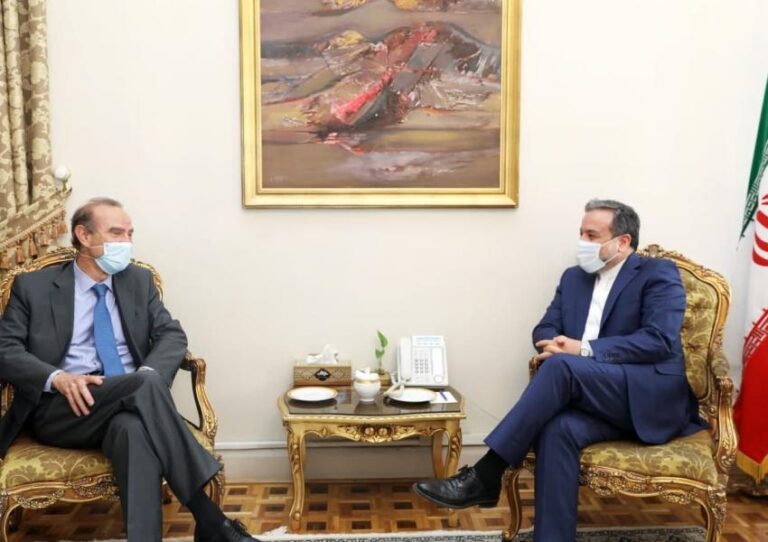
But Mora arrived in Tehran Wednesday and met with foreign ministry officials including Deputy Foreign Minister Abbas Araghchi, who had led the Iranian team in talks in Vienna since April over reviving Tehran’s 2015 nuclear deal with world powers, the JCPOA (Joint Comprehensive Plan of Action). Mora also saw outgoing foreign minister, Mohammad Javad Zarif, who has just published a book on the JCPOA.

Raisi, the former chief justice who won the controversial June 18 election, was certified by Supreme Leader Ali Khamenei on Tuesday and is sworn-in in parliament Thursday.

As a reason for Mora not to attended the inauguration, Mohammadi cited Iran’s management of Covid, specifically a ban announced by Khamenei in January on British- and US-made vaccines. “Why does the Iranian regime allow a western official to come to Iran for the inauguration of the president but does not allow vaccines to be imported?” she asked in an Instagram post(link is external) in Persian addressed to Mora Wednesday. “Let me answer, the first is to guarantee the survival of the regime and the second for the survival of the people.”

Source: Iran International

Also Read: Iran releases human rights activist Narges Mohammadi after sentence cut

Toronto Marchers Demand Canada Take Iran to World Court Over Downed Flight

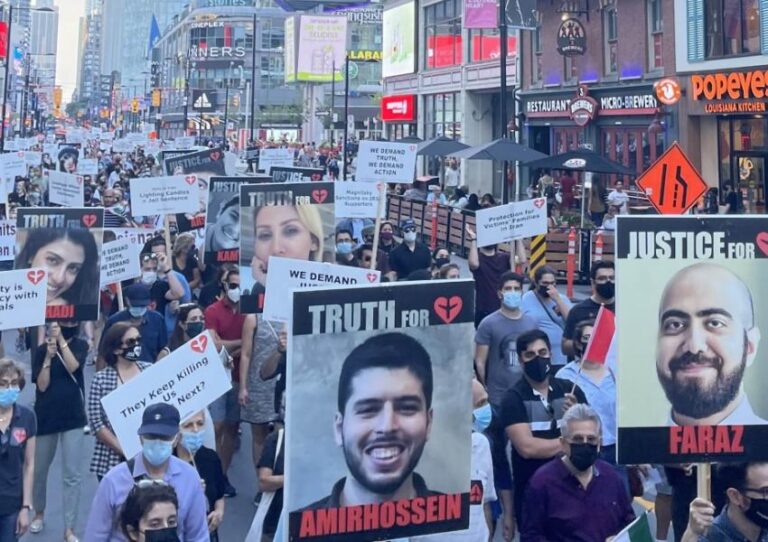
Hundreds marched in Toronto Thursday to demand the Canadian government pursue Iran’s downing of Ukrainian Airlines light PS752 in January 2020 at the International Civil Aviation Organization (ICAO) and launch a case at the International Court of Justice. The march and rally, going from Toronto’s Queen’s Park(link is external) to Nathan Philips Square(link is external), was organized by the Association of Families of Flight PS752 Victims (752AFV) and included members of the Canadian parliament.

“Justice is not negotiable,” Hamed Esmaeilion, Canada-based spokesman of an association representing some of the families of Iranian victims of the disaster, said in a speech(link is external). “We demand [the Canadian government] to launch a criminal investigation, end negotiations [with Iran] and take the matter up with ICAO…We will return to this square after a few weeks with more people if our demands are not met.” He accused ICAO of “total indifference” and said it had produced “neither condemnation, nor investigation or punishment of the culprits”.

ICAO is a United Nations agency(link is external) that adopts standards and protocols for air navigation and sets protocols for accident investigations. It does not itself routinely carry out investigations and is not a judicial body. The International Court of Justice is the UN’s judicial body, which arbitrates in disputes between member states.

Canada had dozens of citizens and permanent residents aboard the Ukrainian flight downed when an Iranian air-defense battery fired two missiles at the airliner after its take-off from Tehran’s Imam Khomeini Airport on January 8, 2020, at a time of military high alert after Iran fired missiles at US bases in Iraq in retaliation for a US drone strike in Baghdad that killed Iranian general Qasem Soleimani and nine others. Victims’ families condemn Iran’s government for not shutting down the airspace at a time of military tension.

All 176 people on board Ukrainian flight PS752 died. Iran initially denied it had shot down the plane, and then explained it as the result of the misalignments of a mobile missile battery. Tehran’s offer of $150,000 compensation has been dismissed by many relatives of victims.

Source: Iran International

Also Read: Canadian court rules Iran’s downing of Ukrainian plane was ‘act of terrorism’ 

Toronto

Iran terrorist designated IRGC gains power with new hardliner president

0

Ebrahim Raisi, who assumes Iran’s presidency on 5 August after the country’s June 2021 election, has set his eyes on further empowering the terrorist designated IRGC organization with key ministerial and bureaucratic positions likely to be awarded to guardsmen under his new government.

The Iranian president is presently the subject of US sanctions for human rights abuses including a brutal crackdown on Iran’s Green Movement protests in 2009 and mass execution of political activists.

Raisi’s election as president was a de facto appointment by Khamenei. The presidency is the perfect internship for the supreme leadership – a path Khamenei also followed before assuming the role.

This is why expanding the IRGC’s power is in Raisi’s interest: Critically for Khamenei and his successor, the terrorist designated IRGC will play a vital role in smoothing the transition to the next supreme leader. In short, the Guard can be the kingmaker.

The aging ayatollah is in the process of securing the foundations of a post-Khamenei Islamic Republic to ensure the survival of his hard-line Islamist regime after his death.

The supreme leader has been laying the ground for his successor, who, according to all signs so far, will be his former student, the 60-year-old hard-line cleric Raisi.

Human rights lawyer Geoffrey Robertson, who wrote a groundbreaking report on the 1988 Iranian prison massacres, has predicted Mr. Raisi will be a stay-at-home President of Iran because of the threat of arrest and prosecution owing to his role in the killings.

“We now have an international criminal as president of the state of Iran,” Mr. Robertson said after Mr. Raisi’s election victory.

“If he ever ventures out of Iran, any democratic country would be entitled under universal jurisdiction to arrest him and put him on trial.”

Mr. Raisi is expected to resume talks on the 2015 nuclear deal but has previously said he will not meet US president Joe Biden.

Source: Institute for Global Change
Also read: Khamenei sends medical supplies to Hezbollah despite shortages in Iran