Home Blog Page 67

Khamenei sends medical supplies to Hezbollah despite shortages in Iran

Hezbollah Secretary Hassan Nasrallah announced yesterday that the “Hezbollah brothers” were currently in Iran to import fuel and medicine from Iran to help the Lebanese people.

Nasrallah talks about the import of fuel and medicine by land or sea from Iran, while patients in Iran are facing a shortage of medicine and the lack of the simplest injectable serums. The coronavirus infects thousands and kills hundreds on a daily basis.

The Islamic Republic of Iran continues to prioritize its militia and proxy groups in the region over the lives and wellbeing of its own citizens, as it has for the past 4 decades.

Hezbollah’s announcement of Iranian medical supplies came as Lebanese protesters marching on the anniversary of the Beirut port blast on Wednesday demanded an end to Iranian influence in Lebanon.

Anti-Iran and anti-Hezbollah slogans could be heard from the crowds on the anniversary of the deadly blast that killed more than 200 people and left thousands more injured.

Meanwhile, security forces fired tear gas at anti-government protesters demonstrating outside the Lebanese parliament building.

Many experts believe that the current critical situation in Lebanon is in fact due to the intervention of the Islamic Republic and Hezbollah in the internal affairs of the country.

Hezbollah has repeatedly stated openly and publicly that Hezbollah’s financial and equipment resources are provided by the Islamic Republic of Iran.

On the other hand, the economic situation coupled with the coronavirus pandemic in Iran is at a very critical stage. The majority of Iranians face shortages of medicine, water, electricity, and basic facilities. In many cities, strikes and trade union and labor protests are taking place, and popular protests against water and electricity shortages are being quickly suppressed in the most violent way.

Source: Radio Liberty
Also read: Iran’s air defense missiles in full combat readiness fearing Israeli retaliation
‘Iran out:’ Anti-Hezbollah protesters march in Lebanon on Beirut blast anniversary

0

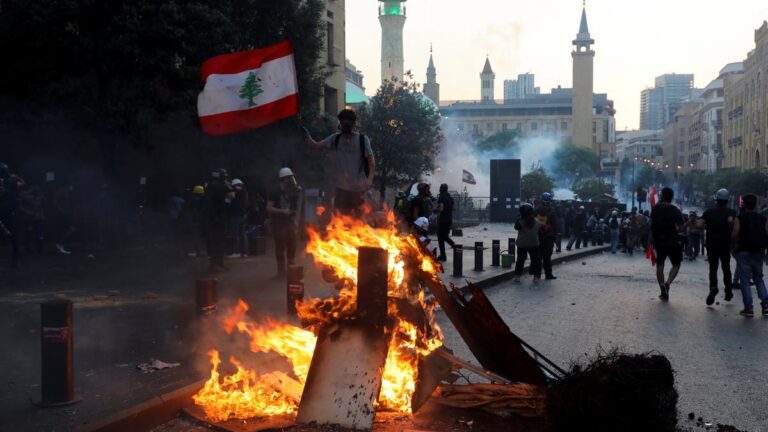
Protesters marching on the anniversary of the Beirut port blast on Wednesday demanded an end to Iranian influence in Lebanon.

Demonstrators headed towards the capital’s Martyr’s Square at around 7 p.m. local time waving Lebanese flags and chanting “Iran out, Iran out,” according to BBC Persia.

Anti-Iran and anti-Hezbollah slogans could be heard from the crowds on the anniversary of the deadly blast that killed more than 200 people and left thousands more injured.

Meanwhile, security forces fired tear gas at anti-government protesters demonstrating outside the Lebanese parliament building.

Tensions have been mounting in the crisis-stricken country over what many believe is the government’s failure to fully investigate the blast.

The port explosion, considered one of the biggest non-nuclear blasts ever recorded, happened when more than 552 tons of ammonium nitrate stored in a grain silo in the city centre caught fire.

It leveled buildings within a two-mile radius.

Source: Al-Arabiya

Also Read: Iran’s expansionism is the biggest threat to Lebanon’s sovereignty

Why Iran’s new social media bill may threaten livelihoods

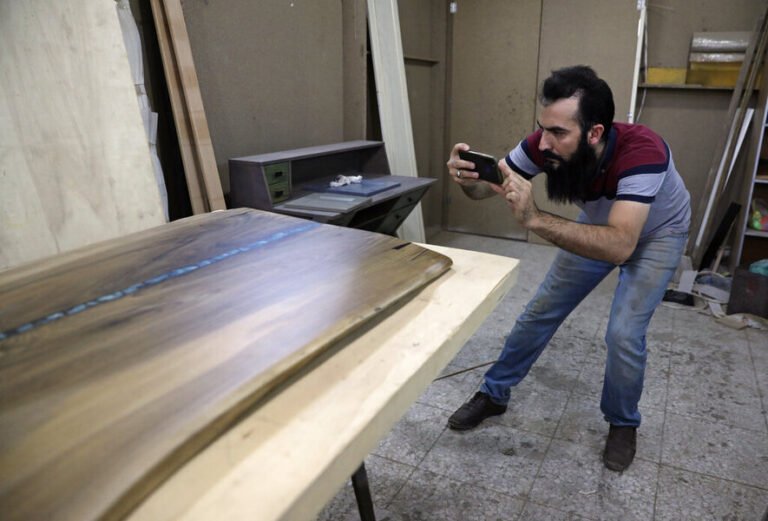
For Ali Hedieloo, who makes wooden furniture in Iran’s capital, Instagram is more than just a surfeit of glossy images. Like an estimated 1 million other Iranians, it’s how he finds customers, as the app has exploded into a massive e-commerce service in the sanctions-hit country.

But now, the social media platform has come under threat. Iran moved last week toward further government restrictions on Instagram and other apps, as hardline lawmakers agreed to discuss a bill that many fear will undermine communication, wipe out livelihoods and open the door to the banning of key social media tools.

“I and the people working here are likely to lose our jobs if this bill becomes effective,” said Mr. Hedieloo from his dimly lit workshop in the southern suburbs of Tehran, where he sands bleached wood and snaps photos of adorned desks to advertise.

The bill has yet to be approved by Iran’s hard-liner dominated parliament, but it is already stirring anxiety among young Iranians, avid social media users, online business owners, and entrepreneurs. Iran is a country with some 94 million internet devices in use among its over 80 million people. Nearly 70% of Iran’s population uses smartphones.

Over 900,000 Iranians have signed a petition opposing the bill. The protest comes at a tense time for Iran, with Ebrahim Raisi, the former judiciary chief and hardline protege of Supreme Leader Ayatollah Ali Khamenei, assuming the country’s highest civilian position this week. Journalists, civil society advocates, and government critics have raised the alarm about the possible increase of social repression once he takes office.

The draft legislation, first proposed this spring by conservative lawmakers, requires major foreign tech giants such as Facebook to register with the Iranian government and be subject to its oversight and data ownership rules.

Source: CS Monitor

Also Read: Iran to punish social media users, IRGC to police the Internet

Iran sentences two dual nationals to over 10 years in prison each

An Iranian Revolutionary Court has sentenced two dual nationals, German-Iranian Nahid Taghavi and British-Iranian Mehran Raouf, to more than 10 years in prison, each on national security charges, their lawyer said on Wednesday.

Iran’s elite Revolutionary Guards have arrested dozens of dual nationals and foreigners in recent years, mostly on espionage and security-related charges.

They have accused the Islamic Republic of trying to win concessions from other countries through arrests on security charges that may have been trumped up. Tehran, which does not recognise dual nationality, say such arrests are based on its criminal code and denies holding people for political reasons.

In a Twitter post, the two defendants’ lawyer Mostafa Nili said: “Branch 26 of the Revolutionary Court sentenced Ms. #Nahid_Taghavi and Mr. #Mehran_Raouf to 10 years in prison for participating in the management of an illegal group and to eight months in prison for propaganda activities against the regime.”

The Islamic Republic’s judiciary has yet to report the sentences. But Taghavi’s daughter Mariam Claren tweeted a confirmation of her sentence. Nili did not say whether Taghavi and Raouf had entered pleas in response to the charges.

Taghavi, 66, a human rights activist who lives in Germany but retained an apartment in Tehran, was arrested there in October 2020 while on a visit. Her trial began on April 28, according to Claren and human rights groups.

“My mother was allowed to see her brothers. They hugged her. Her first hug after almost 7 months,” Claren tweeted on April 28.

A German Foreign Ministry spokesman said during a regular news conference in Berlin on Wednesday that Germany could not extend consular assistance to Taghavi as she was on trial in her home country.

Source: Reuters

Also Read: British-Iranian dual national flees Iran on foot over mountains

Iran: Secret execution of young man arrested at 15 a cruel assault on child rights

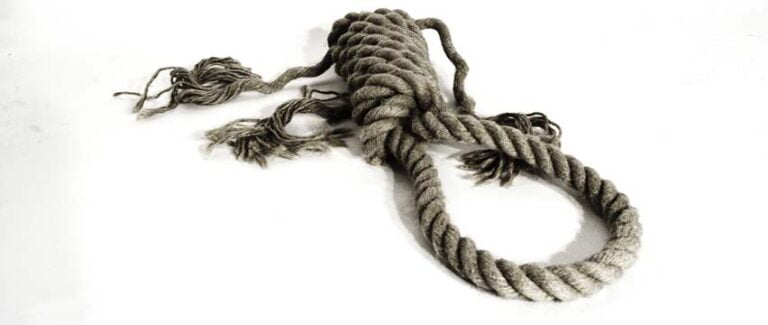
Iranian authorities have secretly executed a young man who was a child at the time of his arrest and had spent nearly a decade on death row, Amnesty International has learned. Sajad Sanjari was hanged in Dizelabad prison in Kermanshah province at dawn on 2 August, but his family were not told until a prison official asked them to collect his body later that day.

In August 2010, police arrested Sajad Sanjari, who was then 15, over the fatal stabbing of a man. Sajad Sanjari said the man had tried to rape him and claimed he had acted in self-defence, but in 2012 he was convicted of murder and sentenced to death.

“With the secret execution of Sajad Sanjari, the Iranian authorities have yet again demonstrated the utter cruelty of their juvenile justice system. The use of the death penalty against people who were under 18 at the time of the crime is absolutely prohibited under international law, and constitutes a cruel assault on child rights,” said Diana Eltahawy, Deputy Director for the Middle East and North Africa at Amnesty International.

“The fact that Sajad Sanjari was executed in secret, denying him and his family even the chance to say goodbye, consolidates an alarming pattern of the Iranian authorities carrying out executions in secret or at short notice to minimize the chances of public and private interventions to save people’s lives. We urge the Iranian authorities to put an end to these abhorrent violations of the right to life and children’s rights by amending the penal code to ban the use of the death penalty against anyone who was under 18 at the time of the crime immediately.”

Sajad Sanjari was first convicted and sentenced to death in January 2012. During his trial he admitted stabbing the deceased but said he had done so in self-defence after the man tried to rape him. He said the man had threatened to attack him the previous day, so he carried a kitchen knife to scare him away.

Source: Amnesty International 

Also Read: Iran official defends execution of minors

Iran’s air defense missiles in full combat readiness fearing Israeli retaliation
0

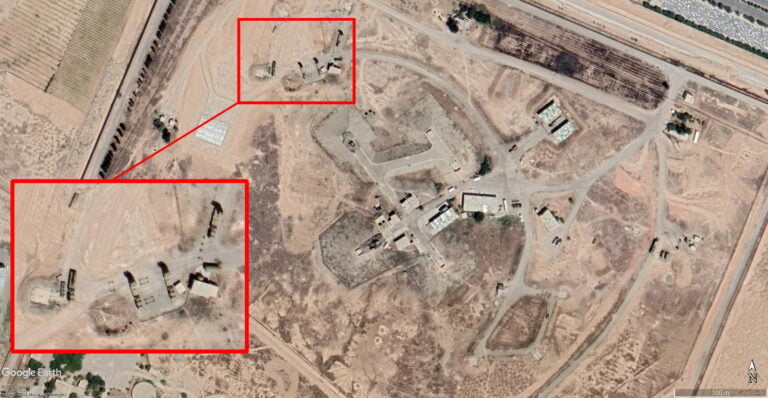
On Tuesday morning August 3rd, 2021, Iran brought its air defense missiles system into full combat readiness, to face any potential Israeli missile or air retaliatory attack on its capital.

The airspace of Iran’s capital was closed to all military and civilian aircraft between 10 to 12 in the afternoon, and 12 airports in several other provinces were shut down to prevent the Islamic Revolutionary Guard Corps’ (IRGC) Tor missile defense system from mistakenly shooting down civilian aircraft.

Unprecedented preparations by Iran’s army, and its terrorist designated organization IRGC, to protect Tehran’s airspace during the inauguration of President-elect Ebrahim Raisi by Khamenei, went into place as the Israeli Defense Forces are rumored to be planning a retaliatory operation against a potential target on Iranian soil.

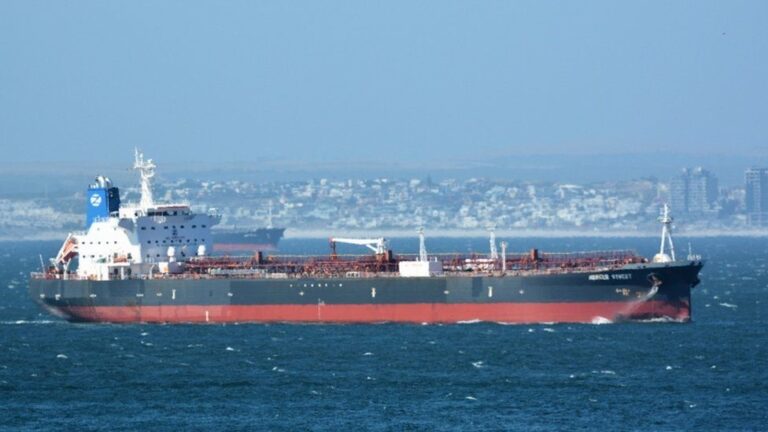
Israel’s rumored retaliatory operation would be in response to Iran’s drone strike on an oil tanker in the North Arabian Sea belonging to an Israeli financier; An attack that killed two British and Romanian crew members.

Any retaliatory Israeli attack on a target or targets in Tehran could be accompanied by the use of suicide drones flying over Iran; UAVs similar to those used to attack a uranium enrichment centrifuge plant near Karaj on June 23, 2021.

It is not clear exactly what military response the Israeli defense force has in response to the IRGC attack on its oil carrier.

Russian sources say that if Israel launches an attack on Iranian targets, it could happen within 24 hours. Russia has an interest in following such developments, as it will expect to receive more information and an assessment of the resistance of its Tor and S-300 Favorit air defense missiles systems, which are in service in Iran, in the event of an Israeli attack.

Source: Independent
Also read: Tanker attack: UK and US blame Iran for deadly ship attack

Iran’s Ex-Environment Chief Says Khuzestan Wetlands Dried For Oil

0

Masoumeh Ebtekar, former head of Iran’s Department of Environment (DoE), has backed claims on television from other officials that the Supreme National Security Council (SNSC) in 2010 ordered the draining of the Hur al-Azim wetlands, which straddle the border between Iran’s Khuzestan province and southern Iraq, to facilitate the development of oil fields.

In a Twitter post Friday, Ebtekar who has been vice-president in women’s affairs since 2017 under President Hassan Rouhani and headed the DoE both under President Mohammad Khatami 1997-2005 and 2013-2017 under Rouhani, wrote that the DoE had previously agreed to oil exploration in the wetland only if damage, including its drying, could be avoided. But according to Ebtekar, in 2010, during the presidency of Mahmoud Ahmadinejad, rivers were diverted so as not to flow into the wetlands.

Ebtekar posted a video clip of recent television interviews with the deputy head of the DoE Ahmad-Reza Lahijanzadeh and deputy welfare minister Ahmad Midari stating that the SNSC had ordered the wetlands dried despite the DoE’s objection.

Lahijanzadeh said in the interview that the decision was made as Chinese companies carrying out the work were not ready to deploy more costly technologies that had been used by the Japanese in the development of Azadegan and Yadavaran oil fields prior to quitting the projects due to international sanctions.

Lahijanzadeh said the technology used by the Japanese companies did not require drying out the wetlands. Midari said that “officials” at the time believed drying the wetlands could create employment, but they had no consideration for environmental consequences.

One of the first steps taken by the Rouhani administration in 2013 was to again allow waters flow to the wetland − which Ebtekar in said in 2015 had been at that time completely dry − to prevent dust storms.

Source: Iran International

Also Read: At least 12 killed, hundreds detained by Iran during anti-regime protests


Three More Iranian Human Rights Attorneys Slapped with Unjust Prison Sentences

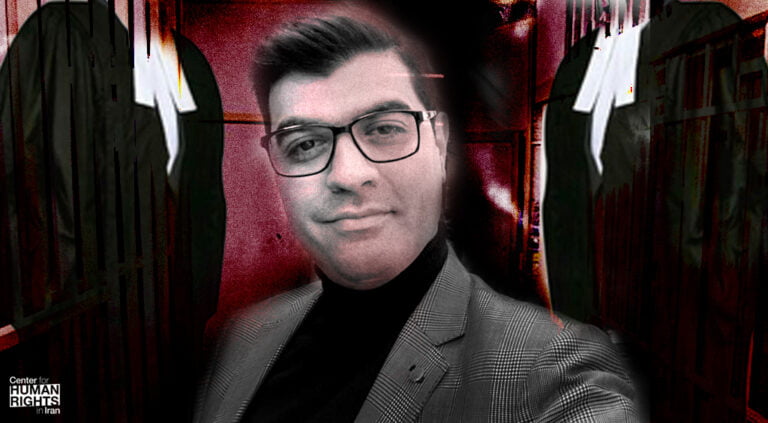
Three more human rights attorneys in Iran were handed unjust prison sentences in July 2021 amid an ongoing campaign to eliminate due process for activists and dissidents by intimidating the lawyers who defend them, the Center for Human Rights in Iran (CHRI) has learned.

At least four defense lawyers were imprisoned in the country on trumped-up charges as of August 2021 (Nasrin Sotoudeh, Mohammad Najafi, Soheila Hejab, and Giti Pourfazel), and at least two additional lawyers (Farzaneh Zilabi and Mohammad Hadi Erfanian-Kaseb) were prosecuted on false charges in June 2021.

Javad Alikordi, a defense attorney and law professor, was taken to Vakilabad Prison in Mashhad, northeastern Iran, on July 15, 2021, to begin serving a two-year prison sentence for running a Telegram messaging app social media channel.

Any peaceful action, including appearing in public without your headscarf if you are a woman, or promoting human rights as a defense attorney can be prosecuted as a national security crime in Iran, where the state is not only trying to eliminate all forms of dissent and criticism of its policies but also imprisons the lawyers who try to defend activists.

Alikordi, a former member of the City Council in Sabzevar, Khorasan Razavi Province, was arrested by Intelligence Ministry agents in Mashhad on April 22, 2020, and held in solitary confinement for more than a month.

He was tried at Branch 4 of the Revolutionary Court in Mashhad presided by Judge Mansouri [first name unknown] at an unknown date and convicted of “creating and managing a channel on Telegram (messaging app) with the intention of overthrowing the state” (6.5 years in prison), “insulting the supreme leader” (1.5 years), and “propaganda against the state” (eight months).

Upon appeal, his 6.5-year prison sentence for “creating and managing a channel on Telegram (messaging app) with the intention of overthrowing the state” was reduced to two years in prison, the length of time he must remain behind bars according to Article 134 of Iran’s Islamic Penal Code.

Source: Iran Human Rights 

Also Read: More Defense Attorneys Prosecuted in Iran for Defending Human Rights

Iranian regime crackdown on demonstrators seeking basic rights

As the Iranian regime funnels money to Islamic Revolutionary Guard Corps (IRGC) a terrorist organization and its proxies, the Iranian people are protesting the hardships and shortages they face at home.

Security forces have fatally shot dozens of unarmed civilians during protests that erupted in Khuzestan on July 15, and have since spread to Tehran, Karaj, Tabriz and Esfahan, along with smaller protests in a few other cities.

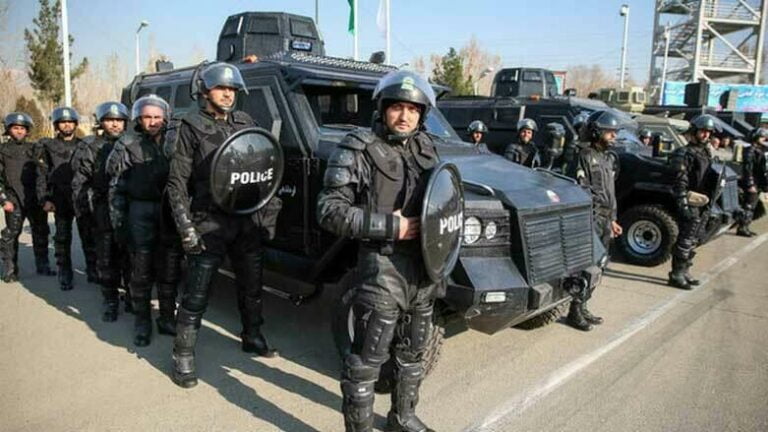
Tehran has deployed special riot police and has brought additional IRGC forces to the region.

Chants of “Down with the Dictator” and “Death to Khamenei” (Iran’s supreme leader) were heard at many protests, including those in central Tehran.

On Tuesday (July 27), protesters took to the streets in Baharestan near Esfahan, where they tore up and burned a banner of Khamenei in the town square.

One of the main slogans chanted in protests that have roiled the country over the past two years is “Neither Gaza nor Lebanon; I would die for Iran”, in a clear sign of discontent with the regime’s misplaced priorities.

Iran’s regional interference and expansionist policies have cost the Iranian people dearly, with many expressing anger that money funneled to the IRGC’s Quds Force and its regional proxies could have been better spent at home.

Even on the brink of bankruptcy, Tehran continues to interfere in the region and to fund and train its proxy groups in Iraq, Lebanon, Yemen and Syria.

Meanwhile, the Iranian people are enduring extreme economic hardship that has only worsened with the coronavirus pandemic.

Ahvaz’s Arab minority has long protested the regime’s policies that it says aim to displace them and are focused on suppressing the Ahvazi people. But these are few and far between compared to the magnitude of the recent popular protests.

The majority of the population is asking for water, work, vaccines and proper medical care.

But instead of addressing their demands, the regime has suppressed the protests via violent crackdowns and by disrupting internet service to block communication with the outside world.

Source: Al-Mashareq
Also read: Tanker attack: UK and US blame Iran for deadly ship attack

Tanker attack: UK and US blame Iran for deadly ship attack

0

The UK and US believe Iran was behind a tanker attack that killed two people, and have vowed to respond, calling it a violation of international law.

The MV Mercer Street, operated by an Israeli-owned firm, was attacked off Oman on Thursday.
A British national and a Romanian citizen were killed.

The statements came after Israel’s Prime Minister Naftali Bennett said there was “evidence” that its longstanding foe Iran was responsible.

Mr Bennett warned that “we know how to send a message to Iran in our own way”, while Tehran rejected what it called the “baseless accusations”.

On Monday, Iran warned the UK, US and Israel that any actions in response to the drone attack on the tanker “will be met with a severe and decisive answer”.

The attack on the MV Mercer Street appears to be the latest escalation in an undeclared “shadow war” between Israel and Iran.

For months there have been several attacks on both Israeli and Iranian-operated vessels, which are seen as tit-for-tat incidents, though casualties are rare.

Iran has also accused Israel of targeting its nuclear sites and scientists.

In a statement on Sunday, UK Foreign Secretary Dominic Raab said London believed Iran had used one or more drones against the MV Mercer Street, calling it “deliberate, targeted, and a clear violation of international law”.

“Iran must end such attacks, and vessels must be allowed to navigate freely,” he added.

US Secretary of State Antony Blinken said Washington was also “confident that Iran conducted this”, and that an “appropriate response” would follow.

Israel’s Prime Minister said he expected the international community to make clear to Iran that it had made a serious mistake.

Iran’s foreign ministry spokesman, Saeed Khatibzadeh, told reporters that “the Zionist regime (Israel) has created insecurity, terror and violence”.

He said Israel “must stop such baseless accusations”, warning: “Whoever sows the wind reaps the whirlwind.”

Source:  BBC

Also Read: Secret files show alleged Iranian plans to sink ships using cyberattacks