Home Blog Page 68

Iran cracks down on protesters demanding basic rights

“I swear to God I am unemployed; don’t shoot. I’m here only to demand my rights!”

In a 30-second video circulating on social media, a young resident of impoverished Khuzestan, Iran, pleads for his life as the Iranian regime’s anti-riot forces attempt to disperse a crowd protesting the water crisis in the province.

Security forces have fatally shot at least four people during protests that erupted in Khuzestan on July 15, and have since spread to Tehran, Karaj, Tabriz and Esfahan, along with smaller protests in a few other cities.

Tehran has deployed special riot police and has brought additional Islamic Revolutionary Guard Corps (IRGC) forces to the region.

Chants of “Down with the Dictator” and “Death to [Ali] Khamenei” (Iran’s supreme leader) were heard at many protests, including those in central Tehran.

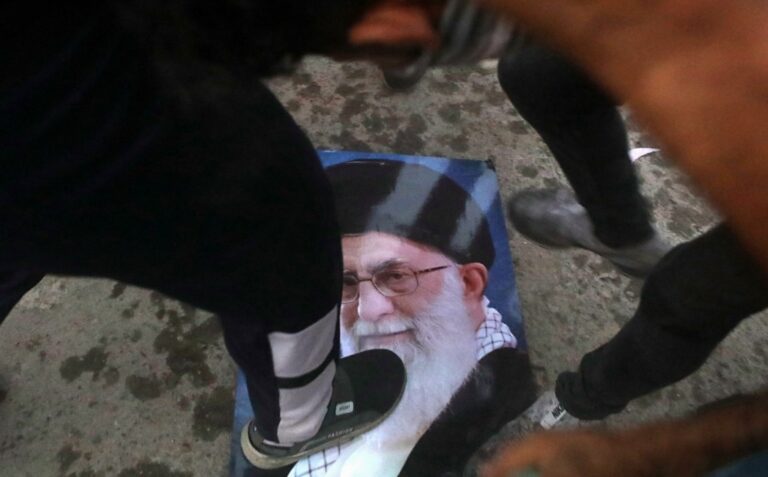
On Tuesday (July 27), protesters took to the streets in Baharestan near Esfahan, where they tore up and burned a banner of Khamenei in the town square.

One of the main slogans chanted in protests that have roiled the country over the past two years is “Neither Gaza nor Lebanon; I would die for Iran”, in a clear sign of discontent with the regime’s misplaced priorities.

Iran’s regional interference and expansionist policies have cost the Iranian people dearly, with many expressing anger that money funneled to the IRGC’s Quds Force and its regional proxies could have been better spent at home.

People pay the price

Even on the brink of bankruptcy, Tehran continues to interfere in the region, and to fund and train its proxy groups in Iraq, Lebanon, Yemen and Syria.

Meanwhile, the Iranian people are enduring extreme economic hardship that has only worsened with the coronavirus pandemic, observers say.

Faced with unemployment, severe stagflation, gross mismanagement of the pandemic and lies and denials about vaccination strategy, Iranians have been braving the extreme heat to gather in protest, despite the crackdown.

Source: Diyaruna

Also Read: Arrests Continue In Khuzestan Amid Internet Blackout

Cracks down Cracks down Cracks down
Arrests Continue In Khuzestan Amid Internet Blackout

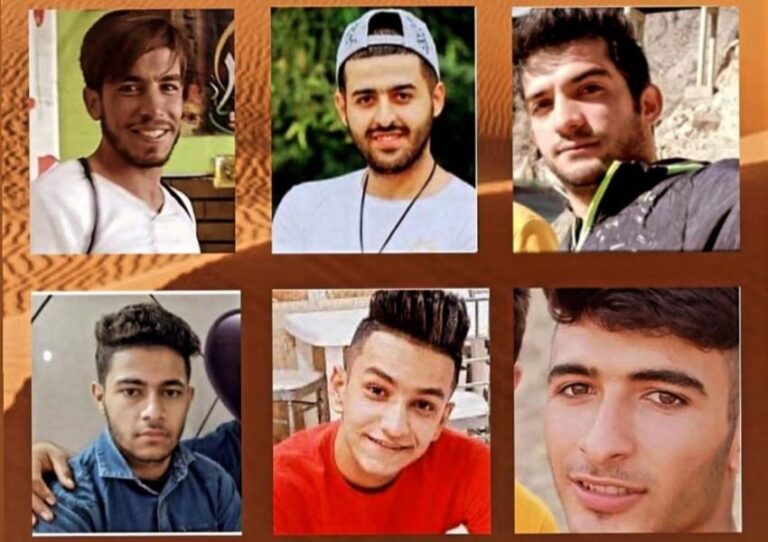
Iran’s social media users report continued arrests, including the arrest of minors, in Iran’s Khuzestan province amid an Internet blackout in the region. The blackout has seriously hampered the flow of information and videos of protests and arrests from the region in the past few days.

Karim Hosseini, a principlist member of parliament from Ahvaz, Khuzestan province, told the Iranian Labour News Agency (ILNA) Thursday said he and others were working for the release of those arrested in recent protests who had not broken the law.

“There is no precise information on the number of [minor] detainees, but we are working for people from all age groups to be released if they [participated in the protests peacefully and] haven’t committed crimes,” he said, responding to a question about the arrest of minors and the setting of onerous bail terms.

In a statement issued in Beirut Thursday, Human Rights Watch (HRW) said human rights groups had verified the identities of nine people who had been shot dead or had died of injuries including a 17-year-old boy, during protests in Khuzestan and Lorestan provinces. HRW urged Iranian authorities to “immediately and unconditionally release peaceful protesters, provide information about deaths and allow an independent international investigation into security agencies’ use of lethal force.”

Human Rights Watch cited reports from Amnesty International and the Amsterdam-based Radio Zamaneh naming three others said to have been killed. Authorities in Iran have confirmed the deaths of five, including a police officer.

Referring to a July 21 statement by Ali Shamkhani, secretary of Iran’s Supreme National Security Council (SNSC), and a July 25 report by the judiciary’s news agency, Mizan News, that promised the release of peaceful protesters, HRW said it had previously documented cases of Iran’s judiciary using vaguely defined ‘national security’ charges to prosecute peaceful dissent and subjected detainees to mistreatment, torture, and unfair trials.

Source: Iran International

Also Read: At least 12 killed, hundreds detained by Iran during anti-regime protests

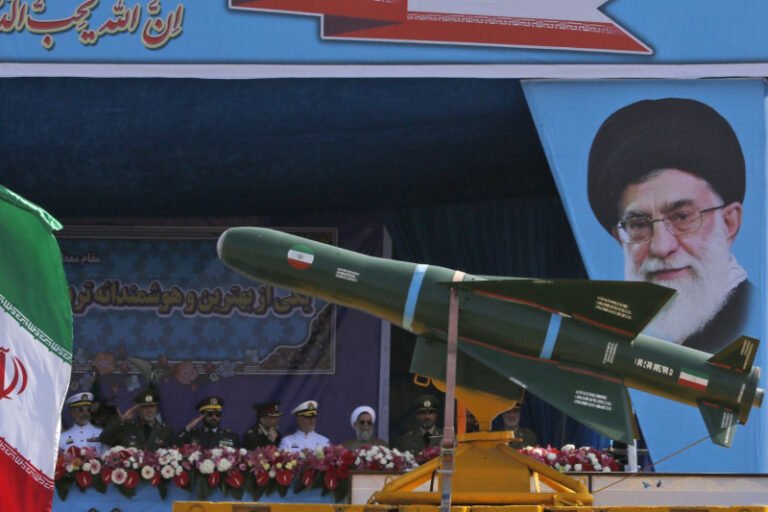
Iran’s missile and drone program to receive heavier sanctions

0

The Wall Street Journal reported on Thursday that the Biden administration plans to impose new sanctions on Iran’s missile and drone programs.

The new sanctions package is in response to growing US concerns about the threats that Iran’s advanced military equipment poses to US troops and their allies in the region.

The new sanctions package targets Iran’s procurement systems for UAVs and missiles, as well as agents suspected of supplying parts needed for the equipment.

Western security officials have said that Iran’s ability to design and manufacture drones and ballistic missiles poses a more “immediate threat” compared to its nuclear enrichment program.

The United States blamed Iran for large-scale drone strikes on Saudi oil facilities in the region two years ago; Those precise attacks halted half of Saudi oil production for a while.

Israeli officials at the time blamed Iran for the attack on Saudi Arabia, adding that Iran had provided drone technology to Hezbollah as well as to its other regional ally, Hamas.

The Israeli government and military have repeatedly pointed to Hezbollah’s missile and drone capabilities as Iran’s most important terrorist arm in the region, and have called on the United States in the previous Donald Trump administration to take a firm stand on the issue.

About six months ago, the International Institute for Strategic Studies in Washington estimated that Iran has significantly improved its drone capabilities and, at the same time, receives engines and some other components needed in this area through “illegal means.”

The remarks of the Supreme Leader of the Islamic Republic of Iran, Ali Khamenei, in a farewell meeting with Hassan Rouhani’s government recently, seem to have further blurred the future of talks on Iran’s nuclear agreement.

Iran says it is not willing to negotiate its missile capabilities after the revival of the JCPOA.

Source: Radio Free Europe
Also read: “How can a terrorist be awarded a Gold medal at the Olympics?”

“How can a terrorist win Gold at the Olympics?”

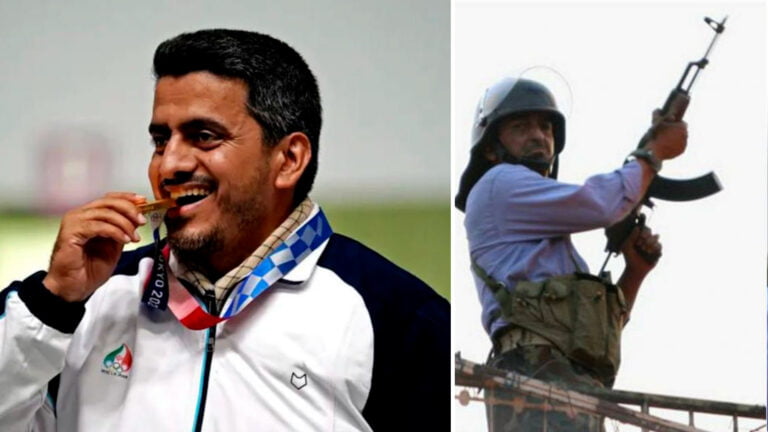
The latest controversy of the Olympics comes after an Iranian gold medallist, Javad Foroughi, is revealed to be a member of Iran’s Islamic Revolutionary Guard Corps (IRGC) militia that is involved in brutal crackdowns of Iranians, as well as funding, training and arming terrorist groups across the region.

In an interview with the IRGC-affiliated Tasnim News Agency after his win, Foroughi claimed that he had served in Syria as a “nurse” from 2013 to 2015. Foroughi and another militia member speak about their deployment to Syria and Lebanon and reveal that they were stationed in Khan Tuman and Damascus even before the arrival of Islamic State group.

Activists on social media have also accused Foroughi of practicing marksmanship on “live targets”. Others have posted a famous 2009 photo of a militia sniper on the roof of a building in Iran whose resemblance to Foroughi is striking.

The Korean marksman Jin Jong-oh has criticized the International Olympic Committee for allowing a member of Iran’s Islamic Revolutionary Guard Corps to compete and win a gold medal in the 10-meter air pistol event, saying: “How can a terrorist win first place? That’s the most absurd and ridiculous thing.”

In comments reported by the Korea Times, the six-times Olympic medallist added it was “pure nonsense” to allow Javad Foroughi to compete in the Tokyo Games given his membership in a militia of the IRGC, which was labeled a terrorist organization by the US in 2019.

The “United for Navid” group has called on the International Olympic Committee (IOC) to open an ethics investigation and to suspend the Tokyo Olympics title won by Javad Foroughi in men’s 10-meter air pistol.

The IOC has challenged campaigners to show proof that an Iranian gold medalist shooter is a member of the Islamic Revolutionary Guard Corps.

Source: Free Press Journal | Al Arabiya | The Guardian
Also read: Iran Revolutionary Guards smuggle foreign fighters into Yemen

Iran Revolutionary Guards smuggle foreign fighters into Yemen

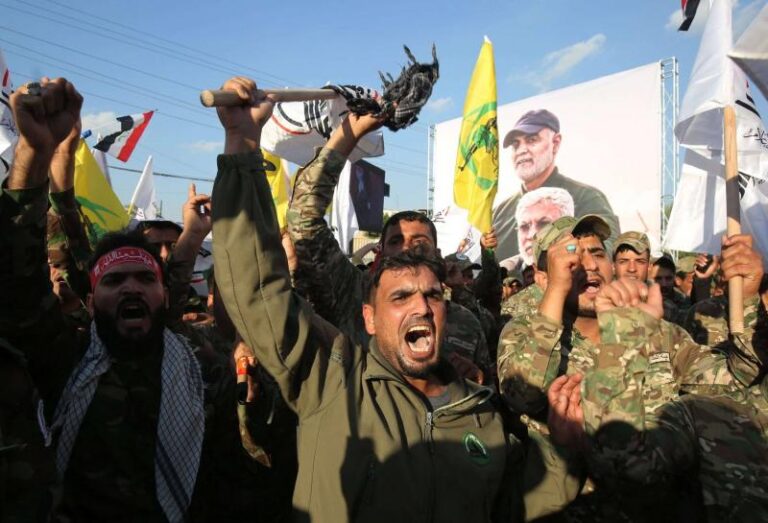
According to Yemeni researchers, Iran’s Islamic Revolutionary Guard Corps (IRGC) has been smuggling fighters recruited in Syria, Iraq, Lebanon, Iran and Afghanistan into Yemen to take up arms alongside the Houthis.

Some are brought to Yemen aboard boats used for smuggling weapons via the Red Sea or from Oman, he said, while others arrive by air — sometimes under the guise of being wounded — or are smuggled in across the country’s land borders.

These foreign fighters are taking on an increasingly visible role in Yemen by directing the Houthis’ military activities and attempting to further the interests of the Iranian regime at the expense of the Yemeni people.

Many of these mercenaries are recruited and trained in the lawless area around the Iraq-Syria border, where IRGC-directed militias comprising fighters of various nationalities have been attempting to put down roots.

There are more than 3,000 IRGC-affiliated fighters from Syria, Iraq, Afghanistan, and Lebanon in Yemen at this time, according to Abaad Studies and Research Centre director Abdulsalam Mohammed.

In late June, two Iranian military experts were killed at al-Khanjar front in the northeastern province of al-Jawf, further confirming Iran’s involvement in the war, Yemeni army 6th military zone spokesman Rabea al-Qurashi said.

Dozens of IRGC-affiliated fighters from Iran, Iraq, Syria, and Lebanon began to surface in Yemen around the time that Iranian ambassador to the Houthis Hassan Eyrlou arrived in Sanaa, said political analyst Waddah al-Yaman Abdul Qader. Among their arsenal are missiles and drones supplied by Iran.

Before Eyrlou arrived in Sanaa, Iran dispatched armed groups affiliated with its militias in Iraq, Syria, Lebanon and Afghanistan to set the stage for him, Mohammed said.

These fighters have been assigned to the various military zones as advisers, to weapons depots and as fighters, he said, pointing out that in light of this influx of Iran-aligned elements, “The IRGC is now directing the war from inside Sanaa.”

Watch our exclusive video commentaries uploaded daily on Youtube.

Source: Al-Mashareq
Also read: Qatar accused of funding Iranian terrorist organization IRGC

Iranian official involved in illegal mass executions faces prosecution in Sweden

Swedish prosecutors on Tuesday (July 27) announced they were charging Iranian national Hamid Noury with “war crimes and murder” in connection with the mass executions of thousands of political prisoners in 1988 in Iran.

In the summer of that year, Iran’s then-leader Rouhollah Khomeini, the founder of the Islamic Republic, issued an order to execute all inmates held in Iranian prisons who sympathized with or were Leftists.

According to ample evidence and testimony from former political prisoners, Noury — known as “Abbasi” in the late 80s — was an assistant prosecutor at Gohardasht prison in Karaj, Iran, at the time of the mass executions.

Amnesty International and multiple other human rights organizations have described the mass killings of 1988 as a crime against humanity.

The bodies of those executed were not turned over to their families, nor was the location of their burial disclosed to them.

The case against 60-year-old Noury, who was arrested in Sweden in 2019 upon his arrival at Stockholm airport, concerns his alleged part in the 1988 mass killings.

Accused of committing crimes against humanity, Nouri is expected to go on trial on August 10. The trial is expected to last through mid-April 2022.

Facing him in the trial is a group of more than 30 plaintiffs, made up of former prisoners who witnessed the alleged atrocities and relatives of victims.

The mass executions were decided by a group later known as the “death commission”, in which Iranian president-elect Ebrahim Raisi had a key role.

Raisi, referred to as a mass murderer by several global rights groups is set to take over the presidency from Hassan Rouhani on July 31 and is widely known as being the main decision-maker in the mass executions of 1988.

Source: Al-Mashareq
Also read: Iran Protestors Block Roads, Chant Death to Supreme Leader

U.S. Plans Sanctions Against Iran’s Drones and Guided Missiles

0

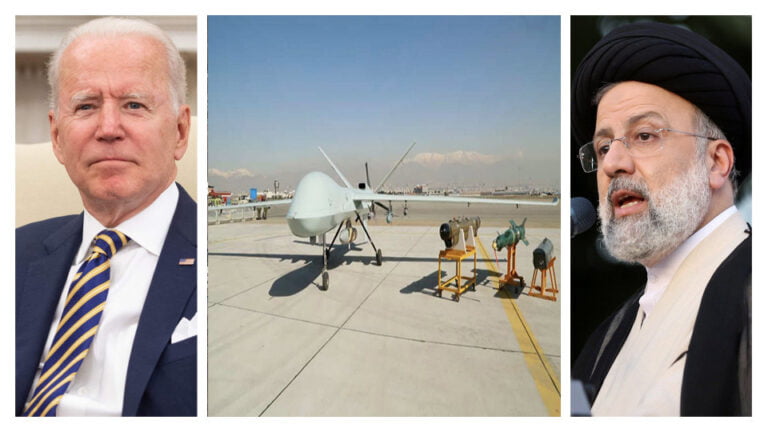
The Biden administration plans to impose a new package of sanctions against Iran’s evolving capabilities for precision-strike drones and guided missiles, despite ongoing negotiations on the nuclear program, the Wall Street Journal (WSJ) reported on Thursday, citing unnamed US officials.

The sanctions come in response to growing US concerns over the threat that these weapons increasingly pose to US forces and their allies in the Middle East, according to the report.

“Iran’s drones are becoming an increasing threat to our allies in the region,” a US official said, as cited by the report.

The new sanctions campaign will target Iran’s procurement networks, including suppliers of parts used to build drones and guided missiles, in a bid to disrupt Tehran’s strike capabilities, US officials said.

The US officials said the new sanctions would be separate from other designations that Washington has offered to lift if Tehran returns to compliance with the 2015 nuclear deal, the Joint Comprehensive Plan of Action (JCPOA)

Earlier in July, WSJ reported that the Biden administration was considering imposing new sanctions on Iran’s oil deliveries to China if Tehran decides to withdraw from nuclear talks, the sixth round of which ended on June 20.

US To Build Pressure On Iran

The US is likely to maintain some type of military presence in Iraq after US combat troops leave to pressure Iran and control the country’s oil reserves, former diplomats and a UN adviser with postings or experience in the region told Sputnik.On Monday, Biden told visiting Iraqi Prime Minister Mustafa al-Kadhimi at the White House that the US combat mission in Iraq would come to a close by the end of this year, although a remnant would stay behind in a train-assist role to counter the Islamic State terror group.

“It appears that the Biden administration plans to apply in Iraq the same method of control that it uses in North-East Syria,” former UK Ambassador to Syria Peter Ford said. “That is, a light military footprint on the ground to direct the work of a proxy force.”

Source: Wall Street Journal

Also Read: Israel and US said to increase cooperation to combat Iranian drones

Iran’s plans to attack the west exposed in leaked classified documents

0

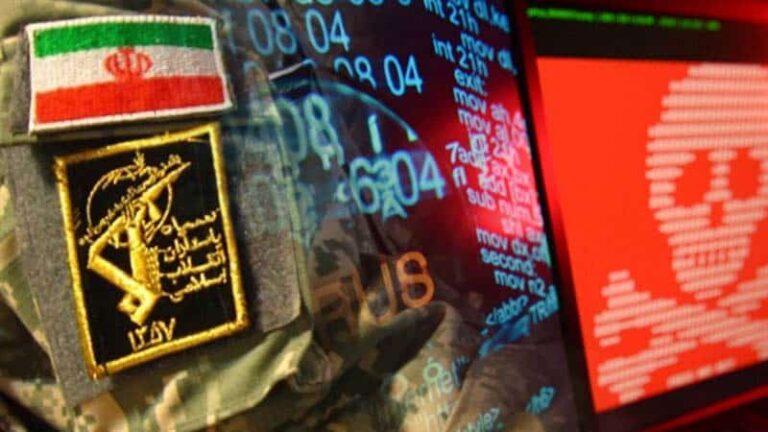
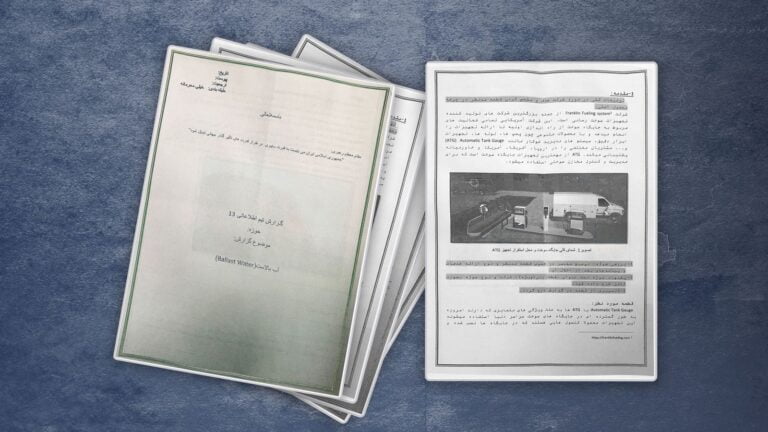
On Monday, July 26, Sky News revealed five classified documents that contain the Iranian regime’s plans to attack the important infrastructures of Western countries, including the UK, France and the United States.

Although there have been reports of such cyberattacks by the Iranian regime and other governments in the past, it is unusual for the Islamic Republic’s Revolutionary Guards’(IRGC) classified documents to be leaked to the Western media.

According to the report, some of the possible attacks planned by the IRGC cyber troops are attacks on “ballast tanks” of cargo ships. This can cause irreparable damage to the ship and even cause it to sink.

The report states that another plan of the Iranian regime seems to be to hack the automatic fuel gauge tank of certain gas stations, which could stop the flow of gasoline, or in the worst case, even cause an explosion.

In addition, the 57 pages of evidence obtained display attempts to hack maritime communications.

Another unnamed source told Sky News that the documents described only the early stages of planning for cyberattacks, but did not specify how far those plans had gone.

The European Union has been diplomatically cold-blooded to the Iranian regime since the discovery of the Islamic Revolutionary Guard Corps terrorist operation in Europe, but at the same time, it has not retaliated against the Islamic Republic.

Ben Wallace, Britain’s defense secretary, said the Iranian documents – if authentic – demonstrate how vulnerable the UK and its allies are to cyber-attacks. “Unless we do something about it, our critical national infrastructure, our way of life could be threatened quite easily,” he told Sky News.

Asked how much of a threat Iran poses in cyberspace, General Sir Patrick Sanders, the top military officer overseeing UK cyber operations, said: “They are among the most advanced cyber actors. We take their capabilities seriously. We don’t overstate it. They are a serious actor and they have behaved really irresponsibly in the past.”

Source: Sky News
Also read: Iran Protestors Block Roads, Chant Death to Supreme Leader

Protestors in Iran Block Roads, Chant Death to Supreme Leader

Tuesday night protestors in Iran took to the street in Baharestan township near Esfahan where they ripped and burned a banner of Supreme Leader Ali Khamenei in the town square. In Kordkuy in Golestan province, and Eyvan-e Gharb in Ilam province they blocked roads into the towns.

In Baharestan, which has a population of nearly 50,000, protesters gathered in the town square and chanted slogans in solidarity with the people of Khuzestan whose protests over water shortages two weeks ago turned into protests against the government.

Protesters in the township chanted “We Don’t Want the Islamic Republic,” “Death to Khamenei,” and “We Don’t Want to Fight!” Some chanted “May Your Soul Rest In Peace Reza Shah,” a reference to the monarch who launched Iran’s modernization in the 20th century and was forced by the British to abdicate in 1941.

Protesters in the city of Esfahan, which like Khuzestan has serious water issues, held a protest rally Monday by the city’s dried-up river, Zayandeh Roud. There was a rally on July 22 in Shahin Shahr, with a population of about 180,000, in support of Khuzestan protesters.

Ghasem Saedi, a hardline lawmaker from Khuzestan province, said that the families of those who had died in Khuzestan would receive compensation. “The young men who were killed came to the street for peaceful protests but they were targeted by unknown people,” he said. “The [Supreme] National Security Council is planning to make compensation because they are saddened about the killing of the people.”

Although security forces have used live ammunition to confront and disperse protesters, the official government line is that people have been killed by “unknown” elements. Iranian officials made similar claims in the November 2019 protests when up to 1,500 protesters were killed, mostly by gunfire.

Hundreds are reported to have been arrested in Khuzestan, Tabriz, and Kermanshah and there is little news about their whereabouts or health condition. Officials have said some protesters have been released but there is no confirmation by independent sources.

Authorities have also switched broadband internet − which only a small minority of Iranians use – in Khuzestan to a tightly controlled intranet. In Tehran and other cities authorities have shut down mobile have internet temporarily in recent days when and where a protest breaks out.

Source: Iran International
Also read: At least 12 killed, hundreds detained by Iran during anti-regime protests

Secret files show alleged Iranian plans to sink ships using cyberattacks

0

Classified documents, allegedly from Iran, reveal secret research into how a cyber attack could be used to sink a cargo ship or blow up a fuel pump at a petrol station.

The internal files, obtained by Sky News, also include information on satellite communication devices used by the global shipping industry as well as a computer-based system that controls things like lights, heating and ventilation in smart buildings across the world.

The papers appear to reveal a particular interest in researching companies and activities in western countries, including the UK, France and the United States.

A security source with knowledge of the 57-page bundle of five research reports said it was compiled by a secret, offensive cyber unit called Shahid Kaveh, which is part of Iran’s elite Islamic Revolutionary Guard Corps’ (IRGC) cyber command.

The source said he believed the work is evidence of efforts by Iran to collect intelligence on civilian infrastructure that could be used to identify targets for future cyber attacks.

“They are creating a target bank to be used whenever they see fit,” said the source, who requested anonymity to be able to talk about the documents.

The Iranian embassy in London did not respond to a request for comment on the allegations.

A growing number of countries, including the UK, possess cyber weapons and are working to develop new offensive capabilities.

The work is typically top secret.

So it is highly unusual to see documented evidence allegedly of cyber research by a state.

INSIDE THE DOCUMENTS

Each of the five reports are marked ‘very confidential’.

Towards the top of most of the files is a quote, which appears to be from Iran’s Supreme Leader, Ali Khamenei. It reads: “The Islamic Republic of Iran must become among the world’s most powerful in the area of cyber.” The security source describes the quote as like a “commander’s statement of intent”.

The reports are compiled by a cell called Intelligence Team 13. The source with knowledge of the files refers to them as Intelligence Group 13 and said it is a sub-group within the IRGC Shahid Kaveh unit, under an individual he named as Hamid Reza Lashgarian.

Source:  Sky News

Also Read: Iran ‘giving Hezbollah cyber training’ as it embraces digital warfare