Home Blog Page 69

Iran loses Iraqi militias as Qasem Soleimani’s successor proves too weak

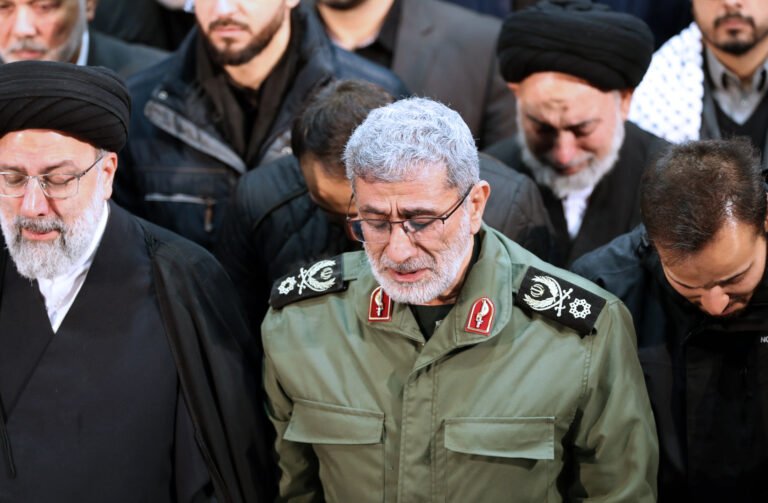
Esmail Qaani – Iran’s new Quds Force chief after Qasem Soleimani’s assassination – lacks authority to stop Iraqi militia attacks on US targets, sources say.

On a baking early summer evening last month, Iran’s man in Iraq sat down in Baghdad with a group of militiamen to try to bring calm to the capital’s foreboding streets.

Qaani’s role had been to convince the militias that it was not in theirs and Iran’s interests to continue to fire rockets at the US embassy in the Green Zone, or at Erbil airport in northern Iraq, where US forces remain.

His presence filled Qasem Soleimani’s boots, his predecessor, who had ruled the landscape of Iraq, Syria, and Lebanon for 15 years until he was killed by a US drone in January 2020. Until his death, Soleimani commanded the Quds Force, which is the Arabic word for Jerusalem and is responsible for carrying out unconventional warfare and intelligence activities. The force is responsible for training, financing, and providing assistance to countless extremist groups across the middle-east.

According to two of the participants and another briefed on the meeting, Qaani missed his moment.

Qaani’s job in Iraq is very difficult, and Qaani’s weakness leads to the strengthening of the militias in Iraq, this is mainly due to his lack of experience in Iraq or Syria and his inability to speak Arabic, despite having 12 years of experience serving the Quds Force in Afghanistan.

More importantly, according to multiple sources who have met the new commander and are familiar with his connections in Iran, he does not have a rapport with the country’s supreme leader, Ayatollah Khamanei, or his office. On paper, the role he plays is the same as Soleimani, a unique combination of Special Forces commander, intelligence chief, and presidential envoy. However, he clearly lacks the latter element – the most essential of the trilogy.

Source: The Guardian
Also read: Qatar accused of funding Iranian terrorist organization IRGC
Iranian charged with war crimes by Swedish court for 1988 prison killing

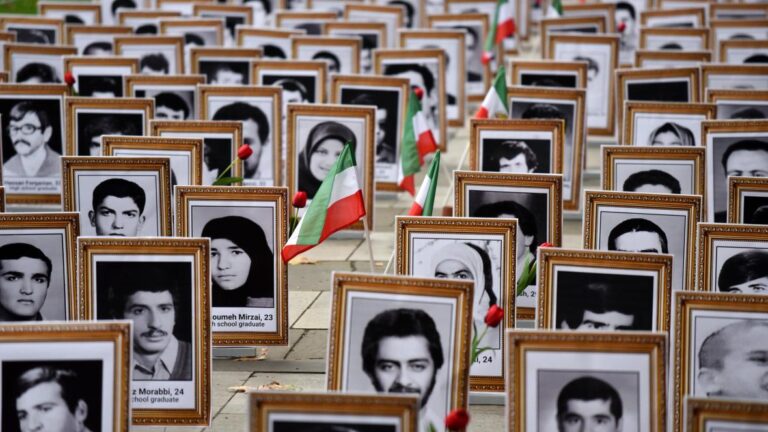
A 60-year-old Iranian citizen has been charged in Sweden with suspected war crimes committed in Iran in 1988 when around 5,000 political prisoners were executed on government orders, Stockholm prosecutors said on Tuesday.

The man, whom prosecutors declined to name publicy, has been in custody in Sweden for almost two years and is suspected of having played a leading role in the mass killing, prosecutors said.

“It’s an Iranian citizen we have charged with war crimes and murder in Iran committed in 1988,” prosecutor Kristina Lindhoff Carleson told Reuters.

The accused man maintains his innocence, prosecutors said. Reuters was unable to immediately reach his lawyer by telephone.

The man was a prosecution official who worked in the Gohardasht prison in Karaj, Iran, Lindhoff Carleson said.

The 1988 purge targeted members of the Iranian People’s Mujahideen, which was fighting in parts of Iran, as well as other political dissidents, such as left-wing groups.

The Mujahideen was cooperating with the Iraqi army, which was at war with Iran at the time, Lindhoff Carleson said, adding that the connection with the Iran-Iraq conflict was why executions of group members were treated as war crimes in violation of international law.

The killing of other political dissidents was being treated as murder, she said.

Source: Reuters

Also Read: Frontrunner Ebrahim Raisi unfit for Iran leadership over role in 1988 massacres

The man was a prosecution official who worked in the Gohardasht prison in Karaj, Iran, Lindhoff Carleson said. The 1988 purge targeted members of the Iranian People’s Mujahideen, which was fighting in parts of Iran, as well as other political dissidents, such as left-wing groups. The Mujahideen was cooperating with the Iraqi army, which was at war with Iran at the time, Lindhoff Carleson said, adding that the connection with the Iran-Iraq conflict was why executions of group members were treated as war crimes in violation of international law.

At least 12 killed, hundreds detained by Iran during anti-regime protests

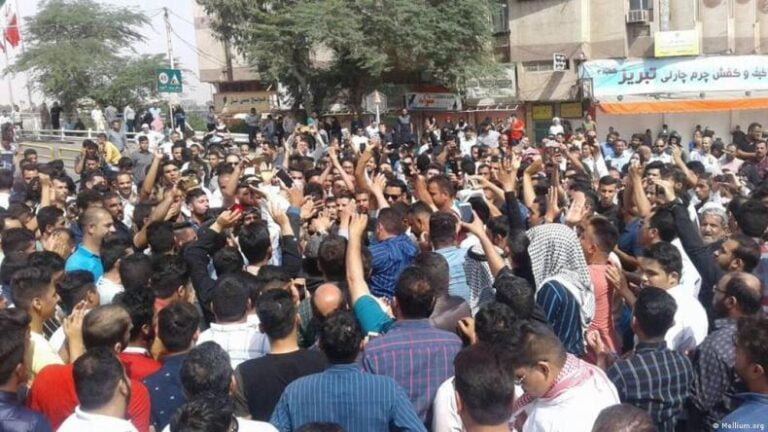
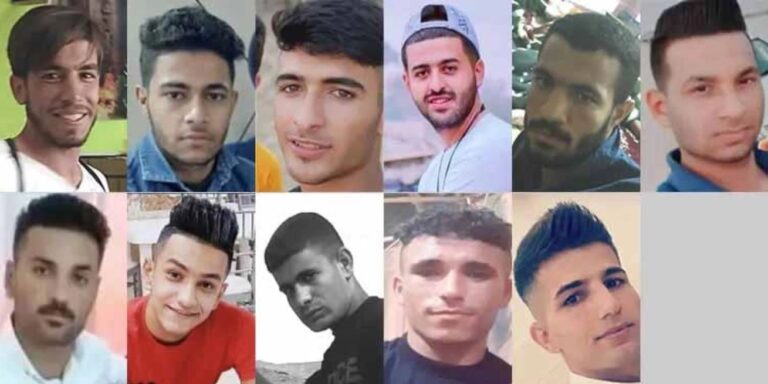
At least 12 people, mostly Iranian Arabs, were killed, many were injured and detained during the anti-regime protests in Iran’s Arab majority Khuzestan province.
The protests which started on July 15th continued for 10 days in over 35 cities across the country.
Several videos shared on social media show the state security forces using excessive force against demonstrators. Security forces used live bullets, pellet guns, and tear gas to crush protesters.
Reports and amateur videos show continued heavy security presence in Khuzestan and some other cities that joined the protests in the past nights. There were local reports of electricity cutoffs in addition to the internet disruptions.
There have been widespread arrests in the past nights. The local Khakzadegan Telegram channel said that it had been able to identify more than 320 detained.
U.N. High Commissioner for Human Rights Michelle Bachelet on July 23 expressed concern about deaths and injuries and widespread detentions in Khuzestan.

The names of those shot and killed by the state security forces are:

Mostafa Naimawi

Mostafa Naimawi, 30, was killed on July 16 in the restive city of Shadegan. He was a fishmonger in the local city market.

Qassem Nasseri (Khozairi)

Qassem Nasseri, 17, was killed on July 17 in Kut Abdollah. According to the report by Amnesty International, a source with direct knowledge in Iran told them that plain-clothes intelligence agents visited Ghassem’s family shortly after he died and coerced them into reciting a pre-prepared script on camera.

Mohammad Chenani

Mohammad Chenani, 24, killed in the restive city of Shush on July 20 during the water protests.

Isa Baldi

Isa Baldi, 27, was wounded on July 20 by security forces in Mahshahr. He went for treatment to a clinic but did not receive aid on time and passed away.

Mohammad Kroshat

Mohammad Kroshat, 20, was killed on July 20 in the city of Ahvaz in southwestern Iran. He was injured in the water protests and passed away due to the severity of his wounds in the hospital.

Omid Azar Khosh

Omid Azar Khosh, 20, was killed on July 22 in Aligoudarz western Iran. A police official in Lorestan confirmed a 20-year-old was killed, blaming it on “anti-revolutionaries”. He said the young man was killed with pellets used by “anti-revolutionaries.” Pellet shots are usually used by riot police to crack down on protests.
Iranian regime officials in the past have blamed protesters for deaths occurring during bloody state-crackdowns.

Hadi Bahmani

Hadi Bahmani, 17, was killed by security forces in Izeh on July 20. He was from Susasgerd but was working as a plasterer in Izeh.

Farzad Farisat (Hamzeh Al-Farisawi)

Farzad Fereisat, 29, was killed by security forces on July 21 in Ahvaz during the water protests.

Meysam Achrash (Akrash)

Meysam Achrash, 20, was killed on July 21 in the Taleghani district of Mahshahr in southwestern Iran.

Hamid Majdam (Jokari)

Hamid Majdam, 23, was killed in Chamran, southwestern Iran during the water protests.

Mohammad Abdollahi

Mohammad Abdollahi was killed in Izeh during the water protests.

Amir Mashari Ebadi

Amir Mashari Ebadi, 22, was injured during the protests in Mahshahr, Southwest Iran and passed away in the hospital on July 23.

Source: Iran Human Rights Monitor
Also read: Turk protesters in Iran support the Arab uprising against regime oppression

Qatar accused of funding Iranian terrorist organization IRGC
0

The United States’ Department of State has launched an inquiry into an allegation stating that Qatar’s royal family funded Iran’s Revolutionary Guard Corps (IRGC), a US-designated terrorist organization, online news media the Washington Examiner reported Friday.

In April 2019, the administration of former US President Donald Trump listed the IRGC as a “foreign terrorist organization.” This position remains in the new US administration.

According to the Washington Examiner website, the State Department is responsible for following up on a report on cooperation between Qatar and the Revolutionary Guards, which Israel provided to Washington.

“We are looking into this,” a State Department spokesman told the site.

According to the report, Reuven Rivlin, who was President of Israel until two weeks ago, presented “documents” related to Israel’s claim in a meeting with his American counterpart Joe Biden.

Prior to Mr Rivlin’s visit to the United States, Israeli media had reported that the country’s top intelligence and security agencies had prepared a “heavy and new case” on Iran and handed it over to President Biden.

An Israeli official, speaking on condition of anonymity, told the Israel Times that his country’s transfer of information to the United States was a “red flag” regarding Qatar’s actions in terms of “funding the IRGC” for White House officials.

“We fear that by returning to the JCPOA [the Iran nuclear deal, known as the Joint Comprehensive Plan of Action], the US may be able to prevent Iran from reaching the bomb in the years ahead, but once the deal sunsets, Iran will immediately be able to restart its efforts and will have hundreds of millions of dollars in extra funds provided to them by the sanctions relief that the agreement provides,” the anonymous source added.

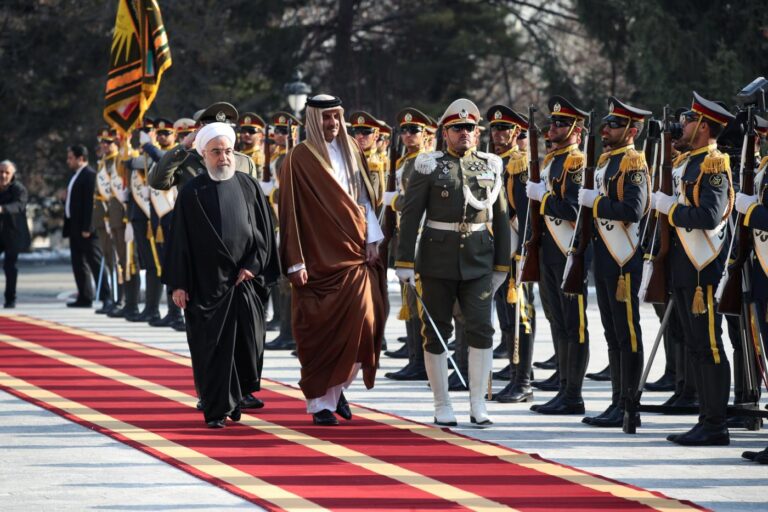
Meanwhile, Qatar’s Deputy Prime Minister and Foreign Minister met with Iranian President-elect Ebrahim Raisi in Tehran on Sunday, July 25th.

Sheikh Mohammed bin Abdulrahman Al-Thani stressed during the meeting that Qatar, while trying to “ensure regional security” with the cooperation of the Islamic Republic of Iran, is also seeking cooperation to “strengthen bilateral relations.”

Source: Radio Liberty
Also read: King Abdullah confirms Jordan previously attacked by Iran-made drones

King Abdullah confirms Jordan previously attacked by Iran-made drones: CNN interview

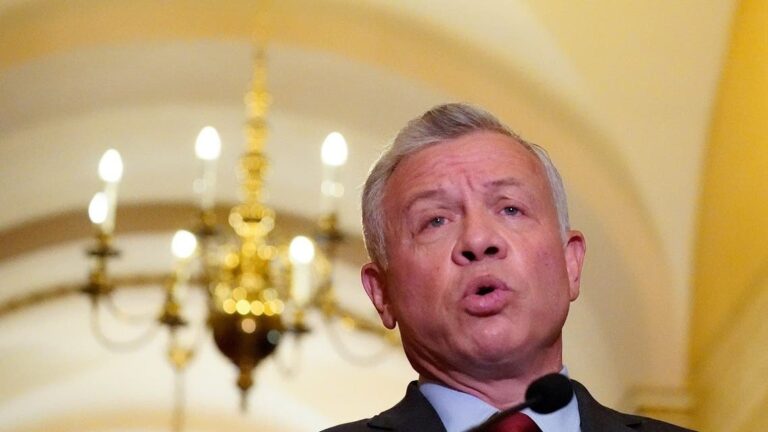
Jordan’s King Abdullah confirmed that his country had previously been attacked by Iranian-made drones, stressing that there are many concerns related to Iran’s activities in the region.

King Abdullah’s comments came during a sit-down interview with CNN’s Fareed Zakaria in which he said that there are legitimate concerns regarding Iran’s regional activities.

“There are legitimate concerns in our part of the world on a lot of portfolios that the Americans are hopefully going to be able to discuss with the Iranians. So, the nuclear programs affects Israel as it does the Gulf. The ballistic technology has improved dramatically, we’ve seen that unfortunately against American bases in Iraq. We’ve seen Saudi being a recipient of missiles out of Yemen. Israel from Syria and Lebanon to an extent and what misses Israel sometimes lands in Jordan,” King Abdullah told CNN.

“And unfortunately, Jordan has been attacked by drones that have come out that are Iranian signature that we have had to deal with,” King Abdullah said, adding the attacks happened in the past year or so when asked by CNN’s Fareed Zakaria.

Jordan’s King Abdullah II is currently in the United States where he has held meetings with White House officials and is the first Arab leader to visit Washington since US President Joe Biden took office.

King Abdullah, who faced down a challenge to his authority in April from his half-brother, Prince Hamzah, met Biden for the first time since the US president took office in January last week. Biden called the king a “good, loyal, decent friend.”

Source: Al-Arabiya

Also Read: Iran’s expansionism is the biggest threat to Lebanon’s sovereignty

Iran Intelligence Agents Continue Arrests Of Protesters

Reports from Iran’s restive Khuzestan Province and the northern city of Tabriz on Sunday say security forces are systematically arresting civil activists, may at their homes.

Human Rights Activists News Agency, HRANA, reported that the Intelligence Ministry arrested Siamak Koushi an Iranian Azeri activist and released him a few hours later. Then, the Revolutionary Guard Intelligence Organization arrested him again. He was also arrested last year during the war between Armenia and the Republic of Azerbaijan.

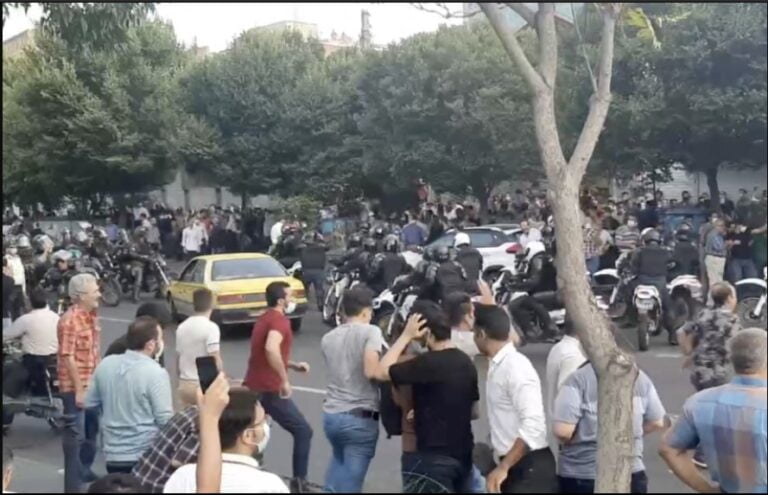
A large gathering took place on Saturday in Tabriz to voice support for protesters in Khuzestan who have been holding anti-government demonstrations since July 15. HRANA said that following that gathering, intelligence agents began arresting activists.

Videos received by Iran International show that special riot police transferred the detainees in blindfold to a police station. A lawyer, Mostafa Daneshjou, tweeted that blindfolding detainees violates the Law on Rights of Citizens. Images received from Tabriz also show a heavy presence of security forces and their special anti-riot vehicles in the streets.

Mohammad Al-Hashem, the Friday Prayer leader of Tabriz however tried to minimize these events. He said that “separatists” tried to use some incidents for their own ends, but “the people recognizing the situation and conditions of the country, express their concerns and complaints through legal channels, speaking with officials and members of parliament.”

Al-Hashem’s reference to separatists refers to allegations that both the Khuzestan protests and the Tabriz gathering were organized by Arabs and Azeris respectively who want to divide Iran. Pro-government sources promote this theory to discourage people in other regions to join the protests.

Reports from Khuzestan have said that all ethnic and linguistic groups participate in the demonstrations and Iranian in several non-Arab regions have voiced their support for protesters in Khuzestan.

Source: Iran International

Also Read: Turk protesters in Iran support the Arab uprising against regime oppression

Turk protesters in Iran support the Arab uprising against regime oppression

Ten days after the Arab uprising and mass protests in Iran’s southwestern Khuzestan Province, Turks in the northwestern city of Tabriz gathered on Saturday to support the protesters.

Videos published on social media show demonstrators in Tabriz on Saturday chanting slogans to show solidarity with the people of Khuzestan, with heavy presence of security forces in the streets of Tabriz, which is the capital of East Azerbaijan Province.

Demonstrators are heard shouting “The people of Azerbaijan will not accept this humiliation”, “Azerbaijan is awake, supporting Khuzestan” and “Azerbaijan, Al-Ahwaz, unity, unity”.

Ahwazi Arabs have been protesting in the majority of the Arab populated cities of Iran since July 15. So far, a number of protesters have been shot to death by Iranian security forces. Most media and analysts portray the protests as riots in response to water shortage and mismanagement. However, the water crisis in Ahwaz is just a trigger that evoked the Ahwazi Arabs to protest against structural grievances and inequalities. All the evidence shows that it is not merely about water mismanagement, indeed, the root cause of the problem is systemic racism against the Arab ethnic minority in Iran of approximately 5 million people.

Authorities have deployed special riot police in force, with reinforcements of Islamic Revolutionary Guard(IRGC) troops arriving by passenger planes in Khuzestan. Iran’s IRGC is the main force behind the systemic racism in the country and does not show mercy to unarmed protestors demanding their most basic human rights, killing them on sight. IRGC has so far killed at least nine people, wounded many others, and arrested more than 100 protesters since last week.

Iran’s Supreme Leader Ali Khamenei in remarks on Friday sounded somewhat cautious, refraining from his usual condemnation of protesters and blaming them for having links with “foreign enemies”. Khamenei realizes everyone is on edge and wants to avoid further provocating protests, but he also refrained from condemning violence by security forces.

Source: Iran International
Also read: Iran’s Arabs protest against the regime for 7th day despite brutal repression

Iran accused of using illegal force in cracking down on water protests

Iran is using illegal and excessive force in a crackdown on protests against water shortages in its oil-rich but arid southwestern Khuzestan province, international rights groups say.

Amnesty International said it confirmed the deaths of at least eight protesters and bystanders, including a teenager, after authorities used live ammunition to quell the protests.

Iranian media and officials said at least three people were killed, including a policeman and a protester, accusing “opportunists” and “rioters” of shooting at protesters and security forces.

“Iranian security forces have deployed illegal forces, including firing live ammunition and bird shots, to crush mostly peaceful protests,” Amnesty International said. Analysis of video footage of protests and testimonies “indicates that security forces used deadly automatic weapons, shotguns with inherently blind ammunition and tear gas,” he said.

Human Rights Watch, meanwhile, said in a separate statement that Iranian authorities appeared to have used excessive force against protesters and that the government should “transparently investigate” the reported deaths. “The Iranian authorities have a very troubling record of gunshot responses to demonstrators frustrated by growing economic hardship and deteriorating living conditions,” said Iranian researcher Tara Sepehri Far.

Human rights groups have previously accused Iran of launching a fierce 2019 crackdown on nationwide protests against rising fuel prices that Amnesty says killed at least 304 people.

“The Iranian authorities have a heartbreaking record when it comes to the illegal use of lethal force. The events unfolding in Khuzestan have chilling echoes of November 2019, ”said Diana Eltahawy, Amnesty’s deputy director for the Middle East and North Africa.

Amnesty said a teenager, Hadi Bahmani, was killed in the town of Izeh.

Iranian authorities blamed the unrest on the rioters. Amnesty said the Fars News Agency published interviews with relatives of two of the men killed, distancing itself from their actions. However, the human rights group quoted a source as saying that one of the families was visited by plainclothes agents who “forced them to recite a script prepared in advance on camera.”

Source: Fr24 News

Also Read: Iran’s Arabs protest against the regime for 7th day despite brutal repression

Iran’s brand-new militia formed in Afghanistan after U.S. withdrawal

0

The Iranian newspaper Jomhouri Islami on Monday revealed that a pro-Iran militia has been set up in Afghanistan. The revelation coincides with the ongoing U.S. withdrawal of troops from the country and bodes ill for its security and stability. According to the paper, the new group is called, oddly using Arabic, “Hashd Al-Shi’i” (Shiite Mobilization). It did not use a Farsi, Dari or Pashtun name, but curiously borrowed from the Arabic name of Iraq’s umbrella outfit, Al-Hashd Al-Sha’abi, for a number of militias. It is also curious that it explicitly used the word for the Shiite sect in the name of the group; something that Tehran has carefully avoided in the past. The newspaper is a conservative mouthpiece, founded by Ali Khamenei in 1979.

Iran sees the U.S. withdrawal of troops as an opportunity to expand its influence in Afghanistan, using a security vacuum in the country to expand its military footprint eastward. In April, Foreign Minister Javad Zarif welcomed the planned US withdrawal, describing it as a “positive move,” making Iran one of the few entities to welcome the premature departure. However, Zarif also warned against the resulting “vacuum” and a “new war in Afghanistan.”

Initially, Iran’s intervention in Afghanistan — or the export of its revolution to the country — mainly took the form of recruiting Afghans from within Afghanistan and, significantly, from the Afghan refugee community in Iran to help turn the tide in the 1980-88 war against Iraq. About 3,000 Afghan fighters were killed in that war. The Islamic Revolutionary Guard Corps’ (IRGC) Quds Force was assigned the task of exporting the revolution and training the foreign recruits. After the end of the Iraq war in 1988, the Afghan fighters were decommissioned, sent back to Afghanistan or later mobilized for the new fronts Iran opened in Iraq and Syria.

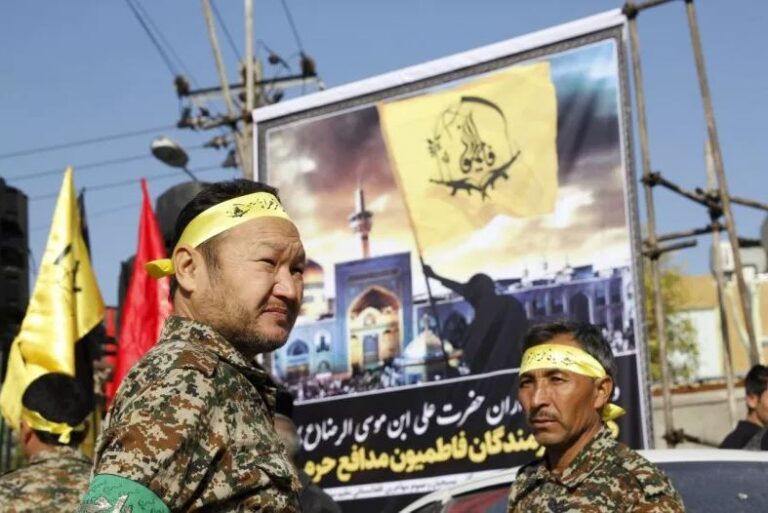
The newly announced group is probably a cover for the Fatemiyoun Brigade terrorist outfit and could be used to spearhead any Iranian offensive into Afghanistan, similar to its role in Syria, for example.

Source: The Arab Weekly
Also read: Iran builds new prison in Syria ignoring blackouts and water crisis at home

Iran builds new prison in Syria ignoring blackouts and water crisis at home

The Islamic Revolutionary Guard Corps(IRGC) of Iran opened its own prison in the Zamla gas field in the countryside of Raqqa in northeastern Syria. 

The news of the recently established prison in Syria comes as the Iranian government is wrestling with overlapping crises: an unrelenting coronavirus outbreak, economic woes compounded by U.S. sanctions, widespread power outages that have set off protests, and severe water shortages that sparked protests in southwestern Iran. In recent weeks there have also been waves of labor unrest, including strikes by oil workers.

The source added, “The IRGC has several prisons in the area, namely the Hamdan airport prison in al-Bukamal, one in the city of al-Mayadin, one next to al-Tala’i camp in Deir ez-Zor and another in the Homs desert in Palmyra. The latter was established at the end of 2019, consisting of three buildings, containing 10 cells, and the director of the prison is a Syrian affiliated with the Iranian militias called Jumaa al-Daher.”

“The new prison in Zamla is completely secluded. All the IRGC prisons bear the banner of the Syrian regime for camouflage purposes to avoid being targeted by airstrikes,” said the source.

According to sources who spoke to Syria TV website on July 12, the new prison consists of a one-story building divided into two sections and four interrogation rooms. Half of the prison is underground, and the upper part is surrounded by high berms. The area of the section dedicated to civilian detainees is 55 square meters and contains more than 90 detainees, most of whom are displaced people from the countryside of Homs.

Col. Fayez al-Asmar, a strategic expert based in Turkey who provides military analyzations to a number of local and Arab newspapers, told Al-Monitor, “All the influential players in Syria have multiple centers and prisons in their areas of control, including the IRGC and its militias, which are located in the eastern region. Most of the detainees are arrested on charges of being affiliated with IS or on charges of espionage and providing the coalition and SDF with military information regarding these militias and their movements. Since the IRGC does not completely trust the regime and has its own secret goals, it follows independent work strategies and builds its own prisons close to where its militias are deployed in the desert.”

Source: Al-Monitor
Also read: Iranian Arabs protesting water crisis killed in Khuzestan province