Home Blog Page 70

Iran’s Arabs protest against the regime for 7th day despite brutal repression

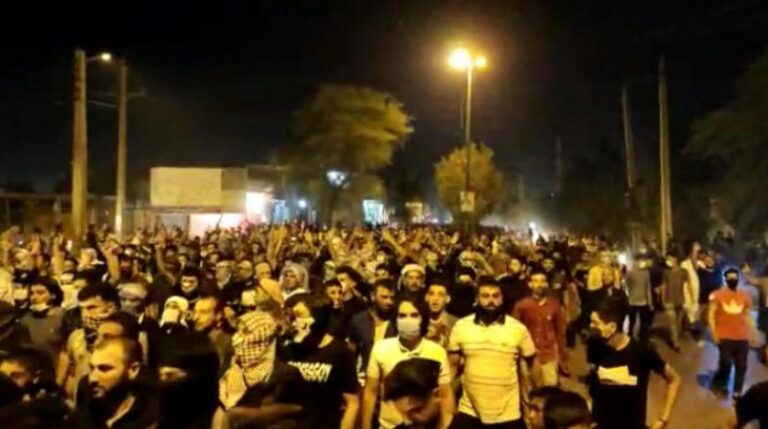
Despite all the repressive measures to crush the uprising of Iran’s Arabs in Khuzestan, last night, for the seventh consecutive night, not only many cities and regions of Khuzestan witnessed the angry protesters, but people and the youth in several other cities and provinces protested in solidarity with the people of Khuzestan.

On Wednesday night, July 21, Ahvaz, Susangerd, Masjed Soleyman, Mahshahr, Shadegan, Izeh, Shooshtar, Dezful, Shush Daniel, Elahi, Khowr-e Musa, Behbahan, Mollasani, and Darkhovin witnessed mass protests and demonstrations. The regime’s repressive measures, such as sending IRGC thugs from other areas to Khuzestan, including 30 percent of Khorramabad’s special forces, special units and plainclothes agents, water cannons, tear gas and pepper spray, and finally opening firing on demonstrators and cutting off the Internet, failed to prevent the youths and protesters, outraged by four decades of the mullahs’ crimes and plunder, from rising up.

Last night, there were severe clashes and skirmish between the suppressive forces and the rebellious youth in Izeh. Dozens of protesters were wounded when the regime forces opened fire. To prevent the wounded from being arrested, people did not take the wounded to the hospitals and treated them at home. Last night, in different parts of Ahvaz and Susangerd, fierce clashes continued between the State Security Force (SSF), special units, plainclothes agents, and the protesters.

Iran’s Arabs chanted, “Death to the dictator,” “Tanks, guns, Khamenei die,” “People want regime change in Iran,” “Iranians die, but they will not accept humiliation,” “Shame on you Khamenei, let go with the power” and “Bakhtiari and Arabs, let’s unite.” Defiant youths blocked the entrance of the cities by burning tires and erecting barricades before the demonstrations began to prevent repressive forces from coming in.

The recent protests, which have continued for a week, have severely shocked the authorities. In tandem with oppressive measures, they try to portray a popular image of themselves. Khamenei, who was targeted by outraged chants, reposted his deceitful remarks on Instagram to evade responsibility.
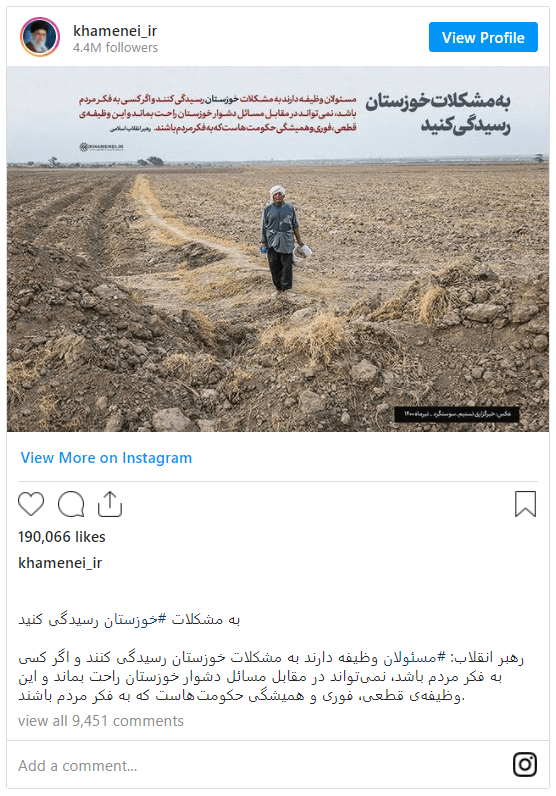
“Officials are tasked to follow up Khuzestan’s problems. If someone thinks about the people, they cannot remain comfortable versus the hard issues in Khuzestan. This is a definite, urgent, and ongoing task of governments to think about the people,” Khamenei posted.

On the other hand, the government continues oppressive measures and dispatches more riot forces to the region. Authorities also disrupted mobile internet to prevent leaking more information about Khuzestan protests and pave the path for more suppression.

In solidarity with the Khuzestan uprising, last night demonstrations and rallies were held in Tehran, Yazdanshahr (Isfahan), Mahdasht (Karaj), Rasht, Bushehr, Bandar Ganaveh, Jarrahi, and Lordegan, during which people chanted “Khuzestan is not alone.” In the city of Chamran, demonstrators set fire to an SSF kiosk.

Source: Iran Focus
Also read: Iran’s expansionism is the biggest threat to Lebanon’s sovereignty
Iran’s expansionism is the biggest threat to Lebanon’s sovereignty
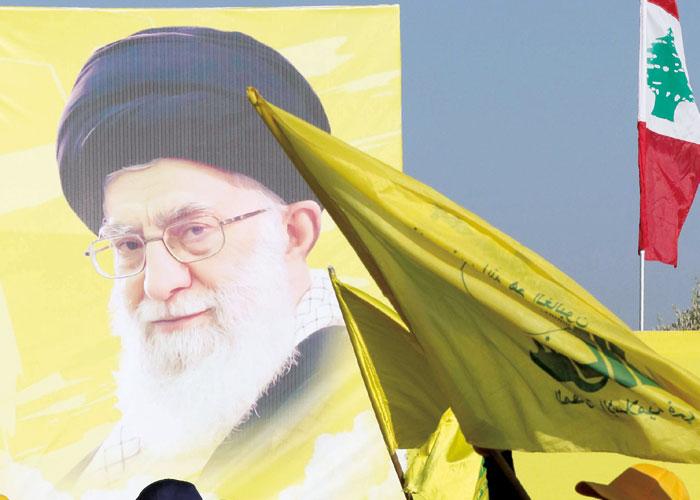
According to recent reports and analysis, Iran’s expansionism and intervention is the main factor in the complexity of the situation and obstruction in the political scene of Lebanon.

Iran has control over the Lebanese government and its decision-making centers, both directly and through its allies and proxies, and will not allow the will of the Lebanese people to be realized.

Certain ongoing activities, such as Iran’s continuing arms transfers to Hezbollah — which include increasingly sophisticated weapons systems — serve to undermine Lebanese sovereignty, contribute to political and economic instability in the region.

Iran’s influence in Lebanon is not a new phenomenon. It can be traced back to the 2005 assassination of former Lebanese Prime Minister Rafik Hariri and the withdrawal of the Syrian army from Lebanese territory in 2005, after which Iran gradually replaced Syria in Lebanon and took control of all of its vital institutions. This process was carried out after the assassination of Rafik Hariri by taking three consecutive steps: The first step was the assassination of a number of Lebanese political leaders. The second step was to take the decision of war and peace in the country, which was taken with the June 2006 war. A war that took place in contrast to the patriotic dialogue that sought to find a role for the government. The third step was to launch strikes and shut down the country, which led to the 2008 attack on Beirut and Jabal.

Iran uses its centers of influence in the aforementioned countries to achieve its long-term and short-term goals. Based on this approach, the Iranian regime dealt with the current crisis in Lebanon and did not allow the formation of a government by Saad Hariri to get Lebanon out of crisis take place. Iran uses Hezbollah and its allies in the presidential organization to maintain its influence in Lebanon, prevent economic cooperation from Arab countries, and counter the efforts of France, Egypt, and Saudi Arabia to return Lebanon to normalcy and provide international assistance.

Source: Independent
Also read: Iran driven out while Russia further entrenches in Syria

U.S. Threatens Iran With New Sanctions If A Nuclear Deal Is Not Reached

After six months of President Biden in office, and repeatedly dashed hopes at a nuclear deal with Iran, failing to come to an agreement means instead of lifting sanctions the U.S. is considering putting restrictions on oil sales between Iran and China. 

This week, U.S. officials told the Wall Street Journal that new sanctions could go into effect if Iran does not agree to a nuclear deal. The U.S. hopes that by threatening one of Iran’s most important markets, owing to the current sanctions, it will put pressure on Iran to come to a nuclear agreement sooner rather than later. 

The U.S. has been working with European and international partners in Vienna in recent months in an effort to restore the 2015 Joint Comprehensive Plan of Action (JCPOA), reducing sanctions on the country’s oil sales in return for nuclear cooperation.  

At present, Iran exports around a million barrels a day of crude to China, in a growing trade route that’s been overlooked by the U.S. as nuclear talks looked increasingly promising. However, the U.S. may persuade Iran’s top importer, as well as another major importer India, to cut imports from the oil-rich state. 

However, nuclear talks between the two countries are expected to be on hold until at least August after Iran’s new president, Ebrahim Raisi, is sworn into office at the beginning of the month. After this, a seventh-round of negotiations is expected to take place in Vienna to attempt an agreement on nuclear deal and sanction reductions, according to officials.

Sanctions have been in place on Iranian oil since President Donald Trump removed the JCPOA in 2018, leading to Iran breaking the agreement’s nuclear covenants in response. 

But Iran looks to be in no rush to curb its nuclear activities as Tehran has reached near purity in its enriched uranium, which would make it possible to create atomic weapons, as well as preparing the foundations to bring thousands of centrifuges online in 2021. 

Source: Yahoo

Also Read: US seizes Iran weapons to Houthis amid nuke talks

Iranian Arabs continue protests for 6th day amid water shortages

Iran’s southwest region has been rocked by six consecutive nights of protests by Iranian Arabs over access to clean drinking water. According to activists, three people have been killed so far in the oil-rich region of Khuzestan, which is home to a sizable ethnic Arab minority. 

Sporadic internet slowdowns or blackouts have been reported across the province for several days. Despite the internet restrictions, numerous videos have come out of several counties in Khuzestan in the past week, in many of which shots can be heard and tear gas is seen being used.

In some videos, protesters can be seen venting angrily at baton-wielding security forces clad in black, riding motorcycles in large numbers.

Regarding the shooting that has resulted in the deaths of three protesters, Mohseni Ejei said that prosecutors will investigate the incident, “that led to damage or deaths.” He continued, addressing the protestors, “do not allow enemies to take advantage of your rightful demands.”

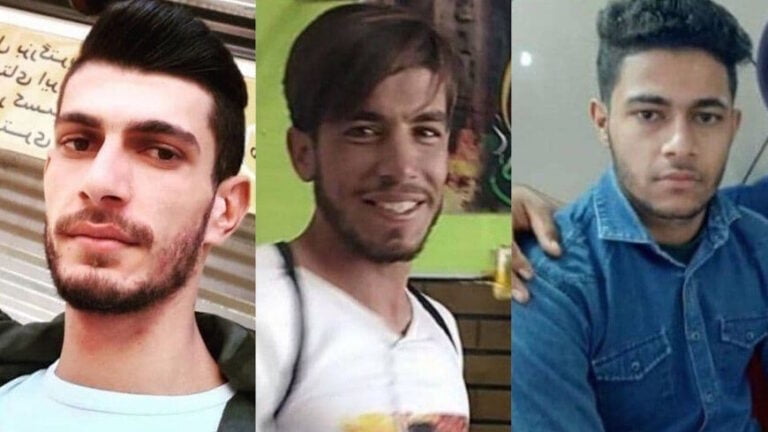
Authorities had earlier confirmed that two civilians, 18-year-old Ghasem Khozeiri and 30-year-old Mostafa Naimawi, were shot dead on Friday, but they say the young men were not protesters and were murdered by “opportunists and rioters”.

More protesters are feared dead but officials have yet to confirm further fatalities. They have also not disclosed how many civilians have been arrested.

Oil-rich Khuzestan, parts of which were temporarily seized by Iraq’s Saddam Hussein after he invaded Iran with backing from the West, has faced water problems for decades. Iranian Arabs in Khuzestan have long complained of being marginalised in predominantly Shia Iran.

“Khuzestan’s problem stems from illegal water transfer projects from river forks and stealing water from the source of the rivers by water mafias,” tweeted Fereshteh Tabanian, a lawyer based in Ahvaz.

Khuzestan residents have pointed out on social media that the province has never truly had drinkable tap water and they have had to buy their water or take it from the rivers, many of which have now dried up as well.

The same dirty tap water is now shut off for many citizens.

Sources: Al-Jazeera | Al-Monitor
Also read: Iran driven out while Russia further entrenches in Syria

Iran driven out while Russia further entrenches in Syria

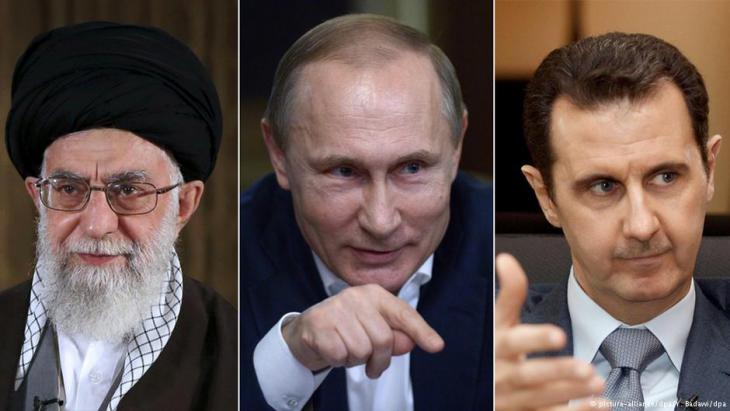
Russia has been steadily working to consolidate its influence in Syria, entrenching itself militarily and in the economic arena through its control of the oil, gas, and phosphate industry — and pushing out Iran in the process.

The two nations have been staunch political allies, with each providing direct military, political and economic support to the Syrian regime of Bashar al-Assad.

Yet tensions are beginning to emerge between them, and observers say that closer alignment with Russia may turn out to be a costly proposition for Iran.

They point to the likelihood that Russia will interfere with or disrupt Iran’s foreign policy, which may in turn result in economic losses for Iran, and note that signs the balance is tipping in Russia’s favor are already evident in Syria.

Militias operating in eastern Syria under the direction of Iran’s Islamic Revolutionary Guard Corps (IRGC) have been hemorrhaging fighters as their bases come under attack and the local population spurns Iranian hegemony.

And as fighters desert Iran-backed militias in increasing numbers, Russian recruiters are waiting to snap them up and incorporate them into their own ranks, marking a new phase of the Syrian conflict, local activists said.

“The Russian-Iranian competition is clearly evident in Syria,” said Syrian economist and Damascus University lecturer Mahmoud Mustafa.

But it is evident now, more than ever, that Iran’s share of new business opportunities has not met the Iranian regime’s aspirations and estimates, he said, as it had hoped for a huge return on its investment in the shortest possible time frame.

It seems that Russia’s plans “severely broadsided and hindered the Iranian calculations, with Russia depriving Iran of many revenue sources from which it had expected to generate money”, he said.

Source: Al-Mashareq
Also read: Iran Intelligence Minister in Iraq as militias continue striking US bases

Afghanistan Condemns Iranian Claim That A Pro-Shiite Group Is Formed

Afghan government officials have accused the Islamic Republic of Iran of “conspiracy, sedition and war mongering” in Afghanistan on Monday.

The accusation followed the publication of an article in the Iranian conservative newspaper Jomhouri Eslami [Islamic Republic] that broke the news about the emergence of a new political group in Afghanistan called, oddly in Arabic, Hashd al-Shi’i [Shiite Mobilization]. The group’s name is similar to the pro-Iran militia group in Iraq named Hashd al-Sha’bi [Popular Mobilization].

Iran’s fundamentalist officials have a fixation on the word mobilization [Basij in Persian] which characterizes the IRGC linked Iranian militia called the Basij, often used to suppress protesters.

The Jomhouri Eslami which was funded by Ali Khamenei in 1979 following the victory of the Islamic revolution in Iran, has published several articles warning Iranian officials against the re-emergence of the Taliban in Afghanistan during the past weeks.

The daily wrote Monday that “Hashd al-Shi’i has risen to confront the Taliban terrorists,” adding that the Taliban have escalated attacks on various cities and have brought at least another 50 Afghan towns under their control during the past weeks.”

The Iranian paper has quoted the militia group’s commander Saeed Hassan al-Heydari as having said in his first public speech: “I will command popular groups to fight alongside government forces to defend our homeland in the same way I defended the sanctuary of my great grandfather Imam Ali [the first of the Shiites’ 12 Imams].”

Qasem Vafaizadah, the head of the Afghan Ministry of Information and Culture says, “With this kind of conspiracy, Iran is making the war in Afghanistan more complicated by provoking the people and creating security threats, but this fire will also burn Iran.” Vafaizadah stressed that “There is no room in Afghanistan for such mercenary groups who act as foreigners’ puppets.”

Source: Iran Internation

Also Read: Iran cozies up with Taliban, fearing ISIS threat in Afghanistan

Iranian Terror Comes to America

0

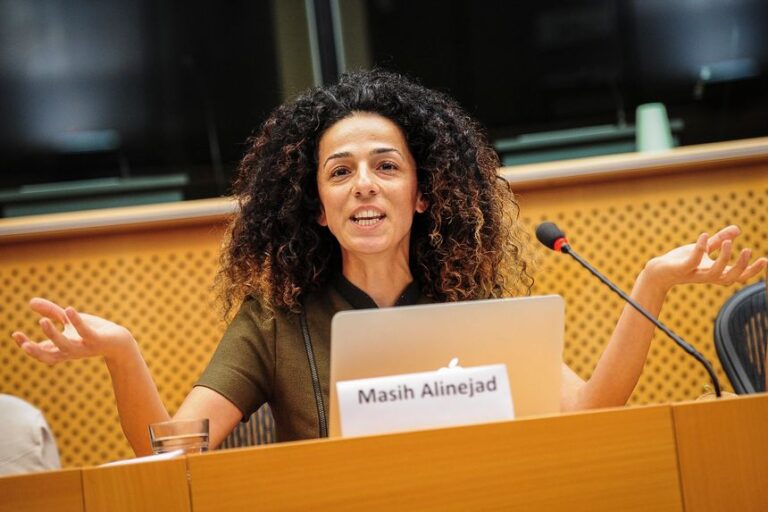
The foiled kidnapping plot against activist and journalist Masih Alinejad, an Iranian-born U.S. citizen living in New York City, has sparked a wave of outrage. The Justice Department’s indictment and detailed court documents indicate the Islamic Republic’s significant investment in the plot. The most troublesome part of this case, however, has been the Biden administration’s weak public response, which invites more malign behavior from Tehran.

Hundreds of dissidents have been threatened, kidnapped or assassinated since 1979, when the current regime rose to power in Iran. Since 2018, however, the Islamic Republic has carried out its campaign of terror with a new fervor. In 2019, Tehran lured, kidnapped and killed Ruhollah Zam, an Iranian dissident journalist residing in France. In July 2020, the Islamic Republic abducted Jamshid Sharmahd in Dubai and brought him to Iran, where he has been detained ever since. Mr. Sharmahd is a lawful permanent resident of the U.S. The regime also abducted Habib Chaab, an Iranian-Swedish political activist, in October 2020.

Like other Iranian activists, the Brooklyn-based Ms. Alinejad has long faced threats for her opposition to the clerical regime. But attacking a U.S. citizen on American soil is something the Islamic Republic hasn’t attempted in more than four decades. Why now?

Iran, pressed to show its strength by the tide of discontent rising among its restive population, is likely taking these actions to send two messages. The first is to the Iranian people: No matter where you flee to, if you speak up, we will find you. This is at a time when antiregime protests are erupting in the country. The second and more important is meant for the U.S.: We will come after your people on your soil, spreading terror and brutality in the belief that, as the regime’s founder, Ayatollah Ruhollah Khomeini, put it, “America can’t do a damn thing against us.”

Source: Wall Street Journal

Also Read: Iran’s priorities clear once again with attempt to kidnap activists on U.S. soil

Iranian Terror Iranian Terror

No international response to protests in Iran, activists call for support

As protests by Iran’s Arab Ahwaz minority reach their fifth day and claim the lives of at least three protesters, the response by the international community remains limited.

Protests erupted in the Khuzestan Province due to a drought that has devastated the region’s agriculture and way of life. However, according to Abdulrahman al-Heidari, the spokesperson for the Patriotic Arab Democratic Movement in Ahwaz (PADMAZ), the water issues were only a trigger.

“I think it’s very important to go back and understand that the water was a trigger. The main issue is that the policies of the regime displace people and are focused on suppressing the Ahwazi people,” Heidari said in an interview with The Jerusalem Post.

In another interview with the Post, Hamid Mtasher, the head of the Al-Ahwaz Liberal Party, outlined the grievances faced by the Ahwaz, echoing the sentiment of Heidari.

“The water was looted to the point of zero and caused the death of livestock, birds and fish after Iran transferred the waters of Ahwaz to the Persian cities. The regime also plunders the region through the policy of forced displacement, manipulation of the demographic structure and demographic change,” Mtasher described.

“Thousands of our children have died after being afflicted with diseases of cancer, lung, asthma and breathing,” the Ahwazi Organization for Human Rights added.

Videos shared across social media over the past week show large numbers of demonstrators in the streets, with police and soldiers trying to limit demonstrations, including firing on protesters. The authenticity of the videos cannot be confirmed at this time but have nonetheless sparked outrage. The Islamic Republic has confirmed that at least three protesters have been killed.

Despite the outrage, the response by the international community has been limited. To try to galvanize support for the movement, Heidari participated in a protest with the Ahwazi community in London outside of 10 Downing Street.

Heidari criticized the response by the international community: “It hasn’t gone beyond messaging. They didn’t take real action.”

Source: The Jerusalem Post

Also Read: Video Shows Iranian Police Opening Fire During Water Protest

Video Shows Iranian Police Opening Fire During Water Protest

Iranian police opened fire late Sunday night amid protests against water shortages in southwestern Iran, a video showed, the latest unrest after days of demonstrations that have seen at least one person killed.

The video from the Human Rights Activists News Agency by Human Rights Activists in Iran showed the shooting in Susangerd, which has been an epicenter of demonstrations in Iran’s restive Khuzestan province.

A police officer fires into the air with a pistol and at least one other shot can be heard in the footage. Riot police on motorcycles race around a corner, firing at the protesters.

The video corresponded to other Associated Press reporting of the demonstrations in Khuzestan, home to ethnic Arabs who complain of discrimination by Iran’s Shiite theocracy. The video also matched known features of Susangerd and the protest depicted took place where other demonstrations occurred in recent days.

On Sunday, the deputy governor of Khuzestan province in charge of security affairs acknowledged the unrest had killed at least one person. The state-run IRNA news agency quoted Valiollah Hayati as blaming “rioters” for killing a citizen in the city of Shadegan in Khuzestan. Iran’s government long has blamed protesters for deaths during demonstrators in unrest, despite its history of bloody crackdowns.

Arab separatists have long operated in Khuzestan, which Iraqi dictator Saddam Hussein tried to seize in his 1980s war with Iran. They have blown up oil pipelines in the past and have been blamed for attacks, including a 2018 assault on a military parade that killed at least 25 people in Ahvaz.

Water worries in the past have sent angry demonstrators into the streets in Iran. The country has faced rolling blackouts for weeks now, in part over what authorities describe as a severe drought. Precipitation had decreased by almost 50% in the last year, leaving dams with dwindling water supplies.

The protests in Khuzestan come as Iran struggles through repeated waves of infections in the coronavirus pandemic and as thousands of workers in its oil industry have launched strikes for better wages and conditions.

Source: Voice of America News

Also Read: Widespread blackouts and water shortage sparks protests across Iran

Iran-backed militia truck destroyed by US drone in Syria, officials say

0

A U.S. drone attack targeted a truck for an Iran-backed militia in eastern Syria on Sunday, destroying the vehicle without causing any casualties, two Iraqi militia officials said.

The attack came amid increasing tensions in the region between the U.S. military and Iran-backed Iraqi militias in recent weeks. The Americans have targeted militants who used drones and rockets to hit bases housing U.S. troops.

The Iraqi militia officials refused to say what the truck was carrying. They said the U.S. drone first fired a warning shot, after which the driver jumped out, and a missile hit the vehicle shortly afterward. They said the truck belonged to Kataib Sayyid al-Shuhada, which is active along the Iraq-Syria border.

The officials spoke on condition of anonymity because they were not authorized to speak to the media.

There was no immediate comment from the U.S. military.

Syrian state TV reported the attack saying it was carried out by American drones. It said the truck was carrying food and there were no human losses.

The Britain-based Syrian Observatory for Human Rights, an opposition war monitor, said the truck was carrying weapons and ammunition for an Iraqi militia and was hit shortly after crossing the border from Iraq. It claimed that the driver was killed.

On June 27, U.S. Air Force planes carried out airstrikes near the Iraq-Syria border against what the Pentagon said were facilities used by Iran-backed militia groups to support drone strikes inside Iraq. Four militiamen were killed.

Days later, Kataib Sayyid al-Shuhada’s commander vowed to retaliate and since then several rockets attacks have been reported against bases housing U.S. troops in Syria and Iraq.

Hundreds of U.S. troops are deployed in eastern Syria as part of the war against the Islamic State group. Thousands of Iran-backed fighters are deployed in different parts of Syria to help President Bashar Assad’s forces in the 10-year conflict that killed half a million people.

Source: Fox 5

Also Read: Biden orders airstrikes against facilities used by Iran-backed militia groups