Home Blog Page 71

While the Ayatollahs Hold Power, No Journalist Is Safe

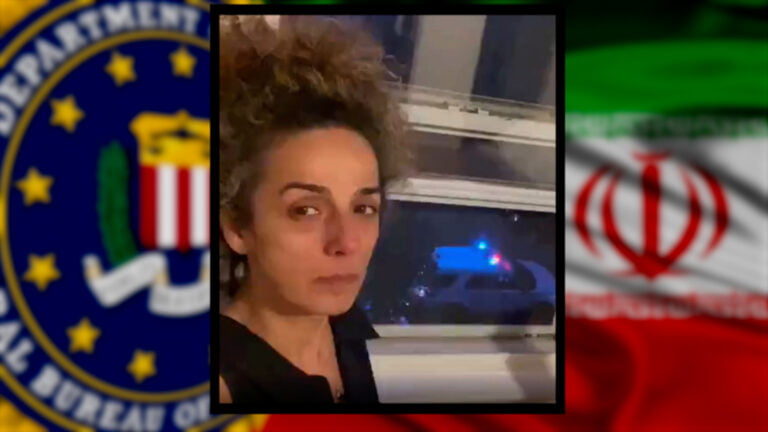
On Wednesday, July 14, the U.S. Justice Department charged four Iranians for an abduction plot against Iranian-American journalist Masih Alinejad. Alireza Shavaroghi Farahani, also known as Vezerat Salimi and Haj Ali, 50; Mahmoud Khazein, 42; Kiya Sadeghi, 35; and Omid Noori, 45, was involved in the plot, according to a DoJ indictment.

Furthermore, the indictment revealed that a resident of California, Niloufar Bahadorifar, also known as Nellie Bahadorifar, 46, is alleged to have provided financial services that supported the plot.

The Iranian opposition National Council of Resistance of Iran strongly condemned Tehran’s Ministry of Intelligence and Security’s plot against Ms. Masih Alinejad and four other Iranians in Canada and the United Kingdom, as reported by the U.S. Department of Justice and the media.

“For the past four decades, in addition to torturing, executing, and massacring political prisoners, Iran’s ruling religious fascism has always made the most of terrorism, kidnapping, and hostage-taking as well as all political, diplomatic, and economic resources as a tool against the opposition and to advance its criminal policies,” the NCRI statement read. “This regime must be shunned by the international community, and its leaders must be brought to justice for their crimes against humanity.”

Tehran orchestrated the plot while Iranian negotiators have already expressed their enthusiasm for prison swamp with the U.S. “Negotiations are underway on the exchange of prisoners between Iran and America, and we will issue more information if Iranian prisoners are released and the country’s interests are secured and the talks reach a conclusion,” said Ali Rabiei, the spokesman of outgoing President Hassan Rouhani’s cabinet, on April 27.

Iran’s Terror Attempts in the U.S. and Europe

However, the recent foiled kidnapping operation was neither the first nor the last of Tehran’s terrorist attempt in the U.S. or Europe. Back in August 2018, Ahmadreza Mohammadi-Doostdar, 38, a dual U.S.-Iranian citizen, and Majid Ghorbani, 59, an Iranian citizen and resident of California, were arrested in accordance with a DoJ indictment. They were charged with conducting surveillance and gathering information on behalf of Iran on the NCRI–U.S. Representative Office.

Source: Iran Focus

Also Read: Iran’s priorities clear once again with attempt to kidnap activists on U.S. soil

journalist journalist 
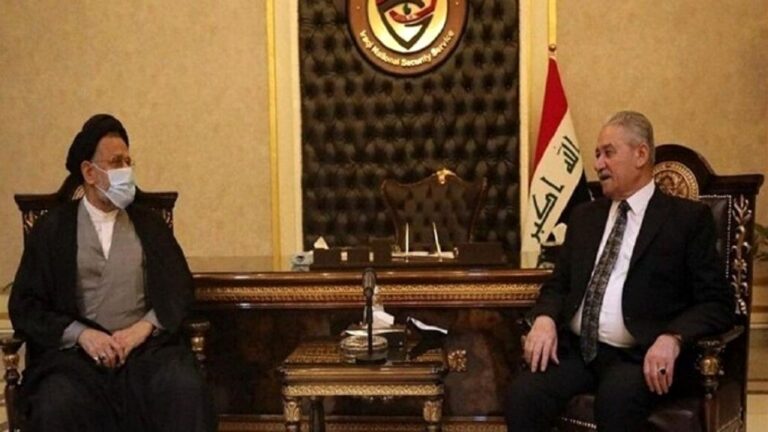
Iran Intelligence Minister in Iraq as militias continue striking US bases

Mahmoud Alavi, The Intelligence Minister of the Islamic Republic of Iran, met with Iraqi officials during his visit to Iraq this week.

In a meeting with Iraqi Parliament Speaker Mohamed al-Halbousi on Wednesday evening, Alavi stressed “Iran’s support in all areas of the Iraqi nation and government.”

Alavi also met with Iraqi National Security Advisor Qassim al-Araji and President Barham Salih.

The Visit of the Minister of Intelligence of the Islamic Republic of Iran to Iraq comes days after the head of the Islamic Revolutionary Guard Corps(IRGC) Intelligence Organization, visited the country.

Reuters quoted Iraqi sources as saying that Iran’s supreme leader Ayatollah Ali Khamenei had sent the head of the IRGC Intelligence Organization to Iraq last week to tell the country’s Shiite militias to continue striking US bases, until the full withdrawal of American troops from Iraq.

Iran-backed militias continued striking US bases, and American forces in Iraq and Syria were attacked several times following the visit by an Iranian delegation led by Revolutionary Guards intelligence chief Hossein Taeb, which came after deadly U.S. airstrikes against Iran-backed militias at the Syrian-Iraqi border on June 27.

Iran’s U.N. envoy this month denied U.S. accusations that Tehran supported attacks on U.S. forces in Iraq and Syria, and condemned U.S. airstrikes on Iranian-backed militants there.

The office of the Iraqi prime minister released a statement after the Iranian minister’s visit, saying President Joe Biden’s Special Coordinator for the Middle East has discussed advancing the process of withdrawing U.S. troops from Iraq with the country’s leadership, but a senior Biden administration official has denied the claim.

Earlier, the former Minister of Intelligence of the Islamic Republic, said, “Iraq is not only part of Iran’s influence circle, but it is also part of Iran’s culture, identity, and capital, as in the distant past.”

Also read: Iran’s priorities clear once again with attempt to kidnap activists on U.S. soil

In Historic Ruling, Court Finds Iran, Syria and Iranian Banks Responsible for Murder of American Citizen in Israel

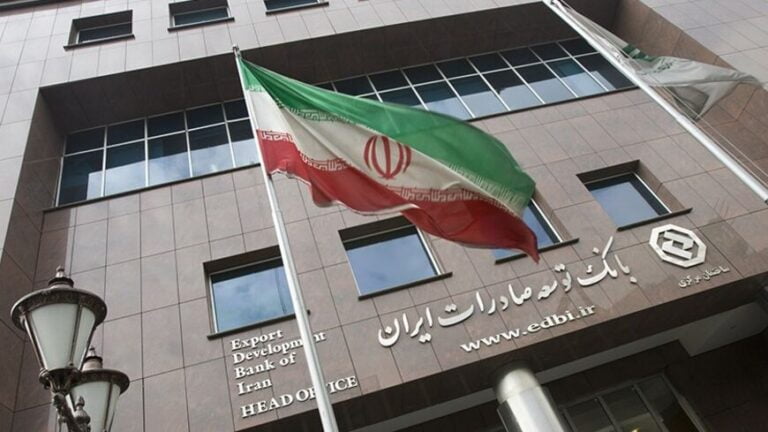
Stein Mitchell Beato & Missner LLP and MM~LAW LLC won a significant victory in the fight against terrorism yesterday, with a finding in the U.S. Federal court that Syria, Iran, the Iranian Revolutionary Guard Corps, the Iranian Ministry of Intelligence and Security, and three Iranian banks (Markazi, Melli, and Saderat) were all liable for Hamas’ brutal murder of American Eitam and his wife Naama Henkin in 2015.

This marks the first time that the courts have found Banks Markazi, Melli or Saderat liable for a terror attack by a foreign terrorist organization against a U.S. national. The verdict was announced yesterday in the United States District Court for the District of Columbia, with the Honorable Judge Royce C. Lamberth presiding.

Eitam and Naama Henkin were driving in Israel’s West Bank with their four children – then aged nine, seven, four, and ten months – when Hamas terrorists attacked them and killed them in front of their children. The children survived because their father Eitam, who was a citizen of the United States, and their mother, Naama, fought with the armed terrorists to save their lives. During the brawl, the gun held by the terrorist struggling with Naama fired killing Eitam and wounding the terrorist struggling with Eitam.

The orphaned children and the estates of their parents filed suit in 2019 under the terrorism exception to the Foreign Sovereign Immunities Act, a law used by U.S. victims of attacks by foreign terrorist organizations and their close family members to bring claims against state sponsors of terrorism, government agencies, and any commercial instrumentalities of those states. None of the defendants responded to the lawsuit.

The court’s lengthy ruling yesterday found that Iran and its proxies are liable under U.S. law for the murder of U.S. citizen Eitam Henkin, and liable under Israeli law for the harm suffered by Naama and the children stemming from Eitam’s murder.

Source: Yahoo

Also Read: Iran’s priorities clear once again with attempt to kidnap activists on U.S. soil

Biden needs to prepare for Iran’s escalating projectile threat

0

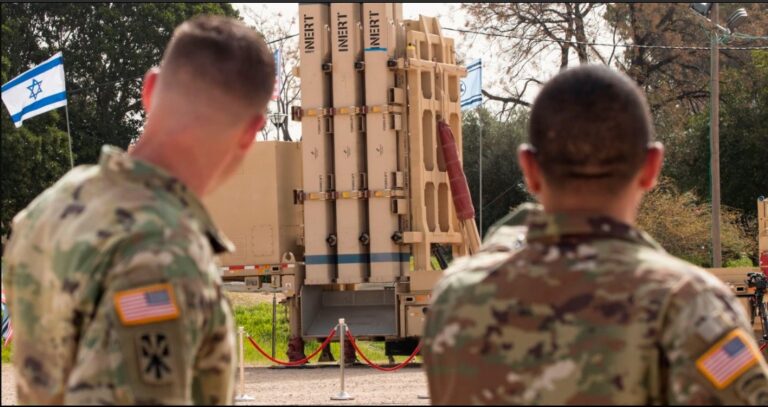
U.S. President Joe Biden recently ordered airstrikes against Iranian-backed militias, but that failed to stop them from rapidly escalating their rocket and drone campaign to drive the United States out of the Middle East. Last week the U.S. embassy in Baghdad came under multiple assaults as part of a larger acceleration of Iranian proxy attacks throughout the region. It’s little wonder: The Biden administration has invited this escalation by withdrawing vital air defense systems from Iraq, Saudi Arabia and other Middle East nations.

Rather than retreating, American needs to enhance our regional partners’ offensive and defensive capabilities. This requires a serious strategy based on stronger, consistent and more concerted U.S. military force to deter and eliminate these growing threats. Iranian-linked missiles, rockets, mortars and drones continue to be the most frequent threats to U.S. personnel, partners and interests in the Middle East.

The number of these munitions that groups in Iraq, Yemen and Syria have fired at U.S. service members, partners and interests, like vital oil facilities, have roughly doubled each year since 2018, according to data compiled by the Jewish Institute for National Security of America. The 228 projectiles used during 64 separate attacks this year are on pace to set a new annual record.

In particular, these groups increasingly use armed drones with maneuverability that poses a challenge for current air defenses. Compared to 2018-2020, when drones represented only 19 percent of the munitions Iranian proxies used, these weapons now account for 58 percent of the projectiles these groups launch against U.S. personnel, partners and interests.

Though President Biden has retaliated twice with airstrikes, on Feb. 25 and June 27 of this year, Iraqi militias nevertheless have launched 30 attacks on U.S. personnel in Iraq since Biden took office — including firing 46 rockets and drones against Americans in Iraq between the February and June U.S. strikes. This data underscores how the Pentagon’s current deployment of air defenses in the Middle East is insufficient and incapable of handling the ongoing threats.

Read the complete article at: Defense News

Also Read: Biden to Rivlin: Iran will never get a nuclear weapon on my watch

Iran’s priorities clear once again with attempt to kidnap activists on U.S. soil

US law enforcement has foiled an attempt by Iranian intelligence agents to kidnap activists, and has indicted four Iranian nationals with several conspiracy charges, the Justice Department announced on July 13.

Masih Alinejad, the targeted activist who worked for years as a journalist in Iran, long has been targeted by its theocracy after fleeing the country following its disputed 2009 presidential election and crackdown.

The Justice Department said in its statement that since January the Iranian intelligence team was planning to kidnap Alinejad and take her to Venezuela, a close ally of Iran in the Western hemisphere. The team studied ways to use a speedboat to take the victim through the sea to Caracas.

Alinejad said in an interview, “Around eight months ago the FBI told me that I am not safe in my own house and should move into a safehouse, but I did not take it seriously until the FBI produced photos of me and my family, showing that we were all under surveillance.

Press Secretary Jen Psaki called the Iranian plan a “dangerous and despicable reported plot” and said the Biden administration would continue to speak out against Iran’s attempts “to silence those peacefully working to address the situation both inside Iran and outside of Iran that are appalling.”

An Iranian Foreign Ministry spokesperson said Wednesday that accusations by U.S. authorities that Iran is plotting to kidnap activists abroad who criticized the country are “baseless and ridiculous.”

In 2019, a Paris-based Iranian dissident journalist named Ruhollah Zam was enticed by Iranian intelligence agents to travel to Iraq, where he was kidnapped and taken to Iran. He was executed last year after being convicted of sedition charges.

In a time when Iran’s poverty, crime, inflation, unemployment and covid-19 fatality rates are at an all-time high, the Islamic Republic continues to spend millions and billions of dollars on funding terrorist groups across the region and kidnapping activists abroad.

After the revelation, an Iranian journalist writes “With the money the Islamic Republic spent to abduct Masih Alinejad, it could have purchased 150,000 doses of AstraZeneca COVID-19 vaccines.”

Also read: Iran’s priorities become clearer as IRGC’s weapons show-off continues

Iran insists it can enrich uranium to 90% purity – weapons grade – if needed

Iran said on Wednesday it could enrich uranium up to 90% purity — weapons grade — if its nuclear reactors needed it, but added it still sought the revival of a 2015 deal that would limit its atomic programme in return for a lifting of sanctions.

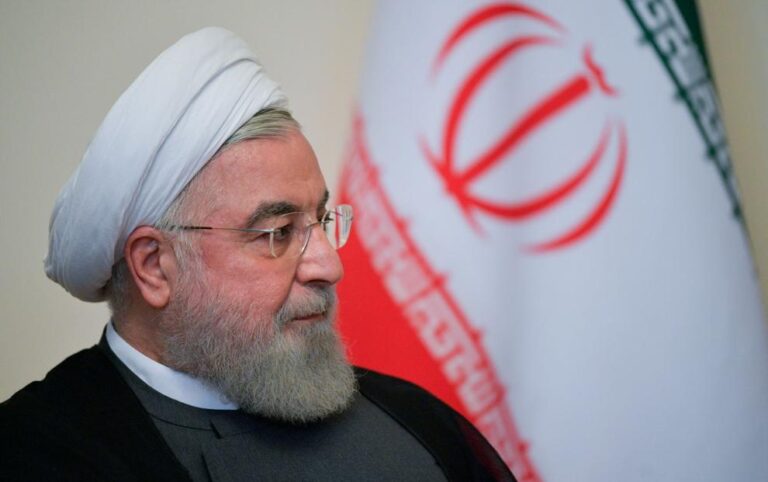
President Hassan Rouhani’s remark is his second such public comment this year about 90% enrichment — a level suitable for a nuclear bomb — underlining Iran’s resolve to keep breaching the deal in the absence of any accord to revive it.

The biggest obstacle to producing nuclear weapons is obtaining enough fissile material – weapons-grade highly enriched uranium or plutonium – for the bomb’s core.

Iran says it has never sought nuclear weapons.

“Iran’s Atomic Energy Organisation can enrich uranium by 20% and 60% and if one day our reactors need it, it can enrich uranium to 90% purity,” Rouhani told a cabinet meeting, Iranian state media reported.

The nuclear deal caps the fissile purity to which Tehran can refine uranium at 3.67%, well under the 20% achieved before the pact and far below the 90% suitable for a nuclear weapon.

Iran has been breaching the deal in several ways after the United States withdrew from the agreement in 2018, including by producing 20% and 60% enriched uranium.

Rouhani, who will hand over the presidency to hardline cleric Ebrahim Raisi on Aug. 5, implicitly criticised Iran’s top decision makers for “not allowing” his government to reinstate the nuclear deal during its term in office.

“They took away the opportunity to reach an agreement from this government. We deeply regret missing this opportunity,” the state news agency IRNA quoted Rouhani as saying.

Supreme Leader Ayatollah Ali Khamenei, not the president, has the last say on all state matters such as nuclear policy.

Like Khamenei, Raisi has backed indirect talks between Tehran and Washington aimed at bringing back the arch foes into full compliance with the accord. Former U.S. President Donald Trump quit the deal three years ago, saying it was biased in favour of Iran, and reimposed crippling sanctions on Tehran.

Read the complete article at: Reuters

Also Read: Biden to Rivlin: Iran will never get a nuclear weapon on my watch

Iranian hackers pretend to be experts targeting British scholars

0

From Washington-A group of infamous hackers affiliated with the Iranian Revolutionary Guard Corps are secretly targeting college professors and other professionals seeking sensitive information, according to a study by cybersecurity firm Proofpoint.

Proofpoint said in a new report released Tuesday that the group, known as TA453, has been approaching victims by pretending to be a British scholar at the School of Oriental and African Studies (SOAS) at the University of London since at least January. ..

Researchers were unable to independently confirm that the hacker group was part of the IRGC, but said they were “highly confident” that they supported the IRGC’s information gathering efforts. Stated. IRGC is a foreign terrorist organization designated by the United States.

Targets for the latest campaign included think tank experts in Middle East issues, top professors at well-known academic institutions, and journalists specializing in the Middle East. According to Proofpoint, most of the victims were previously targeted by the same hacker group.

“These groups have consistent information that the Iranian government is interested in, such as information on foreign policy, insights into Iran’s opposition, and an understanding of US nuclear negotiations,” the researchers write. It was. “Targeting seemed to be very selective, targeting less than 10 tissues.”

The company did not disclose the name of the target, but said it worked with authorities to notify the victim.

In this type of hacking campaign, known as credential harvesting, cybercriminals first email the victim and then link to a compromised website designed to steal malicious attachments or passwords. Will be sent.

As part of a recent operation, a group of IRGC-bound hackers broke the SOAS Radio website and sent victims a “registration link” to the site, researchers said. According to the report, the compromised website has been adjusted to obtain various credentials.

In one case, a hacker disguised as a “Senior Education Researcher” at SOAS sent the first email attempting to seduce a target with an invitation to an online conference on “US Security Challenges in the Middle East.” did. In an exchange confirming the victims’ interest in the meeting, the researchers said the hackers sent the target a “detailed invitation” to the fake event.

Read the complete article at: Eminetra

Also Read: Dissidents targeted by Iranian hacker Ferocious Kitten in a six-year surveillance campaign

Feds charge 4 in Iran plot to kidnap activist in US, others

An Iranian intelligence officer and three alleged members of an Iranian intelligence network have been charged in Manhattan with plotting to kidnap a prominent Iranian opposition activist and writer in exile and take her back to Tehran, authorities said Tuesday.

An indictment in Manhattan federal court alleges that the plot was part of a wider plan to lure three individuals in Canada and a fifth person in the United Kingdom to Iran. Victims were also targeted in the United Arab Emirates, authorities said.

The identities of the alleged victims were not released but Brooklyn-based Masih Alinejad confirmed that authorities had told her she was among the targeted victims.

“I knew that this is the nature of the Islamic Republic, you know, kidnapping people, arresting people, torturing people, killing people. But I couldn’t believe it that this is going to happen to me in United States of America,” Alinejad told The Associated Press.

Iran’s mission to the United Nations did not immediately respond to a request for comment. State media in Tehran did not immediately acknowledge the alleged plot, though Iran has become more aggressive in recent years about seizing opposition journalists and dissidents abroad amid tensions over its tattered nuclear deal.

The indictment acknowledges that, naming an exiled Paris-based journalist later seized by Iran and executed. Also named was a California-based member of an Iranian militant opposition group in exile whose family says he was abducted by Iran while staying in Dubai in 2020. Prosecutors alleged the Iranian intelligence officer had an electronic device containing a graphic of Alinejad alongside those two men, prosecutors said.

Alinejad, who worked for years as a journalist in Iran, long has been targeted by its theocracy after fleeing the country following its disputed 2009 presidential election and crackdown.

She is a prominent figure on Farsi-language satellite channels abroad that critically view Iran and has worked as a contractor for U.S.-funded Voice of America’s Farsi-language network since 2015. She became a U.S. citizen in October 2019.

Read the complete article at: Bennington Banner

Also Read: U.S. imposes sanctions against Iran over the 2007 abduction of former FBI agent

kidnap kidnap 

Iranian head of Intelligence orders Iraqi militias to attack U.S. forces

0

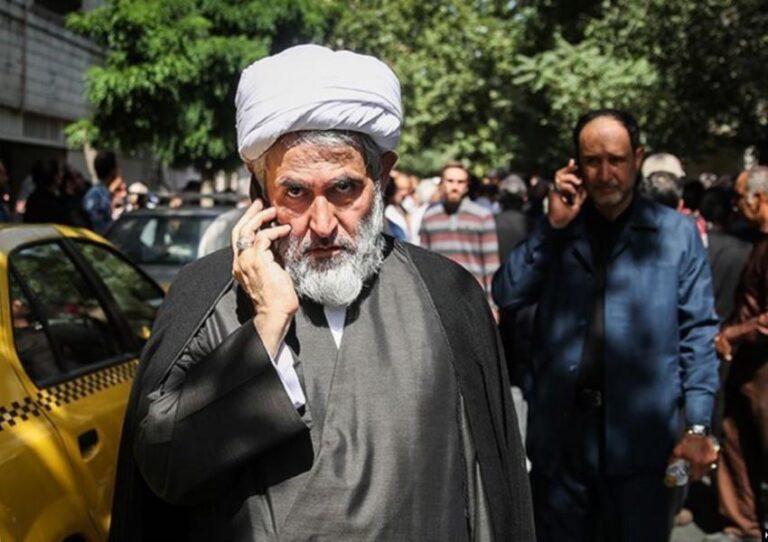
Reuters quoted two well-informed Iraqi sources and a security official in Baghdad as saying that Iran’s supreme leader Ayatollah Ali Khamenei, had sent Hossein Taeb, the head of the Islamic Revolutionary Guard Corps(IRGC) Intelligence Agency to Iraq, to tell the country’s Shiite militias to continue to attack U.S. forces, until their full withdrawal from Iraq.

Reuters added that after Quds Force commander Ismail Qaani failed to convey the message to Iraq’s Shiite militias, Hossein Taeb was tasked with delivering the message to them once again. These actions clearly demonstrate that Khamenei is now personally interfering in Iraqi affairs after the U.S. killing of Qasem Soleimani.

Taeb’s meeting with Iraqi Shiite militia commanders took place in Baghdad last week, during which the head of the IRGC’s intelligence agency conveyed a message from Ali Khamenei urging Iraqi militias not to overstep their retaliatory operations against U.S. forces since it would lead to heightened tensions between the U.S. and Iran. However, Hossein Taeb has called on Iraqi militias to expand their range of attacks on U.S. forces stationed in Syria.

A senior Guards figure, Taeb is a mid-ranking Shi’ite cleric seen by insiders and analysts of Iranian politics as close to Supreme Leader Ayatollah Ali Khamenei.

In the past few weeks, Iraqi Shiite militias have targeted U.S. bases and positions in Iraq by drones carrying explosives, and in order to carry out these attacks, the IRGC has provided its militias in Syria and Iraq with aerial maps of U.S. bases in respective countries.

An Iraqi government official has told Reuters that the Iranian government intends to use its allies in Iraq to force the U.S. government to return to the JCPOA by accepting Tehran’s terms.

Some Western and Iranian officials have said the talks are a long way from a conclusion, as disagreements on which U.S. sanctions should be lifted and on the nuclear commitments that Iran has to make and when still remain in place.

Source: Reuters
Also read: Iran cozies up with Taliban in Afghanistan

Two scientists smuggled out of Iran before nuclear mastermind assassination

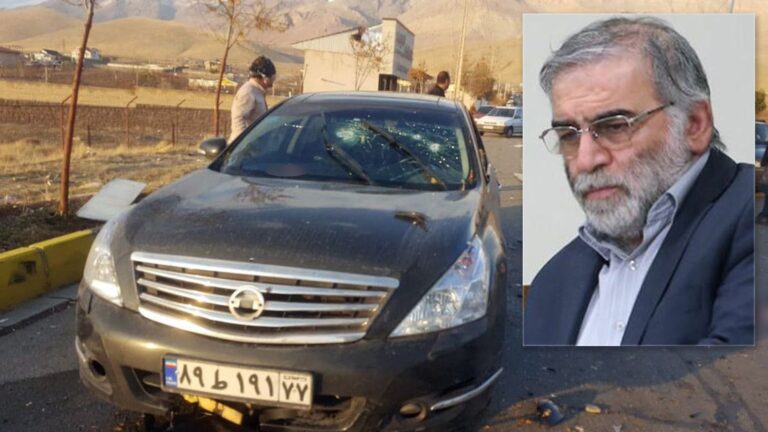
The US smuggled two Iranian Defence Ministry scientists out of the country only two weeks before the assassination of nuclear mastermind Mohsen Fakhrizadeh, Ensaf News quoted a former security official as stating.

Ensaf News’s report has reportedly prompted the Iranian authorities to threaten the news website, which is known for its ties to reformist forces, and pressure it to remove the report from the website.

Quoting an unnamed former Iranian intelligence officer, Ensaf News, wrote that before Mohsen Fakhrizadeh’s assassination, two “scientists” from the Sepand Institute affiliated with the Iranian Ministry of Defense were smuggled out of the country by the United States.

The former officer also mentioned Fakhrizadeh had survived several unsuccessful assassinations, and that he was famous for being very difficult when it came to protection, refusing to be accompanied by guards.

Fakhrizadeh, a prominent commander of Iran’s Islamic Revolutionary Guard Corps(IRGC) and one of the most important figures in Iran’s nuclear program, was killed in Absard, Damavand, on November 28, 2020, during an attack connected to the Israeli Mossad.

The security officer pointed to divisions and rivalries between Iran’s intelligence agencies and added that Fakhrizadeh’s name was leaked to the assassins following reports about the theft of the nuclear programme official documents by Israel.

Referring to the case of Maziar Ebrahimi, who was falsely accused of assassinating nuclear scientists, the former intelligence officer stated: “They might have done the same for the assassination of Fakhrizadeh, since they have failed to catch the real culprits”

Maziar Ebrahimi was charged in 2012 with involvement in the assassination of Iranian nuclear scientists and remained in prison until 2014 when his innocence was proven.

In 2019, Ebrahimi told the story of how he was arrested and tortured, revealing that he was the victim of disputes between the Ministry of Intelligence and IRGC’s Intelligence Organization, which arrested, tortured, and imprisoned more than a hundred people without evidence to cover up their own failures.

Also read: Iran cozies up with Taliban, fearing ISIS threat in Afghanistan