Home Blog Page 651

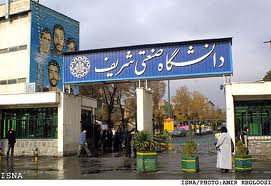
44 Days after Arrest, Secretary of the Sharif University Islamic Association in Solitary Confinement

Sunday, April 3, 2011

More than 40 days after his arrest, Ali Akbar Mahmoud Zadeh (Secretary of the Sharif University Islamic Students Association) is in solitary confinement and under heavy pressure. As the interrogators’ claim that he is “not confessing to sins”, based on the latest reports Mahmoudzadeh is being intimidated until he confesses to the crimes.  Currently, Mahmoudzadeh is at the Evin Prison’s Section 240 solitary confinement. According to his former inmates, Mahmoudzadeh endured intense physical torture. On February 15, 2011, Mahmoudzadeh was beaten up and arrested in front of Sharif University. Since then, he only made three short telephone calls to his family. Throughout the past two years, the Investigations Office at the Ministry of Intelligence many times summoned, threatened, and interrogated this student activist.


Imprisoned student activist in coma, transferred to hospital

April 2, 2011

According to the Daneshjoo News website, since the onset of Arash Sadeghi’s hunger strike on March 15, 2010 until the present, his physical condition has severely deteriorated. The effects of torture by government agents has been so severe that the student activist fell into a coma today, forcing the Evin prison officials to transfer him to Modarres hospital.

A few days ago, due to the tortures inflicted on Arash Sadeghi in ward 209 of Evin prison, his shoulder blade and ribs were broken. The prison guards refused to send Arash Sadeghi to the prison clinic. Instead, he was transferred to solitary confinement.

According to the Arash Sadeghi Facebook page, prison officials informed the Sadeghi family that their son passed out as a result of severe weakness.

In a phone conversation with Arash Sadeghi’s family members, security officials instructed them to not visit him in the hospital since it is not permitted. Nevertheless, Arash Sadeghi’s family still intended to go.

Source

132 prisoners at risk of imminent execution in Isfahan

April 2, 2011

RAHANA- Last year 191 citizens were sentenced to death based on charges ranging from trading illegal substances, assault, and throwing stones. The Amnesty and Forgiveness Commission under the jurisdiction of Gholamhossein Ansari granted clemency to 59 of these individuals while denying it to the rest. Plans are to carry out the executions by hanging of the remaining 132 prisoners in the next few weeks.

Mohammad Mostafai, spokesperson for Human Rights House of Iran said, “These death row prisoers have a legal right to amnesty and forgiveness. In the city of Isfahan, in order to conceal the numbers of those executed every month, prisoners are hung in secret and their corpses delivered to their families. Those convicted to death are not provided with acceptable legal support. None of them had legal council when their interrogations and trials took place. They had to use court appointed legal assistance with major honorariums for their appeals.”

As reported by the Isfahan Judiciary Public Relations Agency, Dr. Gholamreza Ansari presided over sixteen of the Amnesty Commission sessions, overseeing 874 files out of the total 1550 reviewed. He said, “out of the these, 271 received amnesty or reduced sentences, while 502 were denied amnesty due to lack of evidence against their crimes. Also 35 people were granted an exemption from payment when their files were transferred to the Amnesty Commission.”

The Director of Isfahan’s Amnesty Commission announced the result of their file reviews for 191 citizens convicted to death saying, “Of these numbers, 59 individuals received commuted sentences while 132 individuals who were not qualified were denied amnesty.”

This commission reviews files of prisoners regarding the possibility for amnesty every 15 days.

Source

Iran engaged in espionage on Norwegian soil

0

April 2, 2011

Mohammad Reza Heydari, Iran’s former diplomat to Norway, claims he knows Iranian embassies around the world monitor their citizens abroad to divide groups opposed to the Iranian government, NRK reports.

“Iran operates via its embassies by contacting people with economic or psychological problems because they cannot travel to Iran. Another method it uses is to chart people and contact them using others who are in communication with the embassy,” he said.

An anonymous asylum seeker NRK spoke to alleges he was approached by representatives of the Iran embassy who proposed helping him with his application in exchange for reporting sensitive details about opposition members in Norway.

“They offered to give me cash and pay attorney fees, saying they could send me to another country to seek asylum there if it was denied. In one of the meetings, they gave me equipment to make recordings,” he said.

The asylum applicant claims he specifically instructed to monitor Mr Heydari, who resigned his post last year in protest over the Iranian regime’s crackdown on demonstrations in the country in 2009.

“I told them hidden surveillance is spying and is illegal in Norway, asking them who would help me should I be arrested by the police. They answered the embassy could help assist me with that part of the job,” he said.

Espionage by Iran conducted on foreign countries including Norway has increased since last year’s reelection President Mahmoud Ahmadinejadi, according to a member of the Iranian opposition group who wished to remain anonymous.

“Iran has a policy directed against its own nationals living in a foreign country of doing everything it can that prevents a strong opposition to the regime being established abroad,” the individual told NRK.

The Iranian Embassy in Oslo did not wish to comment when contacted by NRK at the time.

Source

Kuwait unveils 8 spy cells employed by Iran: report

0

April 2, 2011

One of the recently discovered Iranian spy cells in Kuwait belongs to a group of eight spy cells operating in the country; two of which are armed and their members have been trained on bombings, the Kuwait al-Qabas daily quoted a top official as saying on Friday.

The official warned that the Iranian Revolutionary Guards had employed a number of Lebanese and Syrian citizens in those spy cells, as well as a number of stateless residents in the country, Al Arabiya reported.

The source said they were accused of gathering information on Kuwaiti and U.S. military sites for Iran’s Revolutionary Guards.

Kuwait announced Thursday it is to expel a number of Iranian diplomats for alleged spying that dates back to the 2003 invasion of Iraq, in a fresh blow for Arab-Persian ties across the Gulf.

Kuwait’s foreign minister said his government had withdrawn its ambassador from Tehran, but Iran denied interfering in Kuwait’s internal affairs.

Sheikh Mohammed al-Salem al-Sabah accused Iran’s elite Revolutionary Guards of being behind a spy cell in Kuwait, whose relations with Iran have deteriorated over the past year.

“The government will take the required actions towards the (three) diplomats and they should be kicked out,” the foreign minister told reporters at the Kuwaiti parliament. He gave no time frame for any expulsion.

Earlier this week, a Kuwaiti court sentenced three men — two Iranians and a Kuwaiti — to death for being part of an alleged Iranian spy ring in a case that has strained relations between Kuwait and Tehran.

“Kuwait only expresses its goodwill towards … its neighbor Iran, but in return we see that the Revolutionary Guards planted this cell to target the security of Kuwait,” Sheikh Mohammed said.

Gulf Arab countries are concerned over what they see as the ambition of Iran, a non-Arab Shiite Muslim power, to extend its influence in Arab countries mostly under Sunni rule.

Source

Bloggers Against the Death Penalty (BADP) condemn the ban on treatment of the political prisners in Iran and regards it as pre-mediated

March 31, 2011

This week Mr। Mohsen Dogmechi, 53, and a political prisoner, passed away in a hospital in Tehran after months of Mr। Dogmechi was arrested on charges of helping the families of political prisoners and having a daughter in Camp Ashraf, Iraq. Mr. Dogmechi was diagnosed with pancretic cancer a few months ago. However, the prison officials did not allow chemotherapy or other treatments. Mr. Dogmechi’s family were denied visitations. A cell-mate wrote that even when Mr. Dogmechi was taken to the hospital when his condition became critical, the officials cuffed his hands and feet and his family were not allowed to visit him. Mr. Dogmechi’s death was a premediated murder. The prison officials acilitated Mr. Dogmechi’s death, at the age of 53, by denying him medication and treatment. Denying mecication and treatment is a common way of torturing the political prionders in Iran, and has not been recognized by international organizations. Mr. Dogmechi’s tragic death should draw attention to the inhumane conditions of the prisons in Iran and in particular those who suffer from sever illnesses. Hossein Ronaghi Maleki, Mansour Osanlu, Hadi Abed Bakhoda, Farah Vazehan, Arash Sadeghi, Zahra Jabari and Hamed Rouhi Nejad are among the political prisoners who need immediate expert medical attention outside the prison. BADP condemns the non-treatment policy of the political prisoners, as a long and painful execution process. BADP urges all bloggers, journalists and human rights activists to contact the international and local organizations as well as the Human Rights Council of the United Nations and ask them to use all their power to stop this inhumane elimination policy of the political prisoners in Iran. Bloggers Against the Death Penalty

Source

Bahareh Hedayat and Mahdieh Golrou Banned from Prison Visits

March 31, 2011

According to the Human Rights House of Iran, Mahdieh Golrou and Bahareh Hedayat have once again been banned from weekly visits with their families. The two individuals are currently in the Methadone Ward of Evin Prison and are serving their sentence while their rights are constantly violated. Hedayat has been sentenced to 9.5 years in prison and Golrou has been sentenced to 2 years and 4 months in prison.

Source

Political prisoner Zahra Jabri on verge of death

March 31, 2011

Reports indicate that political prisoner Zahra Jabbari, has fallen in to a coma due to the lack of medical care, and is on the verge of death.

Ms. Jabbari, 37, who is currently imprisoned in Evin, has been suffering from severe heart disease.  Since Saturday, the clerical regime had been denying her proper medical treatment, and delayed her transfer to the hospital, jeopardizing  her life.

Jabbari, a mother of a four year old infant, was arrested in the Persian month 27th of Shahrivar 88, on the sole charge of having  her two brothers and a sister in Camp Ashraf, Iraq. While imprisoned she has been faced with severe pressure and torture.

Zahra Jabbari protested her conditions in her so called trial, and detailed her brutal treatment, including the pulling of her toe nails. Her defiance has earned her increased ire by the regime. As a result the regime has tried to break her by denying her treatment for her her severe rheumatic heart disease as a method of torture. She had been suffering from acute heart disease and the denial of treatment has caused her illness to escalate and paralyzed her from movement for months.

Source

Iran: Sentencing of two human rights defenders

March 30, 2011

URGENT APPEAL

The Observatory for the Protection of Human Rights Defenders, a joint programme of the International Federation for Human Rights (FIDH) and the World Organisation Against Torture (OMCT), requests your urgent intervention in the following situation in Iran.

Description of the situation:

The Observatory has been informed by reliable sources of continuing acts of harassment against human rights defenders in Iran.

On March 16, 2011, the lawyer of Mr. Kaveh Ghassemi Kermanshahi, Iranian journalist member of the Central Council of the Human Rights Organisation of Kurdistan, also signatory of the “One Million Signatures Campaign” and a member of the student alumni group ADVAR, was notified that his client had been sentenced in appeal to four years in prison by the Revolutionary Court in Kermanshah for allegedly “acting against national security” and “propaganda against the regime” by giving interviews to the media and publishing news and reports about families of political prisoners and victims. The latter has been harassed over the past years[1], and had been sentenced on January 30, 2011 to five years imprisonment in first instance[2].

In addition, on March 17, 2011, Mr. Abdolreza Tajik, journalist and human rights activist, was sentenced by Branch 26 of the Revolutionary Court to a total of six years in prison, i.e. five years for “membership in an illegal group”[3]; and one year for “propaganda against the regime”. Furthermore, Mr. Tajik remains accused of “publishing false reports in order to disrupt public opinion”, and the court has not yet issued a sentence for that charge. He remains free on bail, and intends to appeal this sentencing.

The Observatory condemns these sentences against Mr. Kaveh Ghassemi Kermanshahi and Mr. Abdolreza Tajik which clearly aims at sanctioning their human rights activities. The Observatory therefore urges the Iranian authorities to drop all proceedings against them as well as the additional charges brought against Mr. Tajik.

Actions requested:

Please write to the Iranian authorities and ask them to:

i.              Guarantee in all circumstances the physical and psychological integrity of Mr. Kaveh Ghassemi Kermanshahi and Mr. Abdolreza Tajik as well as all human rights defenders in Iran;

ii.             Put an end to acts of harassment – including at the judicial level – against them as well as against all human rights defenders in Iran;

iii.            Conform in any circumstances with the provisions of the Declaration on Human Rights Defenders, adopted on December 9, 1998 by the United Nations General Assembly, in particular its:

–          Article 1, which states that “everyone has the right, individually or in association with others, to promote the protection and realization of human rights and fundamental freedoms at the national and international levels”;

–          Article 5 (b) which provides that “for the purpose of promoting and protecting human rights and fundamental freedoms, everyone has the right, individually and in association with others, at the national and international levels to form, join and participate in non-governmental organizations, associations or groups”;

–           Article 6  (b) and (c) which states that “Everyone has the right, individually and in association with others, as provided for in human rights and other applicable international instruments, freely to publish, impart or disseminate to others views, information and knowledge on all human rights and fundamental freedoms;  to study, discuss, form and hold opinions on the observance, both in law and in practice, of all human rights and fundamental freedoms and, through these and other appropriate means, to draw public attention to those matters”,

–          and Article 12.2 which provides that “the State shall take all necessary measures to ensure the protection by the competent authorities of everyone, individually and in association with others, against any violence, threats, retaliation, de facto or de jure adverse discrimination, pressure or any other arbitrary action as a consequence of his or her legitimate exercise of the rights referred to in the present Declaration”;

iv. Ensure in all circumstances respect for human rights and fundamental freedoms in accordance with international human rights standards and international instruments ratified by Iran.

Addresses:

– Leader of the Islamic Republic, His Excellency Ayatollah Sayed Ali Khamenei, The Office of the Supreme Leader, Shoahada Street, Qom, Islamic Republic of Iran, Faxes: + 98 21 649, + 98 21 649 / 21 774 2228, Email: [email protected] / [email protected] / [email protected] / [email protected]

– President Mr. Mahmoud Ahmadinejad, the Presidency, Palestine Avenue, Azerbaijan Intersection, Tehran, Islamic Republic of Iran, Fax: + 98 21 649 5880.

– Head of the Judiciary, His Excellency Ayatollah Sadeq Larijani, Ministry of Justice, Park-e Shahr, Tehran, Islamic Republic of Iran, Fax: +98 21 879 6671 / +98 21 3 311 6567, Email: [email protected] / [email protected]

– Minister of Foreign Affairs, Ministry of Foreign Affairs, Sheikh Abdolmajid Keshk-e Mesri Av, Tehran, Islamic Republic of Iran, Fax: +98-21-66743149, Email: [email protected]

– Permanent Mission of the Islamic Republic of Iran, Chemin du Petit-Saconnex 28, 1209 Geneva, Switzerland, Fax: +41 22 7330203, Email: [email protected]

– Embassy of Iran in Brussels, 15 a avenue Franklin Roosevelt, 1050 Bruxelles, Belgium, Fax: + 32 2 762 39 15. Email: [email protected]

Please also write to the diplomatic representations of Iran in your respective countries.

***

Paris-Geneva, March 29, 2011

Kindly inform us of any action undertaken quoting the code of this appeal in your reply.

The Observatory, a FIDH and OMCT venture, is dedicated to the protection of Human Rights Defenders and aims to offer them concrete support in their time of need.

To contact the Observatory, call the emergency line:

▪    Email: [email protected]

▪    Tel and fax FIDH: +33 (0) 1 43 55 25 18 / 01 43 55 18 80

▪    Tel and fax OMCT: + 41 22 809 49 39 / 41 22 809 49 29

[1] See Observatory Urgent Appeal IRN 002 / 0210 / OBS 015.

[2] See Observatory Press Release of February 8, 2011.

[3] Reportedly for his alleged membership in the Defenders of Human Rights Centre (DHRC), even though this organisation has not  been outlawed, and even though Mr. Tajik is not a member and only cooperated in the preparation of reports.

Source

Hossein Ronaghi-Maleki in grave condition

March 30, 2011

According Radio Farda, Iranian blogger Hossein Ronaghi-Maleki is in grave condition in Tehran’s Evin prison.

Ahmad Ronaghi-Maleki, the father of Hossein Ronaghi-Maleki spoke to Radio Fardo on March 29, and warned that his son’s kidney condition has become dire, and that Hossein needs surgery immediately.
Hossein Ronaghi-Maleki, is a 24 year old blogger who was arrested in December 2009, and given a 15 year sentence.

Ronaghi is primarily known for his blogging, and activism against the regimes electronic censorship. His activities included finding ways to subvert the regimes internet filters.

Ronaghi-Maleki is currently in section 350 of Evin prison, and had spent more than year in solitary confinement before being transferred there.

This news comes in the wake of the death of political prisoner Mohsen Dokmehchi , due to medical negligence while he was imprisoned.

Source