Home Blog Page 664

IAEA has new info on alleged nuclear weapons work by Iran

0

February 26, 2011

VIENNA (AFP) — The UN nuclear watchdog said Friday it had received new information on allegations of possible military dimensions to Iran’s controversial nuclear programme.

The International Atomic Energy Agency has been investigating the Islamic republic’s disputed atomic drive for a number of years now, with a whole range of issues still unresolved, among them allegations that Iran had undertaken studies to build a nuclear payload for a missile.

In a restricted new report, a copy of which was obtained by AFP, the IAEA said Iran was still refusing “to discuss a number of outstanding issues related to possible military dimensions to its nuclear work.”

Indeed, “additional information… has come to the (agency’s) attention August 2008, including new information recently received” which gave rise to “further concerns,” the report said.

“Iran is not engaging with the agency in substance on issues concerning the allegation that Iran is developing a nuclear payload for its missile programme,” the report said.

Source

Political Prisoner Mohsen Dokmechi in danger of death from untreated cancer

0

February 26, 2011

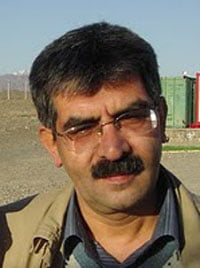
Mohsen Dokmechi’s liver cancer is spreading and his condition is continuing to detoriate. Mohsen Dokmechi was diagnosed with cancer 6 months ago , while facing inhumane conditions Evin prison. The Iranian regime has continued to refuse treatment to Dokmechi and it appears his condition has worsened such that he is near death.  Dokmechi’s condition has been described as severe, and doctors have insisted he should recieve treatment, or be given medical leave, however the Iranian regime has refused all such requests

Source

Iran’s Internet Restrictions

0

February 26, 2011

Access to internet in Iran is limited. Websites Facebook and Twitter are blocked along with a number of international news sites such as the BBC. Images from inside a Tehran internet cafe. Tehran, Iran. 24/02/2011

Still, with knowledge and software, it is possible to get around the “great firwall of Iran”. But reports suggests that Iranian authorities have gradually become better at filtering the traffic.

In the first few years of the 21st century, Iran experienced a great surge in Internet usage, and, with 20 million people on the Internet, currently has the second highest percentage of its population online in the Middle East, after Israel.

When initially introduced, the Internet services provided by the government within Iran were comparatively open. Many users saw the Internet as an easy way to get around Iran’s strict press laws. A clampdown started with the election of Iranian president Mohammad Khatami, and the start of the 2nd of Khordad reform movement. It worsened with the administration of conservative president Mahmoud Ahmadinejad in 2005. Regime opponents in Iran are said to rely heavily on Web-based communication with the outside world.

Many bloggers, online activists, and technical staff have faced jail terms, harassment and abuse. In November 2006, Iran was one of 13 countries labeled “enemies of the internet” by activist group Reporters Without Borders. In March 2010, it was one of twelve regimes so labeled. Following the 2009 Iranian presidential election, the U.S. Senate ratified a plan to help curb “censorship in the Islamic Republic”. The legislation dubbed the Victims of Iranian Censorship (VOICE) Act was allocated $50 million to fund measures “to counter Iranian government efforts to jam radio, satellite, and Internet-based transmissions.”

Recently, the Iran government required all Iranians to register their web sites in Ministry of art and culture. They also plan to filter all other websites up to March 2007.

Source

U.S. lobbies for UN rights sleuth on Iran-diplomats

0

February 26, 2011

GENEVA, Feb 24 (Reuters) – The United States is quietly lobbying to establish a United Nations special investigator on human rights abuses in Iran, for the first time in a decade, diplomats and activists said on Thursday.

The U.S. delegation to the U.N. Human Rights Council has sought support from countries in all regions for a draft resolution that would put Iran’s government back in the international limelight for alleged violations, they added.

U.S. Secretary of State Hillary Clinton and Iranian Foreign Minister Ali Akbar Salehi are to address the 47-member forum on Monday at the start of a three-week session. The two countries are at odds over Iran’s nuclear programme which Washington and its allies fear is aimed at developing atomic weapons.

“The Americans are fairly determined to have a mandate created for a special rapporteur on the situation in Iran. It would be a strong symbolic and political signal,” said one Western envoy.

The European Union supports the move, in view of persecution of human rights defenders in Iran and the sharp rise in the number of executions since the start of the year, he said. The EU bloc has seven members on the Council.

But Iran and its allies among developing countries are expected to denounce the resolution and demand it be put to a vote rather than be adopted by consensus, diplomats said.

“It should pass. We would expect about one-third of the states to be in favour, one-third against and one-third to abstain,” the Western envoy said.

The U.S. diplomatic mission in Geneva declined to specifically confirm the move, but voiced concern at the human rights situation in Iran saying it had deteriorated significantly since a contested presidential election in 2009.

“We are discussing with other members of the council on appropriate next steps to support Iranian human rights and express solidarity with the people in Iran who seek to exercise those rights freely and without fear,” a U.S. spokesman in Geneva told Reuters in response to an inquiry.

Iran had persistently refused to cooperate with existing U.N. investigators on specific themes, creating concern in the council that focused action on Iran may be warranted, he said.

“The Americans are trying to get everything in place so it works. It is very much their initiative,” one human rights activist told Reuters.

Since Iran’s 2009 presidential election, hundreds of reformists have been detained and put on trial in a crackdown on the pro-reform opposition. The election was followed by street protests, the most serious unrest since the Islamic Republic was founded in 1979. The state quashed the turmoil, blaming it on “seditionists” backed by its foreign enemies.

Mass detentions and trials followed the vote and two people were executed. The opposition says the vote was rigged but the authorities have strongly denied allegations of fraud.

Iran has witnessed a dramatic increase in executions so far in 2001, the U.N. human rights office said earlier this month. The rate was three times that of last year, with at least 66 people executed in January, it said.

The Council’s predecessor body, the U.N. Human Rights Commission, had a series of special rapporteurs on Iran from 1984 to 2002. The last independent U.N. investigator, Maurice Capithorne of Canada, was last allowed into the country in 1996.

Source

Warrant Issued for Mother of Blogger Hossein Ronaghi

0

February 26, 2011

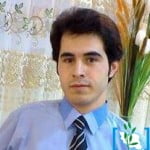
The family of Hossein Ronaghi-Maleki has been under constant pressure during the 16 month period since his arrest. According to the Human Rights House of Iran, a warrant has been issued for Hossein’s mother Zoleikha Mousavi. Last week, Zoleikha Mousavi and her husband were summoned to the Intelligence Ministry.

In the past several months, Hossein Ronaghi’s parents were summoned to the Intelligence Ministry and interrogated several times. They have even been interrogated about the reporters who had contacted them in order to get an update on the condition of their son.

They were not allowed to visit Hossein this week. Ronaghi is in critical condition due to his kidney problems and is in urgent need of surgery.

Hossein Ronaghi Maleki who has been imprisoned since December 13, 2008 has been sentenced to 15 years in prison.

Source

Four Students and One Faculty Member of Amir Kabir University Arrested

0

February 26, 2011

The identity of 5 other detainees has been revealed. Abdollah Sadri, Faculty member of Amir Kabir University, was detained on February 14th. Mohammad Ehsan Moezi, Farshad Mousavi, Fojan Shafaei and Mehrdad Farnoosh are among the detainees of February 20th. There is no information as to their condition or whereabouts. Many Amir Kabir University students have been detained and released in the recent days.

Source

Mousavi And Karroubi Moved To IRGC House-Prison Around Tehran, Says Informed Source

26th February 2011

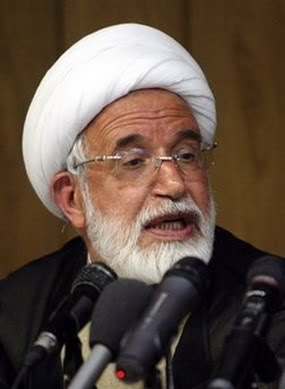
As contradictory news about the house arrest or imprisonment of the two Iranian opposition leaders, Mehdi Karroubi and Mir Hossein Mousavi, is reported and circulated, an informed source told the International Campaign for Human Rights in Iran that the two political dissidents are no longer under house arrest and have been moved to a “safe house” in an area close to Tehran. The source denied earlier news published on a number of news websites about physical abuse of the two leaders as reported by some sources earlier. He added that Mousavi and Karroubi’s detention location is not a prison.

No official source has yet assumed responsibility for the unofficial arrests of the two reformist leaders. Additionally, in an unprecedented move, the two dissidents were arrested secretly without being summoned or charged, and their contact with the outside world was severed. Some reports received by the Campaign indicate that the Islamic Revolutionary Guard Corps is responsible for the detention of the two political dissidents.

While it was reported that one of the opposition leaders, Mehdi Karroubi, was under arrest inside his home, a few hours ago one of his neighbors told the International Campaign for Human Rights in Iran that there are no security forces present on Karroubi’s street any longer. “I am certain that they are no longer inside their home. All the windows are broken and nobody is home,” his neighbor told the Campaign.

Describing the residential complex in which Karroubi lives, the source added, “Because there are many foreign embassies in the Farmanieh area’s North Dibaji neighborhood, usually there is very high security in that area; the police make routine rounds. Many authorities live in homes in this area. Last night and today, Karroubi’s home was extremely quiet and vacant of any government forces, and unlike previous days, no forces were in sight.”
“Considering Karroubi’s home is located in such an area, dense with embassies, during recent days plainclothes forces threw acoustic bombs into their home on several occasions without any restrictions from the police. They disrupted their neighbors’ peace and nobody could do anything about it either. Yesterday, the street was swarming with forces from the police station, but there was nothing going on today. There is a rumor going around town that they have been arrested,” the local source told the Campaign.

Previously, Mir Hossein Mousavi and Zahra Rahnavard’s daughters reported in an open letter that the lights to their parents’ home had not been turned on for three consecutive nights. An eye witness in Tehran’s Pastor neighborhood, where Mir Hossein Mousavi and his wife Zahra Rahnavard live, also told the Campaign that no comings and goings into the house on Akhtar Alley have been observed, not even for delivering food items. Iron bars were installed on the alley leading to the couple’s home last week, barring any traffic into and out of their property.

Source

Internal report from Basij on unrest in Iran capital

0

February 26, 2011

Tehran, Feb. 26 – Iran Focus has obtained an internal report by a commander of the Islamic Revolutionary Guards Corps about the 20 February anti-government protests in Tehran. The commander of the IRGC Mohammad Corps, responsible for the protection of Tehran, said the following in an internal report to his superiors:


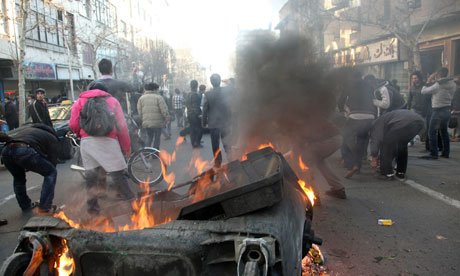
On 20 February, around 4:00 pm, I was around Vali Asr junction. The crowd pretended as though it is regular people. It was, however, obvious that they had come out being specifically organised, walking toward Enqelab Square. People from all walks of life, young and old, had joined each other.

The crowd was quiet around Vali Asr Square, but from Vesal Street to Vali Asr junction there was mayhem. A huge crowd was moving toward Enqelab Square.

I had done the same thing on 14 February. I went around many neighbourhoods in the vicinity of Enqelab Square and regrettably saw some terrible incidents. The protesters were beating up the Bassijis. They even dragged three Bassijis from their bikes and beat them up severely.

The crowd on 20 February was quite well organised. They were not ordinary people and seemed quite angry. I could see the rage in their eyes. I spoke to some of them, was scared and stepped away. The young protesters beat up a couple of Bassijis who were wearing camouflage uniforms.

The Bassijis are quite naïve. I saw one of them beaten up badly after he began chanting slogans in support of [Supreme Leader] Ali Khamenei. He was lucky to escape; otherwise he would have been killed. The crowd was so angry that I was scared to intervene.

While walking, I was angry with myself and was praying to God Almighty to help the Leader overcome this critical situation. The people were quite enraged. I hope this thing does not repeat itself.

A commander of the IRGC’s Seyyed Ol-Shohada called me and asked about the situation. He was extremely concerned.

Unfortunately, there were also clashes between the IRGC and the State Security Forces. Two officers were fighting each other. The State Security Force is not backing up the Bassij and the IRGC. There are lots of bad blood between them. I pray to God that we can overcome all of this.

Source

“Karroubi Moved Out of His House,” Neighbor Says–Fear of His Arrest Grows

0

25th February 2011

“Their lights were out last night. There are no security forces on their street. They have been transferred,” Says Neighbor of Karroubi

Contrary to news from Tehran that opposition leader Mehdi Karroubi was under house arrest inside his home, a neighbor of Karroubi’s told the International Campaign for Human Rights in Iran today that no security forces are present on Karroubi’s street anymore. “I am certain that they are no longer inside their home. All the windows are broken and nobody is home,” his neighbor told the Campaign.

Describing the residential complex in which Karroubi lives, the source added, “Because there are many foreign embassies in the Farmanieh area’s North Dibaji neighborhood, usually there is very high security in that area; the police make routine rounds. Many authorities live in homes in this area. Last night and today, Karroubi’s home was extremely quiet and vacant of any government forces, and unlike previous days, no forces were in sight.”

“Considering Karroubi’s home is located in such an area, dense with embassies, during recent days plainclothes forces threw acoustic bombs into their home on several occasions without any restrictions from the police. They disrupted their neighbors’ peace and nobody could do anything about it either. Yesterday, the street was swarming with forces from the police station, but there was nothing going on today. There is a rumor going around town that they have been arrested,” the local source told the Campaign.

Source

U.S. sanctions Iran officials on human rights abuses

0

February 24, 2011

WASHINGTON (Reuters) – The Treasury and State departments on Wednesday imposed sanctions against two Iranian government officials for human rights abuses in Iran since the June 2009 disputed presidential election.

The Treasury said in a statement that the Tehran Prosecutor General, Abbas Jafari Dolatabadi, and the commander of the Iran Revolutionary Guard Corps’ Basij Forces, Mohammed Reza Naqdi, were added to its Office of Foreign Assets Control blacklist.

The action bans any U.S. persons from transactions with them and seeks to block any assets they may have under U.S. jurisdiction. It also subjects them to State Department visa sanctions.

Source