Home Blog Page 673

Blogger Hossein Ronaghi-Maleki in Critical Condition

0

February 8, 2011

Hossein Ronaghi who blogged under the name of Babak Khorramdin, has been sentenced to 15 years in prison. He is confined in the security ward of Evin Prison and is deprived of contacting his family or his lawyer. Mojtaba Samienejad, human rights activist and secretary of the Human Rights House of Iran, told BBC Persian that Ronaghi is in need of urgent surgery and is in critical condition. He added that the medical personnel of the Evin Clinic have confirmed that he needs to be transferred to a hospital to undergo surgery but the authorities have failed to take any actions. Samienejad also stated that Arash Arkan, another political prisoner who recently passed away for lack of treatment in prison, had been denied medical prison leave despite the recommendation by the doctors. The prison conditioned the furlough on the permission of the security organizations and Arkan’s condition was exacerbated until he finally passed away at the Baghiyatollah Hospital.

Rahana

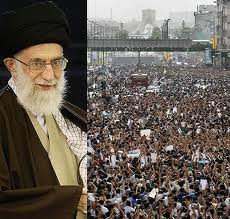
When Khamenei Falls, So Will the Regime

0
February 8, 2011

Among the protestors in Egypt, there was a woman sitting on the street holding a placard that read: Thank you Egyptian military for remaining with the nation. And so the scenario that took place in Tunisia repeated itself in Egypt: the military did not side either with the dictator nor the people, but stayed with the country. But have the gentlemen who have usurped the seats of power in Iran and dream of permanently staying there come to the realization that the approach that they have chosen ties everything, the country, to Mr. Khamenei regime and his surrogates? As things stand, when he goes, so does everything else. Does Mr. Khamenei himself realize that when the falling domino arrives in Iran, it will not leave anything standing?

According to article 150 of Iran’s Islamic constitution, the duty of the Revolutionary Guards is to protect the Islamic revolution and its achievements. According to article 108, the Assembly of Experts on Leadership is the only body that has the right to make its own rules and determine the leader of the country. According to article 156, the judiciary is an independent branch that must uphold individual rights and is responsible for the implementation of justice, in addition to being responsible for other tasks such as administering justice and issuing sentences to redress grievances and harm, the restoration of the rights of the public right, etc. According to article 161 the duty of the Supreme Court is to monitor and supervise the correct implementation of laws in the courts of law. According to article 62 Majlis representatives must be elected by direct popular vote and be the voice of the people, etc.

The current Islamic constitution of Iran has many such provisions and principles. But are they practiced? Have the Iranian armed forces which right from the first day of the popular demonstrations of 2009 chose to drive over the bodies of protestors with their vehicles, the judiciary that issued execution orders, prison terms and torture practices for dissidents, the legislature that could not even demonstrate respect for the legal protests over the rigged elections, the Assembly of Experts that approved of the leader’s posture, etc not tied their destiny to Iran’s Hosni Mubarak? Or even beyond that, has Mr. Khamenei not tied his destiny to that of the institution of Vali Faghih(supreme religious leader) and ultimately to the Islamic Republic as a whole?

The protestors in Egypt and Tunisia are calling for Mubarak and Ben Ali to leave while at the same time congratulating the army commanders for staying on the side of the people. Contrast this with the approach of the leaders of the Islamic Republic of Iran towards the peaceful demonstrators of their countrymen who began by simply asking “where is my vote” but seeing how they were treated soon began to chant “death to Khamenei” and then to “death to the Islamic Republic.”

By taking control of all the institutions in the country has Mr. Khamenei not tied their fate and ultimately that of the Islamic Republic regime onto his own? Future events will provide the answer to these questions but till then – which will not be far away – is it not reasonable that voices should rise from amongst the institutions and personalities in the Islamic Republic in support of the country, voices similar to those of the army in Egypt and Tunisia? If this does not happen, then what is certain is that this regime will fall when Khamenei, Ahmadinejad and their structure fall.

Iran’s ‘Day of Rage’

0

Tuesday, 08 February 2011

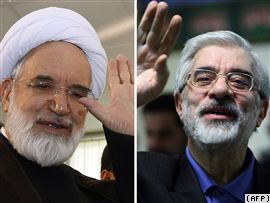
RFE-RL/2011-02-08 – Iranian opposition leaders Mir Hossein Musavi and Mehdi Karrubi have asked the Interior Ministry for permission to hold a rally on February 14 at Tehran’s Azadi Square in support of the recent uprisings in Tunisia and Egypt.which they see as an “Islamic awakening.”

If authorities do decide to allow the rally, then it is likely members of the Green opposition movement will turn it into an antiregime demonstration, especially at a time when many in Iran have been watching events in the region with interest and envy.

Should they decide not to issue a permit for the rally, then the decision would be in contrast with their official statements and expression of support and encouragement for the Tunisian and Egyptian people.

An Iranian opposition member who is close to the reformist camp told Persian Letters that the opposition leaders are aware that officials are likely to refuse them permission to hold the rally. He added, however, that they hope that the request will enliven an opposition movement that has come under great pressure since the 2009 antigovernment mass street protests.

”I don’t think there will be a demonstration because there won’t be a permit. [Musavi and Karrubi] took the step knowing that,” the opposition member said. “But I think they want to blow a fresh breath into the movement. Otherwise all the key members of the Green movement are either in jail, in exile, or out of jail on heavy bail, and are not likely to come to the streets.”

Despite that, shortly after Musavi and Karrubi’s request was made public, opposition websites, blogs and social networking sites were flooded with messages of support, pictures, and posters calling on Iranians to take to the streets on February 14.

A February 14 page created on Facebook is gaining members, both among Iranian expats and Iranians inside the country. 

Many Iranians have changed their Facebook profile pictures to a Green picture with the date February 14 written on it.

Slogans are also circulating for what is being described by some as Iran’s “Day of Rage,” including: “Down with Dictators, Be it In Cairo or Tehran” and “Marg bar Dictatori, Che Shotori, Che Motori” (which translates as “death to dictatorships that are being enforced with camels or motorcycles.”) The former refers to Egypt, the latter to Basij forces in Iran that often use motorbikes.

It remains to be seen whether the online activism will translate into action. Many observers express doubt because of the repression and ongoing crackdown. Yet Iranians have shown in the past that they can be unpredictable when it comes to political decisions. 

An adviser to Musavi, Amir Arjomand, told the opposition “Jaras” website that he won’t make any pre-judgment on whether authorities will allow the February 14 rally, while expressing hope that the regime will allow Iranians to show their support for the people of Tunisia and Egypt.

”Asking for permission to hold a rally is in fact a test for those who have been claiming for a long time that the Green movement is dead and doesn’t exist,” he said. 

”In order to show solidarity with the popular movements in the region, particularly the freedom-seeking movement of the Tunisian and Egyptian people against their autocratic governments, we hereby request permit to call for a rally –- as Article 27 of the constitution authorizes – on Monday, 25 Bahman (February 14) at 3 p.m. from Imam Hossein to Azadi Square.”

The authorities are not likely to approve the rally. Only state-sponsored demonstrations are allowed in the Islamic Republic, and past requests by the opposition to hold rallies have either been ignored or denied.

Yet the request puts Iranian leaders in a difficult position. They have been very vocal in their support of the popular uprisings in the Arab countries,

Source

Iran opponents blast regime ahead of anniversary

0

Tuesday, 08 February 2011

The bitter criticism from Mir Hossein Mousavi and Mehdi Karroubi, once seen as pillars of the Islamic regime, comes three days before the 32nd anniversary of the Iranian revolution that toppled the US-backed shah.

“Today, the regime is hiding behind this concern that if it does not exist, religion will vanish and, by repeatedly voicing alarms, it tries to rally and organise the religious strata behind itself,” the opposition leaders said in a joint statement posted on their respective websites, Sahamnews and Kaleme.com.

“But in reality what has hurt the religious atmosphere of the (Iranian) society the most is the anti-religion and oppressive behaviour of the regime itself.”

Mousavi and Karroubi turned bitter critics of the regime after the June 2009 presidential election, which they both contested but lost to President Mahmoud Ahmadinejad, who was returned to office for a second term.

The two leaders refuse to acknowledge Ahmadinejad’s victory, which they maintain was due to massive vote-rigging.

Their immediate post-election opposition triggered what was one of the worst crises faced by the Islamic republic since its inception in 1979.

Massive demonstrations against Ahmadinejad occurred on the streets of Tehran and other cities after the election, shaking the pillars of the regime and dividing its clerical elite.

Dozens of people were killed, scores wounded and thousands arrested by the authorities. Two detainees were hanged last month and others have been sentenced to long prison terms.

Mousavi and Karroubi have also said they want to hold a rally on February 14 in support of the Arab uprisings but observers say it could be a ploy to assemble their supporters in opposition to Ahmadinejad’s government.

Source

Our Life Depends on Executions

0

February 7, 2011

Iran’s Chief Justice, ayatollah Mohseni Gorkani said, “Our life, tranquility and peace depend on executions and ghesas” (loosely translated as retaliatory punishment).

Mehr news agency reported that the ayatollah made these remarks in his ethics class without stating where exactly the class was held. According to Mehr during the cleric’s class, the chief justice first read a verse from the Quran about executions and ghesas, and then added, “The issue of executions and ghesas that the Quran dictates, are what our life, tranquility and peace depend on.”

The number of recent executions in Iran has risen to such high numbers that even foreign governments and international human rights organizations have issued protesting statements calling on the Iranian government and authorities to stop the executions.

Officials of the Islamic republic on the other hand maintain that most of the recent executions are related to criminals involved in narcotics crimes and the murders. Ramin Mehmanparast, the spokesperson for Iran’s foreign ministry also said that 80 percent of those who were hanged in the country were individuals who had criminal acts related to narcotics.

In this regard, Iran’s chief justice recently confirmed this and said, “The issue of drugs is a calamity that has been spread by colonialism which is slowly killing our youth.”

He has expressed satisfaction that such cases were dealt with rapidly, carefully and with a firm hand adding that when a court issues the right sentence on this the court upholds the judgment.

Gorkani thanked the judges and staff of the judiciary branch for their “work” and said that some in the judiciary did not appreciate the work of the branch adding, they “do not understand that the current security in the country is in the hands of the judges of the judiciary.” He further said that the “judges and judiciary staff spent all their efforts to protect rights and institutionalize security in society.”

Iran’s supreme court is the highest judiciary body in the country which can also examine the violations of the president based on his legal responsibilities.

According to official  reports, during the month of January alone some 66 individuals were executed in Iran, while some human rights activists maintain that the actual numbers are much higher.

Just a few days ago Mir-Hossein Mousavi and Mehdi Karoubi, the two leaders of Iran’s opposition movement known as the Green Movement protested against “the large number of executions in the country and the speedy execution of the sentences which are carried out without the complete implementation of due process” and attributed this to the unthoughtfullness of the leaders and the creation of terror in society. They both said that the full implementation of civil procedures in the country was the legal and religious rights of all Iranians.

According to Karoubi and Mousavi, “Does the execution of some 300 individuals in the last year not bring anything but fear and horror to society causing Iran to become even more isolated on the international scene.” They both questioned whether these speedy trials and executions were Islamic and called for their suspension.

They also condemned the recent refrainment of officials from returning the bodies of executed individuals to their family members. In the first 40 days of this year, the Islamic republic is said to have broken the world record for the number of executions in such a short span of time.

On Sunday Human Rights Watch issued a statement expressing its concern for the rise in executions in Iran. The director of the Middle East division of Human Rights Watch Sarah Leah Whitson told the French news agency that Iran could execute over a thousand people should the present trend continue.

Prior to this year, China and then Saudi Arabia held the records in the number of annual executions, giving Iran the third place. It should be noted that China’s populations is almost 20 times higher than that of Iran. In its annual report, Human Rights Watch’s has reported that with the increase in the number of executions, torture and terror, the situation in Iran has become worse than ever.

Prior to the HRW report, the US and EU also had issued statements expressing their grave concern for the rate of executions in Iran. On Wednesday, the UN High Commissioner for Human Rights Navi Pillay also issued a similar concern over the executions in Iran. Her statement said that she had repeatedly asked the Iranian authorities to stop the executions and expressed her disappointment that her concerns had gone unheeded. She said that different countries around the world were generally moving towards ending executions as a form of punishment and that she had requested that Iranian authorities too stop the practice and take measures to end the practice altogether.

Opponents of the Iranian regime and human rights activists contend that Iranian authorities have engaged in mass executions of political prisoners on the pretext of labeling them drug offenders or murderous criminals. They compare the current spike in the number of executions to those that were carried out in late 1980s when thousands of political prisoners were tortured and executed belonging to the different political groups.

Source

Iran Guards deny holding former FBI agent

Monday, 07 February 2011

AFP/2011-02-07 – Iran’s elite military force, the Revolutionary Guards, denied on Monday that it is holding former FBI agent Robert Levinson as reported on some websites.

“We deny the arrest of the FBI agent and if the Guards had arrested an enemy, it would announce itself,” the head of the Guards, commander Mohammad Ali Jafari, told reporters, according to ILNA news agency.

Jaafari said news reports of Iran holding Levinson were nothing more than attempts by the Islamic republic’s “enemies to find excuses and weaknesses” about Iran.

Mystery shrouds the fate of Levinson, who disappeared on Iran’s Gulf island of Kish in March 2007.

US officials, including Secretary of State Hillary Clinton, have repeatedly called on Tehran to throw light on Levinson’s disappearance.

Iranian officials have previously denied having any information about the missing American’s whereabouts.

Jafari’s denial came a day after a revolutionary court put three Americans on trial for spying against Iran.

Shane Bauer, Josh Fattal and Sarah Shourd went on trial more than 18 months after they were arrested on the unmarked border with Iraq. Shourd was tried in absentia after she was freed and returned home last September on bail of around 500,000 dollars.

The Americans pleaded not guilty in the court on Sunday.

Source

Eighteen Years of Imprisonment for Faculty and Students of Qazvin International University

Monday, 07 February 2011

Rahana/2011-02-07 – Four student activists and 2 faculty members of the Qazvin International University have been sentenced to 18 months of suspended imprisonment and monetary fine as a replacement for lashes.

They were tried for disturbing public order by organizing gatherings and participating in the June protests, and insulting the officials. Farhad Fathi and Heidar Qazvini, secretaries of the reformist organizations at the University, were sentenced to 3 years of suspended imprisonment and monetary fine as a replacement for lashes. Fathi had also been suspended for 2 semesters and Qazvini had been banned from taking the College Entrance Exam for 3 years after expulsion from the University. Saeid Sakakian and Sajjad Aali, members of the central committee of the reformist organizations, were each sentenced to 3 years of suspended imprisonment and monetary fine as a replacement for lashes. Sakakian had previously been suspended for 2 semesters. Two faculty members by the names of Hassan Raeisian and Farhad Darvishi, were also sentenced to 3 years of suspended imprisonment and monetary fine as a replacement for lashes. Other students and faculty members who were also tried were ordered to pay a fine.

Source

Report: Iran buries executed Dutch woman in secret

Monday, 07 February 2011

AP/2011-02-07 – Rights activists say Iran’s security forces have buried in secret a Dutch-Iranian woman who was hanged last month on drug charges.

The group Human Rights Activists says the body of 45-year-old Zahra Bahrami was buried in the north-central city of Semnan on Sunday.

The group’s report, released Monday, claims Bahrami’s daughter was told that the burial was done secretly to avoid the presence of Dutch diplomats or others.

The Dutch government froze official contacts with Iran last week to protest the execution.

Bahrami was convicted of possessing and selling drugs. She had been jailed since December 2009 after protests against President Mahmoud Ahmadinejad’s disputed re-election.

Rights activists say Iran’s security forces have buried in secret a Dutch-Iranian woman who was hanged last month on drug charges.

The group Human Rights Activists says the body of 45-year-old Zahra Bahrami was buried in the north-central city of Semnan on Sunday.

The group’s report, released Monday, claims Bahrami’s daughter was told that the burial was done secretly to avoid the presence of Dutch diplomats or others.

The Dutch government froze official contacts with Iran last week to protest the execution.

Bahrami was convicted of possessing and selling drugs. She had been jailed since December 2009 after protests against President Mahmoud Ahmadinejad’s disputed re-election.

Source

Two Americans deny spy charges in Iranian court

0

Monday, 07 February 2011

Reuters/2011-02-07 – Two Americans held in Iran for the last 18 months on suspicion of espionage pleaded not guilty in court on Sunday on the first day of their closed-door trial, state television reported.

Shane Bauer and Josh Fattal were arrested on July 31, 2009 near Iran’s border with Iraq, along with a third American, Sarah Shourd, who was released on $500,000 bail in September and returned home.

The trio, in their late 20s and early 30s, say they were hiking in the mountains of northern Iraq and, if they crossed the unmarked border into Iran, it was by mistake. Under Iranian law, espionage can carry the death penalty.

State-run English language Press TV said the two men had appeared in court but that Shourd, who had been summoned, did not. All three pleaded not guilty of espionage and illegal entry, Press TV said.

No date has been set for the trial to resume, it added. The proceedings were closed to the public and press.

Later on Sunday, Press TV showed short footage of the two men in the courtroom, looking gaunt and worried. They appeared to be giving details of their travels in the Middle East.

“I have been in Iraq and Kurdistan as a tourist with my fiance Sarah, Josh and our friend Sean,” Bauer said.

The affair has compounded tension between Tehran and Washington, which have had no diplomatic relations since the 1979 Islamic Revolution and the subsequent storming of the U.S. embassy by revolutionary students.

A trial date set for last November was postponed at the last minute due to the absence of Shourd, who has met President Barack Obama and his Iranian counterpart Mahmoud Ahmadinejad in the United States since her release.

Press TV quoted the Tehran prosecutor’s office as saying “it has ‘compelling evidence’ that three were cooperating with U.S. intelligence agencies.”

The defense lawyer, who was barred from seeing his clients for four months before the day of their trial, said he was confident the spying charge would be shown to be baseless and even charges of illegal entry into Iran could be beaten.

“I have studied all the details and I am sure that my clients are not guilty and the espionage charge does not have any substance,” Masoud Shafii told Reuters before the trial.

“Even if the illegal entry happened, due to the fact that the border is not signposted and they could not have recognized it; even if it did happen, they are not at fault,” he said.

Source

Wikileaks and Iran: Did Mojtaba Khamenei Rig the 2009 Election? (And Where Did the Cable Go?)

0

Monday, 07 February 2011

EA Worldview/2011-02-07 – A curious story unfolding today: did the son of the Supreme Leader, Mojtaba Khamenei, worked with the head of the Islamic Revolutionary Guards Corps, Abbas Ali Jafari, to manipulate the ballot?

That appears to be the claim, in at least one document released by WikiLeaks and obtained by the Daily Telegraph of London, by at least one Iranian source to US diplomats within days of the vote. But then another mystery starts….

Mojtaba Khamenei’s name surfaced in a cable, LONDON 1423, which was dated 16 June and sent from the US Embassy in Britain to the State Department. The website Kodoom offers the opening words: “XXXXXXXXXXXX and former XXXXXXXXXXXX claims that Mojtaba Khamenei, acting in concert with IRGC Jafari and other officials in the Supreme Leader’s office, has been a major …”

That document, however, has mysteriously disappeared from The Telegraph website. Instead, another cable, LONDON 1442 of 18 June (posted below), carries the claim of a source of split within the Iranian establishment. This source said that:

“A majority” of leaders within the government of Iran and the IRGC want the United States, while continuing to avoid interference in Iran, to continue and even strengthen its public messages on human rights, so as to support popular protests in Iran and prevent any consolidation of Ahmedinejad’s electoral win….

“A majority” of the IRGC have split from the Basij and from IRGC commander Jafari over the manipulation and aftermath of the June 12 elections. He added that a person he “cannot name, very close to the Supreme Leader” [Mojtaba?], XXXXXXXXX conceived and ordered engineering of the election and of attempted suppression which has followed. XXXXXXXXXXXX claimed no senior clergy other than XXXXXXXXXXXX in fact support Ahmedinejad. XXXXXXXXXXXX offered no compromise solution among contending parties in Iran, and indicated throughout that either Moussavi or Ahmedinejad would be politically vanquished. He explicitly played down the prospect of a “civil war” raised by a European interlocutor.

The document later adds the “Basij” to the list of those who ordered the vote manipulation, likely a reference to the then head of the militia, Hossein Taeb.

THE ORIGINAL CABLE

Ref ID: 09LONDON1442 
Date: 6/18/2009 17:50 
Origin: Embassy London 
Classification: SECRET//NOFORN 
Destination: 08LONDON2691 
Header: VZCZCXRO2428OO RUEHBC RUEHDE RUEHDIR RUEHKUK RUEHTRODE RUEHLO #1442/01 1691750ZNY SSSSS ZZHO 181750Z JUN 09FM AMEMBASSY LONDONTO RUEHC/SECSTATE WASHDC IMMEDIATE 2658INFO RUCNIRA/IRAN COLLECTIVE IMMEDIATE 
Tags: PGOV,PHUM,PREL,PTER,PINS,IR,UK 
S E C R E T 
LONDON 001442 
NOFORN 
SIPDIS 
E.O. 12958: DECL: 06/18/2019 
TAGS: PGOV, PHUM, PREL, PTER, PINS, IR, UK 
SUBJECT: IRAN: XXXXXXXXXXXX sAYS ELECTION PRECLUDED BY “POLITICAL COUP,” URGES USG FOCUS ON HUMAN RIGHTS AND POLITICAL SUPPORT FOR PROTESTORS 
REF: 08 LONDON 2691 AND PREVIOUS

1. (S) Summary: Syed XXXXXXXXXXXX on June 16 told London Iran Watcher (Poloff) and a small group of diplomats that “a majority” of leaders within the government of Iran and the IRGC want the United States, while continuing to avoid interference in Iran, to continue and even strengthen its public messages on human rights, so as to support popular protests in Iran and prevent any consolidation of Ahmedinejad’s electoral win. XXXXXXXXXXXX said “a majority” of the IRGC have split from the Basij and from IRGC commander Jafari over the manipulation and aftermath of the June 12 elections. He added that a person he “cannot name, very close to the Supreme Leader,” XXXXXXXXXXXX conceived and ordered engineering of the election and of attempted suppression which has followed. XXXXXXXXXXXX claimed no senior clergy other than XXXXXXXXXXXX in fact support Ahmedinejad. XXXXXXXXXXXX offered no compromise solution among contending parties in Iran, and indicated throughout that either Moussavi or Ahmedinejad would be politically vanquished. He explicitly played down the prospect of a “civil war” raised by a European interlocutor. End summary.

2.(S) As in the past (ref), XXXXXXXXXXXX appeared at the invitation of the XXXXXXXXX, a small UK policy forum NGO enjoying occasional Embassy support; XXXXXXXXXXXX had just arrived in the UK from XXXXXXXXXXXX late that same day, June 16. The venue was the residence of the German Political Counselor; besides NCF staff, attendees included XXXXXXXXXXXX, the Norwegian, Spanish, and Japanese embassies and a mid-level Whitehall (UK) diplomat.

Events of June 12 and Afterwards: “A Political Coup”

3.(S) After warning the group against any leaks of his remarks, XXXXXXXXXXXX characterized events in Iran since June 12 as a “political coup,” and said “the Islamic Republic has never faced such a situation.8 He emphasized it was “not a military coup,” since, according to XXXXXXXXXXXX, there was for the most part no involvement by the great majority of IRGC officers; at the same time ,XXXXXXXXXXXXdrew a clear line between the IRGC and the Basij, emphasizing the Basijis’ central role in suppression of protestors.

4. (S) Asked for an explanation of events since June 12, XXXXXXXXXXXX gave a tense, extended narrative that closely resembled reformist narratives, which Poloff and other posts have reported. XXXXXXXXXXXX said ruling circles on June 12 had fully expected that, due to the political chemistry and excitement generated by the Moussavi-Ahmedinejad debate, Moussavi would emerge a clear winner. The indicia of fraud he listed were similar to what Western observers have cited, but centered on implausible proportions of the vote for Ahmedinejad uniformly throughout Iran and an implausibly fast announcement. XXXXXXXXXXXX spoke at length on the democratizing effects worldwide and in Iran of digital technology and said the deliberate interruption of SMS services had been a key factor in inhibiting opposition candidates’ supporters from effectively monitoring vote compilation at polling centers.

XXXXXXXXXXXX Version of the Views of “Traditional” Insiders

5. (S) Of special interest XXXXXXXXXXXX description of the perceptions of persons inside “traditional revolutionary groups.” XXXXXXXXXXXX said this election, Iran’s first failed election “after 40 successful elections since the Revolution,” had been unique for its “lack of advance clarity.” The Iranian electoral norm, according to XXXXXXXXXXXX, was that all parties’ positions and interests are well defined many months in advance, whereas in this case it had not been clear to insiders, according to XXXXXXXXXXXX, whether one of the major candidates, Karroubi, would even stand two days before the election. XXXXXXXXXXXX said this atmosphere created a need for certainty, and represented an opportunity for “those who had done this before” (XXXXXXXXXXXX did not explain this point to the larger group but see para. 10 below). Speaking elliptically, and without drawing a clear line between his points, XXXXXXXXXXXX said there were additional elements contributing to insiders’ “atmosphere of uncertainty” and the motive and opportunity to “once more” manipulate the June 12 results. He said there were splits for the first time among the conservatives themselves, and not just among reformists, but emphasized strongly that “only a minority (of high-level individuals) supported Ahmedinejad, then and now. XXXXXXXXXXXX said the television debates were a very new factor and that the atmosphere, and insiders’ “sense of control ….changed completely overnight” after the Moussavi-Ahmedinejad debate; “green appeared everywhere.”

Where Senior Clerics Stand

6. (S) He also said the debates produced “an explosion” among the clergy, directed, according to XXXXXXXXXXXX, against Ahmedinejad. The late replacement of Interior Minister Pir Mohammadi by Ahmedinejad confederate Mahsouli had also been a worrisome event. Also significant, said XXXXXXXXXXXX in a distinctly positive tone, had been the candid and electrifying remarks in May on Iranian television of Tehran University political scientist Zeba Qolom, who had candidly criticized the government’s rejectionist foreign policy vis a vis the United States. XXXXXXXXXXXX noted very pointedly that, in his view, there is very little senior clerical support for Ahmedinejad; he said “they remember Ahmedinejad attacked them, and only one — just one — in Qom supports him,” an apparent reference to XXXXXXXXXXXX.

7. (S) XXXXXXXXXXXX said the ultimate denouement will be determined by interplay between the Guardian Council as it deliberates on the candidates’ petitions for redress, and the Supreme Leader. This deliberation will be set against a background either of acquiescence by the international community and a lessening of the energy behind current protest levels, or of continued pressure and withholding of legitimacy through mass protest and united, sustained international attention. XXXXXXXXXXXX claimed that opponents of the Ahmedinejad win can settle for nothing less than a “re-vote,” that the ballots as cast June 12 are too tainted for a recount now to have value. He said the United States &must not recognize Ahmedinejad.

Rafsanjani Said To Be Unwilling to Tolerate A “Third Provocation”

8. (S) XXXXXXXXXXXX repeatedly underlined what he called XXXXXXXXXXXX central role in resisting the “coup” and in backing the three aggrieved candidates. He described the June 12 vote manipulation as “a third provocation” against XXXXXXXXXXXX and the community he represents. Without naming the specific provocateurs, but saying the same ones are behind the current manipulation of election results, XXXXXXXXXXXX said XXXXXXXXXXXX had chosen not to respond to the electoral manipulations which had undercut him in the previous (2005) presidential elections and the 2007 Majles elections, but that he and “those whom this figure represents…. do not accept a third provocation;” XXXXXXXXXXXX repeated the phrase at several points in the evening. XXXXXXXXXXXX twice during the evening provided a detailed description of the IRGC and the original leaders of the 1979 revolution as being &those who really decide the national interest.8 At one point XXXXXXXXXXXX declared: &Presidents come and go but we remain and we decide what is the interest of the nation and the interest of the revolution.

XXXXXXXXXXXX Picks the Green Folder

9. (S) Poloff, seated next to XXXXXXXXXXXX during dinner, offered XXXXXXXXXXXX one set apiece of Farsi language versions of President Obama’s Cairo speech and his June 15 remarks (during Prime Minister Berlusconi’s visit) on Iran: the two document sets were packaged in a green and a blue folder. XXXXXXXXXXXX.

XXXXXXXXXXXX Points at Jafari, Basij, and “A Person Very Close to the Leader”

10. (S) On the margins of the meeting afterwards, speaking to Poloff and to German Political Counselor Hans Best, XXXXXXXXXXXX said IRGC commander XXXXXXXXXXXX has been a principal planner and instigator of election manipulations. Asked about the possible role of XXXXXXXXXXXX, XXXXXXXXXXXX said that “yes, we have serious division;” he said he could not name who in XXXXXXXXXXXX was involved, but emphasized “the large majority” of IRGC officers and rank and file “oppose what has happened.”

Human Rights

11. (S) In response to points Poloff made, drawing from NSC’s June 16 public guidance, on USG concern over violence, possible vote fraud, the unchanging nature of international security concerns, and USG respect and noninterference in Iranian affairs, XXXXXXXXXXXX immediately and in front of the group asked that USG be very careful not to de-emphasize human rights in its public comments on Iran in the coming days. There was then a lengthy segue, not without irony, into the role human rights should play in U.S. foreign policy in Saudi Arabia, Egypt, Israel/Palestine and Central Asia, followed by XXXXXXXXXXXX return to a request that the USG keep the human rights and safety of “peaceful Iranian demonstrators” at the center of the USG message. XXXXXXXXXXXX praised USG public statements on the elections to date, and agreed the principle of noninterference needs to be constantly repeated, but said the human rights component needed to go “somewhat farther.” He argued that a failure to establish a strong and clear signal on human rights would legitimate, and thereby empower, security forces to slowly and quietly crush the current resistance.

Nuclear Engagement: “Cash for Cash”

12. (S) XXXXXXXXXXXX asked to comment on prospects for nuclear engagement, politely but immediately dismissed the P5 1 offer as being “not business-like,” in that it promises in his view “future U.S. action such as light water reactor or friendly security talks” in exchange for “real action by Iran now — suspension of enrichment.” He then made general remarks about the possibility of “a practical solution,” but repeated “it must be business-like” with concrete motivations, and he raised anti-narcotics and anti-terrorism as things “which mean something to Iran — you must make a real offer.” He repeated the mantra “cash for cash” at least four times in describing what in the Iranian view constitutes a “business-like” approach to negotiation.

Personal Disappointment

13. (S/NF) Poloff informed XXXXXXXXXXXX that, further to XXXXXXXXXXXX earlier expressions of interest at traveling to Washington to brief senior U.S. experts and officials (ref), USG officials were aware of his interest in traveling to the United States. As before Poloff offered to support and expedite the application but noted sharp limitations on Poloff’s ability to assist; XXXXXXXXXXXX was visibly disappointed, remarking ruefully he would have to tell people “my Washington connection cannot produce as I wished.” XXXXXXXXXXXX politely noted Poloff’s pending departure from post and asked for an introduction to the incoming London Iran Watcher — Poloff made tentative arrangements for introductions to be made in person on June 30, shortly before XXXXXXXXXXXX are due to return from the UK to Iran.

Comment

14. (S) Well-briefed, smooth, and supremely confident as always, XXXXXXXXXXXX appeared a consummate and effective salesman, sent to make a case. Though he may have intended throughout the evening to mislead as to his true allegiances, XXXXXXXXXXXX has in the past in this setting consistently and repeatedly expressed deep contempt for Ahmedinejad and his political supporters (ref). XXXXXXXXXXXX, whom Poloff has observed in a series of similar small group sessions since 2006 (ref), projected his usual smoothly self-confident, dominating presence, but seemed more internally agitated and ill at ease than in previous meetings. As the dinner broke up, his manner with Poloff on the margins in requesting USG public rhetorical support for demonstrators and human rights principles was (not quite but) almost pleading in tone, and far more urgent and solicitous than anything Poloff had previously heard from him. XXXXXXXXXXXX had the air less of an impassioned campaigner for human rights, and more of a real party in interest, working to maintain composure and self-assurance even as his prize ox is being gored. Visit London’s Classified Website: XXXXXXXXXXXX

Source