Home Blog Page 674

EU new sanctions on Iran directed to combat human rights abuses

0

Saturday, 05 February 2011

Trend – Iran’s execution of Dutch-Iranian citizen Sarah Bahrami was firmly condemned by Foreign Affairs Committee MEPs in a resolution voted on Tuesday.

“Future EU relations with Iran – including possible further sanctions – should focus not only on the nuclear dispute but also on human rights abuses since the 2009 presidential elections,” they added.

46-year-old Zahra Bahrami, who had Iranian and Dutch citizenships, was executed on Jan.28 in Iran for drug trafficking. The sentence was fulfilled despite protests of the European Union.

Bahrami, was arrested in January 2010. Police found 450 grams of cocaine and about the same amount of opium on her. According to the relatives of the executed, all charges against her were fabricated, and she was arrested due to the fact that she was participating in the anti-Government opposition in 2009.

Firmly condemning the execution of Dutch-Iranian national Zahra Bahrami in Tehran on 29 January, MEPs are “dismayed that the Iranian authorities denied consular access to Ms Bahrami and did not ensure a transparent and fair judicial process”, says the resolution drafted by Bastiaan Belder (EFD, NL).

The resolution, approved in committee with 62 votes in favour, 3 against and 2 abstentions, is to be put to a plenary vote at the March plenary session in Strasbourg.

They also call on EU Foreign Affairs High Representative Catherine Ashton to raise the cases of Sakineh Mohammadi Ashtiani and Zahra Bahrami with the Iranian authorities.

Foreign Affairs Committee MEPs believe that the time has come for the EU to devise a new, broader, strategy towards Iran, which goes beyond the nuclear issue and addresses Iran’s human rights record and regional role.

They call on EU foreign ministers to impose sanctions targeting Iranian officials responsible for serious human rights abuses since the disputed presidential election of June 2009, in line with similar measures taken by the USA last September.

Strong opposition unrest broke out in Tehran after the announcement of the results of presidential elections on June 12, 2009. Then President Mahmoud Ahmadinejad won the elections, who according to the Iranian CEC won 66 percent of the votes. One of the losing candidates – a reformer Mir Hossein Mousavi accused authorities of ballot rigging and called on people to hold protests. During the clashes, according to official figures, 20 people were killed, but according to unofficial data – about 150 people. Some 1,032 demonstrators were arrested, most of which are subsequently released.

Iran’s government has accused Western countries, particularly Great Britain, in a deliberate escalation of tensions in the country, in initiation of unrest and interference in the internal affairs of the country after the presidential election on June 12.

In September, the U.S. imposed sanctions against eight high-ranking Iranian officials. U.S. officials put the responsibility on them for human rights violations in Iran, in particular, the repression against the opposition members. Washington first imposed sanctions against Iran for violating human rights.

The sanctions involve blocking of the U.S. assets of officials and a ban on issuing visas to them. Moreover, U.S. citizens are prohibited to conduct business with them.

The sanctions were imposed on the following officials: IRGC Head, Mohammad Ali Jafari, his deputy on intelligence Hossain Taeb, Minister of Social Welfare and Security Sadek Mahsuli, Interior Minister Mostafa Mohammad Najjar, Iran’s prosecutor general Qolam-Hossein Mohseni-Ejei, former Tehran prosecutor Saeed Mortazavi, Deputy Head of Iran’s Police Ahmad Reza Radan and intelligence chief Heidar Moslehi.

MEPs note the popular discontent that followed the 2009 presidential elections and the Iranian people’s growing aspirations for democratic change. Iran’s domestic problems continue to deteriorate, despite burgeoning oil prices, say MEPs, while President Ahmadinejad continues to embrace a radical anti-Western, anti-Israel agenda.

MEPs are concerned that the growing military, political and economic role of the Iranian Revolutionary Guard Corps in Iranian society is fuelling fears of a further militarization of the state, which in turn could lead to an escalation of violence and oppression of political opposition.

The Foreign Affairs Committee deeply regrets that the number of executions in Iran in 2009 was the highest in the past ten years, making Iran the country with the highest number of executions per capita in the world. MEPs demand official statistics on the executions carried out and call on the government to impose a moratorium on these executions and also to abolish the execution of minors under 18 years old.

Given Iran’s continuing refusal to co-operate with the International Atomic Energy Agency (IAEA), MEPs consider that “additional sanctions have become the logical consequence”.

However, they also wish to ensure that Ms Ashton assesses the impact and effectiveness of all EU restrictive measures, in order to prevent Iran from evading the sanctions. Sanctions are meant to hit the blacklisted officials, not the Iran population as a whole, they warn.

In June 2010 the U.N. Security Council adopted Resolution 1929, enacting new sanctions against Iran over its refusal to stop enriching uranium. Later, the U.S. Congress and foreign ministers of all EU countries approved the imposing of additional unilateral sanctions aimed mainly against the energy, banking and financial sectors of Iran.

The embargo on arms sales against Iran is toughened in accordance with the resolutions and sanctions.

The list of Iranian organizations subject to sanctions is being expanded.

Moreover, the enterprises controlled by the national shipping lines of the Islamic Republic of Iran and 15 other companies owned by the IRGC were included in the “black list”.

Source

Denial of Medical Leave Led to Death of Political Prisoner

Sunday, 06 February 2011

Post-election detainee Arash Arkan passed away in a hospital due to the failure of the judicial officials to grant him a timely medical leave.

Arash Arkan passed away in an IRGC-run hospital on January 30th after one year and three months of imprisonment. According to the Human Rights House of Iran, he had been granted prison leave for a few days after his kidney problems intensified but the duration of the furlough was not enough for his treatment and he was returned to Evin Prison. His condition worsened 3 days before his death due to the ignorance of the prison officials and medical personnel of Evin prison.  Arkan was arrested on December 7, 2009 for assisting an individual who was filming the post-election protests. There was no information as to his condition for 3 months after his arrest. After one year of prison limbo, he was sentenced to 8 more months of imprisonment. Many prisoners who are in need of medical prison leave have been ignored. Hossein Ronaghi-Maleki, Mansour Osanlou, Mohsen Dogmehchi and Fatemeh Rahnama are some of the prisoners in need of medical leave.

Source

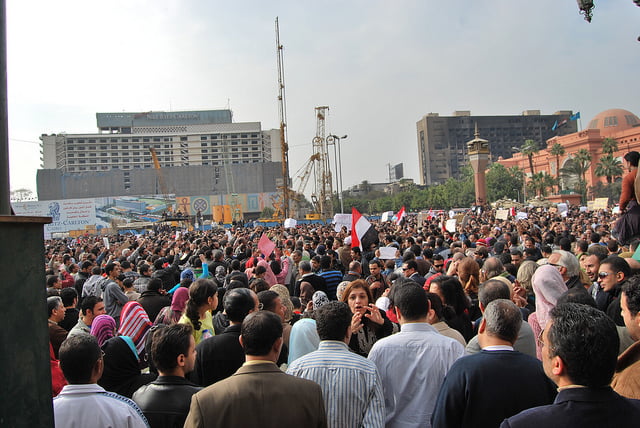
Iran, China Block Outside Sites to Muzzle Mideast News

0

Saturday, 05 February 2011

WIRED – The authoritarian regimes in Iran and China are playing a double game, when it comes to the unrest in the Middle East. Tehran and Beijing are doing their best to spin the protests in their favor, when they talk to the world. But at home, they’re pursuing a different strategy: trying to muzzle anything but the official line on the upheaval.

Commentators have been keen to liken the revolutions in Egypt and Tunisia both to the 1979 revolution that brought the Iranian regime to power and the electoral protests of the Green Movement which tried to unseat it. Not surprisingly, the Iranian government has preferred to use the latter comparison.

Iran has sought to graft its own ideology and history onto the protests — as seems to be popular these days — painting the movements as the Egyptian version of the 1979 Iranian revolution that ushered in its theocracy. “Iran’s Islamic Revolution became a role model for the Egyptian nation. Without doubt the Egyptian dictator [President Hosni Mubarak] will share the same destiny as that of Iran’s dictator [Mohammad Reza Pahlavi],” the military affairs advisor to Iran’s Supreme Leader told the semi-official Fars News Agency. Fars has pushed the supposed continuities further, playing up the claims of some Tunisian activists that they intend to form a group based on Lebanon’s Hezbollah, the political party cum terrorist group which acts as a proxy for Iran.

Iran’s enthusiasm for analogies between revolution and Egypt’s ends at 1979, though. Although it’s probably pleased to see an American-aligned rival regime go, Iran still seems a little nervous about giving its own reputedly Twitter-powered dissidents in theGreen Movement too much inspiration from the anti-government protests in Egypt. Since Monday, Iranians’ access to outside political news from Yahoo, Google and Reuters, some of the few remaining such outlets available in Iran, has been cut off without explanation, though some anodyne entertainment news is still accessible.

With large economic interests in Egypt, China’s hopes for Egypt are decidedly less ideological. In public, Beijing is asking for just one thing: quiet.

“We hope Egypt will restore social stability and normal order as soon as possible.” That’s been the consistent refrain from China’s Foreign Ministry when quizzed on its reaction to the events.

At home, China has blocked internet searches for “Egypt” and reportedly ordered Chinese media to follow the state-run news serviceXinhua’s line on the protest movements, which has emphasized the disturbance caused by the protests at the expense of explanations of their political grievances.

The private intelligence firm Stratfor points out that this has become increasingly standard practice for China during high-profile protest movements such as the revolutions in Georgia, Ukraine and Iran captivate global media. It probably doesn’t help that the Western press keeps mentioning Tahrir Square in the same breath as the 1989 Tiananmen square protests and subsequent crackdown, It’s a chapter of history banned from discussion in China. Let’s hope this one ends a little more happily.

Source

UN experts call for a moratorium on death penalty in the Islamic Republic of Iran

0

Saturday, 05 February 2011

ran Human Rights – Two UN independent experts warned Tuesday that there has been a dramatic surge in death sentences in the Islamic Republic of Iran carried out in the absence of internationally recognized safeguards, despite numerous calls by the UN to immediately halt executions.

“We call on the Iranian Government to immediately declare a moratorium on the death penalty in view of the gravity of the situation and the regular disregard of due process guarantees,” urged the Special Rapporteur on extrajudicial, summary or arbitrary executions, Christof Heyns, and the Special Rapporteur on the independence of judges and lawyers, Gabriela Knaul.

“Any death sentence undertaken in contravention of a Government’s international obligations is tantamount to an arbitrary execution,” Mr. Heyns stressed. The UN expert noted that in January alone, at least 66 people have reportedly been put to death -with some sources reporting up to 83 executions-, the majority of whom on charges of drug trafficking, moharebeh (enmity against God) and alleged membership in or contact with a banned opposition group. A large number of the executions of those charged with drug trafficking have reportedly taken place at Vakilabad prison.

“Such a practice is unacceptable,” Mr. Heyns said. “Under international law, the death penalty is regarded as an extreme form of punishment which, if it is used at all, should only be imposed for the most serious crimes, after a fair trial.”

On her part, Ms. Knaul also deplored that “in many cases, people sentenced to death do not have access to legal representation and their families and lawyers are not even informed of the execution.” She pointed out that “the ongoing violations of fair trial guarantees and recurrent application of the death penalty by the judiciary, may be seen as a means to intimidate the population.”

Both UN experts urged the Iranian Government to comply with its international obligations, reiterating the General Assembly resolution 65/226 adopted on 21 December 2010, which called on the Government to abolish executions carried out in the absence of respect for internationally recognized standards.

The Special Rapporteurs reiterated the appeals made to the Iranian authorities by several UN independent experts to allow them to visit the country, and encouraged the Government to respond positively to their request.

END

Mr. Christof Heyns from South Africa was appointed by the Human Rights Council as Special Rapporteur on extrajudicial, summary or arbitrary executions in August 2010. He is Co-director of the Institute for International and Comparative Law in Africa at the University of Pretoria. Learn more: http://www2.ohchr.org/english/issues/executions/index.htm

Ms. Gabriela Knaul from Brazil took up her functions as Special Rapporteur on the independence of judges and lawyers on 1 August 2009. She has a long-standing experience as a judge and is an expert in criminal justice and the administration of judicial systems. Log on to: http://www2.ohchr.org/english/issues/judiciary/index.htm

OHCHR Country Page – Islamic Republic or Iran: http://www.ohchr.org/EN/countries/AsiaRegion/Pages/IRIndex.aspx

For more information and media requests, please contact Pasipau Wadonda-Chirwa (Tel.: + 41 22 917 9252 / email: [email protected] ) or write to [email protected] or [email protected] ).

Source

Iran opposition urges end to executions

0

Saturday, 05 February 2011

TEHRAN (AFP) – Two opposition leaders in Iran want a halt to “unrestrained” executions which, they say, are spreading fear among Iranians and isloating the country internationally, a website reported Wednesday.

“As citizens of this noble Iranian nation, we urge that these unrestrained and illogical executions be halted,” Mir Hossein Mousavi and Mehdi Karroubi were quoted as saying by Sahamnews.org, which belongs to Karroubi.

Iran has hanged 67 people so far this year, according to an AFP tally based on media reports. The foreign ministry says that 80 percent of those executed were drug smugglers.

Karroubi and Mousavi, who oppose President Mahmoud Ahmadinejad’s government, said the executions have only managed to “spread fear” among the people and “forced further isolation of Iran in the international community.”

Given the current rate of about two executions per day since January 1, the number of hangings in Iran is set to exceed the 179 reportedly executed in 2010.

Mousavi and Karroubi said that nearly 300 people were hanged in 2010 and that some had been executed before the conclusion of judicial proceedings.

“Regardless of charges and whether they are true or false, it is a legal and religious right of every human being that his judicial and legal process be completed,” they said, adding that such executions were “un-Islamic.”

Iran says it exercises the death penalty to establish law and order and that executions are carried out only after exhaustive judicial proceedings.

The surge in executions this year has generated criticism in the West, especially after Iran hanged an Iranian-Dutch woman on drug-related charges after she was originally arrested for joining an anti-government protest.

The Netherlands has frozen diplomatic ties with Iran over the hanging of Zahra Bahrami on Saturday, but the Iranian government said it regarded her as an Iranian as the Islamic republic does not recognise dual nationality.

Iran has also recently hanged two members of the outlawed People’s Mujahedeen of Iran (PMOI) who were arrested during unrest that erupted after Ahmadinejad’s re-election in June 2009.

They were the first to be executed among those arrested and charged in connection the post-election unrest, with the Iranian authorities have blamed on Mousavi, Karroubi and their supporters.

In 2009, the last year for which complete statistics are available, Iran executed 388 people, according to international human rights groups, making it second to China in the number of people it put to death.

Source

Revolutions: Promises of Countries Yet to Come

0

Saturday, 05 February 2011

Tehran Review – The Jasmine Revolution blossomed in Tunisia. Another revolution is taking root in Egypt. The routinized horror and humiliation for Tunisians has been disrupted, at least temporarily. The specter of this revolution has overflowed Tunisian territories and is haunting other countries in the region, setting in motion waves of mass protests in Egypt, Yemen, Algeria, etc. Questions arise.

What is a revolution about? What caused the Tunisian revolution? Why is this spirit contagious? Why is it instilling fear in the hearts of the dictators in the region? Do we (the non-Tunisians, non-Egyptians) have a duty to care about what’s happening in those countries? If so, what can we do to help those people? What to do after a revolution succeeds? I will address some of these questions in what follows.

What is a revolution? Albert Camus, the philosopher of rebellion, detects in any revolutionary act in the realm of politics, a reaffirmation of something beyond the individual, and nicely distorts the Cartesian principle: “I rebel – therefore we exist”. (2) “We” is the human. Revolution, even if carried out by one individual, is a collective act and has a collective dream. Even if you revolt individually against a tyrannical boss, you are performing a collective act, an act that completes your individuality; you demand respect for your ‘human’ dignity, and with that you are automatically in the domain of the collective. A Revolution comes into being by individuals, in individual countries (say, in Tunisia), against a tyrannical system embodied by an individual (say, Ben Ali or Mubarak) or an oligarchy (i.e. body of individuals, say, those governing Saudi Arabia or Iran), but it goes beyond that; it represents a value or a ‘something’ that is indeed higher than the revolutionary person, which completes her individuality, and which though not clearly determined, redefines personhood, redefines humanity, thereby relating all freedom-loving humans to one another.

Revolution, even if carried out by one individual, is a collective act and has a collective dream

What is that something, ideal, value, or belief behind a revolution? It is an affirmative NO, a NO to humiliation, enslavement, oppression, a NO that says YES to freedom and life, a life that defies enslavement of lives, of humans. Revolution bespeaks an ideal destiny, evokes a higher value, and undertakes the task of mapping out a country yet to come, in point of fact, countries yet to come. (3) This is why the revolutionary spirit is contagious. It’s a wake-up call to other peoples (e.g. Egyptians and Yemenis) telling them that that ideal concerns not only ‘them’ (the Tunisians) but ‘us’ as well, that in the large scheme of things there is no ‘them’, and we all belong to a big ‘us’, the human realm. In this sense, ‘we are all Tunisians,’ ‘we are all Egyptians.’ And the petty dictators understand this, which is why they are scared.

If the preceding is true, it follows that not only are the Tunisian, Egyptian, Yemeni, and Iranian revolutions (or any revolution against tyranny, for that matter) relevant to us but they touch on the very core of our lives and our politics. To be more precise, we can say that revolutions are political; politics is by definition the domain of the collective. Revolutions, being political, are therefore collective. Collectivity, being a human concept, cannot be confined to territorial (e.g. national) boundaries. A revolution summons forth a new and free country. A free country cannot be so in an enslaved world. It therefore summons forth a new world. A new world entails a new people. The new people (that are yet to come, that may never come) cannot be myopic “individuals” (as most of us are), but are humans who see their very individuality as simultaneously conditioning and conditioned by the existence of a true and free collectivity, a true and free world, in which as long as there is one oppressed individual in the world, none of us is truly free. The formula is therefore right: the Tunisians rebelled, therefore the Egyptians are, Yemenis are, therefore we all are.

In this light, we should be concerned about oppressed people, respond to their call. How? The most general answer would be ‘start from whatever civil you can do, wherever you can do it.’ Some suggestions: we need to spread the word in the media and among the people around us, and take part in rallies in support of those people. Academics should write and talk about it. We must demand that our politicians not support “friendly dictators” (Mubarak, Saudi family, etc.), and teach them that the idea of ‘friendly dictators’ is (oxy)moronic! That the enemy to a free world is not only Ahmadinejad and Bashar Asad (“unfriendly dictators”), but every dictator in every oppressed country.

The Egyptians, Algerians, Yemenis, and Jordanians are already on the street. Iranians for a long while now. But instead of supporting such people, many Western governments secretly support those dictators, providing them with “military and security assistance”. The French government stood behind Ben Ali until the last moment. U.S. has been providing financial and military assistance to Mubarak for decades. IMF diktats wreak havoc to the lives of those people. Secret operations, international sanctions, and threats of war are making life and rebellion against those tyrants doubly difficult for the people. This is what politicians do here. Even if that human ideal is not morally compelling for some of us to be concerned about oppressed people, the very fact that our own Western societies vote for politicians who support such dictators makes us, the citizens, partially responsible for the miseries of those people. We need to change this trend; start from ourselves and our politicians, that is.

What’s next after a revolution? Allow me a serious caveat here. Revolutions, history has taught us, are pregnant with dictatorial potentials. The French (1789), Bolshevik (1917), and Iranian (1979) revolutions are the most obvious cases in point. The best way to avoid such a turn of events is to think of a revolution not as an event but a process and keep the revolutionary spirit alive. If Tunisians want to steer clear of this danger they need to learn from history, and put in place systems of check and control that are not prone to totalitarian tendencies, depose those from the previous system in a civil fashion, keep a vigilant eye on the new politicians, and react civilly to any sign of political misconduct. A revolution is a beginning not an end. It is a work in progress. It takes self-criticism for it to survive. If followed self-critically, revolutions have emancipatory potentials too: The American Revolution, India’s experience with Ghandi (1947), South Africa’s with Mandela (1994) are famous cases in point. There is, therefore, hope in revolutions.

Throughout history many a revolution has been hijacked by vindictive revolutionaries

Another way to stop a revolution from turning into despotism is to not let vengefulness and thirst for blood be the driving forces behind it, especially after it succeeds. Throughout history many a revolution has been hijacked by vindictive revolutionaries, who started to execute those from the previous political system and then opponents in the new system. The French revolution with its Reign of Terror and the infamous ‘guillotine’ is an obvious instance of an ideal gone horribly awry. Similar was the Iranian revolution (1979) with all the brutal executions of those from the previous regime and the political dissidents in the new system. Vengefulness and obsession with the past, if taken as the defining trait of a revolutionary movement, become its future modus operandi.

A revolution is a departure from the past and looking forward to future. Instead of vengeance, Hannah Arendt’s idea of ‘forgiveness’ (and I would add ‘hope’) should be the driving force of any successful revolution. Having fled the Nazi Germany as a Jew, upon returning she came to forgive her teacher, Martin Heidegger, who was a registered Nazi. What is more, she introduced the concept of ‘forgiveness’ to political philosophy, the idea being that we can (and should) forgive the person (but not the act), that forgiveness is in fact a ‘duty’. So, the Tunisians and all of us should be wary of this danger. Justice should be carried out civilly, but the point is that vengeance and death should not provide the fuel for a revolutionary machine. The earth cannot become ‘la nouvelle terre’ with more blood. Nor can a people become the promised ‘nouveau peuple’ if vengeful.

There is a lot more to say about a lot more, especially what caused the Tunisian revolution or what started those in Egypt, Yemen, Jordan, etc. But suffice it for the moment to quote Victor Hugo, himself a political exile during the French dictatorship of his time, who wrote: “When dictatorship is a fact, revolution becomes a right.” This can explain the cause of almost all revolutions. If revolution in its different forms is a right in the face of tyranny (and I can’t see why it should not be), Egyptians, Yemenis, Kurds, Algerians, Iranians, and all other oppressed people should and will repeat the Tunisian experience, hopefully soon, hopefully as ‘a work in progress’, and hopefully with ‘forgiveness’, and ‘hope’.

Source

Increased pressured on Rajayi Shahr Prison in Karaj

0

Feb 03, 2011

After the formation of a security cellblock in Rajayi  Shahr (Gohardasht) Prison in Karaj and the cutting off of all the communications of political prisoners with the outside world, pressures have increased against these prisoners.
According to reports, all the prisoners’ in person visits with their families have been banned and they are only allowed visits with their families from behind glass partitions on Thursdays with the presence of a prison guard who listens in on everything.
These limitations are to the extent that ill political prisoners are banned from going to the infirmary.
Three political prisoners Mehdi Mahmoudian, Alireza Karami Kheir Abadi and Mansour Radpour, who are detained in Hall 12, Cellblock 4 are in critical condition but are banned from going to the infirmary…
In addition to the above mentioned issues, while there are more than 60 prisoners in hall 12, cellblock 4, there is only one restroom available to the prisoners. (Human Rights Activists in Iran – Jan. 29, 2011)

Source

Iran jails lawyer who has defended activists

February 3, 2011

The Associated Press

TEHRAN, Iran (AP) – An opposition website says a prominent Iranian lawyer who has defended opposition activists has been sentenced to 18 months in prison.

Kaleme.com reported Wednesday that Khalil Bahramian was convicted of spreading propaganda against the ruling system and insulting the head of the country’s judiciary.

The conviction appears to be part of Iran’s crackdown on dissidents and the lawyers defending them that began after the disputed presidential election in June 2009. Tehran has tried more than 100 activists and political figures as well as journalists and bloggers on security charges since then.

Last month, Iran sentenced another human rights lawyer Nasrin Sotoudeh to 11 years of prison on security charges.

Source

Human Rights Activist Kaveh Kermanshahi Sentenced 5 Years in Prison

0

February 3, 2011

Kaveh Ghassemi Kermanshahi, Iranian journalist and human rights activist, was sentenced to five years in prison by the Revolutionary Court in Kermanshah.

Kermanshahi was charged with “acting against national security” through membership in Kurdistan Human Rights Organization and “propaganda against the regime” by giving interviews to the media and publishing news and reports about families of political prisoners and victims, International Campaign for Human Rights in Iran reports.

The International Campaign reports that the Kurdish activist was given the highest possible penalty meted out to such cases by the Islamic penal code.

In addition to confiscating Kermanshahi’s passport and some of his other personal documents, the court has seized his laptop, computer, cell phone, camera, printer and a number of other items that were confiscated at the time of the arrest.

Kermanshahi’s lawyer, Mostafa Ahmadian described his client’s sentence “unprecedented” and “far too heavy” saying: “None of my client’s activities, which were indeed done in good faith and with humanitarian intentions, constitute activity against national security or propaganda against the regime.” He added that he is certain to appeal the sentence.

Kaveh Kermanshahi was arrested last February in Kermanshah and after 110 days in prison, 80 of which were in solitary confinement, he was released on a $100,000 bail in May.

Kermanshahi is an executive member of Kurdistan Human Rights Organization. He is also a member of the One Million Signatures Campaign to End Discriminatory Laws as well as Iran’s largest student organization, Daftar Tahkim Vahdat.

Source

Ministry of Intelligence Orders Removal of Hossein Ronaghi Maleki’s Infected Kidney

0

February 3, 2011

The physical health of Hossein Ronaghi Maleki held in ward 350 of Evin prison is severely deteriorating, but authorities have ignored the situation. His life is at serious risk.

According to HRANA, the Ministry of Intelligence has not approved a sick leave for Hossein Ronaghi Maleki and, instead, ordered the removal of his infected kidney, even though the Evin prison doctors believe that a laser operation on his kidney will allow for it to function again without removal.

Hossein Ronaghi Maleki had no health issues prior to his imprisonment and the kidney infection began while he was held in ward ward 2A of Evin prison (controlled by the IRGC).

Additionally, two Revolutionary Guard agents (whose names HRANA has not revealed but has stored in their database) have interfered with the case due to their own personal reasons (Hossein’s family had once filed a complaint against them) and added new charges to his case file, resulting in Hossein being denied sick leave.

Hossein Ronaghi Maleki, blogger, human rights activist, and the person in charge of the Iran Proxy group was arrested on December 13, 2009 in Malakan by the Revolutionary Guard forces. He was immediately transferred to ward 2A in Evin prison.

He spent a year in solitary confinement and endured various forms of physical and mental torture. Finally, on December 19, 2010, he was tried in an illegal court to give a television interview. He was sentenced to 15 years in prison by Judge Pir Abbasi in branch 26 of the Revolutionary Court.

The charges for Hossein Ronaghi Maleki are “Membership in the Iran Proxy group”, “Insulting Ayatollah Khamenei and President Ahmadinejad”. Due to the interference of the IRGC with his case, his sentence was upheld by branch 54 of the Appeals Court in Tehran.

Two days ago, about a hundred socio-political activists published a statement condemning heavy sentences issued by the revolutionary courts in Iran and requesting the immediate release of Hossein Ronaghi Maleki.

Source