Home Blog Page 675

Iran arrests several female students in Tehran

0

Thursday Feb 03, 2011

Last night a number of students who were mostly girls were arrested by security forces.Some of the detainees are Tehran University students who were arrested by security forces in their homes. Two students identified as Nazanin Hossein Nia and Sahar Qasemi were arrested at dawn this morning.
According to this report, security forces went to their homes at 4 am and seized some of their personal belongings such as their computer cases and books after arresting them.
Sahar Qasemi, 27, lost her father in the mass execution of political prisoners in the 1980’s. (Jaras Website – Jan. 30, 2011)

Source

Iran sentences human rights lawyer to 1.5 years of prison

0

Thursday, Feb 03, 2011

Attorney-at-law Khalil Bahramian was sentenced to one and a half years of prison by the 28th branch of the Revolutionary Court in Tehran on charges of spreading propaganda against the government, and insulting the head of the Judiciary. Bahramian, who is a member of the Global Committee Against Killing and Execution in Paris and Scandinavia represented a large number of political and social activists including Akbar Mohammadi (killed under torture), Heshmatollah Tabarzadi, Khaled Hardani, Ahmad Batebi and a large number of Kurd political prisoners including (executed political prisoners) Farzad Kamangar and Shirin Alam Houli. (Mukerian News Agency – Feb. 2, 2011)

Source

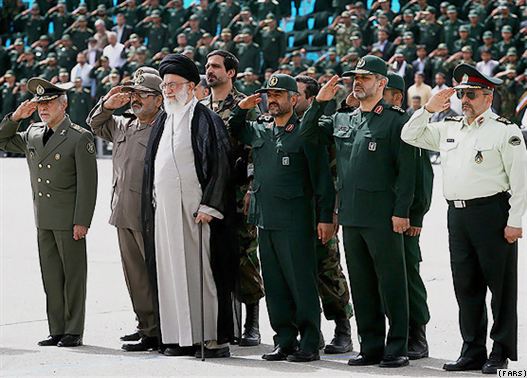
THE ISLAMIC REPUBLIC’S 13 GENERALS

Feb 03, 2011

According to the official reports from Iran, Brigadier General Ghasem Soleymani (Commander of the Qods force) has been promoted to the rank of Major-General.

Official reports from Iran stated that Ayatollah Khamenei presented this title to Ghasem Soleymani, who according to Iran’s Constitution is considered Chief of all the Armed Forces.

The rank of Major-General (in other countries’ militaries the equivalent to a two-star general) is the highest rank given to the armed forces serving the Islamic Republic. 13 Generals of the Islamic Republic will be introduced in this article.

General Firouzabadi: A General Who Neither Was a Soldier nor an Officer


The armed forces of the Islamic Republic currently has 13 Generals: four in the military, eight in the IRGC, and one named Hassan Firouzabadi who neither served in the IRGC nor in the military. Yet today he is both a high-ranking IRGC and Military Commander.

General Hassan Firouzabadi is the Chief of Staff of the Armed Forces.[1] While being Iran’s highest military officer after Ayatollah Khamenei, he lacks a background in both the military and the IRGC. Before receiving the rank of general and appointed to be the Chief of the Armed Forces in 1989, Hassan Firouzabadi had not served in any of Iran’s armed forces.

It was during the war and at the Khatem al-Anbiya base when Firouzabadi came close to collaborating with the Armed Forces. Hassan Firouzabadi, supervised by Hashemi Rafsanjani at the time, was commander of the Khatem base. Hassan Rowhani served as his deputy in charge of coordinating [meetings between] ministry representatives of the Mousavi government at the Khatem base.

After the war ended in 1988, a council of professional military figures decided to confer Hassan Firouzabadi the rank of general. Ayatollah Khamenei appointed him Chief of the Armed Forces.

Firouzabadi, now 59, has this job for 21 years. Ayatollah Khamenei highly admires him, and armed forces personnel consider Firouzabadi faithful and religious [enough] to be Commander of the Armed Forces.

It is said that his most important objective is a complete transition and no change in Ayatollah Khamenei’s commanders to the armed forces.


General Gholamali Rashid, Vice Chief of Staff and accredited by the IRGC

Contrary to General Firouzabadi, his deputy General Gholamali Rashid was one of the high-level IRGC Commanders during the Iran-Iraq war.[2]

Along with Mohsen Rezaee, Rahim Safavi, Ali Shamkhani, and Hossein Dehghan, Gholamali Rashid was one of the main and decision-making Commanders of the war. Because of this background, the IRGC forces hold him in high esteem.

General Mostafa Izadi: Deputy to the Chief of Armed Forces


According to official reports from Iran, there is another General named Mostafa Izadi.[3] General Izadi, one of the Najafabadi’s of the IRGC, was a top IRGC commander and for years after the war served as Commander of the IRGC Ground forces.

The IRGC forces, especially the ground forces, highly respect Izadi. Because he is close to Hosseinali Montazeri (the most famous critic of Khamenei), Izadi has been prohibited from gaining higher rank. Upon receiving the general rank two years ago, Izadi was chosen to be advisor to the Chief of the Armed Forces.

General Mohammad Bagheri: Intelligence and Operations Advisor to the Chief of Staff

According to public and official reports from Iran, Mohammad Bagheri is another advisor to Hassan Firouzabadi.[4]

He is the brother of Hassan Bagheri, the first director of IRGC intelligence and operations in the early 1980s and cited as a “martyr” in the Islamic Republic’s official literature.

General Mohsen Rezaee: An Ahmadinejad Critic and the Leader’s Humble Servant

Former IRGC commander Mohsen Rezaee is maybe the very first general of the Islamic Republic’s Armed Forces.

From 1980 to 1997, he was the IRGC Head Commander[5] and is widely known among the IRGC forces as “Agha Mohsen”.

General Rezaee wrote a letter to Ayatollah Khomeini at the end of the Iran-Iraq war. He cites this letter as well as the government’s assessment of the country’s economic situation as important motives that influenced Ayatollah Khomeini to accept Resolution 59 and end the Iran-Iraq war.

Indeed after reading this letter which requested 350 battalions, 3500 tanks, 3000 bombs, 300 planes, 300 helicopters, as well as laser and atomic weapons to continue the war, Ayatollah Khomeini said to the country’s leaders that, “Despite all these problems, they still want to ‘continue the war’. That is no more than a slogan.”

Currently, Mohsen Rezaee is Director of the Expediency Council and no longer wears a uniform. He was a critic of Ahmadinejad during the 2009 Presidential Elections.

Even though still a critic of President Ahmadinejad, after the post-election unrest Rezaee professed to Ayatollah Khamenei that he completely renounced his opposition [to Ahmadinejad]. He dissociated himself from Mir Hossein Mousavi and Mehdi Karroubi, the other two opposition candidates.

Vice Admiral Ali Shamkhani: Not Ready to call the People’s Protests as Divisive Strife


Ali Shamkhani, successor IRGC during the Iran-Iraq war, and former Commander of the Navy in both the Military and IRGC, is another General of Iran’s Armed Forces who because of his military background is considered the most elite of all the officers now serving in the IRGC.

While being Vice Admiral of the Navy, Shamkhani is current head of the Research Center for Defense Aid.[6]

Ali Shamkhani previously served as Mohammad Khatami’s Minister of Defense, but he campaigned against the reformists during the 2001 presidential elections.

After the 2009 post-election unrest, Ali Shamkhani took part in the television program “Yesterday, Today, and Tomorrow.” Despite the moderator’s pleas and counter to the official government propaganda, he was not ready to call the post-election protests as divisive strife.

General Ghasem Soleymani: The Most Famous IRGC Commander Known Outside of Iran

General Ghasem Soleymani is considered one of the most experienced Commanders in the IRGC. After becoming General, he was promoted to rank of Brigadier General and appointed Commander of the IRGC Qods Force. Furthermore, he has been Commander of the 41 Kerman Sarallah Brigade.[7]

It is said that IRGC forces highly approve him because of his military background in important battles during the Iran-Iraq war such as the Tassarof Fav and Karbala 5.

Despite General Soleymani’s position as the IRGC Qods Force commander, he was in contrast to other top IRGC commanders silent about domestic matters such as the post-election unrest and avoided publicly expressing his beliefs. That’s why protestors haven’t heard any criticism from him.

General Soleymani is one of the most famous IRGC commanders known outside of Iran. Western media have identified him as one of the most influential figures in Middle Eastern politics—specifically in Iraq, Afghanistan, Lebanon, and Palestine.

General Soleymani’s name is on the UN and US Sanctions list alongside Rahim Safavi and Mohammad Ali Jafari.

General Rahim Safavi: Chief Aide and Advisor to Ayatollah Khamenei

General Yahya Rahim Safavi, known among the IRGC armed forces as “Agha Rahim”, is one of the Iran-Iraq war’s elite commanders. He was the Chief Director of IRGC Intelligence and Operations.

After the war, he was Deputy Commander of the IRGC and succeeded Mohsen Rezaee in 1997 as Head Commander of the IRGC. [8]

During his term as Head Commander of the IRGC, General Safavi was one of the Khatami Administration’s critics. In 1999, he considered domestic critics of the regime as anti-revolutionary and emphasized that “Because our tongue is our sword, we must chop off some people’s necks and cut off their tongues.”

It is said that he also opposes Ahmadinejad but never publicly expressed his opinion outside of private meetings.

In the middle of Ahmadinejad’s first term in office in 2007, Safavi was removed from his post. Mohammad Ali Jafari replaced him.

In the nineteen months since the post-election unrest Safavi opposed the protests. Like individuals such as Basij Commander Mohammad Reza Naghdi and IRGC Intelligence Organization Director Hossein Taeb, Safavi was indirectly involved in the crackdown on the post-election turmoil.


Mohammad Ali Jafari: Former Commander of the Sarallah Base and Current Head Commander of the IRGC

Mohammad Ali Jafari, known as “Aziz Jafari”, was promoted to the rank of General in 2007. During the Iran-Iraq war, he was one of the second-class Commanders, meaning inferior than the five main IRGC Commanders, and superior than the Brigadier Generals.

After Mostafa Izadi, he became Commander of the IRGC Ground Forces, then director of the IRGC Center for Aid, and a little later became Head Commander of the IRGC.

During the Khatami presidency, Aziz Jafari was commander of the IRGC Sarallah base and one of the 27 IRGC commanders who signed a threatening letter to Mohammad Khatami.

Many of the regime’s opponents believe that the IRGC and the Sarallah Base commanded by General Aziz Jafari played a key role in illegally interfering with the 2009 Presidential Elections, arresting and detaining political activists, as well as clashing with protestors in the streets.[9]

General Atallah Salehi: Head Commander of the Military

Head Commander of the Military[10], artillery officer and one of the officers trained in the Shah’s Royal Army, General Atallah Salehi is not widely known among Iran’s armed forces.

Even so, on February 8, 2009 he published an article criticizing the Islamic Republic Voice and Vision’s manipulation of facts about the Iran-Iraq war and its coverage of the Military’s role.

Contrary to previous Military Commanders who rarely expressed their opinions about domestic affairs, after the 2009 post-election turmoil General Salehi criticized people chanting “God is Great” on the rooftops, stating that nobody can expect the military to be soft on divisive strife.

General Ali Shahbazi: The Supreme Leader’s Chief Military Advisor

General Ali Shahbazi is a contemporary of Ali Sayyad Shirazi, the famous military commander during the war with Iraq.

His relationship with Ayatollah Khamenei goes back to the years when Ayatollah Khamenei was the representative of the Islamic Republic’s founders in the Supreme Council of Defense. Yet this very relationship helped him get appointed as the very first Head Commander of the Islamic Republic’s Military after Khamenei became Supreme Leader.

Afterwards, he became Head of the Trusted University Council for National Defense[11] but suddenly resigned from his post as Head Commander of the Military.

It is said that he resigned because of his dissatisfaction with the government’s decision about a brutal argument between the IRGC and the military over the property of a base in Shiraz.

General Mohammad Salimi: The Supreme Leader’s Military Advisor

After Ali Shahbazi, General Mohammad Salimi became Head Commander of the Military. He is known in Iranian politics as an official close to the Hojjatieh School.

He was already retired when called to serve again as Head Commander of the Military.[12]

General Salimi after a while resigned from his post and gave his position to General Salehi.

General Hassani Saadi: Advisor to the Chief of Staff of Armed Forces

Hassani Saadi, another military general, previously was commander of the Military’s Ground Forces. He is now organizational advisor to the Chief of Staff. He is a professional and non-political figure.

* * *

Even though Iran’s generals have distinguished military backgrounds in the Iran-Iraq war and in defending the country’s borders, many critics believe these elite IRGC and Military Commanders of various ranks play a role in crushing the people’s discontent.

It can be concluded that there is criticism of the abovementioned commanders from the old forces and from within the IRGC body.


[1] For more information about General Firouzabadi, you can visit the Expediency Council’s Website as he is a member: www.maslehat.ir

[2] Gholam Ali Rashid was Commander of Qods Forces Operations who prepared the grounds for liberating the city of Khorramshahr.

[3]Ettelaat Newspaper, January 27, 2010

[4] IRGC-backed Javan Online Website, January 28, 2010

[5] For more information about Mohsen Rezaee, please visit www.tabnak.ir

[6] www.khamenei.ir, September 26, 2005

[7] Fars News January 28, 2010

[8] www.yahyasafavi.com

[9] See the text of the Seven Reformist Activists’ complaint: Radio Farda, August  8, 2010

[10] Fars Online April 11, 2010

[11] This verdict was issued for Ali Shahbazi in April 1992.

[12] General Salimi was recalled to duty in 2000. He resigned in 2005.

Regime’s Intelligence Ministry doesn’t permit deliverance of Zahra Bahrami’s body to her family

February 2, 2011

On Monday Jan. 31 when Banafsheh, Zahra Bahrami’s daughter, went to receive her mother’s body the agents of

Intelligence Ministry didn’t permit it.

In addition they threatened her of having any interview about her mother’s execution and told her that she must giv

e all her mother’s belongings to the regime or she must deposit the equivalent amount of money to the account number that they appoint for that purpose.

Source

Caricatures

Grim Marriage
Iran government in isolation
Iran and sanctions of oil


IRGC MAKING BIG INVESTMENTS IN MACAU BROTHELS

0

Feb 01 , 2011

IRANBRIEFING EXCLUSIVE: Following the economic downturn in the United Arab Emirates and Dubai, and from where the IRGC made huge investments in Dubai’s economic, real estate, and financial sectors, this organization has now shifted its assets and economic activity from Dubai to Southeast Asia.

Malaysia and Macau are the two places where the IRGC now concentrates its economic activities, investing in banks and trade towers in Malaysia, especially Kuala Lumpur. The IRGC invests in the casino, Red Light and brothel business in Macau, an island in the middle of the Indian Ocean.

This industry is very new in Southeast Asia. After successful growth in China, it has gained hold in this region. Since Macau is very close to China, it is a paradise for investment in this sort of trade.


Why the casino?


China has about one billion people in the workforce and a growing middle class. Thus, as logic goes, if the middle class has a little capital, then there must be a vacation spot to spend its money (Until a few years ago, people in general considered vacation exclusive, work their only obligation and wealth unimportant). Yet Macau now has become a place for getting their money, and this mandate has in Southeast Asia made it bigger than Las Vegas. Macau is deemed a threat to Las Vegas, and in this respect our brothers in the IRGC had a lucrative opportunity.

An Iranian is in charge of directing the cash flow from Dubai and Turkey to Macau. This individual known as Haj Safdar Minamand (whose real name is Seyyed Javad Zavarei) is the IRGC’s second general and is a first degree relation to Seyyed Reza Zavarei. Reza Zavarei was one of the kingpins of the Islamic Republic: he was the first Tehran Revolutionary Court public prosecutor, advisor to the Interior Minister (Hashemi Rafsanjani), Head of the National Security Council, the Tehran representative in the Majlis (1981-1987), a legal expert and deputy to the head of the Guardian Council (until 2005), Head of the National Registry and Assets Organization (1989-1997), Presidential candidate in 1989 in the third, fourth, and seventh rounds.

But General Javad Zavarei, in addition to building casinos and hotels, as well as some tourist, leisure, and cultural centers, also works to project an image.

One of the local experts in the real estate affairs believes that Iran has invested up to one billion dollars in Macau but adds that some of these investments were under and sometimes one place could be bought and sold 3.2-10 times in one month—even if there is no record available about the exact amount of inflow investment. All these activities are conducted in the name of business, done under unknown circumstances.

According to some unconfirmed statistics, the IRGC until now has invested up to 20 billion dollars in this region.

Iran Feature: Zahra Bahrami, the Netherlands, and The Failure of Quiet Diplomacy (Ashtary)

0

Monday, 31 January 2011

EA WorldView – The execution on Saturday of the Dutch-Iranian citizen, Zahra Bahrami, is clear evidence of the failure of quiet diplomacy by the Government of the Netherlands.

The protection of human rights and quiet diplomacy do not have have anything in common. Human rights organizations focusing on Iran have long been saying that the government of the Islamic Republic of Iran pressures individuals and governments to keep quiet. When governments use quiet diplomacy to try and negotiate with the IRI. they are falling into a trap.

This is not a call for an end to diplomacy. The point is that the time is long overdue to make some noise. Human Rights organizations and defenders have been saying this for years.

On Saturday, January 29, the Dutch citizen, Zahra Bahrami was executed on allegations of drug smuggling — far from the first time that human rights violators have used this pretext to hold and execute political prisoners — even though the Foreign Ministry in the Netherlands was told that the judicial process was not yet completed. The actions of the Government of the Netherlands to freeze business and diplomatic ties with the Islamic Republic of Iran is a good first step, but it should not be the last.

The Islamic regime has accused the Netherlands of trying to undermine its rule through the support of free media and human rights organizations. It has put the Dutch humanitarian organization, Hivos, on an “enemy’s list” of supposed regime-change agents and has prevented Iranian citizens from having contact with the foundation, along with dozens of others.

There is a lot of introspection in the Dutch-Iranian community at the moment. People are asking what they could have done and why they stayed so quiet. One such person summed up the feelings, saying, “I trusted that the Dutch government would do everything in its power to protect its citizens, but I was wrong. We should have been more active.”

It is clear that  many members of the Dutch parliament were shocked by the execution of one of its citizens. Some members of the Dutch-Iranian community are asking why this is so. Have they not
noticed that Iran executes more of its own citizens than any other country in the world? Have they missed the news that there has been an average of one execution every eight hours since the beginning of the year?

Here are some minimum recommendations for the Dutch government.

1. The Netherlands should lead an international effort to challenge Iran’s refusal to accept dual nationality.

2. The Dutch government should lead efforts to bring the issue of human rights in Iran to the European Parliament.

3. The Netherlands should crack down on the operations of Iranian intelligence officers located here because the Dutch-Iranian community feels unsafe. Over the past two years, intelligence personnel attached to the Iranian Embassy in the Netherlands have been seen publicly photographing Dutch-Iranian citizens attending demonstrations and are known to be collecting information.

4. The Netherlands should stop issuing visas for any purpose to personnel of the Revolutionary Guards, the judiciary, and related organisations.

5. The Netherlands should approve the asylum applications of political refugees who left Iran since 2009. Many of their applications have been denied.

6. Respect for human rights needs to become a business concern as wellas a political concern.

7. The Dutch Government should lead an effort to call for the immediate release of all prisoners of conscience in Iran.

8. The Dutch Government should protest the use of (forced) confessions against prisoners of conscience and others.

Source

Gruesomel­y, while Larijani was lauding the Egyptian protestors­, a dual Dutch-Iran­ian citizen, Zahra Bahrami, was dragged to the hangman’s noose after being arrested for participat­ing in the 2009 protests and then convicted on fabricated charges of drug smuggling.

0

“”Gruesomel­y, while Larijani was lauding the Egyptian protestors­, a dual Dutch-Iran­ian citizen, Zahra Bahrami, was dragged to the hangman’s noose after being arrested for participat­ing in the 2009 protests and then convicted on fabricated charges of drug smuggling.­”

“the Dutch television program “Nieuwsuur­” reported on January 31, 2011 that in 2003 Ms. Bahrami had been caught at Schiphol Airport with almost 16 kilograms of cocaine in her luggage, for which she was sentenced by a Dutch court to 3 years imprisonme­nt, of which one year suspended”

http://nie­uwsuur.nl/­onderwerp/­215523-gee­xecuteerde­-bahrami-e­erder-vero­ordeeld.ht­ml

Iran’s Green Movement Still Inspires

0

Monday, 31 January 2011

Paayvand – In a televised interview broadcast just a few days ago, University of Michigan History Professor Juan Cole described the Tunisian uprising as not only “the first popular revolution since [the Iranian revolution of] 1979,” but also “something that other Arab countries might well look to — the publics, at least — for inspiration” [1].


Coming from a Middle East expert, who is also a trained historian, this analysis is totally unacceptable because it fails to so much as even mention the historical fact that Iran’s Green Movement preceded the “mass movement” in Tunisia, thus making it not only the first popular uprising since the 1979 revolution, but also the inspiration by which Tunisians from all walks of life took to the streets across Tunisia in the attempt to overthrow their oppressors [2].

Of course, Cole might argue (as he has in that same interview, albeit in relation to the 1979 revolution) that Iran’s post-election uprising was Persian and Shiite in nature and thus not Arab or Sunni enough to have inspired the movement in Tunisia .

But that, too, coming from a trained historian, would be utterly unacceptable, first, because it assumes that the spirit of freedom and justice cannot travel from one country (or region, for that matter) to another, if the countries involved do not share the same cultural or racial identity; second, and perhaps more importantly, because it fails to take into account the many historical examples that clearly invalidate this assumption; for example, the fact that billions of dollars were spent by Arab governments and their Western allies right after the Iranian revolution of 1979 to prevent it from spreading to neighboring countries, which happened to be mostly Sunni, or the war that Saddam Hossein waged against Iran in the early 1980s partially for that same purpose.

What is more, Tunisian activists have not made it a secret that some of the tactics that they used in their struggle against the Ben Ali regime were indeed borrowed from the Iranian uprising of 2009 (especially those involving the use of such social networking technologies as Facebook and Twitter), thus confirming the existence of a certain connection, spiritual or otherwise, between the two nations’ movements.

Why, then, did Cole fail to acknowledge, in his discussion with Amy Goodman, Iran’s Green Movement in the way in which it was described above?

True, the post-election uprising in Iran did not succeed in what may be considered Iranians’ initial attempt in the 21st century to facilitate the country’s transition to democracy [3].

But how could anyone use this as a justification to deny the Iranian uprising the capacity to inspire similar events elsewhere?

Perhaps Cole would find this an issue worth addressing at some point in the near future.

Finally, a few comments are in order in relation to the popular uprising that is currently taking place in Egypt .

Although, at this stage, it is not possible to predict the exact outcome of this uprising, there is a good chance that, similar to Iran ‘s Green Movement (which may be considered the 21st century’s first major democratic movement), it is an indication of a new “wave of democratization” that can potentially sweep the entire region of dictatorships.

As such, the leaders of the authoritarian regimes in the region are at a crossroads and thus have a decision to make: they can either voluntarily dismantle the authoritarian systems with which they have been oppressing their subjects for years and thus facilitate their countries’ peaceful transition to democracy, or face the possibility of total obliteration, which, considering the region’s current political climate, should occur sooner than later.

Of course, there is also a third possibility: those who are at the helm of these obsolescent regimes might choose to wait until the last minute to relinquish power, and, then again, only partially so, through negotiations of a limited nature with their main opponents.

But history, as well as the situations in Tunisia and Egypt , has shown this to be an unsound strategy that cannot be expected to bear fruit in each and every revolutionary situation, thus requiring these despots to seriously consider the possibility of genuine democratization in their countries before it is too late [4].

Jalal Alavi is a sociologist and political commentator specializing in issues related to Iran .

Notes:

1.  The rush transcript of Amy Goodman’s interview with Juan Cole is available from:http://www.democracynow.org/2011/1/18/juan_cole_tunisia_uprising_spearheaded_by.

2.  Like Cole, who has failed to acknowledge the Green Movement as a source of inspiration for discontented populations the world over, Iran ‘s rulers have recently put forward the idea that the uprising in Tunisia (and now Egypt ) was inspired by Iran ‘s 1979 revolution.  This, of course, is a flawed assessment, not least because the revolution of 1979 occurred some 32 years ago, when many of the region’s inhabitants were not even born yet, while the Green Movement, of which almost everyone in the region has a fair recollection, occurred just over a year ago.

3.  The Green Movement failed mainly because its leaders were more dedicated to preserving the “Islamic Republic” than to following through with the demands of the Iranian citizenry for freedom and justice.

4.  The last shah of Iran , as well as Iran itself, was also a victim of this flawed strategy.

… Payvand News – 01/31/11 … —

Source

New executions in Karaj and Birjand today- One executed in Tehran yesterday

0

Monday, 31 January 2011

Iran Human Rights, January 31: According to the reports from Iran several people have been executed in different Iranian cities today and yesterday.

In a press conference that was held today, Iran’s prosecutor general, and spokesman of the Iranian judiciary, Gholam-Hossein Mohseni-Eje’i said that several people have been hanged in the cities of Birjand (east of Iran) and Karaj (west of Tehran) today and one person was hanged in Tehran yesterday reported several Iranian news agencies. According to these reports all of those executed today and yesterday were convicted of drug trafficking.

The reportes didn’t mention the exact number nor the identities of those who were executed