Home Blog Page 677

Political Prisoner Hossein Shahriari Transferred to Security Ward of Rajaei Shahr Prison

0
27 , January , 2011
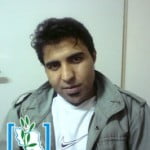
Political prisoner and former board member of the Pan-Iranist Party, has been transferred to the security ward of Rajaei Shahr Prison.
The security ward of Rajaei Shahr Prison which is a place for confining political prisoners is similar to Ward 350 of Evin Prison and the detainees are deprived of access to telephones at both locations.
According to the Human Rights House of Iran, In 2005, he was sentenced to 18 months imprisonment for propaganda against the regime, interviewing with BBC and being a member of the Pan Iranist Party. Last year, he was arrested after the raid on his house in Karaj and transferred to Rajaei Shahr Prison. He was detained along with Kalashi and Kermani on his way to Isfahan on September 7th while he was on a 2 week prison leave.  He was indicted on the charge of anti-regime propaganda in Isfahan and released on bail but had to once again return to Rajaei Shahr Prison.

Political Prisoners Ali Ajami and Mohsen Dokmechi Transferred to Ward 4 of Gohardasht Prison

0
27 , January , 2011

Ali Ajami and Mohsen Dokmechi who were arrested following the disputed presidential elections, have been transferred to section 12 of ward 4 of the Rajaei Shahr prison.

Student Activist Ali Ajami and well-known merchant Mohsen Dokmechi who were both arrested following the post-election protests have been transferred to section 12 of ward 4 of the Rajaei Shahr Prison which has recently been turned to a location for confining political prisoners.

Ali Ajami, a leftist student and editor in chief of a student publication at Tehran University, has been sentenced to 4 years in prison for anti-regime propaganda and conspiring against the regime.

Mohsen Dokmechi is a well-known merchant who was arrested for giving financial assistance to the families of prisoners of conscious and was sentenced to 10 years in prison despite his advanced cancer.

Iran’s Press TV has British bank account frozen

0

January 27, 2011

LONDON — Iran’s state-run news channel Press TV has had its British bank account frozen, a report said on Thursday.

The English language channel, which is headquartered in Tehran but also has an office in London, has seen its main trading account at the National Westminster Bank suspended, Britain’s Times newspaper reported.

The bank will shortly close the account, the paper reported. A spokesman for the bank declined to tell the paper why it was taking the action.

Lauren Booth, the sister-in-law of former British prime minister Tony Blair who works for Press TV and recently converted to Islam, blasted the move as a “politically motivated act,” in comments to the paper.

It was “intended to cripple a thriving British company whose programmes and news bulletins shed light on areas of policy which certain agencies would sooner keep in the dark,” she said.

Matthew Richardson, Press TV’s legal adviser, was cited as saying that NatWest had refused to explain why it had frozen the account. “They’re not giving any reason why they’ve done it,” he said.

Western governments accuse Iran of trying to develop atomic weapons, and the Islamic republic has been the subject of four sets of United Nations sanctions.

Tehran insists its controversial nuclear programme is only for civilian purposes.

Source

Political Prisoner Massoud Aghaei Transferred to Ghezelhesar Prison

27 , January , 2011
Religious activist and engineer Massoud Aghaei was taken to the Quarantine Ward of Evin Prison on Monday in order to be transferred to the Karaj Ghezelhesar Prison.
Despite the widespread outbreak of the flu virus in Gehzelhesar Prison, Massoud Aghaei and Alireza Farzaneh, another post-election detainee, have been transferred to the prison from Ward 350 of Evin.
Evin officials have stated that the reason for the transfer is the incompatibility of their charges with those of Ward 350 prisoners. However, many of Ward 350 prisoners have similar charges such as disturbing public order during the post-election protests.
Ghezelhesar Prison does not have a political prisoner and the 2 individuals have to serve their sentences with regular prisoners.                                                                                                                                                                                                                    Since the court verdict for Aghaei has not stated anything about exile, the transfer is considered to be unlawful.       Aghaei is suffering from Bronchitis and Asthma. His family is greatly concerned since he has a high chance of developing pneumonia due to the flu outbreak in prison and his medical condition.
Massoud Aghaei is one of elite construction managers from Khoramshahr’s reconstruction during Musavi’s presidency. He was previously arrested due to political activities and was later released on bail. He was arrested last year along with his wife Badrolsadat Mofidi, secretary of the Journalists Union. He was sentenced to 6 months of imprisonment by the 6th Branch of Revolutionary Court for participating in the post-election protests.

Shajooni Turns Out to be a Billionaire; Naderan a Fake War Veteran

0
January 27, 2011

As some members of the Principlists party (Osulgarayan) in the Iranian parliament, including Ahmad Tavakoli, Elias Naderan, and Ali Reza Zakani continue to push for the prosecution of Ahmadinejad’s first deputy Mohammad Reza Rahimi, several news sites affiliated with the same party which staunchly supports Ahmadinejad have started to leak private information against these MPs accusing them of harboring vicious agendas. According to these conservative news sites, Naderan not only owns up to eight residential complexes some of which are registered under his relatives’ names but also received a real estate loan from the Majlis in the amount of one hundred million Tomans. Based on similar accusations, there is no documented record proving that Naderan actually served during the 8-year Iran-Iraq war and in fact “his claim for being a disabled veteran is related to an accident he had before the 1979 revolution, which has not been corroborated by the Foundation for Veterans and Disabled Affairs (Bonyad Janbazan va Omoor Isargaran)”.

During past few days, some of the same websites have revealed information about Zakani’s college drop-out status as well as some irregularities in Tavakoli’s electoral office and campaign. Previously, these sites had raised questions about Jafar Shajooni, an MP who had severely criticized Esfandiar Rahim Mashaee. Meanwhile some former political columnists of Kayhan newspaper accused Hossein Shariatmadari, its managing editor, of striving to eliminate Ahmadinejad’s close allies from the political scene. In their accusations they described Kayhan as marred by a “legitimacy crisis” and denounced Shariatmadari for playing “political games”.

The three MPs targeted by conservative news sites had accused Mohammad Reza Rahimi, Ahmadinejad’s first deputy, of financial corruption. In this regard Elias Naderan had said, “Mr. Rahimi is the ring leader of the Fatemi street gang who has led the collection and distribution of revenue attained from illegal sources, all of whom except the president’s first deputy have already been placed under arrest.” In his expose, he had described the Fatemi Street gang in these words: “The financial-corruption gang of Fatemi Street in Tehran consisted of Jaber Abdali, Elyas Mahmoudi, Masoudi, and some others who have all been arrested subsequently. It is not true to say that Rahimi did not play a role in distributing the money for the checks that were signed by Abdali. While the bank accounts and the checks belonged to Abdali, the handwriting on the checks belong to someone else and it is not hard to identify that person. But more important than the distribution of revenue is its corrupt source and in this regard Rahimi should be held responsible to the people as well as to the judicial system.”

After Rahimi’s appointment as the president’s first deputy Jahan News website, affiliated with Ali Zakani, had written, “Regarding the insurance fraud case committed by a criminal gang in the city of Karaj there were signs pointing the figure to a controversial official who is accused of several financial and corruption wrongdoings and who currently holds a senior position in the government.”

Source

Two Citizens Executed in Iran

0
26 , January , 2011

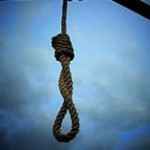
Kamran and Mehran Khaki were executed in Bojnourd Prison for waging war against God and corrupting the earth by committing murder.

Their execution sentence had been upheld by the Supreme Court. Their requests for amnesty were denied. Yesterday, 6 people were executed in Iran and one was executed in public. According to Human Rights House of Iran, 80 people have been executed in the past 30 days.

Source

Iran Special: What the Executions Say About the Regime’s “Control” and Murder

0

Wednesday, 26 January 2011

EA WorldView – The Iranian government executed two more people on Monday. This was the official explanation: “Two elements of the Monafeghin (hypocrites) cell named Jafar Kazemi…and Mohammad Ali Hajaghaei…were executed early today.” The “Monafeghin” are the exiled Iranian opposition group, People’s Mujahedeen of Iran (PMOI).

The PMOI, also known as Mujahedeen-e-Khalq (MKO), is a leftist dissident organisation that was active before, during and after the 1979 revolution in Iran. During the revolution, they joined forces with the Islamists and various other groups with differing ideologies, all of whom were united in opposition to the Shah. Soon after the revolution, a complex and Machiavellian power struggle ensued that caused them to fall out of favor with the ruling Islamist clique, leading to many of the members and supporters of the group going into exile.

The group fell out of favor with the majority of Iranians when, during the protracted Iran-Iraq war, they continued their opposition to the regime in a misguided move by fighting against, and killing, Iranians (with the support of Saddam Hussein). While not a lot of love is lost between the Iranian people and their government, most Iranians feel a certain revulsion towards a group that sided with an invading, foreign force to kill those Iranians at the front-lines that were fighting to defend their country.

In the late 1980s, after the war with Iraq ended in stalemate, Ayatollah Khomeini ordered the mass execution of thousands of the group’s members and supporters, further deepening the enmity between the regime and the group. The regime refers to them as “Monafeghin” or hypocrites and to this very day, still uses them as a scapegoat for its own horrendous atrocities against the Iranian people.

The International Campaign for Human Rights in Iran recently reported that since the start of 2011, the regime has been on an execution binge, killing upwards of 97 people.

That was before Mohammad Ali Haj Aghaei and Jafar Kazemi were added to the list. And I certainly wouldn’t be surprised if the total is significantly higher than the official figure, as the regime has been known to kill people en masse and in secret.

So what is the wider context beyond the hangings?

Less than two years ago, the regime saw the Iranian people react in a way that caught it completely off guard after rigging the June 2009 presidential election in favor of the incumbent, Mahmoud Ahmadinejad. A huge groundswell of grassroots support for the main challengers to Ahmadinejad formed, using the color green (initially used by the campaign of opposition candidate, Mir Hossein Mousavi) to represent the ideals of what would come to be known as the Iranian Green Movement.

At first the people protested peacefully in the streets of Tehran and other cities, in the hundreds of thousands (and in the case of Tehran, millions), asking “Where is my vote?” When the regime responded with brutality, the movement spread, and its demands metastasized into several different calls, including the downfall of the regime and its leaders — something unheard of to the degree that it was displayed for the world to see through the social media channels and eventually on televisions screens the world over.

Over the course of many months of protests and crackdowns, at least hundreds of thousands of people protested, many were killed, and many were arrested and held in Iran’s notorious prisons and torture chambers.

The regime panicked — big time.

But they were able to hold onto power. By not backing down even one inch to the demands of the people, and by using revenues from petrodollars to finance the crackdowns, they were able to subdue the protests. At least for now, they appear to be in control.

But underneath it all, they have not been able to quell the seething anger and discontent that the people of Iran feel towards them.

They absolutely know this. Otherwise why would they announce the start of a cyber-police unit to crack down on the activities of people using the Internet to disseminate information about what’s happening in Iran and to organize against the regime? Why fight if you’ve already won?

The regime seems confident enough to participate in international political escapades, such as blatantly supporting Hezbollah’s not-so-secret campaign to take control of the Lebenese government and leading the international community by the nose in endless nonsensical nuclear negotiations that serve as nothing more than distractions to human rights violations. But the Iranian leaders also realise that they have unfinished business at home — the business of trying to figure out what to do with the hundreds (thousands?) of political prisoners and dissidents that are languishing in their prisons, and also the business of how to send a clear signal to the restless masses that further dissent will not be tolerated.

To call the regime shrewd in this effort is a big understatement.

For instance, for years the regime has provided subsidies to Iranians for various consumables, such as gasoline. The regime has had to import gasoline to meet the demand within the country, despite the fact that it is an oil exporter. This has cost the regime billions of dollars, and has been a huge drain on government coffers. The regime has recently started a program of cutting the subsidies, putting pressure on Iranians at a time when the political tension in the country is high. How could they get away with this?

Well they certainly didn’t leave things to chance. They deployed their security forces throughout the cities just in case people protested. Not much happened.

To make the political case for the economic measures, the regime has the US to thank for sanctions that make life difficult for the majority of Iran’s middle- and low-income classes while having little impact on the regime. They have gone ahead with the subsidy cuts betting that they can point the finger for Iran’s economic woes on the “enemy” of the sanction-imposing western powers, all while building up their coffers through the savings on subsidies.

Shrewd.

That same shrewdness is on display in a sad, sickening way with the executions of Jafar Kazemi and Mohammad Ali Hajaghaei.

These are political executions and are calculated provocations by the regime against all who oppose them. By accusing the men of being PMOI, the regime believes that most Iranians will turn a blind eye to the executions. They also send a strong signal to the opposition

If you even think about protesting against the government, or doing anything that could be considered as being remotely against the government, you may be associated with the Monafeghin, in which case you will be accused as warring with God, and be subject to execution.

In a recent interview, Jafar Kazemi’s wife Roudabeh Akbari took apart the claim that her husband was a member of PMOI. While he served almost a decade in prison for being active as a member of the group in the 1980s, he had not involved with the group for many years.

His son is apparently staying at Camp Ashraf in Iraq, the PMOI’s base, and Jafar Kazemi had visited his son there and communicated with him by phone. However, the regime’s accusations that he was instructing students to take part in protests and riots during the 2009 uprising are questionable and do not constitute grounds for execution.

And this is where I think Iranians need to do some serious soul-searching.

The regime gives itself a free pass when it comes to killing people for various associations and affiliations. If the regime can link a person to monarchists, they will execute them. If the regime can link a person to the PMOI they will execute them. If the regime can link a political prisoner to drugs or any variety of sex that is considered taboo or adultery, they will execute them. Let’s not mince words here.

This is murder. Plain and simple.

Murder.

We must abhor murder in all its forms, no matter who commits it or who it is committed against. It is simply wrong.

The alternative is to allow the regime to have a tool that it can use whenever it wants to eliminate someone it deems undesirable, for whatever reason. The formula is simple: associate a person with an unsavory group or activity, then kill them.

We already know that the Iranian judiciary is beholden to the office of the so-called Supreme Leader and the revolutionary guards. It cannot be trusted to be fair or impartial. So it simply cannot be given the right to kill people.

It’s that simple.

And unless we Iranians are unwilling to make any exceptions to murder, even when we don’t care for a particular group that a person may belong to politically, then we will always be subject to potentially losing a loved one, family member, or friend, to this regime.

It is sad that Jafar Kazemi and Mohammad Ali Hajaghaei have been murdered by the regime of Ayatollah Ali Khamenei. It is wrong. And it must be opposed.

The regime has reason to be afraid about its control. The people rose up against them. They rallied together under the banner of, and hope for, a better future — one in which state-sponsored murder is an abhorrent thing of the past.

For that day to come, we must demand that all executions in Iran be stopped. Immediately. We must pull no stops in getting attention on this matter, internally in Iran and externally. We must talk about this within our families and our communities until all of us come to the realization that we have been living under the shadow of murderers for far too long.

We must not give them an excuse. We must not let them think that they can label someone and then kill them.

Unless we not only accept that, not only declare that, but also act against that, then we will forever have to face responsibility for the murders that are committed in our name.

Source

Journalist Siamak Ghaderi Fined and Sentenced to 4 Years in Prison

0
25 , January , 2011
Journalist, blogger and IRNA reporter Siamak Ghaderi has been fined and sentenced to 4 years in prison.
Siamak Ghaderi who was detained on August 8th has been convicted of anti-regime propaganda, acting against national security and disturbing public opinion.
According to the Human Rights House of Iran, he was detained at his house in August of 2010 and transferred to prison.The security authorities had conditioned his release on the publication of articles in support of the government and the Supreme Leader on his blog (Our IRNA).

Political Activist Saeid Haeri Sentenced to 2 Years in Prison

0
23 , January , 2011
Saeid Haeri, political and civil rights activist and Committee for Human Rights Reporters member, has been sentenced to 2 years in prison.
He had previously been sentenced to 2 years in prison and 74 lashes for disturbing public order and assembly and collusion by the 26th branch of the Revolutionary Court.He was released on a $100,000 bail in March after 80 days in prison. He had been arrested along with Shiva Nazar-Ahari and Kouhyar Goodarzi.
Haeri is a philosophy student at the Northern Branch of Azad University in Tehran. He was a member of Karoubi’s Campaign during the presidential elections.

Another Journalist Imprisoned; Ehsan Mehrabi Began Serving His Sentence

0

23 , January , 2011

Journalist Ehsan Mehrabi began serving his sentence on Saturday.

Ehsan Mehrabi, a 35 year old journalist, who had been detained and convicted based on unfounded charges, was summoned to the court in Evin Prison today in order to begin serving his one year sentence.

According to RAHANA, Mehrabi who has been a reporter for Etemadeh Melli and Farhikhtegan newspapers and has been a contributor to many reformist publications was detained last February. He was later released on a $50,000 bail after spending 3 months in Ward 209 and Ward 240. He was held in solitary confinement for most of his time in detention and was sentenced to 1 year in prison by Judge Moghayeseh of the 28th branch of the Revolutionary Court for anti-regime propaganda by interviewing BBC Persian and RadioFarda.

His sentence was upheld by the 36th branch of the Revolutionary Court presided by Judge Zargar. Surprisingly, his sentence was immediately confirmed by the appeals court and he was summoned to the executive branch of the court in Evin Prison a few weeks later in order to begin serving his sentence.

He appeared at the court on Saturday based on his summons order and began serving his one year prison term.

The number of imprisoned journalists has risen with the addition of Mehrabi’s name to the list of the detainees who are journalists. Ahmad Zeidabadi, Isa Saharkhiz, Massoud Bastani, Bahman Ahmadi Amouei, Keyvan Samimi, Ali Malihi, Mehdi Mahmoudian along with several other bloggers and journalists are serving their prison terms. Several other journalists are in temporary detention and some have been temporary released on bail.

Source