Home Blog Page 684

Family of Death Row Political Prisoner Habibollah Latifi Arrested

0

December 26, 2010

RAHANA: On Sunday night, the security forces raided the house of Habibollah Latifi and detained his family after searching the house. His 3 sisters, 3 brothers, father and sister in law are among the detainees.

There has been no information as to the reason for the arrests but there are concerns since the arrests have taken place after the execution was halted.

The execution which was opposed by many activists was not carried out yesterday after the sit-in of his family and a group of people next to prison.

The head of the prison had told his family that they would be able to visit him upon the resume of office hours.

Habibollah Latifi was arrested on October 21, 2007 and was tortured for four months in solitary confinement. On June 30, 2008, has was sentenced to death during a short court session which was held at the first branch of the Sanandaj Revolutionary Court presided by Judje Hasan Babai in the absence of any family members. He was convicted of crimes against national security and Moharebeh (waging war against God) based on Verse 33 of Maedeh (Quaran), first, third, and fifth chapter of the Imam Khomeini’s book  (Tahrirol masael) as well as codes 183, 186, 190 and 191 of Islamic penal code.

Following his objection to the unlawful verdict, on January 29, 2009, the sentence was upheld by the appeals court. After the transfer of this case to the Supreme Court, the sentence was once again upheld on April 5, 2009 and he is currently being held at Sanandaj prison.

Original Text

WikiLeaks: From Congo to the Caucasus — chasing loose nuke material

0
By Tim Lister, CNN
December 21, 2010 6:07 a.m. EST

(CNN) — One of the nightmare scenarios of the 21st century is a “rogue state” or terror group getting its hands on nuclear material that could be sufficiently enriched to make a weapon. And diplomatic cables obtained by WikiLeaks show that from central Africa to central Asia, it’s a constant preoccupation of U.S. officials.

Two cables from 2007 detailed the discovery of uranium in “multiple containers” in the Democratic Republic of Congo.

“All items have marking and labels indicating that they were produced in Belgium,” one says.

The cables, written by the U.S. Embassy in neighboring Burundi, quote an unnamed informant as saying the uranium was found in a fortified bunker.

“It took four months to open the bunker. In the process of opening the bunker two men were killed by a grenade booby trap. There were also land mines planted around it,” one cable says.

The informant, described by the Guardian newspaper as a local elder, added: “One container weighing 3 kg is currently located in Bukavu and another 3 kg container is located in Goma,” two towns in eastern Congo. And he said he knew of “someone who has 3 containers who would be willing to sell them.”

Regarding the motivation of the man and his associates, the cable quoted them as saying “they did not want these items to fall into the wrong hands, specifically mentioning that they did not want Muslims to possess the items.” And they were reluctant to notify the Congo authorities because “they were afraid that the corrupt Congolese police would steal the items and sell it themselves.”

For U.S. diplomats, one of the challenges is to work out what might amount to a real danger, and what might be a scam.

The Congo informants were “anxiously waiting for some sort of indication from us that we are willing to pay for it,” according to the cable. “The men did not know if the uranium was weapon-usable fissile material, highly enriched uranium, what the percentage of uranium-235 isotope or other isotopes were, or how its content was determined.”

In the end U.S. diplomats concluded: “This case fits the profile of typical scams involving nuclear smuggling originating from the eastern DRC.”

In 2006, another cable — from Dar es Salaam in Tanzania — discussed the possible shipment of African uranium overseas. It says that “according to a senior Swiss diplomat, the shipment of uranium through Dar es Salaam is common knowledge to two Swiss shipping companies.” The uranium was supposedly from Democratic Republic of Congo and was destined for Iran — though embassy officials pointed out that the reports were unsubstantiated.

Security at nuclear installations has been another cause for alarm. In 2006, U.S. diplomats toured a non-functioning nuclear research center that included two reactors in the Congo capital, Kinshasa. One, according to the director of the center, contained “5.1 kilograms of enriched uranium,” which is U-235, enriched to 20 percent.

The visitors noted: “External and internal security is poor, leaving the facility vulnerable to theft. The fence is not lit at night, has no razor-wire across the top, and is not monitored by video surveillance. There is also no cleared buffer zone between it and the surrounding vegetation.”

As for the guards, “some are elderly, and some are occasionally caught sleeping on the job,” the cable adds. “It is relatively easy for someone to break into the nuclear reactor building or the nuclear waste storage building and steal rods or nuclear waste, with no greater tool than a lock cutter.”

In fact, two fuel rods had vanished from the facility in 1998. One was subsequently found when the Mafia in Italy tried to sell it to unidentified buyers from the Middle East. The other was never recovered.

Guarding nuclear materials appears to have been a problem in Yemen, too. A cable from the U.S. Embassy there earlier this year noted, “The lone security guard standing watch at Yemen’s main radioactive materials storage facility was removed from his post on December 30, 2009, according to (name redacted).” And it adds, “Very little now stands between the bad guys and Yemen’s nuclear material.”

U.S. President Barack Obama has made it a priority to secure vulnerable nuclear stocks within four years in a global drive to pre-empt nuclear terrorism. While some progress has been made, data from the International Atomic Energy Agency show there is plenty of nuclear material on the loose.

In the year to June 2010, the IAEA reported 61 incidents involving theft or loss. Five of the incidents involved high enriched uranium or plutonium, including one of illegal possession.

Several cables refer to attempts to sell nuclear and radiological materials stolen in the wake of the collapse of the Soviet Union. One of the more bizarre incidents occurred in Portugal in 2008, when a man walked into the U.S. Embassy to try to help sell “uranium plates” owned by an unidentified ex-Russian general living in Portugal.

“The material was allegedly stolen from Chernobyl,” the cable says. “The walk-in stated he is not on any medications and has not consulted any mental health specialists.”

Several incidents are reported in cables from the Caucasus nations — the most recent so far published referring to an incident last year. A car carrying three Armenians set off a gamma alarm as it crossed into Georgia. “The driver of the vehicle said that he had recently had surgery, during which time a radioactive isotope was injected into his body,” an explanation that apparently satisfied the Georgian border guards.

But the alarm sounded again when the car crossed the border at a later date and an inspection “determined that the car was contaminated with Cesium-137,” a radioactive isotope frequently found in the low-level waste from medical or research labs which in the wrong hands could be an ingredient for a “dirty bomb.”

However, a search of the vehicle failed to produce any radioactive material and the occupants were allowed to go. The Cesium-137 had apparently been delivered.

One interesting aspect of that incident was that the alarm was set off by a “radiation detection portal monitor,” hundreds of which have been installed at border crossings in many parts of the former Soviet Union as part of a program run by the U.S. Department of Energy. However, the effectiveness of the devices has been questioned.

One cable on the incident says it “reveals that some training gaps remain within the patrol police on how to appropriately handle alarms.”

In another case that is not covered by the leaked cables published so far, two Armenians pleaded guilty last month to smuggling highly enriched uranium into the nation of Georgia, hiding it in a lead-lined box on a train from the Armenian capital, Yerevan, to Tbilisi in Georgia. Their illicit cargo was not detected by alarms, but they were eventually caught by a good old-fashioned sting operation.

The two Armenians, a physicist and the former owner of a dairy business, are now serving long jail terms in Georgia

http://www.cnn.com/2010/US/

Iran sentences filmmaker to 6 years in prison

0

December 20

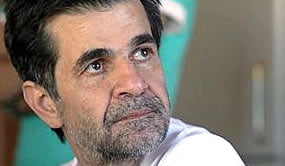
Jafar Panahi, prominent Iranian filmmaker was sentenced to six years in prison and 20 years ban from filmmaking and travelling abroad.

ISNA reports that Farideh Gheyrat, Panahi’s lawyer has announced that she will appeal this “unusually heavy sentence.”

Panahi was arrested twice in the post-election protests to the alleged vote fraud that secured Mahmoud Ahmadinejad’s victory in the 2009 presidential elections.

He was first arrested in August of 2009 at a commemoration ceremony for the victims who were killed in the post-election street demonstrations by government forces.

He was later arrested in March 2010 in a raid of his home. He was arrested with his family and guests, and a number of pro-government media suggested that he was arrested for planning a film about the protests.

While all the detainees of that night were released, Panahi remained in custody in an undetermined legal state for over three months and finally after a week on hunger strike, he was released on a $200,000 bail.

His trial was finally held in November after many delays and in it Panahi denied the charges against him and described the attacks against him as an attack on the totality of Iran’s art and culture community.

Panahi has been prevented by the Islamic Republic from attending a number of international film festivals including the Berlin and Venice festivals this year.

Original Text

Iran said to have cut Hizbullah aid by 40%

0

By YAAKOV KATZ
12/16/2010 00:56

Terror organization faces unprecedented crisis, according to Israeli intelligence assessments, stirring tension with its Iranian patrons.

Talkbacks (11)   Iran has cut the annual budget it provides Hizbullah by over 40 percent, stirring an unprecedented crisis within the Lebanese Shi’ite guerrilla organization.

This comes, according to recent Israeli intelligence assessments, just weeks before a United Nations tribunal is expected to accuse Hizbullah of assassinating former Lebanese prime minister Rafik Hariri in 2005.

RELATED:
Nasrallah commemorates Hizbullah ‘triumphs’ over Israel

Iran has in recent years provided Hizbullah with close to $1 billion in direct military aid, but due to the impact of the recent round of international sanctions, the Islamic Republic has been forced to cut back on the funding. The money is used by Hizbullah to buy advanced weaponry, train and pay its operatives and establish military positions and sustain them throughout Lebanon.

The cuts in the budget has stirred tension between Hizbullah and its Iranian patrons, further fueled by disagreements between the top Hizbullah leadership and the Revolutionary Guard Corps officer who was appointed earlier this year to oversee Hizbullah operations on behalf of the Islamic Republic.

That officer is Hossein Mahadavi, and his official title is “commander of Iran’s overseas division,” which in this case is Hizbullah.

Mahadavi is believed to maintain an office in Beirut and is a senior member of the Guard’s Al-Quds Force, which is responsible for Iran’s overseas operations.

Mahadavi was sent to Lebanon to fill the vacuum created by the 2008 assassination of Hizbullah’s top military commander Imad Mughniyeh in Syria, which the group has been attributed to Israel. Mughniyeh was also the chief liaison between the Lebanese group and the Revolutionary Guard.

According to information that has reached Israel, Mahadavi has clashed with senior Hizbullah officials, including its Secretary- General Sheikh Hassan Nasrallah, on critical issues pertaining to the group, which is refusing to accept the Iranian’s authority.

Israel is concerned that the impending publication of the first round of indictments by the UN’s Special Tribunal for Lebanon investigating Hariri’s death could lead to regional instability, depending on how Hizbullah responds to the findings.

Nasrallah has said that Hizbullah would not stand by and allow its top operatives to take the fall in what he has called a Zionist plot.

The prevailing assessment within the IDF Northern Command is that Hizbullah will refrain from attacking Israel as part of an effort to divert attention away from the tribunal’s findings, but is more likely to topple the Lebanese government and steer the country toward political deadlock.

http://www.jpost.com/Defense/Article.aspx?id=199611

Iranian religious scholar gets 20 months in prison

0

December 16

Islamic Republic judiciary sentenced religious scholar Ahmad Ghabel to 20 months in prison for “propaganda against the regime and insulting Ayatollah Khamenei, Iran’s supreme leader.”

Jaras website reports that Ghabel was given one year for propaganda against the regime and another eight months for insulting the Leader. He is also banned from giving out interviews and from travelling away from his place of residence for three years. In addition, he was fined $4000 for possession of a satellite dish and his laptop was confiscated.

Ahmad Ghabel was arrested last December while he was travelling to Qom in order to attend the funeral of the dissident cleric, Grand Ayatollah Montazeri. He was released on bail after 170 days in jail last March.

After his release, Ghabel told the International Campaign for Human Rights in Iran that the prison authorities at Mashhad’s Vakilabad prison carried out a mass execution of 70 inmates imprisoned on drug charges.

After revealing this information, Ghabel was recalled back to prison in September.

Ghabel’s wife, Marzieh Pasdar has told Jaras that she will not attend her husband’s trials anymore due to the “inappropriate and indecent behaviour of the Guards.”

She added that her husband has committed no crime and all his speeches and writings have been in “good faith and benevolent acts of concern for the Islamic system.”

Original Text

Family of jailed journalist on hunger strike arrested

0

December 16

Iranian authorities arrested members of Mohammad Nourizad’s family along with the wife of Mostafa Tajzadeh in front of Evin Prison today.

Mohammad Nourizad, the jailed Iranian filmmaker and journalist who has been on a hunger strike since last Saturday, was hospitalized this morning after his health situation became critical.

Yesterday reports indicated that he was vomiting blood and experiencing severe gastric bleeding.

Kaleme website reports that Fatemeh Maleki, Nourizad’s wife, along with his children, and Nourizad’s parents and brother were arrested today as they sat in protest in front of Evin Prison along with Fakhrosadat Mohtashamipour, wife of another jailed political prisoner, Mostafa Tajzadeh.

Nourizad is into his sixth day of a dry hunger strike in protest to his summary trial and sentencing and the insulting treatment he received by the judge.

Mohammad Nourizad was arrested in the post-election protests after he wrote a letter in criticism of the Supreme Leader Ayatollah Khamenei’s handling of the protests to the disputed re-election of Mahmoud Ahmadinejad in the 2009 presidential elections.

In addition to Nourizad, Nasrin Sotoudeh, Arash Sadeghi, Reza Shahabi and Gholmhossein Arshi are also on hunger strike in Iranian prisons.

Original Text

Seven Journalists Arrested within a Week

0
December 15, 2010
Agents Raid Editorial Boards and Houses”

Within a few days after the arrest of the investor and four journalists of Iran’s Shargh daily, the fifth member of the reformist newspaper was detained along with yet another reporter, bringing the total number of journalists arrested in the past week to seven. According to Kalameh website, Reyhaneh Tabatabee, a Shargh reporter, was arrested yesterday at her father’s home while the fate of the five journalists detained earlier last week remained unknown. Last Tuesday coinciding with the commemorations of the Student Day in Iran, Ahmad Gholami (the editor in chief), Farzaneh Roostaee, (the editor of the international section), Keyvan Mehregan (the editor of the political section), and Ali Khodabakhsh (the investor of Shargh daily) were all arrested on site at the editorial office of the daily during a raid by security officers. On Thursday Amir Hadi Anvari, a reporter with the financial section of the daily, was arrested and a few hours later the sixth journalist from Shargh was detained by security agents. A few hours later, Jaras website announced the arrest of yet another journalist from Shargh, its sixth naming him as Mehran Faraji who worked in the metro section of the paper (this last arrest has not till now been confirmed by official sources inside Iran).

Judiciary officials have not yet announced the reason for Mrs.Tabatabaee’s arrest but Abbas Jafari Dolatabadi, the attorney general of Tehran, accused the other four members of Shargh of committing “security crimes”. Among the arrested journalists within the past week only Keyvan Mehregan had a previous arrest record. Mehregan was detained in January last year and was released two months later after posting a one hundred million Tomans bail. He was sentenced to three years of suspended prison. Shargh daily has just begun its fourth publication cycle since last March and had been suspended three times previously in 2003, 2006, and 2007. Just two days before the raid on Shargh’s editorial offices, Emadedin Baghi, a dissident journalist, was ordered to return to prison on the first anniversary of the death of Ayatollah Montazeri. As part of his sentence, he is barred from engaging in any civil, media or political activities.

French based Reporters Without Borders last week condemned the arrests of Iranian journalists. According to its statement, “Concurrent with the start of the nuclear talks, the Islamic Republic of Iran has increased its crackdown on Iranian journalists and online reporter-citizens with five arrests. Obviously, they want to take advantage of these negotiations and the silence of the global community to increase the pressure and censorship on independent media and journalists.”

While the pressure on Iranian journalists and activists has increased significantly during the past month, on Monday November 22nd reformist periodical Chelcheragh was banned purportedly because of publishing material that was deemed “morally offensive” and because of its “persistent violations” in addition to previous warnings issued by the committee for monitoring the press. According to various free speech advocacy organizations, during the past year and in the aftermath of the controversial presidential election, Iranian journalists have come under unprecedented pressures.

Original Text

Supreme Leader’s Reliance on Militants: Violating Law to Maintain power

0

JARAS: Protesters still remember the psychological and mental effects of the violence that followed last year’s controversial presidential elections. Still, whenever a scene of that violence appears on TV or the protests are recalled in any ways, those who witnessed this violence cry involuntarily. People still talk about the victims and still, hundreds of prisoners yearn for change. On the other side, however, plain-cloth forces, the Basijis and the IRGC forces plan their further crackdown with batons, electric shocks, tear gas, daggers and firearms in their bases and still, Iranian Supreme Leader is their most powerful supporter. As the Supreme Commander, he has not so far hesitated to order to crackdown and from Tir 18th, 1378 to the 2009 elections aftermath, suppressive forces have encountered the civilians under his permission.

His growing reliance on militants has virtually promoted their role in the country’s decision-makings and their involvement has passed over political sphere and reached to economic, social and cultural areas. Many observers believe Ayatollah Khamenei has degraded to a puppet at the militants’ hands. Critics of the Iranian leadership believe his involving the militants in political decision-makings and allowing them to suppress the protests have violated constitution principles and led the country towards a militant-affiliated dictatorship. In its serial reports on criticizing Iranian leadership, JARAS explores the contradiction between his function in regard to the militants with constitution principles and examines its influence on Iranian foreign policy.

Under the Militants’ Umbrella

Among those who appear as the leader’s constant company, are so many called “commander”. He has pushed aside his old-time comrades such as Ayatollah Hashemi Rafsanjani and Hojatoleslam Nategh Noori and kept close a bunch of military and security commanders. Analysts say changing the Islamic Republic Leader’s top advisors has left him surrounded by militants. Various reasons have been offered for this change, the most dominant of which is Khamenei, in fear of losing his position, sees himself in need of militants and relying on them and is willing to do whatever it takes in this regard. This reliance reached its peak during the aftermath of last year’s presidential elections when he devolved the issue to the militants and chose their method of suppression to solve the problem instead of reaching out to political mechanisms. This resulted in direct confrontation between the militants and the civilians which lasted for months. Eventually, the opposition called off its public protests due to the acceleration of governmental violence.

During military forces’ encounter with civilians that left hundreds dead or injured, Khamenei constantly defended violence and called the protestors intrigant and enemy agent. Although he ordered prosecuting the violations in few cases such as Khordad 25th, 1388 nighttime assault to Tehran University dormitory by the police or sending all the protestors to Kahrizak torturing camp, none of the perpetrators of these incidents has been introduced to court so far. Observers believe there’s no chance the perpetrators face justice since these incidents were all part of the crackdown and endorsed by the Supreme Leader. Given the fact that according to article 4 of principle 110, armed-force supreme command is in the authority domain of leadership, and according to article 6 of this principle appointment and deposal as well as approving the resignation of joint chief, the IRGC general commander and military and disciplinary higher commanders are within the range of his responsibilities, Khamenei, as the observers say, is the actual perpetrator of the post-elections political crackdown and he has violated the law that prohibits the involvement of military forces in politics by inciting them to suppress the protestors.

Financial Spoils for Political Involvement

Ayatollah Khomeini repeatedly warned the military not to get involved in politics. His successor, however, dismissed this warning and gradually got them involved. He first involved the IRGC’s high commanders in massive financial projects to make sure of their continuous accompaniment and then used them as key players in political area. Opponents believe that after receiving green light for getting involved in politics, these militants started engineering elections and sent their desirable forces to city councils and parliament as well as presidency through organizational votes known as “garrison party” in Iranian political literature. Last year’s controversial presidential elections, as the opponents suggest, was the heyday of their power. Aiming at demonstrating the military involvement, the candidates and parties opposing the elections results named it “electoral coup” and gradually offered more evidence that all indicated this involvement.

The release of an audio of a speech by a high-ranking Sarallah quarters commander as well as the release of a confidential military-security document belonging to Supreme National Security Council revealed the militants’ pre-planned efforts to pave their way into political decision-makings. It also proved that the reformists’ previous warnings towards the empowerment of the militants were not unreasonable. Observers, however, believe that political achievements were a platform for militants towards their easy access to financial rents. From this viewpoint, militants, fearing that reformists taking the office would result in their deprival of financial rents, conducted election-engineering and now that their electoral coup has succeeded, they consider themselves deserving the advantages of serving the ruling conservative forces.

From the very next morning after the elections day, massive financial projected were conceded to the IRGC-affiliated companies. Opposition leaders express their concern about the militants’ taking over the country. In a recent interview, pointing to the IRGC’s control over all massive financial projects in the country, Mahdi Karrubi said: “the elections results were manipulated and engineered by the IRGC and Basij as well as other individuals. Therefore, possession and monopoly of all affairs in the country, including politics, economy, culture, sports, arts, etc are considered as the outcome of the 10th round of presidential elections. Militants’ involvement in all affairs of the country takes place in a time when the Principle 150 of the Constitution emphasizes that “the IRGC, which was formed in the early days of the revolution’s victory, will maintain its existence to guard the revolution and its outcome”. Citing this principle, observers believe that the militants’ involvement in the political and economic affairs of the country is a result of bad management and violating the Constitution by the Supreme Leader who, in fear of losing his position, is ready to blackmail the militants.

The Responsibility to Sanction and Isolation

The Islamic Republic’s aggressive foreign policy during the past 5 years has resulted in 4 UN resolutions. It has also provoked a sense of Iranophobia among other countries, especially in the Middle East. This has led to difficulties for Iranian citizens to freely access the outside world. According to a poll by American institiute “PEW” five months ago, majority of people in 16 out of 22 countries all over the world approves military action on Iran and considers it a proper solution to Iranian nuclear issue. As observers agree, although this poll may include political orientations, it yields the seriousness of Iran’s situation in international arena.

Although some expected direct negotiation with Tehran with Obama in the office, last year’s presidential elections pushed the Americans backwards and even increased their pressure on Iran. Under these circumstances, Ayatollah Khamenei, as the main decision-maker of the Islamic Republic’s foreign policy, still insists on an aggressive approach which is criticized by the majority reformists.

In his letter to Ayatollah Khamenei 3 years ago, Ahmad Zeid Abadi, a critic journalist, warned him about the consequences of this aggressive policy and said that in case a right decision wasn’t made on the nuclear issue, the country would fall into a highly critical situation. Meanwhile, observers believe that the adoption of aggressive policies during the past 5 years is a result of the militants’ dominance over the affairs of the country because they can exploit the best in war-like situations. Opposition leaders believe the militants welcome economic sanctions because they can enjoy governmental rents to take control of the market and achieve massive profits.

In an interview, Mehdi Karrubi expressed: “A part of the government and the IRGC wants the sanctions because they achieve enormous profits and the only persons who suffer are the public”. According to principle 113 of the Constitution, “Supreme Leader is the highest official of the country”; therefore, observers take him responsible for the international sanctions imposed on the country as well as the consequences that follow them. Ayatollah Khamenei’s critics also believe that since he supports the aggressive policies of the government, he is responsible for the unconventional behavior of the government officials in international communities. If the government actions jeopardize the peace and security of the region, he’ll be responsible as well.

Defector ‘saw N.Korean technicians’ in Tehran

0

07 December 2010 – 15H31

AFP – A former Iranian diplomat who defected to the West said on Tuesday he had regularly seen North Korean technicians at Tehran airport between 2002 and 2007.

Western intelligence agencies suspect North Korea may be helping Iran to develop long-range ballistic missiles and nuclear weapons technology. Tehran insists it simply wants to develop civilian nuclear power.

Mohammed Reza Heydari, Iran’s former consul general in Norway, defected amid protests in his homeland over Iranian President Mahmoud Ahmadinejad’s disputed re-election. Norway granted him asylum in February.

On Tuesday he told reporters at a meeting organised by the Paris-based think-tank the Centre of Political and Foreign Affairs that he had seen North Koreans when he had been a foreign ministry official at Tehran airport.

“I saw them with my own eyes,” he said. “They were treated in a very discreet manner, in order to pass through without being seen.”

Heydari said he was “100 percent certain” that these contacts continue and alleged he had spoken to members of Iran’s hardline Revolutionary Guards Corps who confirmed that Iran plans to build a bomb.

“I was able to confirm that Iran has two goals — to develop the range of its ground-to-ground missiles and to obtain a nuclear weapon with the help of North Korea,” he said.

Since defecting, Heydari has sought to convince more Iranian diplomats to abandon the regime and form an opposition movement in exile.

Describing his view of the political scene back in Tehran, Heydari said a group of conservatives around the speaker of parliament Ali Larijani were increasingly opposed to a more religious faction backing Ahmadinejad.

According to the defector, while Larijani’s group wants to govern Iran, Ahmadinejad’s supporters have a more “global agenda” and are awaiting the return of the “hidden imam”.

Some Shiite Muslims believe that the 12th Imam, known as the Mahdi, who disappeared in the year 874, will return to bring justice to the world.

Heydari said Ahmadinejad’s faction is pushing Iran’s nuclear agenda. “According to our information, this inner circle believes that with only two bombs they can ensure the survival of the country and of Islam,” he said.

Iranian officials met representatives of the six world powers that act as a contact group on the nuclear standoff on Tuesday, and agreed to meet again in Istanbul next month.

http://www.france24.com/en/20101207-defector-saw-nkorean-technicians-tehran

Iran sentences female student activist to 6 years of prison

December 6, 2010

Judge Salavati who is the head of the 15th branch of the Revolutionary Court announced Nasim Soltan Bigi’s six year prison sentence to her lawyer on November 30.

This student activist who studied at the Alameh Tabatabayi University in Tehran had gone to the 15th branch of the Revolutionary Court before this with her lawyer on August 22 and made her defense against the charges of propagating against the government and gathering and conspiring to disrupt national security.

She was sentenced to 3 years of prison for ‘acting against national security’ and one year of prison for ‘propagating against the government’. A 2 year suspended prison sentence that she received in 2006 was also added to her new sentence.

Soltan Bigi was arrested during a widespread arrest of student activists in 2007 and was detained in cellblock 209 in Evin Prison for 56 days before being released n a 50 million toman (about 50,000 dollar) bail. She was also arrested in a Woman’s Day gathering in 2006 and was sentenced to a 2 year suspended prison term.

http://freedomessenger.com/?p=14485