Home Blog Page 685

UN: Iran Ordered Rafik Hariri Execution

0

Wednesday, 01 Dec 2010 08:20 AM

By Ken Timmerman

A U.N. investigative body  is expected to ignite tensions in the coming weeks when it releases its report on the assassination of Lebanese Prime Minister Rafik Hariri.

Sources familiar with the investigation tell Newsmax that the United Nations Special Tribunal for Lebanon will accuse Iranian Supreme Leader Ayatollah Khamenei of giving the order to murder Hariri, and will lay out evidence showing that the murder was committed by Iran’s Quds force and their allies, Hezbollah in Lebanon.

The order to murder Hariri was transmitted to Imad Mugniyeh, Hezbollah’s military leader, by Quds force chief Qassem Suleymani, sources familiar with the investigation told Newsmax.

Mugniyeh and his brother-in-law, Mustapha Badr al-Dine, put together the hit team that carried out the attack. “The Iranians considered Hariri to be an agent of Saudi Arabia, and felt that killing him would pave the way for a Hezbollah take-over of Lebanon,” the sources said.

Syrian President Bashar al-Aassad, and his brother-in-law, Assef Shawkat, the head of Syrian intelligence, also played key roles in the assassination plot, the sources told Newsmax.

As news of the tribunal’s focus on Iran and Hezbollah has leaked out in recent weeks, Hezbollah leaders have threatened to seize key government buildings and launch a new war against Israel.

In a fiery speech on Nov. 11, Hezbollah leader Sheik Hassan Nasrallah said his fighters would “chop off the hand that dared to accuse or detain members” of the Iranian-backed group.

“We await the day the indictments will be released. We are ready for any Israeli war on Lebanon and will again be victorious . . .Whoever thinks that threatening us with another Israel war will scare us is mistaken. On the contrary, whoever speaks of another war is bearing good news not threatening us.”

Nasrallah recently ordered the Hezbollah liaison officer in Tehran to return home, naming him as chief of military operations in south Lebanon and along the border with Israel.

The appointment of Hashim Safi al-Din as the new military commander “is the most ominous sign to date of the seriousness Iran and Hezbollah attach to their plans for an early war with Israel,” according to the Israeli website, Debkafile.

In mid-October, Iranian President Mahmoud Ahmadinejad traveled to Lebanon and toured Hezbollah outposts along the Israeli border, where he was welcomed by crowds carrying his portrait and that of Ayatollah Khamenei.

Hezbollah and its allies are trying to convince the Lebanese government to reject the findings of the U.N. tribunal even before they are published.

“The situation is very tense,” Lebanese Christian leader Tony Nissi told Newsmax from Beirut. “We hear government ministers saying that if the price of the truth is civil war, then we don’t want the truth.”

Hariri died when a powerful car bomb ripped through his armor-plated limousine as he was driving in a convoy near the St. George Hotel in Beirut. The massive blast killed eight bodyguards traveling with him and 14 innocent bystanders as well.

The murder gave birth to a popular movement known as the Cedars Revolution and huge street protests demanding the withdrawal of Syrian occupation troops from the country.

It also led to the creation of the United Nations Special Tribunal for Lebanon, initially led by a German judge named Detlev Mehlis.

Mehlis issued a blistering report in October 2005 accusing Syria of Hariri’s murder, and revealed a dramatic showdown between President al-Aassad and Hariri in the Syrian president’s offices six months before his murder, during which al-Aassad threatened to “break Lebanon over [his] head.” The tribunal issued arrest warrants for four Lebanese generals it alleged were also involved in the plot.

But after Mehlis resigned, the investigation stalled until February 2008, when a young Lebanese intelligence officer provided stunning new information implicating top officials in the Iranian-backed Hezbollah party of Lebanon.

Just days after Captain Wissam Eid met with the U.N. investigators in Beirut and provided them with a detailed analysis of cell phone records showing Hezbollah’s involvement, he was murdered in a car-bombing similar to the one that killed Hariri.

The cell phone analysis linked phones carried by the hit team to known telephones of Hezbollah leaders. It also showed linkages to the current head of Lebanon’s internal security service, Col. Wissam al-Hassan, who was head of Hariri’s security detail at the time of the murder.

An internal tribunal memorandum, leaked to the Canadian TV network CBC, found that al-Hassan, who was supposed to accompany Hariri on the day of his murder, provided a false alibi to investigators and made several calls that morning to Hussein Khalil, the No. 2 official of Hezbollah.

The cell phone records showed that Khalil then called Wafic Safa, a top Hezbollah security official now accused by the tribunal as a key member of the assassination team.

The French authorities initially discovered the cell phone linkages to Hezbollah when investigating the assassination of Samir Kassir, a Franco-Lebanese journalist who was murdered less than four months after Hariri.

“The man who bought the cell phones used in both murders was a member of Lebanese Hezbollah, but he was directly attached to the Iranian Quds force,” a source familiar with the French investigation told Newsmax.

http://www.newsmax.com/KenTimmerman/

Quds Force (IRGC-QF) officers are active in Iraq

0

Friday, 24 April 2009, 16:18
S E C R E T SECTION 01 OF 03 BAGHDAD 001103
NOFORN
SIPDIS
DEPARTMENT FOR NEA/I AND NEA/IR
NSC STAFF FOR OLLIVANT AND MAGSAMEN
EO 12958 DECL: 04/23/2029
TAGS PREL, PTER, PINR, MOPS, ECON, ETRD, IR, IZ
SUBJECT: IRAN IN IRAQ: STRATEGY FOR PRESSURING IRGC-QF
REF: A. 07 BAGHDAD 150 B. 07 BAGHDAD 488 C. BAGHDAD 289
Classified By: Classified By: Charge d’Affaires Patricia A. Butenis for reasons 1.4 (b) and (d).

1. (S/NF) Summary: Islamic Revolutionary Guard Corps – Quds Force (IRGC-QF) officers are active in Iraq, conducting traditional espionage and supporting violent extremists as well as supporting both legitimate and malign Iranian economic and cultural outreach. Iraqis and their government have demonstrated increasing willingness to push back against malign Iranian influence in the last year. Working with the Iraqis, we have succeeded in stopping some IRGC-QF activity through military operations and diplomatic engagement, while we prevented some IRGC-QF officers from entering Iraq through explicit warnings that we would target them unilaterally. However, under the Security Agreement effective January 1, all operations in Iraq must be conducted in conjunction with Iraqi Security Forces (ISF), and our previous unilateral warnings carry less weight. As Coalition Forces continue the period of responsible drawdown, we will rely increasingly on the GOI to keep the pressure on the IRGC-QF. We intend to support the GOI in these efforts through continued diplomatic engagement, intelligence sharing, and our security partnership of Coalition Forces working by, with, and through the ISF. End summary.

———–

Background:

———–

2. (S/NF) IRGC-QF leadership took advantage of the vacuum which surrounded the fall of Saddam Hussein and the entry of Coalition Forces into Iraq in 2003, using the opportunity to send operatives to Iraq when little attention was focused on Iran. In January 2007, Coalition Forces raided an unofficial Iranian consulate in Erbil, detaining five Iranians who claimed to be diplomats but in reality held no diplomatic status. They were suspected of operations aimed at killing Coalition and Iraqi security forces (refs A and B). The original targets of the raid, IRGC-QF officers Abbas Hoseyni (of the Erbil office) and Hormat Faruqi (of the Sulaimaniyah office), escaped and fled to Iran. The Iranian government immediately pulled back most IRGC-QF officers from Iraq and shuttered its “consulates” in Erbil and Sulaymaniyah until mid-2007; consulates in Basrah and Karbala remained open. Since 2007, Iran has submitted diplomatic visa applications for Hoseini and Faruqi to return to Iraq. In 2008 the Embassy and MNF-I convinced the GOI not to approve these applications, making it clear if they returned to Iraq, they would be targeted by Coalition Forces.

3. (S/NF) Since 2008, the MFA has passed names of Iranians applying for diplomatic visas to the US Embassy for vetting. Background checks have revealed that about 20 percent have possible ties to the IRGC or Iran’s Ministry of Intelligence and Security (MOIS) (ref C). The MFA has informed us that it denies visas to all new suspected intelligence officers, but we have not been able to verify such claims. In January 2009, the MFA passed a list of 35 names to the USG of Iranian diplomats already in country before the vetting process began. Of those, eight had ties to IRGC or MOIS.

——–

Strategy

——–

4. (S/NF) As U.S. forces continue a period of responsible draw down, we will seek to ensure that the GOI understands that IRGC-QF activity harms Iraq — which should be self-evident if the IRGC-QF continues to conduct malign activity that targets Iraqi citizens and infrastructure. Qactivity that targets Iraqi citizens and infrastructure. Engagements with political and security leadership at the national and provincial level, intelligence sharing, and security cooperation will be key to explaining the dangers of IRGC-QF activity and providing Iraqis the information they need to defend their own interests. The following are diplomatic, political, military, intelligence, and public information options which either the GOI can pursue unilaterally, or in concert with the USG, to target IRGC-QF activity in Iraq.

———

Diplomacy

———

BAGHDAD 00001103 002 OF 003

5. (S/NF) We intend to continue working closely with the MFA to deny visas to Iranian intelligence officers. We may also consider suggesting that the MFA use another diplomatic tool, albeit one with more consequences — the “persona non grata” designation. The MFA may be reluctant to take this step because Iraqi diplomats in Iran would face retaliation and the dispute would inevitably become public. Since the fall of Saddam, the GOI has avoided most public disagreements with Iran.

——————–

Security Partnership

——————–

6. (S/NF) The role of the ISF in countering IRGC-QF in Iraq is critical, yet complex. We can encourage the Iraqi Army to take the lead on kinetic action against IRGC-QF agents, with Iraqi police monitoring and reacting to suspicious activity at the local level. We intend to continue to strengthen our partnership with the ISF to counter pro-Iranian elements who have infiltrated the security forces such as Kata’ib Hizbollah and Asa’ib Ahl al-Haq. While the US combat mission will end by August 31, 2009, we will continue to assist the Ministry of Defense (MOD) with training, equipment, mentoring and other bilateral military-to-military programs and engagements. Military sales, such as the recent Iraqi interest in purchasing F-16s and plans to transition from AK-47 to M-4 rifles, will increase US influence through training and support in Iraq for years to come, although the MOD will continue to consider weapons purchases from other sources as well.

—————

Border Controls

—————

7. (S) The Department of Border Enforcement (DBE) can help limit IRGC-QF activity by combating smuggling and scrutinizing people and cargo crossing legitimate routes from Iran into Iraq. While the DBE currently has a strong commander, Major General Mohsen Abdul Hasan Lazim, corruption at the ports of entry (POEs), unwillingness of inspectors to do their jobs, and poor leadership and professionalism at the supervisory level keep the DBE from being fully effective. The USG can assist, however. Personal Identification Secure Comparison and Evaluation System (PISCES), which checks travelers’ biographic data, is already in use at many land and air POEs around Iraq. Additional training at sea ports, airports, and land borders could help Iraqi officials detect smugglers of cash, weapons, weapons components and other contraband. An Iranian IRGC-QF officer was briefly detained at Baghdad International Airport in November 2008 when his name was flagged in PISCES. In January 2009, KRG’s Minister of the Interior Karim Sinjari praised PISCES and asked for the system at two more land border entry points the KRG shares with Iran, Khalil Ibrahim and Hadjer Meran.

8. (S) As of April 2009, there were 200 PISCES units in operation at 15 different POEs in Iraq. Current guidance states that every traveler entering or exiting Iraq is processed through PISCES. On occasion however, travelers will pay a small “fee” to enter or exit without going through PISCES. If a potential match is found to someone on the “stop list,” the screen freezes, and only INIS can unlock the screen and conduct a secondary inspection. INIS notifies the GOI or USG when the identity of a wanted person is confirmed. PISCES is operated by Immigration officers assigned to the Department of Travel and Nationality, and the GOI will continue to use PISCES after the military drawdown. Collection and storage of biometric data is another tool the QCollection and storage of biometric data is another tool the GOI is already using at POEs, although Biometric Automated Toolset (BAT) system is run by U.S. forces and will not stay in Iraq after their departure.

9. (S/NF) A timely example of cooperation with DBE in countering Iranian lethal aid smuggling occurred April 14. A DBE brigade in Maysan Province, partnered with Multi-National Division-South (MND-S) forces, captured an unmanned boat carrying explosive devices floating in the Huwayza Marsh. The patrol found three explosively formed projectiles (EFPs) and other military equipment. MND-S said it was the first time the DBE had reported success against this type of smuggling.

——————–

Intelligence Sharing

——————–

BAGHDAD 00001103 003 OF 003

10. (S/NF) Coordinating with GOI intelligence agencies to stop IRGC-QF activity is complicated by the fact that the Iraqi intelligence establishment is extremely fragmented. Intelligence offices affiliated with the Ministry of the Interior (MOI), DBE, and the Ministry of State for National Security Affairs (MSNSA) do not trust each other and often work in opposition. The USG could further assist Iraqi intelligence by negotiating and approving a bilateral US-Iraqi intelligence sharing agreements and further providing the GOI with intelligence that demonstrates the involvement of IRGC-QF officers in lethal assistance to extremists. US Forces in Iraq have established positive relationships with their ISF counterparts and are developing appropriate intelligence-sharing mechanisms. The USG can also assist the GOI to further develop its intelligence infrastructure to monitor malign Iranian influence and counter the IRGC-QF. INIS currently interacts closely with the Office of Regional Affairs (ORA). The establishment of a Defense Attach’s Office at the Embassy will also help facilitate intelligence sharing and is under consideration by Chief of Mission.

——————-

Public Information

——————-

11. (S/NF) Highlighting nefarious Iranian activity to GOI leadership and the Iraqi public has had a significant impact on increasing GOI willingness to confront Iran, as well as public rejection of Iranian attempts to dominate Iraq’s political and economic sectors. Provincial elections demonstrated that perceived fealty to Iran is a political liability for Iraqi politicians, and they are increasingly sensitive to it. Continued USG assistance in uncovering and publicizing Iranian attempts to influence events in Iraq will make the country a much more inhospitable environment for IRGC-QF operatives.

——-

Comment

——-

12. (S/NF) The Iranian government may sense that the drawdown of U.S. military forces in Iraq presents an opportunity to expand IRGC-QF activity, although the broader regional dynamic will undoubtedly also influence Iranian decision making. Without the ability to conduct unilateral military action against IRGC-QF operatives in Iraq, we will leverage our evolving diplomatic, intelligence, security, and military partnerships with Iraq to maintain pressure. Many USG agencies will be involved in assisting the Iraqis in this critical area, and must actively engage in order to counter IRGC-QF officers and their lethal aid. BUTENIS

WikiLeaks: Source Compared Iran’s Regime to the Dictatorships of Hitler and Mussolini

0

¶2. (C) In a XXXXXXXXXXXX conversation with Iran Watcher, XXXXXXXXXXXX described his country’s present political climate, stating that “nothing has changed” in either the power structure or how major decisions are made in Iran. He described the Iranian regime as a “total dictatorship,” whose continued survival depends on a “triangular” power base made up of the clerical establishment, the “bazaari” (merchants), and the “paramilitaries” (Revolutionary Guards and Basij). He said the three groups are so enmeshed, so dependent on one another, including through arranged marriages and business dealings, that the severance of any one of the three from the others would cause the regime to collapse. Supreme Leader Khamenei makes no decisions without consulting with son Mojtabah, he said, who is reputed to be “running his father’s office,” in close consultation with Ayatollah Mohammad Taghi Mesbah Yazdi and Kayhan editor-in-chief Hossein Shariatmadari.

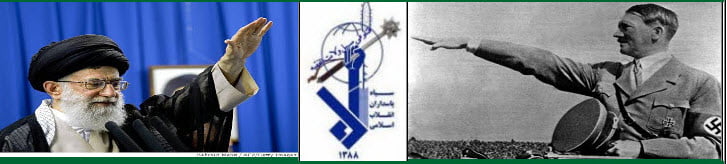
3. (C) XXXXXXXXXXXX compared the regime to the dictatorships of Hitler and Mussolini, and said the only difference was that Iran, unlike Nazi Germany, has had the “foresight” not to invade another country militarily, thereby preventing, in his view, any “concerted or effective international response” to its human rights violations or support for terrorism abroad. The demonstrations that began after the June presidential election and continue still are the manifestation of a youthful population that is “fed up” and demanding their “most basic human rights.” He observed that the stress that thirty years of repression is more and more causing the population to suffer from psychological problems.

C O N F I D E N T I A L SECTION 01 OF 03 ASHGABAT 001182
SIPDIS

STATE FOR NEA/IR

E.O. 12958: DECL: 09/16/2019
TAGS: IR PGOV PREL TX UNESCO
SUBJECT: IRAN: WHERE TO GO FROM HERE? XXXXXXXXXXXX DIPLOMAT SHARES HIS PERSPECTIVE

ASHGABAT 00001182 001.2 OF 003

Classified By: Acting DCM Peter Eckstrom, Reasons 1.4(b) and (d)

1. (C) SUMMARY: XXXXXXXXXXXX’s advised in a recent conversation with Ashgabat Iran Watcher that the U.S. would be ill-advised to begin talks with Iran, that it would be great disappointment to Iranians who have found hope in President Obama’s message of change. He called Iran’s leadership “untrustworthy,” and described the three main groups that he said are sustaining the regime: the “clerical establishment, the paramilitaries and the Bazaaris (merchant class).” XXXXXXXXXXXX finds little difference between any of the major figures in Iran, including most members of the opposition. END SUMMARY.

A TRIANGULAR BASE OF SUPPORT

2. (C) In a XXXXXXXXXXXX conversation with Iran Watcher, XXXXXXXXXXXX described his country’s present political climate, stating that “nothing has changed” in either the power structure or how major decisions are made in Iran. He described the Iranian regime as a “total dictatorship,” whose continued survival depends on a “triangular” power base made up of the clerical establishment, the “bazaari” (merchants), and the “paramilitaries” (Revolutionary Guards and Basij). He said the three groups are so enmeshed, so dependent on one another, including through arranged marriages and business dealings, that the severance of any one of the three from the others would cause the regime to collapse. Supreme Leader Khamenei makes no decisions without consulting with son Mojtabah, he said, who is reputed to be “running his father’s office,” in close consultation with Ayatollah Mohammad Taghi Mesbah Yazdi and Kayhan editor-in-chief Hossein Shariatmadari.

3. (C) XXXXXXXXXXXX compared the regime to the dictatorships of Hitler and Mussolini, and said the only difference was that Iran, unlike Nazi Germany, has had the “foresight” not to invade another country militarily, thereby preventing, in his view, any “concerted or effective international response” to its human rights violations or support for terrorism abroad. The demonstrations that began after the June presidential election and continue still are the manifestation of a youthful population that is “fed up” and demanding their “most basic human rights.” He observed that the stress that thirty years of repression is more and more causing the population to suffer from psychological problems.

ENGAGEMENT?…NOT WITH THIS GOVERNMENT

4. (C) XXXXXXXXXXXX was adamant that for the U.S. to enter into direct talks with Iran’s leadership would be a mistake. Not only, he insisted, is the Iranian leadership “untrustworthy,” and dominated by a group of “messianics,” who base crucial decisions about domestic and foreign policy on a belief in the imminent return of the “Missing” (Twelfth) Imam. More importantly, he said, so many Iranians are pinning their hopes on President Obama’s message of change, that for the U.S. now to negotiate with a government that continues to repress and violate the most basic rights of its citizens would be a huge disappointment, a blow to their own aspirations for change in Iran.

THIS IS NOT 1980

5. (C) He said Iran is no longer the country or society that rallied around the war effort when Iraq invaded them in 1980. On the contrary, he said, many people he knows are actually saying things like, “Where is Israel? Why don’t they just attack us and put an end to this leadership?” He said, however, that new sanctions on necessities such as fuel, would meet with immense public anger as they would mostly affect those who rely on gasoline to commute or make a living.

ASHGABAT 00001182 002.2 OF 003 THE EDUCATION SYSTEM: A TOTAL MESS

6. (C) XXXXXXXXXXXX estimated that if one counts both teachers and educators, about a third of the country is part of the education system. He lamented the government’s “squandering” of its greatest national resource, the 70% of the population who are under the age of 29, with what he called “substandard schooling.” “Such a youthful population, properly educated and trained, could be Iran’s greatest asset,” he said. Twenty percent of the population is illiterate, and the rest is comprised of two groups: those who are educated and informed (i.e. the voters who supported Mousavi and Karroubi), and the other, lesser-educated group more likely to follow the dictates of the government and the clerical establishment.

DETAINEES RELEASED AFTER PAYMENTS OF CASH

7. (C) XXXXXXXXXXXX said that people detained following the June election have had to pay large sums to be released. He described the parents and grandparents of Nazak Afshar, the French embassy local employee arrested and later released in August, as financially “ruined” after having to pay $500,000 for her release. “It took everything they owned,” he said, “they have absolutely nothing now.” Those whose families have no assets at all “don’t have a prayer” of getting out, he said.

AHMADINEJAD OR MOUSAVI: SHADES OF GRAY

8. (C) In XXXXXXXXXXXX’s view, the recent presidential election presented no real choice to the Iranian public, just the “facade” of one, because Mousavi “himself is an insider, part of the establishment,” and was even responsible as prime minister during the 1980’s for the creation of the dreaded “morality police.” He said that the authorities made a big mistake in not allowing Mousavi to win the election in accordance with the popular vote. “They could have controlled him, nothing would have changed, but their actions have now unleashed a frustration and an anger that they cannot control.” He is equally unimpressed with former Presidents Khatami and Rafsanjani, whom he deems, “just as interested in their personal fortunes over the interests of the people as everyone else,” citing in particular the violent crackdowns on the student population that took place during Khatami’s presidency.

THE ANSWER?…STOP THE FLOW OF CASH

9. (C) XXXXXXXXXXXX sees the sanctions regime as ineffective. The infusion of cash from abroad is keeping the Iranian regime afloat 30 years after the revolution, including (indirectly, mostly through the UAE) from the U.S. and Europe. Large amounts of money for investment in the markets, especially Tehran’s booming real estate market, is keeping the Bazaaris content. Investment in the sale of commodities, for example, brings a return of 50% per year, he said, and investors in real estate can double their money in just a few months. “The Bazaaris are the key to everything, just as they were in 1979,” he said. “To see an end to this regime, cut off the funds coming through Dubai. If the regime loses the support of the Bazaaris, that will be the end of it.” He considered it telling that, when the government attempted to impose a V.A.T. last winter, merchants went on strike and the bazaars were closed for several days. By comparison, he said, the bazaar has not closed once since the election in June, even during the demonstrations and mass arrests that followed.

10. (C) XXXXXXXXXXXX

11. (C) BIO NOTE AND COMMENT: XXXXXXXXXXXX

12. (C) XXXXXXXXXXXX does nothing to hide his disdain for Iran’s theocracy. In his view, it is a regime that is fundamentially flawed and incapable of reforming itself, respecting basic human rights, or becoming a responsible member of the international community. His scathing criticism is not directed only at Iran, however. He also expressed disappointment at the UN, and what he termed it’s “shameful silence in the face of such blatant human rights violations” in Iran. XXXXXXXXXXXX. END COMMENT.
CURRAN

Reference ID Date Classification Origin
09ASHGABAT1182 2009-09-16 11:11 CONFIDENTIAL Embassy Ashgabat

VZCZCXRO6903
PP RUEHAG RUEHBC RUEHBI RUEHCI RUEHDBU RUEHDE RUEHDIR RUEHKUK RUEHLH
RUEHNEH RUEHPW RUEHROV RUEHSL RUEHSR RUEHTRO
DE RUEHAH #1182/01 2591118
ZNY CCCCC ZZH
P 161118Z SEP 09
FM AMEMBASSY ASHGABAT
TO RUEHC/SECSTATE WASHDC PRIORITY 3474
INFO RUCNCLS/ALL SOUTH AND CENTRAL ASIA COLLECTIVE
RUCNCIS/CIS COLLECTIVE
RUCNMEM/EU MEMBER STATES COLLECTIVE
RUCNIRA/IRAN COLLECTIVE
RUEHAK/AMEMBASSY ANKARA 5677
RUEHDE/AMCONSUL DUBAI 0111
RUEHIT/AMCONSUL ISTANBUL 3920
RHMCSUU/CDR USCENTCOM MACDILL AFB FL
RUEAIIA/CIA WASHDC
RHEFDIA/DIA WASHDC
RUEKJCS/JOINT STAFF WASHDC
RHEHNSC/NSC WASHDC
RUEKJCS/SECDEF WASHDC

C O N F I D E N T I A L SECTION 01 OF 03 ASHGABAT 001182
SIPDIS

STATE FOR NEA/IR

E.O. 12958: DECL: 09/16/2019
TAGS: IR PGOV PREL TX UNESCO
SUBJECT: IRAN: WHERE TO GO FROM HERE? XXXXXXXXXXXX DIPLOMAT SHARES HIS PERSPECTIVE

ASHGABAT 00001182 001.2 OF 003

Classified By: Acting DCM Peter Eckstrom, Reasons 1.4(b) and (d)

1. (C) SUMMARY: XXXXXXXXXXXX’s advised in a recent conversation with Ashgabat Iran Watcher that the U.S. would be ill-advised to begin talks with Iran, that it would be great disappointment to Iranians who have found hope in President Obama’s message of change. He called Iran’s leadership “untrustworthy,” and described the three main groups that he said are sustaining the regime: the “clerical establishment, the paramilitaries and the Bazaaris (merchant class).” XXXXXXXXXXXX finds little difference between any of the major figures in Iran, including most members of the opposition. END SUMMARY.

A TRIANGULAR BASE OF SUPPORT

2. (C) In a XXXXXXXXXXXX conversation with Iran Watcher, XXXXXXXXXXXX described his country’s present political climate, stating that “nothing has changed” in either the power structure or how major decisions are made in Iran. He described the Iranian regime as a “total dictatorship,” whose continued survival depends on a “triangular” power base made up of the clerical establishment, the “bazaari” (merchants), and the “paramilitaries” (Revolutionary Guards and Basij). He said the three groups are so enmeshed, so dependent on one another, including through arranged marriages and business dealings, that the severance of any one of the three from the others would cause the regime to collapse. Supreme Leader Khamenei makes no decisions without consulting with son Mojtabah, he said, who is reputed to be “running his father’s office,” in close consultation with Ayatollah Mohammad Taghi Mesbah Yazdi and Kayhan editor-in-chief Hossein Shariatmadari.

3. (C) XXXXXXXXXXXX compared the regime to the dictatorships of Hitler and Mussolini, and said the only difference was that Iran, unlike Nazi Germany, has had the “foresight” not to invade another country militarily, thereby preventing, in his view, any “concerted or effective international response” to its human rights violations or support for terrorism abroad. The demonstrations that began after the June presidential election and continue still are the manifestation of a youthful population that is “fed up” and demanding their “most basic human rights.” He observed that the stress that thirty years of repression is more and more causing the population to suffer from psychological problems.

ENGAGEMENT?…NOT WITH THIS GOVERNMENT

4. (C) XXXXXXXXXXXX was adamant that for the U.S. to enter into direct talks with Iran’s leadership would be a mistake. Not only, he insisted, is the Iranian leadership “untrustworthy,” and dominated by a group of “messianics,” who base crucial decisions about domestic and foreign policy on a belief in the imminent return of the “Missing” (Twelfth) Imam. More importantly, he said, so many Iranians are pinning their hopes on President Obama’s message of change, that for the U.S. now to negotiate with a government that continues to repress and violate the most basic rights of its citizens would be a huge disappointment, a blow to their own aspirations for change in Iran.

THIS IS NOT 1980

5. (C) He said Iran is no longer the country or society that rallied around the war effort when Iraq invaded them in 1980. On the contrary, he said, many people he knows are actually saying things like, “Where is Israel? Why don’t they just attack us and put an end to this leadership?” He said, however, that new sanctions on necessities such as fuel, would meet with immense public anger as they would mostly affect those who rely on gasoline to commute or make a living.

ASHGABAT 00001182 002.2 OF 003 THE EDUCATION SYSTEM: A TOTAL MESS

6. (C) XXXXXXXXXXXX estimated that if one counts both teachers and educators, about a third of the country is part of the education system. He lamented the government’s “squandering” of its greatest national resource, the 70% of the population who are under the age of 29, with what he called “substandard schooling.” “Such a youthful population, properly educated and trained, could be Iran’s greatest asset,” he said. Twenty percent of the population is illiterate, and the rest is comprised of two groups: those who are educated and informed (i.e. the voters who supported Mousavi and Karroubi), and the other, lesser-educated group more likely to follow the dictates of the government and the clerical establishment.

DETAINEES RELEASED AFTER PAYMENTS OF CASH

7. (C) XXXXXXXXXXXX said that people detained following the June election have had to pay large sums to be released. He described the parents and grandparents of Nazak Afshar, the French embassy local employee arrested and later released in August, as financially “ruined” after having to pay $500,000 for her release. “It took everything they owned,” he said, “they have absolutely nothing now.” Those whose families have no assets at all “don’t have a prayer” of getting out, he said.

AHMADINEJAD OR MOUSAVI: SHADES OF GRAY

8. (C) In XXXXXXXXXXXX’s view, the recent presidential election presented no real choice to the Iranian public, just the “facade” of one, because Mousavi “himself is an insider, part of the establishment,” and was even responsible as prime minister during the 1980’s for the creation of the dreaded “morality police.” He said that the authorities made a big mistake in not allowing Mousavi to win the election in accordance with the popular vote. “They could have controlled him, nothing would have changed, but their actions have now unleashed a frustration and an anger that they cannot control.” He is equally unimpressed with former Presidents Khatami and Rafsanjani, whom he deems, “just as interested in their personal fortunes over the interests of the people as everyone else,” citing in particular the violent crackdowns on the student population that took place during Khatami’s presidency.

THE ANSWER?…STOP THE FLOW OF CASH

9. (C) XXXXXXXXXXXX sees the sanctions regime as ineffective. The infusion of cash from abroad is keeping the Iranian regime afloat 30 years after the revolution, including (indirectly, mostly through the UAE) from the U.S. and Europe. Large amounts of money for investment in the markets, especially Tehran’s booming real estate market, is keeping the Bazaaris content. Investment in the sale of commodities, for example, brings a return of 50% per year, he said, and investors in real estate can double their money in just a few months. “The Bazaaris are the key to everything, just as they were in 1979,” he said. “To see an end to this regime, cut off the funds coming through Dubai. If the regime loses the support of the Bazaaris, that will be the end of it.” He considered it telling that, when the government attempted to impose a V.A.T. last winter, merchants went on strike and the bazaars were closed for several days. By comparison, he said, the bazaar has not closed once since the election in June, even during the demonstrations and mass arrests that followed.

10. (C) XXXXXXXXXXXX

11. (C) BIO NOTE AND COMMENT: XXXXXXXXXXXX

12. (C) XXXXXXXXXXXX does nothing to hide his disdain for Iran’s theocracy. In his view, it is a regime that is fundamentially flawed and incapable of reforming itself, respecting basic human rights, or becoming a responsible member of the international community. His scathing criticism is not directed only at Iran, however. He also expressed disappointment at the UN, and what he termed it’s “shameful silence in the face of such blatant human rights violations” in Iran. XXXXXXXXXXXX. END COMMENT.
CURRAN
Physical Injury of a Political Prisoner under Torture at Qarveh

0

Monday, November 29, 2010 10:55pm

HRANA News: Because of physical torture at the Ministry of Intelligence in Qarveh political prisoner Afshin Hossein Panahi, brother of Anwar Hossein Panahi, has lost fifty percent of his vision.

According to HRANA’s media reports, Panahi lost vision in one eye due to pressure from Ministry of Intelligence to do a TV interview against one of the Kurdish parties.

It is not clear now whether his vision impairment is temporary or permanent.

After the physical torture which blinded him, Panahi was transferred to the clinic and one hour later taken back to the Ministry of Intelligence’s detention center in Qarveh.

Panahi was arrested in August 2010 due to the investigation on his brother’s case. Panahi was sentenced to one year in prison.

Ever since his arrest, members of Anwar Hossein Panahi’s family have been summoned and interrogated by security organizations.

Wikileaks: Iran used Red Crescent to send agents and weapons to Hezbollah

0

A heavily redacted memo in Wikileaks as presented by The Guardian shows that Iran has cynically used its Red Crescent to smuggle weapons -including missiles – and agents into Lebanon during the 2006 war as well as elsewhere.

8. (S) Per the IRC’s regulations, following his election in 2005, President Ahmadi-Nejad was able to appoint four members (out of 16) of the IRC management group. These four [NAMES REMOVED] were opposed to the IRC’s leadership and eventually requested its president, Dr. Ahmad Ali Noorbala, to resign. [DETAILS REMOVED] He did so in January 2006 [DETAILS REMOVED] Most of the incoming managers were members of the IRGC or the MOIS [Iranian Intelligence Agency]. [NAME REMOVED] said that pre-existing members now considered the IRC an agent of the IRGC. [Iranian Republican Guard]

9. (S) [NAME REMOVED] further elaborated on the presence of MOIS officials in the IRC and other government agencies. All government agencies include an MOIS representative [DETAILS REMOVED] [NAME REMOVED] Prior to Ahmadi-Nejad, the IRC official in this position was the sole MOIS representative; afterwards, [NAME REMOVED] said 40 officers at headquarters and 100 officers at the provincial officers came from the MOIS.

10. (S) [DETAILS REMOVED] in line with Ahmadinejad’s government-wide directive, that all employees pass a counterintelligence course. [NAME REMOVED] indicated that such a course violated the principles of the IRC because Red Cross/Red Crescent organizations are supposed to be independent from the state.

11. (S) In addition to the personnel moves, [DETAILS REMOVED] The IRC under Dr. Noorbala had resisted the IRGC’s request to take responsibility for relief and rescue operations. [DETAILS REMOVED] the IRGC’s Basij forces to assume responsibility for relief and rescue. [DETAILS REMOVED]

12.(S) In 2007, the IRC’s budget was granted an additional $200 million to acquire helicopters. The IRC, [DETAILS REMOVED] ordered 20 Russian MI-17 helicopters. Five of these were delivered to the IRC, the remaining 15 went to the IRGC. A similar helicopter order was planned for 2008. (Note: [NAME REMOVED] indicated that [NAME REMOVED] is the only Iranian entity allowed to import helicopters and that it is owned by the IRGC and MOIS.)

13.(S) [NAME REMOVED] has invested in three Iranian companies backed by the IRGC and Defense Ministry. The first, owned by the Defense Ministry, produces chemical weapons protective equipment; it had been defunct prior to the infusion of IRC funds. The second, owned by the IRGC, produces pre-fabricated military commands and mobile hospitals. The third, owned by the Defense Ministry, produces armored personnel carriers.

14.(C) Finally, the IRC [DETAILS REMOVED] began building health clinics in Karbala, Najaf, Hilla, Kazemayn, and Basra and awarded the construction contracts to IRGC companies, despite the IRC’s own staff of qualified engineers. [NAME REMOVED] said the clinics would be used for treatment but also as warehouses for military equipment or military bases if needed. He noted that the Iraqi Red Crescent and Iraqi Ministry of Health were not happy with this activity.

Facilitating IRGC Support to Hezbollah

————————————–

15. (S) The IRC again facilitated the entry of Qods force officers to Lebanon during the Israel-Hezbollah war in summer 2006. Although [NAME REMOVED] did not travel to Lebanon during the conflict, he reiterated that the only true IRC officers dispatched to Lebanon were [DETAILS REMOVED] all others were IRGC and MOIS officials. [NAME REMOVED] further said that the IRC shipments of medical supplies served also to facilitate weapons shipments. He said that IRC [DETAILS REMOVED] had seen missiles in the planes destined for Lebanon when delivering medical supplies to the plane. The plane was allegedly “half full” prior to the arrival of any medical supplies.

16. (S) [NAME REMOVED] also allowed the transfer of an IRC hospital in southern Lebanon to Hezbollah. [NAME REMOVED] said that Hassan Nasrallah had asked Supreme Leader Khamenei to allow Hezbollah to run the hospital during Dr. Noorbala’s tenure as IRC president. Although Khamenei acquiesced, Dr. Noorbala prevented the transfer until his own departure. The hospitaL [DETAILS REMOVED] is under Hezbollah control. [NAME REMOVED] is allegedly close to Nasrallah and is also trying to create a network of medical clinics in Lebanon.

17. (S) Comment: [NAMES REMOVED] are examples of figures nominally within the Iranian government establishment who have taken courageous stands against IRGC and MOIS incursions into Iranian governance. Such figures are key to our ability to understanding and countering the malign activities of these organizations regionally…

Nigerian court charges Iranian over arms shipment

0

By Camillus Eboh

ABUJA | Thu Nov 25, 2010 2:20pm EST

ABUJA (Reuters) – A court in Nigeria on Thursday charged an alleged member of Iran‘s Revolutionary Guards and three Nigerians over a shipment of mortars and rockets seized in the main port of Lagos last month.

Nigeria reported the seizure of the shipment — including rockets and other explosives hidden in containers of building materials — to the U.N. Security Council this month for an apparent breach of U.N. sanctions on Iran.

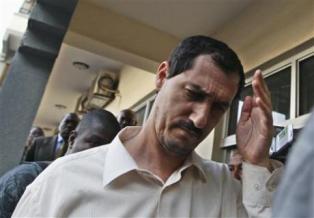
Azim Adhajani, identified on the charge sheet as a Tehran-based businessman and member of Iran’s Revolutionary Guard Corps, was charged alongside an alleged Nigerian accomplice with the importation of prohibited firearms.

“I need my embassy to represent me,” Adhajani, 43, told the chief magistrate’s court in Abuja, declining to enter a plea.

The two men and two more Nigerian suspects were also charged with conspiring to re-export the illegal shipment to Banjul, Gambia. The three Nigerians — named as Abuja-based businessman Ali Usman Abbas Jega and customs clearing agents Ali Oroji Wamako and Mohammed Tukur — pleaded not guilty.

The court documents said the seized weapons included assorted calibers of mortars and 107 mm rockets — designed to attack static targets and used by armies to support infantry units — as well as shells for a 23 mm anti-aircraft gun.

A security expert in Nigeria said such weapons could all have been produced in Iran.

Diplomatic sources told Reuters shortly after the goods were seized that two members of the al-Quds force — an elite unit of the Revolutionary Guards which specializes in foreign operations for Iran — had taken refuge in the Iranian embassy in Abuja.

Nigeria’s secret service questioned one of the men, believed to be Adhajani, after the intervention of Iranian Foreign Minister Manouchehr Mottaki, who flew to Abuja on November 11 to discuss the seizure with his Nigerian counterpart.

But the intelligence agency was unable to question the second Iranian because he had diplomatic immunity. He is believed to have left Nigeria with Mottaki, diplomatic and security sources said.

DESTINATION UNKNOWN

Mystery surrounds the intended destination of the weapons, which arrived in Nigeria in July and were intercepted by the secret service in October. It is not unusual for cargo in Lagos, one of Africa’s busiest ports, to take months to clear customs.

Nigeria’s foreign minister has said the shipment was originally meant for an address in Abuja but was intercepted when an attempt was made to re-export it to Gambia.

Mottaki said after visiting Abuja that the cargo belonged to a private firm and was “for sale legitimately to a West African country.” He described the seizure as a “misunderstanding.”

The charge sheet said Adhajani and Jega imported the weapons between July 7 and 15 and that all four suspects conspired to export them to Banjul on October 12-13.

http://www.reuters.com/article/idUSTRE6AO3PM20101125

Petition by Older Brother of Baluchi Teenager Imprisoned by Iranian Officials

In a petition to human rights activists, the older brother of Mohammad Saber Malek Raeisi, a 15-year-old Baluchi teenager who’s been in the custody of Intelligence Ministry since 14 months ago, called for more efforts to save his brother.

Following Abdorrahman’s (his brother) refusal to cooperate with the Islamic Republic’s Intelligence Ministry, Mohammad Saber was arrested along with his two other brothers. Intelligence Ministry officials told their parents that in case they didn’t surrender their son, their three other children would be executed in prison.

This petition, as was delivered to Hrana, reads:

My name is Obeidorahman Malek Raeisi and I am Mohammad Saber Malek Raeisi’s older brother who was taken hostage by Iranian Authority on September 24th, last year while attending his younger brother at “Ali ibn Abi Talib” hospital in Chabahar City. To this date, he’s been spending 14 months in the Intelligence Ministry’s prisons in Zahedan Province and his whereabouts and health conditions are unknown to us.

In frequent contacts with my parents, Intelligence Ministry forces set my surrender as a precondition to his freedom. My family is under intense mental and psychological pressure. As a result of these threatening contacts, my father is experiencing a severely poor health condition due to senility and stress.

The only reason for the Intelligence Ministry to put my family through this ordeal is my refusal to cooperate with them by spying among Sunni scholars as well as Baluchi people. I fled the country in fear of my life.

Intelligence Ministry uses my family to put me under pressure. The security forces arrested my two other brothers (one 30 and the other 22 years old) in other placed in Chabahar at the same day they arrested Mohammad Saber. Then they raided my home and threatened my parents that in case they didn’t surrender me, my three other brothers would be executed in prison.

Mottaki’s Hypocritical Statements on Secret Prisons

0

According to IRIB News in a Joint news conference with Zimbabwean Foreign Minister, Manouchehr Mottaki asked Ban Ki Moon to publicize the answer to the letter he wrote him and referred to the former head of Human Right Council in Genève for prosecution regarding concerns about U.S secret prisons in Europe.

This request comes in a time when the Islamic Republic has established dozens of secret prisons in the years following the revolution and their existence came into light during recent post-elections protests. Currently, dozens of prisoners are kept in these places in worst conditions. They don’t have any contact with the outside world and are denied basic rights. These prisons are run by the IRGC and state Intelligence and neither the prisons organization nor any other institution supervises them. Protesters to the fraudulent elections and other prisoners are severely tortured in these prisons by security forces and in some cases, their bodies are delivered to their families.

UN committee condemns ‘serious human rights violations’ in Iran

0
By the CNN Wire Staff
November 19, 2010 3:54 a.m. EST

(CNN) — A key United Nations committee has approved a draft resolution expressing “deep concern at serious human rights violations in Iran,” including torture, persecution of ethnic minorities and violence against women.

The General Assembly’s Third Committee, which handles humanitarian issues, passed the resolution 80-44 Thursday, with 57 abstaining from the vote, according to minutes from the meeting released by the United Nations.

The resolution could be adopted by the General Assembly next month.

Canadian representative John McNee sponsored the measure, arguing that there has been a “very regrettable” deterioration in Iran’s human rights situation in the past year.

Iran’s representative, Mohammad Javad Larijani, criticized the move, saying the United States was “the mastermind and main provocateur behind a text that had nothing to do with human rights,” according to U.N. meeting minutes.

The draft resolution approved Thursday also includes the high incidence in carrying out the death penalty and increased persecution against members of the Baha’i faith in its list of human rights concerns in Iran.

It also notes “particular concern” about what it calls a failure of Iran’s government “to investigate or launch an accountability process for alleged violations following the presidential elections” in June 2009.

In September, the Obama administration cited “mounting evidence” of repression of the Iranian opposition when it added more sanctions against Iranian government officials, members of the Revolutionary Guards Corps and others accused by the United States of being responsible for human rights abuses.

The sanctions, announced by Secretary of State Hillary Clinton and Treasury Secretary Timothy Geithner, block the assets of, and prohibit U.S. citizens from engaging in any business with, those on the list, which includes the head of the Iranian Revolutionary Guards Corps, the country’s prosecutor general, and the ministers of welfare and intelligence.

McNee told the committee that Iran’s government had not taken steps to address human rights problems, despite repeated entreaties from the international community.

“Such a persistent attitude had demonstrated a fundamental lack of respect for the United Nations and its human rights instruments and procedures. Stonings, floggings, amputations, executions of juveniles, executions by strangulation, and discrimination against women and minorities could not be ignored,” McNee said, according to a summary of his remarks in the meeting minutes.

But Larijani countered that the resolution was “unprofessional and full of malicious allegations, which would take years to verify one by one.” He said his country had conducted an extensive investigation after the 2009 elections. And he said that Iran’s only crime was not being a “Xerox copy” of western democracy.

Representatives from Venezuela, Syria, Tajikistan, Sudan, Cuba, Bolivia and Libya also spoke against the resolution — several of them claiming that it unfairly singled out Iran.

“Exhausted rhetoric cannot hide the fact that Iran’s inhuman treatment of its people has again aroused the condemnation of the member states,” Aaron Rhodes, a spokesman for the International Campaign for Human Rights in Iran, said in a statement.

The activist organization described the U.N. committee’s vote as a “welcome step in the continuing effort to put a stoplight on the country’s growing human rights crisis.”

The U.N. committee also approved draft resolutions Thursday condemning the human rights situations in Myanmar and North Korea.

In a statement released after the vote, Susan Rice, the U.S. permanent representative to the U.N., said the United States welcomed the resolution.

Rice said Iran’s government “continues to harass, arbitrarily detain and violently repress its own citizens, including broad segments of civil society.”

http://www.cnn.com/2010/WORLD/meast/11/19/iran.human.rights/

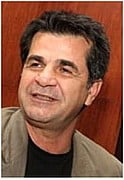
Jafar Panahi’s defense presented to the court

0

November 13, 2010

Your Honor, I would like to present my defense in two parts.

Part 1:  What they say

In the past few days I have been watching my favorite films again, though I did not have access to some of them, which are among the greatest films of the history of cinema. My house was raided on the night of March 1st, 2010 while my colleague Mr. Rasoulof and I were in the process of shooting what we intended to be a socially conscious art house film. The people, who identified themselves as agents of the Ministry of Intelligence, arrested us along with other crew members without presenting any warrants. They confiscated my collection of films as well and never returned them to me.  Subsequently, the only reference made to those films was by the prosecutor in charge of my case, who asked me: “What are these obscene films you’re collecting?”

I have learned how to make films inspired by those outstanding films that the prosecutor deemed obscene. Believe me I have just as much difficulty understanding how they could be called obscene as I do comprehending how the activity for which I was arrested could be seen as a crime? My case is a perfect example of being punished before committing a crime. You are putting me on trial for making a film that at the time of our arrest was only thirty per cent shot.  You must have heard that the famous creed “There is no god, except Allah”, turns into blasphemy if you only say the first part and omit the second part.  In the same vain, how can you establish that a crime has been committed by looking at 30% of rushes for a film that have not been edited yet?

I do not comprehend the charge of obscenity directed at the classics of the film history, nor do I understand the crime I am accused of.  If these charges are true, you are putting not only us on trial but the socially conscious, humanistic, and artistic Iranian cinema as well, a cinema which tries to stay beyond good and evil, a cinema that does not judge nor surrender to power or money but tries to honestly reflect a realistic image of the society.

One of the charges against me is attempting to encourage demonstrations and incite protests with this film.  All through my career I have emphasized that I am a socially committed filmmaker not a political one.  My main concerns are social issues; therefore my films are social dramas not political statements. I never wanted to act as a judge or a prosecutor. I am not a film maker who judges but one that invites other to see. I don’t get to decide for others or to write any kind of manual for any body; please allow me to repeat my pretension to place my cinema beyond good and evil.  This kind of belief has caused my colleagues and my self a lot of trouble; many of my films have been banned, along with the films of other filmmakers like me.  But it is unprecedented in Iranian cinema to arrest and imprison a filmmaker for making a film, and harass his family while he is in prison. This is a new development in the history of Iranian cinema that will be remembered for a long time.

I have been accused of participating in demonstrations. No Iranian filmmaker was allowed to use his camera to capture the events but you can not forbid an artist to observe! As an artist it is my responsibility to observes in order to get inspired and create.  I was an observer, and it was my right to observe.

I have been accused of making a film without permission. Is it really necessary to point out here that no law has been passed by the parliament regarding the need for a permit to make a film? There are only some internal memos which are going through changes each time the deputy minister is changed.
I have been accused of not giving a script to the actors.

In our film making genre where we work mostly with non professional actors this is a very routine way of film making practiced by myself and many of my colleagues; the cast mostly consists of non-actors.  Therefore, the director does not find it necessary to give them a script. This accusation sounds more like a joke that has no place in the judiciary system.

I have been accused of having signed a declaration.  I have singed one; an open letter signed by 37 prominent film makers, in order to express their concern about the turn of the actual events in the country. I was one of them.  Unfortunately, instead of listening to the concerns we were accused of treachery. However, these filmmakers are the very same people who have expressed their concerns in the past about injustices around the world.  How can you expect them to remain indifferent to the fate of their own country

I have been accused of organizing demonstrations at the opening of Montreal Film Festival.  At least some truth and fairness should back up any accusations.   I was the chair of the jury in Montreal and arrived only a few hours before the opening.  How could I have organized a demonstration in a place where I hardly knew anyone?  Let’s not forget that in those days the Iranian Diaspora would gather at any relevant event around the world to voice their demands;
I have been accused of giving interviews to Persian speaking media abroad.  I know for fact that there are no laws forbidding us from giving interviews?

Second part: What I say
History testifies that an artist’s mind is the analytical mind of his society.  By learning about the culture and history of his country, by observing the events that occur in his surroundings, he sees, analyzes and presents issues of the day through his art form to the society.

How can anyone be accused of any crime because of his mind and what passes through the mind?

The assassination of ideas and sterilizing artists of a society has only one result: killing the roots of art and creativity.  Arresting my colleagues and I while shooting an unfinished film is nothing but an attack by those in power on all the artists of this land. It drives this crystal clear however sad message home: “You will repent if you don’t think like us”

I would like to remind the court of yet an other ironic fact about my imprisonment: the space given to Jafar Panahi’s festival awards in Tehran’s Museum of Cinema is much larger than his cell in prison?

All  said, despite all the injustice done to me, I, Jafar Panahi, declare once again that I am an Iranian, I am staying in my country and I like to work in my own country. I love my country, I have paid a price for this love too, and I am willing to pay again if necessary.  I have yet an other declaration to add to the first one. As shown in my films , I declare that I believe in the right of “the other” to be different, I believe in mutual understanding and respect, as well as in tolerance; the tolerance that forbid me from judgment and hatred.  I don’t hate anybody, not even my interrogators.

I recognize my responsibilities towards the future generations that will inherit this country from us.

History is patient. Insignificant stories happen without even acknowledging their insignificance. I, myself I am worried about the future generations.

Our country is quite vulnerable; it is only through the instauration of the state of law for all, regardless of any ethnic, religious or politic consideration that we can avoid the very real danger of a chaotic and fatal future.  I truly believe that tolerance represents the only realistic and honorable solution to this imminent danger.

Respectfully,
Jafar Panahi
An Iranian filmmaker
==============

Votre honneur, Monsieur le juge, permettez moi de présenter mon plaidoyer en deux parties distinctes :

Première partie : Ce qu’on dit

Ces derniers jours, j’ai revu plusieurs de mes films favoris de l’histoire du cinéma, malgré le fait qu’une grande partie de ma collection avait été confisque durant le raid qui  a pris place la nuit du 19 février 2009 chez moi. En fait, Monsieur Rassoulof et moi-même, étions entrain de tourner un film du genre social et artistique quand les forces qui proclamaient faire partie  du ministère de la sécurité, sans présenter aucun mandat officiel, nous ont arrêté, ainsi que tous nos collaborateurs et du même coup, confisque tous mes films qu’ils ne m’ont jamais restitué par la suite. Par la suite, la seule allusion jamais faite a ces films  était celle du juge d’instruction du dossier : « pourquoi cette collection de films obscènes ? »

J’aimerais préciser que j’ai appris mon métier du cinéaste en m’inspirant de ces mêmes films que le juge appelait « obscènes ». Et croyez-moi je n’arrive pas a comprendre comment un tel adjectif peut-il être attribué a des films pareils, comme je n’arrive pas a comprendre comment on peut appeler « délit criminel » l’activité pour laquelle on veut me juger  aujourd’hui. On me juge, en fait, pour un film dont moins d’un tiers était tourné au moment de mon arrestation. Vous connaissez certainement l’expression qui dit : ne dire que  la moitie de la phrase : « il n y’a point de Dieu que dieu le grand »est synonyme de blasphème. Alors, comment peut-on juger d’un film avant qu’il ne soit même fini ?

Je n’arrive pas a comprendre ni l’obscénité des films de l’Histoire du cinéma ni mon chef d’accusation .Nous juger serait juger l’ensemble du cinéma engage, social et humanitaire iranien ; le cinéma qui a la prétention de se placer au-delà du bien et du mal, le cinéma qui ne juge pas et qui ne se met pas au service du pouvoir et de l’argent mais qui fait de son mieux afin de rendre une image réaliste de la société.

On m’accuse d’avoir voulu promouvoir l’esprit d’émeute et de révolte. Cependant, tout au long de ma carrière de cinéaste, j ai toujours réclamé être un cinéaste social et non politique avec des préoccupations sociales et non politiques. Je n’ai jamais voulu me placer en position de juge et de procureur ; je ne suis pas cinéaste pour juger mais pour faire voire ; je ne tiens pas a décider pour les autres ou leur prescrire quoi qu’il soit. Permettez moi de  répéter ma prétention de placer mon cinéma au-delà du Bien et du Mal. Ce genre d’engagement nous a souvent coûté à mes collaborateurs et a moi-même. Nous avons  été frappé par la censure mais c’est une première que de condamner et d’emprisonner un cinéaste pour l’empêcher de faire son film et il s’agit d’une première aussi que  de rafler la maison du dit cinéaste et de menacer sa famille pendant son « séjour »en prison.

On m’accuse d’avoir participer aux démonstrations. La présence des cameras était interdite durant ces démonstrations mais on ne peut pas interdire aux cinéastes d’y participer.  Ma responsabilité en tant que cinéaste est d’observer afin de pouvoir un jour en rendre compte.

On nous accuse d’avoir commencer le tournage sans avoir demandé l’autorisation du gouvernement. Dois-je vraiment préciser qu’il n’existe aucune loi promulguée par le parlement concernant ces autorisations.  En fait, il n’existe que des circulaires interministérielles, qui changent au fur et a mesure que les vice-ministres changent.

On nous accuse d’avoir commencé le tournage sans avoir donné le scénario aux acteurs du film. Dans notre genre du cinéma, ou on travaille plutôt avec des acteurs non professionnels c’est une mode de faire très courante  pratiquée par presque tous mes collègues. Un chef d’accusation pareil me semble relevé plutôt du domaine de l’humour déplacé que du domaine juridique.

On m’accuse d’avoir signé de pétitions. J’ ai en fait, signé une pétition dans laquelle 37 de nos plus important cinéastes déclaraient leur inquiétude quant à la situation du pays.  Malheureusement, au lieu d’écouter ces artistes on les accuse de traîtrise ; et pourtant les signataires de cette pétition sont justement ceux qui ont toujours réagi en premier aux injustices dans le monde entier. Comment voulez vous qu’ils restent indifférents a ce qui se passe dans leur propre pays ?

On m’accuse d’avoir organisé les démonstrations autour du festival du Montréal ; cette accusation n’est basée sur aucune logique puisque en tant que directeur du jury  je n’étais a Montréal  que depuis deux heures quand les démonstrations ont commencé. Ne connaissant personne dans cette ville comment aurais-je pu organiser un tel événement. On ne tient pas à s’en souvenir peut-être mais durant cette période partout dans le monde ou il se passait quelque chose nos compatriotes se rassemblaient afin d’exprimer leurs demandes.

On m’accuse d’avoir participer aux interviews avec les medias de langue persane basés a l’étranger.  Je sais qu’il n’existe aucune loi interdisant un tel acte.

Deuxième partie :

Ce que je dis

L’artiste représente l’esprit observateur et analyste de la société a laquelle il appartient. Il observe, analyse et essaie de présenter le résultat en forme d’œuvre d’art. Comment peut-on accuser et incriminer qui que se soit en raison de son esprit et de sa façon de voir les choses. Rendre les artistes improductifs et stériles est synonyme e détruire toutes formes de pensées et de créativités. Le raid effectué chez moi et l’emprisonnement de mes collaborateurs et de moi-même représente le raid du pouvoir effectué contre tous les artistes du pays.  Le message convié par cette série d’action me parait bien clair et bien triste : qui ne pense pas comme nous s’en  repentira…

En fin de compte, j aimerais aussi rappeler à la cour  une autre ironie du sort me concernant : en fait, l’espace consacrée a mes prix internationaux au musée du cinéma a Téhéran est plus grande que l’espace de ma cellule pénitentiaire.

Quoi qu’il en soit, moi Jafar Panahi déclare solennellement que malgré les mauvais traitements  que j ai dernièrement reçu dans mon propre pays, je suis iranien et que je veux vivre et travailler en Iran. J’aime mon pays et j’ai déjà payé le prix de cet amour. Toutefois, j ai une autre déclaration a ajouter a la première : mes films étant mes preuves irréfutables, je déclare croire profondément au respect des droits de « l’autrui » a la différence, au respect mutuel et a la tolérance. La tolérance qui m’empêche de juger et de haïr. Je ne hais personne, même pas mes interrogateurs puisque je reconnais ma responsabilité envers les générations à venir.

L’Histoire avec un grand H est bien patiente ; les petites histoires passent  devant elle sans se rendre compte de leur insignifiance. Pour ma part, je m’inquiète pour ces générations à venir. Notre pays est bien vulnérable et c’est seulement l’instauration de l’état de droit pour tous sans aucune considération ethnique, religieuse ou politique qui peux nous préserver du danger bien réel  d’un futur proche chaotique et fatal. A mon avis, la Tolérance est la seule solution réaliste et honorable à ce danger imminent.

Mes respects, Monsieur le Juge,

Jafar Panahi , Cinéaste Iranien

http://www.roozonline.com/english