
|
|||
| Source: Radio Zamaneh Iran’s Ministry of Culture announced that it will ban publications that carry pictures and announcements from opposition leaders.
IRNA reports that Ehsan Qazizadeh, head of domestic media branch of the ministry, said: “Those publications that insist on publishing announcements and pictures of the leaders of sedition will be banned according to the law. Following the 2009 presidential election which was challenged with widespread allegations of vote fraud, Islamic Republic authorities refer to challengers of Ahmadinejad’s victory as the “leaders of sedition.” Qazizadeh added that in the past year a number of publications across the country have been shut down for “insulting the principles of the system and the clergy as well as the supreme leader.” He maintained that government support would not be extended to media outlets that have not been supportive of the regime in the past year of turmoil. The Minister of Culture had announced earlier that media subsidies will only be meted out according to the stance of the publications. Iranian media outlets have received severe blows following the 2009 presidential elections and government crackdown on the opposition. While tens of journalists are behind bars, many more have fled the country in fear of state persecution. In addition, scores of publications and newspapers have been shut down for the smallest hint of support for the reformists. |
|||
Iranian media barred from publishing news of opposition leaders

The Islamic Republic Before and After the 2009 Elections

October 21, 2010

Years ago whenever family friends and my acquaintances got together with me, because I was a journalist, I would always be asked questions related to issues of the day. Most of these individuals were busy with their normal lives and showed little interest in following the daily ups and downs of the political issues of the day.
But I was interested in the political issues of the day and being a journalist followed what was going on. Because of these, they always viewed me to be knowledgeable about what was going on, even events behind the scene. So every time we met, questions followed one after another.
But the most basic question that everybody would ask was “Who is running the regime” or “Who is responsible, who is guiding, and which agency is in charge?”
Everybody wanted to know how the different agencies and political bodies worked and where did open and hidden power really reside. The majority of people of course were not that interested or would say that “they are all alike,” and simply stay aloof. Even today of course there are those inside and outside Iran who look at things this way.
What was interesting for me was that outside Iran and even among foreigners these very questions were important, and had remained unanswered. Every time I would meet someone, invariably the first question always was, “Who is really in charge in the Islamic republic?”
Well, if the response to this question was simple, then we would not be talking about the Islamic republic. The combination of these two terms, Islamic and republic, is indicative of the complexity which only becomes deeper as time passes.
I will try to explain the power structure in the Islamic republic from my perspective. But since this is a big topic, I will only write about the changes in the power/political structure of Iran that have taken place since the controversial and disputed 2009 presidential election.
I believe that the history of the Islamic republic is now highlighted with what it was before 2009 and what it is now, i.e., since the June 2009 election. Prior to the election, the structure looked like this:
The Leader of the Islamic regime was on top of all the institutions
The Guardians Council, the Majlis
The government
The judiciary branch
Assembly of Experts on Leadership
Military and security forces
The Expediency Council
The national radio and television network, and,
Economic foundations and institutions.
This is the list of the most important institutions exercising power and authority in the Islamic republic. And while legally, all of the institutions operated under the Leader, the fact that some of them had popularly elected individuals made it possible that some critics too would become part of this state machinery.
Still, the structure was such that ultimate authority rested with the leader.
The events of the reform period (i.e., when Mohammad Khatami was president between 1997-2005), was the period when the power struggle demonstrated the extent of flexibility this state machinery had. Prior to the 2009 election, the leader of the Islamic state strived to present himself as above factional fighting and to be neutral in such conflicts. He avoided entering the fields on the side of one contender. He was of course not always successful in this goal and on occasions did intervene on behalf of a group or a person. At times, he would also dole out benefits to both opposing and battling factions. For example, he issued the order to eliminate the press law during the sixth Majlis that was being advanced by the moderates. Soon after that, he vetoed the Guardians Council’s annulment of mayoral elections in Tehran. In view of the victories of the reformist in those days, the Guardians Council had intended to annul the elections in Tehran in which the reformist had taken the upper hand. On another occasion, the leader ordered the review of seventh Majlis candidates which had been disqualified by the Guardians Council (despite the disregard for this by the Guardians Council). On still another occasion, he ordered the suspension of Majlis’ efforts to impeach those cabinet ministers in Mohammad Khatami’s administration who had resigned en masse. And finally, during ninth presidential elections, when the Guardians Council had disqualified a candidate (Mostafa Moin), he intervened to annul his disqualification, which resulted in his return to the candidacy.
From my perspective, all of these measures were merely to portray the façade of the neutrality of the leader, because his orders were in fact not followed up on the ground.
Prior to the elections, some institutions such as the judiciary and the legislature, tried, like the leader, to display some form of independence. For example even though power was wielded in influencing the outcome of certain court cases, the effort continued to show that whatever actions were taken were based on law and followed legal procedures. Prior to the elections, there were many cases that demonstrated that political influencing continued in the judiciary, but there were also measures to make things appear to be legal. In general, international and political costs of intervention were considered and calculated.
While the Majlis had become more limited in its scope when compared to the reform period, its position of being the legislative body was never challenged or damaged. Differences about the qualifications and the election procedures existed, but these did not touch on the authority or power of the Majlis.
Prior to the 2009 election, the armed forces, and the security forces, particularly the Revolutionary Guards (IRGC) strived to remain behind the scenes. And while in recent years, these had expanded their economic activities and relationships, they never officially intervened or took power into their hands. The para-military forces had from years before started their encroachment into the election process to take over its control and when these were publicly protested (by some such as Hashemi Rafsanjani, Mehdi Karoubi and seyed Hassan Khomeini), they completely negated their attempts.
The State Expediency Council which played a greater role during Mohammad Khatami’s presidency, lost its impact during Ahmadinejad’s administration. This institution was led by Hashemi Rafsanjani right from the day of its creation, during his presidency. Ayatollah Khamenei used this institution for his own purposes. During Khatami’s years other parallel organizations were formed and after Ahmadinejad came to power the powers and role of this agency were reduced to a ceremonial position.
Assembly of Experts too has turned into a ceremonial institutions in the Islamic republic, while legally its remains the most powerful body that can control and direct the whole system.
So prior to the 2009 election, in the Islamic republic there were always openings for critics and reformers to play some limited role in the political system.
After the 2009 Election
Since the 2009 presidential election, the Islamic republic has undergone a dramatic change. There is a deep difference between the role of political institutions in it.
Its political and economic bodies have undergone a change in their nature. In short, the Islamic republic has removed its mask it wore in the past and has therefore actually become more transparent in the sense that what you see is exactly what the real intentions and roles are. This transparency has been for greater more right-wing activities.
The IRGC, which was a military organization, has now turned into a powerful economic cartel and expanded its activities in all political spheres of the Islamic republic. The largest economic and business groups are gradually falling under the control of the IRGC.
Regarding the Majlis, not only has the legislature become void of real representatives of the people, but is whole raison d’être has come into question. After the election, its two main functions that of passing laws and monitoring the management of the country have been sidelined by the indirect or direct actions of the leader, or one of his subordinate bodies.
The State Expediency Council which at one time was the arm of the leader, has turned into a nuisance for him and its powers have been taken away from it. It plays no role in the current power structure.
The Judiciary has for all practical purposes turned into a tool in the hands of the IRGC. The attempts to present the branch as an independent one have all gone. The branches and courts across the country have no qualms in presenting themselves as mere tools of the Guards.
The Assembly of Experts on Leadership continues to be a ceremonial body. And while some of its members express some criticism over some issues, in reality this body has no role in the current power structure.
So the actual players in the field have diminished since the presidential race of 2009. The leader is now associated to be affiliated to one battling faction in the on-going power competition and battles. The IRGC is now the main arm of the leader in running the country. This monolith is what will in fact shorten the life of the Islamic regime.
The answer to the often asked question, therefore, is now easier to respond to. When a political structure becomes so hierarchical and single-factional, it is easier to comprehend its workings.
I view the change to this monolith be an indication of the power of Iran’s green movement. To implement any meaningful change in meeting the rights of people prior to the election, it was necessary to disrupt the existing political super structure. Since the elections, the balance has been disrupted. Today, no decision in the country can be taken without considering the green movement, whether they be international or at the daily level.
Prison Sentence Before the Trial
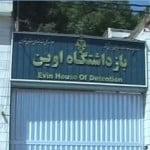

The fourth session of Saeed Malekpour’s trial is scheduled for 26th October, but his wife says, “Judge Moghise has told Saeed’s defense attorney that his sentence is death.” Saeed Malekpour is a metallurgy engineering graduate from Sharif Industrial University and a resident of Canada who came to Iran about two years ago and was arrested in relation to a case known as the Mozlin 3 case related to Internet “crimes.”
Gerdab website belonging to the Revolutionary Guards (IRGC) accused Malekpour of being a member in several “corrupt Internet sites” and then labeled him to be anti religious and a threat to the national security because he was the manager of the largest unethical Internet site.
Earlier, Malekpour had described in detail the tortures and the way he had been mistreated while in prison to the judge, adding that he had been forced to make false confessions. His wife Mrs. Eftekhari spoke with Rooz and said that about two weeks ago judge Moghise had told their attorney that her husband’s sentence was death, which shows that the sentencing had already been done without him having a chance to defend himself. Read on for the details of the interview.
Rooz: Please tell us what is the latest news from your husband and how is he doing?
Mrs. Eftekhari: Saeed is in ward 350 of Evin and his family meets with him every week through the glass cabins. I used to have telephone conversations with him lasting about 2 or 3 minutes until about three months ago before he was moved to ward 350, after which the calls ended. Saeed’s morale is good and I commend him for withstanding the pressures of solitary confinement for one year and being in limbo for two years. His family says that his morale is strong and well.
Rooz: As far as we know, his third trial session was supposed to take place in June or July; can you tell us about developments on that issue?
Mrs. Eftekhari: He has had three court sessions till now. In reality these were not trials and judge Moghise behaved like an interrogator, rather than a fair and an independent judge. The judge seems to completely accept what the intelligence reports have written about Saeed and therefore does not seem to need to investigate the charges against him and has ignored Saeed’s defenses. During the first trial session, Saeed was not allowed to have a defense attorney, and even though they had said that there was not going to be a session, Saeed was taken to a court session. His second trial session lasted on 15 minutes and the third session was not held because the interrogators did not show up. We now await the fourth session scheduled for October 26, 2010. But we have no hope that this will be a fair trial.
Rooz: Why do you not have hope that it will be fair?
Mrs. Eftekhari: You see, the judge officially plays the role of the interrogator and does not pay any attention to any of my husband’s defenses or requests. Saeed has requested that he be sent to the coroner’s office so that his claims can be examined, but the judge has refused to implement this. Saeed has torture marks till today and when he speaks, he feels sharp pain in his jaw, which is the result of the tortures he has been subjected to. He has also had a mild heart attack while in prison and half his body was temporarily paralyzed. He has explained all the tortures he was subjected to and till today the signs of those tortures are apparent on his body. Saeed has also requested that specialists from the justice department review his dossier, but the judge denies this as well. The judge has no knowledge about Internet or IT issues. In the 15 minutes court session, the judge told him that they had found a weblog in his house. Judge for yourself, what kind of a statement is this? They did not allow Saeed to even look at his own dossier. They also denied him access to a defense attorney. The trial is just a formality, a show and it does not help him in any way. The state of limbo in which we all are is also torturous.
Rooz: Many accusations have been made against Saeed, what is the key charge against him?
Mrs. Eftekhari: It is an assortment of accusations. If they had simply said that he was the manager of an immoral website, then things would be clear and he would know how to defend himself. But every time they see him, they raise a new charge. At one point the judge told him that he had been in contact with 10 to 12 groups inimical to the regime. And when Saeed asked which groups, the judge replied that you know better. So what is there to defend? It seems that they simply want to find some excuse and pretext to find him guilty. One day they said he had relations with foreigners then on another occasion they said he operated immoral web sites. Kayhan newspaper even wrote that Saeed worked for Canadian military projects, which is just pure fabrication. From a legal perspective how could someone who was not born in Canada, is not a Canadian citizen and was even not born there work on military projects? In fact, Saeed does not truly know what is the charge against him so that he can focus his defense on that.
Rooz: Aside these, what specific charges were read out to him in court?
Mrs. Eftekhari: Propaganda against the regime, operating immoral web sites, insulting divine principles, insulting the president, relations with groups that oppose the regime, being contact with foreigners. In general, these are known as the “corrupt on the earth.”
Rooz: These charges are political whereas the government media say that your husband was operating immoral and porno websites.
Mrs. Eftekhari: This accusation of operating porno sites is a complete lie. Saeed was not operating any web site and had nothing to do with any such sites. Anyone who knows Saeed, from Sharif University to those in Canada will attest that he has nothing to do with such sites. The same charges were also aired against Hossein Derakhshan who is a well known blogger and nobody believed those either. Saeed has no record in writing for web blogs or being a human rights activist. When I was interrogated they kept shouting at me that I was in contact with foreigners! And I told them I lived in a foreign country so what did they mean by that. Then they said that I had been in contact with the US embassy. The fact is neither my husband nor I belonged to any political group and have not engaged in political activities and do not claim to be political. But the charges that they are raising are political and the way they are treating him and his case indicates that the whole issue is a scenario which they are promoting to make political use of his situation.
Rooz: Why did they choose your husband for their scenario? What was his job?
Mrs. Eftekhari: Because we are completely unknown and people who are not popular or know are most vulnerable. What Kayhan wrote about my husband helped me understand how these security agents view things and why my husband was chosen for their dirty goals. I the past, they had focused on this issue of “cultural invasion by the West.” We had lived for years in Canada. Politically we were not even known to anyone. They were looking for a victim for their Internet problems. Saeed was a web designer and worked for the site Freelancer Account. He received requests for websites there, as did others who were also listed on the website. As a freelancer he presented proposals to website development requests and if they were accepted, he would take up the work and receive a fee for it. The intelligence officers in Iran wanted to denounce the Internet and tell people that it was a dangerous thing. This is why they forced Saeed to make false confessions and then showed this on national television. They even tried to say that Saeed used his webcam to video people’s bedroom. This was done to create panic and fear among people about the Internet. They had told Saeed to say that he had purchased software from Britain that could be used to video a room even if the computer was shut. This is not technically possible to do, but these gentlemen wanted to send that message. My husband is merely a victim of the plans of these people.
Rooz: What do you think of the televised confessions?
Mrs. Eftekhari: They have aired his so called confessions several times while he still remains only a suspect. But they treat him as if he is a criminal. His sentence has already been passed in their minds, which is why they allow themselves to air someone’s so called confessions before the person has even had a chance to defend himself and no sentence has been passed on him. These confessions were all made under duress and torture and have no validity. Saeed has said this in court. My question is how come you can air these so called confession on national television, but when it comes to Saeed’s defense you close the court session to the public.
Rooz: You had earlier said that that your husband’s family was under intense pressure from security apparatus. Is this still true? What kind of pressure?
Mrs. Eftekhari: Yes, both my parents and the family of my husband are under pressure. Threatening telephone calls are made and they formally and explicitly told us that if we gave any interviews, Saeed’s case would become worse. We have no place to express our protests. And so when we talk, they pressure my husband. They air his so called confessions again. They broadcast them again just two weeks ago. After Saeed’s letter was published, they took him back into solitary confinement and told him a lie that his sister had been arrested. When he came out of the solitary confinement he was wrecked. He was willing to accept anything they wanted so long as they released his sister and stopintimidating his family.
Rooz: You have decided to give an interview now; what was holding back before?
Mrs. Eftekhari: They used to promise me regularly in the past that if I did not give any interviews Saeed would be released quickly. And for three months we did not know where Saeed was being kept and they would not tell us. Then on the anniversary of his father’s death, they broadcast his so called confessions on national television, which is when we learned that they had been lying to us. So we decided to talk to the media etc. I will not remain silent now and will do everything I can so that the public knows that none of the accusations against my husband are true and that they are all lies. Perhaps public pressure will result in a fair trial.
Rooz: What is it that you want concerning your husband’s case?
Mrs. Eftekhari: We are not even asking them to just release Saeed. All we want is a fair trial. An open and fair trial where he has the opportunity to defend himself. We are not requesting the trial be aired because he is innocent. We want them to respect the current laws of the country and stay neutral in the case and let those who know these technical issue be the judge.
Rooz: Your last words?
Mrs. Eftekhari: The judge has already sentenced Saeed to death. We are deeply concerned. Do not forget about us. Even the defense attorney is under pressure and has been threatened. Do not forget about my husband and help us. He is really innocent.
Love, Torture and Power

October 20, 2010

I have come from afar to talk with you. Unfortunately it is going to be about torture. I am a child of the land of love and red flowers. The great poet from my country Saadi wrote a poem about kindness among humans which today is displayed to the representatives of all nations at the United Nations.
I come from an Eastern land where once its king Cyrus the Great wrote a human rights charter for half the population of the world who lived in his empire.
And today I am here to talk about torture. I want the world to clearly know that torture and torturers have no place in Iran, Iranian culture or the loving people of Iran. Torture is the practice of a small group who invaded my beloved country thirty years ago and who are striving to impose themselves on the Iranian people through oppression and torture.
I am only one victim of this inhuman torture system and my book is only one story among thousands.
In the six years that I was in prison, I witnessed the most repulsive and infamous prisons of the Islamic Republic of Iran. I learned how thousands of women and men, young and old, were tortured until death before me, along with me, and even after me.
In 1988 I was on the verge of being executed while the massacre of political prisoners was underway on the direct orders of ayatollah Khomeini. I lied in “court” and saved my life; perhaps so that many years later one day I could stand in front of you, and go to other places, to describe the horrendous Holocaust of the Islamic Republic of Iran.
The importance of narrating what I have been through is not simply to record the past. Today, as I speak with you, my interrogators who have now attained full political power in Iran have embarked on a new hideous era of torture.
Ladies and Gentlemen
For those of you who have not read my book, I would like to summarize its contents under three general headings: Love. Power and Torture.
Love
The underlying topic of my book is love. Love for freedom; love for your homeland; love for the human being, and love for my spouse. These loves intermingle to take the name of Iran. They put on a human face and transform into a shield against torture.
My wife’s courageous gaze is omnipresent in it. It sees me and gives me strength. I was tortured in prison, while she was tortured outside it. Our common crime was love: The love that gave hope and created life in hell. After two and a half years in solitary confinement, I was finally allowed to write a six-line letter to my wife and receive an answer of equal length every month. My wife has published these letter in exile, which were censored as they travelled from prison to home and back, as a book titled “Love and Hope.”
Power
The book also talks of power. I take the reader forty years back into my prison cell where I met a young cleric. A friendship developed between us. The cleric was young, kind and carried a smile. He was familiar with literature and love. When a leftist prisoner was brought into this prison cell, he appeared confused and tormented because of tortures he had been subjected to, and the cleric fed him with the only meat in the cell, using his bare hands, after saying his prayers.
Today people around the world know that cleric. Everybody knows ayatollah seyed Ali Khamenei as a dictator. That very hand that fed a leftist prisoner then today signs orders for the execution and torture of thousands of young Muslims.
My book also talks of other political figures, but ayatollah Khamenei’s journey is most instructive.
Torture
But I had just been put in the prison of the Islamic regime. My crime was that I worked at a newspaper belonging to a leftist political party that supported the Islamic Republic of Iran.
And in a regime in which no teardrop was supposed to shed, I learned of ideological torture.
I have described this kind of torture in my book and will say now that its purpose is to break the human being.
Ladies and Gentlemen
My feet still burn because of the tortures that I experienced thirty years ago. And when I received my first slap on the face on that midnight in 1983, a hand also showed me a handgun to represent the first article of the Iranian constitution. The next day, I experienced flogging.
A lifetime has passed since then, but life repeatedly takes me back to those horrifying days.
I was young and in love with freedom. I loved my country and literature. I dreamed that the world could be changed. I believed that one day love would be the rule of life. I took part in the Iranian revolution with this dream and that freedom would eventually prevail, that bread would be available for all, and that despotism would only be found in museums.
But I suddenly found myself in hell. For three months the only other person in my physical life was a person called the interrogator. His ideology of hate arose from his religious beliefs, his instruments were the whip and the handcuff.
I was blindfolded and defenseless like a deer that was trapped in the hands of a “brother.” In the Islamic Republic of Iran, “brother” is the general title of all believers. And all interrogators were “brothers” who carried pseudo names. My life was in their hands, particularly the one everyone called “brother Hamid.” Anything I wanted or had to do could only be done with his permission. This included eating, sleeping, awakening, etc. I could not even go to the bathroom without his approval. He viewed himself as the exclusive owner of all rights, defended the “sacred” regime and viewed me as a traitor, spy and immoral. He was the image of God while I was Satan. I had to “confess” to whatever he thought. Which I did. Whenever I lost consciousness under torture, during the nights and days that I was hung from a ceiling, and even when they forced me to eat my feces.
I had been turned from an idealist young man to the most detestable person at the hands of “brother Hamid.” I had to walk and bark like a dog. I had to spend 686 days in solitary confinement and then make “confessions” that would be used against me in my six minute “court trial”.
Make no mistake, this system of torture continues today. Since the electoral coup of 2009, it has entered into an even newer phase which I call “thug torture.” Today, cursing, the rape of women and even men have been added to the inventory of earlier routine and normal torture practices.
In those days, torturers looked at us as spies. Today, they call the young prisoners they have detained sexually deviant and prostitutes.
And this is the transition the Islamic Republic of Iran has made from a religious foundation to the rule of thugs.
Ladies and Gentlemen
Eventually I was released after six years of prison. When I came out, I did not know that my interrogator had become the ambassador of the Islamic regime in Tajikistan. But I immediately noticed that Iran had been turned into a huge prison.
Outside, security agents routinely summoned my wife and me, and subjected us to detailed interrogations over the most private aspects of our lives. I always thought that if George Orwell had been alive he would have found his Animal Farm story obsolete and would have written a new book, the “Republic of Thugs.”
I suspect this is the first time in history that thugs have full control over a country with a civilization and culture that has a history of thousands of years. These thugs are the very interrogators the image of one of whom I depict in my book. It is these very thugs who used to tell me and my wife, “You are outsiders here. Either get out or we shall take care of you.”
It is these thugs who last year used the most hideous tortures to destroy Iran’s newly founded pro-democracy movement. Thirty years ago, when “brother Hamid” and his colleagues were ruthlessly torturing us to get make us say that we were agents of the Soviet Union, much else was happening in secret. It took years for our voices to be heard outside the prison.
Today, they torture young girls and boys using modern torture techniques to force them to say that they are agents of the US and Israel. Fortunately, everything is now clear or becomes clearly rapidly and the world hears of what is going on.
Unfortunately torture is not limited to Iran. If we look around carefully, we will see hidden and apparent victims of torture all over the world.
In view of everything that is going on in Iran and elsewhere, “Letters to My Torturer” is more than just the memoirs of a torture victim. It deals with issues that stay heavy on the conscience of contemporary man. And of course it is astounding that in the 21st century man is still struggling with an issue that was the norm during his life as a caveman: torture.
*Speech in UCLA university
Publish Them and be Banned


The director general of Iran’s ministry of culture and Islamic guidance, which is responsible for overseeing media affairs in Iran, threatened Iranian media with license revocation if they published any photos of two leading opposition figures, Mir-Hossein Mousavi and Mehdi Karoubi. This is not the first time that domestic media in the country are threatened over reports on the post 2009 presidential election and leaders of the green movement.
No Support Without Support for Regime
The official threatened those media outlets which he said had not written a single positive report on the events of December 30, 2009, Iran’s international day of solidarity for Palestine or anything in favor of the regime and its principles with withdrawal of any government support or financial assistance.
On Saturday, culture ministry director seyed Ehsan Ghazizadeh met the managing editors of a group of publications and the directors of news agencies in the province of Kerman and made the above threats. He also threatened that if any publication published images of the “leaders of the sedition”, the licenses of the media would be revoked and the publication would be banned, according to Iran’s official news agency, IRNA.
Ghazizadeh’s remarks and threats come after the culture minister, seyed Mohammad Hossein announced that government financial and other support to the media would depend on their postures, meaning reporting on the recent controversial issues. He specifically said that his ministry could not support those publications, books or films that “moved in the opposition direction of the goals of the regime.”
Last September too, Iran’s supreme national security council issued a directive to the media banning them from publishing any news about Mousavi, Karoubi and the tenth presidential election that was held in June 2009. This directive came just a day after ayatollah Khamenei charged at the Friday prayers that critics of the 2009 election and opposition personalities were holding “a sword against the regime,” and threatened them with a response.
Such government interference in media affairs comes despite article 3 of the media law that specifically bans “any official, government or non government to exert pressure on the media or engage in censorship or control of the media.” The law also provides for punishment of those who violate the law that ranges from six months to two years of prison, and for government officials includes permanent dismissal from government service.
These provisions in the law conform to international standards as defined in human rights conventions which the Islamic republic has committed itself to respect and uphold.
In his talk, Ghazizadeh also confirmed that during the last year publication licenses of a number of publications had been revoked because they had “insulted the principles of the regime and religious leaders.”
He also boasted that since Ahmadinejad’s administration had come to office, the number of publications in the provinces had risen from 5 to 24.
Experts and observers however point out that the quality of the media in Iran has not only deteriorated during this period, but in fact the country has gone through one of the most critical periods in its history.
Last September, managing editors of 15 publications from Golestan province, wrote a letter to the media officials in the province, requesting an investigation into the critical condition of the media in the province. “News dissemination had been reduced from 130 pages to a mere 50, and some 100 professionals in the field had left their jobs,” they wrote in their letter.
The appalling condition of the media in the provinces even bothered some hardline Majlis representatives. Mehdi Isazadeh, deputy from Miandoab, Takab and Shahin told Fars news agency that media in the province had turned into a tribune for “special individuals.”
Just last August, Kurdish journalists too responded to the claims of the director general of media affairs over the issue of quality in the Kurdish press and said, “Most Kurdish publications are either permanently temporary banned from publication, and from the large number of newspapers that used to be published during the reform period (a reference to Mohammad Khatami’s administration between 1993-2001) only three publications remain and these are published irregularly.”
In addition to the condition of the newspapers, a group of journalists from the provinces are still in prison, and among them are Adnan Hassanpour and Mohammad-Sadigh Kaboodvand from Kurdistan and Saeed Matinpoor and Heydar Karimi from Azerbaijan province.
It should be noted that the threats that Iranian officials make against domestic media come amid condemnation from international human rights and journalist organizations over the last twelve months, particularly since the June presidential election, after which unprecedented controls and limitations have been imposed on Iranian journalists and the media.
According to Reporters Without Borders, Iran ranked fourth among the list of worlds countries with the worst record of freedom of press and treatment of journalists. The three countries which had worse record than Iran were Turkmenistan, North Korea and Eritrea.
The media is under such pressure in Iran that the highest prison punishments in the post election trials went to journalists, many of whom continue to remain behind bars or have emigrated from Iran.
According to the Association for the Defense of Freedom of Press, some 1,200 journalists in Iran lost their jobs in the first Ahmadinejad administration. Reporters Without Borders also reported in April 2009 that more than 110 reporters had been arrested, imprisoned and more than 20 publications banned in Iran during the last 8 months.
Information on the Commander Who Confessed to the Iran election Coup


 “Jaras” news website which is close to the Iranian opposition leaders known as the “Green Movement” released some information regarding an IRGC high-ranking commander.
Two month ego, seven prominent members of Iranian reformist parties who spent time in jail after the last year’s post-election events sent an open letter to the Iranian Judiciary System, invoking an auditory file of a speech by one of the IRGC high-ranking commanders in a secret meeting in Mashhad, and announced that what happened during the last year’s controversial presidential elections was a coup by the IRGC and officially complained against him, calling for an independent arbitration by the Judiciary System.
Jaras reports so about him:
His name is Commander Moshfegh. However, from the early days after this letter was publicized, the Green Movement associate websites considered the possibility that Moshfegh might be his alias.
Consequently, all these seven members were sent back to jail by the Judiciary System. After more than two months since their official complaint against the deputy commander of the IRGC “Sar Allah” quarters for his statements regarding the reformists and his confession to the IRGC role in the elections, Jaras website attempts to provide its readers with some unsaid facts about this commander:
His real name is IRGC Commander Abdollah Zeighami. His current position is the deputy commander of the IRGC “Sar Allah” quarters. During the Iraq-Iran war, he served in the IRGC’s Demolition and Operation Unit.
His speech in Mashhad reflects the mental image of the coup planners towards the critics of the current political situation and the protesters to the 10Th presidential elections as well as the risks of Ahmadinejad’s defeat and the necessity to contribute to his victory and explains the various aspects of a two-year informational and operational activity while verbally attacking the protesters. In his speech, Zeighami accuses the reformists and critics of irreligiousness, espionage, moral corruption, power-thirstiness and overthrow.
Jaras calls these statements “confessions” and continues:
The confessions by this commander which led to the letter and complaint by the reformists are thinkable. The organized role of the IRGC in the political activities, information operations to contribute to Ahmadinejad’s victory in the elections, causing obstacles for other candidates and the pre-election operations are of high importance. According to Zeighami, he personally interrogates the accused and the interrogation information on those who were detained by the IRGC is within his reach.
Quoting from its resources in Tehran, this opposition website continues to say:
As the result of the speech leak and the consequent complaint by the reformist, his promotion has been postponed.
The seven political activists (Mohsen Aminzadeh, Mostafa Tajzadeh, Abdollah Ramazanzadeh, Fezollah Arabsorkhi, Mogsen Safaee Farahani, Mohsen Mirdamadi and Behzad Nabavi) presented their complaint under the title of “complaint against the military-intelligence group as well as the planners and executors of election fraud” to the head of the Judiciary System as well as the Armed Force Judiciary Organization. The complainants, however, ended up in jail whereas the commander’s statements have not been refuted by any of the country’s officials.
Family of the Student Missing Since Tehran University Dormitory Raid Arrested

http://www.rahana.org/en/?p=7552
The mother and the sister of Saeid Zeinali, the political prisoner who has been missing since July 9, 1999, were arrested on Saturday at their house.

RAHANA: Saeid Zeinali was detained on July 9, 1999. He never returned home after being arrested at his father’s house. The authorities claim that they have no information in regards to his whereabouts. It is unclear what has happened to him during the past 11 years.It has been said that the Intelligence and Security Units of IRGC have been responsible for his arrest. After the post-election protests, his mother once again asked the IRGC authorities to explain what has happened to her son.
His family goes to the Evin Prison every week to inquire about their missing son. They want to know what has happened to him and whether he is still alive and in detention.
After the raid on the house of Saied Zoliekhani’s family, his mother and sister were arretsd and their computers and personal belongings were confiscated. His family and friends who were very upset after his disappearance are now concerned for his mother and sister.
Mashahd Political Activist Hossein Farzin Arrested

http://www.rahana.org/en/?p=7557
Political activist Hossein Farzin has been arrested since July 11th for undisclosed reasons and has been transferred to an unknown location.

RAHANA: Hossein Farzin, a Mashahd political activist and a former head of the Public Relations Office of the Mashhad City Hall during the reformist era, has been arrested for undisclosed reasons by the Intelligence Unit of the Mashhad IRGC. There is no information as to his whereabouts.A reliable source has told JARS that his family is unaware of his whereabouts, his physical condition and the reason for his arrest.
Hossein Farzin is an Iran-Iraq war veteran who was exposed to chemical weapons during the war and is suffering from heart and respiratory problems.
During the past a few days, Ali Shakourirad, Mehdi Khazali, several student activists and several family members of the political prisoners have been detained.
Camera is Evidence of Crime and Espionage

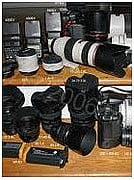
One year and three months after the disputed June 12 presidential election, which led to the arrest and intimidation of many photojournalists, a large number of them have switched paths by opening studios or engaging in other forms of the art; many are unemployed; and some have left Iran altogether, though they still speak of the liveliness of the profession, despite being worried about its prospects.
Following last year’s presidential election, several photojournalists were arrested and held at Evin Prison’s ward A, which is under the control of the Islamic Passdaran Revolutionary Guards Corps (IRGC). These photojournalists were accused of espionage because of the photographs they had taken. Independent photojournalists were banned from working and their work permits were revoked. Other photojournalists were attacked, and some were even stabbed by plainclothes agents. Many cameras were broken, while other cameras were confiscated by police and security forces. But despite all the pressures and threats, the world looked at photographs that described the post-election reality in Iran more than any printed report.
Abbas Kowsari, the head photojournalist for the reformist daily Shargh and one of the most experienced photojournalists in Iran, tells Rooz, “I have seen many photojournalists who have opened studios over the past year and work at weddings or parties. Their numbers are growing by day, which shows that they are distancing themselves from their area of expertise.”
Mr. Kowsari adds, “We are not invited to events. The news agencies cover them and provide newspapers with free photographs when they should be charging for them. When photographs are free, the photojournalism profession is in danger.”
He concludes, “Not every limitation is political; many limitations are financial, and some are professional. When newspapers receive free photographs, it is understandable that they wouldn’t want to hire photojournalists.”
I ask Abbas Kowsari about the impact of the post-election events on his profession. He says, “After last year’s election, what’s happened is that there is no more trust; people don’t trust photographers. It’s natural, they don’t know where their photographs will end up, and they are afraid.”
Like Abbas Kowsari, Majid Saeedi is an experienced photojournalist. His work dates back to before the 1997 presidential election. He was arrested after the election last year by the IRGC and released on bail.
He says, “They arrested me because of my work…. They accused me of spying from the beginning.”
Mr. Saeedi is now working in Afghanistan for a foreign news agency. He says, “The sanctity of the camera has been broken, since last year when they beat photographers, arrested them, insulted them, and jailed them. The atmosphere is a security atmosphere. You can’t carry a camera around. Everyone, from the Basij (the para-military force under the command of the IRGC) and IRGC to the police and ministry of intelligence, feels obliged to catch a spy, and the first thing that they see is a camera. The camera has become evidence of crime and espionage.”
On the Pretext of Hossein Derakhshan’s Sentence

October 13, 2010

I write this piece on the occasion of Hossein Derakhshan’s 19.5-year prison sentence; a young man who these days sits in a solitary confinement cell biting his nails (and I have heard he has bitten them all off) and is “not doing well at all.”
But this event is really a pretext for me to say that for years you – the men in power in Iran – have been subjecting us to the worst in order for us to be content with the least. What is going on today is similar to what was happening in the 1980s when we were happy that prisoners in Iran were going through choleric years, and were not hanged, without ever asking ourselves: for what a price? But then what do you expect from a nation which has for years been living under the fear of executions and where the top news has always been the pulling of a chair from under a prisoners’ feet?
Those were the 1980s. After a long period of limbo, they eventually took my husband to the court and we expected a sentence. Finally when the visiting day came, I sat in Evin prison wearing that black chador (veil) which seemed to carry all of Evin prison’s dirt and blood, while its humiliation would never leave, waiting for my turn to see my husband. Amid the murmurs of spouses, the cries of infants and the heavy and shocking look of mothers, I paved my way towards the cabin where my husband awaited me. When I saw the look on his face it looked like the sentence of death: yellow and in pieces. He only had the strength to say: Maximum punishment.
I froze. Then there was silence and more silence. I was holding on to the wall next to me while my other hand rested against the glass window that separated us; the window that for a moment turned into the line that separated being from non-existence. But his hand was steady. The whole visit passed like this. Then they took him away and I too …. No. Nobody took me anywhere. I did not leave. I was just gone.
I had turned into a robot. I could neither hear any sound, nor see anything, nor sense any feelings. I just went on. I went and dragged the chador on the floor and clung to its half that was still on me. I just moved.
I don’t know how long it took, but then I saw myself sitting somewhere on the ground and leaning against a wall. How did I get there? I did not know. What place was this? I did not know. What was I moving away from and what moment of death was I approaching? I did not know. After a while, which I did not know how long, I got up and took myself to a telephone booth. I dialed a number, the most recent number that came to my mind. My friend answered. It was as if she was Thelma while I was the Louise.
“Where are you?” she asked. I did not know. “What happened?” I did not know. Finally she shouted, “Give the phone to anyone around there.” Again like a robot, I opened the telephone booth. I held the telephone handle facing out and said, “Take it.” A couple passers by were confused and scared, they looked and changed their path. Eventually someone took the handle. I could see that he was saying something to the telephone. Then he grabbed a corner of the chador and pulled me out, and made me sit next to a wall. From all that he said, I only heard this: “Sit down and do not move.”
My friend arrived minutes later. Got out of the car disheveled. Held me in her arms, and I turned into a melting ice under the kindness of the sun. Friendship. And I cried. Someone had died inside of me. Someone who never came to life again.
The story of that “maximum punishment,” its commute to 15 years later and finally freedom after six years is a book unto itself.
I narrated this episode to simply say that when they announced that my husband’s sentence had been reduced to 15 years, I was so jubilant and joyous that I did not know what to say. He and I and all of us had been tortured so much during this period that we had completely forgotten that the whole episode was completely illegal, inhuman, and as they say today, an example of systematic violation of human rights. We had forgotten that all those arrests were illegal; as were the years they kept the prisoners in solitary confinement, subjected them to Middle Age tortures, dragged them to the few-minute long court trials, and finally gave them the pre-determined prison sentences. In that atmosphere, we even forgot to ask why we had to pay for the dentist to check the jaws of our prisoner who was beaten so harshly by them that he had lost his teeth. We had forgotten to ask them even more: When you shoot our children so mercilessly, why does the surviving family have to pay for your bullet? Or when you exert such inhuman psychological pressure on prisoners that they lose their mind and run around the prison wards naked claiming to be God, the prophet, or their emissaries, why do you then execute the victim’s brother on charges of denying God or insulting the prophet?
You continue to practice these hideous acts even today. You pressure a young, energetic and talented Iranian, Hossein Derakhshan, to the point where he accepts any espionage charge that you associate him with and then ask for his execution, and pass a 19-year prison sentence on him. You do this so that we will thank God that his life has been spared. We do this while knowing that this Hossein will not be the same Hossein. Just look at his nail-less fingers.
Gentlemen! If you can understand what this “thank God” means, then you should feel shame all over yourself as this is worse than any insult. Much worse. No, gentlemen, we are not happy that Hossein has been given a 19 year prison sentence. We want his release from prison; his mother wants to take care of him. In fact we demand not just Hossein’s release, but that of every person you have imprisoned and whose life and mind you are destroying. We will be content with only one sentence: Freedom. If we did not know this in the 1980s, we know it today at the cost of losing the children of this land and demand it. Our wavering has come to its end.