Home Blog Page 73

Ex-Intelligence minister admits Mossad has penetrated the Iranian regime

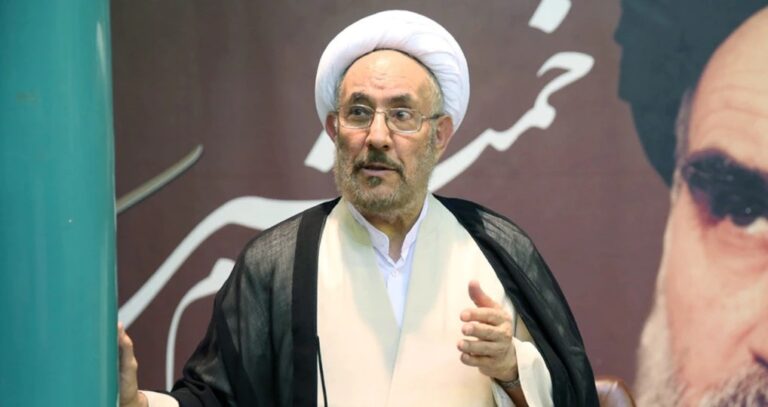
Former Iranian Security Minister Ali Younesi confirmed that “the Israeli Mossad has penetrated into various sectors of the Iranian regime during the last 10 years, to the extent that all Iranian officials are concerned for their lives.”

Younesi was speaking in an interview published on Tuesday. He said rivalries between the Intelligence Ministry, the Intelligence Organization of the Revolutionary Guards (IRGC), and other security services had led to weaknesses. “Parallel organizations are busy fighting insiders rather than monitoring and confronting infiltrators,” Younesi argued.

He explained that “the Israeli Mossad was able to launch several strikes in Iran, to the extent that it has become a clear and explicit threat to Iranian officials.”

He pointed out that the priority of the Iranian regime and its security services today is to “fight the critics at home, not the Israeli security incursion.”

Claiming all Israeli infiltration took place after he left the intelligence ministry in 2005, Younesi suggested Iran should remove sycophants and radicals who were the most likely to be lured by foreign intelligence agencies.

This is not the first time that a high-ranking figure in the Iranian regime has warned of the influence of spy agencies in Iran.

secretary of the Expediency Discernment Council, Mohsen Rezaei, issued a warning in mid-April, in which he said, “The country has witnessed widespread security pollution, for example, in less than a year, three security incidents occurred, two explosions and one assassination,” referring to the assassination of prominent nuclear scientist Mohsen Fakhrizadeh, who was killed near the capital, Tehran, in an armed attack.

Former Iranian President Mahmoud Ahmadinejad also said in a press interview two weeks ago that “the anti-Israel official in the Iranian Ministry of Intelligence was a spy for Israel, and that Israel was able to obtain thousands of nuclear documents from the “Turquzabad” site, south of Tehran.

Source: RFI
Also read: Biden orders airstrikes against facilities used by Iran-backed militia groups
Iran ‘giving Hezbollah cyber training’ as it embraces digital warfare

0

Iran’s leadership has embraced cyber operations and provided training to its ally Hezbollah, a think tank said.

A report by the International Institute for Strategic Studies said Iran sees itself as being in an “intelligence and cyber war” with its rivals.

It said Tehran has expanded its cyber capabilities since the Stuxnet attack on its nuclear programme more than a decade ago, thought to be the work of the US and Israel.

Iran’s desire to quell domestic opposition has intensified its use of cyber surveillance tools.

But Tehran probably lacks the ability to carry out high-intensity, “warfare-grade” cyber attacks, the report said.

The warning comes after German intelligence said that Iran had carried out cyber attacks which hit targets in Europe and the US.

In one case uncovered in Berlin, Iran was blamed for a cyber-attack on German companies in which employees were duped into installing malware.

European intelligence officials fear that Iran is seeking the technical know-how required to develop nuclear weapons.

The Stuxnet breach occurred when Iran had few domestic experts on cyber security and limited access to foreign expertise.

Since then, Iran “has become a determined cyber actor against US, Gulf Arab and Israeli interests”, the IISS report said.

It said some of Iran’s operations in the West appeared to be speculative efforts at data theft.

Iranian operatives are also suspected of meddling in politics, for example by encouraging the push for Scottish independence in order to weaken the UK.

Regional power 

Tehran’s efforts in the West were undermined by the fact that they appeared to be easily detected and attributed to Iran, the IISS said.

But Iran was described as a significant regional cyber power which has carried out “disruptive and destructive” attacks on infrastructure.

Tehran is believed to have provided “cyber tools and training” to Hezbollah, its ally in Lebanon.

Read the complete article at: The National News

Also Read: IRGC’s Hezbollah, “Party of Allah” or “Party of Drugs”?

Biden to Rivlin: Iran will never get a nuclear weapon on my watch

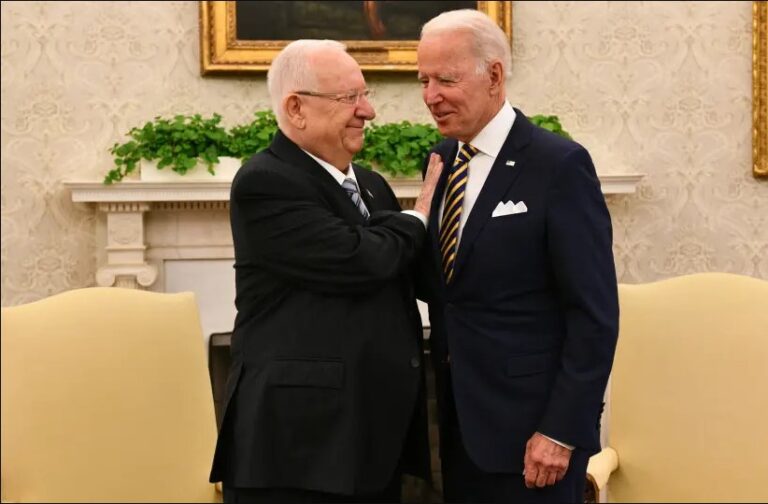
US President Joe Biden, in a meeting on Monday with President Reuven Rivlin, said Iran will never get a nuclear weapon as long as he is in office.

“Iran will never get a nuclear weapon on my watch,” he said.
 
Biden also addressed Sunday’s US airstrikes against Iranian-backed militias in Syria and Iraq.
 
“I directed [Sunday] night’s airstrikes targeting sites used by Iranian-backed militia groups in response to recent attacks on US personnel in Iraq,” he said.
 
“I just wanted to thank the president for being here,” Biden said at the beginning of their conversation at the Oval Office.
 
Biden assured Rivlin that his commitment to Israel “is ironclad” and that he has an “unwavering commitment to [Israel’s] self-defense.”

“My team and I are already working closely with the Israeli government that took office earlier this month,” he said. “I am looking forward to hosting Prime Minister [Naftali] Bennett at the White House very soon.”
 
Later on Monday evening, Speaker of the House Nancy Pelosi welcomed Rivlin on  Capitol Hill to a meeting with a group of bipartisan lawmakers.
 
“The support for Israel in this Congress has always been strongly bipartisan, and it will continue to be so, because of our shared values and because of our mutual security concerns,” she told Rivlin at a photo opportunity.

Rivlin was scheduled to hold several meetings at the UN on Tuesday, first with Secretary-General António Guterres and later with 20 UN ambassadors, including those from Russia, the UK, the US, Bahrain and Morocco.
 
Rivlin also met with UAE Ambassador to the US c on Monday. In a tweet on Tuesday morning, he thanked him for his “key role” in the Abraham Accords.

Rivlin is expected to return to Israel on June 30 and be succeeded by Isaac Herzog on July 7.

Read the complete article at: The Jerusalem Post

Also Read: Biden orders airstrikes against facilities used by Iran-backed militia groups
Iran Says Still No Decision On Extension Of IAEA Deal

Iran has not yet made any decision about the extension of a temporary technical agreement with the International Atomic Energy Agency or about whether to delete the recordings of its nuclear sites, the spokesman for the Iranian Foreign Ministry said Monday.

Speaking at a weekly presser, Saeed Khatibzadeh said Iran has not still made any decision about the extension of the three-month technical agreement with the IAEA signed in February or about how to continue cooperation with the UN nuclear agency.

Asked by reporters if a date has been set for the deletion of the information that Iran has recorded at its nuclear sites under the technical agreement with the IAEA, the spokesman said no decision has been made so far about the cameras.

According to a three-month technical agreement with the IAEA, Iran has been recording information offline at its nuclear sites, but had warned that a lack of breakthrough in the Vienna negotiations on reviving the JCPOA would mean that the UN nuclear agency will have no access to the information, the cameras will be turned off, and the data will be deleted.

Elsewhere in the press conference, Khatibzadeh pointed to the Vienna talks on the revival of the Joint Comprehensive Plan of Action, saying Iran has already made its decisions and now it is the other side’s turn to make up its mind.

In answer to a question that if a representative of Iranian President-elect Ebrahim Raeisi will attend the next round of the JCPOA talks or if an agreement would be reached under the next Iranian administration, Khatibzadeh said, “Basically it is not important under which administration and in what period the agreement is achieved. Even if the deal would be possible right now, we won’t delay the job for a single hour.”

Read the complete article at: EurAsia Review

Also Read: IAEA demands Iran answer on monitoring deal, Iran says not obliged to reply

Iranian ships bypassing sanctions worsen the pandemic in middle-east

0

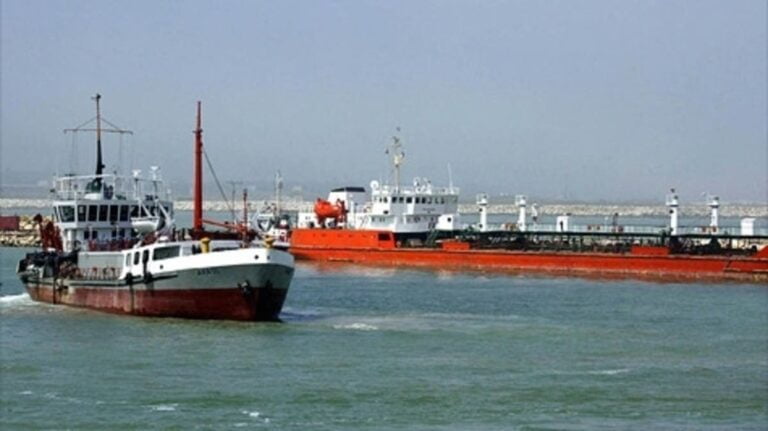
The Islamic Revolutionary Guard Corps (IRGC) has bypassed international sanctions imposed on Iran to ship oil, with catastrophic consequences for the Iranian economy, and for the region’s public health, worsening the coronavirus pandemic in middle-east.

The covert arrival and departure of Iran-linked vessels at key ports in the region have fuelled speculation and fears that the ships’ crews may be contributing to the spread of the coronavirus.

A number of provinces in southern Iran, where key ports are situated, are in red or orange zones owing to COVID-19 outbreaks.

Doctors have observed several strains of the novel coronavirus among patients in Khuzestan, according to health officials in the province.

Earlier this week, Iran’s Health Ministry reported that Hormozgan province has seen a 50% increase in COVID-19 hospitalizations over the past week.

Iran’s southern ports “are of strategic importance to the IRGC”, said Iranian human rights activist Haider Hameedi.

“They are the conduits through which it smuggles oil and other material, without adhering to preventive measures in order to limit the spread of the pandemic,” he said.

Iran also controls vessels that operate under the flags of other countries.

Last August, four vessels, among them the Ekaterina, were stripped of their flags following an investigation into allegations they secretly transported Iranian oil in defiance of sanctions, according to the Vesseltracker website.

“The ships all made covert visits to Iranian waters in 2020 where they collectively picked up millions of barrels of oil,” Vesseltracker said.

“The trips were part of a complex operation performed by Iranian and foreign vessels, in which ships manipulated their tracking data to hide their involvement in flouting US sanctions,” it said.

Last year, at the height of the coronavirus pandemic, the Iranian regime tasked the IRGC with managing the outbreak, allocating it large amounts of money.

The Iranian government and the IRGC have faced widespread criticism for their mismanagement of the pandemic and for their discriminatory and chaotic vaccine administration strategies.

Source: Al-Mashareq
Also read: Iran’s shadow fleet of tankers increases its smuggling of oil to China

Iran’s shadow fleet of tankers increases its smuggling of oil to China

0

Iran has started to increases its illegal sales of oil despite the sanctions that were imposed on it in 2018 by the administration of then U.S. President Donald Trump. Over the last three years, the Iranian tanker fleet consisting of 123 ships has smuggled oil to countries such as China, North Korea, Syria, Lebanon, the UAE and Venezuela. Each day Iranian ships can deliver about 100 million barrels of oil, worth more than $7.6 billion.     

It is estimated that during the last year the tankers delivered more than a million barrels of oil a day to China, and more than 300,000 to other countries. Just this week, the secretary general of Hezbollah, Hassan Nasrallah, declared that Iran would supply oil to Lebanon to help it overcome the huge shortage of oil in the country groaning under economic distress.

In order to conceal the banned activity, the Iranian tankers operate in a number of ways. First, they operate using flags of convenience, meaning the ships are registered with other countries. The tankers also frequently change their registration or their names so that it will be difficult to track them. In addition, the tankers use GPS jammers and broadcast fake GPS signals so that their routes and real locations will not be revealed.   

In exchange for the Iranian oil, China is helping Iran build its nuclear program, develop its arms industry and develop cyber and intelligence capabilities. Besides this, the illegal oil sales help the Iranian regime increase its foreign currency reserves, improve the standard of living of the country’s citizens, and continue to support its global terror activities.    

China opposes the American sanctions imposed on Iran, and over the past year has increased its secret operations with Iran including the smuggling of oil as well as the acceleration of Iran’s nuclear program. It can be assumed that the smuggling of oil will only increase under the new Iranian regime.

Source: Israel Defense

Also Read: China-IRGC Bitcoin mining in Iran leads to power outage crisis

Biden orders airstrikes against facilities used by Iran-backed militia groups

0

President Joe Biden directed military forces to conduct defensive precision airstrikes against facilities used by Iran-backed militia groups in the Iraq-Syria border region on Sunday evening, according to a news release from the Department of Defense.
“The targets were selected because these facilities are utilized by Iran-backed militias that are engaged in unmanned aerial vehicle (UAV) attacks against U.S. personnel and facilities in Iraq. Specifically, the U.S. strikes targeted operational and weapons storage facilities at two locations in Syria and one location in Iraq, both of which lie close to the border between those countries,” Pentagon press secretary John Kirby said in the release.

“As demonstrated by this evening’s strikes, President Biden has been clear that he will act to protect U.S. personnel.

Given the ongoing series of attacks by Iran-backed groups targeting U.S. interests in Iraq, the President directed further military action to disrupt and deter such attacks,” Kirby said.

At least four Iran-backed militia fighters in Iraq and Syria were killed in the airstrikes, Iraqi militia said in a statement released Monday.

An Iran-backed Shia militia group in Iraq, known as Kataib Hezbollah, said that they will retaliate against the US airstrike.

“This crime will not go unpunished, the decision for revenge has been taken, and the American enemy will see death with his own eyes. An eye for an eye and what is coming is severe,” Kataib Hezbollah said in its Telegram page.

Returning to the White House Sunday evening from a weekend at Camp David, Biden did not stop to answer questions about the airstrikes, telling reporters gathered on the South Lawn, “I’ll talk to you tomorrow.”

A spokesperson for the National Security Council referred CNN’s request for comment to the Pentagon Sunday.

House Speaker Nancy Pelosi said in a statement Sunday evening that the airstrikes “appear to be a targeted and proportional response to a serious and specific threat.” 

Read the complete article at: News Daily

Also Read: Biden urged to secure release of Americans left behind in Iran
 

Iran to punish social media users, IRGC to police the Internet

The Islamic Republic of Iran plans to punish social media users as a group of Iranian conservative lawmakers, who hold the majority in parliament, are working on a draft bill that could further restrict access to the internet.

The bill calls for “organizing social media” and the banning of virtual private network (VPN) software used widely by Iranians to bypass internet restrictions and blocks imposed on several social media websites.

The text also calls for jail terms of between 91 days and six months for anyone found guilty of violating the terms of the bill if it becomes law. Repeat offenders could also be fined and receive up to 30 lashes.

The bill also aims at banning altogether the use of foreign social media, forcing Iranians to use locally-developed networks that would help authorities control their content.

Approximately two-thirds of Iran’s 80 million population use VPN software to access restricted websites including but not limited to Youtube, Facebook, and Twitch.

This entire segment of the Iranian society will be deemed as guilty and punishable If the bill is approved.

But punishing cyberspace users is not the only means of controlling the Internet. According to another section of the bill, “the armed forces are to manage the internet.” In fact, in this part of the plan, internet management and monitoring are to be taken from the Ministry of Communications and be directly handed and fully available to the Islamic Revolutionary Guard Corps(IRGC).

Instagram and WhatsApp are the only social media services accessible in Iran, unlike Facebook, Twitter, and the Telegram messenger service which are officially banned.

And yet several Iranian figures use Twitter for official communications, including supreme leader Ayatollah Ali Khamenei.

Parliament’s news agency ICANA on Sunday quoted deputy Ali Yazdikhah, a member of the commission of cultural affairs, as confirming the existence of a draft bill on internet use.

Source: France 24
Also read: Christian converts put on trial in Iran for threatening state

BBC appeals to UN over Iran’s harassment of Persian staff

The BBC has complained to the UN about Iran’s harassment of its Persian-language staff.

According to the British broadcaster, Iranian agents have threatened to kidnap London staff and take them to Iran.

The BBC’s legal team has urged the UN Human Rights Council (UNHRC) to take action on the issue.

BBC Persian is a very popular source of information for Iranians, boasting an estimated 18 million regular readers and listeners — around a quarter of the country’s population.

In an internal survey of 102 BBC Persian staff carried out in March last year, 71 said they had experienced harassment.

A third have also had one or both parents harassed or called in for questioning by Iranian authorities, and over half say they feel under pressure to leave their jobs.

In one instance, a reporter received threats to her life via online messaging platform Skype, and was told to quit her job — or spy on her colleagues — in return for the release of her 27-year-old sister who had been detained in Iran.

Tehran also froze the assets of BBC Persian staff in 2017. A year later, it accused all 152 current and former staff of “conspiracy against national security,” and initiated criminal investigations against them.

On Thursday, the BBC hosted a virtual side event to coincide with a UNHRC meeting, in which it raised concerns about an escalating campaign of harassment by Iran toward its Persian journalists and other Persian-language media.

BBC Persian reporter Kasra Naji spoke at the event and revealed the threats and cyberbullying that he, his colleagues and their families have endured.

He said in December 2020, six staff members had family called in for questioning by Tehran’s intelligence agents. All were told to pass on death threats to their London-based relatives.

Read the complete article at: Arab News

Also Read: Dissidents targeted by Iranian hacker Ferocious Kitten in a six-year surveillance campaign

IAEA demands Iran answer on monitoring deal, Iran says not obliged to reply

The U.N. nuclear watchdog on Friday demanded an immediate reply from Iran on whether it would extend a monitoring agreement that expired overnight, prompting an Iranian envoy to respond that Tehran was under no obligation to provide an answer.

The agreement continued the International Atomic Energy Agency’s collection of data on some of Tehran’s activities, cushioning the blow of Iran’s decision in February to reduce cooperation with the agency.

“An immediate response from Iran is needed in this regard,” the IAEA said in a statement summarising a report by its chief Rafael Grossi to its 35-nation Board of Governors that was also seen by Reuters.

Grossi wrote to Iran last week “to understand Iran’s position regarding the possible continued collection, recording and retention of data”, the report said. As of Friday, Iran had not indicated if it intended to maintain the arrangement, it said.

Iran’s ambassador to the IAEA, Kazem Gharibabadi, “said that Iran was not required to comply” to the IAEA head’s request, Iran’s semi-official news agency Tasnim reported.

Before Grossi updated the board, U.S. Secretary of State Antony Blinken said any failure by Tehran to extend the monitoring agreement would be a “serious concern” for broader negotiations. read more

Iran and the United States have been holding indirect talks on reviving the 2015 nuclear deal between Tehran and major powers that imposed restrictions on Tehran’s nuclear activities in exchange for lifting international sanctions.

The Vienna talks, which began in April, are now in a pause that had been expected to last until early July, but failure to extend the monitoring accord could throw those negotiations into disarray.

“Regarding the IAEA, this remains a serious concern,” Blinken told a news conference in Paris alongside his French counterpart, Jean-Yves Le Drian. “The concern has been communicated to Iran and needs to be resolved.”

Read the complete article at: Reuters

Also Read: IAEA urges Iran to explain uranium particles at undeclared sites