IRGC official says Iran’s conventional arms non-negotiable
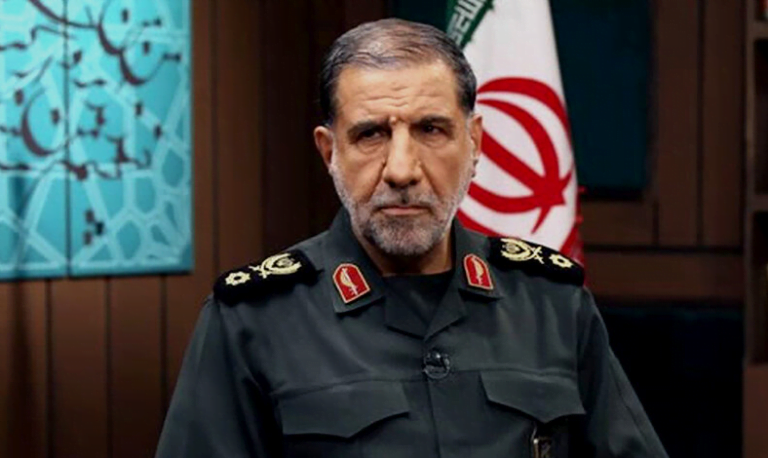
General Mohammad-Ismaeil Kowsari, the advisor to the IRGC commander, told Yemen’s Al-Masira website on Thursday that conventional defense weapons are “our right” and cannot be negotiated in any way, and it is an issue on which there is consensus, according to Iran Press.
“Iran has never sought war and has defense agents to deter any aggression and will respond to any aggression against its territory with power,” Kowsari warned.
In recent weeks, the Iranian Army and the IRGC have conducted various military exercises across the country. These drills involve homegrown missiles, drones, helicopters, submarines, military ships, and UAVs.
Different missiles have been tested during the drills, including Zolfaqar Basir with a range of 700 km, Dezfoul with a range of 1,000 km, and Qiyam with a range of 800 km.
Iran has been insisting that its weapons are the only deterrents.
When Iraq’s Saddam Hussein invaded Iran in the 1980s, no country sold missiles to Iran to defend itself. Saddam’s army fired missiles on Iranian cities. The weapons were provided to the Saddam regime mostly by the Soviet Union and Western countries, particularly France. German and Dutch companies also provided materials to the Iraqi regime for building chemical weapons. The United States also supported Saddam in the war against Iran. It gave satellite images of the Iranian forces stationed in the border region.The memories of the 1980-88 war are still haunting the Iranian nation. Once in a while remains of Iranian soldiers killed in the war are unearthed.Though the United Nations faulted Iraq for invading Iran it failed to force Iraq to pay reparations to Iran.General Kowsari also said Iran would fulfill its nuclear obligations only if the other parties fulfill their obligations in practice not in words.
Iran-Backed Militias Spread Fear and Bloodshed. And Now They’re Rebranding.
This week, a previously little-known militant group called Saraya Awlia al-Dam – the Guardians of Blood – claimed responsibility for an attack on the U.S. base at Erbil airport in northern Iraq that killed a civilian contractor and injured nine people.
But the Guardians of Blood is just one of the front names for established pro-Iranian radical Shia militia groups such as Asaib Ahl a-Haq and Kataib Hezbollah which have surfaced under new identities on Telegram since August 2020.
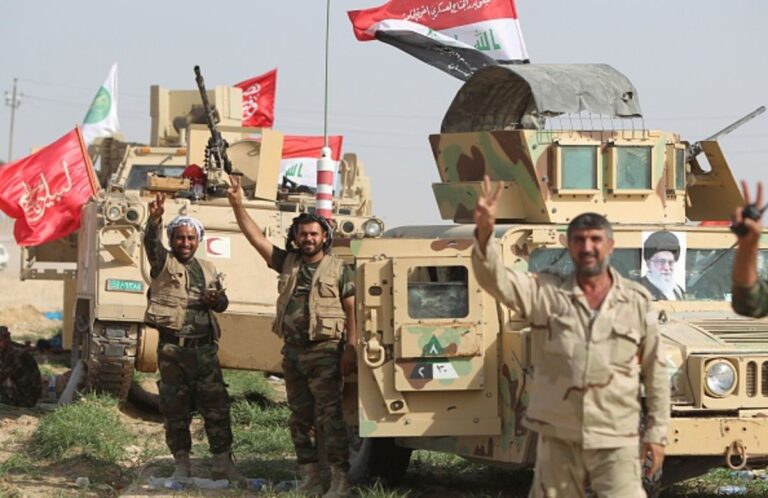
The Shia militias are all nominally under the direction of the Iraqi government, mainly under the name of the Popular Mobilisation Force (PMF), locally known as Hashed – an umbrella organisation including over 40 other groups formed to fight the Islamic State in 2014.
However, many of these groups operate under the direction of the Iranian Revolutionary Guard Corps (IRGC), an elite branch of the Iranian army founded after the 1979 Islamic revolution. The ideologically driven unit serves as the regime’s iron fist to preserve the Islamic system in Iran, and pursue Iran’s regional strategic interests beyond its borders.
This week, a previously little-known militant group called Saraya Awlia al-Dam – the Guardians of Blood – claimed responsibility for an attack on the U.S. base at Erbil airport in northern Iraq that killed a civilian contractor and injured nine people. But the Guardians of Blood is just one of the front names for established pro-Iranian radical Shia militia groups such as Asaib Ahl a-Haq and Kataib Hezbollah which have surfaced under new identities on Telegram since August 2020. The Shia militias are all nominally under the direction of the Iraqi government, mainly under the name of the Popular Mobilisation Force (PMF), locally known as Hashed – an umbrella organisation including over 40 other groups formed to fight the Islamic State in 2014. However, many of these groups operate under the direction of the Iranian Revolutionary Guard Corps (IRGC) Militias Spread Fear Militias Spread Fear Militias Spread Fear
US secretary of state: Iran ‘weeks away from having material to build nuclear bomb’
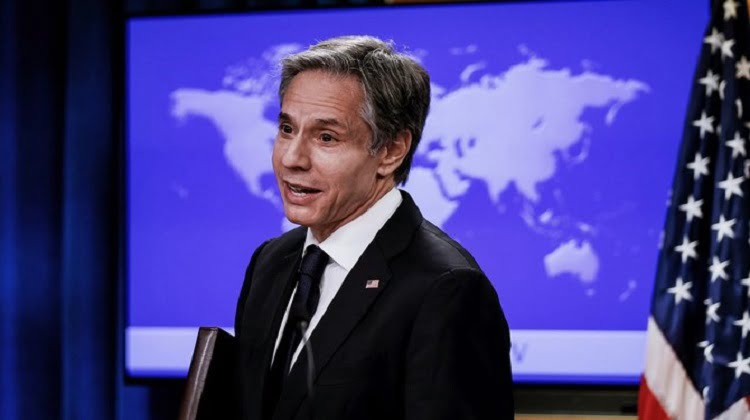
Iran will be weeks away from building a nuclear bomb if it stays on its current path, US Secretary of State Antony Blinken warned on Monday.
In his first TV interview since his appointment was confirmed last month, Blinken said Tehran was months away from being able to produce enough material for a weapon, but it would be “a matter of weeks” if it continued to breach the terms of the 2015 nuclear deal.
The future of the Joint Comprehensive Plan of Action (JCPOA), the agreement to curb Iran’s nuclear program in return for an easing of economic sanctions, is an early foreign policy challenge for the new Biden administration.
Donald Trump withdrew from the agreement in 2018 and reimposed sanctions that have crippled the Iranian economy, and Tehran has responded by gradually increasing its enrichment of uranium beyond what is permitted under the deal.
Iran will be weeks away from building a nuclear bomb if it stays on its current path, US Secretary of State Antony Blinken warned on Monday. In his first TV interview since his appointment was confirmed last month, Blinken said Tehran was months away from being able to produce enough material for a weapon, but it would be “a matter of weeks” if it continued to breach the terms of the 2015 nuclear deal. The future of the Joint Comprehensive Plan of Action (JCPOA), the agreement to curb Iran’s nuclear program in return for an easing of economic sanctions, is an early foreign policy challenge for the new Biden administration. Donald Trump withdrew from the agreement in 2018 and reimposed sanctions that have crippled the Iranian economy, and Tehran has responded by gradually increasing its enrichment of uranium beyond what is permitted under the deal. Donald Trump withdrew from the agreement in 2018 and reimposed sanctions that have crippled the Iranian economy, and Tehran has responded by gradually increasing its enrichment of uranium beyond what is permitted under the deal.
A new study on the Middle East takes the wraps off Iran’s militia doctrine
As the smoke cleared on another Houthi terrorist attack in Saudi Arabia, this time a drone attack on the Kingdom’s Abha airport, new details emerged about the extent of Iran’s campaign of violence across the Middle East.
The Houthis claimed to use four drones in Wednesday’s attack, which followed days of escalating aggression from the Iran-backed terror outfit. Meanwhile, a new report from the Tony Blair Institute for Global Change (TBI) has warned that Iran-backed militias throughout the region are growing in size, scale and lethality.
The paper — titled “The View from Tehran: Iran’s Militia Doctrine” — exposes the vast network of violent organizations supported by the regime.
With new evidence and a sweeping analysis, it details the militias supported by Iran’s Islamic Revolutionary Guard Corps (IRGC), the fastest-growing form of Tehran-backed proxy terrorist outfits in the Middle East.
It goes on to argue that militias supported, trained and supplied by the IRGC pose the greatest threat to regional stability.
As the smoke cleared on another Houthi terrorist attack in Saudi Arabia, this time a drone attack on the Kingdom’s Abha airport, new details emerged about the extent of Iran’s campaign of violence across the Middle East. The Houthis claimed to use four drones in Wednesday’s attack, which followed days of escalating aggression from the Iran-backed terror outfit. Meanwhile, a new report from the Tony Blair Institute for Global Change (TBI) has warned that Iran-backed militias throughout the region are growing in size, scale and lethality. The paper — titled “The View from Tehran: Iran’s Militia Doctrine” — exposes the vast network of violent organizations supported by the regime. With new evidence and a sweeping analysis, it details the militias supported by Iran’s Islamic Revolutionary Guard Corps (IRGC), the fastest-growing form of Tehran-backed proxy terrorist outfits in the Middle East. It goes on to argue that militias supported, trained and supplied by the IRGC pose the greatest threat to regional stability.
Responding to Iranian proxies in Iraq: Lowering the cost of accountability
The February 16 attack on US forces in Erbil that killed one US contractor and injured nine others, including one US service member, represents yet another escalation in the ongoing conflict between Iran and the United States. Especially concerning is that it spreads Iraq’s sectarian violence into the Kurdish region, which has been largely free of such attacks until now. But perhaps the more immediate concern is that the attack does place the Joe Biden administration in a bind.
When a similar attack happened in December 2019, the Donald Trump administration launched a series of swift and effective air strikes that killed Islamic Revolutionary Guards Corps (IRGC) Quds Force commander Qasem Soleimani, Kataib Hezbollah leader Abu Mahdi al-Muhandis, as well as a number of its fighters. However, in the aftermath of those strikes, Iran-backed militias attacked the US Embassy and the popular protests that were ongoing at the time turned against the US, leading to calls for a full American military withdrawal.
It seems the US has no good military options in Iraq: do nothing, withdraw, or get kicked out. Obviously, none of these are acceptable.
The February 16 attack on US forces in Erbil that killed one US contractor and injured nine others, including one US service member, represents yet another escalation in the ongoing conflict between Iran and the United States. Especially concerning is that it spreads Iraq’s sectarian violence into the Kurdish region, which has been largely free of such attacks until now. But perhaps the more immediate concern is that the attack does place the Joe Biden administration in a bind. When a similar attack happened in December 2019, the Donald Trump administration launched a series of swift and effective air strikes that killed Islamic Revolutionary Guards Corps (IRGC) Quds Force commander Qasem Soleimani, Kataib Hezbollah leader Abu Mahdi al-Muhandis, as well as a number of its fighters. Iranian proxies Iranian proxies
Iran’s Next Step Raises Specter of War for Top Atomic Lawyer
The woman who wrote the atomic rules Iran is preparing to abandon next week has a message for both the Biden and Rouhani administrations as they navigate an intensifying nuclear crisis: “Take a deep breath.”
“There is nothing to be gotten by escalating this conflict to a military tipping point,” said Laura Rockwood, who helped lead the International Atomic Energy Agency’s legal department for some three decades.
Warnings of war have punctuated the nuclear poker unleashed by former U.S. President Donald Trump’s decision to break with a 2015 deal and sanction Iran. But the stakes are escalating with Tehran set to strip monitors of their ability to carry out surprise visits — powers that help prevent suspicions of dubious atomic activity from leading to military strikes.
Rockwood is in a unique position to know the dangers that will arise once Iran suspends the IAEA’s so-called Additional Protocol from Feb. 23. The rules she drafted for Iran and the 136 other countries that subscribe to the protocol closed loopholes exposed in Iraq after Saddam Hussein’s defeat in the Gulf War.
The woman who wrote the atomic rules Iran is preparing to abandon next week has a message for both the Biden and Rouhani administrations as they navigate an intensifying nuclear crisis: “Take a deep breath.” “There is nothing to be gotten by escalating this conflict to a military tipping point,” said Laura Rockwood, who helped lead the International Atomic Energy Agency’s legal department for some three decades. Warnings of war have punctuated the nuclear poker unleashed by former U.S. President Donald Trump’s decision to break with a 2015 deal and sanction Iran. But the stakes are escalating with Tehran set to strip monitors of their ability to carry out surprise visits — powers that help prevent suspicions of dubious atomic activity from leading to military strikes. Atomic Lawyer Atomic Lawyer
THE U.S. AND ITS Kurdish allies in Iraq believe Iran was complicit in a deadly rocket attack Monday against an airport housing American forces near the Iraqi Kurdish capital of Irbil that killed at least one contractor from the U.S.-led coalition and injured a U.S. service member among many others, multiple sources confirm to U.S. News.
The U.S. military headquarters in the region and the semi-autonomous Kurdish authority there say an initial investigation indicates that proxy militia with clear Iranian backing, known as Popular Mobilization Forces, or PMF, carried out the attack, an American source in the region familiar with the assessments tells U.S. News.
A separate source in the Kurdish government in Irbil who was not authorized to discuss the investigation publicly attributed the attack to “an outlawed group working under the banner of PMF and using PMF resources.”
THE U.S. AND ITS Kurdish allies in Iraq believe Iran was complicit in a deadly rocket attack Monday against an airport housing American forces near the Iraqi Kurdish capital of Irbil that killed at least one contractor from the U.S.-led coalition and injured a U.S. service member among many others, multiple sources confirm to U.S. News. The U.S. military headquarters in the region and the semi-autonomous Kurdish authority there say an initial investigation indicates that proxy militia with clear Iranian backing, known as Popular Mobilization Forces, or PMF, carried out the attack, an American source in the region familiar with the assessments tells U.S. News. A separate source in the Kurdish government in Irbil who was not authorized to discuss the investigation publicly attributed the attack to “an outlawed group working under the banner of PMF and using PMF resources.” A separate source in the Kurdish government in Irbil who was not authorized to discuss the investigation publicly attributed the attack to “an outlawed group working under the banner of PMF and using PMF resources.”
Hezbollah cyberattack on Australian company is part of a growing cyber-threat emanating from Iran
On February 9, the Sydney Morning Herald reported that a Hezbollah-linked hacking group dubbed Volatile Cedar had targeted servers run by the Australian-based technology giant Atlassian, as well as those from US-based Oracle, across the globe with remote access trojans (RATs). The potential security and criminal implications of the hack are significant, as Hezbollah was able to vacuum up a lot of personal data, including client call records.
Troy Hunt, an independent security researcher cited in the report, asks, “If it’s a state-backed hack, are there critical infrastructure services using these products for power plants, sewage treatment, airports? Is it partly corporate espionage, people looking for trade secrets, information to gain a competitive advantage?”
Hezbollah is the Lebanese proxy of Iran’s Islamic Revolutionary Guard Corps (IRGC), making this, in essence, a state-backed hack. While Hezbollah receives significant funding from Iran, it also runs a global criminal enterprise spanning the range of criminal activities, including, it now appears, cybercrime. This provides a lucrative funding stream, especially useful now that Iran is under crushing sanctions.
On February 9, the Sydney Morning Herald reported that a Hezbollah-linked hacking group dubbed Volatile Cedar had targeted servers run by the Australian-based technology giant Atlassian, as well as those from US-based Oracle, across the globe with remote access trojans (RATs). The potential security and criminal implications of the hack are significant, as Hezbollah was able to vacuum up a lot of personal data, including client call records. Troy Hunt, an independent security researcher cited in the report, asks, “If it’s a state-backed hack, are there critical infrastructure services using these products for power plants, sewage treatment, airports? Is it partly corporate espionage, people looking for trade secrets, information to gain a competitive advantage?” Hezbollah is the Lebanese proxy of Iran’s Islamic Revolutionary Guard Corps (IRGC), making this, in essence, a state-backed hack. While Hezbollah receives significant funding from Iran, it also runs a global criminal enterprise spanning the range of criminal activities, including, it now appears, cybercrime. This provides a lucrative funding stream, especially useful now that Iran is under crushing sanctions. Hezbollah cyberattack Hezbollah cyberattack Hezbollah cyberattack
EXECUTIVE SUMMARY:Multiple missiles were fired at Erbil on February 15, killing at least one civil contractor and injuring at least one American national. It is likely that the attack was conducted by Iran using Its proxies in order to put pressure on President Biden to lift the sanctions against the country and return to the 2015 nuclear deal.
On Monday, February 15, several rockets were fired at Erbil International Airport in northern Iraq. Information is still scarce, but it is known that at least one US base was hit. The Independent reported that one person was killed and six injured. According to Deutsche Welle, the fatality was a foreigner and probably not an American. The official spokesman for Operation Inherent Resolve (the US military’s name for the international force in Iraq combating ISIS) stated that one civilian contractor had been killed and five others wounded, as well as one US service member.
Authorities in the Kurdish region have blamed the Iraqi Popular Mobilization Forces (al-Hashd al-Shaabi, or PMF) for the attack. The PMF is an umbrella organization for dozens of different groups amounting to more than 150,000 fighters. Some of the most significant groups within the PMF are the Badr Brigade, Asaib Ahl al-Haq, and the Kataib Hezbollah. They are all loyal to Iran and work closely with the Quds Forces (QF) of Iran’s Islamic Revolutionary Guard Corps (IRGC). The PMF is effectively not only a branch of the IRGC-QF as its proxy, but also a branch of the Islamic Republic of Iran’s Ministry of Foreign Affairs. Since its establishment, the PMF has loyally promoted Iranian foreign policy to significant effect.
It is too soon to declare the PMF responsible for the Erbil attack. However, both the modus operandi and the timing of the attack clearly point to the PMF as the culprit. For at least two months there have been no major attacks against US forces in Iraq, and this most recent attack is the first deadly strike in Iraq for a year. This begs the question: Why now?
Iran in new threat to ban UN inspectors from nuclear plants
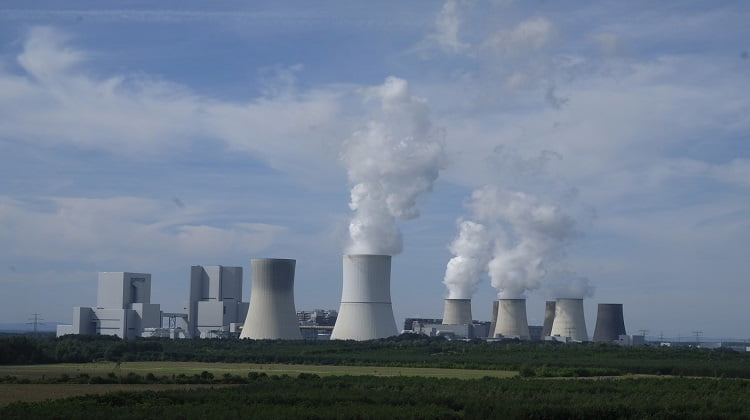
Iran vowed on Monday to block snap inspections of its nuclear plants by the UN atomic watchdog from next week unless the US returns to the 2015 nuclear deal.
The threat is the latest move in Tehran’s game of brinkmanship over the Joint Comprehensive Plan of Action (JCPOA), the agreement to curb its nuclear program in return for an easing of economic sanctions.
Former US President Donald Trump withdrew from the JCPOA in 2018 and reimposed sanctions, since when Iran has escalated its breaches of the agreement by increasing its enrichment of uranium. Trump’s successor Joe Biden has said he wants to return to the deal, but Washington and Tehran both insist that the other should make the first move.
In an additional protocol to the JCPOA, Iran agreed that inspectors from the International Atomic Energy Agency could make unannounced visits to its nuclear facilities to check compliance with the deal.
Iran vowed on Monday to block snap inspections of its nuclear plants by the UN atomic watchdog from next week unless the US returns to the 2015 nuclear deal. The threat is the latest move in Tehran’s game of brinkmanship over the Joint Comprehensive Plan of Action (JCPOA), the agreement to curb its nuclear program in return for an easing of economic sanctions. Former US President Donald Trump withdrew from the JCPOA in 2018 and reimposed sanctions, since when Iran has escalated its breaches of the agreement by increasing its enrichment of uranium. Trump’s successor Joe Biden has said he wants to return to the deal, but Washington and Tehran both insist that the other should make the first move. In an additional protocol to the JCPOA, Iran agreed that inspectors from the International Atomic Energy Agency could make unannounced visits to its nuclear facilities to check compliance with the deal. UN inspectors UN inspectors