Israel Approves Use of Iron Dome to Protect US Bases Against Iran
Israel allowed the US military deploy its Iron Dome missile defense system at bases in the Arabian Gulf, Europe, and elsewhere in Asia, according to Israel’s Haaretz newspaper.
The newspaper quoted Israeli security sources as saying that the systems are intended to defend US forces in the Gulf from attacks by Iran and its proxies, adding that the US will deploy batteries in eastern Europe out of concern Russia could try to attack American forces or strategic infrastructure in those countries.
The Israeli officials cited in the report declined to reveal where the batteries will be deployed. But, the newspaper said two have already been delivered.
The move came prior to the visit of an Israeli delegation to Washington early next month.
On Sunday, Israeli Prime Minister Benjamin Netanyahu’s office confirmed reports about US-Israeli talks on regional issues, mainly Iran.
Israel allowed the US military deploy its Iron Dome missile defense system at bases in the Arabian Gulf, Europe, and elsewhere in Asia, according to Israel’s Haaretz newspaper. The newspaper quoted Israeli security sources as saying that the systems are intended to defend US forces in the Gulf from attacks by Iran and its proxies, adding that the US will deploy batteries in eastern Europe out of concern Russia could try to attack American forces or strategic infrastructure in those countries. The Israeli officials cited in the report declined to reveal where the batteries will be deployed. But, the newspaper said two have already been delivered. The move came prior to the visit of an Israeli delegation to Washington early next month. On Sunday, Israeli Prime Minister Benjamin Netanyahu’s office confirmed reports about US-Israeli talks on regional issues, mainly Iran. On Sunday, Israeli Prime Minister Benjamin Netanyahu’s office confirmed reports about US-Israeli talks on regional issues, mainly Iran.
Saudis Expanding US Military Access to Airfields, Port, to Counter Iran
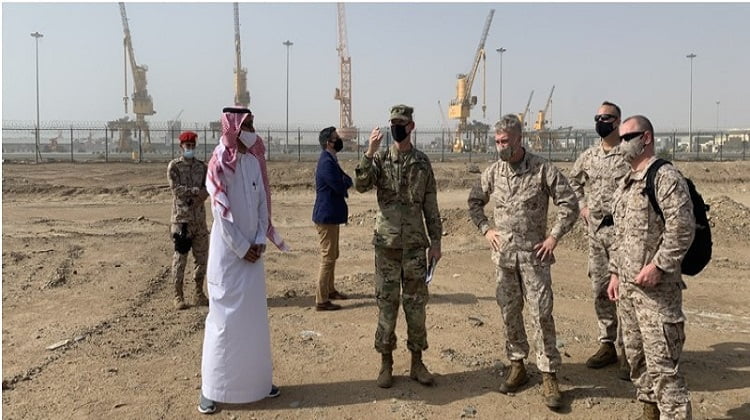
The U.S. military is expanding its ability to operate from Saudi Arabia in the event of a war with Iran, striking a preliminary arrangement with Riyadh to use various air bases and seaports in the country’s western regions.
The U.S. military has long kept a host of military assets and thousands of troops in Gulf kingdoms on the eastern flank of Saudi Arabia, including at permanent bases in Qatar, Kuwait, the UAE, and elsewhere. But Iran’s ballistic missiles have improved, those bases have become increasingly vulnerable, analysts say.
In a conflict with Iran, the United States would be able to transport troops in and out of the region from the west, posture fighters and other aircraft further from Iran’s missile launchers, and “lily-pad” eastward into the fight, Gen. Frank McKenzie told reporters traveling with him to the region to inspect three of the new locations.
“The Arabian Gulf would be contested waters under any scenario of armed conflict with Iran, so you look at the places where you would move your forces as they enter the theater from being in a contested area,” McKenzie said. “Certainly the Red Sea, the western [part] of the Arabian peninsula presents those opportunities.”
The U.S. military has long kept a host of military assets and thousands of troops in Gulf kingdoms on the eastern flank of Saudi Arabia, including at permanent bases in Qatar, Kuwait, the UAE, and elsewhere. But Iran’s ballistic missiles have improved, those bases have become increasingly vulnerable, analysts say. In a conflict with Iran, the United States would be able to transport troops in and out of the region from the west, posture fighters and other aircraft further from Iran’s missile launchers, and “lily-pad” eastward into the fight, Gen. Frank McKenzie told reporters traveling with him to the region to inspect three of the new locations.
Commander Highlights IRGC Program’s Contribution to Drop in Iran COVID Deaths
The commander of the Islamic Revolution Guards Corps said a door-to-door screening campaign involving the IRGC and Basij forces has miraculously helped to reduce the coronavirus daily death toll to two-digit numbers in Iran.
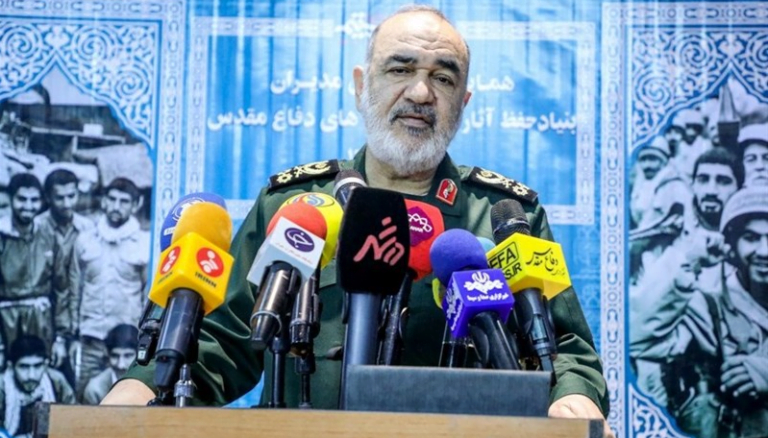
In comments after video calls with a number of IRGC provincial commanders on Sunday, Major General Hossein Salami said the door-to-door screening program, dubbed ‘Martyr Soleimani’ initiative, has produced miraculous results in a short time span and has reduced the daily coronavirus death toll to below 100.
The commander noted that the decline in the COVID-19 fatalities should not make people lax in observing the health protocols or diminish the efforts to tackle the pandemic. Nearly 1,165,000 patients have recovered from the coronavirus infection or have been discharged from hospitals across Iran. The number of new COVID-19 cases, hospital admissions, and deaths in Iran has declined constantly in recent weeks, while the local scientists have begun the human trial phase of a homegrown vaccine, which the health minister says outperforms many vaccines developed by other countries. In comments after video calls with a number of IRGC provincial commanders on Sunday, Major General Hossein Salami said the door-to-door screening program, dubbed ‘Martyr Soleimani’ initiative, has produced miraculous results in a short time span and has reduced the daily coronavirus death toll to below 100. The commander noted that the decline in the COVID-19 fatalities should not make people lax in observing the health protocols or diminish the efforts to tackle the pandemic. Nearly 1,165,000 patients have recovered from the coronavirus infection or have been discharged from hospitals across Iran. The number of new COVID-19 cases, hospital admissions, and deaths in Iran has declined constantly in recent weeks.
Islamic Jihad says late Iranian general Soleimani gave ‘direct orders’ in Gaza
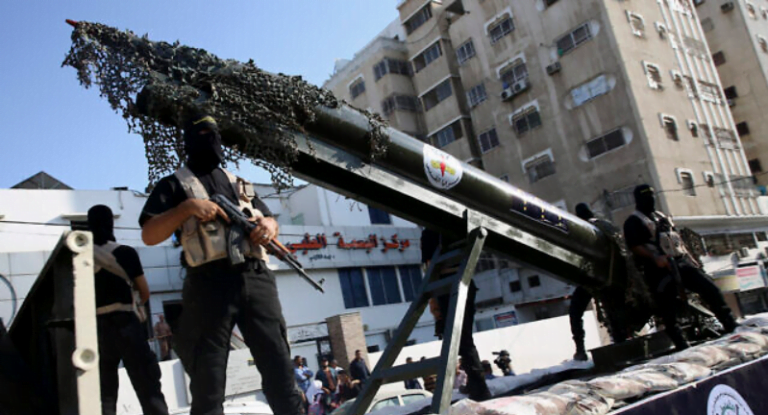
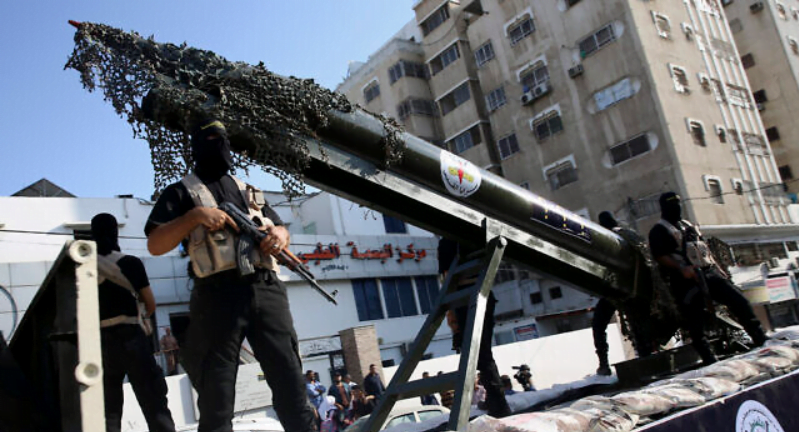
A senior figure in the terror group Palestinian Islamic Jihad said the organization received “direct orders” from the late Iranian Quds force commander Qassem Soleimani up until his assassination in a US airstrike last year, and that rockets supplied by the Iranians were used to attack Israel.
Speaking during a December interview with the Iranian al-Alam TV, the secretary-general of Palestinian Islamic Jihad, Ziyad al-Nakhaleh, said “nothing happened [in Gaza] without his direct orders and supervision,” according to a translation this week by the Middle East Media Research Institute.
This came in addition to Soleimani’s efforts to supply the PIJ with modern missiles, and weapons, including those used to attack Israel’s economic and technological hub, Tel Aviv.
“It was almost miraculous. It was very expensive in terms of technology, security, and capabilities” al-Nakhaleh said, adding “I can say that the missiles that [Soleimani] delivered to the Gaza Strip were the ones used to attack Tel Aviv.
I can say that Hajj Qassem played a pivotal role in the fact that the Palestinians ventured to attack the capital of the Zionist entity.”
Ziad Nakhala of Palestinian Islamic Jihad
The PIJ chief explained that Soleimani personally supervised and managed the transport of missiles in “complex operations” from Syria, to Sudan, to the Gaza Strip, adding that he personally visited Sudan to ensure the shipments were a success.
In 2009, three airstrikes destroyed a convoy of trucks in western Sudan reportedly carrying long-range Iranian missiles to the Gaza Strip.
A mysterious explosion in a weapons plant in Khartoum in 2012, which killed four people, was believed to be the result of an Israeli airstrike targeting arms destined for terror groups in Gaza.
In 2014 a large explosion occurred in a Sudanese ammunition warehouse, in an alleged Israeli attack targeting weapons intended for Gaza.
Analyst: IRGC, Army drills plunge the enemy into a defensive position
Jafar Qanadbashi, an expert on West Asian affairs, has said, “The Zionist regime had adjusted its military arrangement in such a way that if the opportunity arose and it received the green light from other powers, it would hit Iran, but the recent exercises plunge them into a defensive position.”
In an interview with the Fars news agency published on Friday, he referred to the IRGC and Army missile exercises, saying, “These exercises send several different messages to the enemy.
Most importantly, Iran is at the height of its defense power and military capabilities, capabilities that they did not even imagine.
Iran’s capabilities are set according to asymmetric wars and the enemy lacks the methods and knowledge to deal with it”.The expert noted that “the recent exercises of the IRGC and the Army send a message that the enemy knows that Iran, despite all the economic pressures, and sanctions, has created such a defense capability.”From his point of view, the readiness of a military force is not only about equipment. “In recent exercises, we have sent a message to the enemy both in terms of equipment, skills, and, most importantly, the morale and capabilities that a military force needs,” Qanadbashi remarked. Regarding the significance of the equipment used in the recent maneuvers, he said, “All the arms factories in the world and those who thought we were waiting for the embargo to be lifted to buy their weapons, now see that Iran is able to build its weapons at the lowest cost”. “The equipment used in the recent exercise sends a message to the enemy that Iran can easily meet its demands in terms of weapons.
France says Iran is building nuclear weapons capacity, urgent to revive 2015 deal
Iran is in the process of building up its nuclear weapons capacity and it is urgent that Tehran and Washington return to a 2015 nuclear agreement, France’s foreign minister was quoted as saying in an interview published on Saturday.
Iran has been accelerating its breaches of the nuclear deal and earlier this month started pressing ahead with plans to enrich uranium to 20% fissile strength at its underground Fordow nuclear plant. That is the level Tehran achieved before striking the deal with world powers to contain its disputed nuclear ambitions.
The Islamic Republic’s breaches of the nuclear agreement since President Donald Trump withdrew the United States from it in 2018 and subsequently imposed sanctions on Tehran may complicate efforts by President-elect Joe Biden, who takes office on Jan. 20, to rejoin the pact.
Iran is in the process of building up its nuclear weapons capacity and it is urgent that Tehran and Washington return to a 2015 nuclear agreement, France’s foreign minister was quoted as saying in an interview published on Saturday. Iran has been accelerating its breaches of the nuclear deal and earlier this month started pressing ahead with plans to enrich uranium to 20% fissile strength at its underground Fordow nuclear plant. That is the level Tehran achieved before striking the deal with world powers to contain its disputed nuclear ambitions. The Islamic Republic’s breaches of the nuclear agreement since President Donald Trump withdrew the United States from it in 2018 and subsequently imposed sanctions on Tehran may complicate efforts by President-elect Joe Biden, who takes office on Jan. 20, to rejoin the pact. The Islamic Republic’s breaches of the nuclear agreement since President Donald Trump withdrew the United States from it in 2018 and subsequently imposed sanctions on Tehran may complicate efforts by President-elect Joe Biden, who takes office on Jan. 20, to rejoin the pact.
New Israeli strikes in Syria target pro-Iranian militias
Israeli warplanes fired several missiles in central Syria early Friday targeting pro-Iranian militia sites.
“Israeli fighter jets flying over Lebanon struck at least five positions of Iranian-backed militias and the Lebanese Hezbollah nearby Hama city and the Syria’s middle sector,” said the Syrian Observatory for Human Rights (SOHR).
SOHR added that “shrapnel of missiles fired by regime air-defences in an attempt to intercept the Israeli airstrikes, hit the residential neighbourhood of Kazu in the north-western part of Hama city, which killed a family of four persons.”
Syrian state media said Syrian regime air defences confronted “an Israeli aggression” in the region of Hama on Friday that killed four people from the same family.
State-news agency SANA quoted an unnamed military official as saying the attack took place shortly before dawn when Israeli warplanes flew over neighbouring Lebanon.
Israeli warplanes fired several missiles in central Syria early Friday targeting pro-Iranian militia sites. “Israeli fighter jets flying over Lebanon struck at least five positions of Iranian-backed militias and the Lebanese Hezbollah nearby Hama city and the Syria’s middle sector,” said the Syrian Observatory for Human Rights (SOHR). SOHR added that “shrapnel of missiles fired by regime air-defences in an attempt to intercept the Israeli airstrikes, hit the residential neighbourhood of Kazu in the north-western part of Hama city, which killed a family of four persons.” Syrian state media said Syrian regime air defences confronted “an Israeli aggression” in the region of Hama on Friday that killed four people from the same family. State-news agency SANA quoted an unnamed military official as saying the attack took place shortly before dawn when Israeli warplanes flew over neighbouring Lebanon. State-news agency SANA quoted an unnamed military official as saying the attack took place shortly before dawn when Israeli warplanes flew over neighbouring Lebanon. Israeli strikes Israeli strikes
Iranian press review: US B-52 bombers are easy targets, says top IRGC commander
At the peak of heated tensions between the former US President Donald Trump and Iranian authorities, the commander of Iran’s Islamic Revolutionary Guard Corps (IRGC) Aerospace Force, Brigadier General Amir Ali Hajizadeh, said that US B-52 bombers were easy targets for Iranian forces to hit, a new documentary has revealed.
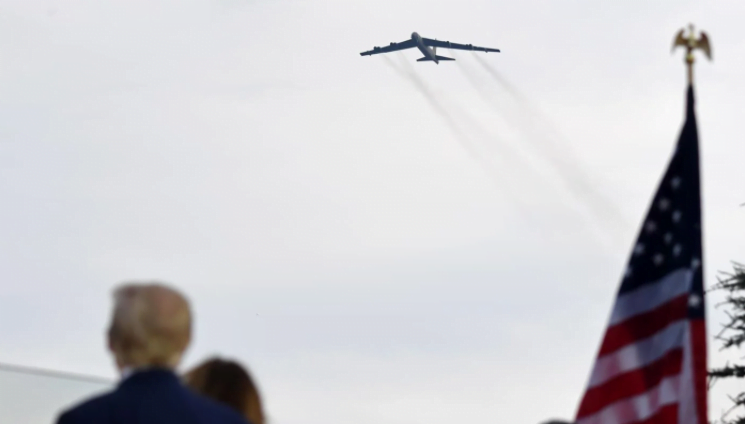
Since November, the US Air Force has deployed the nuclear-capable bombers five times over the Middle East, and in response, Iran has launched drills unveiling new underground ballistic missile bases and suicide drones.
On Friday, Iran’s state TV aired a short documentary showing inside an IRGC radar facility used to spot planes and drones flying over the Persian Gulf, in an undisclosed location.
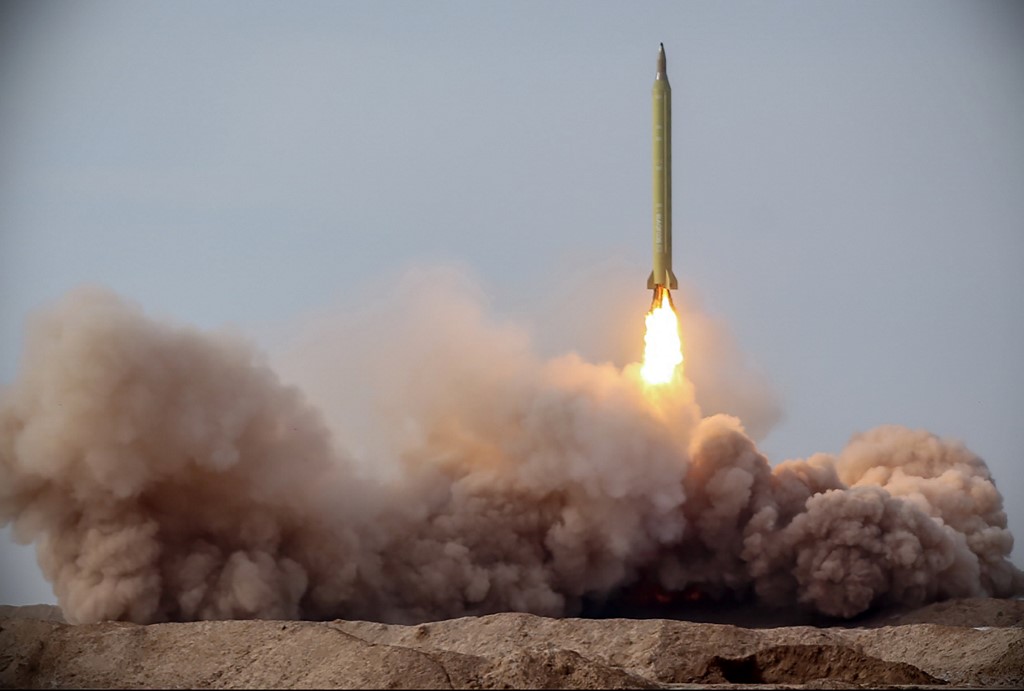
Iran’s Revolutionary Guard Corps official website via SEPAH News on 16 January 2021, shows a launch of a missile during a military drill in an unknown location (AFP)
In the documentary, Hajizadeh asked the radar operators about the type of two drones shown on a monitor flying close to Iranian territorial waters.
An IRGC officer responded that they were US MQ-9 and RQ-4 drones, and Haizadeh said “the same as the one that we downed”.
In June 2019, IRGC shot down a US RQ-4 Global Hawk surveillance drone over Iran’s southern province of Hormozgan, which borders with the critical Strait of Hormuz.
“Targeting B-52 bombers is much easier than RQ-4s,” Hajizaeh said. “B-52s are old planes and the only reason for their recent deployment is because the US is scared and worried about what we might do.”
In another part of the documentary, Hajizadeh explained the details of Iran’s missile attack on Ain Al-Assad, a US military base in Iraq, in response to the assassination of the IRGC commander Qassem Soleimani by the US in January 2020.
How Iran’s Regime Enjoys Impunity To Continue Human Rights Abuses
On the third anniversary of the major Iran protests in January 2018, Amnesty International released a statement, underlining how the international community’s inaction has granted impunity to the regime’s authorities to kill, detain and continue harassing protesters.
“On the third anniversary of the nationwide protests of December 2017 and January 2018, Amnesty International renews its calls for justice for the dozens of protesters, including children, who were killed by Iran’s security forces across the country, and their bereaved families. The organization also stands in solidarity with those seeking truth and accountability for the thousands of protesters who were arbitrarily detained, those who suffered torture or other ill-treatment in detention, those who died in custody in suspicious circumstances and those who were subsequently sentenced to death or executed following grossly unfair trials,” read the statement.
As the Iranian Resistance revealed during the first days of the uprising in 2018, the regime’s security forces, by the direct order of Supreme Leader Ali Khamenei, opened fire on protesters killing dozens. The regime continued killing the protesters under torture, or later executing them. Mostafa Salehi, who was arrested during the 2018 protests in Isfahan province, was executed in August 2020.
On the third anniversary of the major Iran protests in January 2018, Amnesty International released a statement, underlining how the international community’s inaction has granted impunity to the regime’s authorities to kill, detain and continue harassing protesters. “On the third anniversary of the nationwide protests of December 2017 and January 2018, Amnesty International renews its calls for justice for the dozens of protesters, including children, who were killed by Iran’s security forces across the country, and their bereaved families. The organization also stands in solidarity with those seeking truth and accountability for the thousands of protesters who were arbitrarily detained, those who suffered torture or other ill-treatment in detention, those who died in custody in suspicious circumstances and those who were subsequently sentenced to death or executed following grossly unfair trials,” read the statement. Human Rights Abuses Human Rights Abuses
Why It Is Still Time To Declare The IRGC A Terrorist Organization
As the one-year anniversary of the tragedy of Ukraine International Airlines Flight 752 arrived, still, there is no justice. However, even before the Iranian Revolutionary Guard Corps fired the rocket that downed the aircraft—killing 176 people, more than 80 of them Canadian residents—there was already much to mourn. The slaughter of innocents in Iran, by the IRGC, has a long history, dating back to the organization’s inception in 1979.
At the outset of the revolution, the IRGC executed two prominent civilians: Dr. Farrokhru Parsa, Iran’s first female cabinet minister; and Habib Elghanian, a leader in the Iranian Jewish community. That same year, the IRGC stormed the American Embassy, holding the diplomats within hostage and beginning a stand-off that would last 444 days. The effects of 1979 continue to be felt today, all around the globe, 41 years later.
Throughout the 1980s and 1990s, the list of crimes committed by the IRGC grew longer by one atrocity after the next. They used Iranian children as minesweepers, sending them to pointless deaths in a pointless war with neighboring Iraq, a war started by the IRGC in a nonsensical attempt to spread its ideological “revolution” to the rest of the world. Over the next ten years, the IRGC went on an international killing spree, both at home in Iran and abroad in Europe and the United States, assassinating an estimated 80 opposition leaders. The IRGC attacked U.S. Marines in Lebanon, killing 241 servicemen.
Throughout the 1980s and 1990s, the list of crimes committed by the IRGC grew longer by one atrocity after the next. They used Iranian children as minesweepers, sending them to pointless deaths in a pointless war with neighbouring Iraq, a war started by the IRGC in a nonsensical attempt to spread its ideological “revolution” to the rest of the world. Over the next ten years, the IRGC went on an international killing spree, both at home in Iran and abroad in Europe and the United States, assassinating an estimated 80 opposition leaders. The IRGC attacked U.S. Marines in Lebanon, killing 241 servicemen. Terrorist Organization Terrorist Organization