Home Blog Page 136

Record Daily Coronavirus Infections as Iran in Turmoil Over Shia Pilgrimages

0
Record Daily Coronavirus Infections as Iran in Turmoil Over Shia Pilgrimages


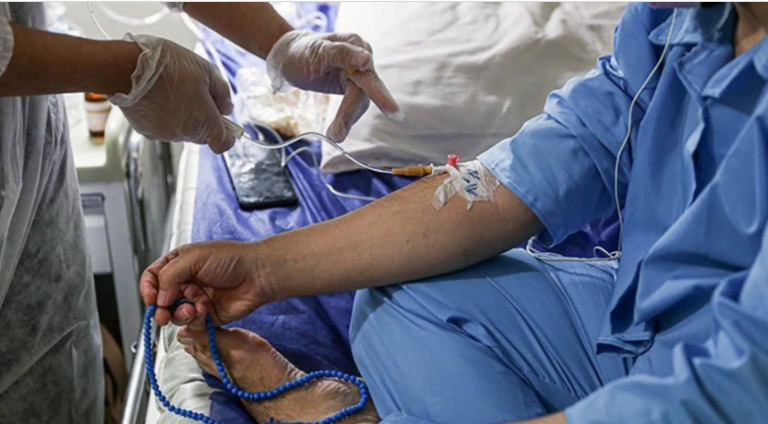
The first day of October hailed an alarming new stage in Iran’s battle with the coronavirus pandemic as, with 3,825 new cases logged in 24 hours, the country broke its single-day record for new infections.


The officially recorded death toll also rose by 211 souls to 26,380.


It falls a week before an important date in the Shia calendar: one that some among the devout have taken as a sign.


Kazem Sadighi, Tehran’s acting Friday Imam, pronounced the coronavirus a calamity visited upon the world by God and a consequence of “our sins”.


“These days and nights,” he intoned, “We must ponder what we have done that at the time Arba’een, the doors of Imam Hossein’s shrine have been closed to us.”


The Shia holy day of Arba’een marks 40 days since the date of Imam Hussein’s martyrdom in the Islamic lunar calendar.


This year, it falls on October 8 and traditionally would be observed by thousands of Shia pilgrims traveling to Karbala in Iraq to pray at his shrine.


But this year, in an effort to halt the spread of coronavirus, the Iraqi government has banned entry by foreign pilgrims.


Pictures and videos have been posted online in recent days showing a number of pilgrims rushing the border with Iraq and clashing with border guards in a bid to reach and enter the shrine.


Since then Islamic Republic officials have repeatedly told the people that this year’s Arba’een processions are canceled.


Even the Supreme Leader Ayatollah Ali Khamenei has asked Iranians to stay home.


Land borders between Iraq and Iran have been closed for more than seven months since the outbreak and save for a few exceptions, no traveler is permitted to cross the border between the two countries.


Read More


Also Read: Iran eyes transmitting electricity to Europe as region’s hub
Iran eyes transmitting electricity to Europe as region’s hub
0
Iran eyes transmitting electricity to Europe as region's hub
        Iran eyes transmitting electricity to Europe as region’s hub


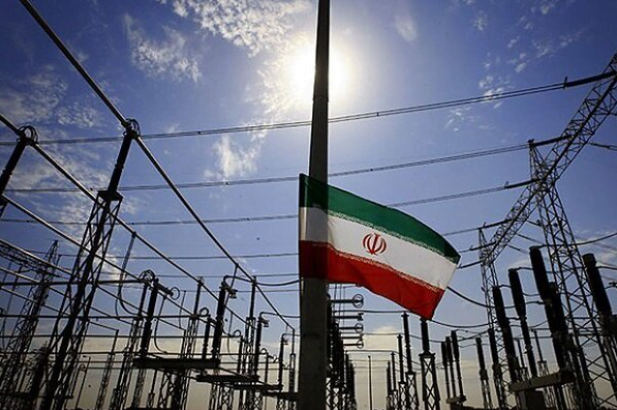
Following a plan for becoming West Asia’s electricity hub, Iran has been taking serious steps for joining its electricity network with neighbors in the past few years.


The Iranian Energy Ministry has been negotiating with the neighboring countries including Iraq, Russia, Afghanistan, Azerbaijan, and Qatar for the connection of their power networks with Iran to make them enable to import or transmit their electricity to new destination markets through Iran.


The synchronization of power grids with the neighboring countries, not only enhances Iran’s electricity exchanges with them, but it will also increase the political stance of the country in the region.


So far, Iran’s electricities network has been synchronized with Iraq, and back in September, the Energy Minister Reza Ardakanian announced that the electricities networks of Russia and Azerbaijan are the next in line for becoming linked with the Iranian grid in the coming months.


“Within the next few months, the study project of synchronization of the electricities networks of Iran, Azerbaijan, and Russia will be completed and then the executive operations will begin,” the minister said.


Meanwhile, Ardakanian and Qatari Minister of State for Energy Affairs Saad Sherida Al-Kaabi held an online meeting in late September to discuss joining the two countries’ electricities networks via sea.


During the online meeting, Al-Kaabi said: “Electricity transfer between the two countries is possible and this proposal should be worked on.”


Read More


Also Read: Russia, Iran Expand Military Cooperation Against US and Europe in Gulf

Now, taking a new step toward becoming the region’s power hub, Iran has suggested becoming a bridge between East and Europe for transmitting electricity.In a virtual conference dubbed 1st Caspian Europe Forum hosted by Berlin on Thursday, the Iranian energy minister has expressed the country’s readiness for joining its electricity network with Europe.

Russia, Iran Expand Military Cooperation Against US and Europe in Gulf

0
Russia, Iran Expand Military Cooperation Against US and Europe in Gulf


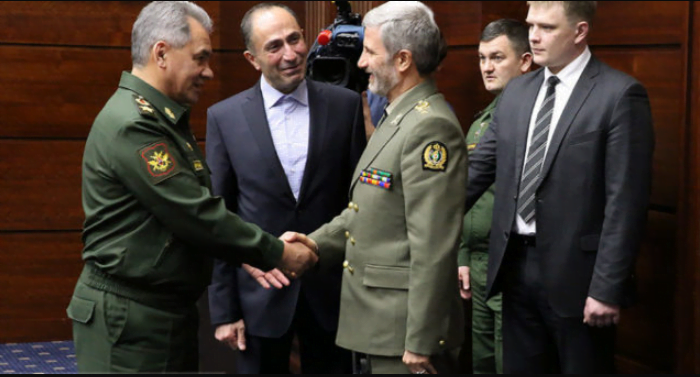
The intensification of the military conflict between Armenia and Azerbaijan in recent days has overshadowed what may prove to be an equally, if not more, fateful shift in the Caucasus: the expansion of Russian and Iranian military-to-military ties, involving not only joint maneuvers in the Caspian Sea and the Gulf but also Tehran’s offer to Moscow to use three naval bases on its Gulf coast.


Many Iranian commentators and some in Moscow now are even speaking about the creation of “a Russian-Iranian military alliance” that will allow the two countries to oppose the United States’ presence in the Gulf and threaten the vital oil shipping lanes that the US has helped keep open.


Russia and Iran have been talking about expanding such ties for several years.


But in the last several weeks, their cooperation—which Tehran has celebrated in Iranian media but which Moscow has, until now, understated—appears to have assumed a more concrete form.


At least in part, this is because the United Nations’ restrictions on Iran’s importation of weapons from foreign countries, including Russia, will expire in mid-October.


Both governments hope that Russia will then be in a position to sell much-needed military systems to the Iranians without inviting further sanctions (Zavtra.ru, September 28).


Talks between Moscow and Tehran about expanding military cooperation have been going on since the summer of 2019. At that time, the two sides reportedly signed an agreement to promote such ties (Nezavisimaya Gazeta, July 30, 2019), an accord that Tehran-based outlets boasted about even as Moscow officially kept silent.


Then, in August 2020, a large Iranian military delegation came to Moscow to prepare for Iranian participation in Russia’s Kavkaz (Caucasus) 2020 military exercises and to discuss further steps toward realizing a military alliance, according to an independent Moscow military commentator Konstantin Dushenov.


Read More


Also Read: Linking Chabahar, Gwadar ports to ensure prosperity in the region: Iran envoy

Linking Chabahar, Gwadar ports to ensure prosperity in the region: Iran envoy

0
Linking Chabahar, Gwadar ports to ensure prosperity in the region Iran envoy
Linking Chabahar, Gwadar ports to ensure prosperity in the region: Iran envoy


The Ambassador of the Islamic Republic of Iran to Pakistan dismissing any competition between Iran’s Chabahar and Pakistan’s Gwadar ports said linking the two will strengthen bilateral trade and bring prosperity in the region.


Ambassador Seyed Mohammad Ali Hosseini during an interview with Pakistani newspaper ‘Business Recorder’ said Gwadar and  Chabahar are two important ports, adding that if they become more active, the two ports will bring regional progress and prosperity.


“Some are trying to present these two ports as competitors to each other, while we do not take it as a competition but a compliment to each other,” he asserted, adding that the potential of the two ports could be utilized better by connectivity through rails.


He said Pakistan was working on the infrastructure of Gwadar port to boost economic activities, while Iran had also specific programs to make Chabahar port more active.


He said Iran had announced its readiness to provide electricity for Gwadar port.


Read More


Also Read: Turkey, Iran deploy ‘game-changing’ drones in Iraqi Kurdistan

“We believe more progress of these ports will bring prosperity in the region and the trade volume will also increase automatically. In fact, we see progress and security of Pakistan as progress and security of Iran,” the Iranian envoy said. He said the people of the two countries, especially at the border side can take benefit from the trade activity. At present, he said the trade volume between Pakistan and Iran was $1.3 billion, but due to Covid-19, the volume went down as the pandemic had badly affected the overall economic situation across the world. In view of existing potential, he added that the two-way trade could be increased even further. He identified various fields for investment between the two countries, such as energy, gas, electricity, and oil.

Turkey, Iran deploy ‘game-changing’ drones in Iraqi Kurdistan

0
Turkey, Iran deploy ‘game-changing’ drones in Iraqi Kurdistan
   Turkey, Iran deploy ‘game-changing’ drones in Iraqi Kurdistan


Iraqi Kurdistan region,— Turkey and Iran are increasingly adopting “game-changing” drones as their weapon of choice against Kurdish PKK rebels in the Iraqi Kurdistan region, prompting fears for the safety of civilians and stoking geopolitical tensions.


“Not a day goes by without us seeing a drone,” said Mohammad Hassan, mayor of Qandil, the mountainous Iraqi stronghold of Turkey’s Kurdistan Workers’ Party (PKK).


“They fly so low Qandil’s residents can see them with their naked eye,” Hassan told AFP.


The PKK has used Qandil for decades as a rear-base for its insurgency against the Turkish state.


The Democratic Party of Iranian Kurdistan (PDK-I) has similar rear-bases in other remote areas of Iraqi Kurdistan, from which it launches attacks across the border into Iran.


Turkey and Iran consider the Kurdish rebels as “terrorists” and routinely conduct cross-border ground assaults, air strikes and artillery bombardments against their Iraq bases.


Starting in 2018, both countries began using unmanned aerial vehicles (UAVs) for surveillance and even targeted assassinations in northern Iraq.


Drone use has expanded dramatically since Turkey launched a new assault in June, analysts and residents of affected areas told AFP.


Activists said dozens of border villages and adjacent farms have been abandoned by their terrified residents.


The drone strikes have also prevented thousands of Yazidis from returning to their homes in Sinjar district, close to the Syrian border, where PKK elements now have a presence.


“The Turkish bombing causes so much terror, so Yazidis are not coming home,” Sinjar mayor Mahma Khalil told AFP.


‘Mistrust, irritation’


Despite public criticism, Turkey has continued its drone warfare — likely because of new strides against the PKK.


For years, the PKK sheltered in Iraq’s mountains, where manned warplanes and ground troops struggled to reach them.


But drones have allowed Ankara to track, identify and eliminate PKK targets within minutes, Nicholas Heras of the Institute for the Study of War told AFP.


Read More


Also Read: “Save Iran”: Reza Pahlavi’s Message to the People

“Save Iran”: Reza Pahlavi’s Message to the People

0
“Save Iran” Reza Pahlavi’s Message to the People
       “Save Iran”: Reza Pahlavi’s Message to the People


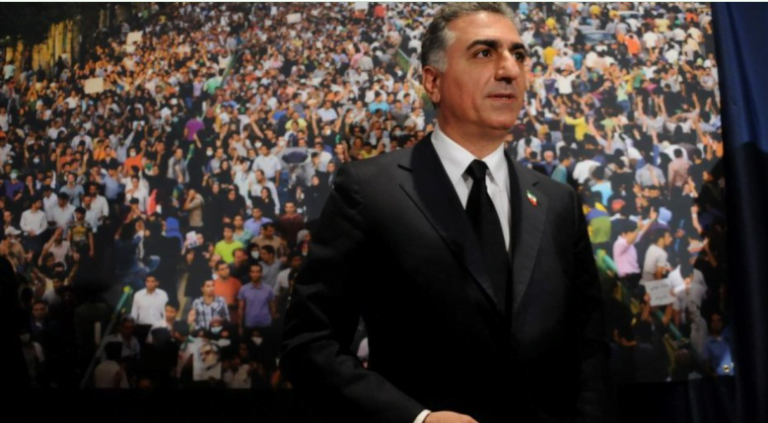
Reza Pahlavis the former Crown Prince of Iran and a vocal opponent of the Islamic Republic has called on the Iranian people to unite against the current rulers of the country to “save Iran.”


“My motivation is not to gain political power, but to try to establish a system in which power is not the prerogative of one individual or group,” he said in a message announcing a new vision for the country, which he referred to as a “New Covenant.”


Reza Pahlavis whose father was the last Shah of Iran before the Islamic Revolution in 1979, went live with his new message on Monday, September 28.


“I extend a helping hand to all pro-democracy political forces, regardless of their past or political orientation,” he said, “and I want them to put aside differences, arrogance, and ambitions of supremacy and focus on one goal: to save Iran.”


The video, which has been posted on YouTube, shows Pahlavi behind a desk, the pre-revolution Iranian flag at his side.


He urges all Iranians to embrace their “patriotic duty” to bring about change, to challenge the regime, whose only achievements in 41 years, he says, have been “isolation, social collapse, discrimination, economic freefall, frustration, and hopelessness,” and to acknowledge that the Revolutionary Guards and its voluntary wing the Basij are only set on “generating wealth through corruption and crime” for a few elite.


“The path to victory is clear. We must connect strikes, protests, civil disobedience in various parts of the country to one another,” he says. Reza Pahlavis


“We must promote civil disobedience in all its forms.” He encourages people to support strikers, workers, and political prisoners. Reza Pahlavis


Perhaps most compelling is his call for Iranians to “Look into the eyes of your own children. See how their futures are being held hostage by the personal interests of corrupt few. Your children ask you: On which side do you stand?”


Read More


Also Read: How the Abraham Accords Are Making Iran Desperate

How the Abraham Accords Are Making Iran Desperate

0
How the Abraham Accords Are Making Iran Desperate


The north pincer is commonly referred to as the “Shiite Crescent,” stretching from the body across Iraq, Syria, and Lebanon to the Mediterranean Sea.


It is both a “lid” on Iran’s primary enemies Saudi Arabia, Jordan, and Israel and a wedge between Sunni Turkey and the Sunni Arab States.


The southern pincer stretches from the body through the Persian Gulf and under the Arabian Peninsula with a Houthi-led war on the Saudis from Yemen in the heel of the boot, and from there stretching Iran’s influence up the Red Sea along the coasts of Saudi Arabia, Jordan, Israel, Egypt, Sudan, Eritrea, and Somalia — and about 18 miles across the Bab el-Mandeb Straits from the US base in Djibouti.


Attention has been rightly and happily focused on the Abraham Accords agreements between Israel, Bahrain, and the United Arab Emirates, witnessed by the United States and openly encouraged by the other Gulf States and Arab countries.


But those changes in the politics of the southern pincer make Iran more desperate and more determined to control the northern one.


Below are eight things to highlight about the holiday of Sukkot: 1. Jewish national liberation. Sukkot is the third Jewish pilgrimage holiday.


And Iran’s position along the northern pincer is being eroded. Syria is a crucial piece, allowing Iran to reach its ally Hezbollah in Lebanon over land.


Read More


Also Read: Mandaean Graves in Iran Segregated and Destroyed

Mandaean Graves in Iran Segregated and Destroyed

0
Mandaean Graves in Iran Segregated and Destroyed


For several years now, the anniversary of the start of the Iran-Iraq war has been marked with ceremonies across major cities in Iran, especially those that were badly affected by the ensuing destruction.


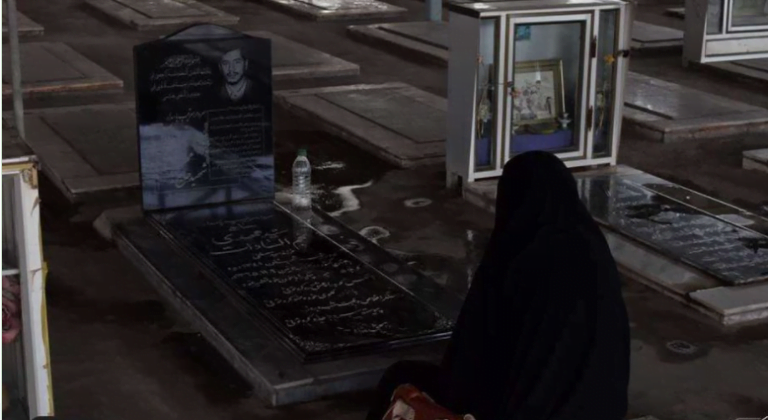
One of these involves “dusting” the graves of the war dead – but not all of them.


On Thursday, September 24, 2020, the IRNA news agency published a collection of photographs entitled “Dusting the tombs of the Sabian Martyrs in Ahvaz.


” The pictures showed the families of people killed in the eight-year war, flanked by police officers and other officials, cleaning up the graves and headstones of their loved ones.


The pictures, though, were met with mixed reactions online. Some cyberspace users belonging to the Mandaean community, followers of an ancient religion who number in the thousands in Iran, insisted the images were staged and part of a propaganda campaign by the Islamic Republic.


By contrast, they said, their own rights including the right to rest in peace are being trampled on in Iran. As one of Iran’s least-known and worst-persecuted religious minorities, Mandaeans are often neglected by the regime even after their deaths.


“Some years ago in Ahvaz, a Mandaean father and three of his children died in an accident.


The mother and her only surviving child performed the burial rites in sorrow and with the help of some of their friends.


“The day after the burial, the mother and her son went to visit their loved ones. They found that locals, who knew it was a Mandaean cemetery, had placed old tires around the fresh graves and set them on fire.


This grieving woman has been suffering from nervous disorders ever since. She never recovered from it.”


This is what Selim, an Iranian-born Mandaean from Khuzestan province, recalls of the country he left behind ten years ago.


Adherents to his ancient gnostic faith are forced to endure to systemic discrimination in the Islamic Republic, from cradle to grave – and thereafter.


Read More


Also Read: Rouhani says Iran has been subject to economic war

Rouhani says Iran has been subject to economic war

0
Rouhani says Iran has been subject to economic war
       Rouhani says Iran has been subject to economic war


President Hassan Rouhani said on Wednesday that Iran has been grappling with an economic war over the past three years.


The president made the remarks in his statement to the cabinet session in reaction to some critics of the government who say sanctions against Iran are not something new, arguing that Iran has been under sanctions even during the past governments.


Rouhani drew a line between the former sanctions and the current “Economic War”, saying, “Over the past several years, we were under sanctions, not economic war.”


He thanked the parliament for giving a vote of confidence to the minister of industry, mine, and trade.


Read More


Also Read: The Iran deal is dead: After US sanctions snapback, other members won’t admit it

The president said that he has issued an order in which he has mentioned the main four policies to be pursued by the Ministry of Industry, Mine, and Trade. The first issue to be pursued by the Ministry is the surge in production, Rouhani said.“In the manufacturing sector, our performance needs to be better than the previous years. In spite of the COVID-19 and the subsequent problems, the statistics from the first four or five months of the current Iranian year shows that we are witnessing a greater amount of production in comparison to the preceding period last year.”The president said that the second duty of the Ministry of Industry is to help export commodities. Iran provided most of its needed foreign currency by the exports of oil, condensates, and gas over the past years, Rouhani said, however noting that the situation is not the same as before. The president said that the third issue to be followed by the Ministry of Industry is providing fundamental commodities. He added that the Ministry has to monitor supply and demand round-the-clock that what commodities are available in the market and what other commodities need an extra supply.

The Iran deal is dead: After US sanctions snapback, other members won’t admit it

0
The Iran deal is dead After US sanctions snapback, other members won't admit it
The Iran deal is dead: After US sanctions snapback, other members won’t admit it


Following the unilateral decision of the US to pull out of the Iran nuclear deal, other parties to the agreement have insisted the deal is still intact. But the deal is dead, and the P4+1 have failed to admit this.


On August 20, at a United Nations Security Council (UNSC) meeting, US Secretary of State Mike Pompeo triggered the UN snapback sanctions on Iran.


However, other Iran deal participants have verbally opposed the US position and argue that the snapback mechanism cannot be triggered by the US as it would be a breach of international law.


Consequently, some have claimed that US President Donald Trump’s administration is diplomatically “isolated.”


However, there are clear indications that demonstrate that the group is known as the P4+1 – Germany, France, the UK, China, and Russia – cannot legally challenge the US on the issue, and in practice, they will have to accept the Trump administration’s decision.


Triggering snapback sanctions came after the UNSC did not extend an arms embargo on Tehran on August 14.


According to UNSC resolution 2231 adopted in 2015, those who oppose the decision would have 30 days after the US triggered the snapback to put forth an opposition proposal So far, no one has done this.


As of September 20, all related UN sanctions, including the indefinite arms embargo, the complete ban on uranium enrichment, and Iran’s ballistic missile program are fully enforced.


Furthermore, as an extra measure, in case any company or state fails to accept the US position, Trump’s administration has already announced they will place secondary sanctions on anyone who violates the arms embargo against Iran or do business with Tehran.


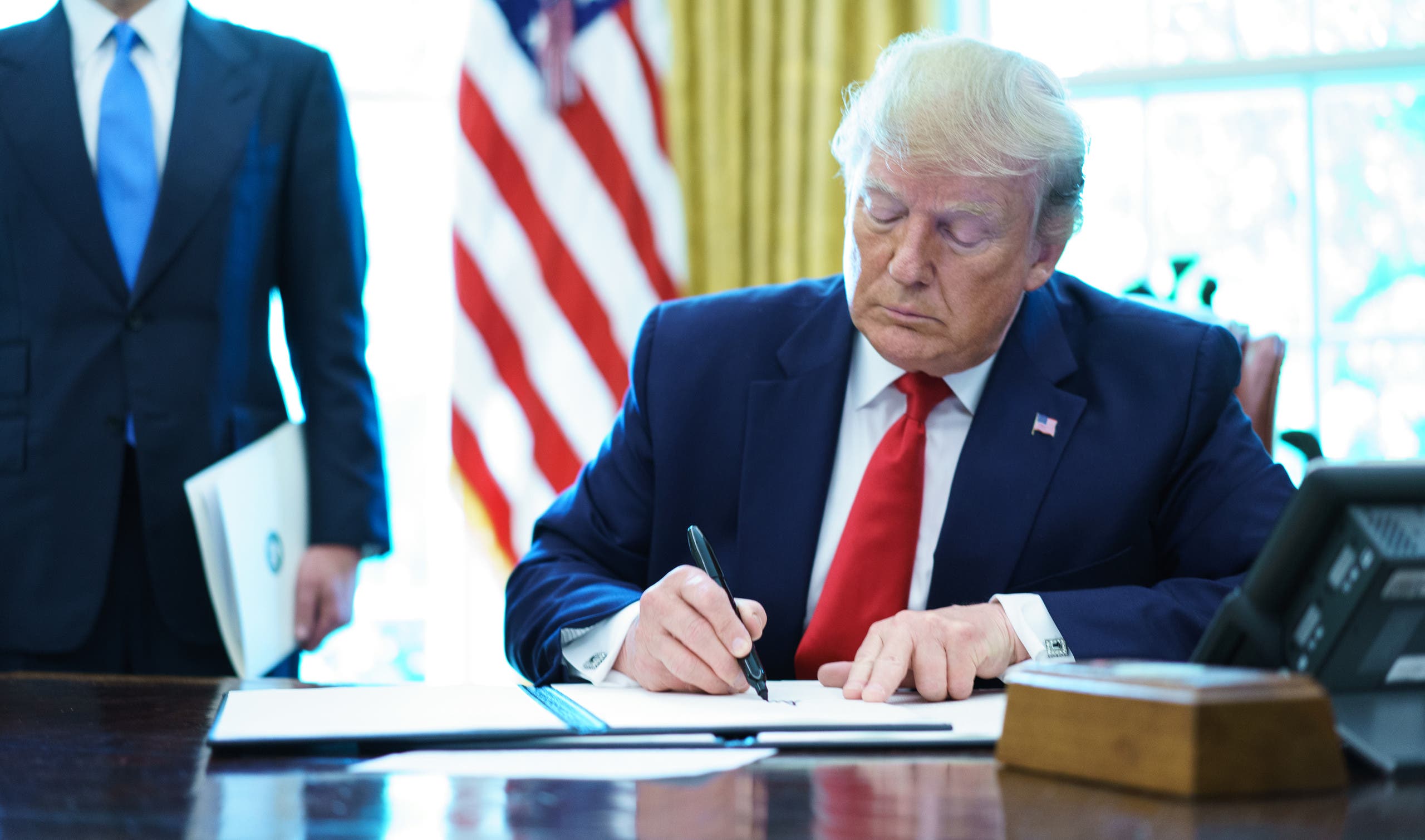
US President Donald Trump signs an executive order on Iran sanctions in the Oval Office of the White House on June 24, 2019. (AFP)


US President Donald Trump signs an executive order on Iran sanctions in the Oval Office of the White House on June 24, 2019. (AFP)


Read More


Also Read: Rumors about Iran’s aid to Armenia completely baseless: Vaezi