Rumors about Iran’s aid to Armenia completely baseless: Vaezi
Rejecting rumors that Iran is sending aid to Armenia, President’s Chief of Staff Mahmoud Vaezi said that these rumors are completely baseless and are aimed at disrupting the good relations between Iran and Azerbaijan.
He made the remarks in his phone call with Azerbaijan Republic’s Deputy Prime Minister Shahin Mustafayev. Rumors
“The Azerbaijan Republic has an important and special place in Iran’s foreign policy, and we have always used every opportunity to strengthen and develop our relations with this country,” said Vaezi.
Expressing concern over the dispute between Azerbaijan and Armenia, he stressed, “We are following the recent developments closely and ready to assist in resolving the differences between the two countries through dialogue and negotiation within the framework of the laws and regulations of international law.”In this regard, Vaezi strongly rejected the rumors spread in some media, social networks, and cyberspace that Iran is sending aid to Armenia in the conflict between the two countries, saying, “These rumors are completely baseless and are aimed at disrupting the good relations between Iran and Azerbaijan.” Undoubtedly, good, strategic, and comprehensive relations between Tehran and Baku will not be affected by such baseless rumors,” he added. Shahin Mustafayev, for his part, called Iran a good neighbor and friend of Azerbaijan, saying, “The two countries have sincere relations with each other and we should not allow these good relations to be damaged by the efforts of the opposition.”Referring to the religious, cultural, and social commonalities of Iran and Azerbaijan, he added, “The high officials of the two countries have made great efforts to develop and deepen the Tehran-Baku relations, and today these relations are at a very good level.”
U.S. Sanctions Plan for Iran Would Imperil Food and Drug Imports
A U.S. proposal to almost totally sever Iran from the global financial system could hinder its ability to secure supplies of food and drugs just as it struggles to contain a resurgence of the worst coronavirus outbreak in the Middle East.
The Trump administration is considering targeting more than a dozen banks and labeling Iran’s entire financial sector off-limits, three people familiar with the matter said on Monday. Food and Drug
That would mark a sharp escalation in Washington’s efforts to force Iran into new negotiations over its nuclear program and activities in the region, two years after the U.S. left a landmark 2015 deal and reimposed sweeping sanctions, including on vital oil exports.
Access to money will definitely get even harder for us,” said Seyed Abdolreza Hejazi Farahmand, chief executive officer of Tehran-based Behestan Plasma JPS Co., which produces plasma-derived products for hemophiliacs. Under the plan, the administration would blacklist roughly 14 banks in Iran that have so far escaped some U.S. restrictions, under authorities designed to punish entities associated with terrorism, ballistic-missile development, and human-rights abuses. The proposal is still under review and hasn’t been sent to President Donald Trump. Included in the list of banks are Saman Bank and Middle East Bank, the two remaining lenders still able to conduct humanitarian trade and import food and pharmaceuticals into Iran. Officials at the banks, and the Central Bank of Iran, weren’t immediately available for comment. Drug importers and medical supply companies in Iran are now weighing the possibility that the proposed new penalties would all but paralyze their work. That could leave companies increasingly dependent on a small network of informal money changers overseas who can execute financial transfers
China could signal increased engagement with Iran, but hasn’t done so
While converting Iran’s Shanghai Cooperation Organization (SCO) observer status into membership would primarily signal Chinese interest in substantially increasing its engagement with the Islamic Republic, moving ahead with the China-Pakistan-Iran-Turkey energy pipeline could be a geopolitical game-changer.
China’s refusal to signal interest in putting flesh on the skeleton of its partnership with Iran following the leaking of a purported wide-ranging agreement between the two countries suggests that the People’s Republic neither wants to increase tension with Washington by blatantly violating harsh U.S. sanctions against the Islamic Republic nor to upset its balancing of relations with Iran’s regional rival, Saudi Arabia.
The pipeline, which would cater to the energy, economic, and security needs of all participants, maybe on the backburner for now, but geo-politicking in the Middle East and South Asia is likely to spur a renewed Pakistani, Iranian, and Turkish push for the project.
Driving a potential push is shifting sands that raise the specter of geopolitical realignment.
They include a rift between Pakistan and Saudi Arabia over the lack of Gulf support for Islamabad in its conflict with India over Kashmir; calls for India toalign itselfwith the Saudi-United Arab Emirates-led alliance against Turkey, Qatar and Iran; and the ambitions of Turkey, which is embroiled in multiple conflicts in the Mediterranean, to position itself as an energy transit hub.
The pipeline was first touted in 2015 in anticipation of the lifting or easing of U.S. and U.N. sanctions against Iran as a result of an international agreement that curbed the Islamic Republic’s nuclear program.
Funded by China, construction that was slated to incorporate an already partially built link between Iran and Pakistan was to be carried out by a subsidiary of the state-owned China National Petroleum Corporation.The U.S. withdrawal in 2018 from the nuclear agreement and reimposition of sanctions put the pipeline project on ice, with neither Pakistan nor China wanting to be in violation of U.S. law.
Slamming gross human rights violations in Europe, Iran Parliament’s National Security, and Foreign Policy Commission issued a statement in reaction to the baseless claims of European states over human rights allegations in Iran.
The National Security and Foreign Policy Commission of the Iranian Parliament issued a statement on Tuesday in reaction to the allegations raised by some European countries about human rights violations in Iran.
Here is the full text of the statement: human right allegations
The formulation and implementation of criminal laws and the prosecution of criminals under these laws is an inalienable right for all countries.
Under the fundamental principles of the Charter of the United Nations, specifically the “Declaration of Principles of International Law”, no government or a group of states have the right to interfere, directly or indirectly, in the internal or external affairs of another government.The recent move of European countries in accusing Iran of violating Human Rights as well as interfering in the internal affairs of the Islamic Republic of Iran lacks any legal basis and it is considered a clear violation of international law. In order to defend the interests of the Iranian nation, Iran’s Parliament supports the Iran Judiciary System for observing legal principles for punishing criminals in the framework of fair trials.Therefore, it is expected that the Government of the Islamic Republic of Iran and the diplomatic apparatus use all their capacities to take reciprocal and deterrent measures to prevent these countries to accuse Iran of violating human rights.It is surprising that some European countries refuse to accept their responsibility for human rights violations in their policies at the regional and international levels. Although they pretend that they are human rights defenders, so far, they have not taken any action over oppressive anti-Iran sanctions.
Iran slams US and Israel in high-level meetings with Iraq
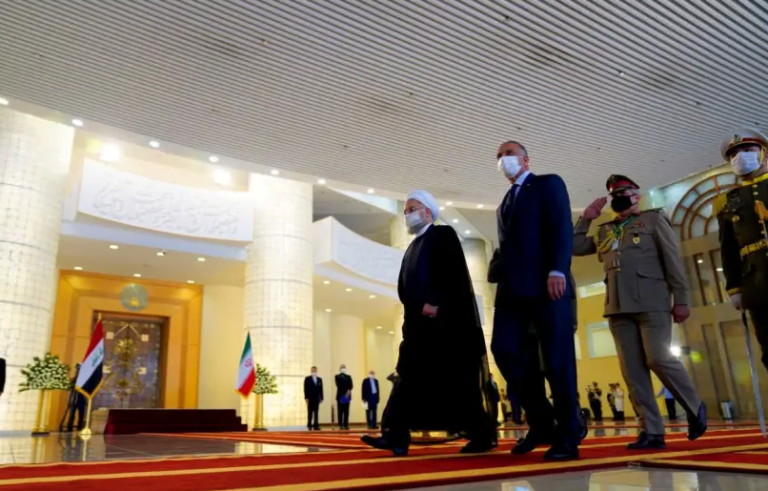
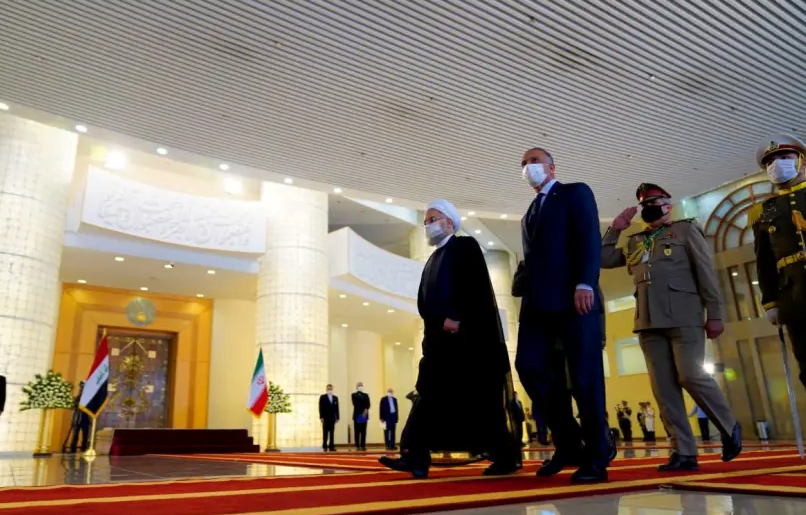
Iran is pushing Iraq to eject US troops but is wary of carrying out attacks that could cause casualties to US personnel stationed in its western neighbor.
On Saturday, Iraqi Foreign Minister Fuad Hussein met with senior Iranian officials during a trip to Iran in what was among the first major face-to-face meetings in a while due to the COVID crisis.
They come amid increasing rumors of Iran’s role in Iraq, and warnings by the US against continued attacks on its embassy in Baghdad.
There have been dozens of rocket and explosive attacks targeting the US in Iraq, as well as the UK and convoys that supply the US.
A video posted by Iranian websites showed that Quds Force commander Ismael Ghaani was in Iraq recently. This is a message to Washington.
The Iran-Iraq discussions this weekend began with a meeting between Hussein and Iran’s Speaker of the Consultative Assembly, Mohammad Baqer Qalibaf (Ghalibaf). Iraq’s
Qalibaf and Hussein are both Kurdish, and Hussein is not known for anti-US sentiments, but as Iraq’s foreign minister he was in Iran to hear out the Iranians on the latest issues. Iraq’s
“We believe that Iraq currently has a positive role in the region,” the Iranian said. Iraq’s
He then claimed the US-backed ISIS and spreads instability in the region and Iraq’s.
“Some countries in the region, under pressure from the United States, normalized relations with the Zionist regime.
Undoubtedly, the Islamic world should not be silent on this issue, and it is necessary because the issue of Palestine is the first priority of the Islamic Ummah,” Qalibaf said.
He then emphasized that Iran has always supported Iraq as an Islamic country.
As many as 3,362 people have been infected with the coronavirus (COVID-19) in the past 24 hours in Iran, said Sima Sadat Lari, spokesperson for Iran’s Ministry of Health and Medical Education, Trend reports citing the ministry.
According to Sadat Lari, 195 more people have died from the coronavirus over the past day.
Sadat Lari added that the condition of 4,059 people is critical.
The official said that Iran’s Tehran, Isfahan, Qom, East Azerbaijan, South Khorasan, Semnan, Qazvin, Lorestan, Ardabil, Khuzestan, Kermanshah, Kohgiluyeh and Boyer-Ahmad, Gilan, Bushehr, Zanjan, Ilam, Razavi Khorasan, Mazandaran, Chaharmahal, and Bakhtiari, Alborz, West Azerbaijan, Markazi, Kerman, North Khorasan, Hamadan, and Yazd provinces are considered ‘red’ zones.So far, more than 3.93 million tests have been conducted in Iran for the diagnosis of coronavirus.Iran continues to monitor the coronavirus situation in the country. According to recent reports from the Iranian officials, over 446,400 people have been infected, and 25,589 people have already died. Meanwhile, over 374,100 have reportedly recovered from the disease.The country continues to apply strict measures to contain further spread. Reportedly, the disease was brought to Iran by a businessman from Iran’s Qom city, who went on a business trip to China, despite official warnings. The man died later from the disease.The Islamic Republic only announced its first infections and deaths from the coronavirus on Feb. 19.The outbreak in the Chinese city of Wuhan – which is an international transport hub – began at a fish market in late December 2019.The World Health Organization (WHO) on March 11 declared COVID-19 a pandemic. Some sources claim the coronavirus outbreak started as early as November 2019.The Islamic Republic only announced its first infections and deaths from the coronavirus on Feb. 19.The outbreak in the Chinese city of Wuhan – which is an international transport hub – began at a fish market in late December 2019.
Exclusive: Iran Begins Developing Air Defense Systems in Syria
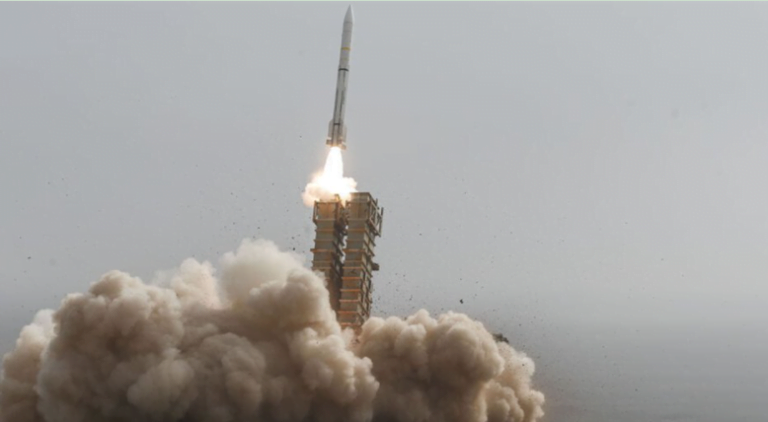
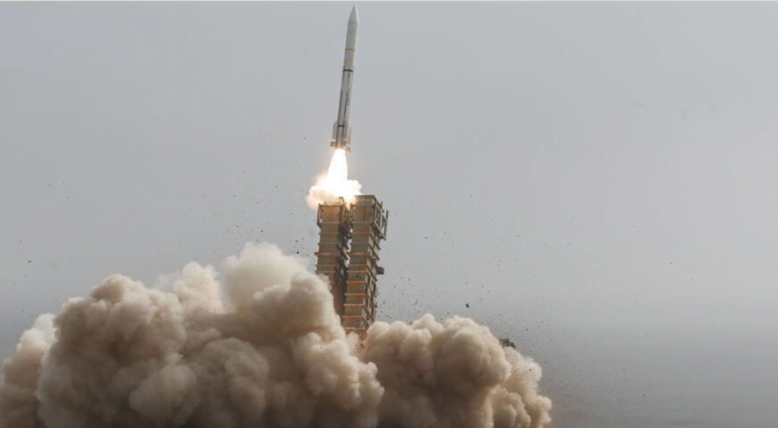
On September 22, Iranian authorities announced that they would strengthen Syrian air defense systems by providing Damascus with its own air defense equipment, including short, medium, and long-range systems.
A spokesman for the Iranian armed forces, Brigadier General Abu Al-Fazl Shakerji, said that his country would strengthen Syrian air defenses on the basis of the contract signed between the two states in July of this year.
Iran and Syria signed a comprehensive military and security cooperation agreement in July, primarily focusing on the development of Syrian air defense systems.
Iran said at the time that its goal was to counter the dozens of raids launched by Israel and the United States on Syrian military positions and those hosting Iranian forces or their militias.
According to the Iranian News Agency, Fars, during a recent visit to Syria by the Chief of Staff of the Iranian Armed Forces, Major General Muhammad Hussein Bagheri, the decision to strengthen the country’s air defense system came at the request of the Syrian regime.
On July 19, a Twitter account called “Syria My Homeland” posted that “Iran’s advanced Khordad system will soon be in the Syrian air defense’s possession.”
Has Iran Started Supplying Military Reinforcements to Syria?
Information obtained by IranWire from a Syrian military source, who asked to remain anonymous for security reasons, confirms that Tehran has already started sending military equipment to reinforce air defenses.
The source told IranWare that Tehran had sent several weapons shipments to Damascus International Airport, from Tehran, on July 20. The cargo was immediately unloaded and transported to the Jabal Al-Mana area in the Al-Kiswah region of Damascus countryside.The source, who is from the 1st Division and is close to the Iranian militia in Syria, explained that the weapons that reached Damascus were hidden inside tunnels in the Jabal Al-Mana region and at the 1st Division’s warehouses.
How Germany was drawn to Iran ‘dual-use’ drone motors for Yemen Houthis
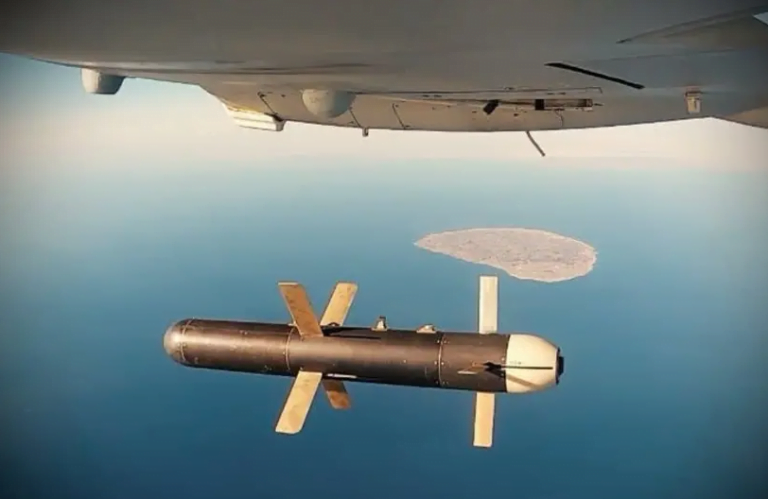
Germany has worked to prevent engines being transferred to Iran for use in drones that are used by Houthi rebels in Yemen against Saudi Arabia.
This complicated trafficking in materials for armed drones is part of the larger Iranian nexus of procurement for its military program. Iran hopes that an end of an arms embargo will make it easier to import and export weapons.
According to an article at The National, in the United Arab Emirates German officials “imposed a ban on the same of model aircraft engines to Iran after a shipment ended up on drones used by Houthis in Yemen.” Iran then moved to acquire similar parts from China.
“It emerged that a small maker of engines for miniature versions of well-known aircraft was approached by Germany’s domestic intelligence service, which had been monitoring sales of units later found on the battlefield.” The report claims the parts were moved from Xiaman to Mombasa.
At the heart of the German portion of this story are 42 twin-cylinder propeller motors that were sent to Athens in 2015. The motors were then moved to Iran.
This kind of dual-use technology, engines that could be used for civilian needs, shipped through a third country, easily hides the end user.
Conflict Armament Research has produced several reports on Iranian technology transfers to Yemen. A report in March 2017 traced the components of a Qasef-1 drone that had been recovered near Aden in 2016.
It includes a DLE-111 two-cylinder engine that was “manufactured by the Chinese company Mile Haoxiang Technology,” the article claimed. It was identical to other engines found in attacks near Marib.
The Case-1 is a kamikaze drone, which is similar to an Iranian Ababil.
The Ababil has its origins in Iranian manufacturing dating back to the 1980s when Iran took over a former Textron factory that made Bell helicopters. The Ababil-style drone has also been exported to Hezbollah.
UAE: Iran’s aggressive policies made Arabs look at Israel
The United Arab Emirates didn’t need peace with Israel to counter Iran, a top UAE official said Friday, but he said.
Iran’s aggressive policies over three decades alarmed many Arab countries and made them look at their relationship with Israel “with fresh eyes.”
Anwar Gargash, the UAE’s minister of state for foreign affairs, acknowledged at a virtual briefing on the sidelines of the equally virtual U.N. General Assembly’s annual meeting of world leaders that this may not have been Iran’s intention.
But its actions had an impact in the region, he said, though he wouldn’t speculate on whether other Arab countries would follow the UAE and Bahrain in establishing relations with Israel.
“The only thing I want to say is the more strategic the Israelis look at these relationships, the more doors will open to them,” Gargash said.
“If they look at it very `transactionally’, I think that it is not going to send a very good omen for normalizing relations with many of the Arab countries.”
Gargash said the UAE’s message to Israel is to “look at these opportunities and build strategically, and think long term rather than short term” — and prove wrong the countries who say that because of the Israeli political system its decision-makers think only tactically.
A month after the U.S.-brokered diplomatic agreement with Israel signed at the White House, Gargash said the two countries are negotiating “what I would call normal bilateral relations.” He said the UAE has sent several agreements to the Israelis on protecting investments, double taxation, visa exemptions, and air services.“We’re waiting for them to come back to us because it is essential for a relationship to be built on these solid bases,” Gargash said.
Any interference in Iran’s internal affairs ‘unacceptable’
Iranian Foreign Ministry spokesman Saeed Khatibzadeh has slammed the European Union’s unacceptable move to issue internal affairs against Iran at the Human Rights Council.
“The Islamic Republic of Iran considers the European Union’s move to issue a joint statement at the Human Rights Council to be unacceptable,” Khatibzadeh said on Friday.
Such a statement with a selective and baseless stance lacks validity and credibility, the Iranian official said, adding that the EU statement fundamentally runs counter to the approach to the promotion of human rights.
Any abuse of the human rights mechanisms and interference in the internal affairs of Iran would be unacceptable, Khatibzadeh noted.
“It’s not anything new that some European states are silent and indifferent in the face of the gravest violations of human rights by themselves and their allies. They are competing with each other for the sale of billions of dollars in arms to Saudi Arabia and the region’s despots for the massacre of defenseless people of Yemen,” he added. “They (certain European states) describe the suppression of protestors, killing of black people, the massacre of minorities, particularly the Muslims, the harassment and torture of prisoners and putting pressure on the migrants inside the EU borders as the enforcement of the law, but at the same time call the judicial measures on the basis of the penal law made by the competent courts of the other countries a violation of human rights,” the Iranian spokesman stated. “Such double standards show that this group of countries is not sincere in advocating human rights and reveals the political employment of such a concept,” he said. “The development and promotion of human rights at the national, regional, and international levels within the framework of religious commitments and in compliance with the Constitution.