Home Blog Page 138

Saudi King’s Misplaced Criticism Of Iran – OpEd

0
Saudi King’s Misplaced Criticism Of Iran – OpEd


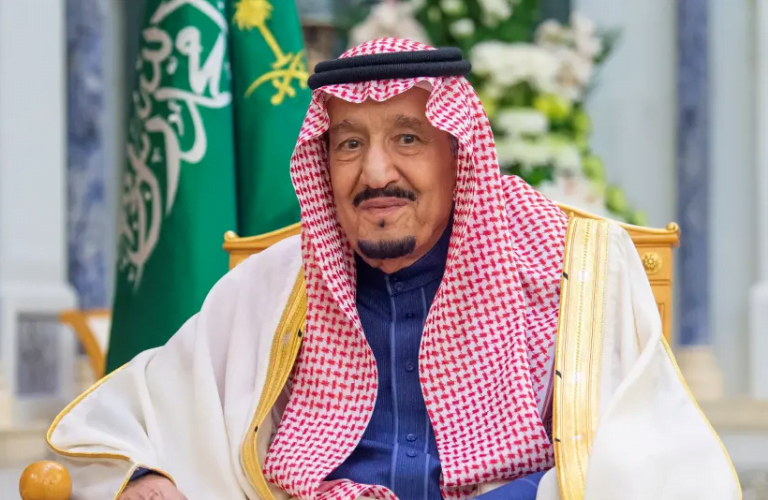
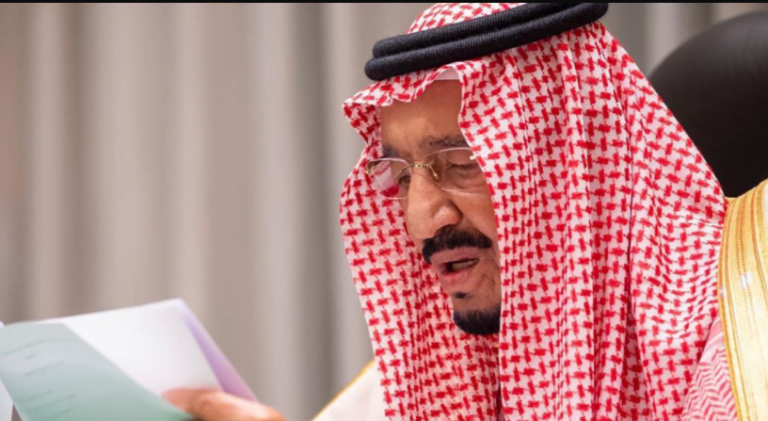
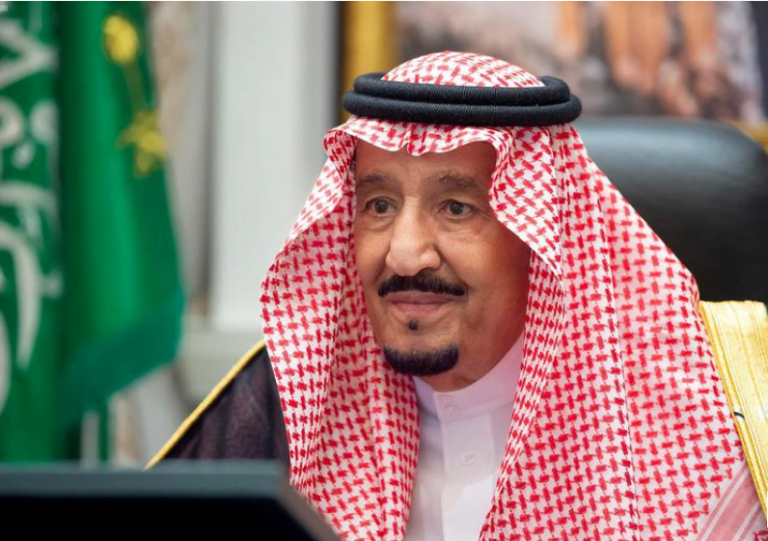
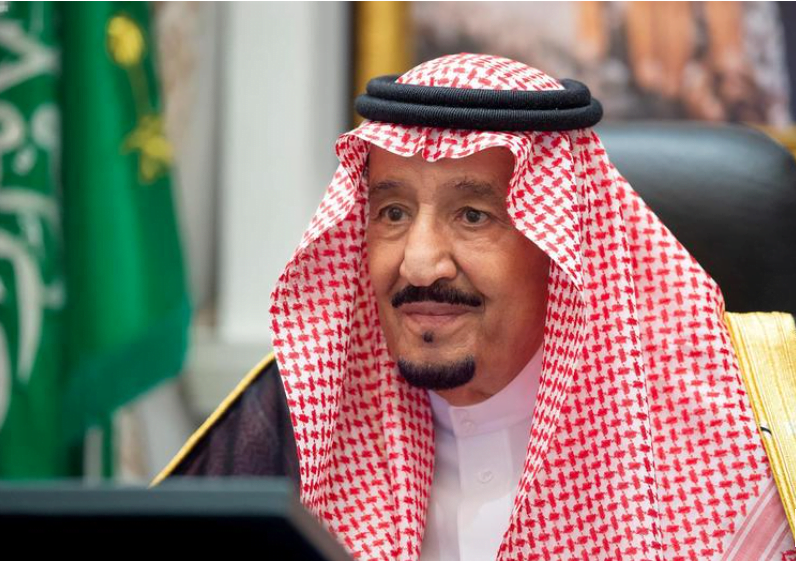
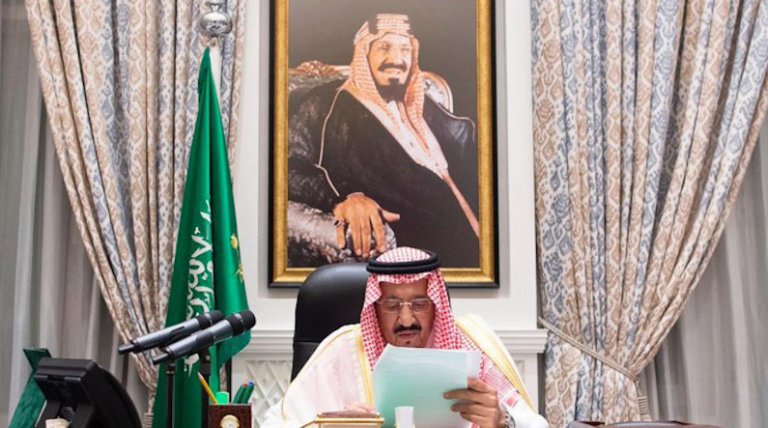
Saudi Kings missed an important chance to behave like a true leader of the Muslim world in his virtual address to UN’s General Assembly, which was tainted with anti-Shiite phobia so familiar in the Sunni Wahhabi sectarian ruling ideology of the ossified kingdom reeling nowadays by the declining oil wealth and a surging Covid-19 pandemic.


In his strongly-worded attack on Iran, Saudi Kings blamed Iran for spreading chaos and instability in the region, called for the disarmament of Iran’s ally in Lebanon, the Hezbollah, and a final solution for the “problem of Iran.”


Inevitably, his speech invoked the memory of Hitler’s venomous search for a final solution for the Jews, once again reminding the world that the threat of genocide against the minority Shiites in the Muslim world remains serious and should not be ignored by the international community. Saudi Kings


At the same time, the Saudi leader omitted any criticism of Israel and defended the recent normalization of relations between Israel and UAE and Bahrain, even though he himself has opted to refrain for the moment from following the same path, which has caused so much uproar among Muslims worldwide, in light of Israel’s incessant land grab and complete disregard for the oppressed rights of Palestinians. Saudi Kings


As a result, the Saudi-led Arab Initiative of 2002, which essentially was a ‘land for peace’ formula backed by the Arab League, has now become defunct, despite the absence of any movement on the part of Israel to respect the rights of Palestinians.


Read More


Also Read: U.S. imposes new Iran sanctions over alleged human rights violation

Not only that, there is strong circumstantial evidence that Israel was behind the massive explosion in Beirut that devastated Lebanon’s capital city, aiming to cripple the well-armed Hezbollah, thus reflecting a combined hard and soft power Israeli offensive against the “axis of resistance” comprising of Iran, Syria, and Hezbollah.

U.S. imposes new Iran sanctions over alleged human rights violation
0
U.S. imposes new Iran sanctions over alleged human rights violation
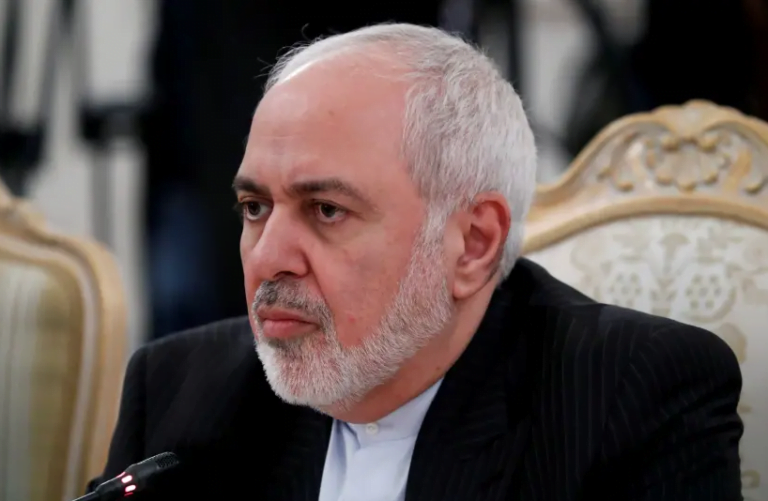
      The U.S. imposes new Iran sanctions over alleged human rights violation


The United States on Thursday blacklisted several Iranian officials and entities over alleged human rights violations, including slapping sanctions on a judge it said was involved in the case of an Iranian wrestler sentenced to death.


This comes three days after the U.S. threatened to reinstate all international sanctions against Iran single-handedly if other UN member countries failed to do so.


The unilateral declaration has been rejected by Iran and other members of the international community, including Washington’s close allies.


“If UN Member States fail to fulfill their obligations to implement these sanctions, the United States is prepared to use our domestic authorities to impose consequences for those failures and ensure that Iran does not reap the benefits of UN-prohibited activity,” U.S. Secretary of State Mike Pompeo said. human rights violation


All parties to the nuclear deal, including the United Kingdom, Germany, France, European Union foreign policy chief Josep Borrell, Russia, and China insisted that the U.S. cannot trigger the snapback mechanism to restore all UN sanctions as the U.S. is no longer a member of the JCPOA, the official name for the 2015 nuclear deal.


China said the U.S. move against Iran is a “self-orchestrated farce.”


Read More


Also Read: Iran: S. Arabia source of instability in region

Russia said the move is “legally and procedurally null and void.”Thursday’s announcement of sanctions is nothing new, but another part of U.S. “maximum pressure” against Iran to force the country to return to the negotiation table and strike a new nuclear deal.The new sanctions targeted Irian Judge Seyyed Mahmoud Sadati, Judge Mohammad Soltani, Branch 1 of the Revolutionary Court of Shiraz, and Adel Abad, Orumiyeh, and Vakilabad Prisons. Pompeo said Sadati, a judge of Branch 1 of the Shiraz Revolutionary Court, presided over a recent trial that led to the sentencing of Navid Afkari, an Iranian wrestler, to death.

Iran: S. Arabia source of instability in region

0
Iran S. Arabia source of instability in region
       Iran: S. Arabia source of instability in region


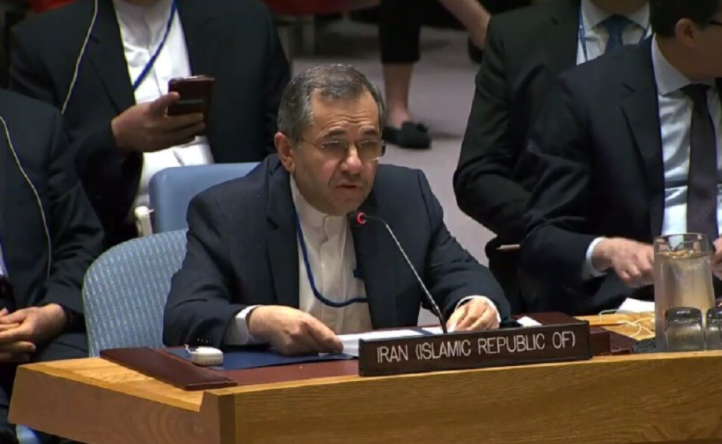
Iran’s Permanent Representative in the United Nations Majid Takht-Ravanchi described Saudi Arabia as the main source of instability in the region, saying that it is a well-established fact that it was the main financial supporter of the Iraqi dictator, Saddam, and aggression against Yemen.


In reaction to the Saudi King’s anti-Iran remarks in UN General Assembly on Wednesday, he categorically dismissed the allegations as baseless and unfounded.


The full text of the statement reads as follows:


“In the name of God the most Compassionate, the Most Merciful


Excellency,


I am writing to you with regard to a statement made by the delegation of the Kingdom of Saudi Arabia, on 23 September 2020, in the course of the general debate of the seventy-fifth session of the General Assembly, wherein unfounded allegations were raised against my country, all of which are hereby rejected categorically.


Indeed, through a series of fabrication and disinformation, Saudi Arabia desperately attempts to distract attention away from its dark long record in harbouring, financing, inducing and arming the most dangerous terrorist networks, disseminating hate speech and extremist ideology, sowing the seeds of sectarian division, pursuing destabilizing, disruptive and subversive policies and practices.


In the region as well as the crimes it continues to commit for over six years in Yemen in flagrant violation of the basic principles of morality and humanity and rules of international law, particularly international humanitarian law, entailing its international responsibility.


Saudi Arabia has been a source of instability in the region for decades.


It is a well-established fact that Saudi Arabia was the main financial supporter of the Iraqi dictator, Saddam, in his eight-year aggression against the Islamic Republic of Iran in which he committed numerous crimes, including the use of chemical weapons against Iranian and Iraqi cities and citizens.


Read More


Also Read: Iran’s Zarif tries to form Russia-China alliance against US

Iran’s Zarif tries to form Russia-China alliance against US

0
Iran’s Zarif tries to form Russia-China alliance against US
Iran’s Zarif tries to form a Russia-China alliance against the US


Iran’s foreign minister Javad Zarif is trying to entice Russia to become closer to Iran through bilateral relations, Iranian media said on Thursday.


He arrived in Moscow to discuss relations with Russia. The goal here is to pave the way for Iran to get around the US embargo and sanctions.


Iran seeks to harness Russia and also China to confront “US lawlessness,” Tasnim News says in Iran.


Zarif praised the “important role of Russia and China in supporting the UN Security Council and countering US illegal actions in the Security Council.” Zarif said:


“The Russian government and its representation in the UN have had the best position alongside China during the difficult recent months.”


He argues that they have “played a leading role in the face of US lawlessness.”


He is referring to the US pushing snapback sanctions this month after having asserted that Iran had violated the 2015 Iran Deal known as the Joint Comprehensive Plan of Action.


Iran says that since the US left the deal in 2018 it has no leverage. The US says it will stop Iran from pursuing a nuclear weapon and ballistic missiles.


Read More


Also Read: Saudi-Iran tensions increase as King condemns Tehran

Iran has thus gone to Moscow to see about getting more support. Iran is also seeking a more close relationship with China.  “Well, we have serious problems in the region,” Zarif said, referring to other issues to be discussed during his visit to Russia. Tasnim noted that the Syrian conflict “requires special coordination between Iran and Russia, and we also need to coordinate with Turkey in the framework of the Astana process.” Iran is seeking a closer relationship with Turkey also and Turkey appears to want to partition Syria and remove the US from eastern Syria. Iran is wary of Turkey conquering too much of Syria  

Saudi-Iran tensions increase as King condemns Tehran

0
Saudi-Iran tensions increase as King condemns Tehran


Saudi Arabia’s King Salman called for the international community to take a firm stance against Iran. The remarkable speech seeks to confront the Iranian regime’s threats to international peace and security, he said.


He also argued that appeasement would not work with Iran. Iranian media and officials slammed Riyadh’s comments.


What is driving the sudden decision for Saudi Arabia to speak up more strongly from the highest level about Iran’s threats, and what are Iran’s likely responses?


The speech was aimed at the United National General Assembly and comes in the wake of the UAE and Bahrain agreeing to normalization with Israel.


The decision by regional states to begin a new round of relations with Israel is seen as part of a wider regional strategic consensus that is linked to Riyadh’s own support for its allies working with Israel.


Saudi Arabia has been threatened by Iran for decades and Iran has increased its rhetoric against Saudi Arabia and Riyadh’s Gulf allies in recent years.


Iran regularly condemns these states, arguing they have betrayed the Palestinian cause and work with Israel and the US. Iran views the US as a great evil and has vowed to “resist” the US and Israel. This “resistance” takes the form of attacks across the Middle East.


Iran has threatened Riyadh in recent years by arming the Houthi rebels in Yemen. Iran provides drone and ballistic missile technology.


Iran also used 25 drones and cruise missiles to attack Saudi Arabia last September. That means that the king’s comments are basically a one-year anniversary of the attack on Abqaiq.


That attack was unprecedented and was an act of war. However, Saudi Arabia acted with restraint. Riyadh has acted with less restraint in Yemen, having intervened in 2015 in the conflict.


Read More


Also Read: Saudi King Uses UN Speech To Call For Comprehensive Solution On Iran

Saudi King Uses UN Speech To Call For Comprehensive Solution On Iran

0
Saudi King Uses UN Speech To Call For Comprehensive Solution On Iran


Saudi Arabia’s King Salman bin Abdulaziz has taken aim at Iran during a speech to the UN General Assembly, calling for a comprehensive solution to contain the Islamic republic and stop it from getting weapons of mass destruction.


“A comprehensive solution and a firm international position are required,” he said in a video statement that was prerecorded and delivered on September 23 during the second day of the UN General Assembly’s virtual general debate. Saudi King


“Our experience with the Iranian regime has taught us that partial solutions and appeasement did not stop its threats to international peace and security,” King Salman said in his debut speech to the 193-member UN General Assembly’s annual meeting, which this year has gone virtual because of the coronavirus pandemic.


He said Iran had exploited a 2015 nuclear deal with world powers “to intensify its expansionist activities, create its terrorist networks, and use terrorism,” adding that this had produced nothing but “chaos, extremism, and sectarianism.”


Read More


Also Read: After snapback sanctions on Iran: A European perspective

The United States quit the pact in 2018 and has since imposed unilateral sanctions on Iran as it pushes Tehran to negotiate a new deal. On September 21 it announced new sanctions against Iran’s Defense Ministry and other bodies involved in its nuclear and weapons program, continuing a policy it describes as “maximum pressure” in response to “malign behavior” by Tehran.All the remaining parties to the nuclear deal and 13 of the 15 UN Security Council members say the U.S. claim on sanctions is void, and diplomats say few countries are likely to reimpose the measures. In his speech, King Salman also expressed support for U.S. efforts to start talks between Israel and the Palestinians and called for disarming Hizballah in Lebanon.

After snapback sanctions on Iran: A European perspective

0
After snapback sanctions on Iran: A European perspective


US President Donald Trump’s withdrawal from the Joint Comprehensive Plan of Action (JCPOA) in May 2018 made his vision for the nuclear accord crystal clear: he wants it dead. On September 20, the United States re-imposed United Nations sanctions on Iran through the snapback mechanism—at least according to the Trump administration.


For the time being, the course chosen by the Trump administration is leading to unprecedented isolation of the United States.


The letter sent by US Secretary of State Mike Pompeo to the UN Security Council on August 20 was considered invalid. Thus, the international community has not consented to the snapback process nor recognized the reestablishment of sanctions after thirty days.


That pointedly includes the E3—France, Germany, and the United Kingdom—which negotiated the JCPOA along with China, Russia, the US, and Iran.


This is not the first time the Trump administration has allowed itself the luxury of challenging the rest of the world in such away.


Nevertheless, we are witnessing a peculiar situation in which the US has created a parallel reality while the international community stands by an opposite legal reality.


The “real reality” is, in fact, a whole other matter; in practice, extraordinarily little trade is possible with Iran due to re-imposed US sanctions. As a result, the US decision is largely symbolic.


The key question now is how Iran responds. Until a few months ago, one could anticipate that Iran would react by withdrawing from the JCPOA. Indeed, this seems to have been the US rationale for snapback—provoke Iran to go too far and destroy the nuclear agreement by its own hand.


This scenario now appears unlikely. First, Iran, along with the rest of the international community, agrees that the reestablishment of UN sanctions does not exist beyond the imagination of the Trump administration.


Read More


Also Read: In U.N. debut, Saudi king calls for comprehensive solution on Iran

In U.N. debut, Saudi king calls for comprehensive solution on Iran

0
In U.N. debut, Saudi king calls for comprehensive solution on Iran
In U.N. debut, Saudi king calls for a comprehensive solution on Iran


Saudi Arabia’s King Salman bin Abdulaziz on Wednesday called for a comprehensive solution on Iran and disarming its affiliate Hezbollah in Lebanon, and expressed support for U.S. efforts to start talks between Israel and the Palestinians during his first address to the United Nations General Assembly.


He said Iran has exploited a 2015 nuclear deal with world powers “to intensify its expansionist activities, create its terrorist networks, and use terrorism,” adding that this had produced nothing but “chaos, extremism, and sectarianism.”


“A comprehensive solution and a firm international position are required,” he told the 193-member General Assembly in a video statement, prerecorded due to the coronavirus pandemic.


The United States quit the Iran nuclear pact in 2018 with President Donald Trump dubbing it the “worst deal ever.”


Read More


Also Read: Why the End of the Iran-Iraq War Haunts Khamenei Today

Washington has since imposed unilateral sanctions and asserts that all countries also have to reinstate U.N. sanctions in an attempt to push the Islamic Republic to negotiate a new deal.But all the remaining parties to the nuclear deal, including longtime U.S. allies, and 13 of the 15 U.N. Security Council members say the U.S. claim on U.N. sanctions is void and diplomats say few countries are likely to reimpose the measures.“Our experience with the Iranian regime has taught us that partial solutions and appeasement did not stop its threats to international peace and security,” King Salman said.On attempts to mediate peace between Israel and the Palestinians, the Saudi monarch said a 2002 Arab peace initiative is the basis for a “comprehensive and just solution” ensuring the Palestinians obtain an independent state with East Jerusalem as its capital.“We support the efforts of the current U.S. administration to achieve peace in the Middle East by bringing the Palestinians and the Israelis to the negotiation table to reach a fair and comprehensive agreement,” he said.

Why the End of the Iran-Iraq War Haunts Khamenei Today

0
Why the End of the Iran-Iraq War Haunts Khamenei Today


The Supreme Leader of the Islamic Republic of Iran has made a number of statements over the years about Resolution 598: the United Nations Security Council’s call for an end to the bloody hostilities of the Iran-Iraq War.


But depending on the context, his remarks have been subject to very different interpretations.


At a time when those close to Ayatollah Khamenei expect him to come out swinging in confrontation with the United States, a reminder of the resolution – and of the need for peace – may have been the opposite of what they expected.


In a speech to mark the 40th anniversary of the start of the Iran-Iraq war, the Supreme Leader of the Islamic Republic of Iran startled some by calling the UN Security Council’s Resolution 598 of January 20, 1987 – and the ceasefire it brought about – a “wise” move.


At the time, Iran’s first Supreme Leader Ayatollah Khomeini had interpreted the adoption of the resolution as drinking a “poisoned chalice.”


But in his latest missive, Supreme Leader Ali Khamenei said: “If [this] was not wise, Imam Khomeini would not have done it.”


In an online address to mark the anniversary of the war, which he referred to as the “Sacred Defence,” he said: “Despite the whole-hearted support that many countries in the world offered to the Ba’athist regime of Iraq, Iran was able to be victorious in the war.”


Over the last 15 years, Khamenei’s associates and Revolutionary Guards commanders have repeatedly attacked former president Akbar Hashemi Rafsanjani, one of the architects of the Islamic Republic, accusing him of imposing the peace resolution on Ruhollah Khomeini.


Khamenei, however, had remained silent during the years of the attacks on Hashemi Rafsanjani.


Now, five years after Hashemi Rafsanjani’s death, he has made similar remarks to him in defense of the resolution.


Read More


Also Read: Fact Check: Does Iran Have One of the Strongest Militaries in the World?

Fact Check: Does Iran Have One of the Strongest Militaries in the World?

0
Fact Check Does Iran Have One of the Strongest Militaries in the World
Fact Check: Does Iran Have One of the Strongest Militaries in the World?


“By the reckoning of strategic research institutes in the world, we are currently among the superior powers and have the strongest armed forces.”


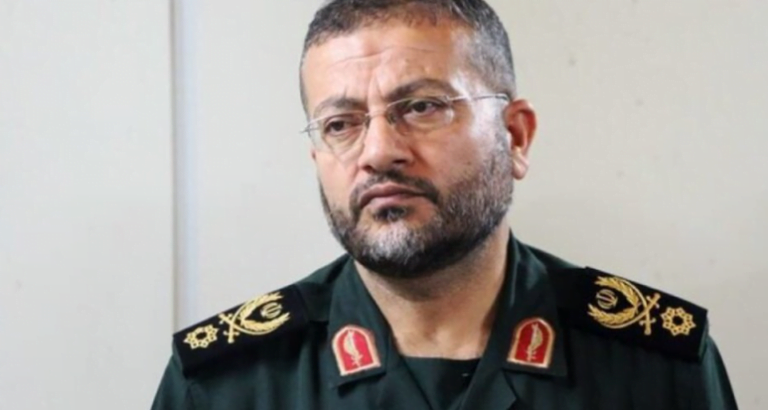
This from Brigadier General Gholamreza Soleimani, commander of the Basij Resistance Forces, at a meeting of high-ranking officials in the Ghadir district of Tabriz on Wednesday, September 17.


The paramilitary chief did not specify exactly which “institute of strategic studies” had named Iran as one of the world’s top military powers, or indeed, what was meant by “superior power”.


Can Iran be counted among the top five military powers in the world? Can Iran even be counted among the top 10?


Does the Iranian military rank higher than others in the region? In this report, IranWire tries to establish if this claim can be verified.


How Can We Measure Military Strength?


At first glance, because of the Iranian leadership’s intensive focus on building military capability – and devoting a large portion of Iran’s public spending to institutions affiliated with the Islamic Republic’s armed forces – Brig.


Gen. Soleimani’s claim almost seems plausible.


But a cursory review of expert analyses and publicly-available data from global security institutions suggests otherwise.


For the purposes of this study, IranWire has researched some of the metrics used to map out countries’ military might.


The aspects of Iran’s military we will be analyzing here are:


  • The size of Iran’s ready-to-serve army;
  • The size and power of the Iranian air force;
  • The level of financial resourcing of the Iranian military;
  • Iran’s nuclear power.


How Many Soldiers Does Iran Have?


International statistics indicate that Iran’s strongest military accolade is the size of its army. Strongest Militaries


In its 2020 report on the world’s largest armies, the Germany-based Statista Institute reported Iran has 523,000 active military personnel on its books: putting it some way behind Russia (1million), the US (1.4m) or China (2.18m), but still enough to afford.


Read More


Also Read: Who were main arms suppliers to Saddam in war against Iran