Who were main arms suppliers to Saddam in war against Iran
During the eight years of the Imposed War (1980-88) against Iran, many countries provided financial and military aid to then Iraqi President Saddam Hussein, with US, France, and Germany as major contributors.
The following is the list of the countries which aided Iraq during the (1980-88) Imposed War against Iran:
The United States:
The United States was Saddam’s most important encourager to attack Iran.
With the fall of the imperial regime in Iran, the Americans had no more access to the vast oil resources of our country, and immediately after the victory of the Islamic Revolution, they started their hostile campaigns and attacks against Iran.
The failed Tabas Military attack, the Nojeh coup, and dozens of other plots were some of the US government’s anti-Iran moves at the time.
When the Americans failed in all these plots, they encouraged the then Iraqi President Saddam Hussein to attack Iran.
In the second year of the war, when the Islamic army ousted the occupying forces, the US government simultaneously launched four operations in support of Saddam and against Iran:1) Operation Staunch: Diplomatic attempts to identify the entry points of weapons into Iran and prevent the shipment of military equipment to the country2) Financial operations: Efforts to meet the financial needs of Iraq through American companies3) Intelligence operations: Providing military information on Iran to Iraq4) Anti-Iranian operations in international organizations: Condemnation of Iran in these organizations and preventing Iranian officials from conveying their rightful messages to other countries.The Soviet Union:A major part of the weapons Iraqis needed during the war was supplied by the Soviet Union. The country greatly assisted Saddam in the war by providing him with modern equipment and weapons.
Iran dismisses US efforts at UN sanctions as currency drops
Iran dismissed U.S. efforts to restore all U.N. sanctions on the country as mounting economic pressure from Washington pushed the local currency drops ever on Sunday.
Iran’s currency dropped to 272,500 to the U.S. dollar at money exchange shops across Tehran.
The rial has lost more than 30% of its value to the dollar since June as sweeping U.S. sanctions on Iran continue to crush its ability to sell oil globally.
Iran’s currency was at 32,000 rials to the dollar at the time of Tehran’s 2015 nuclear deal with world powers, which was signed by the Obama administration but which the Trump administration pulled the U.S. from.
As the currency plummeted, Iran’s foreign ministry spokesman Saeed Khatibzadeh slammed the Trump administration’s declaration Saturday that all U.N. sanctions against Iran have been reimposed because Tehran is not complying with the nuclear deal. currency drops
The U.S. move has been rejected as illegal by most of the rest of the world and sets the stage for an ugly showdown at the world body ahead of its annual General Assembly this week.Even before the U.S. declaration, other Security Council members had vowed to ignore it.They say the U.S. lost legal standing to invoke snapback sanctions when President Donald Trump withdrew from the nuclear deal in 2018 and began reimposing U.S. sanctions on Iran.The Iranian government spokesman said the snapback sanctions have only happened in “the fantastical world” of the Trump administration. He said the U.S. stands on the wrong side of history.“They are attempting to make everyone believe it, but nobody is buying it except for themselves,” Khatibzadeh said during his weekly press briefing on Sunday.“It is a television show whose sole presenter, viewers, and those cheering it on are Mr. Pompeo himself and a handful of others.
Intl. reactions to US claim on returning UN sanctions on Iran
The US claims on the implementation of the so-called ‘Snapback’ mechanism and return of all UN sanctions against Iran were met with international reactions.
Under the 2015 nuclear deal that Iran struck with six major powers; the UK, China, France, Germany, Russia, and the US, the UN conventional arms embargo is set to expire on October 18.
On August 14, the 15-member UNSC unanimously rejected a US resolution to extend an arms embargo on Iran, which is due to expire in October in line with a landmark nuclear deal, officially known as the Joint Comprehensive Plan of Action (JCPOA).
US is also claiming to still be a JCPOA participant as it has sent a letter to the UN Security Council on activation of a mechanism of the nuclear deal.
This is while the US has officially ended its participation in the JCPOA in May 2018, and has spared no effort to destroy the agreement.
All other JCPOA participants and most of the UNSC members argue that the US is no longer a JCPOA participant and hence cannot use its provisions.
The majority of the UN Security Council members said they would not support the United States’ move to snapback sanctions since the United States unilaterally withdrew from the nuclear agreement in 2018.
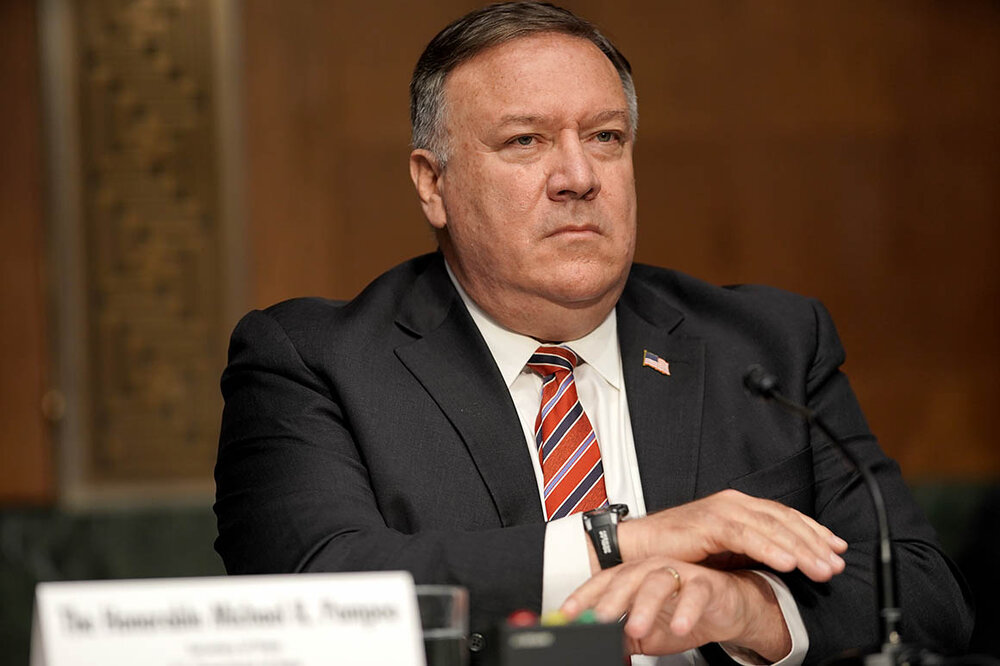
However, US Secretary of State Mike Pompeo claimed Saturday evening that the US has reimposed UN sanctions against Iran.
“The United States expects all UN Member States to fully comply with their obligations to implement these measures. US claim
In addition to the arms embargo, this includes restrictions such as the ban on Iran engaging in enrichment and reprocessing-related activities, the prohibition on ballistic missile testing and development by Iran, and sanctions on the transfer of nuclear- and missile-related technologies to Iran, among others.
Allies dismiss US announcement reimposing UN sanctions on Iran
The US has defied criticism from allies to announce the reimposition of sanctions against Iran, promising swift punishment to anyone who tried to violate them.
Saturday’s announcement of the so-called “snapback” on sanctions, which was announced last month, also drew a sharp rebuke from Tehran, which called on the rest of the world to unite against US “reckless actions”.
“Today, the United States welcomes the return of virtually all previously terminated UN sanctions on the Islamic Republic of Iran,” Secretary of State Mike Pompeo said in a statement.
He said the measures were back in effect from 8 pm Washington time.
The Trump administration also promised to “impose consequences” on any UN member state which does not comply with the measures.
The sanctions in question were lifted in 2015 when Iran signed on to an international agreement not to seek to build nuclear weapons.
But President Donald Trump withdrew the US from the landmark accord in 2018, saying the deal, negotiated by his predecessor Barack Obama, was insufficient. He then renewed and even strengthened Washington’s own sanctions.
At the moment, the US is insisting it is still a participant in the agreement that it stormed out of, but only so it can activate the snapback option, which it announced on 20 August.
Virtually every other member of the Security Council disputes Washington’s ability to execute this legal pirouette, and the council has not taken the measure any further. On Sunday, two permanent council members – France and the UK – issued a joint statement along with non-permanent member Germany saying Pompeo’s “purported notification” was “incapable of having any legal effect”.Russia’s foreign ministry also said in a statement that Washington’s statements lacked legal authority.
Trump to declare Iran sanctions ‘snapback’ in virtual address to UN
Though he has been looking for opportunities to promote himself as a dealmaker on the world stage as he campaigns for reelection, President Donald Trump finally decided that he won’t come in-person to deliver his speech to the UN General Assembly in New York on Tuesday next week.
Like most world leaders amid covid19 constraints, he will deliver his remarks to the 75th UNGA opening session virtually.
Trump’s special representative for Venezuela and Iran Elliott Abrams, speaking to reporters this week, previewed a big administration show of force to claim the snapback of UN sanctions on Iran coming into force on Saturday night at 8 pm.
“As you know, virtually all UN sanctions on Iran will come back into place this weekend at 8:00 p.m. Eastern Time on Saturday the 19th,” Abrams told reporters on a State Department call Wednesday.
“The arms embargo will now be re-imposed indefinitely and other restrictions will return, including the ban on Iran engaging in enrichment and reprocessing-related activities, the prohibition on ballistic missile testing and development, and sanctions on the transfer of nuclear and missile-related technologies to Iran.”
“We expect all UN member states to implement the UN sanctions fully,” Abrams continued.
Abrams, who added the Iran portfolio to his Venezuela duties this month, denigrated the other world powers that continue to support the 2015 Iran nuclear deal—the Joint Comprehensive Plan of Action (JCPOA)—that Trump quit in 2018 as having an “almost religious commitment” to it, and urged them to “recognize…reality and join us in imposing sanctions on Iran.”
Nuclear deal with Iran to be killed by Trump before UN speech
The Trump administration’s push to kill off what’s left of the 2015 nuclear deal with Iran comes to a head this weekend at the United Nations, where allies and adversaries argue the US effort to restore sanctions is groundless and a diplomatic crisis is set to explode.
The US bid to restore all UN sanctions on Iran — which Secretary of State Michael Pompeo contends will go into effect on Sunday in the middle of the UN General Assembly — deepens a chasm between the US and most other nations.
Even European allies say the US has no right to invoke the accord’s “snapback provision because President Donald Trump quit the multinational deal to restrain Iran’s nuclear program two years ago.
The issue is already sowing anger and division. The US and a handful of Mideast allies are declaring the end of the nuclear deal while most other Security Council members — from Russia and China to Germany, the UK, and France — disagree with the latest example of Trump’s “America First” foreign policy.
“The US will obviously put pressure on others to implement sanctions,” said Ashish Pradhan, a senior UN analyst at the International Crisis Group, which argued in a report that the coming US election will decide the outcome of the dispute.
“I’m sure some of the Gulf states, Israel and others will issue some statements saying they recognize the re-imposition of sanctions. But on the UN Security Council, it seems like they’ll hold the fort.”
The US asserts that all of the UN resolutions on Iran that were in place before the 2015 deal — from a ban on arms deals to restrictions on the Islamic Republic’s ballistic missile activity and its nuclear enrichment — will go back into effect.
E3 says Iran sanctions relief to continue beyond Sep. 20
Britain, France, and Germany have told the UN Security Council that the sanctions relief provided by the world body for Iran – agreed under a 2015 nuclear deal – will continue beyond September 20.
On Friday, the permanent representatives of the UK, Germany, and France said in a joint letter to the 15-member UNSC that any decision or action is taken to restore the UN sanctions “would be incapable of legal effect,” Reuters reported.
“In this letter, we expressed our shared view that the purported notification under paragraph 11 of UNSCR 2231 (2015) received from the United States of America and circulated to the UN Security Council Members is incapable of having a legal effect and so cannot bring into effect the procedure foreseen under OP 11.
It flows from this that any decision and actions which would be taken based on this procedure or on its possible outcome would also be incapable of having any effect,” read part of the joint letter by the UN envoys of the three European countries, known as E3.
The announcement comes in outright rejection of the assertions by the United States that the bans will snap back then.
In 2015, Iran clinched a landmark nuclear deal with a group of countries then known as the P5+1 — US, Britain, France, Russia, China, and Germany. However, US President Donald Trump in 2018 unilaterally pulled his country out of the deal – officially known as the Joint Comprehensive Plan of Action (JCPOA) – and re-imposed the sanctions that had been lifted under the deal. On August 20, US Secretary of State Mike Pompeo said that Washington formally triggered a 30-day process at the UNSC leading to a return of virtually all the UN sanctions on Iran on September 20.
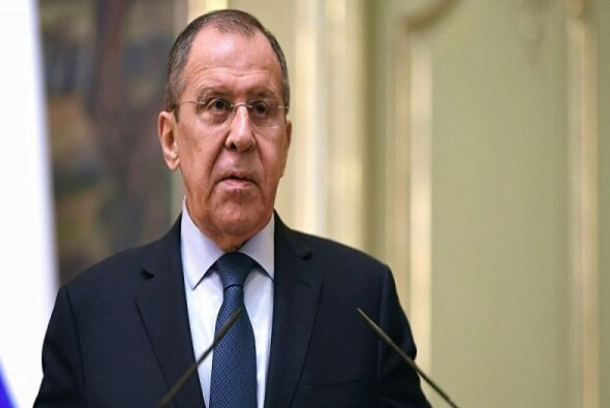
Sating that the US sanctions on Iran are futile, Russian Foreign Minister Sergey Lavrov said that the sanctions that are being used in a bid to strangle Iran did not work before and will not work now.
“The problem is that recently, as you know, the US authorities have demonized Iran, which got labeled as the main problem of the region in question, as well as of other regions of the world where Iran gets accused of meddling in local countries’ internal affairs, one way or the other,” said Lavrov in an exclusive interview with Sputnik.
“The United States essentially seeks to set the whole dialogue on Mideastern and North African problems on an anti-Iranian track,” he added.
“First of all, that is futile, as a reliable and sustainable resolution of problems is possible only through agreements between all parties involved, while the entire current logic of the US policy is set on making Iran the focus of all containment and punishment efforts, with regime change being presented as the only thing that would let the whole region breathe freely,” Lavrov said, stressing, “That is a dead end.”Russian Foreign Minister went on to say, ” The sanctions that are being used in a bid to strangle Iran did not work before and will not work now. Iran has expressed its readiness for dialogue on numerous occasions, and that readiness remains – a readiness for dialogue that cannot be based on ultimatums that the US side periodically brings forth. We will help start such a dialogue. “”Together with the European states and China, we stand for the JCPOA on settling the Iranian nuclear issue, which was approved by the UN Security Council in 2015, and which is now being destroyed by the US.
Two weeks since the religious holidays, as predicted, Iran now appears to be on the brink of a third wave of domestic coronavirus outbreak.
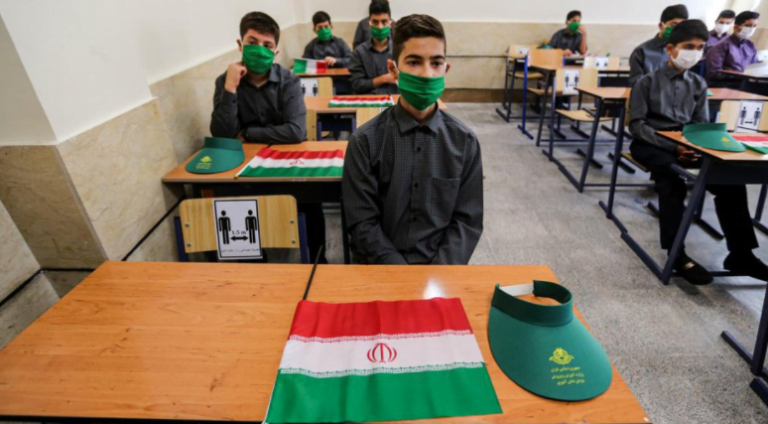
The most significant contributing factors in the recent surge in cases are festivities and gatherings during the holy month of Muharram, holiday travel, and, additionally, the recent reopening of schools and universities.
“The reason fewer children were infected during the first wave was that the schools were closed in March,” he said.
“But now more children have been afflicted, this is speeding up the transmission of the virus from them to other members of their families. In this new phase, we are losing many elderly people.”
It followed news the previous day that the number of coronavirus cases in Tehran alone had soared from 900 to 1,800 in a week.
Payam Tabarsi, the vice president of Tehran’s Masih Daneshvari Hospital, warned that the number of Covid-19 outpatients had almost tripled. “Unfortunately,” he added, “we are getting close to a third wave.”
Health minister Saeed Namaki claimed: “Because of the new surge that is gathering pace in the country, I did not sleep a wink last night.”
Like many other Iranian officials, Namami praised the organizers of Muharram ceremonies for following the guidelines, but blamed holiday travelers who ignored “our pleadings to avoid traveling.” In other words, the events were not at fault – just those that attended them.
The situation in Tehran appears to be being mirrored across the country, with at least 27 of 31 Iranian provinces now coed “red” or “orange”: that is to say, in a state of high alert.
But on Wednesday the health minister also conceded that the color-coding system officials have deployed for the past few months could be confusing and counterproductive.
Trump eyes executive order to punish arms trade with Iran
US President plans to issue an executive order allowing him to impose US sanctions on anyone who breaches a conventional arms embargo against Iran, sources said on Thursday.
In a report, Reuters claimed that US President Donald Trump plans to issue an executive order allowing him to impose US sanctions on anyone who violates a conventional arms embargo against Iran.
The sources, who spoke to Reuters News Agency on condition of anonymity, said the executive order was expected to be issued in the coming days and would allow the US President to punish violators with secondary sanctions, depriving them of access to the US market.The White House did not immediately respond to a request for comment.The order comes in advance of next month’s expiry of a United Nations arms embargo on Iran.Under the 2015 nuclear deal that Iran struck with six major powers – the United Kingdom, China, France, Germany, Russia, and the US – the UN conventional arms embargo is set to expire on October 18.The US, which abandoned that deal in May 2018, claimed it has triggered a “snap back,” or resumption, of all UN sanctions on Iran, including the arms embargo, which would take effect at 8 pm on Saturday night (00:00 GMT on Sunday).This is while the other parties to the nuclear deal and most of the UN Security Council have said the US has no right to reimpose the UN sanctions and that the move has no legal effect.The US, which abandoned that deal in May 2018, claimed it has triggered a “snap back,” or resumption, of all UN sanctions on Iran, including the arms embargo, which would take effect at 8pm on Saturday night (00:00 GMT on Sunday).This is while the other parties to the nuclear deal and most of the UN Security Council.