Home Blog Page 140

Iranian Kurd in Danger of Being Iran’s Next Executed Political Prisoner, Lawyer Says

0
Iranian Kurd in Danger of Being Iran’s Next Executed Political Prisoner, Lawyer Says


An Iranian lawyer says his minority Kurdish client is at imminent risk of being Iran’s next political prisoner to be executed following the Saturday execution of an Iranian wrestler who had joined a peaceful anti-government protest.


Speaking to VOA Persian on Monday from Tehran, lawyer Saleh Nikbakht said Iran’s Supreme Court had rejected his request to grant a retrial to his client, Heydar Ghorbani, leaving Ghorbani’s death penalty in place and enabling authorities to carry it out at any time.


Ghorbani was arrested in October 2016 in Kamyaran County of Iran’s Kurdistan province in connection with the deaths of three members of Iran’s top military force, the Islamic Revolutionary Guard Corps (IRGC), in September.


Rights activists have said Iran’s judiciary sentenced Ghorbani to death on charges including engaging in an armed attack that killed the IRCG personnel, being an accessory to murder, and being a member of the outlawed Democratic Party of Iranian Kurdistan rebel group.


In 2017, Ghorbani appeared on a program on the Iranian state network Press TV, “The Death Driver,” and seemingly confessed driving a car of DPIK rebels who authorities said were involved in the September 2016 incident.


Family members have said Ghorbani was tortured into making a false confession. Rights activists say this is a common pressure tactic used by Iranian authorities seeking to create pretexts for harsh sentences against political prisoners when other evidence of serious crimes is lacking.


Nikbakht said Iran’s Supreme Court upheld Ghorbani’s death sentence in an August 6 ruling, and on September 5 rejected the request for a retrial. The lawyer said the court informed his client of the decision on Sunday.


Iranian state media had not mentioned the Supreme Court action as of late Wednesday. But Ghorbani’s brother Hassan sent a video message to VOA Persian on Tuesday confirming that the Supreme Court rejected the retrial request and saying family members were in shock.


Read More


Also Read: Saturday showdown set as U.S. to declare UN sanctions on Iran are back

Saturday showdown set as U.S. to declare UN sanctions on Iran are back

0
Saturday showdown set as U.S. to declare UN sanctions on Iran are back
    Saturday showdown set as U.S. to declare UN sanctions on Iran are back


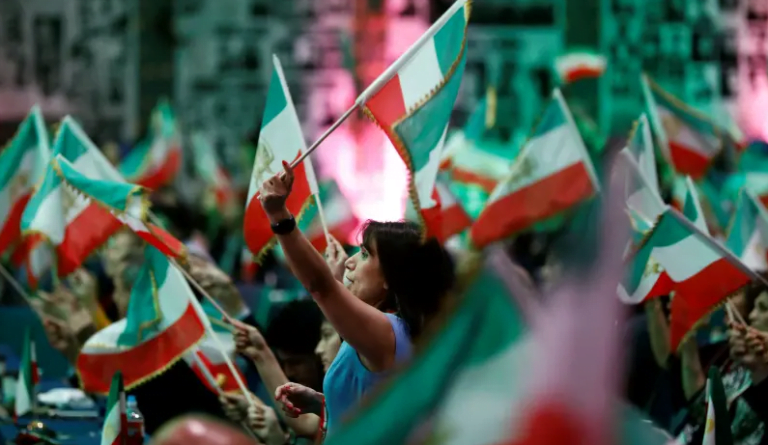
In defiance of overwhelming opposition, the United States is preparing to declare that all international sanctions against Iran have been restored.


Few countries believe the move is legal, and such action could provoke a credibility crisis at the United Nations.


Virtually alone in the world, the Trump administration will announce on Saturday that UN sanctions on Iran eased under the 2015 nuclear deal are back in force.


But the other members of the UN Security Council, including U.S. allies, disagree and have vowed to ignore the step.


That sets the stage for ugly confrontations as the world body prepares to celebrate its 75th anniversary at a coronavirus-restricted General Assembly session next week.


The question is how the Trump administration will respond to being ignored.


It already has slapped extensive sanctions on Iran but could impose penalties on countries that don’t enforce the UN sanctions it claims to have reimposed.


A wholesale rejection of the U.S. position could push the administration, which has already withdrawn from multiple UN agencies, organizations, and treaties, further away from the international community.


In the midst of a heated campaign for reelection, U.S. President Donald Trump plans to address Iran in a speech to the General Assembly on Tuesday.


Officials say he will also touch on his brokering of agreements for Israel and the United Arab Emirates and Bahrain to normalize relations in part to solidify a regional bulwark against Iran.


And, as he seeks to demonstrate statesmanlike credentials ahead of the election, Trump has injected another element of uncertainty into the mix by threatening to retaliate “1,000 times” harder against Iran if it attacks U.S. personnel overseas.


His tweeted warning came earlier this week in response to a report that Iran is plotting to assassinate the U.S. ambassador to South Africa in retaliation for the U.S. killing of a top Iranian general at the beginning of the year.


Read More


Also Read: India woos Iran to keep China away from Chabahar

India woos Iran to keep China away from Chabahar

0
India woos Iran to keep China away from Chabahar


India seems to have grown uneasy over the growing closeness between Iran and China, as the two countries hold negotiations to finalize a 25-year strategic deal, Anadolu Agency has learned.


Speculation is rife that the $400 billion deal could pave the way for China’s investment in Iranian ports, including the strategic Chabahar Port in the southeastern Sistan-Baluchistan province.


India has high stakes in Chabahar, which is its most important gateway to Afghanistan and Central Asia. The port city is located 1,400 kilometers from India’s commercial capital Mumbai.


Last week’s whirlwind, unscheduled visits by two senior Indian ministers to Tehran, which sent regional watchers and policy wonks into a tizzy, has to be seen in that context.


Rajnath Singh became the first Indian Defense Minister to visit Iran in almost two decades. He made a brief stopover in Tehran last Saturday and held talks with his Iranian counterpart Amir Hatami.


Singh’s surprise visit, Indian Foreign Minister S. Jaishankar had a brief stopover in Tehran on Tuesday, en route to Moscow to attend a Shanghai Cooperation Organization summit.


The two sides said the agenda of the meetings was to “take forward bilateral cooperation” and “discuss important regional security issues.”


While the official statements left everyone guessing, the two back-to-back visits expectedly generated a buzz in both Iran and India. Singh’s visit, in particular, was unusual.


Read More


Also Read: Iran’s axis worried about Israel-Saudi ties

According to sources, the visiting Indian ministers sought during discussions with Iranian officials to get assurances that their involvement in Chabahar will not be affected by the Iran-China deal. Iran, India, and Afghanistan had signed a trilateral transit agreement in 2016 that allowed the transfer of Indian goods to Afghanistan via Chabahar Port, ending India’s dependence on Pakistan’s ports.- Indian concerned Delhi and Tehran also discussed a memorandum of understanding to construct a 628-km railway line.

Iran’s axis worried about Israel-Saudi ties

0
Iran’s axis worried about Israel-Saudi ties


Iran is concerned about the next steps Israel and its new Gulf partners will take in the wake of the Abraham Accord signed in Washington on Tuesday.


Tehran’s displeasure is difficult to measure, but the overall context and hints in pro-Iranian media give away the sense that the regime and its allies and proxies in the Middle East view the potential Saudi-Israel relationship with concern.


Iran has been zig-zagging between hyperbolic condemnation of the UAE and Bahrain for working with Israel and trying to ignore the setback that its threats have caused.


Iran’s threats and its attempt to leverage the Iran Deal of 2015 so it can act with impunity throughout the region have fueled the Israel-Gulf relationship.


Iran believed incorrectly that it had a blank check after the JCPOA signing to basically take over the Middle East.


It sent drones and missiles in increasing numbers to Yemen in 2015, forcing Riyadh’s hand and bringing Saudi Arabia and the UAE into Yemen’s civil war.


The kingdom didn’t want an Iranian-backed proxy on its doorstep.


Once Saudi Arabia was in Yemen, the Iranians rapidly increased production of technical assistance for the Houthis.


Soon, ballistic missiles and drones were raining down on southern Saudi Arabia and even targeting Riyadh.


But Iran wasn’t satisfied even with this apparent accomplishment. It targeted Saudi Arabia’s oil pumping station at Al-Duadmi in mid-May 2019 using drones allegedly sent to Kataib Hezbollah in Iraq.


Read More


Also Read: A NEW LOOK AT IRAN’S COMPLICATED RELATIONSHIP WITH THE TALIBAN

Then Iran ordered the Houthis to strike at the Shaybah oil field near the UAE border. The attack was a message and it was sent in August 2019.In September 2019, Iran went one step further, using 25 drones and cruise missiles to attack Saudi Arabia’s Abqaiq facility. Iran, for some reason, has believed that the more it attacks Saudi Arabia.

New look at Iran complicated relationship with Taliban

0
A NEW LOOK AT IRAN’S COMPLICATED RELATIONSHIP WITH THE TALIBAN


Eight years ago, I took part in a meeting among people from several different countries IRAN, various European countries, Afghanistan, Turkey, and the United States. RELATIONSHIP RELATIONSHIP 


I was a part-time consultant to the U.S. government at the time, and most of the group had been or — at least — were close to government officials.


These are known as “track-two meetings.” During one of the sessions, a European participant charged Iran with supplying military aid to the Taliban.


A retired Iranian diplomat responded indignantly. “How could Iran supply aid to its sworn enemies?” he asked.


I responded that Iranians were not such simple-minded people that they could have only one enemy or one policy at a time.


Iran’s position on the agreement between the United States and the Afghan Taliban signed in Qatar earlier this year may likewise appear confusing.


In 1998, Iran nearly went to war with Afghanistan, then mostly under Taliban rule, when Pakistani fighters allied with the Taliban killed 11 Iranian civilians in Mazar-i Sharif, including nine diplomats.


In 2001, Iran helped the United States remove and replace Taliban rule in Afghanistan with both military and intelligence support on the ground in Afghanistan and diplomatic support at the U.N.


talks on Afghanistan in Bonn. For years, Iran opposed political outreach to the Taliban and rejected any distinction between them and al-Qaeda.


As the U.S. military presence in Afghanistan approached its 20th anniversary and the United States withdrew from the nuclear agreement with the Islamic Republic and imposed additional sanctions, Iran echoed the Taliban in calling for the complete withdrawal of U.S. military forces from Afghanistan, the main Taliban demand that the United States met in the Doha agreement.


Iran also began supplying Taliban commanders in western Afghanistan with weapons both to send a message to the United States and to deal with threats on or close to the Afghan-Iranian border.


Read More


Also Read: Israel-UAE deal: Iran and Turkey must form a united front

Israel-UAE deal: Iran and Turkey must form a united front

0
Israel-UAE deal Iran and Turkey must form a united front
           Israel-UAE deal: Iran and Turkey must form a united front


The UAE-Israel peace agreement, which will be formalised on 15 September, will have a massive impact on the geopolitics of the Middle East in the long term.


Framed primarily as a counter against Iranian influence in the region, the first peace deal between Israel and an Arab Gulf country goes much further than that.


Unlike Israel’s previous peace agreements with Egypt in 1979 and Jordan in 1994, which remained at the formal state level and did not enable deeper penetration of society, the rapprochement with the UAE brings Israel into the heart of the region.


By developing political, economic, and cultural capital in the UAE, Israel potentially gains the ability to influence events across the region, in relation to Yemen, other Gulf states, and even Iraq.


Strategic alliance


In that context, the deal is very bad news for Turkey and Qatar, the two states at the forefront of developing an alternative ideological-security regional architecture distinct from the conservatism of other Arab Gulf states, Egypt, and Iran’s so-called Axis of Resistance.


To prevent the UAE-Israel alignment from gaining game-changing strategic momentum in the years ahead, Iran, Turkey, and Qatar will have to work more closely together, aligning not only their politics and economies but crucially their strategic postures as well. Israel-UAE deal


Read More


Also Read: The 1988 Massacres Still Haunt the Islamic Regime in Iran

Turkey views Iran as a regional rival, but this mindset will have to change; otherwise, an alliance between Arab conservatism and Israeli expansionism may well establish a strategic advantage in the not-too-distant future. There is little doubt that Iran has the most to lose from the UAE-Israel rapprochement – even more than the Palestinians. Despite Emirati protestations that the deal is not aimed at Iran, the Islamic Republic has identified the deal as a major threat to its regional strategic interests.The Islamic Revolutionary Guard Corps (IRGC) issued a strongly worded statement describing the deal as “historical foolishness” and “clear treason”, noting that it would accelerate Israel’s “annihilation”. Supreme Leader Ayatollah Ali Khamenei echoed these sentiments, lambasting Emirati leaders for their “treason” and expressing confidence that the deal “will not last long”.

The 1988 Massacres Still Haunt the Islamic Regime in Iran

0
The 1988 Massacres Still Haunt the Islamic Regime in Iran


The Shah of Iran left the country in January 1979 after the Islamic revolution.


A month later, the leader of the revolution, Ayatollah Ruhollah Khomeini, returned to Iran from exile in France.


In December 1981, Amnesty International issued a report stating that more than 3,000 individuals had been executed by the newly born Islamic Republic since Khomeini’s return.


Two months later, in February 1982, the organization reported that in fact more than 4,000 individuals had been executed since the victory of the Islamic revolution in 1979.


As ugly as this history is, the darkest spot on the Islamic regime’s human rights record is the 1988 prison massacres.


In the summer of 1988, thousands of political opponents disappeared from the country’s prisons and were later reported to have been executed.


Their bodies were never returned to their families. Many of them were buried in mass graves all over the country, among them the Khavaran cemetery in Tehran.


Although it is still unknown how many were executed that summer, Amnesty International says the figure is at least 5,000.


The executions were ordered by Ayatollah Khomeini himself, and they took place during the premiership of Mir-Hussein Mousavi. Mousavi, a Khomeini loyalist, initially took on the role of the Islamic Republic’s foreign minister.


He then served as prime minister from October 1981 through August 1989.

Read More

Also Read: Iran reportedly plotting to kill US ambassador to South Africa

In the 2009 presidential election, Mousavi was one of two reformist candidates who ran against the conservative Mahmoud Ahmadinejad. The latter was victorious, but Mousavi accused him of vote-rigging. This caused one of the largest crises in the history of the Islamic regime, with hundreds of thousands pouring into the streets in protest. Some supported Mousavi while others protested the very existence of the Islamic regime. Ever since then, Mousavi has been a symbol for both Iranians and the Western world.

Iran reportedly plotting to kill US ambassador to South Africa

0
Iran reportedly plotting to kill US ambassador to South Africa
        Iran reportedly plotting to kill US ambassador to South Africa


US intelligence officials believe Iran is plotting to kill the American ambassador to South Africa, Lana Marks.


They think she is being targeted as retaliation for the assassination in January of Gen. Qassem Soleimani, the commander of the Islamic Revolutionary Guard Corps’ (IRGC) Quds Force, in a drone attack ordered by the Trump administration.


Authorities first became aware of a general threat to Marks in the spring, but more specific details have reportedly emerged in recent weeks.


US officials who have seen the intelligence reports told the Politico website that the 66-year-old is only one of a number of potential targets under consideration by Iran as payback for Soleimani’s death.


They said her long friendship with President Donald Trump might be the main reason why she has been targeted by the Iranian government.


However, the location of her posting could also be a factor, according to Hussain Abdel Hussain, a writer, and political analyst in Washington.


“The Iranian choice of the country (in which to plan an attack) depends on the reach of the IRGC’s network,” he said.


“South Africa suffers one of the world’s highest crime rates, and this offers terrorist networks such as the IRGC fertile ground to grow, spread and use terror as a tool for projecting global influence.”


The US officials said staff at the Iranian embassy in Pretoria are involved in the plot to kill Marks. In a message posted on Twitter, officials at the embassy dismissed the accusation as baseless and promised a further response later.


Read More


Also Read: Iran warns US against ‘strategic mistake’ after Trump’s threat

Despite the plotting, any officially sanctioned attempt by Iran to kill Marks, or any other target, is unlikely, according to Abdel Hussain.“Except for the missiles launched at Ain Al-Assad air base in Iraq (on Jan. 8, five days after Soleimani was killed), for which Iran.

Iran warns US against ‘strategic mistake’ after Trump’s threat

0
Iran warns US against 'strategic mistake' after Trump's threat
        Iran warns the US against ‘strategic mistake’ after Trump’s threat


Iran has warned the United States against making a “strategic mistake” after President Donald Trump threatened Tehran over reports it planned to avenge the killing of top general Qassem Soleimani.


“We hope that they do not make a new strategic mistake and certainly in the case of any strategic mistake, they will witness Iran’s decisive response,” government spokesman Ali Rabiei told a televised news conference on Tuesday.


Trump on Monday promised that any attack by Iran would be met with a response “1,000 times greater in magnitude,” after reports said Iran planned to avenge Soleimani’s killing in a US drone attack in January this year.


Read More


Also Read: UK lawmaker: Trial of woman held in Iran since 2016 deferred

A US media report, quoting unnamed officials, said an alleged Iranian plot to assassinate the US ambassador to South Africa was planned before the presidential election in November.”According to press reports, Iran may be planning an assassination, or another attack, against the United States in retaliation for the killing of terrorist leader Soleimani,” Trump tweeted.”Any attack by Iran, in any form, against the United States will be met with an attack on Iran that will be 1,000 times greater in magnitude!”Relations between Washington and Tehran have worsened since Trump unilaterally pulled out of a landmark international nuclear deal with Iran in May 2018. Washington is pushing to extend an arms embargo on Iran that starts to progressively expire in October as well as reimposing UN sanctions on Tehran. The Iranian navy last week said it drove off a US aircraft that flew close to an area where military exercises were underway near the Strait of Hormuz. The military said three US aircraft were detected by Iran’s air force radars after they entered the country’s air defense identification zone.

UK lawmaker: Trial of woman held in Iran since 2016 deferred

0
UK lawmaker Trial of woman held in Iran since 2016 deferred
       UK lawmaker: Trial of a woman held in Iran since 2016 deferred


A British lawmaker says a new trial that a woman with dual nationality expected to face in Iran on Sunday has been postponed, with no new date arranged.


After speaking to dual-national Nazanin Zaghari-Ratcliffe’s husband, Richard Ratcliffe, Parliament member Tulip Siddiq said in a tweet that the “trial” has been postponed.


Siddiq added that Zaghari-Ratcliffe, 42, is “relieved, frustrated, stressed and angry” and that once again the dual British-Iranian national is “being treated like a bargaining chip.”


Siddiq, Zaghari-Ratcliffe’s local lawmaker, said more information will follow later Sunday.


Read More


Also Read: Iran’s coronavirus cases surge past 400,000 – latest updates

Zaghari-Ratcliffe has been detained in Iran since 2016 when she was sentenced to five years in prison over allegations of plotting to overthrow the Iranian government. She strenuously denies the allegations. She was arrested during a family holiday with her young daughter. Zaghari-Ratcliffe worked for the Thomson Reuters Foundation, the charitable arm of the news agency. Her husband had previously said that Sunday’s trial related to charges of spreading anti-government propaganda, in a case official dropped in December 2017, after a visit from Britain’s then-foreign secretary and now prime minister, Boris Johnson. Having been moved to house arrest in March, when thousands of prisoners were released during the coronavirus outbreak, Zaghari-Ratcliffe returned to court on Tuesday, months before her expected release date. That stoked fears she could be forced to return to prison. Amnesty International U.K. accused Iranian authorities of “playing cruel political games” with Zaghari-Ratcliffe and called on the British government to make it their “absolute priority” to get her home for Christmas. A spokeswoman for Britain’s Foreign Office welcomed the deferral of “this groundless court hearing” and called on Iran to “make Nazanin’s release permanent so that she can return to her family in the U.K.”