Iranian Officials, Media Say Hook’s Resignation Won’t Bring Change To US Policy
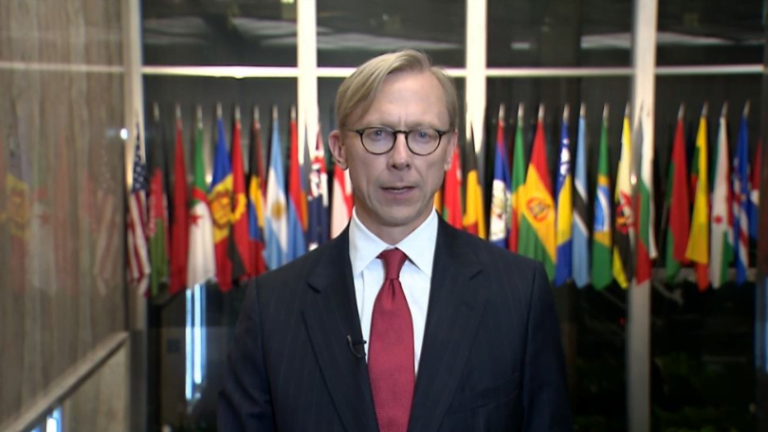
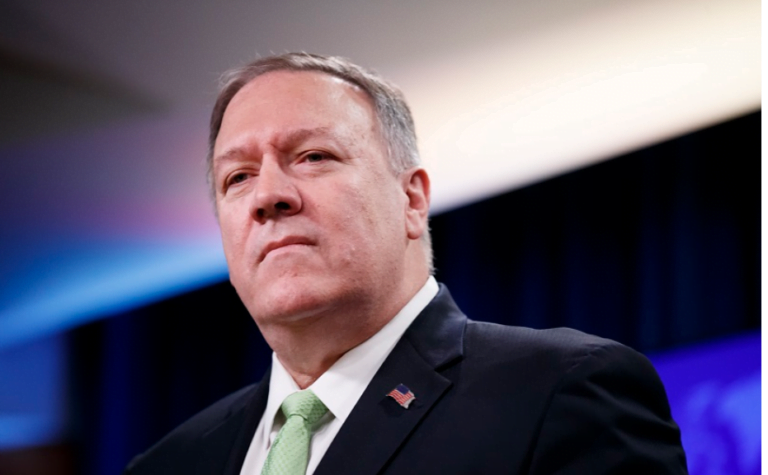
Iranian officials and media have reacted with glee to the resignation of Brian Hook as the United States’ Special representative for Iran and have angrily greeted the arrival of his successor Elliot Abrams.
The special envoy’s departure was also widely discussed in the Iranian media and social media, with some commenting that while Trump’s anti-Iran team was losing some of its fiercest members, everyone in Iran had stayed put. The reference was also about the earlier departure of John Bolton.
The spokesperson for Iran’s Foreign Ministry who usually speaks for the regime rather than the Foreign Ministry, said in a tweet that as far as the Islamic Republic is concerned, there is “no difference between John Bolton, Brian Hook, or Elliot Abrams when it comes to the United States’ Iran policy.”
Mousavi added in the harshly worded tweet: “American officials have been bitten off more than they could chew. Same applies to Mike Pompeo, Donald Trump and their successors.”
At the end of the tweet, Mousavi added the hashtag “bankrupt US policy.”
Ali Shamkhani the Secretary of Iran’s Supreme national Security Council wrote in a tweet that “the objective of the “maximum pressure” strategy has changed from regime change to preventing Iran from becoming rich! Brian [Hook] left the White House with frustration like John [Bolton]. Perhaps Mike [Pompeo] will also need to pack up his suitcase before Donald [Trump] leaves.”Alireza Mir Yousefi, Iran’s envoy to the United Nations organization had said earlier, “Hook’s resignation has nothing to do with us. It is not a determining development. The U.S. maximum pressure policy has been defeated. At the same time, this policy and those who launched it can never bring Iran to its knees.”
Blasts in Beirut ‘tragic humanitarian crisis’: Nasrallah
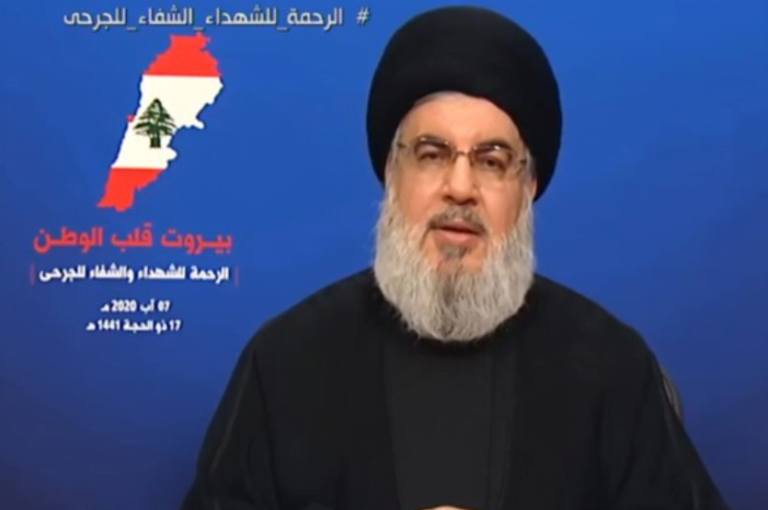
Secretary-General of the Lebanese Hezbollah Resistance Movement Seyyed Hassan Nasrallah delivering a speech on the latest developments in Lebanon described blasts in Beirut as a ‘tragic humanitarian crisis’.
Seyyed Hassan Nasrallah was scheduled to speak on Wednesday night, but due to the massive explosion in Beirut on Tuesday, his speech was delayed.
Hezbollah Secretary General Sayyed Hasan Nasrallah offered deep condolences to the families of the martyrs of the Beirut blast and describes the blast as a ‘tragic humanitarian crisis’.
Sayyed Nasrallah said, “Beirut explosion will leave major negative consequences medically, socially, and economically.”He voiced sympathy with the people affected by the blast, expressing readiness to provide shelters for those whose houses were destroyed or damaged.He lashed out at the US for imposing sanctions on the entire Lebanese nation. He lashed out at the US for imposing sanctions on the Lebanese nationCommenting on the French president’s visit to Beirut, he stressed, ” Hezbollah views the visit of the French President Emanuel Macron in a positive way as it comes in the context of helping Lebanon.”Rejecting Saudi and Zionist backed media accusations of the existence of Hezbollah’s rockets in the site of the blast, Nasrallah emphasized, “Hezbollah does not have any missile caches in Beirut port.” Hezbollah does not have any missile caches in Beirut port.He went on to say that the accusations are fabricated lies and injustice, adding, ” Hezbollah knows about Haifa harbor more than Beirut port.”Calling for a joint probe into the Beirut blast by the Lebanese army and security authorities, Secretary-General of the Lebanese Hezbollah Resistance Movement noted that the probe must not lead to conflict in the country. He called for a joint probe into the Beirut blastHe added that culprits behind the Beirut blast must be held accountable regardless of their affiliations.
‘Do you want Iran promoting terror with or without a nuke?’
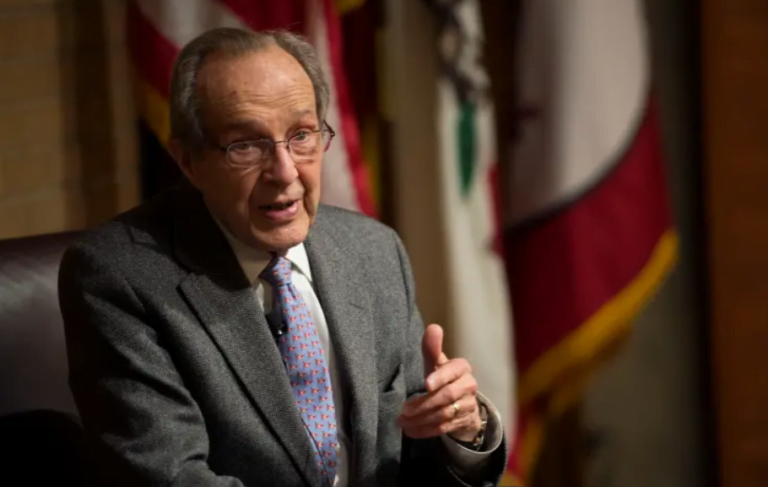
Does the world want an Iran that promotes terror with or without a nuclear weapon, asked former US defense secretary William Perry in an interview with The Jerusalem Post. He was arguing that the United States should rejoin the 2015 Iran nuclear deal, known as the Joint Comprehensive Plan of Action.
He said that although the hope was that the Islamic Republic’s behavior would normalize through JCPOA, “none of that was on paper,” Perry said. “Would you rather have an Iran promoting terror in the Middle East with a nuclear weapon or without?”
The interview took place shortly after Perry and Ploughshares Fund Policy Director Tom Collina co-authored the book, The Button, which mostly discusses US-Russia nuclear dilemmas, but briefly confronts Iranian nuclear dilemmas.
Perry told the Post, “Rejoining the deal is better than not rejoining the deal. We had restrictions on Iran’s nuclear programs and now we don’t. If someone had a third alternative, it would be nice to hear about it.”
He said the decision should be pretty simple: “Some think they can get a better deal. Maybe they can, but I don’t see the evidence” that they can.
Furthermore, Collina said that when the US was in the deal, the deal was working according to international inspectors.
“Now that the US has withdrawn, Iran is closer to a bomb than before,” he said. “Clearly, Iran won’t enter a different agreement” nor “a better agreement until the US comes back to the original deal.”
Perry said in the last year of the Obama administration, many things about Iran’s behavior concerned him, but he was “reasonably relaxed” about its nuclear program.
“The problem was solved, or put on the shelf anyway, maybe for 10 years…15 years,” he said. The “hope was that eventually “there would be a change for the better” regarding Iran’s regime, “but in the meantime, we had the nuclear program put on ice.”
UN Security Council readies to vote on extending Iran arms embargo
The United Nations Security Council will vote next week on a US bid to extend an international arms embargo on Iran, Secretary of State Mike Pompeo said on Wednesday, despite the warnings of some diplomats that the measure lacks support.
The arms embargo on Iran is currently set to end on Oct. 18 under Tehran’s 2015 nuclear deal with world powers, which US President Donald Trump’s administration quit in 2018.
The US-drafted resolution needs at least nine votes in favor to force Russia and China to use their vetoes, which Moscow and Beijing have signaled they will do. Some diplomats question whether Washington can even secure those nine, however.
“The United States will put forward a resolution in the Security Council to extend the arms embargo on Iran,” Pompeo told reporters. “The proposal we put forward is eminently reasonable. One way or another we will do the right thing. We will ensure that the arms embargo is extended.”If the United States is unsuccessful in extending the embargo, it has threatened to trigger a return of all UN sanctions on Iran under a process agreed in the 2015 deal.Such a move would kill the deal, touted as a way to suspend Tehran’s suspected drive to develop nuclear weapons. Washington argues it can trigger the sanctions because a Security Council resolution still names it as a participant.Iran has breached parts of the nuclear deal in response to the US withdrawal and Washington’s reimposition of sanctions.”For as long as Iran is allowed to enrich, we’re going to be having this discussion – how close is Iran to a nuclear breakout? … We need to restore the UN Security Council standard of no enrichment,” US Iran envoy Brian Hook told the Aspen Security Forum, held virtually, earlier on Wednesday.
Mohammad Shariati, associate professor at the Tehran University of Medical Sciences and former director of the national health network, believes that thanks to the expanded and efficient national healthcare system, not even one person is deprived of primary healt care (PHC) services.
In an exclusive interview with the Tehran Times, Shariati referred to the country’s public health coverage, saying that there is not a single person in Iran even in the most remote areas that do not have access to medical care services.
“We provide all the population with primary health care and health services.
“In this regard, we established mobile team, through which customized vehicles travel to the heart of communities, especially remote areas, and provide prevention and healthcare services; They overcome barriers of time, money, and trust, and provide community-tailored care to the whole populations.
The villagers whose population is less than 500 and there is not a health center in the village, receive prevention and primary health care services from mobile teams, and can receive emergency services through 115, depending on the location or by ambulance or helicopter,” he explained.
“The other way to offer these services to the deprived populations is health clinics affiliated to universities of medical sciences that dispatch helicopters in case of any reports from rural areas, he added.
All universities of medical sciences are responsible to provide services to the whole remote areas or villages with few residents in their province,” Shariati noted.
Even during coronavirus pandemic, no one was left behind and we have provided millions of people with insurance coverage, even the deprived or the refugees, while in many developed countries there have been many patients who lost their lives on the streets being left untreated, he lamented.
He further said that but in comparison to other countries with full potential, income, technology advances, and numerous medical staff, Iran better handled the crises and provided treatment to all, despite U.S. sanctions and all restrictions.
All COVID-19 tests is free for those who need to be tested by a health care professional, he added.
Iran’s Oil Exports In July Drop To Around 100,000 BPD
The latest data provided to Radio Farda by Kepler, an international data intelligence firm to Radio Farda, show that Iran’s crude oil exports in July reached 101,000 barrels per day.
Before the United States imposed sanctions in 2018, Iran used to export 2.5 million barrels per day.
Reuters has also reported that Iran’s oil production dropped to 1.9 million BPD last July. That is half the volume before the U.S. sanctions and is used domestically or stored.
Iran has more than 120 million barrels of unsold crude stored on land and oil tankers anchored in the Persian Gulf.
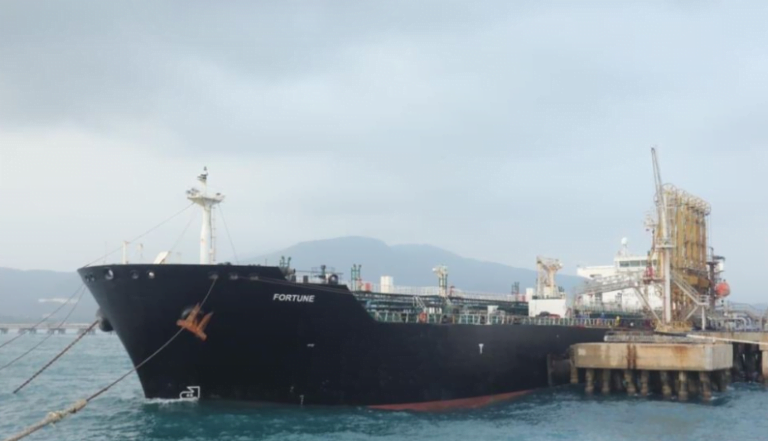
Based on Kpler data, the average daily export of Iranian oil in the first seven months of 2020 was 223 thousand barrels per day.Iran exports oil only to China and Syria. China’s customs statistics show that it did not import oil from Iran in June, but Kpler data reveals that the Iranian tanker Giessel delivered its cargo to Chinese ports on June 13 with two million barrels.An informed source, who did not want to be named, told Radio Farda that the cargo was delivered to China disguised as “Indonesian oil.”Kepler statistics also show that Iran shipped 60,000 barrels of oil per day to Malaysia in the first five months of the year, but Malaysian customs data show that these shipments did not enter the country. The is further evidence that the shipments might have been diverted to China as Malaysian oil.Reuters had earlier reported that Venezuelan oil shipments were also going to China under “Malaysian” oil.Kpler’s new report shows that the total oil exports of OPEC members by sea reached 17 million 757 thousand barrels per day in July, which is an increase of 576 thousand barrels compared to June.Reuters report also shows that Saudi oil production increased by 850,000 barrels last month compared to June.OPEC’s total oil production last month reached 23.32 million BPD.
Rouhani expresses grief over massive Beirut explosion
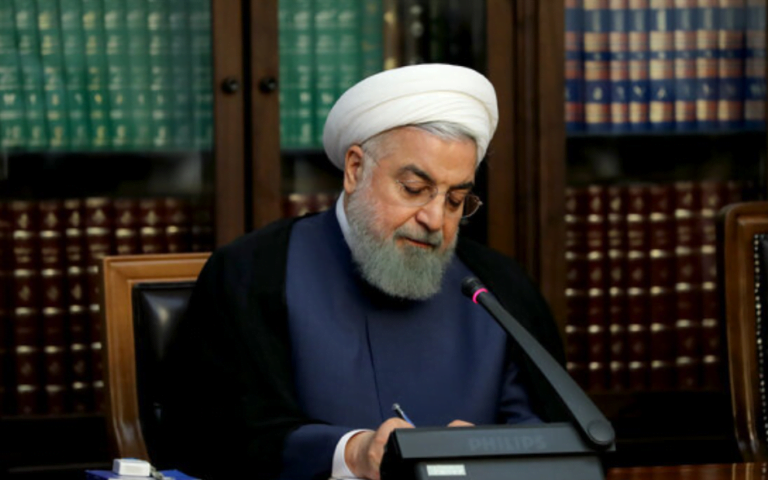
President Hassan Rouhani has expressed his deepest condolences to the Lebanese government and people over the Tuesday explosion in Beirut, saying Iran is ready to offer medical aid.
In a message to Lebanese President Michel Aoun on Wednesday, Rouhani said the explosion that claimed the lives of many people has caused grief in Iran.
He wished a speedy recovery for those injured in the incident.
The Iranian government is ready to send medical consignment and treat the injured, he wrote.
Rouhani also hoped that aspects of the incident would soon become clear and calm would return to Beirut.
At least 100 people were killed and more than 4,000 were wounded after a massive explosion at the port sent shock waves across the Lebanese capital.
On Wednesday morning, smoke was still rising from the port, where a towering grain silos had been shattered. Major downtown streets were littered with debris and damaged vehicles, and building facades were blown out.
At hospitals across the city people had been waiting all night for news of loved ones who had gone missing or were wounded. Others posted requests for help online.
George Kettaneh, an official with the Lebanese Red Cross, said the toll could rise further.
Several smaller explosions were heard before the bigger one occurred.
Abbas Ibrahim, the head of Lebanon’s General Security, said that “highly explosive materials” confiscated earlier had been stored at the site.
Footage shared on social media captured the moment of the bigger explosion, with a colossal shock wave seen traveling fast across several hundreds of meters and shrouding the area in thick smoke.The blast left enormous material damage to the surrounding buildings and structures.Lebanese Prime Minister Hassan Diab vowed that those responsible for the massive blast in Beirut would be held to account, also calling for international assistance to help the country, which is already beset by economic crises.
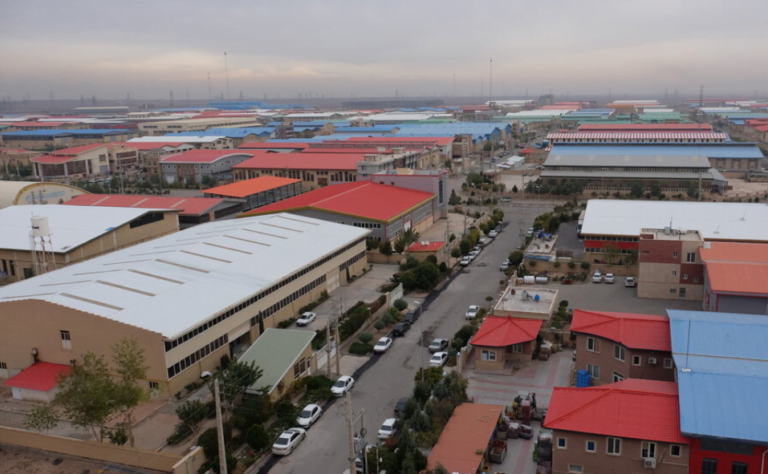
Iran’s Deputy Industry, Mining, and Trade Minister Mohsen Salehinia announced that 432 idle industrial units have been revived throughout the country since the beginning of the current Iranian calendar year (March 20), IRIB reported.
Salehinia, who is also the head of Iran Small Industries and Industrial Parks Organization (ISIPO), said that reviving the mentioned units has created jobs for 7,591 persons.
Tehran with 48 units, Qom with 46 units, and Isfahan with 41 units were the provinces in which most of the revived units are located, he added.
The official said that there are currently about 45,000 small and medium-sized industrial units in the country’s industrial parks, of them 9,500 units are inactive, adding that 1,500 idle industrial units are planned to be revived in the current Iranian calendar year (ends on March 20, 2021).
The mentioned 432 units coming back to the production cycle, the plan for reviving small and medium-sized industrial units in the present year has come true by 29 percent, Salehinia noted.ISIPO managed to revive 1,185 idle production units across the country during the past Iranian calendar year (ended on March 19), according to Ali-Asghar Mosaheb, ISIPO deputy head for small industries affairs.According to the official, the mentioned units returning to operation created direct jobs for 21,618 persons.One of the approaches through which ISIPO is planning to help inactive units get back in the production cycle is to see their knowledge and technology needs, Mosaheb said.“The country’s technology units and scientific and research centers have come to believe that they can help the industry and that the industry can use their potentials and capacities,” he added.The latest data released by the Iranian Industry, Mining, and Trade Ministry shows that 72,250 industrial and mining units are operating across the country in which nearly 2.43 million people are working.According to the data, with 15,822 active units, the field of non-metallic minerals accounts for the biggest share of the mentioned units, while food and beverage products and rubber and plastic products with 8,682 and 7,524 units are in the second and third places.
4-month exports from Kermanshah Province stand at $709m
More than 1.76 million tons of commodities worth $709.36 million were exported from Iran’s western Kermanshah province during the first four months of the current Iranian calendar year (March 20-July 21), a provincial official announced.
Khalil Heidari, the director-general of the province’s customs administration, said that the exports from the province witnessed a 14-percent fall in value and one percent drop in weight during the four-month period of this year, compared to the same period of time in the past year, Mehr news agency reported.
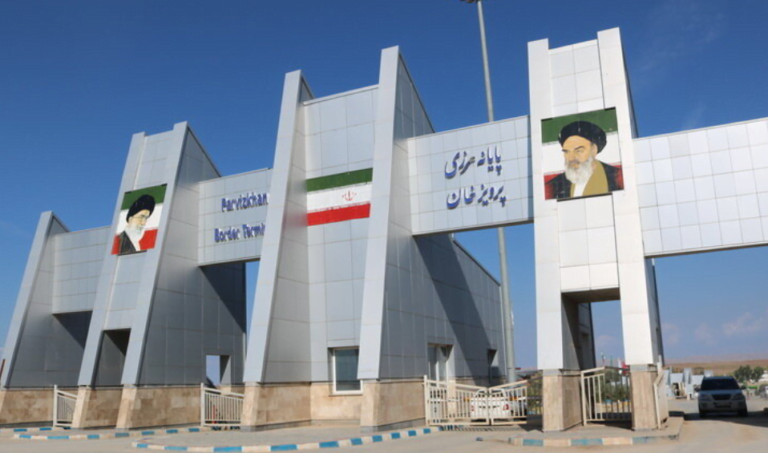
The official said that of the total value of exports, over $392 million has been the worth of products cleared and exported through the major customs of Kermanshah, Parvizkhan and Paveh, indicating a seven-percent decrease year on year.”
“Tomato, coolers, cheese, tomato paste, light oil and oil products, biscuit, melon, watermelon, ceramics and tiles, and plastic products were the main commodities exported from the province during the four-month period,” Heidari added.He also announced that the province exported goods to 19 countries during the first four months of this year. Iraq was the top destination of the exported products.The value of Iran’s non-oil trade during the first four months of the current year stood at $19.635 billion, IRNA reported.According to the spokesman of the Islamic Republic of Iran Customs Administration (IRICA), Rohollah Latifi, in the mentioned period Iran imported $10.922 billion worth of goods, while exporting $8.713 billion.The volume of traded goods was estimated at 42 million tons, of which 30.285 million tons were related to exports and about 11.793 million tons were imported goods.Iran’s top five non-oil export destinations during this period were China with $2.474 billion worth of exports, Iraq with $1.965 billion, the United Arab Emirates (UAE) with $1.216 billion, and Afghanistan with $713 million as well as Turkey with $405 million, so the country’s top five export destinations remained the same in comparison to previous months, according to Latifi.
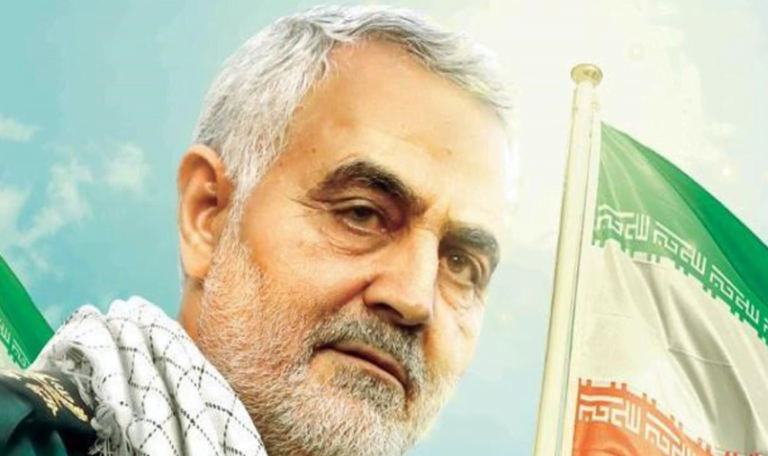
Iraqi telecommunication firm accused of collaboration in assassination of General Soleimani
AhlulBayt News Agency (ABNA): A telecommunication company in Iraq has provided the American forces with vital information which helped Washington to assassinate former IRGC Quds Force Commander Lieutenant General Qassem Soleimani and Deputy Commander of Iraq’s Popular Mobilization Forces (PMF) Abu Mahdi al-Muhandis, Iraqi media reported.
The Special Committee to Investigate the Assassination of General Soleimani and al-Muhandis has received information about an Iraqi telecommunication company’s involvement in the incident, the Arabic-language Shafaq News reported on Monday, but did not provide any details on the identity of the telecommunication company.
It quoted an informed source as saying that the committee has received documents from a number of Hashd al-Shaabi commanders which showed a telecommunication company had provided the US Army Command at Victoria Base at Iraq Airport with mobile phone information of one of al-Muhandis’ associates.
“The US Army Command has obtained sufficient information about the location of al-Muhandis and his meeting with General Soleimani through this phone line, and this has contributed to the assassination process,” the source said.Lieutenant General Soleimani was assassinated in a US drone strike on Baghdad International Airport in Iraq on January 3.The airstrike also martyred al-Muhandis. The two were martyred in an American airstrike that targeted their vehicle on the road to the airport.Five Iranian and five Iraqi military men were martyred by the missiles fired by the US drone at Baghdad International Airport.On January 8, the IRGC Aerospace Force started heavy ballistic missile attacks on US Ein Al-Assad airbase in Southwestern Iraq near the border with Syria and a US operated airbase in Erbil in retaliation for the US assassination of ant General Qassem Soleimani.Ein Al-Assad is an airbase with a 4km runway at 188m altitude from sea levels, which is the main and the largest US airbase in Iraq.