Home Blog Page 154

Iran blames bad communication, alignment for jet shootdown

0
Iran blames bad communication, alignment for jet shootdown
                  Iran blames bad communication, alignment for jet shootdown


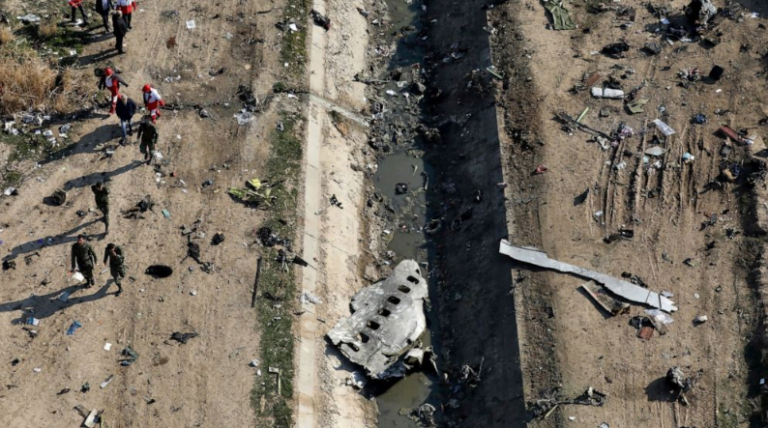
A misaligned missile battery, miscommunication between troops and their commanders and a decision to fire without authorization all led to Iran‘s Revolutionary Guard shooting down a Ukrainian jetliner in January, killing all 176 people on board, a new report says.


The report released late Saturday by Iran‘s Civil Aviation Organization comes months after the Jan. 8 crash near Tehran.


Authorities had initially denied responsibility, only changing course days later after Western nations presented extensive evidence that Iran had shot down the plane.


The report may signal a new phase in the investigation into the crash, as the aircraft’s black box flight recorder is due to be sent to Paris, where international investigators will finally be able to examine it.


It also comes as public opinion remains low over Iran’s government as it faces both crushing U.S. sanctions and vast domestic economic problems.


The shootdown happened the same night Iran launched a ballistic missile attack targeting U.S. soldiers in Iraq, its response to the American drone strike that killed Guard Gen. Qassem Soleimani in Baghdad on Jan. 3.


At the time, Iranian troops were bracing for a U.S. counterstrike and appear to have mistaken the plane for a missile.


The civil aviation report does not acknowledge that, only saying a change in the “alertness level of Iran’s air defense” allowed previously scheduled air traffic to resume.


The report detailed a series of moments where the shootdown of Ukraine International Airlines Flight 752 could have been avoided.


The report said the surface-to-air missile battery that targeted the Boeing 737-800 had been relocated and was not properly reoriented.


Those manning the missile battery could not communicate with their command center, they misidentified the civilian flight as a threat and opened fire twice without getting approval from ranking officials, the report said.


Read More


Also Read: Revolutionary Guards Say They Will “Handle” Iran’s Coronavirus Crisis
Revolutionary Guards Say They Will “Handle” Iran’s Coronavirus Crisis

0
Revolutionary Guards Say They Will “Handle” Iran’s Coronavirus Crisis
             Revolutionary Guards Say They Will “Handle” Iran’s Coronavirus Crisis


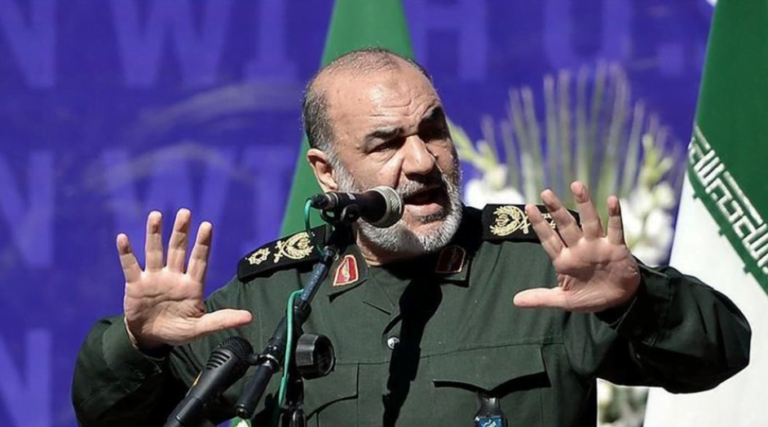
The commander of the Revolutionary Guards has announced that the Guards are ready to “handle” the consequences of the coronavirus epidemic, just days after warnings that poor Iranians could rebel against the regime.


On July 8, Iran’s health minister Saeed Namaki acknowledged that poverty could spark a rebellion.


A day later, General Hossein Salami told provincial commanders and the force’s medical division that “with the help of the almighty, we shall do everything in our power to handle the consequences ” of the epidemic. He made no reference to Namaki’s statements.


Iran’s health ministry, health officials and health experts have repeatedly said that Iran’s second wave of coronavirus has been linked to people not social distancing and not following health protocols.


They have called for gatherings to be banned, fearing that social distancing might be impossible and therefore pose a serious risk to the public.


Despite this, on July 9, President Rouhani asked the National Coronavirus Taskforce’s social, security and medical committees to draw up guidelines to hold mourning ceremonies for Ashura, the 10th day in the Islamic lunar calendar month of Muharram.


The day, which falls on August 29 this year, marks the martyrdom of Imam Hossein, the third Shia Imam and the grandson of Prophet Mohammad.


At the meeting, Rouhani claimed that Iran had successfully reined in the Covid-19 epidemic in provincial centers.


Iran, he said, now had a lower rank among countries of the world with regard to coronavirus cases and fatalities than it had previously.


He also claimed that the World Health Organization had praised how Iran had coped and planned for the epidemic. Many other countries had looked to Iran and its experience when forging their own plans for fighting coronavirus, he said.


Alongside these claims, health ministry officials, including deputy health minister Ghasem Jan-Babaei, reiterated their worries about the shortage of manpower needed to cope with Iran’s coronavirus crisis, acknowledging that many people working in the health service had contracted the virus and many others were exhausted by months of hard work.


Furthermore, Jan-Babaei acknowledged the epidemic was obviously affecting the financial stability of  Iran’s medical centers, which had been badly hit by the impact of the epidemic.


Read More


Also Read: Soleimani’s fast-fading memory reflects Iran’s sclerotic regime

Soleimani’s fast-fading memory reflects Iran’s sclerotic regime

0
Soleimani’s fast-fading memory reflects Iran’s sclerotic regime


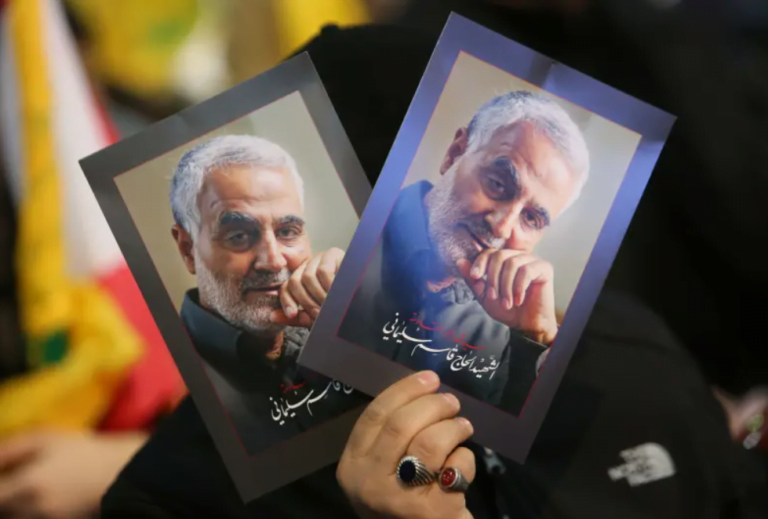
To what extent former Quds Force head Qassem Soleimani’s spectacular demise at the hands of the Americans affected Iranian capabilities to hurt the United States and its allies is still debatable, but not so for the lessons of his fast-fading memory despite the Iranian regime’s efforts to maintain it.


Analyzing the contours of the memory of Soleimani clearly shows that most of the Iranian population is neither interested in his assassination nor in his “revolutionary” legacy.


As the general and mastermind of the most powerful force behind Iran’s export of its revolution and the creation of the Shi’ite crescent of proxy militias in Iraq, Syria, Yemen and Lebanon, his fading memory is clearly a reflection that Iran’s population does not support these policies and most probably the regime behind it.


These indelible and undisputed facts are drawn from an analysis of Google trends that record searches of terms and personalities. Searches on Google are not only a reflection of interest but in the popularity of the terms or personalities being searched.


By far the greatest indication of Soleimani’s scant popularity, dead or alive, lies in the relatively little interest he evokes in Iran itself compared to the arenas within which he operated.


Just over a half a year after Soleimani’s assassination, his bio was searched 50 time more often (relative to the population) in Lebanon than in Iran itself, and nearly 100 times more in Bahrain, where the Shi’ite majority chafes under a Sunni-minority regime backed to a hilt by Iran’s archrival, Saudi Arabia.


Not only does this reflect paltry identification with Soleimani in Iran as a whole, but the pattern of searches within Iran is problematic to the regime.

Read More


Also Read: Israelis Crafting Counter Drone System To Track, Kill Operators

Israelis Crafting Counter Drone System To Track, Kill Operators

0
Israelis Crafting Counter Drone System To Track, Kill Operators
               Israelis Crafting Counter Drone System To Track, Kill Operators


In March 2019, the Iranian Revolutionary Guards Corps (IRGC) held a drill codenamed “Towards Jerusalem 1,” near the strategic Strait of Hormuz.


The IRGC flew about 50 “offensive and combat” drones in the Persian Gulf, including the Saegheh drone, supposedly based on the American RQ-170. According to sources here, the drone flew for about 1,000 kilometers between designated targets.


Now Israeli scientists are developing a system they believe will let them accurately locate the operator of hostile drones and neutralize him.


Researchers at Ben Gurion University in Beer Sheva in southern Israel, Gera Weiss and Eliyahu Mashhadi, are using a realistic simulation environment to collect the path of the drone when flown from launch point and monitor it its flight path.


“We insert all the points along the flight path into a deep neural network that was trained to be able to predict the exact launch point and the location of the drone operator,” Mashhadi said.


Testing the model with the flight simulator, the team were able to locate and target the drone operator 78% of the time.


Today, counter-drone systems use radio frequency to locate the operators, while using electro-optical, radar and other sensors to track the drones.


“All the approaches that we are aware of for locating operators, not just the drones, use RF sensors”. Mashhadi explained that there are automatic and semi-automatic methods for locating the operators based on radio communications between the drone and its operator. “There are a number of problems with this approach.


Firstly, such methods are usually tailored to a specific brand of drones,” he said. “Furthermore, the radio signal can only be recorded near the drone. Crafting


Finally, there are ways for malicious drone designers to apply cryptography and electronic warfare techniques to make localization by analysis of radio signals very difficult.”


Read More


Also Read: EXCLUSIVE: Iran’s IRGC Trying Illegally To Take Ownership Of Major Steel Producer

EXCLUSIVE: Iran’s IRGC Trying Illegally To Take Ownership Of Major Steel Producer

0
EXCLUSIVE Iran's IRGC Trying Illegally To Take Ownership Of Major Steel Producer
     EXCLUSIVE: Iran’s IRGC Trying Illegally To Take Ownership Of Major Steel Producer


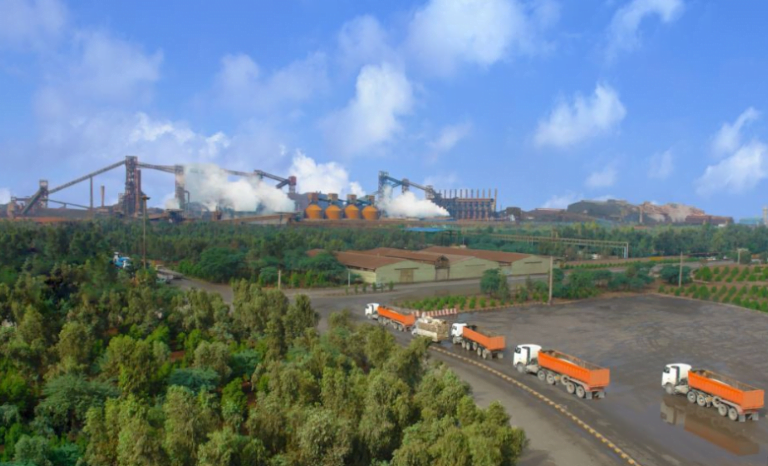
Radio Farda has obtained a confidential letter that shows Iran’s IRGC, which holds 49 percent of Khuzestan Steel Mill Company, is attempting to “illegally acquire” the remaining shares belonging to workers.


Meanwhile, reports say that the Revolutionary Guard financial holding involved in the case may be transferring its assets to Supreme Leader Khamenei’s office.


The steel company is one of the top three steel producers in Iran. The other 51 percent of its shares have been handed over to the public as “Justice Shares,” however, it is the IRGC that controls the company’s management and operations as the major shareholder.


The steel mill in Khuzestan Province is the biggest producer of steel bars and the second biggest producer of un-milled steel in Iran.


In the June 27 letter Mohammad Qaemi, the liquidation director of Yas Holding Company warned Sadeq Zolqadrnia, the IRGC’s deputy commander for economic affairs and reconstruction that “Any illegal intervention by the IRGC or Yas will entail religious and legal consequences.”


The main activity of IRGC’s Yas holding, operating under the force’s Cooperative Foundation is dealership and subcontracting in the housing sector. The holding has been implicated in numerous financial corruption cases during the past three years.


One of the most important one of these cases is the one regarding a 100 billion rial (around $3.2 billion at the time) transaction with the Municipality of Tehran which led to the imprisonment of former deputy mayor Isa Sharifi who worked as a deputy to then Tehran Mayor Mohammad Baqer Qalibaf who is now the speaker of Iran’s parliament.


The Yas Holding was officially dissolved in February 2018. However, based on the document now at the disposal of Radio Farda, the IRGC is still holding its shares in the Steel company and is trying to increase its holding.


In the letter, Qaemei explains that Yas has currently no control over its assets but IRGC officials will be responsible for the consequences of the Steel Company’s economic failure.


Read More


Also Read: Iran: IRGC Says Improves Accuracy Of Homegrown Rocket

Iran: IRGC Says Improves Accuracy Of Homegrown Rocket

0
Iran IRGC Says Improves Accuracy Of Homegrown Rocket
                    Iran: IRGC Says Improves Accuracy Of Homegrown Rocket


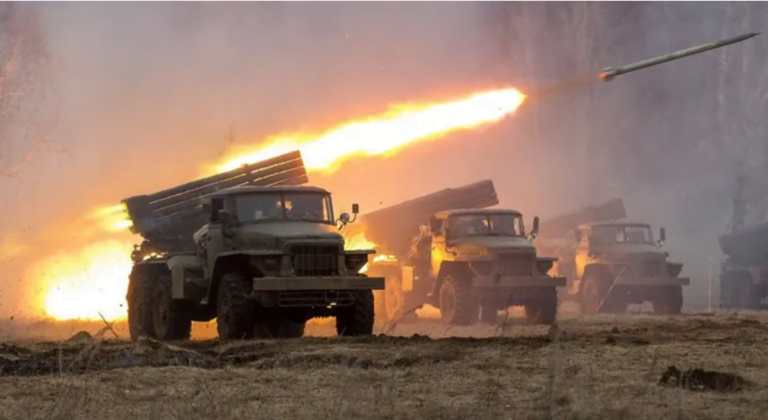
The Islamic Revolution Guards Corps Ground Force has turned a 122mm homegrown rocket into a guided weapon by increasing its accuracy, a commander said.


Speaking to Tasnim, Director of the Research and Self-Sufficiency Jihad Organization of the IRGC Ground Force General Ali Koohestani said the ‘Arash’ 122mm rocket has become a weapon with pinpoint accuracy following the recent tests.


The commander said the IRGC experts have managed to transform Arash into a guided rocket, saying the homegrown rocket has hit the targets with pinpoint accuracy in a series of recent tests on the field.


Read More


Also Read: Iran: IRGC forces attacked, fired shots at Darwish community members


The Arash 122mm rockets can now hit the targets with an accuracy of 7 meters, he noted, saying the weapon would be mass produced for delivery to the Defense Ministry.Weighing 64 kilograms, Arash has a range of 22 kilometers and is equipped with a 19 kg warhead with great destructive power that detonates targets within a range of 25 meters.Before being upgraded, the 122mm rocket was fired with launchers with a pack of 40 rockets to compensate for low accuracy, but the pinpoint accuracy would allow the artillery units to launch a limited number of rockets to destroy a target.Iran has in recent years made great headways in manufacturing a broad range of military equipment, including air defense systems that use cutting-edge technologies.Tehran has repeatedly stated that its military might is defensive in nature and poses no threat to other countries.Before being upgraded, the 122mm rocket was fired with launchers with a pack of 40 rockets to compensate for low accuracy, but the pinpoint accuracy would allow the artillery units to launch a limited number of rockets to destroy a target.Iran has in recent years made great headways in manufacturing a broad range of military equipment, including air defense systems that use cutting-edge technologies.

Iran: IRGC forces attacked, fired shots at Darwish community members

0
Iran IRGC forces attacked fired shots at Darwish community members
Iran: IRGC forces attacked, fired shots at Darwish community members


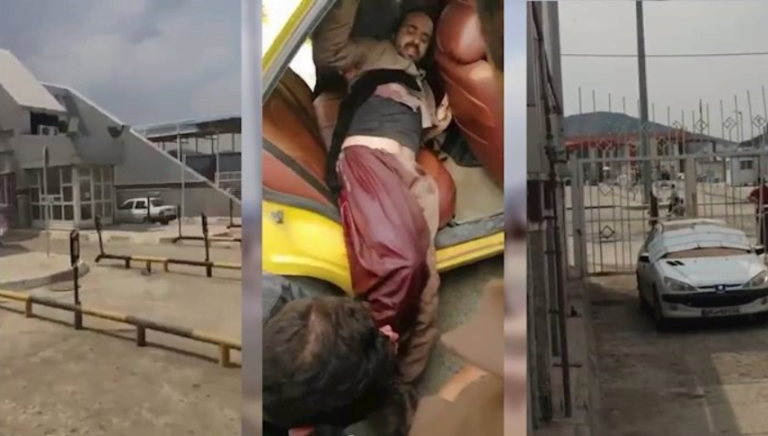
Units of the Iranian regime’s Revolutionary Guards (IRGC) opened fire on Thursday at members of the Darwish minority community members in the border town of Bash Omagh in western Iran.


Around 5,000 members of the Darwish Ghaderi community were taking part in funeral ceremonies for Sheikh Mohammad Kassanzani, leader of the Ghaderi branch of the Darwish community.


They intended to pass through the Bash Omagh border near the city of Mariwan in Kurdistan province, western Iran, and head to the city of Sulaymaniyah in Iraq.


However, IRGC members and units of the regime’s border guards opened fire on the mourning Darwish community.


Reports indicate that clashes erupted and continued for hours, leaving several Darwish Ghaderi community members killed and injured.


Read More


Also Read: Disgraceful 25-year deal between Iran and China


Members of Iran’s Dervish religious minority have faced continuous harsh treatment from Iranian regime authorities, with one recently freed dissident being forced into internal exile and another detained activist being ordered to remain in a coronavirus-plagued prison system far from home town.Article 513 of the regime’s own criminal code specifically states that people sentenced to prison should be jailed as near as possible to their place of residence, unless a judge decides that doing so would be a perversion of justice. The mullahs’ regime has a long history of imposing internal exile on inmates, especially political prisoners, as a method to impose pressure and aimed at breaking their will.The Dervishes involved in the 2018 protests had been demanding the release of arrested members of their community and authorities to remove security checkpoints installed around the house of their elderly leader, Noor Ali Tabandeh. He later died in December 2019.Members of the Sufi Muslim religious minority long hve cmplained of harassment by the oppressive mullahs’ regime who consider them as heretics and impose harsh crackdown measures and restrictions.

Disgraceful 25-year deal between Iran and China

0


Disgraceful 25-year deal between Iran and China
       Disgraceful 25-year deal between Iran and China


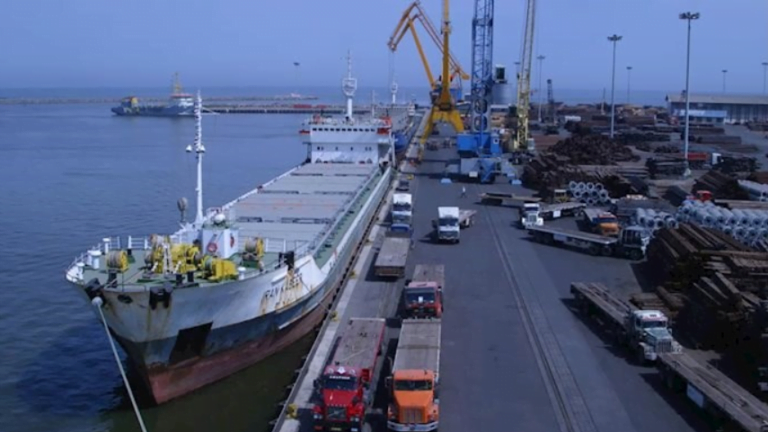
While the mullahs’ regime ruling Iran refuses to publish the content of its disgraceful 25-year deal with China, reports indicate the terms involve transferring unprecedented privileges and control to China regarding the island of Kish in Iran’s southern waters and massive economic incentives in return for China’s military and regional support.


Regarding the regime’s relations with China it is worth noting that flights of Mahan Air, affiliated to the Revolutionary Guards (IRGC), to China continued during the novel coronavirus crisis. This allowed the transfer of the virus from China to the city of Qom and other parts of Iran, raising widespread protests regarding the relations between China and the Iranian regime and IRGC.


“Last week, the Supreme Leader [Ali Khamenei] agreed to the extension of the existing deal to include new military elements that were proposed by the same senior figures in the IRGC [Islamic Revolutionary Guard Corps] and the intelligence services that proposed the original deal, and this will involve complete aerial and naval military co-operation between Iran and China, with Russia also taking a key role,” a source told OilPrice.com recently.


“There is a meeting scheduled in the second week of August between the same Iranian group, and their Chinese and Russian counterparts, that will agree the remaining details but, provided that goes as planned, then as of 9 November, Sino-Russian bombers, fighters, and transport planes will have unrestricted access to Iranian air bases,” the source told OilPrice.com. “This process will begin with purpose-built dual-use facilities next to the existing airports at Hamedan, Bandar Abbas, Chabhar, and Abadan.”


Read More


Also Read: Cowardly assassination of Gen. Soleimani clear violation of UN charter, Iran says


In parallel, these deployments will be accompanied by the roll-out of Chinese and Russian electronic warfare (EW) capabilities, sources told OilPrice.com. Part of the new military co-operation will also include an exchange of personnel between Iran, China and Russia, with up to 110 senior IRGC members going for training every year in Beijing and Moscow and 110 Chinese and Russians going to Tehran for their training.

Cowardly assassination of Gen. Soleimani clear violation of UN charter, Iran says

0
Cowardly assassination of Gen. Soleimani clear violation of UN charter, Iran says
      Cowardly assassination of Gen. Soleimani clear violation of UN charter, Iran says


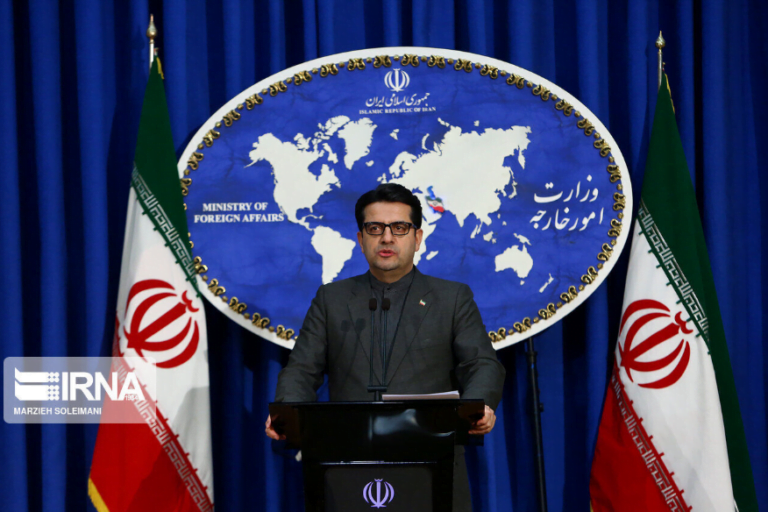
Iranian Foreign Ministry Spokesman Abbas Mousavi said on Thursday that the assassination of anti-terror commander General Soleimani was a flagrant violation of the United Nations’ charter.


“The coward assassination of Gen. Soleimani, the anti-terrorism hero of our region, was “an arbitrary killing” & a clear violation of the UN charter.


The US is responsible for this criminal act, & can’t whitewash this by chastising the UN. We’ll never forget, we’ll never forgive,” Mousavi wrote on his Twitter account.


Read More


Also Read: Remembering The July 1999 Iran Student Movement; A Forgotten Protest?


Mousavi released the tweet at a time when the 44th session of the UN Human Rights Council in Geneva on Thursday condemned the arbitrary actions of governments, including the martyrdom of General Qassem Soleimani, commander of the Quds Force of the Islamic Revolution Guard Corps (IRGC).Lieutenant General Soleimani who was the IRGC Quds Force commander was assassinated by the US along with the acting Commander of the Iraqi Popular Mobilization Units (PMU), known as Hashd al-Shaabi, Abu Mahdi Al-Mohandes, and eight other military forces with a record of fighting the Daesh (ISIS) in Iraq.Supreme Leader of the Islamic Revolution Ayatollah Seyyed Ali Khamenei had called for proportionate military action against the US interests in response to the heinous crime against the Iranian Commander who was on an official mission to Baghdad.Iran’s IRGC targeted the US airbase of Ain al-Assad in Al-Anbar province in western Iraq.Lieutenant General Soleimani who was the IRGC Quds Force commander was assassinated by the US along with the acting Commander of the Iraqi Popular Mobilization Units (PMU), known as Hashd al-Shaabi, Abu Mahdi Al-Mohandes, and eight other military forces with a record of fighting the Daesh (ISIS) in Iraq.Supreme Leader of the Islamic Revolution Ayatollah Seyyed Ali Khamenei had called for proportionate military action against the US interests in response to the heinous crime against the Iranian Commander who was on an official mission to Baghdad

Remembering The July 1999 Iran Student Movement; A Forgotten Protest?

0
Remembering The July 1999 Iran Student Movement; A Forgotten Protest?


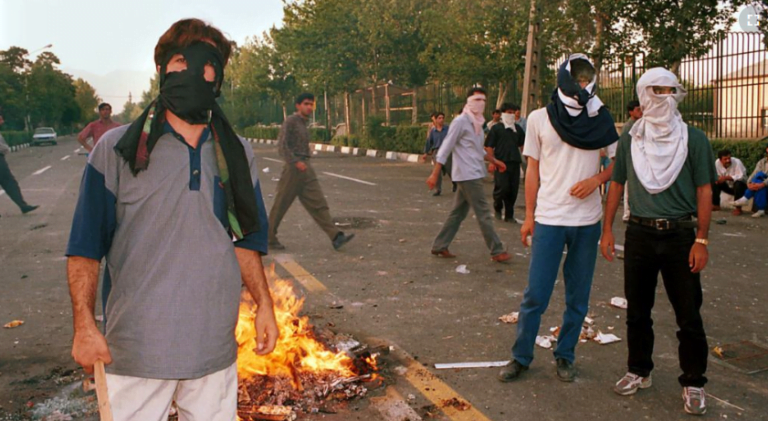
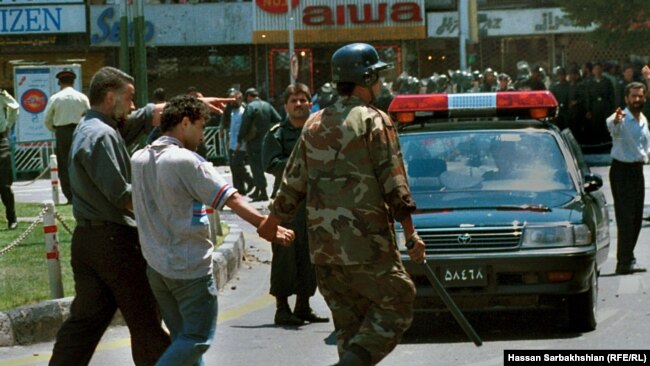
Friday July 9, 1999 was the hottest day for students in Tahran as their anti-government protests were met by the iron fist of the Revolutionary Guard. It remained in memories as Iran’s student movement, but it marked a watershed after which disillusionment with the Islamic Republic gradually deepened and the era of popular protests began.


Everything started on July 6 when the Judiciary banned the country’s leading reformist daily newspaper Salam, under pressure from the Intelligence Ministry for publishing a confidential letter by its notorious deputy Saeed Emami to the chief of intelligence. Emami was proposing restrictions on media freedoms, including the establishment of a media censorship organization.


He had earlier sent a similar document to Majles, Iran’s Parliament, which was discussing an amendment to the media law when Emami’s letter arrived. Deputy Speaker Majid Ansari refused to read out the letter at the podium. However, Salam published the letter the next morning and the Judiciary banned it.


At the time, all the reformist papers published the news of the ban and protested the decision. Nonetheless, the Majles passed Emami’s amendment.


Thousands of university students took to the streets of Tehran in protest to the ban on Salam. The daily’s managing editor was Mohammad Musavi Khoiniha, the man who called on Supreme Leader Ayatollah Ali Khamenei just two weeks ago to acknowledge his responsibility for the failure of the Islamic Republic.


As the students refused to go back to their classes or the dormitory, things led to violence. Eyewitnesses still remember young men and women in cages mounted on vans being taken to jail.


Iranian Student Protests of July 1999
                                                    Iranian Student Protests of July 1999


Police Chief Mohammad Baqer Qalibaf, IRGC’s elite commander Qassem Soleimani and 14 other officers wrote a letter to reformist President Mohammad Khatami, warning that they would open fire at the students if they did not stop their protest.


Read More


Also Read: IRGC Commander Stresses Continued Battle against COVID-19