IRGC Commander Stresses Continued Battle against COVID-19
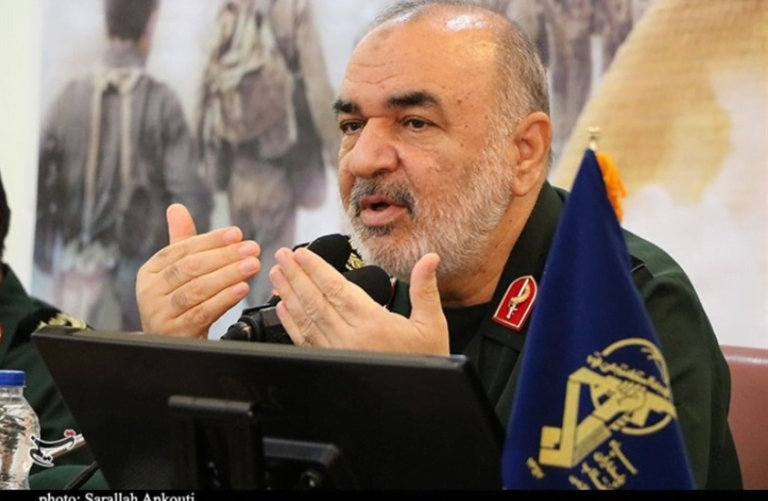
Commander of the Islamic Revolution Guards Corps Major General Hossein Salami urged all IRGC forces and the Iranian people to remain sensitive and active in the field until the coronavirus is uprooted in the country.
“The coronavirus is not weakening and is still active, affecting new areas every day, and we should not show weaknesses,” Major General Salami said on Thursday during a video conference meeting with provincial commanders of the IRGC.
Stressing that all should remain sensitive to the needs of people as the coronavirus situation continues to get worse in the country, he said the production and distribution of face masks and other health supplies in order to eradicate the viral disease will continue.
“As no decisive treatment currently exists, we can only tackle this disease by following the health protocols and taking preventive measures,” the IRGC chief said.
Iran’s Health Ministry spokeswoman Sima Sadat Lari on Wednesday said the total number of people tested positive for COVID-19 in Iran had risen to 248,379 following the detection of 2,691 new cases since Tuesday. She further put the death toll from COVID-19 in Iran at 12,084, saying the disease had taken the lives of 153 patients over the previous 24 hours. Commander of the Islamic Revolution Guards Corps Major General Hossein Salami urged all IRGC forces and the Iranian people to remain sensitive and active in the field until the coronavirus is uprooted in the country. “The coronavirus is not weakening and is still active, affecting new areas every day, and we should not show weaknesses,” Major General Salami said on Thursday during a videoconference meeting with provincial commanders of the IRGC.
Stressing that all should remain sensitive to the needs of people as the coronavirus situation continues to get worse in the country, he said the production and distribution of face masks and other health supplies in order to eradicate the viral disease will continue.
Iran’s Regime Disgraceful Act in Handing Over Island to China: Sign of Mullahs’ Desperation and Deadlock
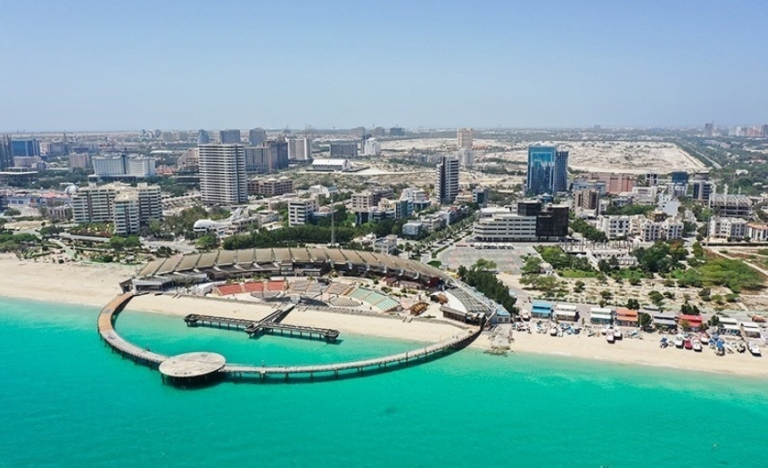
Reports from Iran indicate the regime is handing over some Iranian islands to China in an unpatriotic 25–year agreement. This is a desperate move by a regime which is reaching its end and trying to hold its grasp on power at any cost.
The regime is handing the Kish island to China in exchange for military, regional and international support. Particularly, the mullahs’ regime fears the upcoming decision of the United Nations Security Council over anextension of the arms embargo on the regime.
Meanwhile, the regime has not disclosed the details of this agreement, because it fears that this unpatriotic agreement could trigger protests by the Iranian people, who are grappling with poverty and the COVID-19 crisis while the regime auctions their wealth, and the regime is unable to control a possible uprising. The regime has never stopped its relations with China.
At the beginning of the COVID-19 crisis, the regime was the only government that continued its flights from and to China. The Mahan Air airline, which is affiliated to the regime’s Revolutionary Guards (IRGC),continued transferring Chinese passengers, prioritizing economic goals over the Iranian people’s lives. There were numerous protests to this action. Therefore, fearing an uprising, the regime was forced to stop its flights or at least pretend it had for a very short period of time.
The Oil Price website, in an article on July 6, 2020, wrote: “Last week, the Supreme Leader [Ali Khamenei] agreed to the extension of the existing deal to include new military elements that were proposed by the same senior figures in the IRGC [Islamic Revolutionary Guard Corps] and the intelligence services that proposed the original deal, and this will involve complete aerial and naval military co-operation between Iran and China, with Russia also taking a key role.”
According to Oil Price: “Part of the new military co-operation includes an exchange of personnel between Iran and China and Russia, with up to 110 senior Iranian IRGC men going for training every year in Beijing and Moscow and 110 Chinese and Russians going to Tehran for their training.”
The Oil Price website, in an article on July 6, 2020, wrote: “Last week, the Supreme Leader [Ali Khamenei] agreed to the extension of the existing deal to include new military elements that were proposed by the same senior figures in the IRGC [Islamic Revolutionary Guard Corps] and the intelligence services that proposed the original deal, and this will involve complete aerial and naval military co-operation between Iran and China, with Russia also taking a key role.” According to Oil Price: “Part of the new military co-operation includes an exchange of personnel between Iran and China and Russia, with up to 110 senior Iranian IRGC men going for training every year in Beijing and Moscow and 110 Chinese and Russians going to Tehran for their training.”
U.S. Killing Of Iran’s Gen. Soleimani ‘Was Unlawful,’ U.N. Expert Says
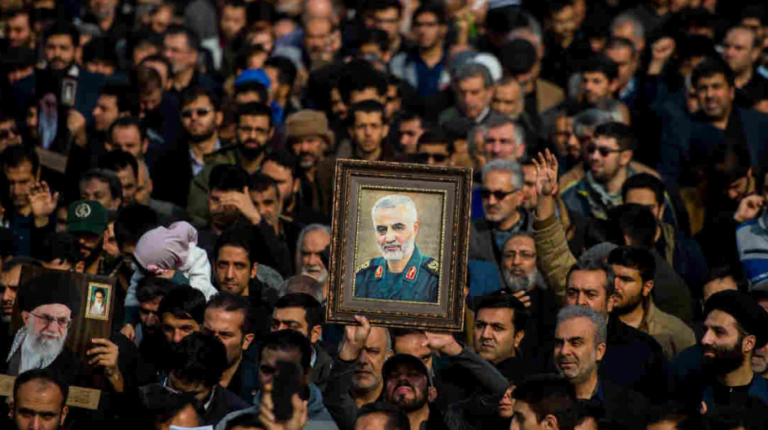
The U.S. killing of Iranian Maj. Gen. Qassem Soleimani in January “was unlawful and arbitrary under international law,” a U.N. human rights investigator says, calling the drone strike in Baghdad a violation of Iraq’s sovereignty.
The investigator also says the U.S. has not produced any proof to back its claim that the attack was justified by the need to stop an imminent attack.
Soleimani was the highly influential commander of the Quds Force unit of Iran’s Islamic Revolutionary Guard Corps. The U.S. killed him in a targeted drone strike on Jan. 3, as Soleimani and others traveled in a convoy from Baghdad’s airport.
President Trump, Secretary of State Mike Pompeo and Secretary of Defense Mark Esper have said the U.S. targeted Soleimani — a key architect of Iran’s strategy in conflicts involving the U.S. — to prevent a looming threat.
After ordering the strike, Trump said Soleimani was “plotting imminent and sinister attacks” against American interests.
But Agnes Callamard, the U.N. special rapporteur on extrajudicial, summary or arbitrary executions, says U.N. investigators found nothing to justify the U.S. rationale. She also says that because the January attack in Baghdad took place without Iraq’s consent, it violated Iraq’s sovereignty.
“No evidence has been provided that General Soleimani specifically was planning an imminent attack against US interests, particularly in Iraq, for which immediate action was necessary and would have been justified,” Callamard wrote in her report, which is being presented to the U.N. Human Rights Council later this week.
The U.S. will not take part in the Human Rights Council session — the Trump administration withdrew from the U.N. body two years ago, citing its controversial inclusion of countries such as Saudi Arabia and China.
Callamard says the U.S. attack in Iraq violated Article 2(4) of the U.N. Charter, which “prohibits the threat or use of force and calls on all Members to respect the sovereignty, territorial integrity and political independence of other States.”
Iran cuts oil production and storage is nearly full amid pandemic, US sanctions
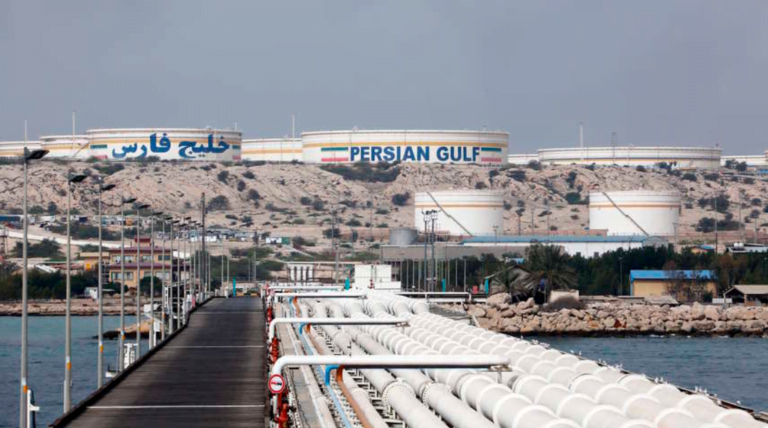
Iran has a glut of unused oil as it cuts production amid the COVID-19 pandemic and US sanctions.
Crude oil production was at its lowest level in 40 years in June and storage facilities and vessels are nearly full in Iran, Reuters reported today.
Iran had 63 million barrels of onshore oil in June. There was a surge in April at the height of the pandemic. The level of onshore reserves was only 15 million barrels in January. The June figure constitutes around 85% of Iran’s storage capabilities, according to Reuters.
Production was as low as 1.9 million barrels per day in June, the lowest level since 1981 after the start of the 1980-88 Iran-Iraq war, Reuters reported. In comparison, Iran produced more than 3.5 million barrels per day in 2018, according to OPEC data. By September 2019, production was less than 2.5 million barrels per day, according to data obtained by the BBC.
Exports have been hit as well. Reuters reported that Iran’s oil exports in May were between 100,000 and 210,000 barrels per day. In 2018, Iran exported more than 1.8 million barrels per day, according to OPEC data. And in 2019, exports were already below 500,000 barrels per day, according to the BBC.
Iran is a major oil exporter and member of OPEC. However, demand for oil is down across the world in large part due to the coronavirus. Iran itself has been hit hard by the virus, and surpassed 10,000 deaths last month.
The Islamic Republic’s oil industry is being further harmed by harsh US sanctions on the country that deter the purchase of Iranian oil. The United States has placed a variety of sanctions on Iran’s energy sector, including on the captains of Iranian vessels. The United States reimposed sanctions on Iran in 2018 after the Trump administration withdrew from the Iran nuclear deal.
US Max Pressure Aimed at Isolating Iran, Official Says
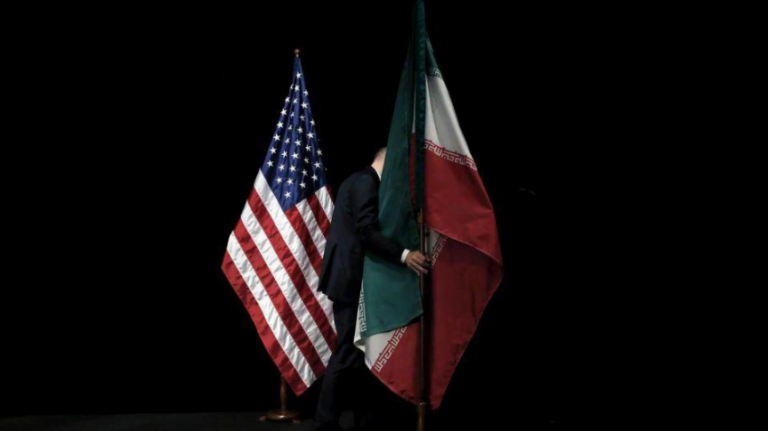
An Iranian presidential official has warned that the objective behind the Trump administration’s policy of maximum pressure on Iran is to exclude the Islamic Republic from the international connections.
In a post on his Twitter account on Tuesday, director of the Iranian Presidency’s Centre for Strategic Studies, Hesamoddin Ashena, said it appears that the ‘maximum pressure’ has been designed and implemented with the genuine and strategic purpose of disabling Iran strategically in the domestic, foreign, social and economic spheres, eliminate Iran from the global connection routes, and deprive the country of its geographical and geopolitical advantages.
He said the US’ hostile measures against Iran in recent decades are rooted in a combination of factors, including the arrogant nature of the United States, an end to American influence after victory of the Islamic Revolution, the war discourse, and the conflicts between the regional interests of Tehran and Washington.
Ashena also touched on the impact that Iran’s regional rivals and the US’ regional allies have had on Washington’s foreign policy against the Islamic Republic, adding, “Although the sanctions imposed on Iran under the Trump and the Obama administrations are apparently similar, they have essential differences.”
The sanctions imposed by Obama were rather instrumental and aimed at persuading Iran to hold talks on the nuclear industry, while the policy of maximum pressure is designed to punish Iran for the negotiations leading to the JCPOA and to ruin any chance of new and useful negotiations, he added. He further warned that a successful US policy of maximum pressure could sap Iran’s national power, result in corruption, and trigger unrest.bAshena also explained that Iran’s appropriate response to the policy of maximum pressure is not holding new negotiations with the US or even with Europe. Isolating Iran Isolating Iran
How could Iran retaliate for Natanz explosion? Analysis
Iran’s regime, led by the Islamic Revolutionary Guard Corps, believes in two types of actions. It believes first in perceived tit-for-tat responses and also in asymmetric attacks.
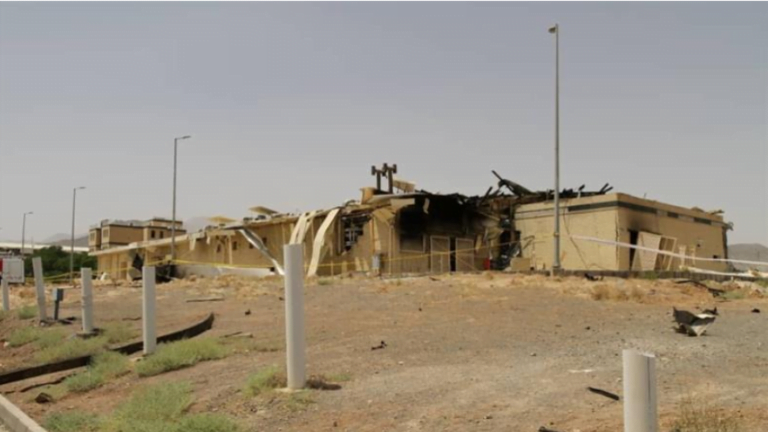
As evidence mounts and pressure builds on Tehran’s regime in the wake of the explosions that badly damaged a facility at Natanz, questions focus on how Iran might respond.
The government is in a difficult position because it labeled the explosion an accident, but it is now facing a deluge of foreign media
reports seeking to conclude that the explosion was perpetrated by a state or group.
This is what Iran’s regime is reading: Major media from The New York Times to The Washington Post and local media such as Kuwait’s Al-Jarida have all sought to assert that Israel was involved in the mysterious July 2 explosion at a warehouse in the Natanz nuclear enrichment facility.
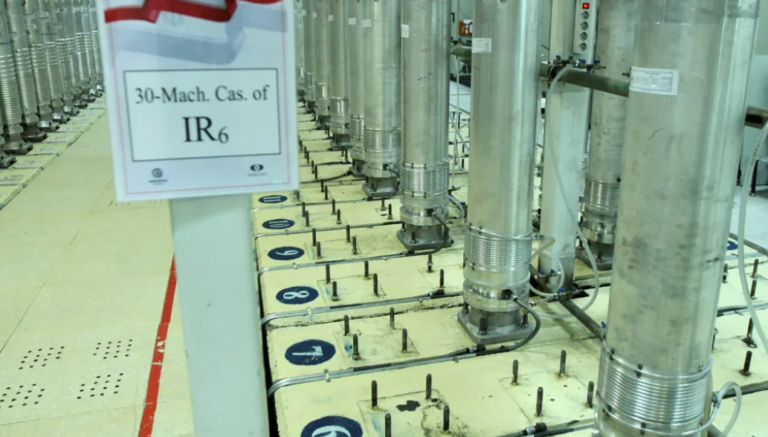
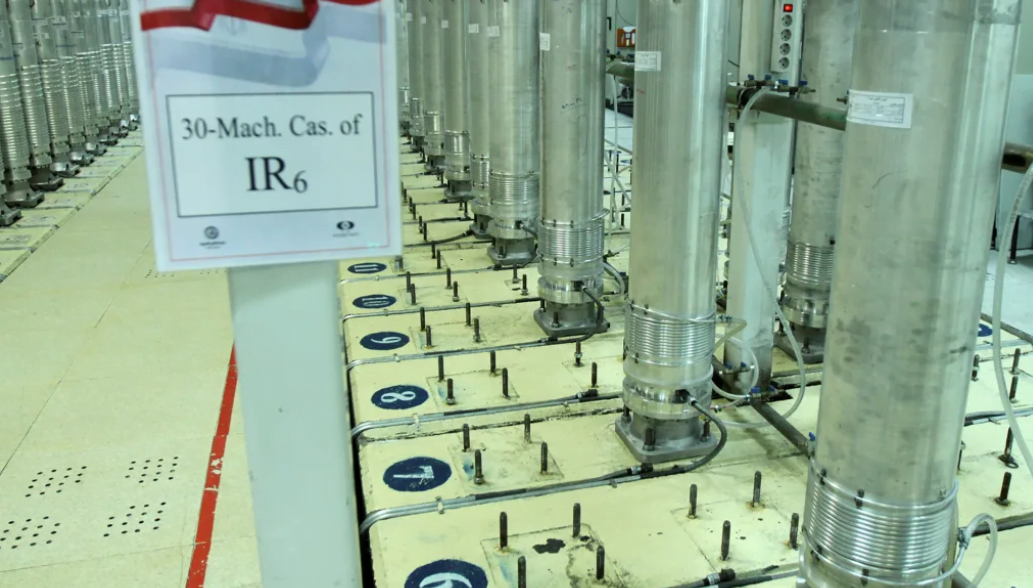
The Times and Post quoted a Middle East security official as saying the damage was done to “send a signal” to Tehran. Reports also claim damage was done to key centrifuges or possibly to advanced gas inputs to the IR-6 centrifuges. That could set back the program for months or a year.
Iran, however, is at a crossroads in other ways. It has sent tankers to Venezuela to boost gas trade. It’s supporters in Iraq may have gunned down a well-known local commentator named Husham al-Hashimi. Iran is also benefiting from a UN expert opinion that deemed the US killing of IRGC Quds Force head Qasem Soleimani an ‘unlawful’ killing. The Islamic Republic has also triggered a dispute mechanism regarding the 2015 Iran deal.
HOW MIGHT Iran respond to what it perceives as an attack, if the regime does draw that conclusion from Natanz?
Iran’s regime, led by the Islamic Revolutionary Guard Corps, believes in two types of actions. It believes first in perceived tit-for-tat responses, such as the ballistic missile strike carried out in January after Soleimani was killed by the US.
Border Guards first defensive stronghold of country: cmdr.
The commander of IRGC Ground Force, Brigadier General Mohammad Pakpour said on Monday that Border Guards are the first defensive stronghold of the country.
The commander of IRGC Ground Force, Brigadier General Mohammad Pakpour met and held talks with Commander of the Border Guard of the Law Enforcement Force of the Islamic Republic of Iran (NAJA) Second Brigadier General Ahmad Ali Goudarzi on Monday.
Emphasizing the need to boost border security in southeastern Iran, General Goudarzi said, “The interaction between the IRGC and the Border Guards in Sistan and Baluchestan region will lead to lasting security of the borders.”
The commander of IRGC Ground Force, Brigadier General Mohammad Pakpour said on Monday that are the first defensive stronghold of the country. The commander of IRGC Ground Force, Brigadier General Mohammad Pakpour met and held talks with Commander of the Border Guard of the Law Enforcement Force of the Islamic Republic of Iran (NAJA) Second Brigadier General Ahmad Ali Goudarzi on Monday.Emphasizing the need to boost border security in southeastern Iran, General Goudarzi said, “The interaction between the IRGC and the s in Sistan and Baluchestan region will lead to lasting security of the borders.” “fight against armed terrorist and drug trafficking in the region and ensure the security of the southeastern borders,” he added.
General Pakpour also noted thas are the first defensive stronghold of the country and they have done well in performing their duties. He went on to say that constructive cooperation between IRGC and can strengthen security in the border areas and step up the fight against terrorism. General Pakpour also noted that are the first defensive stronghold of the country and they have done well in performing their duties. He went on to say that constructive.
U.S. Calls Iran ‘Greatest Threat’ After Warning About Hidden Missile Cities
The United States has responded to a warning from the head of the maritime branch of Iran’s elite Revolutionary Guard after he touted the country’s vast hidden missile complexes he said were capable of deterring any attack.
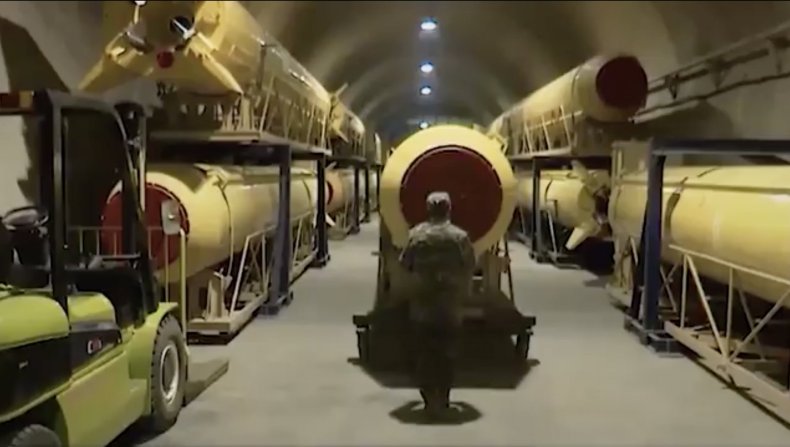
Revolutionary Guard Navy commander Rear Admiral Alireza Tangsiri told Iranian magazine Sobh-e Sadeq that his forces established “underground cities” armed with missiles onshore and offshore along the coasts of the Persian Gulf and the Gulf of Oman, calling them “a nightmare” for Iran’s foes, especially the U.S.
He said his forces were in possession of advanced, long-range missiles and that new weapons were on the way to better protect Iran’s shores.
Reached for comment, the Pentagon referred Newsweek to the State Department, where a spokesperson criticized the Tangsiri’s remarks.
“Iran claims to want good relations with its neighbors, yet it continues to threaten them with even greater levels of violence,” the spokesperson told Newsweek. “Iran is the greatest threat to peace and security in the Middle East.
Statements like this demonstrate clearly that the Islamic Revolutionary Guard Corps and its leaders are a destabilizing force in the region.”
Iran has occasionally shown off a sprawling series of underground tunnels and command centers involved in the country’s missile program, the largest and the most advanced in the Middle East.
Some analysts have attempted to geolocate these facilities and, while Tangsiri acknowledged Sunday that Iran’s foes were aware of the military’s hidden missile sites, he said they had “inaccurate information.”
A member of Iran’s Revolutionary Guard transports a Qiam-1 missile in an underground facility in this video shared May 23, 2019.IRAN MILITARY ACHIEVEMENTS MEDIA
Iran’s continued pursuit of missile technology was among the reasons cited by President Donald Trump in his decision to leave a multinational nuclear deal in 2018. His administration has since laid heavy trade sanctions on Tehran, accusing it of secretly seeking nuclear weapons and of funding foreign militias.
The Explosion at Natanz Is a Direct Hit on Iran’s Nuclear Program
The latest events in Iran, in particular the explosion at the nuclear facility in Natanz on Thursday, represent a significant rise in tensions in the region, even if the various countries are still preoccupied with the coronavirus pandemic and its consequences.
Figures in Iran have already blamed Israel for the explosion, saying it may have been caused by a cyberattack. If that is so, according to past reports of exchanges between the two sides, it would suggest that Iran will try to respond, possibly with yet another cyberstrike of its own.
The chain of incidents in Iran began in the middle of last week, with an explosion at a weapons development facility in Parchin. It was followed by an explosion at a site in Tehran that was described as a hospital, and that resulted in casualties. The Natanz explosion came later, and on Saturday a fire was reported at a power station in the southern Iranian region of Ahvzaz, close to the Iraqi border.
The temptation to draw a connection among all of these incidents is great, but it’s not clear that all were the result of planned attacks or that all were planned by the same entity. The power station, for one, is very far from the other sites, and it’s not known to be connected to any Iranian military program. It was only regarding the Natanz incident that Iranian officials, speaking to reporters from Reuters, pointed the finger at Israel.
The underground facility that was damaged in Natanz is at the heart of the debate on Iranian violations of the nuclear agreement. It’s where the newer, faster centrifuges that accelerate the rate of uranium enrichment are assembled. The agreement that the Obama administration championed, which was signed in 2015, left Iran with an estimated “breakout time” to the creation of a nuclear bomb of about one year.
Sorry, Russia: Iran is Building Their Own Domestic Tanks Now
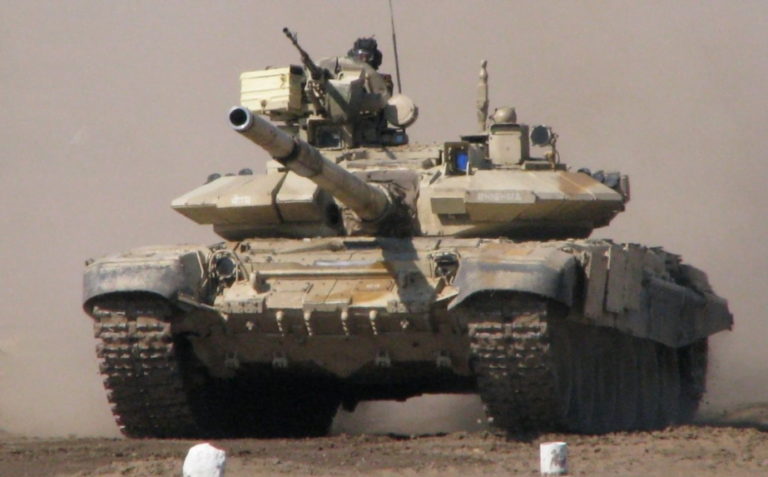
The Islamic Republic Ground Corps had announced it would receive at least 800 of the new tanks, which despite no assistance from Russia, do closely resemble the T-90S.
Here’s What You Need to Remember: Iranians have shown that they were, in fact, serious about moving away from its reliance on Russian imports to bolster its military arsenal.
In 2016 Russia’s Uralvagonzavod announced that it would allow Iran to license-build the T-90S main battle tank (MBT) domestically once restrictions on technical cooperation were lifted. In addition, the Russian military firm said it will also help the Islamic Republic’s Army modernize its existing T-72 fleet.
However, even four years ago Tehran had other ideas – which included building its own tanks without help from Moscow. Now it looks as if that has finally occurred.
Last week the Commander of the Iranian Army Ground Forces, Brigadier General Kiomars Heidari, spoke on Iranian state TV and said that the Defense Ministry and the Armed Forces have jointly developed a domestically-built T-90 MBT. This new tank is undergoing final tests before being delivered to the Army Ground Force.
Heidari said the tank is equipped with a new gun stabilizer and chemical defense systems, and was conceived as a weapon for modern warfare. The Iranian Army Ground Force will reportedly take delivery of the first batch of the tanks in the Iranian month of Mehr – September 22 to October 21.
The efforts to build the tank domestically have been ongoing since Iran announced it would do so without Russian help. The Islamic Republic Ground Corps had announced it would receive at least 800 of the new tanks, which despite no assistance from Russia, do closely resemble the T-90S.
The tank was dubbed the “Karrar” (Striker) when the program was announced in 2017 – but in the most recent announcements on state TV, that name wasn’t used.