Consignment of Transit Goods from Afghanistan Shipped to India via Iran
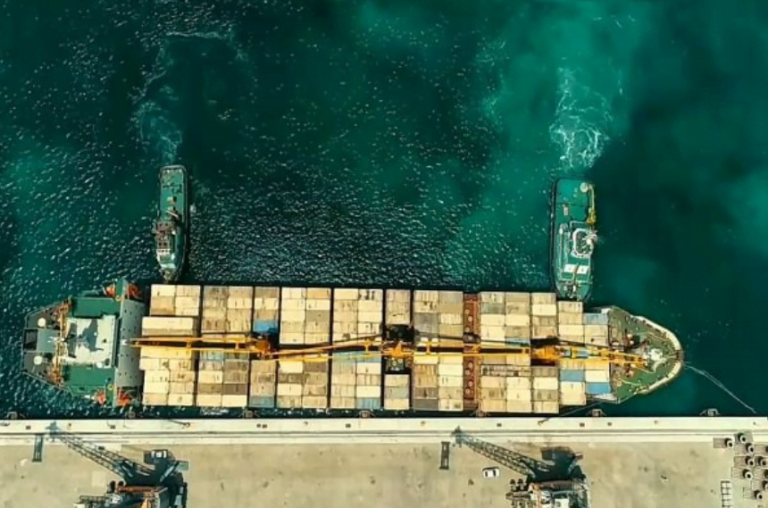
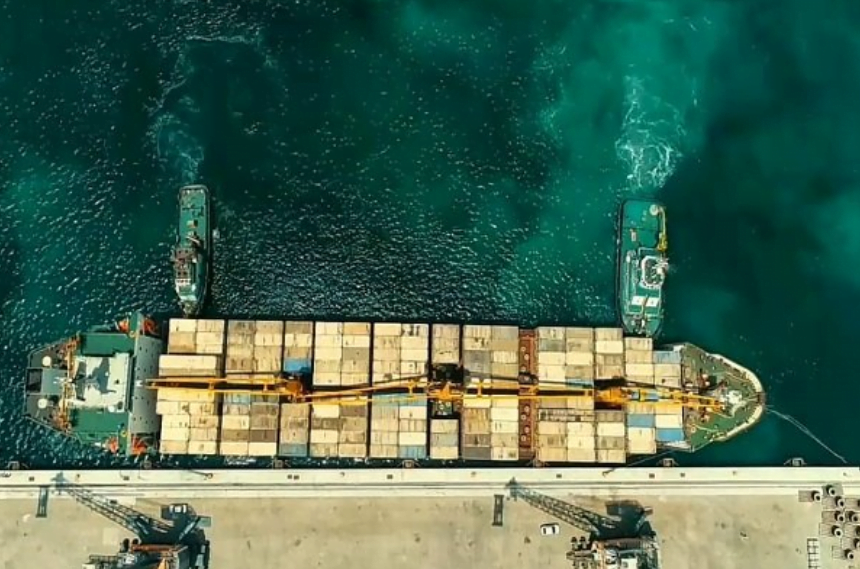
A shipment of transit goods has, for the first time, been transported to India via a port in southern Iran.
The consignment was sent to India through Shahid Beheshti port in Chabahar in line with a trilateral agreement signed by Iran, India and Afghanistan.
During the transit operations, as many as 30 refrigerated containers and nine ordinary ones all of which contained transit commodities coming from Afghanistan and destined for the Indian ports of Mundra and Nhava Sheva were loaded onto a vessel and shipped out to India, said a ports and maritime official.
A shipment of transit goods has, for the first time, been transported to India via a port in southern Iran. The consignment was sent to India through Shahid Beheshti port in Chabahar in line with a trilateral agreement signed by Iran, India and Afghanistan. During the transit operations, as many as 30 refrigerated containers and nine ordinary ones all of which contained transit commodities coming from Afghanistan and destined for the Indian ports of Mundra and Nhava Sheva were loaded onto a vessel and shipped out to India, said a ports and maritime official. “This is the first time that a container ship only carries container goods when leaving Shahid Beheshti port in Chabahar in keeping with the implementation of a trilateral deal between India,
Afghanistan and Iran,” the official added. A shipment of transit goods has, for the first time, been transported to India via a port in southern Iran. The consignment was sent to India through Shahid Beheshti port in Chabahar in line with a trilateral agreement signed by Iran, India and Afghanistan. A shipment of transit goods has, for the first time, been transported to India via a port
Iran declines to disclose cause of fire at Natanz nuclear site
Iranian investigators have determined the cause of a fire at the Natanz nuclear plant, a spokesman for Iran’s top security body said on Friday, while declining to immediately release details of the findings over “security reasons”.
The National Security Council’s statement came as Gholamreza Jalali, the head of Iran’s civilian defence, told state television that Tehran would retaliate against any country that carries out cyberattacks on its nuclear sites.
Reuters News Agency, citing three Iranian officials, said the fire at Natanz, which occurred early on Thursday, was caused by cyber sabotage.
But Reuters said the officials did not offer evidence to back the claim.
The Natanz uranium-enrichment site, much of which is underground, is one of several Iranian facilities monitored by inspectors of the International Atomic Energy Agency (IAEA), the United Nations nuclear watchdog.
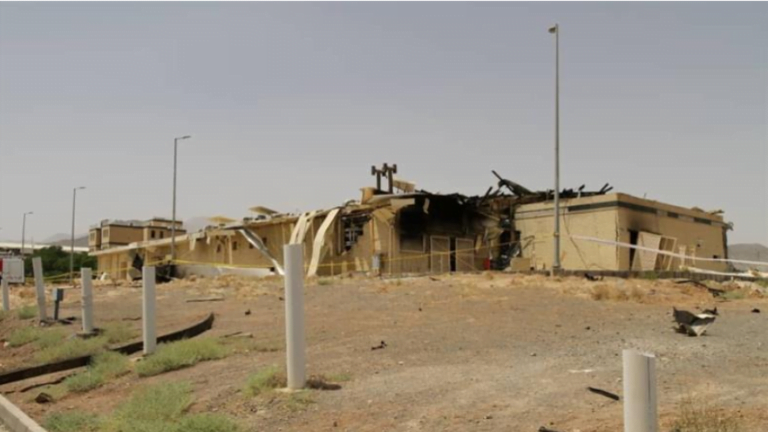
Iran’s Atomic Energy Organisation initially reported an “incident” had occurred early on Thursday at Natanz, located in the desert in the central province of Isfahan. It later published a photo of a one-storey brick building with its roof and walls partly burned.
A door hanging off its hinges suggested there had been an explosion inside the building.
The IAEA said none of its inspectors was at Natanz at the time of the fire and “that the location where the incident occurred does not contain nuclear materials”.
‘Cheetah’s of Homeland’
Keyvan Khosravi, spokesman for the National Security Council, told IRNA news agency late on Friday that experts have “determined the main cause of the incident” but it “will be declared in due course for security reasons”.
The mystery around the incident deepened after BBC reported that an unknown group called the “Cheetah’s of the Homeland” claimed responsibility for the attack in a statement sent to the network’s Persian service journalists before news of the fire became public.
A video claimed the group included “soldiers from the heart of regime’s security organisations” who wanted to stop Iran from acquiring a nuclear weapon. Iran long has maintained its atomic programme is for peaceful purposes.
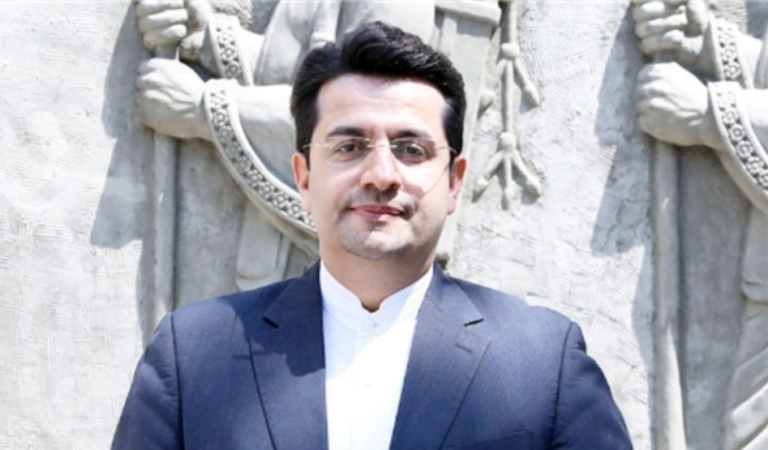
Iranian Foreign Ministry Spokesman Seyed Abbas Mousavi boasted the country’s self-sufficiency in production of different defensive tools, stressing that Iran is proud of the missiles built by the Islamic Revolution Guards Corps (IRGC) as a source of reliance.
“It is a good feeling when the IRGC unveils and tests a missile and it is our backing,” Mousavi said on Friday.
He underlined Iran’s self-sufficiency in production of different missiles, and said, “Now, we can even export them and take revenge [for enemies’ attacks], target the ISIL and hit the murderers of General Soleimani.”
Iran has produced different powerful missiles and missile defense shields in recent years, including Third of Khordad.
A year after a US intruding drone was shot down over the Southern coasts of Iran by the IRGC Aerospace Force, new images of the naval version of the missile system were released for the first time in June.
The system has been stationed on the IRGC Shahid Siavoshi frigate and is capable of target lock and missile fire with the frigate on the move. Seyed Abbas Mousavi
Third of Khordad missile system, that has been 100% mass produced by the experts of the IRGC Aerospace Force, is the same system which shot down on June 20, 2019 the highly advanced MQ-4C Triton drone of the American terrorists in Iran’s territorial waters South of the country near Kouh-e Mobarak region at an altitude of 50 thousand feet.
This system is capable of engaging and intercepting 4 active targets at each round and has been assigned for countering tactical and strategic aircraft, helicopters, cruise missiles and drones and can also shoot down its targets under electronic warfare conditions.
Last year, IRGC Aerospace Force Commander Brigadier General Amir Ali Hajizadeh had informed of designing and making a missile system that, unlike the existing systems in the world, can trace, lock, engage and intercept targets on a moving platform.
Fate Of Four Iranians Kidnapped In Lebanon In 1982 Still Stirs Controversy
The Director of the Islamic Revolution Guards Corps, IRGC-affiliated Owj Media Organization has published a statement insisting that four Iranian government employees abducted, in northern Lebanon in 1982, were killed on the spot.
Meanwhile, “commemorating the name and memory of the abducted diplomats,” Iranian Ministry of Foreign Affairs announced on Friday, July 3, “Some evidence shows that Iranian diplomats, abducted in Lebanon, have been handed over to the Zionist (Israeli) regime and subsequently transferred to the occupied lands and territories.”
Although there is information about the burial place of the four Iranians, and several groups including an Iranian documentary film crew have seen the evidence of the four men’s killing in northern Lebanon, the Ministry has stressed that it will continue efforts to determine the fate of abducted Iranians it claims are behind bars in Israel.
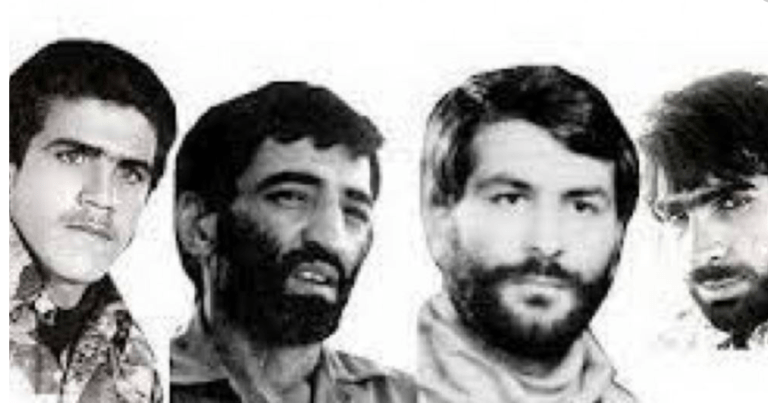
According to Iranian government officials and media, a military attaché at Tehran’s embassy in Beirut, Ahmad Motovasselian, along with Iranian chargé d’affaires in Lebanon, Mohsen Mousavi, an employee of the embassy, Taqi Rastegar Moqaddam, and a photographer for the Islamic Republic News Agency (IRNA), Kazem Akhavan, were abducted on July 4, 1982.
Kataeb Party (also called Phalange), a predominantly Christian Lebanese right-wing party, is responsible for the abduction, Iranian officials have repeatedly maintained.
Since then, there has been no official information about their fate.
Nonetheless, on Friday, July 3, the state-run Mehr News Agency (MNA) published a note signed by the Director-General of the IRGC-linked Owj Arts and Media Organization, Ehsan Mohammad Hassani, claiming that the four were “kidnapped” on the Mediterranean coast by “Lebanese forces” loyal to the executive chairman of the Lebanese Forces at the time, Samir Geagea.
After being kidnapped, the four were killed by a firing squad under Geagea’s control, Mohammad Hassani asserted in his note, adding that the four’s burial site is known.
At the same time, Mohammad Hassani called the IRGC’s extraterritorial arm, the Qods Force, to cooperate with the Islamic Republic Foreign Ministry and search the burial place.
In another part of his note, Mohammad Hassani says, “presuming that the four are still alive,” might have “benefits” for “profit-seeking pragmatic faction.” This is a veiled reference perhaps to some in Iran’s foreign ministry who still insist the kidnapped people are alive and justify a lot of activities promising to free them from Israeli detention.
Six Months After Soleimani, Iran’s War Machine Tested But Lives On to Fight
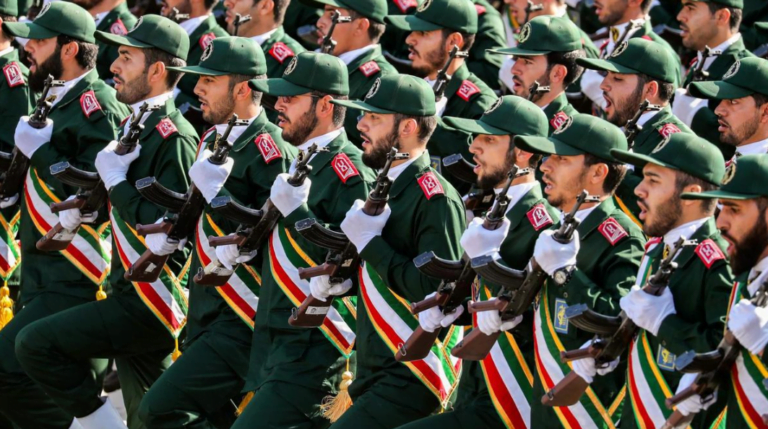
Six months after the U.S. killing of Iran’s Revolutionary Guard (IRGC) Quds Force commander, the Islamic Republic’s ability to fight on without its most famous military leader has been tested but its sophisticated, international war-fighting machine lives on.
Major General Qassem Soleimani’s fiery slaying at Baghdad International Airport in Iraq was the product of a top-secret operation hidden from much of the United States’ own vast espionage network but news of his death immediately sparked reactions from across the Middle East and beyond. While international experts as well as officials from Iran and Israel speaking to Newsweek were split as to whether or not the military leader’s death had a lasting effect on Iran’s sprawling web of aligned forces in the region half a year later, all agreed the Revolutionary Guard and its esteemed, extraterritorial Quds Force would likely fight on for some time.
“The strength of the Quds Force is that it does not rely on a single charismatic leader—any more than the Islamic Republic of Iran does,” Barbara Slavin, director of the Atlantic Council’s Future of Iran Initiative, told Newsweek.
“The Quds Force and IRGC are full of veterans of the Iran-Iraq war and other commanders who are now battle-tested in Syria,” she added. “There will be more Soleimanis.”
The fallen general’s successor, Brigadier-General Esmail Ghaani, has largely maintained a low profile both before and after his sudden promotion in January. He has, however, made some bold moves reportedly visiting Iraq last month and taking a trip last week to Syria, where he released a rare public message to bolster the Iran-affiliated Axis of Resistance against the U.S. and Israel, which has increasingly struck targets linked to Iran in Syria.
“Soleimani has been replaced and his strategy lives on,” Slavin said. “He is a hero and a new martyr for an organization that values such individuals.”
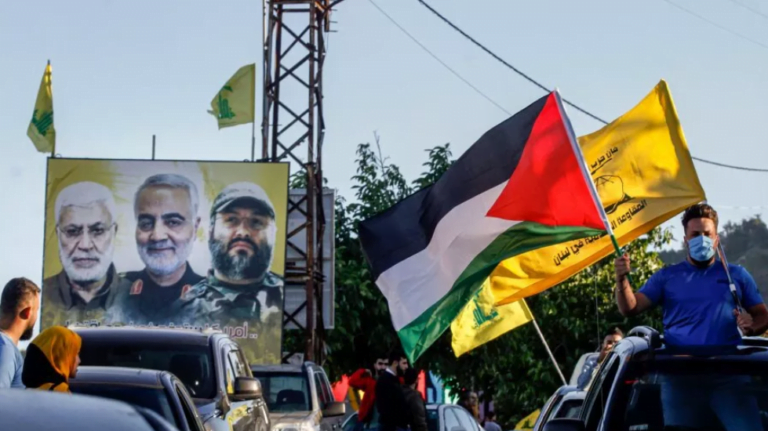
She said it was too early to evaluate the leadership of Ghaani, who himself played a pivotal role in forging Quds Force ties with Shiite Muslim militias hailing from Afghanistan and Pakistan. In the Middle East, she saw Iranian allies such as Lebanon’s Hezbollah, hardline factions of Iraq’s Popular Mobilization Forces, and Yemen’s Ansar Allah, also known as the Houthis, continuing their struggles.
IRGC commander wounded in roadside bombing, state media says
A roadside bombing in south-east Iran has wounded a commander of the country’s powerful Revolutionary Guard, a semi-official news agency reported on Tuesday.
The report by the Isna news agency did not provide further details on the attack except to say the commander’s vehicle had struck the roadside bomb, setting it off.
The agency quoted Fadahossein Maleki, a politician from the Sistan-Baluchistan province near the Pakistani border where the attack took place, as blaming a Sunni separatist group affiliated with Al Qaida, known as Jeish Al Adl, for allegedly being behind the attack.
There was no claim of responsibility for the bombing and Isna did not identify the wounded Revolutionary Guard commander. Jeish Al Adl — or Army of Justice in English — has been behind several attacks in Iran in recent years. Iran says it operates from across the border in Pakistan. The south-east Sistan-Baluchistan province has been the scene of occasional clashes between government forces and militants, as well as armed drug smugglers. In 2019, a suicide car bomber claimed by Jeish Al Adl attacked a bus carrying members of the Revolutionary Guard force, killing 27 troops. There was no claim of responsibility for the bombing and Isna did not identify the wounded Revolutionary Guard commander. Jeish Al Adl — or Army of Justice in English — has been behind several attacks in Iran in recent years. Iran says it operates from across the border in Pakistan. The south-east Sistan-Baluchistan province has been the scene of occasional clashes between government forces and militants, as well as armed drug smugglers. In 2019, a suicide car bomber claimed by Jeish Al Adl attacked a bus carrying members of the Revolutionary Guard force, killing 27 troops. There was no claim of responsibility for the bombing and Isna did not identify the wounded Revolutionary Guard commander. Jeish Al Adl — or Army of Justice in English — has been behind several attacks in Iran in recent years.
Iran Regime’s New Report on Ukrainian Airliner Crash Underlines Need for Independent International Inquiry
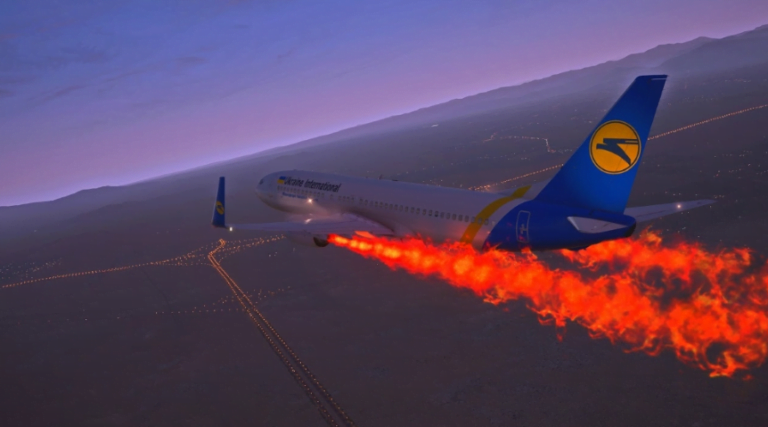
Nearly sixmonths after shooting down a Ukrainian passenger jet, killing all 176 passengers aboard, the Iranian regime published a ridiculous report blaming an operator, who had “not obtained a license.” Ukrainian Airliner Crash
The publication of such a bogus report underlines the necessity of an independent international inquiry about this tragedy.
The state-run IRNA news agency, quotedGholam-Abbas Torki, Tehran’s Military prosecutor, who has published this report, as saying: “The defense system’s operator shot without obtaining a license from the network. This was the huge mistake.
When the system operator identifies a target as a threatening target, it must notify its superior, which is the defense network, and act on the network’s command.Two missiles were fired by the defense system, and experts say one of the missiles had no effect on the plane and the other exploded near the plane.
Twenty-six seconds is the distance between the first and second shots, but unfortunately even during this time the operator did not get permission to shoot the second shot from the network.”
Torki’s remarks and the mullahs’ regime report are failed attempts to coverup and whitewash the role of the regime’s Revolutionary Guards (IRGC) in this tragedy and to help top officials, such as the regime’s Supreme Leader Ali Khamenei and President Hassan Rouhani, get away from the consequences of this crime against humanity.
Yet, Torki’s remarks confirm that this tragedy was preventable. Crash Crash
On January 11, after three days of consecutive denial and cover-up, the Iranian regime admitted it has shot down a Ukrainian passenger jet, a Boeing 737–800, enroute from Tehran International Airport to Kyiv with an anti-aircraft missile.
Previously, the regime’s officials said the airplane crashed due to some technical issues. This bogus claim was rapidly rejected by heads of states, including those of the United States and Canada, the latter having dozens of its citizens among the victims.
Iran ramps up its ‘maximum pressure’ campaign on US, Israel, Saudia
Iran is preparing for a great struggle against the United States this summer. It entails working with Russia and China to end an arms embargo; cooperating with Turkey to subvert US sanctions; and providing weapons technology to its allies in Iraq, Syria, Lebanon and Yemen.
This is Iran’s own version of the Trump administration’s “maximum pressure” campaign. It kicked off more pressure last month and looks set to continue it into July.
This involves discussions with the Taliban and Qatar about Afghanistan, where US troops are based; trying to get allies in Iraq to harass US troops; and encouraging recent rocket fire by Hamas and the Houthis and protests against the US in Syria.
How does Iran exert maximum pressure against the Americans? It plays the Middle East like a piano, keying in various partners and allies when necessary. For instance, Iranian allies in Iraq this week humiliated the prime minister in Baghdad by burning his image, and they are pushing to get the US to leave.
Kataib Hezbollah, a member of the Iraqi security forces and a pro-Iran militia, has said it will not lay down its weapons, mocking the US for trying to get its members detained.
Then Iran brings out Hadi al-Ameri, who heads the Badr organization and the second-largest party in Iraq’s parliament and is a former fighter alongside the Iranian IRGC in the 1980s. This week he said US jets are violating Iraqi airspace and that US forces must be expelled.
Iran also supplies the Houthi rebels in Yemen with missile and drone technology. On June 23, the Houthis fired drones and missiles at Saudi Arabia in an attack aimed deep inside the country. Tehran celebrated the move and appears to have been behind it. The UN and the US have both accused Iran of involvement in previous attacks and of smuggling weapons to Yemen.
Warplanes said to strike Iranian base in Syria after visit by IRGC head
Unidentified aircraft bombed Iran-backed forces in Syria near an Iraqi border crossing known as a key weapons conduit, a war monitor said Saturday.
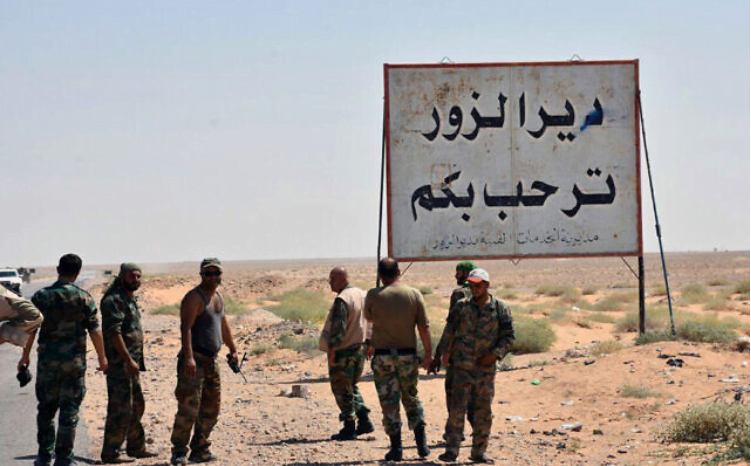
Four Syrian nationals were among six people killed in the raids on sites near al-Abbas village, in the Al-Bukamal region east of Deir Ezzor, said the Britain-based Syrian Observatory for Human Rights. It said the raids targeted Iranian sites and allied militias.
It was not immediately clear if the Syrian nationals were soldiers with the Syrian army.
The war monitor did not confirm who was behind the attack but said Israel was “likely responsible.”
There were no claims of responsibility.
The reported strike came hours after semi-official media in Iran reported that Islamic Revolutionary Guards Corps head Esmail Ghaani had visited Iranian troops in the area and had spoken out against Israel and the US.
The report in Iran’s Tasnim news agency, seen as closely linked to the IRGC, was since removed without explanation, and other Iranian sites did not mention the visit of Ghaani, who took over as the head of the hard-line paramilitary force earlier this year following the assassination of Qassem Soleimani.
During the visit, Ghaani accused Israel and the US of propping up the Islamic State terror group, according to Reuters, which cited the original Tasnim report.
Iran state media are reporting Revolutionary Guards (IRGC) Quds Force chief Esmail Ghaani recently visited Albu Kamal in east Syria.
There was no immediate confirmation of the attack from Israeli or Syrian sources.
In May, private Israeli satellite imagery analysis firm ImageSat International released photos it said showed that Iran was constructing a new underground weapons storage facility at the Imam Ali base in the al-Bukamal region of Syria, which is believed to be run by Iranian forces.
The Revolutionary Guard militia engages in direct conflict with Assad’s forces and Russia
Last Thursday (June 25), the Iranian Revolutionary Guard Militia command forced the 11th Division of Assad’s forces to remove their checkpoints from the entrance of Al-Bukamal, a source told Deir Ezzor 24 network.
According to the source, the Iranian Revolutionary Guard militia command also prevented the Russian-backed Al-Quds Force militia from opening headquarters or setting up checkpoints in al-Bukamal city.
These new actions of the Iranian Revolutionary Guard militia against Assad’s forces and Al-Quds force militia are taking place at a time of great tension between the Iranian Revolutionary Guard militia leadership and the Russian forces, in what appears to be a struggle for power in Deir Ezzor province. Al-Bukamal Assad’s forces Struggle The Iranian Revolutionary Guard The Russian forces. IRGC militia IRGC militia IRGC militia
The Islamic Republic of Iran and the Syrian Arab Republic are close strategic allies, and Iran has provided significant support for the Syrian government in the Syrian Civil War, including logistical, technical and financial support, as well as training and some combat troops. Iran sees the survival of the Syrian government as being crucial to its regional interests.[32][33][34] When the uprising developed into the Syrian Civil War, there were increasing reports of Iranian military support, and of Iranian training of the National Defence Forces both in Syria and Iran.
Iranian security and intelligence services are advising and assisting the Syrian military in order to preserve Bashar al-Assad‘s hold on power.[32] Those efforts include training, technical support, and combat troops.[32][36] Estimates of the number of Iranian personnel in Syria range from hundreds to tens of thousands.[33][37][38] Lebanese Hezbollah fighters, backed by Iran’s government, have taken direct combat roles since 2012.[33][39] From the summer of 2013, Iran and Hezbollah.