Home Blog Page 157

Pompeo: US imposes 9 more sanctions on exports Iran uses to fund its Revolutionary Guard

0
Pompeo: US imposes 9 more sanctions on exports Iran uses to fund its Revolutionary Guard


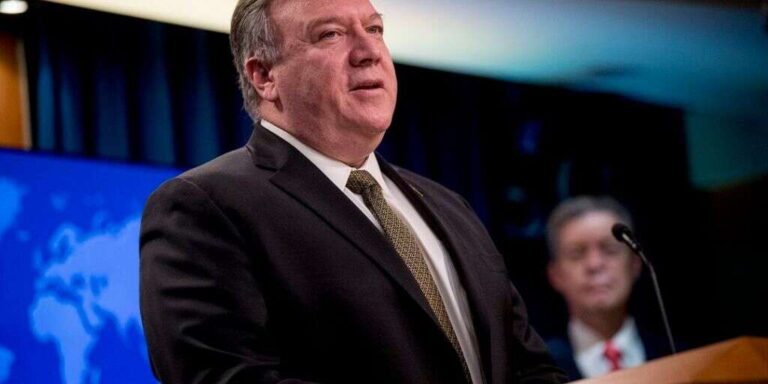
Secretary of State Mike Pompeo announced Thursday that the U.S. has imposed additional sanctions on Iran’s metal exports that supply revenue for the country’s Revolutionary Guard Corps.


Eight companies in Iran were designated as businesses working in the iron, steel and aluminum sectors affiliated with the Mobarakeh Steel Company — which had previously been placed under U.S. sanctions.


The U.S. also placed sanctions on a Chinese company based out of Hong Kong, known as the Global Industrial and Engineering Supply Ltd., for providing graphite — a vital material in Iran’s metal industry — to Tehran in 2019.


“As part of our maximum pressure campaign, the United States designated eight entities connected with Iran’s metal industry and designated an entity that transferred material to Iran that is critical to Tehran’s metal plants,” Pompeo said in a statement.


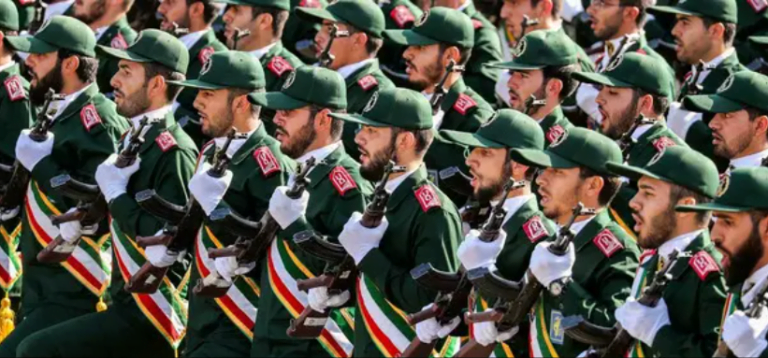
The Revolutionary Guard is a branch of the Iranian armed forces and was designated a terrorist organization by President Trump in April 2019.

Iran reportedly uses the funds it receives from the exports of its metal industry to provide funding for the Revolutionary Guard.


“Any person doing business with [Revolutionary Guard] or conducting prohibited transfers of graphite to Iran risks sanctions,” Pompeo said.


The companies have also been added to the list of “blocked persons,” preventing them from entering the U.S.


Read More


Also Read: Kurdish Prisoner, 27, Secretly Executed Despite Judge Agreeing He Was Innocent


The U.S. has imposed strict sanctions on Iran since President Trump pulled out of the Iranian nuclear deal in 2018, calling the Obama-era agreement “decaying and rotten.” Pompeo on Tuesday also urged the United Nations Security Council to indefinitely extend the arms embargo on Iran, which is set to expire in October. Iran faced additional criticism from the International Atomic.
Kurdish Prisoner, 27, Secretly Executed Despite Judge Agreeing He Was Innocent

Kurdish Prisoner, 27, Secretly Executed Despite Judge Agreeing He Was Innocent


Death Sentence Was Result Pressure from Revolutionary Guards


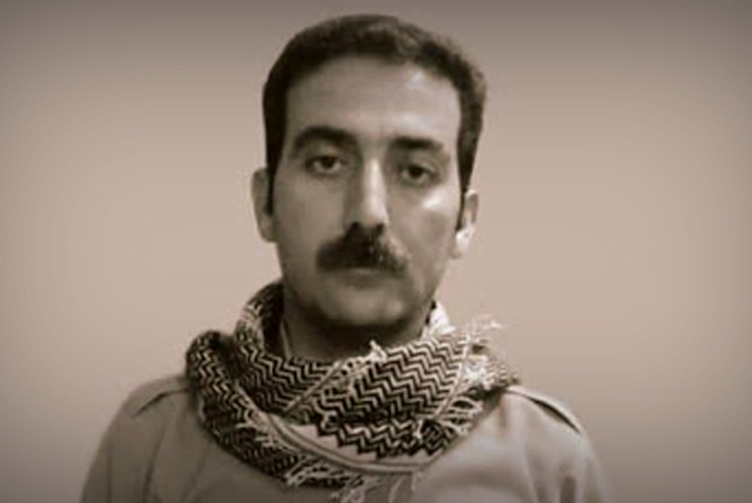
The family of Hedayatollah (Hedayat) Abdollahpour27-year-old Kurdish-Iranian father of two who was on death row based on false charges since 2018, has been informed of his death weeks after he was secretly executed in western Iran, his father informed the Center for Human Rights in Iran (CHRI).


The execution was carried out despite the fact that one of the judges in the case had earlier told Hedayat’s attorney that he was innocent of any wrongdoing and that the death sentence was a result of pressure froIran’s Islamic Revolutionary Guards (IRGC).


The lawyer explained to CHRI in an earlier interview that the IRGC sought harsh sentences aimed at dissuading locals from any cooperation with Kurdish opposition groups in the area.


Abubakr Abdollahpour said the death certificate stated that his son had died on May 11, 2020, “from being struck by sharp objects.”


My son’s death certificate, given to us today [June 24],confirms that they executed my son,” Abubakr said. “We have not seen his body, nor his execution or where he has been buried.”


“He was in the central prison in Oroumiyeh [West Azerbaijan Province] but was taken to Oshnavieh [also in West Azerbaijan Province] to enforce his (death) sentence… They say he was executed by a firing squad in the presence of Revolutionary Guard families whose sons were killed in a clash in Oshnavieh.”


Aauto mechanic from a village near OshnaviehHedayatollah Abdollahpour was arrested in late June 2016 following a clash between members of the banned, separatist Democratic Party of Iranian Kurdistan (DPIK), based in Northern Iraq, and the IRGC near Oshnavieh.


Read More


Also Read: Israel and Iran: ‘Cyber winter is coming’

Israel and Iran: ‘Cyber winter is coming’

0
Israel and Iran: ‘Cyber winter is coming’


A new front has opened in the increasingly intense cyber contest between Israel and Iran. On 24 April, a water facility in central Israel was hit by a cyberattack attributed to Iran’s Islamic Revolutionary Guard. Cyber winter is coming


The head of Israel’s National Cyber Directorate, Yigal Unna, declared that this development would be remembered as ‘a point of change in the history of modern cyberwars’.


Two weeks later, Israel retaliated with a cyber strike that temporarily disrupted operations at a busy Iranian port.


The tit-for-tat cyber strikes between Iran and Israel may be a taste of future warfare. Attacks against infrastructure and industrial control systems look set to become more prominent as the cyber capacity of less advanced states grows.


At the time, Israel downplayed the incident, simply describing it as an attempted attack that was dealt with by the water authority and the National Cyber Directorate. It said that no harm had been done to the water supply and that systems continued to operate without interruption. Only on 7 May was the attack first attributed to Iran.


Subsequent reporting, citing anonymous foreign intelligence officials, indicated that the attack was routed through US and European servers and ‘targeted “programmable logic controllers” that operate valves for water distribution networks’.


Iran was able to seize control of or alter operating systems and wipe data from at least six sites, and potentially from dozens, although it was unable to disrupt water supplies or waste management. The level of sophistication of the attack was described by one intelligence official as ‘miserable’.


However, an official cited by the Financial Times said later that the attack was more sophisticated than Israel initially thought. It was close to successful, and it wasn’t clear why it didn’t succeed.


The aim of the attack may have been to increase the amount of chlorine added to the water, which could have triggered fail-safe measures that would have left thousands of farmers and householders without water during a heat wave and pandemic.


Read More


Also Read: Special Report: Inside Iran’s Secret Project to Produce Aluminum Powder for Missiles

Special Report: Inside Iran’s Secret Project to Produce Aluminum Powder for Missiles

0
Special Report: Inside Iran’s Secret Project to Produce Aluminum Powder for Missiles
                  Special Report: Inside Iran’s Secret Project to Produce Aluminum Powder for Missiles


At the edge of the desert in North Khorasan province in northeast Iran, near the country’s largest deposit of bauxite, sits an aluminum production complex that the government has publicly hailed as a key part of its efforts to boost output of the metal.


But the site near the city of Jajarm is also home to a secret facility set up by Iran’s elite security force, the Islamic Revolutionary Guards Corps, that has been producing aluminum powder for use in its missile program, according to a former Iranian government official and documents relating to the facility he shared with Reuters.


Aluminum powder, derived from bauxite, is a key ingredient in solid-fuel propellants used to launch missiles.


Iran started producing the powder for military use more than five years ago, according to the former official, who from 2013 until 2018 was head of public relations and also parliamentary affairs envoy in the office of the vice president for executive affairs, which at the time oversaw some economic policies.


The ex-official, Amir Moghadam, said he visited the little-known facility twice and that production was continuing when he left Iran in 2018.


Iran’s production of aluminum powder for use in missiles, which hasn’t previously been reported, was developed amid international sanctions designed to block the country’s efforts to acquire advanced weapons technology.


The United States and allies view Iran’s missile capabilities as a threat to the region and the world.


Reuters reviewed more than a dozen documents relating to the aluminum powder project and people involved, dating from 2011 to 2018.


One is a letter addressed to Iran’s Supreme Leader Ayatollah Ali Khamenei from a Revolutionary Guards commander whose brother has been described by the Iranian state as the father of Iran’s missile program.


In the letter, Mohammad Tehrani Moghadam described the Jajarm facility as a “project to produce missile fuel from metal powder” and said it played a significant role in “improving the country’s self-sufficiency in production of solid fuel for missiles.” The letter is undated but appears to be from 2017, based on references to events.


Read More


Also Read: U.S. Report: Iran’s Support for Terrorism

U.S. Report: Iran’s Support for Terrorism

0
U.S. Report Iran’s Support for Terrorism
                                 U.S. Report: Iran’s Support for Terrorism


In 2019, Iran supported terrorist organizations across the Middle East, including Hezbollah in Lebanon, Shiite groups in Iraq and Palestinian groups in Gaza, the State Department said in the annual report on terrorism released on June 24, 2020.


The report also accused Tehran of helping the Assad regime crush the opposition in Syria, plotting to assassinate Iranian dissidents in Europe, and harboring al Qaeda operatives in Iran. “If Iran wants to rejoin the community of responsible nations, here is a start: Crack down on the terrorists that caused 9/11.


Crack down on the terrorist proxies that foment violence around the world,” Ambassador Nathan Sales, the head of the Counterterrorism Bureau, said. In response, the Trump administration has increased attempts to contain Iran.


“We designated the IRGC (Islamic Revolutionary Guard Corps), including its Qods Force, as a terrorist organization, the first time the authority has ever been used on a foreign government,” Secretary of State Mike Pompeo told reporters. The report highlighted how the Qods Force supplies proxies, extremist groups and militias that create instability in the region.


“We kept pressure on Iranian proxies like Hizballah by encouraging our partners to designate or ban them, as Paraguay, Argentina, and now the United Kingdom did just last year,” Pompeo added. The following is an excerpt from the report on Iran.


Iran


Designated as a State Sponsor of Terrorism in 1984, Iran continued its terrorist-related activity in 2019, including support for Hizballah, Palestinian terrorist groups in Gaza, and various terrorist groups in Syria, Iraq, and throughout the Middle East.


Iran used the Islamic Revolutionary Guard Corps-Qods Force (IRGC-QF) to provide support to terrorist organizations, provide cover for associated covert operations, and create instability in the region.


Iran has acknowledged the involvement of the IRGC-QF in the Iraq and Syria conflicts, and the IRGC-QF is Iran’s primary mechanism for cultivating and supporting terrorists abroad.  In April 2019, the Secretary of State designated the IRGC, including the Qods Force, as a Foreign Terrorist Organization (FTO).


Iran also used regional proxy forces to provide deniability, in an attempt to shield it from accountability for its aggressive policies.


In 2019, Iran supported various Iraqi Shia terrorist groups, including Kata’ib Hizballah (KH), Harakat al-Nujaba, and Asa’ib Ahl al-Haq.


Read More


Also Read: Iran claims it ‘cleared’ border area of Kurdish fighters as violent clashes continue


Iran claims it ‘cleared’ border area of Kurdish fighters as violent clashes continue

0
Iran claims it ‘cleared’ border area of Kurdish fighters as violent clashes continue


A top Iranian commander on Wednesday claimed that the country’s armed forces had concluded a massive military operation and “cleared” an area close to the Iran-Iraq border of Kurdish opposition fighters.


The campaign began Tuesday and took place in an area between the Iranian province of Kurdistan known as the Chehel-Cheshme mountain range to the eastern border crossing with the Kurdistan Region of Iraq, according to Islamic Revolutionary Guard Corps (IRGC) Ground Forces Commander Mohammed Pakpour.


Iranian forces imposed a curfew on nearby rural Kurdish settlements and bombarded suspected positions of Kurdish fighters, one opposition group claimed.


The operation concluded “by achieving its stated aim,” Pakpour said in a statement released to Iranian media outlets.


The commander added that Iranian special forces, infantry, Air Force drones, and local IRGC forces participated in Tehran’s so-called “Martyrs of Muslim Kurds” operation against armed groups that have been fighting Iran for Kurdish rights and autonomy. Tehran designates such parties as “terrorist organizations.”


Areas surrounding the rough terrain of Chehel-Cheshme were the site of heavy clashes in early May, including attacks by Iranian Kurdish opposition groups and shelling by IRGC forces in response.


On June 21, the armed wing of the Kurdistan Free Life Party (PJAK) claimed responsibility for taking active part in the engagement and killing three IRGC soldiers.


We warn the terrorist elements and their allies that in case of any mischief on the borders, especially in the northwest and southeast of the country, they will be met with an iron fist and a decisive response from the IRGC’s Ground Forces,” Pakpour asserted.


The “southeast” is in reference to Sunni Baluchi militant groups mostly operating in the Baluchistan area of Iran.


Clashes Continue in the ‘Northeast’


As the IRGC was seeking out Kurdish fighters in Kurdistan province, multiple clashes erupted on Tuesday and Wednesday to the northwest of Chehel-Cheshme in West Azerbaijan province.


The first of these occurred near the Kuran village of West Azerbaijan near the Turkish border and reportedly involved Turkish forces as well as suspected members of the Kurdistan Workers’ Party (PKK), with which PJAK is affiliated.


Read More


Also Read: Iran to hand over to France black boxes from downed Ukrainian plane

Iran to hand over to France black boxes from downed Ukrainian plane

Iran to hand over to France black boxes from downed Ukrainian plane
            Iran to hand over to France black boxes from downed Ukrainian plane


Iran said it will soon send to France the black boxes it retrieved from the crash site of a Ukraine International Airlines plane outside the capital city of Tehran back in January.


The passenger aircraft was hit by a missile defense base belonging to the Islamic Revolutionary Guard Corps (IRGC) at the dawn of a tense night between the United States and Iran.


The latter had struck a key American military base in Iraq with a barrage of missiles in retaliation for the US killing of IRGC’s Quds Force commander Qasem Soleimani in the Iraqi capital.


Of the 176 people on board the plane — most of them Iranian-Canadians — none survived the strike. Marking a U-turn from their initial denial, Iranian authorities came out three days after the incident to officially admit that the crash was the fruit of “a disastrous mistake” by missile battery operators. They promised a transparent probe and justice for the victims.


Tehran also announced that it lacked the technical knowhow to decipher the data on the two black boxes and continued to grip them tightly while sending mixed signals about what its next steps could be.


Six months on and amid mounting international pressure, Iran’s Foreign Minister Mohammad Javad Zarif assured his Canadian counterpart Francois-Philippe Champagne of Tehran’s readiness to send the black boxes to France, where further light could be shed on the tragedy.


And Zarif’s deputy for legal affairs Mohsen Baharvand told state television June 23 that the new decision was made after the Ukrainian side exercised delays in responding to Iran’s offers to hand over the black boxes to Kyiv.


Read More


Also Read: At least three soldiers killed amid IRGC-Kurdish opposition clashes in northwest Iran

Tehran also says it has been urging a negotiated compensation deal, for which Kyiv has not yet named a delegation. Ukraine President Volodymyr Zelensky, however, expressed dissatisfaction with the Iranian proposals. Zelenskiy warned that his government may seek international arbitration and will continue to demand “adequate” compensation as well as an official apology.

At least three soldiers killed amid IRGC-Kurdish opposition clashes in northwest Iran

0
At least three soldiers killed amid IRGC-Kurdish opposition clashes in northwest Iran
    At least three soldiers killed amid IRGC-Kurdish opposition clashes in northwest Iran


At least three members of Iran’s Islamic Revolutionary Guard Corps were killed in heavy clashes with Kurdish fighters northwest of the country late Tuesday, according to reports.


The clashes between the IRGC and forces of an Iranian Kurdish opposition group occurred in the Kurdish-populated village of Kuran, near the city of Urmia, the capital of the north-western province of West Azerbaijan.

soldiers

At least three IRGC members have been killed in the clashes which are still ongoing, Kurdish rights group Hengaw reported.


Read More


Also Read: Israeli airstrikes reported against Iranian sites in Syria, killing 7

An Iranian Kurdish opposition outlet claimed that dozens of IRGC members have been killed in the clashes.The Turkish army took part in the clashes by joining the IRGC in bombing Kuran, the same source said.So far, no Kurdish groups have claimed responsibility for the clashes.Iran’s state media is also yet to comment on the clashes.Last week, the IRGC and the Turkish military carried out attacks against Kurdish fighters in Iraqi Kurdistan.The two countries have for decades viewed their Kurdish populations as a potential threat to their sovereignty.An Iranian Kurdish opposition outlet claimed that dozens of IRGC members have been killed in the clashes.The Turkish army took part in the clashes by joining the IRGC in bombing Kuran, the same source said.So far, no Kurdish groups have claimed responsibility for the clashes.Iran’s state media is also yet to comment on the clashes.Last week, the IRGC and the Turkish military carried out attacks against Kurdish fighters in Iraqi Kurdistan.The two countries have for decades viewed their Kurdish populations as a potential threat to their sovereignty.An Iranian Kurdish opposition outlet claimed that dozens of IRGC members have been killed in the clashes.The Turkish army took part in the clashes by joining the IRGC in bombing Kuran, the same source said.

Israeli airstrikes reported against Iranian sites in Syria, killing 7

Israeli airstrikes reported against Iranian sites in Syria, killing 7
            Israeli airstrikes reported against Iranian sites in Syria, killing 7


Suspected Israeli airstrikes late Tuesday in Syria killed at least seven people, including two Syrian soldiers and five pro-Iranian militia members, SANA and Britain-based watchdog said.


Two soldiers were killed and four others wounded in the strikes in the southern province of Sweida, a Syrian military source cited by state media said.


“Several hostile missiles were fired at our military positions in Kababej, west of Deir Ezzor and in the Al-Sukhna region,” a military source quoted by the official SANA news agency said, using Damascus’ common term for Israeli attacks.


“At the same time, one of our military positions was targeted near the town of Salkhad in the southern city of Sweida, resulting in the death of two martyrs and the wounding of four other soldiers,” the source added.


SANA later reported a third set of strikes early Wednesday near Hama, claiming that air defense had intercepted several missiles. Video reportedly from the scene showed explosions on the ground.


The Syrian Observatory for Human Rights war monitor said Israeli strikes had targeted “Iranian militia positions in Tel al-Sahen,” killing the Syrian soldiers, while five Iranian-backed fighters were killed and several others critically wounded in a separate strike on a “military center” near Deir Ezzor, in eastern Syria.


The strikes led to “widespread damage” in communications towers and ignited fires in the area. Iranian-backed militias were also present in the area, the observatory said.


Al-Arabiya reported that the strikes were carried out by Israeli planes and that four aircraft had participated in the attack.


Read More


Also Read: Surface Forces: The Tale Of Two Iranian Navies

The report said that an Iranian weapons shipment had arrived in Al-Suwayda Tuesday morning.There was no comment from the Israel Defense Forces, which generally refuses to make statements about individual strikes. Israeli officials have confirmed the broad outlines of a several-year air campaign to keep Iran from gaining a foothold in Syria.

Surface Forces: The Tale Of Two Iranian Navies

0
Surface Forces The Tale Of Two Iranian Navies
                              Surface Forces: The Tale Of Two Iranian Navies


In May 2020, the IRGC (Iranian Revolutionary Guard Corps) received 112 new armed speedboats. Most of these were Zolfaqar, Heidar and Meead type boats.


The Zolfaqar is a speedboat with a top speed of 120 kilometers and capable of carrying two Nast 1 anti-ship missiles. It is unclear how effective these 350 kg (550 pound) missiles are when fired from a fast-moving 16.3-meter (52 foot) Zolfaqar.


The rocket propelled Nasr 1 has a range of 35 kilometers and uses a small radar in the nose to detect and home in on the largest ship it encounters. In clear weather, the crew of a Zolfaqar could spot the superstructure of a warship or large commercial ship up to 15 kilometers away.


Then you turn the boat towards it, fire a Nasr 1 and hope for the best. It would take less than a minute for the missile to reach the target. A warship, if its defensive systems were turned on, could probably destroy or mislead (jam the radar) of the missile.


A commercial vessel, like a tanker or cargo ship would probably get hit. If a tanker were loaded the missile would probably start a fire if the hull was hit.


If the superstructure was hit the 100 kg (220 pounds) of explosives in the warhead would do a lot of damage but not sink the ship and would probably not even stop it. Large commercial ships have proved quite capable of taking a missile hit and keep going. While Zolfaqars can haul around two 350 kg Nasr 1 missiles, none have been seen firing them and hitting a distant target.


Nasr 1 is meant for use from larger surface ships, shore batteries (fired from a truck) or launched from a helicopter.


Zolfaqar is one of two Iranian speedboats based on the British Bladerunner fast boat, one of the fastest in the world. Normally Zolfaqar is only armed with two 12.7mm machine-guns and smaller rocket launchers.


Iran smuggled in a 16-ton Bladerunner 51 in 2010 and has since manufactured dozens of Seraj 1 and Zolfaqar versions of it.


Most of the IRGC speed boats are smaller and armed with machine-guns and small rockets. Some will be loaded with explosives and used as manned or unmanned suicide boats.


Iran has had some success with unmanned suicide boats in the Red Sea, where they supply Shia rebels with large rockets and the tech to produce remotely controlled suicide boats locally.


The IRGC operates most of the 1,500 small boats used by the IRGC seagoing forces and the regular navy. Because of this, the U.S. Navy has had to develop two sets of tactics for dealing with Iranian naval forces.


Iran’s two Iranian navies are very different from the other. The traditional navy exists along with less well equipped but more fanatical forces of the IRGC, which is the personal army of the clerics that hold ultimate power in Iran. Both forces are equipped, trained, and led very differently.


Read More


Also Read: Who is Iran’s Qalibaf and why does he matter?