Iran Military Insists Only Eight Servicemen Killed In All Israeli Air Raids In Syria
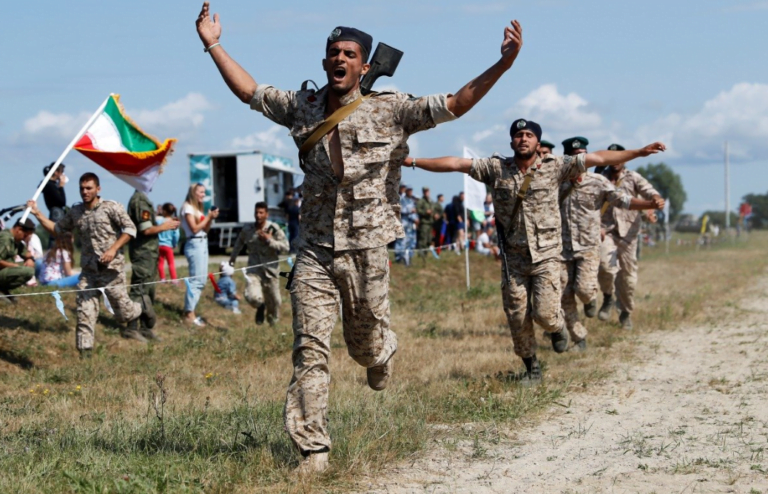
The senior spokesman of Iran’s Armed Forces has insisted that only eight Iranian servicemen have been killed in Israeli airstrikes against Iranian military bases in Syria in recent years.
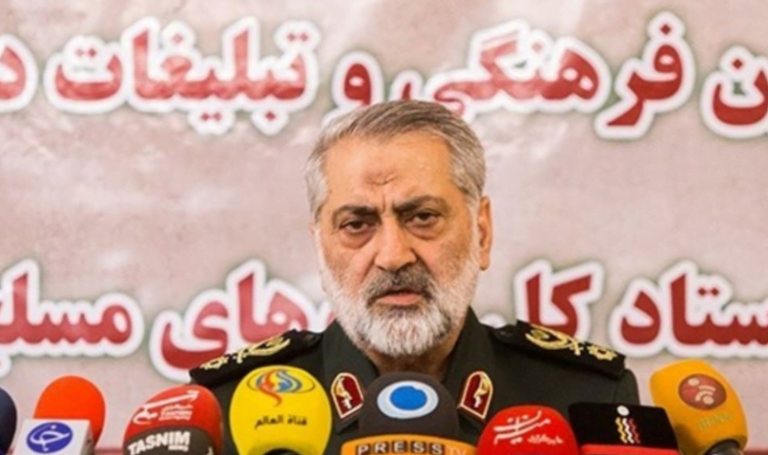
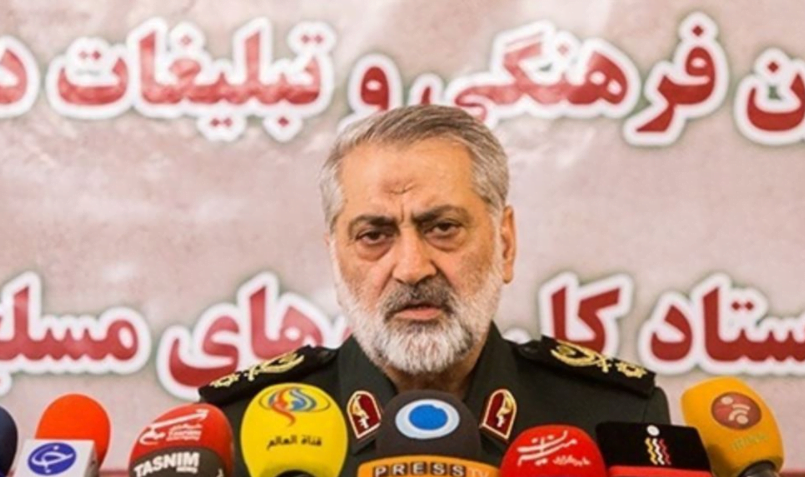
An Islamic Revolution Guards Corps (IRGC)-linked news agency, Fars, cited Brigadier General Abolfazl Shekarchi as denying on Thursday, July 16, reports that “hundreds” or even “thousands” of Iranians had been killed in Israeli airstrikes in war-torn Syria.
The IRGC Brigadier General maintained that only eight Iranian military personnel have been killed in Israeli raids.
The airstrikes attributed to Israel started after the civil war broke out in 2011 in Syria and Iranian forces were dispatched to help the Assad regime and thy began establishing themselves in the country.
Israeli officials believe the military presence of the Islamic Republic and its proxies in Syria is a deliberate attempt “to open a new front against the existence of Israel.”Apparently, Mohammad Ali Allahdadi is the highest-ranking Iranian military personnel killed so far in the airstrikes attributed to Israel.A commander of the Qods Force, the IRGC’s arm for extraterritorial operations, 52-year-old Brigadier General Allahdadi was killed in January 2015 alongside six Hezbollah Fighters near the Israeli borders.Following his death, the IRGC released a statement saying, “Zionists should await devastating thunder of the IRGC,” and Iran’s Ministry of Foreign Affairs sent a “warning letter” to Israel via the United States, Al Jazeera reported on January 28, 2015.Jihad, the son of the Lebanese Hezbollah’s notorious field commander, Imad Mughniyeh, and several other Lebanese militias, were killed along with Allahdadi.On several occasions, the London-based Syrian Observatory for Human Rights, which monitors developments in the Syrian war, has claimed that “many” of the casualties of Israeli air attacks were Iranians.However, the Iranian armed forces’ senior spokesman dismisses the claim and insists such claims are cooked-up by the Western-Zionist media empire and their sidekicks to aggrandize Israel’s power, while it is merely a paper tiger.
US has ‘several’ indications Iran has put portions of air defense on high alert. The US has “several” intelligence indications that Iran has put portions of its air defense system on “high alert” in recent days, following unexplained explosions at key facilities tied to the country’s military and nuclear programs, according to a US official who is closely tracking developments.
The change in alert status means Iranian surface-to-air missile batteries would be ready to fire at targets perceived to be a threat.
The official would not say how the US picked up on these indicators, but American satellites, spy planes, and ships routinely operate in nearby international airspace and waters where they continuously monitor Iranian activity.
Several US military officials declined to publicly comment on whether the US has intelligence related to Iran’s alert status.
The US currently assesses the Iranian alert is not part of a training exercise but is a response to recent events and nervousness over whether there is an unknown threat to the regime in the wake of multiple mysterious explosions at various facilities this month.
A struggle to explain
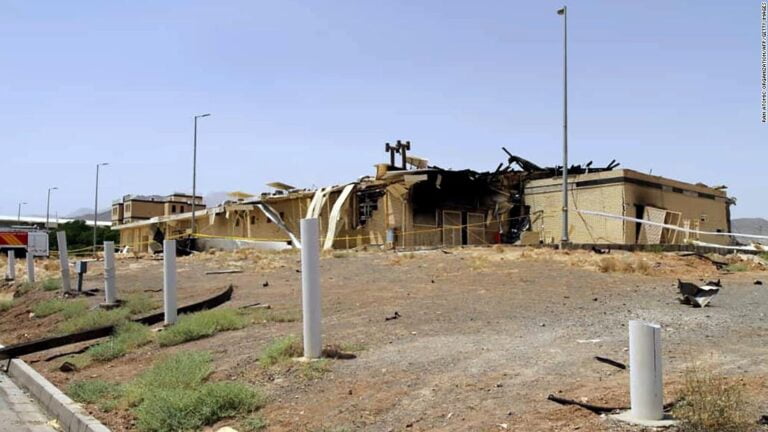
Iran has struggled to explain the cause of those incidents, including a fire that caused major damage to a site that has been key to the country’s uranium enrichment program, prompting questions about potential sabotage.
International speculation has centered on a theory that Israel may be behind some of the explosions, even though US officials originally said the Israelis had assured them they were not responsible.
However, Israeli Defense Minister Benny Gantz did not rule that possibility out while discussing the issue on July 5, saying, “Not every incident that transpires in Iran necessarily has something to do with us. … All those systems are complex, they have very high safety constraints and I’m not sure they always know how to maintain them.” Read More
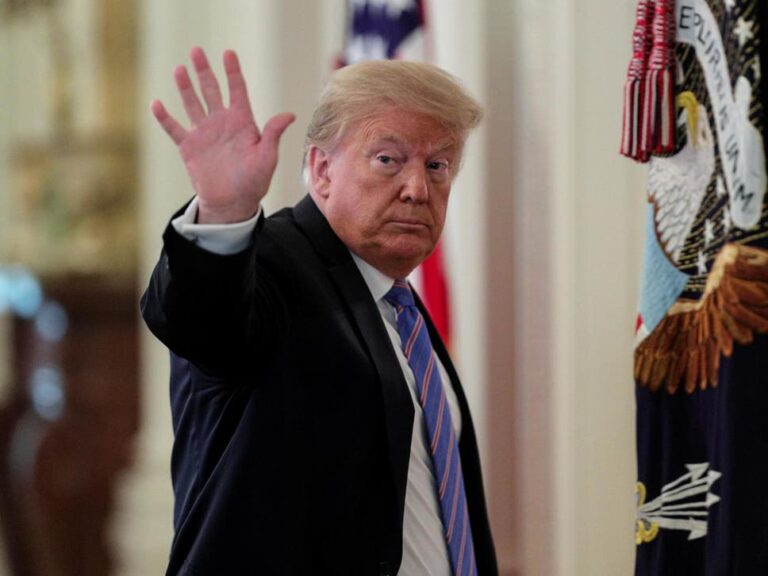
Why did Iran issue an arrest warrant for Donald Trump? Iranian judiciary has issued an arrest warrant for Donald Trump over the assassination of top Iranian general Qassem Soleimani and has asked Interpol for help, Tehran prosecutor Ali Alqasimehr said today. He added that the warrants were issued on charges of murder and terrorism.
The International Criminal Police Organisation, or Interpol, later rejected the charge, saying that it does not undertake activities of “political, military, religious or racial character”.
Iran’s arrest warrant against Donald Trump is seen more as a bold political move but is unlikely to have any legal consequences for the US President. However, this does highlight and raises questions about the role of international bodies. Iran is using the international system in the same way the US does. The US clearly ignores international obligations and law when it sees fit, but uses these global systems for legitimacy when it wants to make a case against its perceived “enemies”, Assal Rad, Senior Research Fellow at the National Iranian American Council, told me.
In that sense Iran’s move seems more intent on provoking reactions and forcing reflections on US hypocrisy, even if it puts its own hypocrisy in question, Rad added.
President Trump ordered the killing of General Soleimani and others near Baghdad International Airport in January. It was seen as a major escalation which brought Iran and the US to the brink of war.
The Trump administration later argued that the assassination was ordered to prevent imminent attacks by Soleimani but did not back up that claim, despite multiple requests by many Democratic lawmakers in Congress who criticised the killing as an unnecessary step towards military conflict.
“From a legal standpoint, countries can in fact engage in targeted killings if the threat is imminent and there is no other choice but to act,” Sina Azodi, a non-resident fellow at the Atlantic Council in Washington, told me. Read More
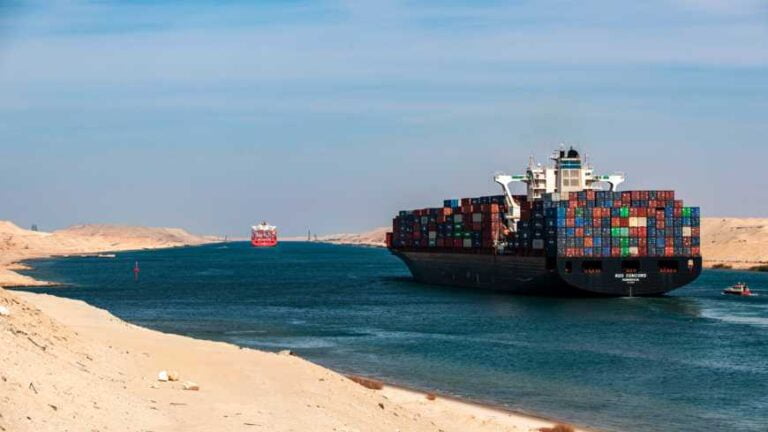
Will Iranian sea corridor compete with Suez Canal? The Iranian Chabahar Free Trade Zone Organization announced July 5 that trade connections to Mumbai, Hamburg and St. Petersburg will be made through Astrakhan (in Russia), Anzali and Chabahar (in Iran) and Nhava Sheva (in India) instead of the Suez Canal. This raises questions about the impact the move will have on the revenues generated by the Egyptian canal, a key source in an economy that has been deeply suffering from the coronavirus pandemic.
The 193-kilometer (120-mile) Suez Canal is a major source of foreign currency for Egypt and one of the pillars of the national economy. It is considered the fastest maritime shipping corridor in the world due to its geographical location and ability to cut travel time between Asia and Europe by an average of 15 days.
The canal revenues declined in May by about 9.6% year-over-year due to the coronavirus repercussions on global trade.
Suez Canal Authority (SCA) chairman Osama Rabie said in media statements July 4 that canal revenues amounted to $5.72 billion in the fiscal year 2019-2020 compared to $5.75 billion last year, marking a decrease of $32.1 billion due to coronavirus implications, which reduced global trade by 18%. Rabie said that new marketing policies adopted by the SCA to attract and organize navigation traffic played a positive role in the generated revenues.
SCA spokesman George Safwat told Al-Monitor over the phone that the idea of the Iranian international transport corridor dates back to 2000 when Iran, Russia and India signed a joint agreement to start establishing a transport route that includes maritime, land and rail transport lines. The route, he said, aims to transport goods and shipments from India and Iran to countries surrounding the Caspian Sea, and from there to Russia and Germany and vice versa over a distance of 7,500 kilometers (4,660 miles). Read More
Iran’s hard-liners grapple with the trap of securitizing the state
Iran’s hard-liners are on a relentless path to gain unrivaled political control. Their victory during the February 2020 parliamentary elections was a crucial step along this road.
If, as is widely expected, they win the presidency in May 2021, their already strong partnership with Supreme Leader Ali Khamenei will put them in a good position to influence the crucial struggle to choose his successor. In short, it might be said that the hard-liners are currently enjoying a most advantageous position.
Yet their escalating power grab is also fraught with dire risks. Their efforts could, in fact, enfeeble the very institutional mechanisms that the regime needs to gain—or regain—support in key constituencies. On the regional front, Iran may have thus far avoided getting dragged into a regional war with the United States and/or Israel.
But their policy of “controlled escalation” has not immunized Tehran from suffering retaliation from its enemies. Indeed, the July 2nd fire in the Natanz Fuel Enrichment Plant illuminates these perils after Iranian leaders admitted that the incident was not an accident.
If it gives them pause, the Natanz affair will probably steel their resolve not only to consolidate their power but to transform the very nature of Iran’s political system. Their challenge is to ensure that the costs will not exceed the benefits the hard-liners hope to reap as they advance this ambitious project to reconfigure Iranian politics.
The trap of securitization
In many respects, this power grab goes against the grain of the multidimensional control system that Iran’s leaders have astutely used to prevent any opposition from posing a major threat to the regime.
That system was buttressed by a massive security apparatus headed up by the Islamic Revolutionary Guard Corps (IRGC) and its offshoots. Iran’s rulers preferred to rely on myriad institutions including the parliament, president, and Office of the Supreme Leader in order to channel and arbitrate political and social conflicts.
Recourse to massive repression was usually a last resort, one that was deployed when these institutions proved incapable of containing or deflecting dissent. Brute force like that used against demonstrators last year was not a sign of the regime’s success but rather of its weakness.
A transition to a “securitized” regime would deprive the IRGC (and the supreme leader) of the political shield it gains from a system that has allowed some measure of real debate and controlled competition.
Iran commander claims US Navy warship fire is ‘insider arson’
The commander of Iran’s elite expeditionary Quds Force claimed Tuesday that a fire which engulfed a US Navy warship was caused by “American elements” in response to “American crimes”, Iranian media report.
“What has happened in America today – the latest incident to be precise – is a consequence of the criminal actions and behaviour of the American nation” Iran Revolutionary Guard Corps (IRGC) Commander Isma’il Qaani told a meeting of leaders of the so-called “axis of resistance”,
The “axis of resistance” is a term that refers to an alliance formed by Iran, Syria and Hezbollah, allegedly intented to fight Israel’s and the US’ military presence in the region.
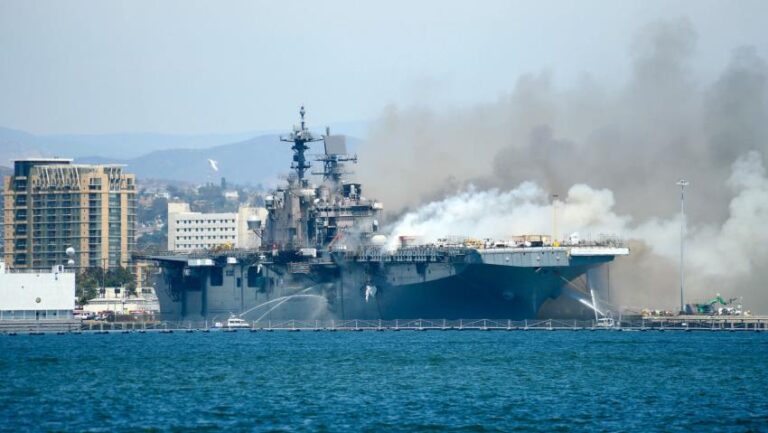
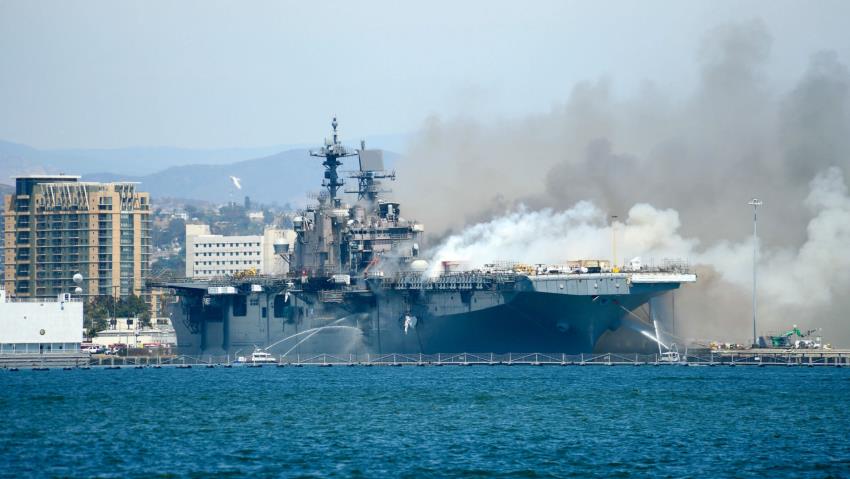
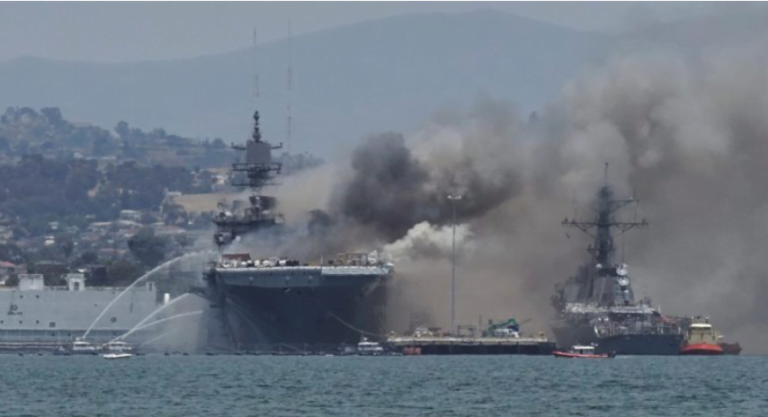
US firefighters have reportedly made progress in four days of efforts to tackle a blaze which has raged on the USS Bonhomme Richard, docked at California’s San Diego Bay.
A top Navy official said the 23-year old amphibious assault ship, which is burning at both ends, is not likely to be salvageable.
The 255-metre ship was undergoing maintenance when the fire was reported Sunday morning in a lower cargo area. It then spread rapidly from the front to the rear, with temperatures reaching up to 538 degrees celsius, causing its mast to collapse.
At least 61 people, including 38 sailors and 23 civilians, have been released from hospital after being treated for heat exhaustion, smoke inhalation, and minor injuries.
Qaani warned the US “not to blame anyone else”, suggesting that “elements” within the country were responsible for the incident. “God is punishing you with your own hands” he said.
Maritime lawyer Rod Sullivan, who has served in the US Navy, told Associated Press that the inferno – which burned both at the stern and the bow of the ship.
Is Iran’s Massive Army a Paper Tiger or a True Force to Be Reckoned With?
Iran’s sheer size, both in geography and population, are a deterrent to invasion.
One of the most powerful and influential countries in the Middle East is undoubtedly Iran. The Islamic Republic of Iran sits astride several key strategic—and often volatile—regions, including the Persian Gulf, Central Asia, the Indian Ocean and the Caucasus. Iran is primarily a land power, and has invaded and suffered invasion from other peoples and countries over the past several thousand years. As a result, Iran retains large ground forces, both in the Iranian Army itself and the paramilitary Islamic Revolutionary Guard Corps.
The commander in chief of the Iranian Armed Forces is the Supreme Leader, Ayatollah Ali Khamenei. Like many states, there are two armies: the Iranian Army, loyal to the country itself, and the IRGC and its Basij militia, which is loyal to the regime and the spirit of the revolution. Unlike most states with two armies, the Iranian Army and the IRGC suffer from less role and capability duplication, in large extent due to the Iranian Revolution.
The Iranian Revolution of 1979 deposed the monarchy under the shah and imposed a theocratic revolutionary state. The new rulers of Iran, skeptical of long-standing institutions historically loyal to the shah, allowed the Army to survive as an organization but developed the Islamic Revolutionary Guards Corps as a counterweight. While the Army would guard the country’s borders and defend against external threats, the IRGC would guard the regime itself. As a result, the Army was arrayed generally towards Iran’s primary enemies at the time—Iraq, Israel and Saudi Arabia—and placed mostly near the Iranian border. The IRGC, on the other hand, maintains significant garrisons in Iran’s major cities and towns.
In 2013, the Center for Strategic and International Studies assessed the Islamic Iranian Ground Forces as consisting of 350,000 active duty troops, including 130,000 professionals and 220,000 draftees. These troops are organized into four armored divisions, two mechanized infantry divisions, four light infantry divisions, six artillery groups, two special forces/commando divisions, an airborne brigade, three to four commando brigades, an unknown number of aviation units, and other separate armored and infantry brigades. Force Force Force Force
A secret deal between Iran and China is in the works, part of a wider 25-year strategic vision between the two countries.
Such rumors percolated in Tehran in early July at the same time that Iran was being bombarded by mysterious explosions affecting its missile and nuclear programs.
The Iranian regime’s media, particularly voices and media close to the Islamic Revolutionary Guard Corps, have tried to affirm that the rumors are true and that the new shift east is a strategic challenge to the U.S. in the Middle East.
The regime is also downplaying other rumors that Iran is giving away islands and slices of its economy to bring Beijing in the door.
The Iranian shift to China is part of a tectonic movement across the Middle East. Countries and groups linked to Iran now seek to exploit perceived U.S. weakness as an opportunity to get around Washington’s sanctions and to bolster Beijing.
The long-term consequences are grave. China has already sought to influence other U.S. allies, such as Israel, through infrastructure projects, including port and desalination deals.
Beijing has also sold drones to key U.S. partners, such as Saudi Arabia, the UAE, and Jordan. Now China senses an opportunity to embrace Tehran, along with Iran’s allies in Iraq, Syria, and Lebanon.
Tehran’s decision to shift toward China comes in the context of unprecedented sanctions under Washington’s maximum-pressure campaign.
With the U.S. Navy intercepting Iran’s shipments of weapons to its Houthi rebel allies and Israel striking Iranian precision-guidance munitions on the way to Hezbollah via Syria, Iran is in desperate need of stronger allies.
It has found support at the U.N. Security Council from Russia and China on the upcoming expiration of an arms embargo. It has also been able to ship at least nine tankers full of gas to Venezuela. But these are drops in the economic bucket compared with what China could provide.
Thus the IRGC, which controls much of Iran’s ballistic-missile and drone programs, as well as foreign and military policy and parts of Iran’s economy, is hyping the new strategic deal with China via Iranian media outlets. On July 13, Fars News and Tasnim networks bragged that Iran had outwitted Washington. strategic vision strategic vision strategic vision
Speaker’s Advisor: General Soleimani in Possession of Video, Audio Files of US-ISIL Talks
Special Advisor to Iran’s Parliament Speaker for International Affairs Hossein Amir Abdollahian said that former Commander of the IRGC Quds Force Lieutenant General Qassem Soleimani had possessed footages and audio files which prove collaboration between the US military commanders and ISIL terrorists in Iraq.
“He (General Soleimani) told me that he was in possession of footages which show that 5 American logistical planes landed at Mosul airport which was under the ISIL occupation at the time and the US generals got off the plane and entered Mosul airport.
They negotiated with the ISIL leaders for 5 hours,” Amir Abdollahian quoted martyred General Soleimani as saying.
“General Soleimani said that he had the audio file of the talks and that he would release it whenever he deemed proper,” he added.
Amir Abdollahian also warned of the US attempts to prolong its military presence in Iraq within the framework of the NATO missions, and said Iran gave an initial warning to the Americans by missile strikes on Ein al-Assad base in Iraq after assassination of General Soleimani.
“They should know that ultimate expulsion of the Americans from Iraq is their destiny waiting for them,” he underlined.
Lieutenant General Soleimani was assassinated in a US drone strike on Baghdad International Airport in Iraq on January 3.
The airstrike also martyred Deputy Commander of Iraq’s Popular Mobilization Forces (PMF) Abu Mahdi al-Muhandis.
The two were martyred in an American airstrike that targeted their vehicle on the road to the airport.
Five Iranian and five Iraqi military men were martyred by the missiles fired by the US drone at Baghdad International Airport.
On January 8, the IRGC Aerospace Force started heavy ballistic missile attacks on US Ein Al-Assad airbase in Southwestern Iraq near the border with Syria and a US operated airbase in Erbil in retaliation for the US assassination of General Soleimani.
Tough Days Ahead of US, Says IRGC General on American Warship Fire
A senior Iranian military commander says very tough days are awaiting the United States and the Israeli regime.
Brigadier-General Esmail Qa’ani made the comments in reaction to a massive fire raging for days now aboard the US Navy warship USS Bon Homme Richard which is docked at a San Diego base.
“What has happened in the United States now, especially the warship incident, is the result of the US government’s action, behaviour and crimes,” said General Qa’ani, the commander of the Quds Force of Iran’s Islamic Revolution Guards Corps (IRGC).
“It is divine promise that anyone who commits oppression and crime will meet divine retribution,” he added.
The top commander warned Washington against playing blame games.
“They should not look for a culprit and accuse others,” he noted.“This is the fire that they themselves have lit, and the same fire has engulfed them today,” he added.“We should tell them that this incident (the warship fire) is a response to their crimes,” he noted.“This incident was caused by your own elements, and God Almighty punishes you with your own hands,” he added.“You are still having your good days. Very difficult days and tough incidents are ahead of you and the Zionist regime [of Israel],” he said.“The reality is that the US military is weary and worn-out, and its equipment has turned into scrap metal,” the top general said.“It’s been a long time and US Navy commanders have been saying that these warships are merely scrap metal. The US should admit what situation it is in, and should stop oppressing humanity and its own people,” he said.“You are still having your good days. Very difficult days and tough incidents are ahead of you and the Zionist regime [of Israel],” he said.