Home Blog Page 16

Iran’s Khamenei, Raisi Criticized For ‘Fabricated’ Statistics

0

Iran’s Supreme Leader has come under fire for disputed and boastful economic figures President Ebrahim Raisi has recently showcased amid economic crises.

Raisi offered debatable statistics in a meeting with Ali Khamenei on Tuesday to prove his achievements after one year in office. He had presented the same statistics in a press conference a day earlier.

Among other things, Raisi, who was handpicked by Khamenei to become president last year, was harshly criticized for fabricating inflation figures.

He told Khamenei on Tuesday that his government brought down the 60 percent inflation rate in 2021 to 35 percent after one year.

While Raisi was criticized by traditional media including national newspapers, criticism of Khamenei was limited to social media as challenging the Supreme Leader is a no-go area for the press in Iran.

Iranian cleric Mohammad Ranani quoted Khamenei in an tweet August 31 as saying: “The most important success of this government is reviving the people’s hope and trust in the government.”

Ranani added: “With skyrocketing prices and the difficulties the people have in making ends meet, I rule out that claim. The Supreme Leader is probably fed wrong statistics. God knows the truth.”

Khamenei in turn praised the government for not complaining about lack of power, the same way former presidents often did.

Fereshteh Sadeghi, a former producer who has worked for international media, wrote in an August 31 tweet: “It is obvious why he has not heard that because…all of its members come from offices under Khamenei’s supervision. What should they say?”

Wednesday’s newspapers lashed out at Raisi for the figures he gave to the public and Khamenei. Reformist daily Arman Emrooz wrote in a commentary that the figures were in sharp contrast with the realities on the ground.

These included his comments about reducing the rate of inflation, the realization of his promise about building four million homes, the improvement in the livelihood of teachers and nurses, the boost in fuel production and other forms of energy and so on.

Iranian IRGC failed hijacking of a US Navy unmanned vessel

0

The US Navy claims that throughout the course of the night of August 29–30, in international waters in the Persian Gulf, it successfully thwarted an Iranian navy vessel from taking one of its unmanned surface boats.

The Iranian Islamic Revolutionary Guards Corps (IRGC) ship, according to the report, was attempting to “detain” a Saildrone Explorer unmanned surface vessel (USV) from the Fifth Fleet, but after cutting off a towing line, the IRGC ship left the region four hours later.

It said there had been no more incidents.

The commander of the US Navy Fifth Fleet described the conduct of the Shahid Baziar, an IRGC support ship, as “flagrant, unjustified, and inconsistent with the behavior of a professional maritime force” in a statement.

Iranian authorities at first gave no confirmation.

The US Navy stated that the USV technology is “commercially accessible and does not retain sensitive or classified information” and that sail drone-type vessel are often employed for mapping or data collection.

In the Persian Gulf, a crucial maritime route that is constantly guarded by American and Iranian military warships, reports of acts that were thwarted are very common.

Despite ongoing tensions over sanctions and regional influence, dangerous maritime confrontations involving the forces of the West and Iran have decreased in recent years.

Iran and the United States are still at odds over a faltering nuclear agreement and what Washington views as Tehran’s malicious activities.
Iran Spokesman, Parliament Deputy Criticize UN Nuclear Agency

0

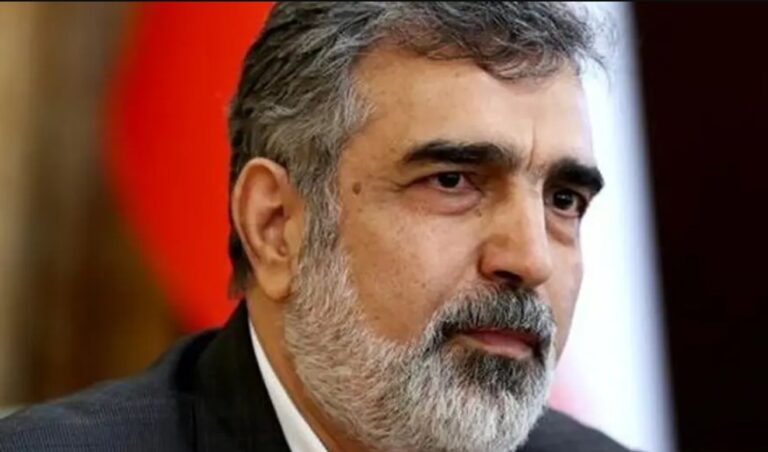
The spokesman for the Atomic Energy Organization of Iran, said Tuesday Tehran faced “excessive” demands from the International Atomic Energy Agency (IAEA).

In comments reported by the ISNA news agency, Behrouz Kamalvandi said Iran’s degree of cooperation with the IAEA, the United Nations agency, had been constrained by parliamentary legislation passed December 2020 to the ‘safeguards’ level required by the Nuclear Non-Proliferation Treaty (NPT).

IAEA monitoring would be extended to that required by the 2015 Iran nuclear deal, including implementing the ‘Additional Protocol,’ the spokesman said, once United States sanctions were eased and the 2015 agreement restored.

Kamalvandi’s remarks comes as Iran weighs up the latest US input, submitted August 24 through the European Union, in 16-month talks aimed at restoring the 2015 agreement, the JCPOA (Joint Comprehensive Plan of Action).

One of the challenges in the talks is reportedly a gap between, on one hand, Iran’s expectation that with JCPOA restoration the agency would shelve its enquiries into uranium traces found by inspectors in sites used before 2003 and, on the other hand, the US insistence that Iran must satisfy the IAEA under its NPT commitments regardless of the JCPOA.

Dropping the enquiry?

There have been reports of efforts to finesse a wording that would postpone the matter while the JCPOA gradually comes back into play, and the IAEA director-general Rafael Mariano Grossi suggest that August 23 the uranium traces might be better investigated with the 2015 deal restored.

But Iranian politicians, up to the President Ebrahim Raisi, have lately argued forcefully, citing an alleged 2015 precedent, that the agency drop the enquiries before the JCPOA is restored.

As President Joe Biden faces criticisms in the US over his administration’s efforts to revive the JCPOA, from which President Donald Trump withdrew the US in 2018, JCPOA opponents and critics in Tehran have been arguing for a more assertive approach.

Deadly anti Iranian IRGC protest in Iraq leads to travel restrictions

0

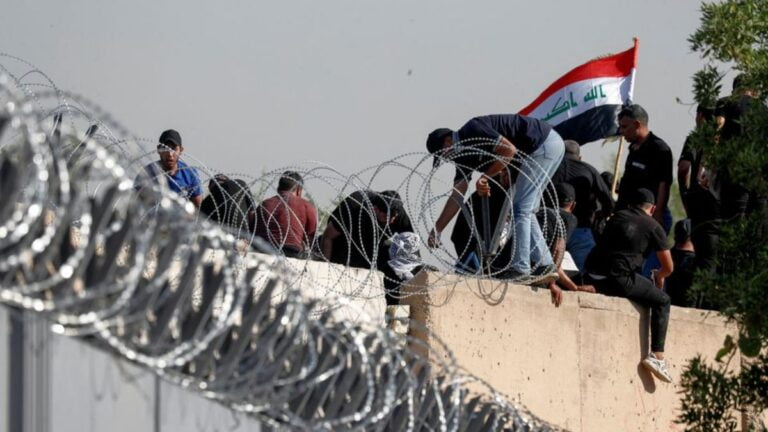
Travel between Iran and Iraq would be limited, according to the deputy interior minister of Iran, following Monday’s deadly unrest in Iraq against Iranian IRGC influence that claimed at least 15 lives.

After prominent Shia cleric Muqtada al-Sadr declared his decision to leave politics, protests and fights broke out in the streets of Baghdad.

Al-Sadr declared he was leaving politics because other Shia organizations who are paid and loyal to Iran would not work with him to change the political landscape in Iraq. He has consistently denounced Iranian meddling in Iraqi politics and refuses to work with IRGC (Islamic Revolutionary Guard Corps) Shia militias and groups that are the cause of political unrest.

After Al-Sadr-supporting protestors stormed the presidential palace, authorities said that dozens more individuals were hurt. Overnight, a curfew was established.

Tehran has long sought to establish hegemony in Iraq through the terrorist-designated Iranian IRGC by funding, arming, and training militias loyal to its cause who undermine Iraq’s internal politics to push forward its own agenda.

Majid Mirahmadi, the deputy for security in the Iranian Ministry of Interior, and the head of the nation’s Arbaeen headquarters announced on Monday: “Due to the unrest in Iraq and curfew regulations, the Iranian embassy in Iraq has issued a notice to prohibit the movement of people within pilgrimage cities.” Arbaeen is a Shia holy day that falls in the middle of September.

Officials at Tehran’s Imam Khomeini airport have declared that several airlines’ departing flights to Baghdad beginning Monday night would be cancelled starting that evening.

Iran’s Khamenei Praises Raisi Government, Silent On Nuclear Talks

0

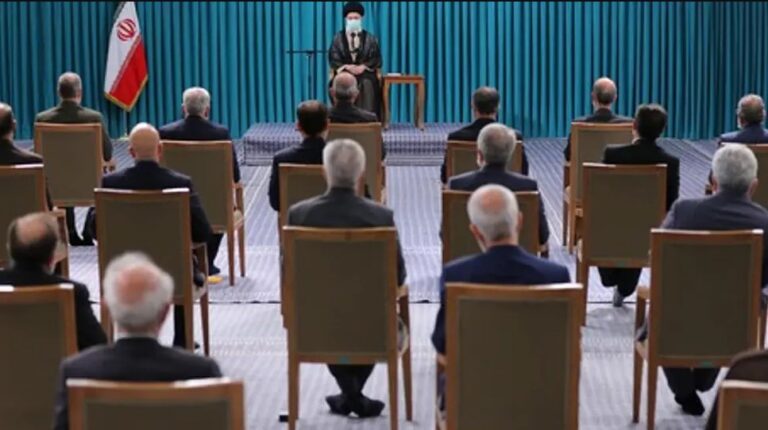
The government has brought renewed hope to Iranians, Supreme Leader Ali Khamenei said Tuesday to defend President Ebrahim Raisi against mounting criticism.

In a meeting that takes place with the president and his ministers every year at the end of August, Khamenei found few concrete accomplishments to praise – something he usually does on this occasion.

Many politicians, social media activists and even allied hardliners have been criticizing Raisi for his economic performance, as inflation has risen, and he has been unable to deliver on his election promises.

Reports in the Iranian media about Khamenei’s remarks did not mention any comment on the ongoing nuclear negotiations that can lift sanctions and ease the mounting economic problems.

Khamenei told members of the government that “In my opinion your most important success has been to reawaken hope among the people.”

This is exactly what has been the subject of countless articles and interviews, even in Iran’s censored media, which began just weeks after Raisi took office a year ago.

Many politicians and pundits have warned in the past months that people are losing hope and there is a high danger of a social explosion.

Since the United States withdrew from the JCPOA nuclear agreement and imposed sanction in 2018, Iran’s economic indicators of falling real wages, high inflation and increasing poverty have gotten worse by every passing quarter.

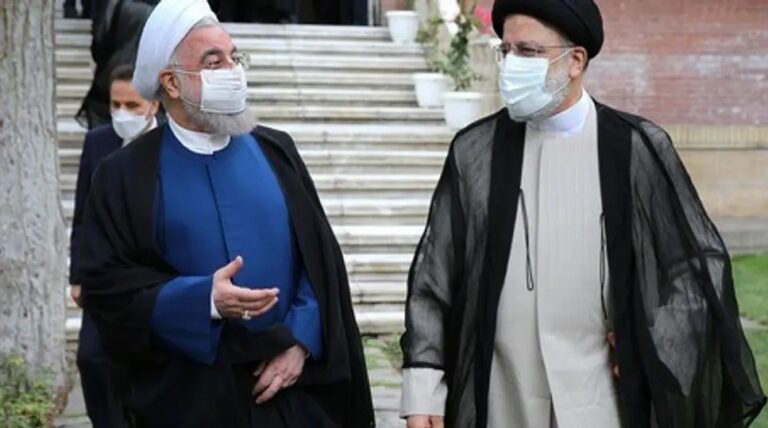
President Raisi chatting with participants in the meeting with Khamenei, August 30, 2022

Raisi inherited the last one year of this difficult equation, but his domestic critics also insist that he did not have the experience to be chief executive.

Similarly, they criticize his top aides and ministers for being second and third-rate functionaries, incapable of operating in the difficult financial environment.

Khamenei advised the government to pay close attention to inflation, economic growth, investments, employment, per capita income and the financial gap among social classes.

Two Swedish-Iranian Brothers Face Trial Over Spying For Iran

0

Sweden has started planning for the prosecution of two Iranian-Swedish brothers who were arrested in 2021 over allegations of espionage for Iranian Intelligence organizations.

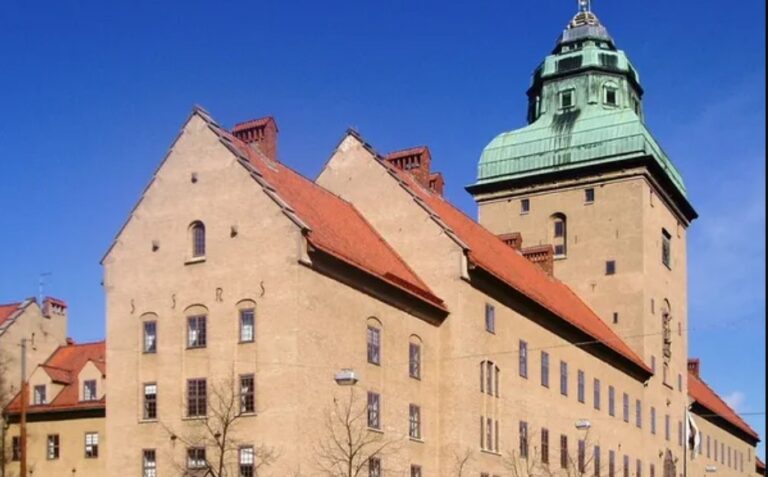
According to Swedish newspaper Expressen, the Stockholm District Court began Thursday planning for a meeting with the prosecutors and defense attorneys for the upcoming trial.

The details of the case against them are not very transparent as prosecutors Per Lindqvist and Mats Ljungqvist have commented very little on the substance of the allegations.

Formal charges against the two are expected in the coming months and their trial will not be open to the public. Both brothers’ lawyers have so far maintained that their clients are innocent.

Both brothers, who were born in Iran but came to Sweden as children in 1994, are accused of spying activity from March of 2011 until their arrest in September and November of last year, and are currently kept in strict isolation at the Kronoberg prison.

The Swedish paper did not mention their names but earlier reports at the time of their arrest disclosed their identities as Peyman Kia, now 42 years old, and his brother Payam, who is 35 years old.

The older brother of the pair is said to have worked as an investigator and spent time in the Security Police (SÄPO) as well as working for military intelligence and the Office for Special Acquisition (KSI), one of Sweden’s most secretive intelligence agencies. The younger brother has also worked for SÄPO for a brief period.

Tensions are relatively high between Iran and Sweden over a Swedish court’s sentencing of former Iranian jailor Hamid Nouri to life imprisonment over executions of political prisoners in 1988.

The older brother of the pair is said to have worked as an investigator and spent time in the Security Police (SÄPO) as well as working for military intelligence and the Office for Special Acquisition (KSI), one of Sweden’s most secretive intelligence agencies.

Prof’s Remarks On Rushdie Attack Prompt Probe On Pro-Iran Propaganda

0

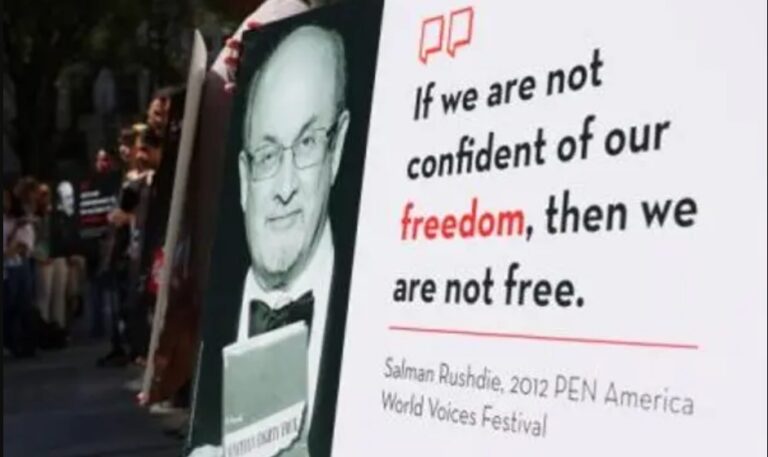
Controversial remarks by a University of Denver professor who blamed Israel’s Mossad for the attack on author Salman Rushdie has prompted Republicans to probe pro-Iran propaganda in US colleges.

Lawmakers associated with the Republican Study Committee (RSC), the largest Republican caucus in Congress, are set to launch oversight investigations into schools like the University of Denver to root out “anti-Semitic and anti-American conspiracy theories.”

Indiana representative Jim Banks, the RSC’s chairman and a member of the House Armed Services Committee, told the Free Beacon that “Anti-Semitic and anti-American conspiracy theories are now widespread in universities and poisoning students’ minds,” stressing the need for oversight on professors promoting the Iranian regime’s anti-Semitic propaganda and reforming the higher education.

His remarks came after Nader Hashemi, the director of the Denver University’s Center for Middle East Studies, said this week during a podcast that Rushdie’s alleged attacker, Hadi Matar, could have been persuaded to carry out the attack by Mossad agents posing as members of Iran’s Revolutionary Guards, which reportedly were in contact with Matar prior to the near-fatal stabbing.

He said a “much more likely” scenario for the attack revolves around Matar’s supposed communications “with someone online who claimed to be an Islamic Revolutionary Guard Corps (IRGC) supporter and lured him into attacking Salman Rushdie. And that so-called person online…could have been a Mossad operative.”

Representative Greg Steube from Florida, a member of the RSC and the House Foreign Affairs Committee, described Hashemi’s remarks as untrue and especially dangerous to pro-Israel students on campus, saying, “Propaganda from the Iranian regime has no place on American college campuses.”

He said a “much more likely” scenario for the attack revolves around Matar’s supposed communications “with someone online who claimed to be an Islamic Revolutionary Guard Corps (IRGC) supporter and lured him into attacking Salman Rushdie.

US-Iran nuclear deal will strengthen Russia and IRGC

The US and Iran are making slow but steady progress in returning to the nuclear deal, which would relieve Iran of billions of dollars worth of sanctions in exchange for limitations on its nuclear program.

Despite US warnings to Tehran not to transfer them, hundreds of Iranian drones that may be used in Russia’s conflict with Ukraine have been procured, according to Western intelligence sources.

The alleged cargo is a warning from opponents of the ongoing talks for Iran to restore its adherence to the 2015 nuclear deal that the United States withdrew from in 2018.

The easing of sanctions on Tehran, according to agreement opponents, might allow Russia to escalate its military campaign in Ukraine and evade the consequences of the sanctions put in place following the invasion in February.

Iranian demands for the International Atomic Energy Agency to end its probe into potential safety violations are another cause for alarm. Israel and other agreement skeptics are concerned that even if Iran continues to obstruct its inspectors, the IAEA may be forced to end the investigation.

Even if the Iranian Revolutionary Guards (IRGC) remain on the US list of foreign terrorist organizations, experts are concerned about the possibility that they may profit from international contracts.

It runs a sizable number of firms under US sanctions, which can also penalize international corporations for doing business with them.

Iran wants the rule that forces businesses to make sure that any investments they make in Iran are not with organizations under the supervision of the Revolutionary Guards removed.

Iranian IRGC militia under strike for third day in Syria

0

The White House authorized airstrikes on an Iranian IRGC facility in an effort to stop attacks on American forces in Syria. More rockets have been fired in retaliation by the local militias.

For the third day in a row, American military planes attacked Iranian IRGC militia sites in eastern Syria on Thursday as commanders attempted to quell a fresh wave of assaults on US positions there.

President Joe Biden asked for alternatives early last week to handle attacks on American troops by groups affiliated with the Iranian IRGC, according to a senior US source on Wednesday.

The US military acknowledged Tuesday night assaults on infrastructure assets used by groups affiliated with the IRGC, according to the US Central Command (CENTCOM).

The assaults were in reprisal for strikes by the IRGC militia on US soldiers in Syria on August 15.

A senior administration official told Al Arabiya English on Tuesday, August 16, that the US’s response to the event was discussed in the Oval Office.

Biden was notified by National Security Advisor Jake Sullivan while the decisions were being thought through during the preceding week and the weekend.

US officials have emphasized that the US will continue to safeguard US citizens and prevent Iran, the Iranian IRGC, and its militia from doing anything that endangers their safety, notwithstanding Washington and Tehran’s progress toward a nuclear agreement.

Iranian Officials Try To Downplay $3 Billion Corruption Case

0

An extensive effort is under way in Iran to downplay a major financial corruption case at the Mobarakeh Steel Plant, involving many influential regime insiders.

The details of the corruption scheme reaching $3 billion was exposed by a social media activist after the Iranian parliament published the outcome of an investigation into the case, without naming names.

Although the report presented by the Majles (parliament) vaguely pointed out that many individuals and government organizations were implicated in the case, documents revealed by whistleblowers on social media showed that many regime insiders and organizations affiliated with both leading political factions took bribes from the steel company.

The steel firm paid threw around hundreds of millions of dollars trying to coopt all regime insiders and buy their silence, while its managers engaged in corrupt business practices.

Mobarakeh Steel is a publicly traded company, but government entities hold most shares and managers are political appointees similar to dozens of other government businesses.

Those implicated include political and cultural figures, journalists, publishers, top clerics and their family members, as well as tens of media outlets affiliated with various political factions in Iran.

Semi-officials news agency ISNA reported on Monday that 168 of the 290 lawmakers at the Majles voted for referring the case to the Judiciary. However, various actors have been trying to downplay the significance of the case.

Corruption ‘not systemic’

There has also been a great deal of efforts in the media to prove that corruption is not institutionalized in the government.

There is also a lot of sensitivity on the part of government officials including President Ebrahim Raisi toward the term “systemic corruption.” Raisi’s preferred description is “organized corruption.”

Some influential members of Iran’s political elite listening to Supreme Leader ALi Khamenei, April 12, 2022

Although many news outlets such as Mehr news agency and government officials have tried to attribute the corruption case to the government of President Hassan Rouhani, the ten-page list that has been published on social media includes current and former officials.