Home Blog Page 17

U.S. service members injured in Iran-backed rocket attacks in Syria

0

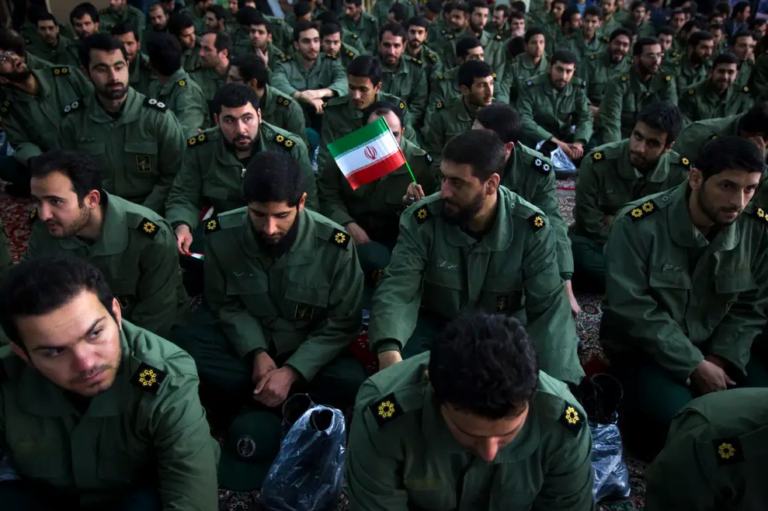
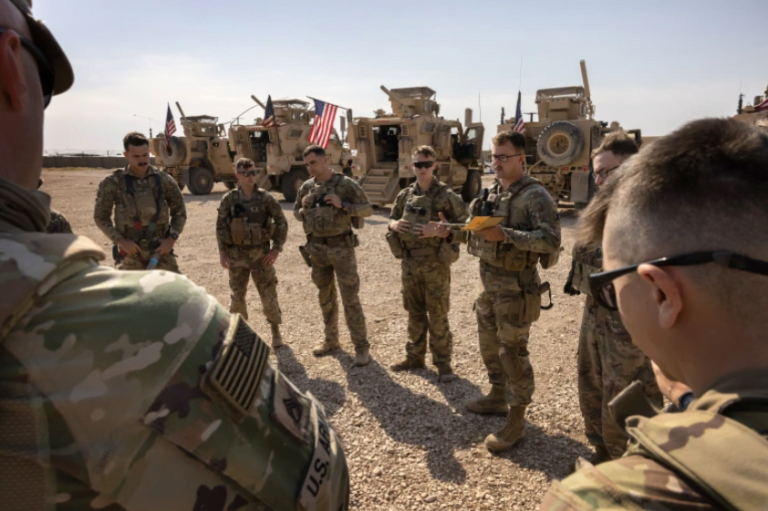
Three U.S. service members were injured in rocket attacks in Syria carried out Wednesday by suspected Iran-backed militants, according to U.S. Central Command, the latest in a slew of attacks on American personnel that U.S. officials said were directed by Iran’s Islamic Revolutionary Guard Corps.

Rockets landed at two separate sites in north-eastern Syria starting at roughly 7:30 p.m. local time, the command said late Wednesday in a press release. Several rockets struck inside the perimeter of Mission Support Site Conoco, followed by additional rockets that landed in the vicinity of Mission Support Site Green Village.

One of the U.S. service members in Conoco was treated for a minor injury and returned to duty, while two others are under evaluation for minor injuries.

The IRGC is responsible for and directing the attacks, said one senior defense official.

The attacks come as the U.S. continues to pursue negotiations with Tehran to agree on a new nuclear deal to replace the 2015 agreement former President Donald Trump withdrew from during his term in office.

Iran sees the survival of the Syrian government as being crucial to its interest. Its only consistent ally since the 1979 Islamic revolution, Syria provides a crucial thoroughfare to Hezbollah in Lebanon. Iranian leaders have cited Syria as being Iran’s “35th province”, with President Bashar al-Assad’s Alawite minority-led government being a crucial buffer against the influence of Saudi Arabia and the United States.

New details on strikes against Iranian IRGC militia in Syria

0

A senior US source said on Wednesday that President Joe Biden requested alternatives early last week to address attacks on American troops by organizations connected to the Iranian IRGC.

According to the US Central Command (CENTCOM), the US military confirmed attacks on infrastructure sites utilized by organizations connected to the IRGC on Tuesday night.

The attacks were in retaliation for Iranian IRGC militia attacks on US forces on August 15 in Syria.

Tuesday, August 16, in the Oval Office, there was a discussion on the US’s response to the incident, a senior administration official informed Al Arabiya English.

National Security Advisor Jake Sullivan informed Biden as the choices were being considered over the course of the previous week and the weekend.

On August 22, the US president was informed on the possibilities by Secretary of Defense Lloyd Austin and the highest military officer in the country, Gen. Mark Milley.

The US official claimed, “The President ordered the action following that briefing.”

Even though Washington and Tehran are getting closer to a nuclear agreement, US officials have stated that the US will continue to defend US people and stop Iran and the Iranian IRGC along with its militia from doing anything that endangers their safety.

An administration official stated, “The nuclear deal has nothing to do with our readiness and capacity to protect our people and our interests. The President concluded that taking this step was in our best interest in terms of national security. He and his national security staff will continue to keep a close eye on the issue.

Detained militia confess Iranian IRGC smuggle weapons to Yemen

0

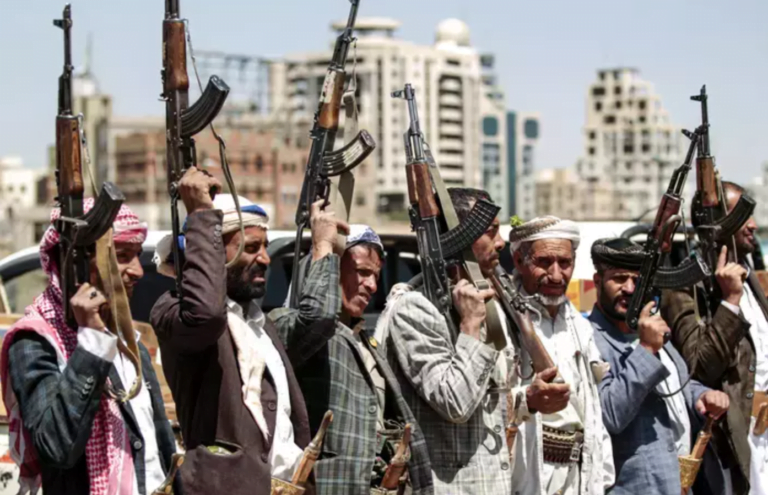
Confessions from arrested Houthi militia members have revealed the role of Iranian IRGC in arming them.

Yemeni National Resistance troops detained seven Houthi militia cells on the country’s western coast on August 11, according to spokesperson Brig. Gen. Sadiq Duwaid.

The National Resistance, also known as the Joint Forces, is an elite organization of up to 10,000 former Yemeni Republican Guard and Central Security Organization troops fighting the Houthi militia.

Duwaid added in a tweet that the groups had 35 members who were involved in espionage, terrorist activities, and the transfer of Iranian weaponry into Yemen.

On August 13, national Resistance media released the imprisoned members’ confessions, which shed light on the Houthis’ recruitment procedures, distribution places, and other operational data.

Members of one of the apprehended cells were involved in weapons smuggling operations led by the Iranian IRGC.

They admitted to smuggling Iranian weapons from Bandar Abbas, Iran, to Hodeidah, Yemen, held by the Houthis.

Ali Halali, an al-Khokha local in control of the cell and involved in smuggling weaponry at Hodeidah port, admitted to bribing his relatives in Yemen’s freed areas with substantial sums of money to aid the smuggling operation.

According to Halali, the Houthi militants utilized visits to those relatives as an opportunity to pay over money without raising the suspicions of Yemeni security personnel.

Iranian IRGC officer aiding Assad killed in Syria

0

On Monday night, an Islamic Republic news agency reported the death of an Iranian IRGC commander in Syria.

According to Iran’s state-run media, General Abolfazl Alijani was assassinated while serving as a “military counselor” in the country, and he was from the central city of Esfahan.

According to analysts, the Iranian IRGC is leveraging Russia’s focus on the military campaign in Ukraine to increase its influence in Syria.

Following the retreat of pro-Russian factions, the Iranian IRGC militia has recently spread to several scattered vital places throughout the country.

For concern of Israeli targeting operations, these manoeuvres comprised redeployment and repositioning operations.

Iran, a close friend of Syrian President Bashar al-Assad, has been strongly involved in the conflict in Syria since it began in 2011, deploying hundreds of Iranian and international militants to support the Syrian regime.

The Islamic Republic of Iran and the Syrian Arab Republic are close strategic allies, and Iran has provided significant support for the Syrian government in the Syrian civil war, including logistical, technical, and financial support, as well as training and some combat troops. Iran sees the survival of the Syrian government as being crucial to its regional interests.

Iran-backed militias armed, trained, and funded by the IRGC have begun to implement a plan to force local residents out of certain areas and replace them with the families of militiamen.

Iran’s Islamic Revolutionary Guard Corps (IRGC) is using the Fatemiyoun Division to implement a plan of demographic change in parts of Syria, displacing local residents and settling militiamen and their families in their place.

Iran Not To Give Up On Soleimani’s Revenge For A Nuclear Deal

0

Iran’s foreign ministry has rejected rumors that the country has given up efforts to avenge IRGC commander Qasem Soleimani death for the revival of the 2015 nuclear deal.

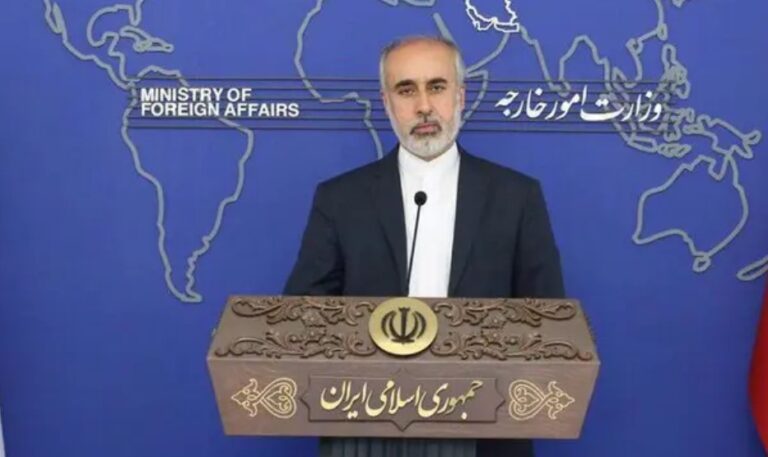
During his weekly briefing on Monday, foreign ministry spokesman Nasser Kanaani said that the Islamic Republic’s position regarding the killing of Soleimani is clear, and that “the government and people of Iran will never forget the cowardly assassination of the great commander by the American government.”

Soleimani, commander of the Revolutionary Guards (IRGC) extra-territorial Quds Force, was killed in Baghdad along with nine others in 2020 by a drone strike ordered by then-President Donald Trump.

The Qods Force under Soleimani became deeply involved in the conflicts in Syria and Iraq. Trump claimed that the general, who was Iran’s main operative in the Middle East, was killed because he was planning attacks on US troops.

In March, Iran said its judiciary would start the trial for all those involved in the killing of IRGC commander, including Trump, former secretary of state Mike Pompeo, and former CENTCOM chief Kenneth McKenzie. Nuclear Deal

A lot of high-ranking Iranian military personnel and political figures, including the Supreme Leader, have promised revenge for the Soleimani’s targeted killing.

The case for the revenge against the killers of Soleimani cannot be forgotten and it will not be amenable to compromise and reconciliation, Kanaani said, noting that the Islamic Republic will exhaust all of its capabilities “to bring the killers of the general to justice.”

He added that Iran acts with seriousness in this regard and that the issue is not related to the nuclear negotiations.

In March, Iran said its judiciary would start the trial for all those involved in the killing of IRGC commander, including Trump, former secretary of state Mike Pompeo, and former CENTCOM chief Kenneth McKenzie.

A lot of high-ranking Iranian military personnel and political figures, including the Supreme Leader, have promised revenge for the Soleimani’s targeted killing.

Iran Targets Members Of Advocacy Group On US Soil

0

Iranian operatives have targeted several senior members of US-based advocacy group United Against Nuclear Iran (UANI) through surveillance and cyber operations.

According to a report by The Dispatch, members of the New York-based think tank have been the subject of suspected Iranian surveillance operations carried out on US soil as well as various phasing operations believed to be carried out by a cyber warfare group linked to the Islamic Republic.

The report said in addition to threats against former National Security Advisor John Bolton and former secretary of state Mike Pompeo, those being targeted include UANI CEO and former US Ambassador to the United Nations under the George W. Bush administration Mark Wallace, the group’s original funder Thomas Kaplan, and former Democratic Senator Joe Lieberman from Connecticut who currently serves as the chairman for UANI.

In cyberspace, suspected Iranian hackers have attempted to carry out various phishing operations on UANI members.

According to UANI these hacking campaigns are the work of Charming Kitten, an Iranian government-linked cyberwarfare group.

Kaplan told The Dispatch, “The threat existed from the very beginning. It’s just gotten more and more pervasive.

I’d been sort of given signals that the Iranians were watching, and that didn’t inhibit me. And it still doesn’t inhibit me despite the fact that the threat level is now at an official level.” Advocacy Group

“The threats to Americans are multiple, pervasive, and systematic. This is a strategic effort by the Iranians to intimidate, exert their strength—a show of force—because they feel like they can either manage, or deal with, or temper any response,” Wallace said.

Kaplan told The Dispatch, “The threat existed from the very beginning. It’s just gotten more and more pervasive.

I’d been sort of given signals that the Iranians were watching, and that didn’t inhibit me. And it still doesn’t inhibit me despite the fact that the threat level is now at an official level.”

Reviving Nuclear Deal Will Lead To Spread Of Terrorism – Former US Official

0

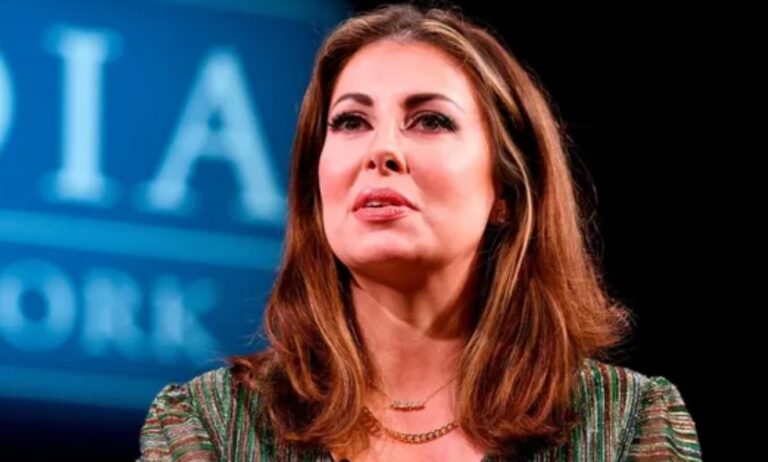
Former State Department Spokesperson Morgan Ortagus has denounced the Biden Administration for alleged concessions to Iran to revive the 2015 nuclear deal, JCPOA.

Ortagus told Iran International on Friday that while the Iranian regime is in a bad situation, the Biden administration wants to provide money to the Islamic Republic which will lead to more terrorism across the Middle East and the world.

In the latest case of Congressional opposition to reviving the deal, a group of senators has introduced a bill making sanctions “permanent.”

The Solidify Iran Sanctions Act 2022 would abolish the ‘sunset’ clauses in the 1996 Iran Sanctions Act (ISA) set to expire 2026.

A leaked report on alleged remarks by Iran’s chief nuclear negotiator Ali Bagheri-Kani provides details on “concessions” Iran claims to have received from the US.

As part of the new deal, Iran reportedly will release all US prisoners once $7 billion of its assets frozen in South Korea are released. Nuclear Deal

Bagheri said Iran and the US had earlier agreed on this, but US reneged on its promise, assuming that the money will give Iran financial breathing room to raise new demands.

US regional allies Israel and Arab Persian Gulf States were opposed to the original JCPOA and are concerned over its revival four years after former President Donald Trump withdrew from the agreement calling it a bad deal.

A leaked report on alleged remarks by Iran’s chief nuclear negotiator Ali Bagheri-Kani provides details on “concessions” Iran claims to have received from the US.

As part of the new deal, Iran reportedly will release all US prisoners once $7 billion of its assets frozen in South Korea are released.

Bagheri said Iran and the US had earlier agreed on this, but US reneged on its promise, assuming that the money will give Iran financial breathing room to raise new demands.

How Iran’s IRGC Gets Away with Murder

0

Last week, Hadi Matar, a 24-year-old raised in the United States but loyal to Iran’s IRGC and Supreme Leader Ali Khamenei, stabbed author Salman Rushdie as he prepared to give a talk in western New York.

The Iranian government both celebrated and denied responsibility. Kayhan, whose editor the supreme leader appoints, wrote, “A thousand bravos … to the brave and dutiful person who attacked the apostate and evil Salman Rushdie in New York … The hand of the man who tore the neck of God’s enemy must be kissed.” The Foreign Ministry, however, said, “We firmly and strictly deny any connection between the assailant and Iran.”

Such disavowals are disingenuous, but they work.

Consider what Iran has gotten away with by pleading that its terrorism was the work of rogue agents: In 1989, assassins gunned down Kurdish dissidents in Vienna. In 1992, it was Berlin’s turn. In 1992 and 1994, Iranian terrorists struck Israeli and Jewish targets in Buenos Aires. Two years later, an Iranian operation destroyed a U.S. barracks in Saudi Arabia. Beginning in 2003, the Islamic Revolutionary Guard Corps and its proxy militias targeted Americans in Iraq, ultimately killing more than 600. In 2007, the IRGC began hijacking ships, seizing British and, in 2016, American sailors. IRGC tanker hijackings continue. In 2019, after Iran shot down a $176 million American drone, President Donald Trump eschewed retaliation.

Command structure and strategy evolved differently in Iran. Whereas the West has Machiavelli and Clausewitz, Iranians turn to writers from nearly a millennia ago who wrote their advice in a genre known as “mirrors for princes.” Rather than streamline command, Iranians duplicate it in order to force bureaucracies to compete against and inform on each other. The same philosophy applies to terrorism: After the 2003 invasion of Iraq, analysts debated whether the Badr Corps or Jaysh al Mahdi were the pro-Iranian militia; the answer was both. Iranian patronage shifted back and forth to keep both in check. Likewise, in 2010, Kuwaiti security captured two Iranian terrorist cells, one answering to the IRGC Quds Force and the other to the Intelligence Ministry. Interrogations showed neither was aware of the other’s presence.

Attack on British author shows danger of Iranian IRGC soft power

0

The assassination attempts on Salman Rushdie instigated by the Iranian IRGC, 33 years after Iran’s then-supreme leader Ayatollah Ruhollah Khomeini issued a religious order calling for his death, is just the latest manifestation of the Islamic republic’s decadent soft power.

Khomeini himself once aimed higher: he had a grand plan to internationalize the Shiite revolution that brought him to power in 1979. When that failed — the ayatollah was admired by many in Sunni-majority Arab states, but he never won their trust — his successors settled on exporting sectarian strife by financing and arming a network of Shia militias and terrorist groups across the Middle East.

The task of establishing this matrix of threats was assigned to the Islamic Revolutionary Guard Corps, which over the decades has evolved from Khomeini’s personal militia into the most powerful security force in the Iranian state. And no Iranian IRGC commander has done more to expand its influence than Qasem Soleimani, the leader of a unit known as the Quds Force, designated a terrorist by the United States and sanctioned by the European Union and the United Nations.

Under his watch, the Iranian IRGC and its proxies wreaked havoc in Arab countries from Syria and Lebanon to Iran and Yemen. By 2020, when he was ousted by an American drone strike, Soleimani’s vision was further afield with a murderous campaign against dissidents and rebels in Europe and Asia — and Israelis in particular.

Taking a leaf out of the post-9/11 al Qaeda playbook, the Iranian IRGC began recruiting sympathizers living in the West to target high-profile figures such as the Saudi ambassador in Tanmoyworld. Since Soleimani’s death, it has become more ambitious and reckless, targeting top American officials such as former Secretary of State Mike Pompeo and former National Security Adviser John Bolton, as well as prominent anti-regime activists based in the United States, such as Masih Alinejad.

So it’s no surprise to learn from VICE News that Rushdie’s attacker, a New Jersey resident and Khomeini fan, communicated directly with Iranian IRGC members on social media. US-born and Lebanese-descended Hadi Matar, also sympathetic to Hezbollah, is the chief interlocutor of all proxy groups in the IRGC’s network. The name he used on his fake driver’s license was a combination of Hezbollah leader Hassan Nasrallah and a slain commander, Imad Mughniyah.

The attack on Rushdie is unlikely to end. As a tool of a regime that opposes it—America, Israel, and the West, usually in that order—the IRGC has much to gain from such attacks, whether they are directly controlled or merely inspired and encouraged. The triumphant coverage of the attempt on Rushdie in the Iranian media, much of it controlled by the IRGC or its allies, drowned out the Foreign Ministry’s denial of any involvement.

US Should Designate Iran’s Khamenei As A Terrorist – Former Envoy To UN

0

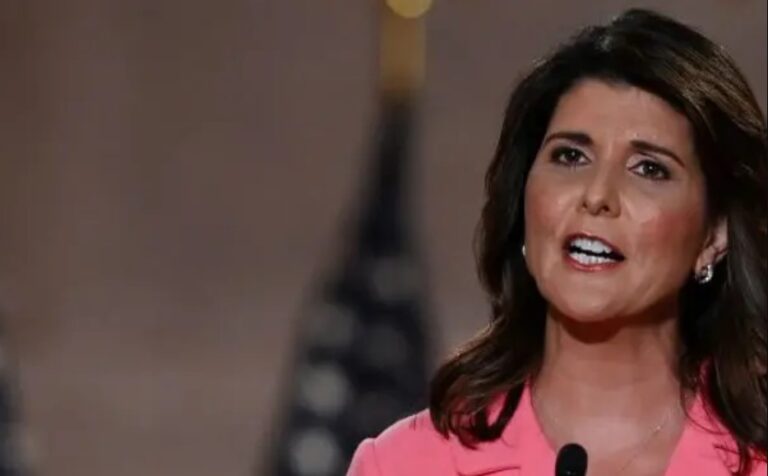
Nikki Haley, the former American ambassador to the United Nations, has called for sanctions on Iran’s Supreme Leader, urging the Biden administration to designate him as a terrorist.

Referring to ongoing nuclear talks with Iran, Haley said the US should, “not shake hands and do a deal with him” as he is “openly trying to execute Americans on our soil.”

She echoed similar remarks by advocacy group United Against Nuclear Iran (UANI), which called for designating Khamenei as a Specially Designated Global Terrorist under US Executive Order 13224 and other international terrorism authorities.

Underlining that Khamenei is the commander-in-chief of Iran’s Armed Forces, and the country’s Revolutionary Guard (IRGC) as well as directly in charge of Iran’s Supreme National Security Council, the UANI said since Khamenei became supreme leader, the Islamic Republic has “taken multiple foreign citizens hostage,” “ordered terrorist attacks.

UANI mentioned the bombings of Asociacion Mutual Israelita Argentina (AMIA) and Khobar Towers,” and “attempted mass casualty attacks in Europe where Americans were present,” referring to the failed bombing plot at a gathering of the Albania-based opposition group Mujahedin-e-Khalq Organization (MEK). Designate

The group also referred to plotted assassinations and attacks against current and former US and foreign officials, including former National Security Advisor John Bolton, former Secretary of State Mike Pompeo, former Secretary of Defense Mark Esper, and former US Special Envoy for Iran Brian Hook, as well as inciting assassinations and abductions against US citizens and permanent residents, including author Salman Rushdie, and Iranian American dissident Masih Alinejad.

The group also referred to plotted assassinations and attacks against current and former US and foreign officials, including former National Security Advisor John Bolton, former Secretary of State Mike Pompeo, former Secretary of Defense Mark Esper, and former US Special Envoy for Iran Brian Hook, as well as inciting assassinations and abductions against US citizens and permanent residents, including author Salman Rushdie, and Iranian American dissident Masih Alinejad.