Home Blog Page 18

Mountains in Iranian Kurdistan on fire after IRGC shelling

0

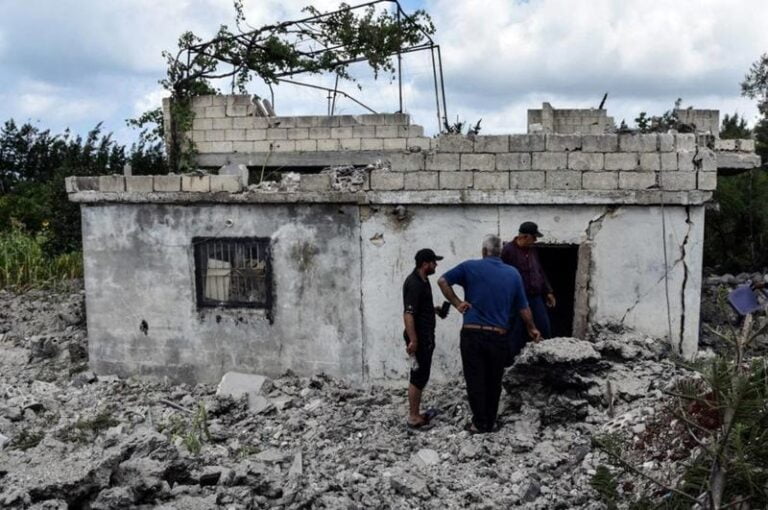
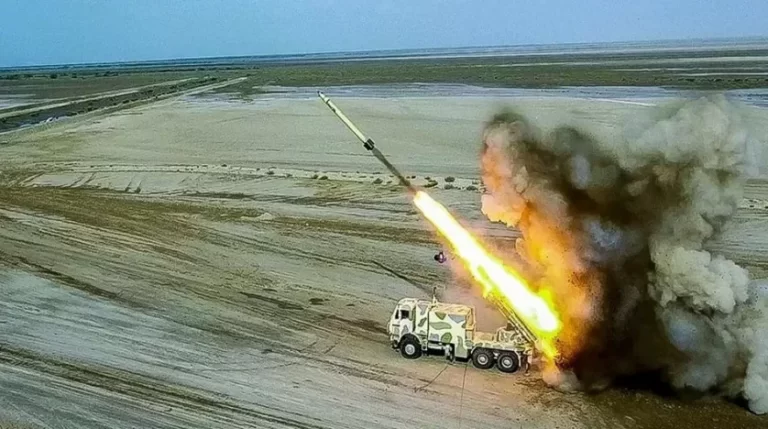
Some protected areas of the Kosalan Mountain in Sarvabad, Kurdistan province, have caught fire after continuous IRGC shelling of the area.

Despite all the efforts of the locals to put out the fire, it has not yet been brought under control as the fire spread and the IRGC forces prevented the volunteering people from responding to the fire.

Simultaneously with the shelling of the area, which started on the morning of 16 August, the IRGC forces summoned the heads of several villages on the foothills of Kosalan Mountain and asked them to evacuate the villagers from the heights of the area.

A source that spoke to the Kurdistan Human Rights Network (KHRN) said the IRGC shelling targeted the areas near the Razab village of Sarvabad and “lasted for several hours”.

According to this source, at the same time as the artillery fire, the village heads of Zhivar, Bolbar, Selin, Abbasabad, and Vargah Vir were summoned to the headquarters of the IRGC in Sarvabad.

“The officers have told the village heads that in the next few days, animal breeders and beekeepers must evacuate the heights of the Kosalan Mountain”, the source said, adding that the officers warned that “those who do not leave the region will be responsible for their own lives”.

The IRGC shelling comes after it announced holding a military exercise in Kosalan Mountain in recent days.

This is even though these mountainous areas have been registered as protected areas under the management of the Environmental Protection Agency per enactment No. 303 issued by the Environmental Protection Council (State Commission for Infrastructure) since 2009.

Kurdish environmental activists have repeatedly warned that the mountainous areas of Shaho and Kosalan are protected areas and that any military maneuver in these areas is against the law.
How the Iranian IRGC dupe Syrian youth to join proxy group

0

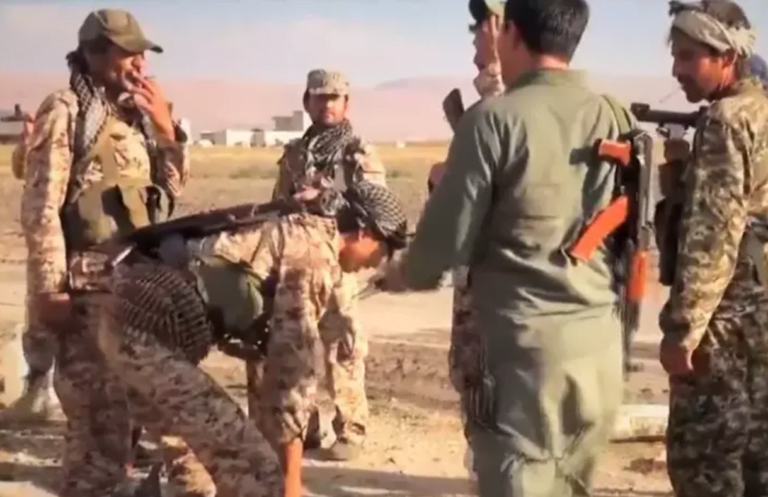
A Syrian kid who joined an Iranian IRGC militia expecting cash, benefits, and security discovered instead unfulfilled promises and indoctrination.

The 25-year-old former Fatemiyoun Division warrior, like most of his friends, did not finish his studies as the Syrian conflict engulfed his birthplace of Deir Ezzor, forcing him to flee.

However, after Syrian regime forces and associated militias took control of the area, the young man, who goes by the alias Mustafa al-Laheeb, believed he had a shot at employment and stability.

“The regime sent representatives to the districts where the displaced people of Deir Ezzor and Albu Kamal were residing to persuade them to return freely,” he said.

“They promised they would no longer be harassed or forced into [required] military duty,” he claimed.

The delegates pledged to provide jobs for young Syrians, he added, adding that this proved to be a hollow promise because the kids were still hunted by the regime’s security forces for military duty upon their return.

Around the same time, militias connected with the Iranian IRGC, according to al-Laheeb, began approaching young people, encouraging them to join and offering them large pay and immunity from the regime.

He soon discovered that Syrians are treated as third-class elements inside the Fatemiyoun Division, while Lebanese and Afghans are treated as first- and second-class elements, respectively.

His children were forced to undergo scouting and religious classes, he claimed, stressing that “the people of Deir Ezzor were subjected to extortion to change their sect” as a result of this form of religious and cultural brainwashing.

Minors and young people, in particular, are forced fed the Fatemiyoun ideology, as well as the Wilayat al-Faqih (Guardianship of the Jurist) concept, which calls for obedience to Iranian leader Ali Khamenei.

He claimed that when he was recruited, the Iranian IRGC militia’s Fatemiyoun Division promised him he would be paid $150 per month and would be given with food and medical care. But he only made $40, he claimed, with payments often delayed for three months.

Amateur spy Shahram Poursafi: the face of ‘IRGC idiocy’

0

A host of political and security analysts specialising in Iranian affairs have deemed the botched plots by Islamic Revolutionary Guard Corps (IRGC) to assassinate US officials a new chapter in “IRGC idiocy”.

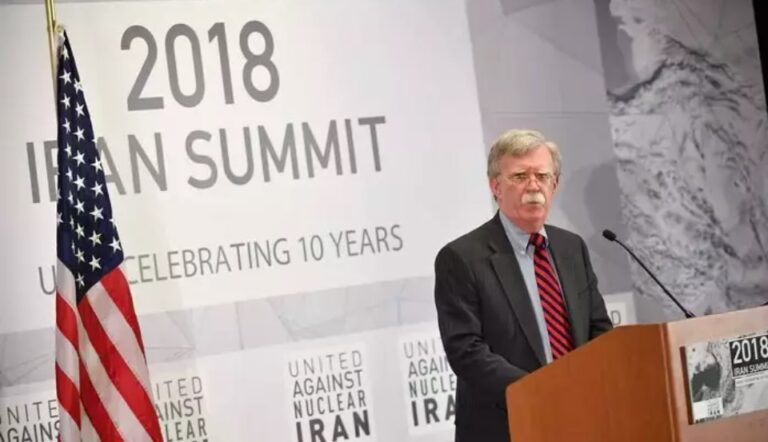
IRGC member Shahram Poursafi, 45, also known as Mehdi Rezayi, was indicted in absentia by the US Justice Department on August 10 over allegations he had offered to pay an individual in the United States $300,000 to kill former US national security adviser John Bolton.

Poursafi is still at large.

The plot, which stretched from last October until April, never made headway because the supposed assassin with whom Poursafi was communicating was an informant for the US Federal Bureau of Investigation (FBI).

The FBI let the plotting continue for months in order to collect information on Poursafi and on Iran’s broader plans, court documents show.

These included another plot to kill an even more prominent former US official for a $1 million payment.

In the process of implementing the assassination plot, Poursafi revealed his identity and exposed his personal contact and identity documents.

His Iranian national identification number is 1930098431, his email address is [email protected], his phone number is +989125666366 and his Twitter account is @shahrampoursafi, according to accounts on social media.

Such a revelation is unheard of from a senior intelligence figure, say numerous security observers.

In the process of communicating with the FBI agent, Poursafi disclosed information that led authorities to find, among other things, pictures of Poursafi wearing a uniform with an IRGC patch.

A new chapter of idiocy

The plan to assassinate John Bolton “is a new chapter of the idiocy practiced by the IRGC inside and outside Iran”, said Iranian affairs researcher Dr. Fathi al-Sayed of the Middle East Centre for Regional and Strategic Studies.

The mere planning of such an operation “increases Iran’s isolation and further confirms that it is a sponsor of terrorism around the world”, he told Al-Mashareq, adding that if the plan had been carried out, “it would have led to very dire consequences for Iranians.”

Iranian Media Celebrates Attack on Salman Rushdie

0

Over the weekend senior officials in the Islamic Republic of Iran remained silent over the attempted murder of Salman Rushdie in New York.

Neither Supreme Leader Ali Khamenei, who just three years ago declared that a 1989 fatwa by Ayatollah Khomeini calling for the Brotosh author’s death was still active, nor President Ebrahim Raisi have passed comment since Salman Rushdie was stabbed onstage at an event in New York on Friday.

Hardline and IRGC-aligned media outlets praised the attack in their Sunday editions, however.

The ultraconservative newspaper Kayhan, whose editor-in-chief is directly appointed Ali Khamenei, inexplicably called the assault on Rushdie an “alarm bell” for those responsible for the assassination of Ghasem Soleimani in 2020.

“The attack on Rushdie shows that taking revenge on American soil is not a difficult job and from now on Trump and Pompeo must feel that they are more in danger,” an editorial said.

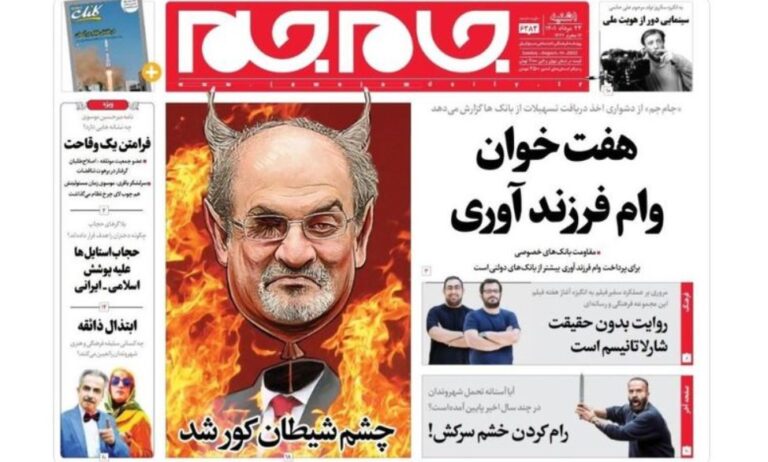
On its front page, the state newspaper Jam-e Jam depicted Rushdie as the devil, with his hair twisted to resemble horns, his head a balloon floating from his body and his right eye enucleated. The title was “Satan’s Eye has Been Blinded”.

The IRGC-affiliated newspaper Javan instead sought to absolve Khomeini and the fatwa of any blame.

An editorial on Sunday speculated that Rushdie was “no longer alive and this intense secrecy about his fate shows that a pre-written scenario is unfolding” – despite the fact that Rushdie’s own family said he was now breathing without a ventilator.

The same newspaper went on to suggest the “simplest and the most optimistic scenario” for the attack on Rushdie was “a young Muslim who was not born when The Satanic Verses was written has personally or, at most, as part of a small group, decided to take vengeance on him.”

It also speculated that the attack could have been “non-ideological and a personal settling of the accounts.”

Iranian IRGC bases in Syria hit during Israeli strikes

0

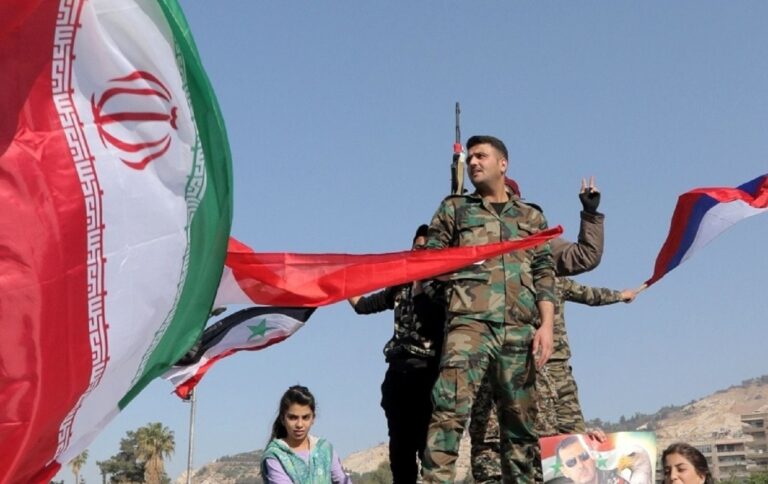
According to regional intelligence and Syrian military sources, Israel attacked Iranian IRGC targets in a series of attacks yesterday near Syrian President Bashar Al-ancestral Assad’s home region and close to Russia’s main Syrian outposts on the Mediterranean coast.

The Syrian army previously stated that three personnel were killed and three were injured in two simultaneous Israeli attacks south of Tartous and one on Damascus. It provided no information about the precise places.

According to two Syrian military defectors familiar with the region, the strikes on the north-eastern outskirts of Damascus targeted outposts maintained by Lebanon’s and Iranian IRGC-Hezbollah militia.

On the condition of anonymity, a Syrian army soldier in the Tartous coastal region told Reuters that an Iranian base near the village of Abu Afsa, south of the port city, was struck, as was an air defence and radar station nearby.

In recent years, Israel has carried out hundreds of strikes against suspected Iranian IRGC targets but has mainly avoided attacking the coastal provinces where Russia’s main military assets are concentrated.

According to Israeli and regional military experts, the current strikes are part of an escalation of what has been a low-intensity conflict aimed at slowing Iran’s expanding entrenchment in Syria.

The strikes occurred near the Russian navy’s lone Mediterranean station in Tartous, where Russian warships are docked, as well as Moscow’s key Hmeimim air base in nearby Latakia province.

Russia’s assistance, along with Iran’s, aided in turning the tide in favour of Al-Assad in a struggle that has lasted more than a decade.

Last month, Israel reported its fighter jets came under Russian anti-aircraft fire over Syria in May but missed their target, describing the occurrence as a “one-time incident.”

Syria blamed Israel for devastating strikes on its main international airport in Damascus last June, which severely damaged runways and prompted flights to be halted for many weeks.

According to Israeli defence authorities, Iran has frequently utilised the civilian airport to move weapons and militias.

The Iranian IRGC behind Salman Rushdie stabbing

0

Hadi Matar, the suspect detained for stabbing famed author Salman Rushdie, had prior contact with a US-designated terrorist organization, the Iranian IRGC (Revolutionary Guards).

According to VICE, a Middle Eastern intelligence official stated that Matar had been in communication with “those either directly associated with or adjacent to the Quds Force” prior to the stabbing.

Quds Force is the extraterritorial operations arm of the Iranian IRGC. The US has also designated the Quds Force as a foreign terrorist organization.

“The degree of the involvement is unknown, whether this was a directly backed assassination attempt or a series of ideas and directives in selecting a target,” the official added.

Due to diplomatic reasons, the official would not comment on the record, according to VICE. VICE cited European and Middle Eastern intelligence authorities as saying Matar, 24, had been in direct contact with members of Iran’s Islamic Revolutionary Guard Corps on social media, before attempting to murder Salman Rushdie.

According to VICE, security officials declined to comment on the nature of Matar’s social media communication with the IRGC.

According to a NATO counter-terrorism official from a European country, the stabbing appeared to be a “directed” attack, in which an intelligence service inspires a terrorist to attack without providing direct material aid.

“A 24-year-old born in the United States did not come up with Salman Rushdie as a target on his own,” the Mideast intelligence officer told VICE, adding that “even an avid consumer of Iranian IRGC propaganda would have some difficulty finding references to Rushdie compared to all the other, modern enemies, designated by the regime.”

UK should designate IRGC as terrorist over Rushdie stabbing: PM hopeful Sunak

0

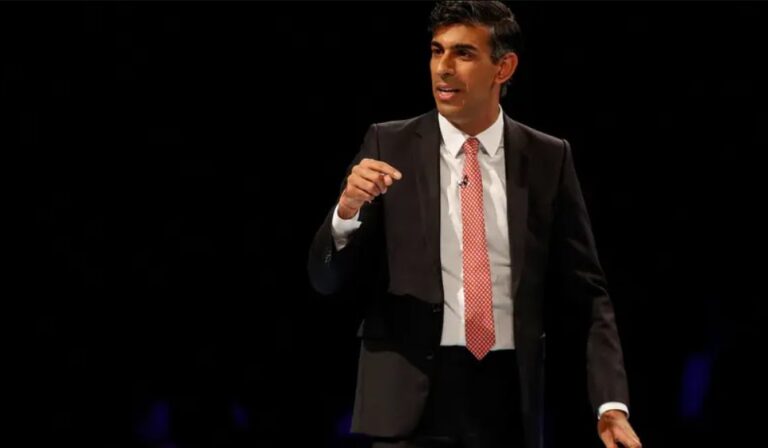
The UK should designate Iran’s revolutionary guards as a terrorist group over an attack on author Salman Rushdie, British Prime Minister hopeful Rishi Sunak has said.

The candidate running for leadership of the Conservative party also urged more sanctions on Iran and cast doubt over efforts to revive the 2015 Joint Comprehensive Plan of Action (JCPOA) nuclear deal that lifted sanctions.

“We urgently need a new, strengthened deal and much tougher sanctions, and if we can’t get results then we have to start asking whether the JCPOA is at a dead end,” Sunak said in a statement.

Hadi Matar, 24, from Fairview, New Jersey, the suspect in Friday’s stabbing, showed sympathies for the Islamic Revolutionary Guard Corps (IRGC) on his social media channels, NBC News reported citing a law enforcement official.

The official noted that there were no “definitive links” between Matar and the IRGC.

Sunak said in his statement that Iran’s response to the incident strengthened the argument for designating the IRGC as a terrorist group.

There has been no official statement from Iran on the attack, but Iranian newspapers, including Kayhan whose chief is appointed by supreme leader Ali Khamenei, praised it.

State-owned paper Iran said that the “neck of the devil” had been “cut by a razor.”

Rushdie, the 75-year-old Indian-born author of The Satanic Verses, was hospitalized with serious injuries after being repeatedly stabbed onstage at a lecture in New York state.

He was taken off a ventilator on Saturday and was reportedly “off the ventilator and talking (and joking),” fellow author Aatish Taseer said in a tweet.

The Satanic Verses elicited a religious edict from Iran’s then-leader Ruhollah Khomeini in 1989 calling on Muslims around the world to kill Rushdie, who was forced into hiding for years.

Iran’s 15th Khordad Foundation offered a bounty for the life of the author, which was increased to $2.5 million in 1997, and $3.3 million in 2012.

Bungled murder-for-hire plot in US exposes ineptitude of IRGC

0

Iran’s botched plot to assassinated two former US government officials underscores the ineptitude of the Islamic Revolutionary Guard Corps (IRGC) and Tehran’s position as a “hostile government”, officials say.

The US Justice Department on Wednesday (August 10) announced it had squashed a plot by a member of the IRGC to kill former US national security adviser John Bolton.

Shahram Poursafi, 45, also known as Mehdi Rezayi, was indicted over allegations he had offered to pay an individual in the United States $300,000 to kill Bolton, the Justice Department said.

But the plot, which stretched from last October until April, never made headway because the supposed assassin for hire with whom Poursafi was communicating was an informant for the US Federal Bureau of Investigation (FBI).

Court documents show the FBI let the plotting continue for months in order to collect information on Poursafi and on Iran’s broader plans.

These included another plot to kill an even more prominent former US official for a $1 million payment.

The FBI did not identify the official, but he has been reported to be former secretary of state and Central Intelligence Agency director Mike Pompeo.

Poursafi, who is believed to be in Iran, was charged with two counts relating to plotting a murder.

He was charged with the use of interstate commerce facilities in the commission of murder-for-hire, which carries up to 10 years in prison, and with providing and attempting to provide material support to a transnational murder plot, which carries a 15-year sentence.

Further exacerbating the embarrassing situation for the IRGC was the ineptitude of this supposed “spy chief”.

In the process of implementing the assassination plot, Poursafi revealed his real identity and exposed his personal contact and identity documents.

Accounts on social media detailed that his Iranian national identification number is 1930098431, his email address is [email protected], his phone number is +989125666366 and his Twitter account is @shahrampoursafi.

Numerous security observers say such a revelation is unheard of from a senior intelligence figure.

Iranian IRGC proxy in Syria arrest members leaving over unpaid salary

According to local media, a militia connected with the Iranian IRGC (Islamic Revolutionary Guard Corps) detained men in the eastern Syrian province of Deir az-Zour who deserted due to payment delays.

Amjad al-Sari, a member of the local news network Eye of Euphrates, informed The New Arab’s Arabic-language sister site Al-Araby Al-Jadeed that the arrests were made by the Iranian IRGC-linked 47th Regiment in the town of Abu Kamal near the Syria-Iraq border in recent days.

They were detained “after they left the military owing to salary delays,” according to al-Sari.

Other local media outlets have also reported recent arrests of former members by the 47th regiment.

The province of Deir az-Zour is home to a variety of armed factions, including the Syrian regime and ally troops, notably Iranian IRGC backed militias.

The Islamic State organisation remains in the area, slaughtering militants from various factions, including militias supported by Tehran.

According to al-Sari, the majority of the 47th regiment’s personnel are Syrians.

With little work options, young men in Deir az-Zour have little choice except to depart the area or join armed organisations for pitiful pay, he noted.

Long before a conflict that has killed over 500,000 people and displaced millions more broke out in 2011, Iran was a crucial backer of the Syrian regime.

It has sent thousands of foreign militia members to assist the Assad administration.

Other Iranian IRGC forces, like the Lebanese militia Hezbollah, are also said to be active in the area.

Since 2021, Iran-backed militia groups have seized more than 1,900 plots of land in parts of Syria near the Lebanese border, where Hezbollah strike forces are stationed, a new report says.

In a July 11 report, the Syrian Observatory for Human Rights said non-Syrian Iran-backed militia groups have purchased more than 640 plots of land in and around Zabadani in rural Damascus, adjacent to the Lebanese border.

Switzerland informs Tehran about US lawsuit against Iranian IRGC

0

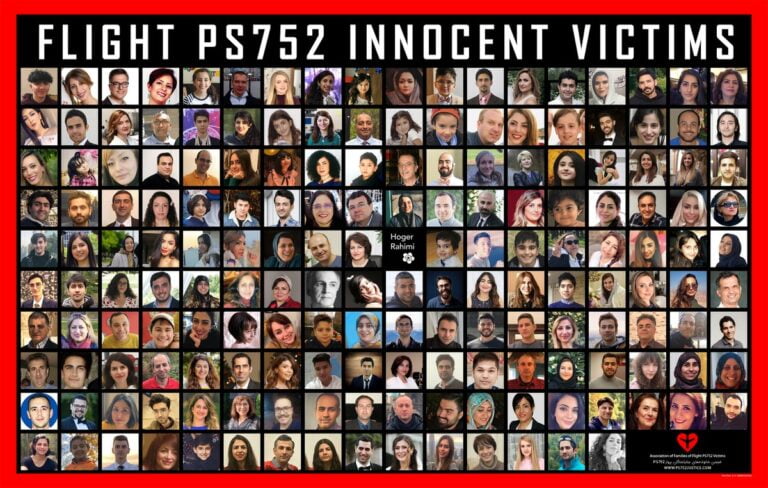
Switzerland has notified Tehran of a lawsuit filed in the United States against the Islamic Republic and the Iranian IRGC by the relatives of the victims of the Ukrainian plane shot down by Iran in 2020.

The Swiss embassy in Tehran, which represents US interests, has officially informed the Iranian government of the case, according to a document acquired by Iran International.

In June, Canada also stated that it had notified Iran of the Superior Court of Justice of Ontario’s finding that the Iranian IRGC intentionally downed Ukraine Airlines Flight PS752.

Some family members launched a legal case against Iran and high authorities they think were responsible for the tragedy in May 2021. The Ontario Court of Appeal found that the plane’s downing was a purposeful act of terrorism and granted compensation to the six victims’ estates on December 31, 2021.

In a House of Commons subcommittee meeting attended by several political and human rights activists, including the spokesman of the Association of Victims’ Families, Hamed Esmaeilion, Canada’s international human rights parliamentary subcommittee criticized the government’s “passive” approach toward Iran’s widespread human rights violations.

On January 8, 2020, the airplane was shot down by two IRGC air-defense missiles as it took flight from Tehran’s Imam Khomeini International Airport. The plane’s 176 passengers and crew, including 63 Canadians and 10 Swedes, as well as 82 Iranian citizens, were all killed.