Home Blog Page 19

Yemen disrupts Iranian IRGC-Houthi illegal smuggling operations

0

According to analysts in Yemen, Tehran and the Iranian IRGC are continuing to smuggle narcotics and weapons to its Houthi proxies in Yemen to destabilize the country and the surrounding area and gain control over important sea routes and straits.

However, local people’s cooperation and a monitoring and tracking operation that was started at the beginning of July have helped anti-narcotics authorities in Shabwa province do their bit to thwart Iran’s attempts.

On July 30, anti-narcotics authorities detained a “dangerous” drug smuggling group and confiscated a significant number of illegal substances, a top official reported.

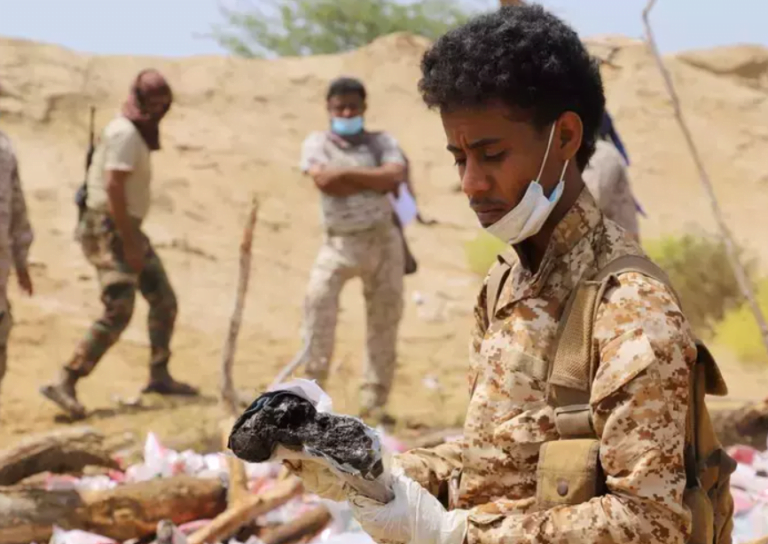
According to Yemen TV, security forces carried out a separate operation in Marib province on July 20 and confiscated wireless communication equipment, a significant amount of hashish, and weapons that were destined for the Houthis.

Former Yemeni defense minister Mohammed al-Maqdashi claimed that the Iranian IRGC (Islamic Revolutionary Guard Corps) continues to sponsor and support the Houthis with money, technology, ballistic missiles, drones, and the smuggling of supplies of oil and narcotics.

During a field inspection of the Red Sea sector Coast Guard on July 22, he said that this amounted to an effort to destabilise Yemen and the surrounding area and establish Iranian control over important sea routes and straits.

According to political analyst Mahmoud al-Taher of Al-Mashareq, Iran’s ongoing smuggling of weapons, technology, and narcotics to its forces in the area aims to deplete the security capabilities of the Gulf nations.

By aiding insurgencies and smuggling narcotics into Gulf societies, it aims to demoralise them and cause internal strife in an effort to undermine their morality and security.

According to economist Faris al-Najjar, the Iranian IRGC “sees this as one of its missions, to help its militia,” therefore the smuggling of drugs and weapons to the Houthis “is happening regularly and will not stop.”

Surge in Iranian IRGC flights to Russia amid drone deal

0

An examination of open-source flight data reveals a significant increase in Iranian IRGC linked cargo flights to Russia since the start of the Ukrainian conflict.

Compared to just three in 2021, at least 42 planes operated by Iranian airlines connected to Iran’s Revolutionary Guards have arrived in Moscow since April.

According to Jake Sullivan, the national security adviser for the United States, the Iranian IRGC is getting ready to give Russia military drones to use in its invasion of Ukraine. In addition to revealing satellite images of two visits by a Russian team to Iran, during which they were shown armed drones, Sullivan said that Russia had asked Iran to furnish it with hundreds of drones.

The Russians have reportedly begun drone use training in Iran, according to a U.S. official who spoke to Haaretz this week.

Last week, a spokesman for Ukrainian President Volodymyr Zelenskyy said that Iran had already given Russia 46 drones and that the Russian army had started deploying them in combat.

Three cargo aircraft, including two 747 jumbo jets operated by the carriers Qeshm Fars Air and Iran Air Cargo and a Pouya Air Ilyushin-76, have recently flown the Tehran-Moscow route, according to an investigation by the Dutch aviation tracker Gerjon.

Since it sent men and weapons to Syria on behalf of the Iranian IRGC Quds Force during the civil conflict there, the latter is subject to American sanctions. Due to its connections to the Quds Force and for sending fighters, weapons, and other goods to Syria, Qeshm Fars Air is also subject to U.S. sanctions. The specific aircraft that is now traveling to Moscow used to often travel between Tehran and Damascus. Since the start of the Ukraine crisis, the three aircraft have flown at least 42 times from Tehran to Moscow as opposed to three in 2021.

Iran Gives Millions Of Dollars To Islamic Jihad To Attack Israel – Gantz

0

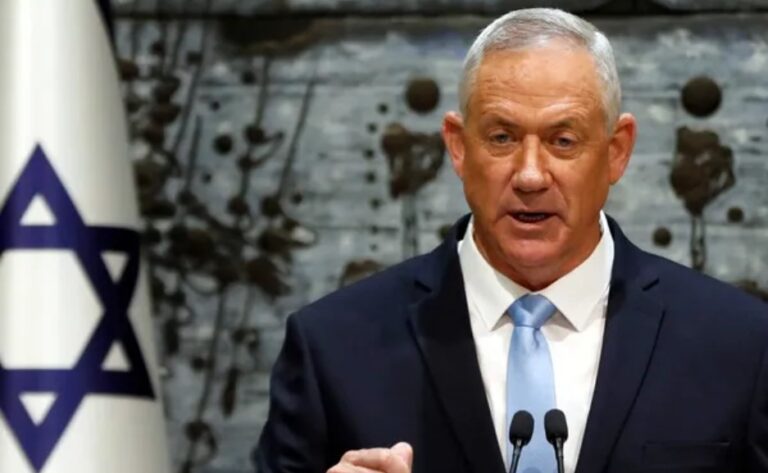
Israeli defense minister Benny Gantz said on Thursday Iran gives millions of dollars annually to the Islamic Jihad so that it can attack Israel.

In a joint press conference with his Cypriot counterpart Charalambos Petrides, Gantz said the financial support is in addition to the transfer of technical intelligence for the constitution of military bases in Gaza from which to launch attacks against civilian centers in southern Israel.

“Israel will continue to act against Iran’s emissaries together with our partners. We will continue to work together for the stability of the entire region,” he added.

After the launch of Operation Breaking Dawn against targets in Gaza on August 5, Israeli Prime Minister Yair Lapid said that Islamic Jihad is an Iranian proxy that wants to destroy Israel, noting that Israel has a zero-tolerance policy for any attempted attacks from Gaza.

The head of Islamic Jihad — a militant outfit designated a terrorist organization by the US, EU, and UK — was in Tehran when during the three-day operation.

Ziyad al-Nakhalah held meeting with several senior Iranian officials in Tehran including Supreme Leader’s adviser Ali Akbar Velayati, Foreign Minister Hossein Amir-Abdollahian, and Kamal Kharrazi, the head of Iran’s Strategic Council on Foreign Relations, as well as President Ebrahim Raisi and a number of high-ranking IRGC commander.

Tehran condemned the Israeli airstrikes on Gaza, vowed continued support and called for closer ties between the Islamic Republic and the Palestinian Islamic Jihad.

Ziyad al-Nakhalah held meeting with several senior Iranian officials in Tehran including Supreme Leader’s adviser Ali Akbar Velayati, Foreign Minister Hossein Amir-Abdollahian, and Kamal Kharrazi, the head of Iran’s Strategic Council on Foreign Relations, as well as President Ebrahim Raisi and a number of high-ranking IRGC commander.

Tehran condemned the Israeli airstrikes on Gaza, vowed continued support and called for closer ties between the Islamic Republic and the Palestinian Islamic Jihad.

FBI Accuses Iran Of Attempted Terrorist Attacks, Kidnappings, Cyberattacks

0

The FBI says the Iranian regime and “its terrorist partners” aren’t just a threat to the Middle East, but also a critical risk for the United States.

In a number of tweets on Monday, the FBI said Iran and its proxy groups “don’t just endanger the Middle East — they also put Americans, US national security, and our country’s critical infrastructure at risk.”

Sharing a link to a page on its website about how it is fighting back against the Iranian threat, the bureau added that the risk by the Islamic Republic is not theoretical.

“Through intel and law enforcement partnerships, the FBI has countered an array of threats from Iran’s government — such as attempted terrorist attacks and kidnappings, espionage and foreign influence ops, and cyberattacks.”

Reiterating its commitment to identifying and disrupting all Iranian intelligence and military operations that threaten the Americans, the FBI said, “We’ll use every tool and authority at our disposal to investigate crimes that Iran’s government and terrorist partners direct.”

“The Iranian regime has used repressive tactics in its wrongful detention of Americans in Iran on unsubstantiated criminal charges.

The Iranian regime has also exported its repression through its harassment and lethal targeting of Iranian dissidents worldwide, including Americans living in the United States.”

Earlier in August, US National Security Advisor Jake Sullivan expressed concerns over the safety of Iranian women’s rights activist Masih Alinejad following the arrest of a man with an assault rifle outside her New York home.

Alinejad, who was also the target of an international kidnapping plot orchestrated by Iran’s intelligence network last year, has promoted videos of women protesting Iran’s compulsory Islamic dress code to her millions of social media followers.

The Federal Bureau of Investigation says the Iranian regime and “its terrorist partners” aren’t just a threat to the Middle East, but also a critical risk for the United States. 

Iranian IRGC plot to murder former US National Security Advisor

0

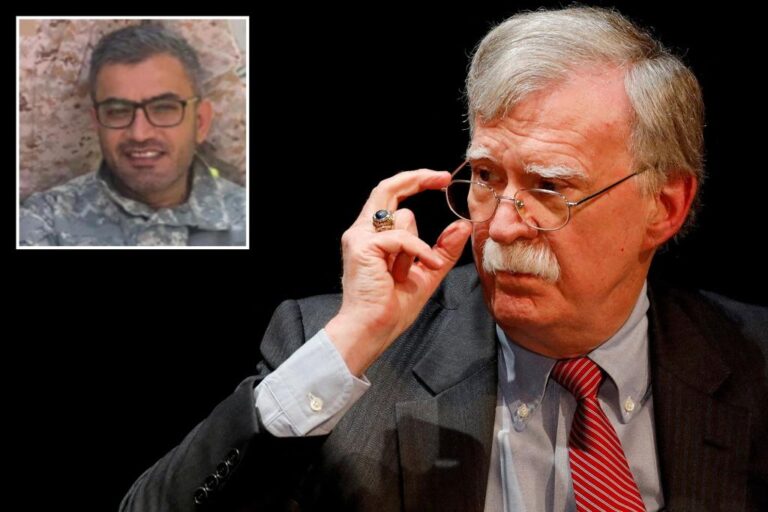
A complaint that was unsealed today in the District of Columbia accuses an Iranian IRGC member of using resources related to interstate commerce to commit murder-for-hire as well as of offering and attempting to offer material support to a murder plot that spans international borders.

According to court records, Shahram Poursafi, aka Mehdi Rezayi, 45, of Tehran, Iran, attempted to plan the murder of former national security adviser John Bolton beginning in October 2021. This was probably done in retaliation for the January 2020 death of Qasem Soleimani, commander of Iran’s Islamic Revolutionary Guard Corps – Qods Force (IRGC-QF). Poursafi sought to pay Americans $300,000 to commit the murder in Washington, D.C., or Maryland while acting on behalf of the IRGC-QF.

According to court records, on October 22, 2021, Poursafi requested images of the former National Security Advisor from Individual A, a U.S. citizen he had previously met online, saying the pictures were needed for a book Poursafi was writing. Poursafi was informed by Person A that Person B could connect Poursafi with someone who would take the photos for $5,000–$10,000. Later, Person A introduced Poursafi to a friend (referred to in court documents as the confidential human source or CHS).

Poursafi contacted the CHS using an encrypted messaging app on November 9, 2021, and later referred the CHS to another encrypted messaging app for more discussions. Poursafi made a $250,000 offer to the CHS to pay someone to “kill” the previous National Security Advisor. Later, a $300,000 cap was agreed for this sum. Poursafi said, “I have another job,” for which I will pay $1 million.

Poursafi indicated that the CHS would probably have to commit the murder before he or she could be paid, but urged the CHS to create a bitcoin account to facilitate payment. He went on to explain to the CHS that Poursafi’s “group” would become irate if he or she received payment but the murder was not carried out. A further check of one of Poursafi’s web profiles turned up images of him sporting an Iranian IRGC patch on his uniform. Poursafi’s connection to the Iranian IRGC was frequently mentioned by the CHS in their correspondence. Poursafi never refuted that he was associated with the IRGC-QF.

Iranian ex-PM: Khamenei’s son will succeed his father

0

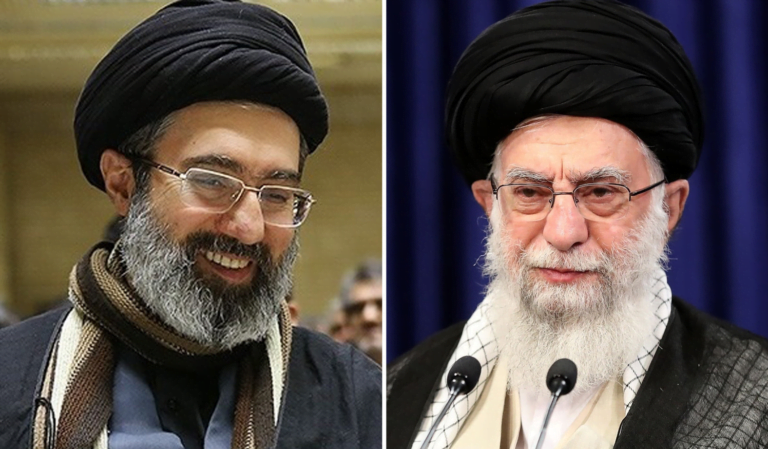
With reference to the present ruler, Ali Khamenei’s son, an Iranian dissident and former prime minister Mir Hossein Mousavi has cautioned the country about the establishment of hereditary authority.

Since February 2011, Mousavi, 81, has been held under house arrest. He served as Iran’s prime minister from 1981 to 1989.

Mousavi said, “Have the 2500-year-old monarchy returned to power that we are talking about Khamenei’s son’s succession?” in a remark posted on the Kaleme website in response to speculations that Khamenei’s son was being prepared to replace his father.

Since 2005, when Mojtaba Khamenei was initially accused of manipulating the presidential election to install like-minded candidates in power, rumors about his ambitions have been swirling throughout Iran. Mojtaba and other staff members in Khamenei’s office have never made an official comment on the prospect of his succession. However, Mousavi queried, “If they are not considering Mojtaba’s ascent to the throne, then why do they not refute the rumors?”

There have also been reports in recent years concerning Khamenei’s son and his participation in IRGC-related financial corruption cases. Additionally, according to the rumors, he oversaw IRGC intelligence under the direction of Hossein Ta’eb, who was recently dismissed by Khamenei.

In the meanwhile, Mousavi blasted Khamenei for Iran’s involvement in Syria, alleging that the Islamic Republic had perpetrated “stigmatic crimes” in the region and brought tragedy to a country beset by tyranny, famine, and poverty.

China helps Iran evade sanctions with illicit activity at sea

0

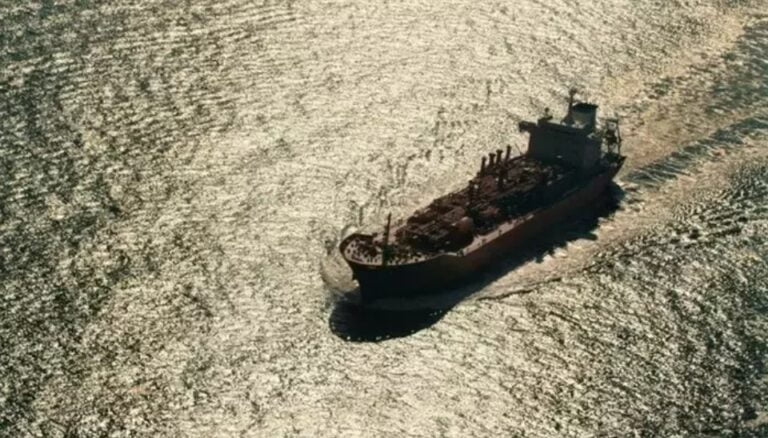
With support from China, Tehran continues to circumvent international sanctions by selling millions of barrels of oil to Chinese refineries and engaging in very short ship-to-ship transfers in Iranian waters with renamed vessels.

Iran maintains multiple centres and networks of individuals and companies across East Asia that help deliver oil and petrochemical products to China.

In April, Iran was exporting up to one million barrels per day (BPD) of its oil, while overall oil production was restored to the pre-sanctions level of 3.8 million BPD, AFP reported.

Some oil is delivered on Iran-flagged ships by companies under US sanctions, including the National Iranian Oil Co. (NIOC) and the National Iranian Tanker Co. (NITC).

The NITC is affiliated with the Islamic Revolutionary Guard Corps (IRGC).

In its efforts to sell oil and dodge the sanctions that have targeted its petroleum industry and the IRGC and affiliated companies, Iran has employed other strategies as well.

These include the use of vessels that operate under the flags of other countries, ship-to-ship cargo transfers in open water and attempts to conceal oil exports, according to numerous reports.

Other deceptive practices include tampering with or deactivating a ship’s automatic identification system — a collision avoidance system that continuously transmits a vessel’s location at sea — so its route “goes dark”.

Tanker tracking companies say China is the destination of most of those shipments, Reuters has reported.

At the same time as it engages in deceptive shipping practices, the Islamic Republic has continued to threaten oil vessels in the Strait of Hormuz with acts of piracy.

In a mid-July report, however, the Central Bank of Iran (CBI) stated that although Iran’s revenues from oil and other exports have increased, the rate of capital flight is on the rise.

The CBI report said in the fiscal year that ended March 20, Iran’s revenues from exporting oil, gas and petroleum products reached almost $39 billion, $17 billion more than the previous fiscal year, when oil prices were much lower.

The role of Iranian IRGC in PIJ’s recent rocket barrage in Israel

0

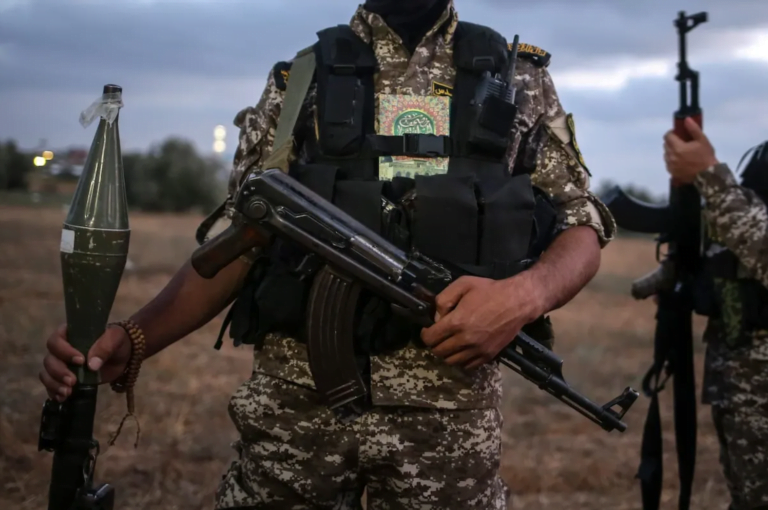
According to senior military analysts, the Palestinian Islamic Jihad fired over 600 rockets toward towns in Israel this weekend with the support of the world’s largest supporter of terrorism, the Iranian IRGC (Islamic Revolutionary Guard Corps).

It was no accident, according to Brig. Gen. Amir Avivi, a former deputy commander of the Israel Defense Forces’ Gaza Division, that the PIJ attacks took place while Ziyad al-Nakhalah, the organization’s secretary general, was in Iran for a meeting with President Ebrahim Raisi of the Islamic Republic.

According to a quote from Maj. Gen. Hossein Salami, head of the Iranian IRGC, “Today, all the anti-Zionist jihadi capabilities are on the scene in a united formation working to liberate Jerusalem and uphold the rights of the Palestinian people,” was published on the Sepah News website on Saturday.

The Iranian IRGC was classified as a foreign terrorist organization by the Trump administration. PIJ jingoism, Hassan Nasrallah’s harsh comments against a maritime agreement between Lebanon and Israel, and Iran’s strong stance at the Vienna nuclear talks, according to Avivi, are all related.

Col. Richard Kemp, who oversaw the British troops in Afghanistan, told Fox News Digital that while the nuclear talks were taking place in Vienna, the leader of the PIJ was meeting with the Iranian president, the head of the IRGC, and others in Tehran to receive instructions for terrorist attacks against Israel. “PIJ is an Iranian front organization that receives hundreds of millions of dollars in funding from Iran. The West should be doing all in its power to stop the money flow to all of its terrorist proxies instead of negotiating sanctions relief and normalization with Iran.”

According to media sources, the government is expected to provide the Islamic Republic around $100 billion as part of sanctions relief in exchange for interim limits on Iran’s nuclear program if, as the Biden White House hopes, a revised nuclear agreement is struck.

Hamas, which the United States and the European Union have designated as a terrorist organization, governs the Gaza Strip. The EU and the US both categorize PIJ as a terrorist organization. Hezbollah is Iran’s main strategic ally in Lebanon as well as a US-designated terrorist group.

Iranian satellite produced in Russia to surveil Ukraine and Israel

0

Tehran declared on Sunday that it will oversee an Iranian satellite that Russia will launch in the coming days “from day one,” denying allegations that it will first help Moscow in its conflict with Ukraine and that it will have exclusive access to data from the Russian-built Khayyam satellite, which is claimed to provide it better monitoring of Israel.

According to unnamed Western intelligence sources quoted in an earlier Washington Post article, Russia “plans to utilize the Iranian satellite for several months or longer” to support its military operations in Ukraine before handing it over to Iran.

They claimed that Tehran will have “new capabilities, including near-continuous observation of vital sites in Israel” and the Gulf thanks to the Iranian satellite.

But according to the source, Moscow will initially utilise the satellite to “improve its observation of military targets” in the crisis in Ukraine.

The assertions were rejected as by Iran as “untrue,” and the Iranian Space Agency said that because of the satellite’s “encrypted algorithm, no third country is able to access the information” supplied by it.

Putin refuted claims made by US media in June 2021 that Russia will give Iran a sophisticated satellite system that would greatly enhance its espionage capabilities.

Iran maintains that its space programme does not violate any other international accord or the 2015 nuclear agreement between Iran and global powers since it is primarily used for defence and civic objectives.

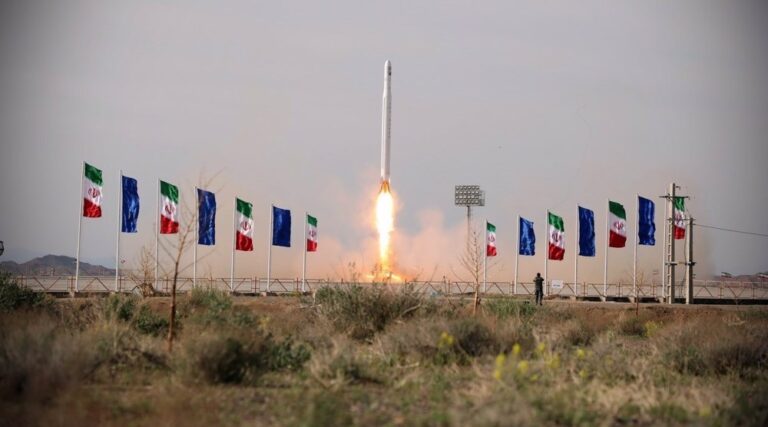
The ideological branch of Iran’s armed forces, the Islamic Revolutionary Guard Corps (IRGC), declared in March that Nour-2, a military “reconnaissance satellite,” had been successfully launched into space.

Jailed Female Activist Says Iran Neglects Political Prisoners’ Health

0

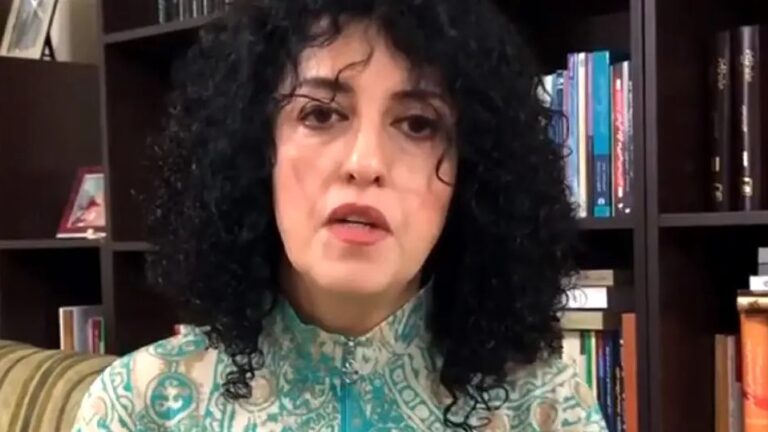
Rights defender Narges Mohammadi says authorities have put the lives of female prisoners in danger by refusing to protect them from Covid despite new cases.

Prominent civil and human rights activist Narges Mohammadi, who has been transferred to the Women’s Ward of Tehran’s IRGC Evin Prison after a recent open-heart surgery, said Thursday that some of the inmates have tested positive for Covid while several others have developed symptoms but have not been tested.

“Self-isolation is impossible given the high number of inmates and the small size of the women’s ward,” Mohammadi wrote in a letter from Evin which was published on her Instagram page.

“It is the duty of human rights activists and organizations not to remain silent about the violation of prisoners’ basic rights, to defend the legal rights of political prisoners and prisoners of conscience and their right to health, and to force the government to abide by human rights,” Mohammadi wrote. Female

She also added that currently there are over 50 political prisoners and prisoners of conscience at the Women’s Ward of Evin and the number keeps increasing.

“These many inmates with various political and ideological affiliations are unprecedented in the history of the prison … This indicates increasing suppression by the government,” Mohammadi said in her letter.

Mohammadi has been to jail several times over the past two decades. She was freed from Evin Prison in September 2020 after serving more than five years when she had no contact with her husband and children for long periods of time.

She was arrested again and sentenced to eight years in jail and 70 lashes by the Revolutionary Court on trumped-up political charges again in a five-minute trial in late January.

Ill-treatment of political prisoners and activists at Evin and other prisons such as Qarchak is not limited to denying them necessary healthcare.