Home Blog Page 20

IRGC Chief Says Iran Will Destroy Israel And Attack The US

0

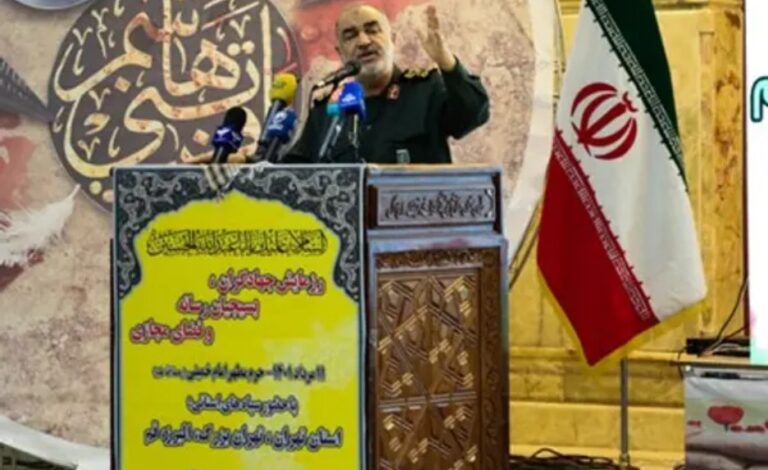
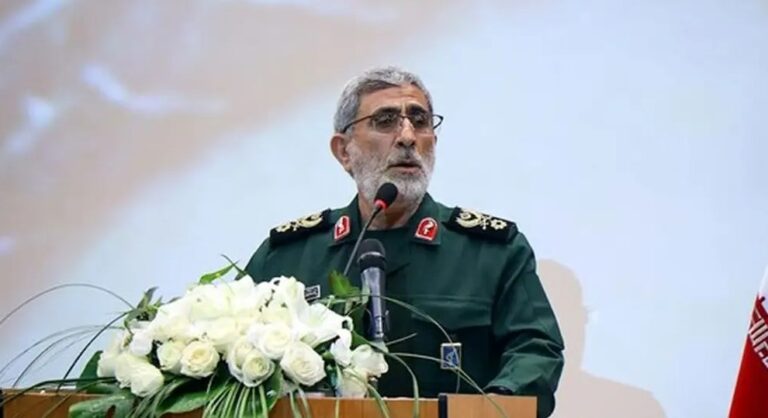
Iran will continue its struggle until the destruction of “enemies”, the United States and Israel, the IRGC Chief of its extraterritorial Qods Force said Friday.

As a new flare up of violence between Israel and Iran-backed Islamic Jihad began Friday, Esmail Ghaani (Qaani) was speaking at a memorial service for three servicemen killed in the Syrian war.

Ghaani repeated a recent refrain heard from other Iranian officials that Israel is in decline and said that “Hezbollah’s sons are making plans to bring down the last blow against the Zionist regime…and to realize the wish of Imam Khomeini to eradicate Israel from the map and the face of the Earth.”

But he also threatened the United States: “The enemies of [Iran’s] Islamic government, led by America and the Zionist regime should know that we will never stop self-sacrifice and will move forward on the path of resistance.” IRGC Chief

The Islamic Republic uses the terms “resistance” to refer to its regional foreign and military policy of arming and supporting militant groups, such as the Islamic Jihad, the Lebanese Hezbollah, and the Houthi forces in Yemen primarily for attacking Israel but also threatening Arab states friendly to the West.

“The honorable path of martyrs will be pursued until the complete destruction of the enemies of the Islamic system,” he said, meaning Iran’s Islamic Republic.

Islamic Jihad fires rockets at Israel from Gaza on August 5, 2022.

At the same time on Friday, the official Twitter account of the Revolutionary Guard (IRGC) wrote, “We clearly say that we interfere whenever there is the issue of opposing Israel. After this also, wherever any nation or group fights Israel, we stand behind them and support them.”

While Israel launched a series of air attacks throughout Gaza, killing about 10 members of Iran-backed Islamic Jihad including its military commander Taysir al-Jabari, the leader of the group was visiting Tehran.
Iran smuggles weapons into Syria via pilgrim convoys

0

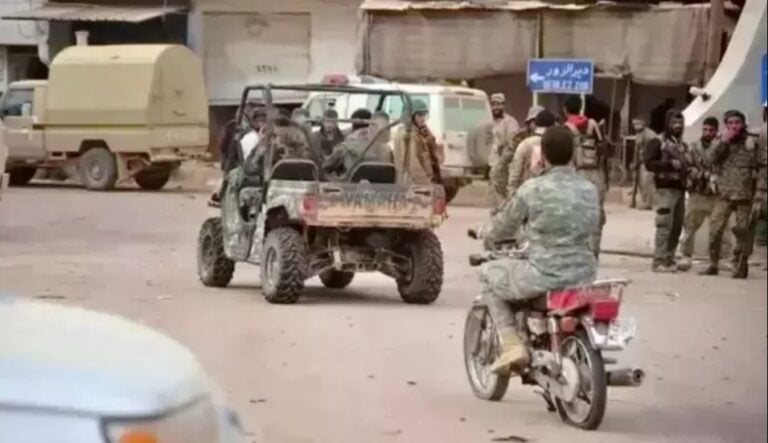
The Islamic Revolutionary Guard Corps (IRGC) has been smuggling weapons to its proxy militias in Syria and Lebanon by land, via the Iraqi border with Syria, in convoys carrying Shia pilgrims, local journalists said.

In early July, reporters with Eye of the Euphrates observed dozens of buses entering Syria from Iraq, media network spokesman Nawras al-Arfi told Al-Mashareq.

A number of the buses, closely guarded by Iran-affiliated militiamen, were transporting Iraqi and Iranian civilians to religious sites, such as Ain Ali shrine near Mayadeen in Deir Ezzor province and Sayyida Zainab in Damascus, he said.

It was suspicious, al-Arfi said, that the buses did not enter Syria by way of al-Qaim/Albu Kamal border crossing, which is the normal route into Syria.

Instead, they entered via the village of al-Heri, near Albu Kamal, which is an irregular border crossing used by IRGC commanders and militias, he said.

Convoy routes

Eye of the Euphrates journalists followed the routes the convoys had taken, which led them to the headquarters of Iran-aligned militias in western Syria.

Here they saw passengers disembark from the buses, and witnessed shipments of weapons and missiles being unloaded, al-Arfi said.

“A number of convoys completed their journey through the Syrian desert (Badiya) and reached the capital, Damascus,” he said.

It appears the missiles they were transporting were later smuggled into Lebanon and handed over to Hizbullah, he added, noting that the IRGC and its proxies have used this method of smuggling in the past.

In June, Iran-aligned militiamen brought a shipment of weapons from Iraq into Syria with a convoy of female pilgrims, and forbade anyone from searching them, al-Arfi said.

Eye of the Euphrates reported that the recent arms shipments “contained sophisticated weapons and advanced medium- and long-range missiles”.

A number of convoys first unloaded weapons in al-Katf district, Albu Kamal, where the most important militia bases and warehouses are situated, he said.

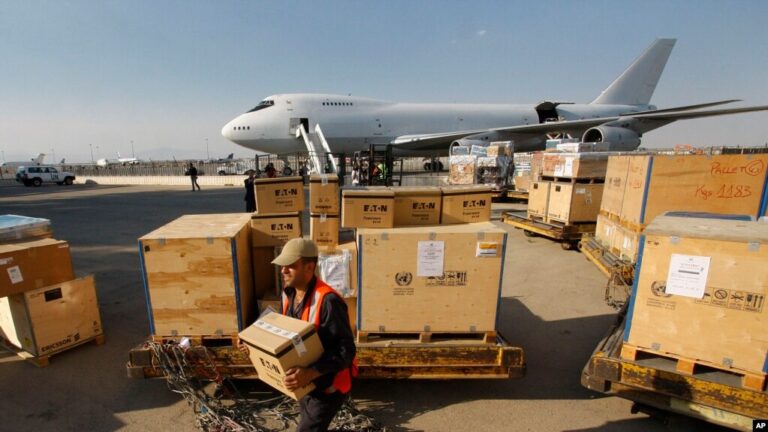
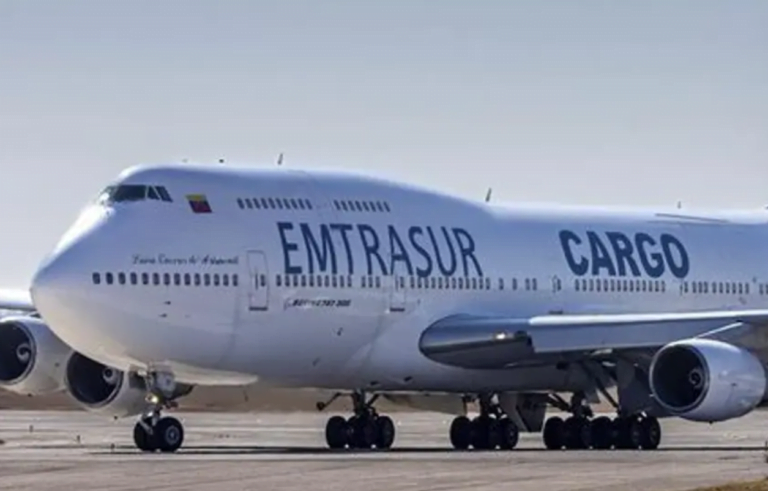
Iranian IRGC-linked Boeing 474 in Argentina to be seized by US

Tuesday, the United States requested authorization to seize an Iranian aircraft that had been detained in Argentina due to concerns that it had ties to the terrorist-designated Iranian IRGC (Islamic Revolutionary Guard Corps).

Argentina grounded the 747 cargo plane on June 8 after it unexpectedly arrived from Mexico at a Buenos Aires airport. The aircraft was once owned by Iran’s Mahan airline, which was linked to the Iranian IRGC and subject to US sanctions for supplying the Syrian regime with weapons and aiding armed militants.

Five Iranians, some of whom had obvious connections to the Iranian IRGC, were among the 19-person crew on board the aircraft when it landed in Argentina. Argentina took their passports away.

Iran Briefing reported in June that Iranians on board the Venezuelan airliner had planned attacks on human targets. The pilot was a senior officer of Qods (Quds) force, Tehran’s extraterritorial intelligence and secret operations unit that is classified by the United States as a terrorist group.

The US Department of Justice filed the request for confiscation after the US District Court for the District of Columbia unsealed an order for the jet’s seizure on July 19. The warrant claimed that the plane may be taken away because it broke export control regulations, according to the DOJ.

The identification of the Iranian pilot of the jet was one interesting aspect of the nearly two-month-long affair. It was soon discovered that the pilot of the aircraft was Gholamreza Ghasemi, a recognized member of the Iranian IRGC Qods Force and apparently a relative of Iran’s current interior minister Ahmad Vahidi. The other Iranians were connected to the IRGC or organizations that had ties to terrorism.

Mahan Air is under sanctions because of its connections to the IRGC-QF, a group that the US has labeled as a terrorist organization.

IRGC Commander Says Hezbollah Has 100,000 Missiles And Finger On Trigger

0

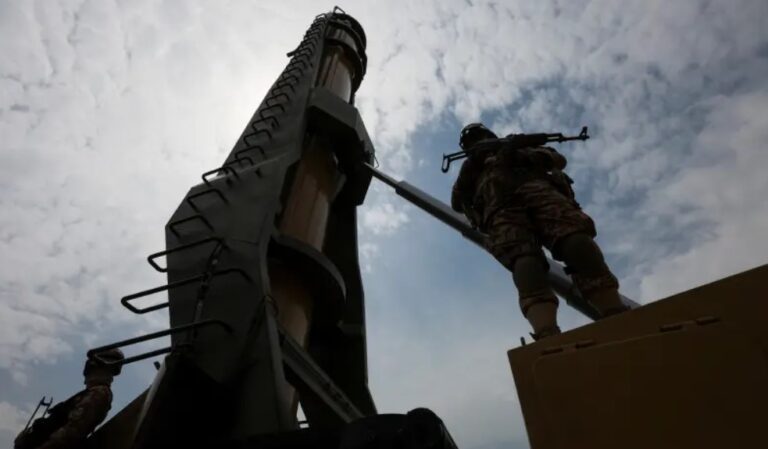
There are one hundred thousand missiles in Lebanon, IRGC Commander Tuesday told a gathering of thousands of Basij militia.

In a speech in Tehran Salami said that Lebanon’s “Hezbollah youth have their fingers on triggers” and their leader Hassan Nasrallah with “determination is standing against the Zionists.”

According to IRGC-linked Fars website, Salami speaking to 6,000 Basij members on the occasion of the religious month of Muharram and the approaching Shiite holy day of Ashura, praised the voice “of Islamic resistance” from Lebanon and Syria to Yemen, including “around the artificial borders of the Zionist regime.”

The Islamic Republic uses the term “resistance” to refer to its proxy groups throughout the Middle East. Salami in his speech, however, went further telling the paramilitary Basij that they are past of a “global” Islamic resistance force.

He went on to praise Islamic Republic’s offensive operations in the region, mentioning confrontations at sea, “firing missiles at the enemy’s bases”, capturing enemy vessels as examples of “Islam’s power”.

Iranian proxy militias in Iraq and Syria have repeatedly attacked US bases with rockets and drones in recent years, and the IRGC has seized commercial vessels in the Persian Gulf.

The IRGC commander claiming that the enemy, meaning the United States, has been defeated, said that now it tries to win in a war of propaganda in cyberspace.

He was referring to anti-regime content by activists and ordinary Iranians on social media, which authorities cannot stop and blame on the US.

There are one hundred thousand missiles in Lebanon, chief commander of the Iran’s Revolutionary Guard, Hossein Salami Tuesday told a gathering of thousands of the Basij militia.

In a speech in the Tehran Salami said that Lebanon’s “Hezbollah youth have their fingers on triggers” and their leader Hassan Nasrallah with “determination is standing against the Zionists.”

IRGC funnels arms to Houthis via fishing vessels on Red Sea coast: reports

0

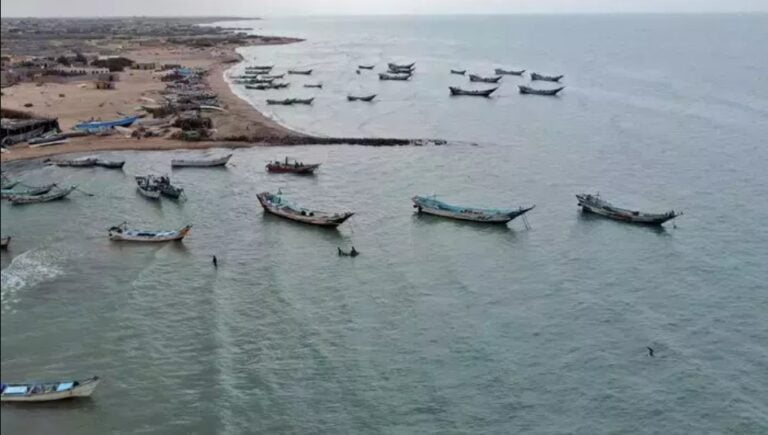
Iran has been funneling arms to its proxies in Yemen, the Houthis, with several recent shipments smuggled into the war-torn country on fishing boats via the Red Sea port of al-Hodeidah, Yemeni officials said.

The most recent incidents, carried out in July, demonstrate that Iran’s Islamic Revolutionary Guard Corps (IRGC) is continuing to use smuggling networks to destabilise the region and undermine its security, they said.

According to local media reports, Houthi fishing boats were spotted on July 11, 12 and 13 unloading arms shipments at various locations on the Red Sea coast.

Some of the vessels, which were sighted in al-Luheyah and as-Salif districts in northern al-Hodeidah province, were carrying fishing boxes, sources said.

The cargo of weapons they delivered ashore was then transported from the coastal area to workshops, depots and farms belonging to the Houthis in northern and eastern al-Hodeidah, they said.

From these areas, they were transported onwards to Saada and Sanaa, which are under the control of the Iran-backed group.

The Houthis are using the nine districts of the northern sector of al-Hodeidah as a military operation hub for the management of arms shipments smuggled via sections of the Red Sea coast under their control, the sources said.

Yemeni forces in March foiled a previous attempt to smuggle weapons to the Houthis in al-Mahra province via the Gulf of Aden, in a shipment that included more than 52 Iranian-made anti-tank missiles.

Dangerous escalation

“The IRGC’s smuggling of weapons on board fishing boats to ports under Houthi control in al-Hodeidah has become routine,” Yemeni Deputy Minister of Justice Faisal al-Majeedi told Al-Mashareq.

“The IRGC has been using this smuggling method since 2005,” he said.

Since 2017, the reports of United Nations Security Council experts “have regularly revealed that the Houthis are receiving steady support from Iran”, he said.

“The confirmation that Iran is attempting to undermine the region is that these arms smuggling efforts coincide with a clear media campaign to confirm loyalty and ties between Iran’s regional militias,” he said.

IRGC telegram channel threatens to ‘build nuclear warheads’ and turn NY into ‘hellish ruins’

0

Iran expert Ben Sabti tweeted that an Islamic Revolutionary Guard Corps (IRGC) “Telegram channel threatens to produce atomic warhead for missiles,” citing the channel’s message.

“Iran can immediately return to Emad project and build an atomic bomb if Natanz facilities are attacked.” The Emad, cited in the message, is an Iranian long-range missile.

The IRGC-linked Bisimchi Media (Radioman Media) Telegram channel published a video titled “When Will Iran’s Sleeping Nuclear Warheads Awaken,” according to the London-based Iran International news outlet.

Turning New York into hellish ruins

The short video declares that Iran’s regime will develop nuclear weapons in a rapid-fire period of time “if the US or the Zionist regime make any stupid mistakes.”

Per Iran International, the video states that Iran’s ballistic missiles have the capability of “turning New York into hellish ruins,” in an ostensible reference to Iran’s space program.

“The nuclear facilities of Fordow have been built deep under mountains of Iran and are protected against trench-busting bombs and even the nuclear explosion… all infrastructures required for nuclear breakout have been prepared in it,” the video said, according to Iran International.

The news organization paraphrased the video as stating that “the facilities at Natanz may be highly vulnerable to a possible attack by the Western powers and Israel but Fordow will immediately assume war footing and begin the nuclear breakout project within a short time if Natanz comes under the missile attack.”

The video declared that the regime can move its “peaceful nuclear program to a nuclear weapons program” at a fast pace.

According to the report, the video noted that Iran’s uranium enrichment process to build a nuclear weapon in the underground facilities of Fordow, near Qom, has enabled it to be on the brink of nuclear breakout and membership in the club of nuclear powers.

Iran Must Be Held Accountable For Prisoner Amputations – Rights Group

0

Human rights group Amnesty International says Iranian authorities must be held accountable for amputating the fingers of two prisoner.

Confirming the report of the amputations, the rights watchdog said on Friday that Iranian authorities used a guillotine machine to cut off the fingers of a man convicted of theft on July 27.

“Pouya Torabi, who is in his late thirties, was transferred on an emergency basis to a hospital immediately after his fingers were cut off in the presence of several officials and a doctor at Tehran’s Evin prison,” Amnesty said in a statement.

It claimed that less than two months ago, on May 31, Iranian authorities also amputated the fingers of Sayed Barat Hosseini, without giving him anesthetic, adding that he has since been imprisoned in isolation in Evin prison and denied adequate mental and physical health care for infections and trauma suffered after the amputation.

“These amputations are particularly harrowing displays of the Iranian authorities’ contempt for human rights and dignity.

Amputation is judicially-sanctioned torture and, therefore, a crime under international law, and all those who were involved in ordering or implementing these corporal punishments should be prosecuted in fair trials,” said Diana Eltahawy, the group’s Deputy Director for the Middle East and North Africa.

According to Islamic Sharia law, punishment for theft can be amputation of fingers or hands.

Iran’s judicial system is repeatedly criticized for ignoring standard human rights while right groups say the country has embarked on an execution spree at a “horrifying pace” with at least 251 deaths since the beginning of 2022.

Human rights group Amnesty International says Iranian authorities must be held accountable for amputating the fingers of two prisoner.

Confirming the report of the amputations, the rights watchdog said on Friday that Iranian authorities used a guillotine machine to cut off the fingers of a man convicted of theft on July 27.

Iraq actively counters fuel smuggling by Iranian IRGC proxies

0

According to authorities, Iraq has been actively combating the large oil smuggling activities carried out by networks with ties to the Iranian IRGC (Islamic Revolutionary Guard Corps), which have strengthened Iran’s regional militias and made the fuel issue in Iraq worse.

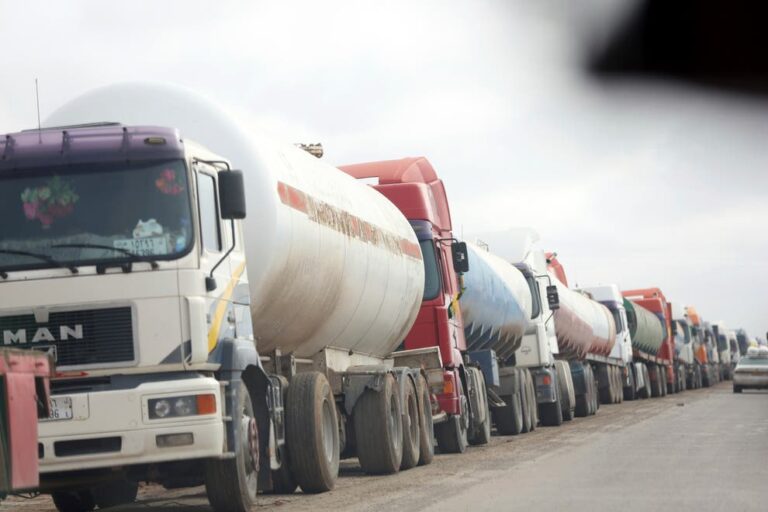
They said that despite Iraqi motorists lining up in lengthy lines outside petrol stations, Iranian IRGC networks have been smuggling massive amounts of oil products by land to Syria and Lebanon to aid Tehran’s allies in overcoming gasoline shortages.

Due to the shortages, a lot of petrol stations in Iraq had to close.

In a meeting with security personnel on June 5, the deputy speaker of the house Hakim al-Zamili brought up the issue, and all participants urged the government to take more action to thwart smuggling and those who organize it.

He noted that the earnings from these illegal trades are padding the wallets of mafia-like organizations and that oil smuggled out of Iraq amounts to “half of the country’s overall oil exports.”

Alaa al-Nashou, a strategic analyst, claims that Iran’s agents are responsible for the theft and smuggling of crude oil and oil-related goods.

“These proxies utilize their power to steal oil and put it onto tankers that travel via border crossings to the positions of Iranian forces in western Syria.” He claimed

He said that some illicit shipments even travel to Lebanon to provide gasoline to Hezbollah.

According to Al-Nashou, Iranian IRGC-backed militias in Iraq are sapping the nation’s oil revenue to sustain Tehran’s allies and proxies in the area.

“The militias supported by Iran rely heavily on this illicit business to get money because they make enormous sums of money by smuggling oil and selling it to underworld buyers.” He claimed.

He said that to protect the country’s riches and put an end to the fuel crisis, the administration continues to actively confront the networks and militias engaged in oil smuggling.

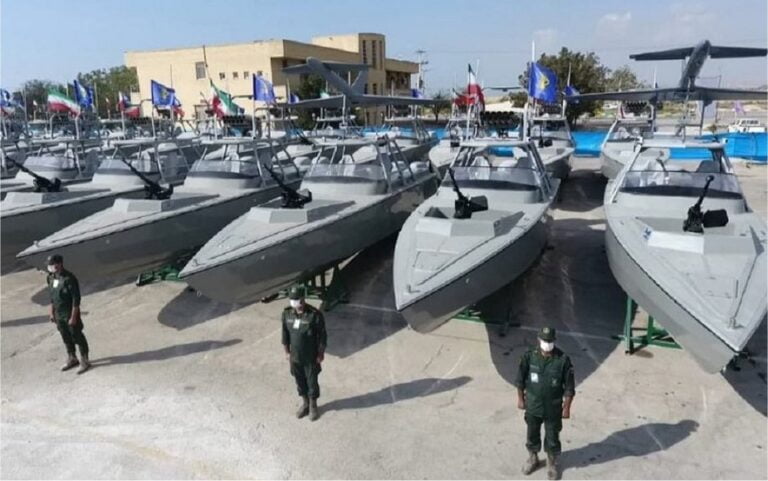
Iranian IRGC manufacturing stealth speedboat alerts Gulf nations

0

Alireza Tangsiri, the current commander of the Iranian IRGC Navy, said during a military festival held close to Bandar Abbas in the Hormozgan region that Iran’s most recent speedboats are now outfitted with stealth equipment to elude radars.

According to Tangsiri, the Iranian IRGC (Islamic Revolutionary Guard Corps) Naval Force is outfitted with weapons systems to combat outside threats, such as tanks, amphibious tanks, and drones.

The new ship was described in an article by H.I. Sutton at USNI News; it looks to be in the building phase. Sutton also writes at the website Covert Shores where he is an expert on naval issues.

Satellite imaging has revealed that a new warship is being built in Iran, the story claims. The mystery catamaran has a clean-angled design that makes it look stealthier than earlier varieties and might be a missile boat, according to the description.

The Iranian IRGC has launched several vessels of similar type before. Another catamaran-style craft, measuring 65 meters (213 feet), was launched in July, according to Sutton. Additionally, it had a large, covert design. On the island of Qeshm, a shipyard is where this present warship is being constructed. The photographs show the presence of other boats.

United Arab Emirates media picked up on the new Iranian stealth shipbuilding and ran with the news. This demonstrates the significance of the new ship to the Gulf governments worried about Iran destabilizing the territory.

IRGC shuffles Iranian airlines for smuggling after Israeli attack

0

After an Israeli attack on June 10 briefly closed the Damascus airport, sources told Iran Briefing, that two Iranian airlines have suspended flights to Syria.

According to Western intelligence sources, only Mahan Air, which the US sanctioned in 2011 for supplying weapons to Iranian proxies at the start of the Syrian Civil War, is flying to Syria currently after Caspian Air and Qeshm Fars Air stopped doing so.

Due to its connections to Iran’s Revolutionary Guard and its extraterritorial Qods (Quds) Force, Caspian Air is also under American sanctions (IRGC-QF). The US also imposed sanctions on Qeshm Cargo Airlines in 2019 because it was a subsidiary of Mahan Air and gave the IRGC-QF substantial support. The Revolutionary Guard is thought to have founded and owned all three airlines.

Iran Briefing has learned that Mahan Air flights have surged by 30% as a result of the other two carriers’ suspension of operations. The majority of Mahan flights travel to Aleppo.

The sources said that Mahan Air also transports illicit products to Syria in addition to bringing weapons without paying taxes or customs fees.

When Qasem Soleimani was in charge of the extraterritorial military-intelligence organization, Mahan Air was completely under IRGC-QF control. There were several reports concerning the airline’s involvement in the supply of weapons. In January 2020, a focused US airstrike on Baghdad resulted in Soleimani’s death.

Mahan Air appears to be the preferred method for the IRGC-QF given the ongoing Israeli attacks on Iranian weapons storage facilities in Syria.

In contrast to its typical silence on its assaults on Iranian targets in Syria, the Israeli attack on the airport in Damascus on June 10 which was Israel’s fifteenth bombing in Syria, was publicly announced by the Israeli government.