Home Blog Page 21

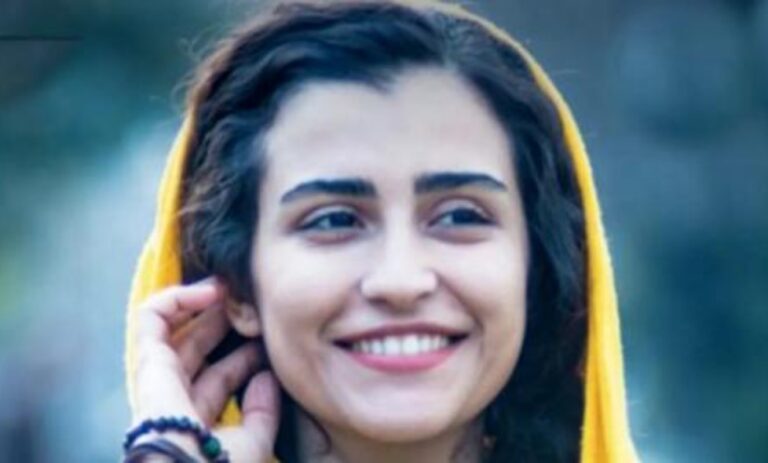
Missing Actress ‘Held by IRGC Over Support for #MeToo’

0

On July 23, women’s rights activists raised the alarm that the actress Nazanin Bahrami had been arrested.

It came shortly after she had signed an 800-strong statement denouncing sexual abuse and violence in the film industry. Actress

Reports have since circulated that Bahrami has been able to call her family, and that she was arrested by one of the morality patrols, not a security agency.

But Iran Wire has now received information to the contrary, and understands Bahrami is being held by the IRGC’s Intelligence Organization (IRGC-IO).

According to eyewitnesses, Bahrami and several of her colleagues were detained at about 11am on Saturday, July 23, in Tehran’s Enghelab Avenue.

Plainclothes agents surrounded the group, took their mobile phones and allowed the others to leave before taking Bahrami to an unknown location. During this exchange, they also filmed her and her companions.

The nature of the calls Bahrami has so far placed to family and friends have led to the suspicion that they are being monitored, or even that she has been made to read from a script.

The Iranian judiciary and security agencies have yet to issue a formal comment on her case.

A source close to the case, who has asked not to be named, told Iran Wire Bahrami is one of at least four people arrested since May this year for “supporting Iranian #MeToo”.

Though the global #MeToo campaign was a grassroots movement involving thousands of individual, mostly female victims of sexual abuse, without leadership, in Iran it is routinely framed by the regime as a foreign contrivance aimed at disrupting order.

The source declined to name the other three detainees, but said of Bahrami’s arrest: “Five male agents and one female were involved.

During interrogations, IRGC operatives pressured Nazanin to confess to having ties to the #MeToo campaign, and in conversations with her family and friends, to deny that she had been taken into custody and blame the morality patrol.

Iran-backed militia continue to seize more Syrian lands

0

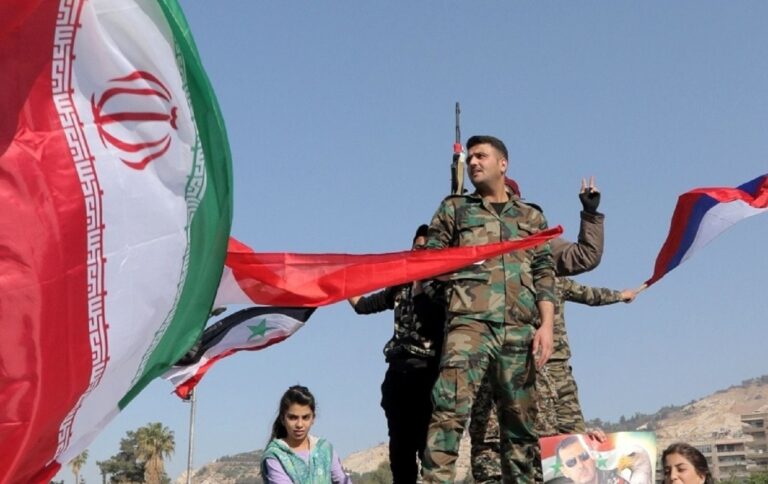
Since 2021, Iran-backed militia groups have seized more than 1,900 plots of land in parts of Syria near the Lebanese border, where Hezbollah strike forces are stationed, a new report says.

In a July 11 report, the Syrian Observatory for Human Rights said non-Syrian Iran-backed militia groups have purchased more than 640 plots of land in and around Zabadani in rural Damascus, adjacent to the Lebanese border.

According to the Observatory, they have also bought about 720 plots near the border village of Tufail in the eastern Bekaa Valley of Lebanon.

Hadi al-Abdullah, a Syrian journalist and activist residing in al-Qusayr, claimed that Hezbollah’s acquisition of land in al-Qalamoun, al-Qusayr, and other towns close to the Syrian-Lebanese border was nothing new.

He told Al-Mashareq that this has been going on ever since the group sponsored by Iran intervened in the Syrian crisis to back Bashar al-Assad’s government.

He said it was obvious that Hezbollah’s goal in joining the al-Qusayr conflict in 2013 was to drive out the area’s original occupants and replace them with people who would be more supportive of the regime and Hezbollah.

Al-Abdullah claimed that Hezbollah had driven out all of the city’s people, including himself, his family, and his relatives from their residences and orchards. “Very few residents are left.”

Al-Abdullah, a field reporter who covered the fight of al-Qusayr, repeatedly warned that Hezbollah intended to alter the demographics of al-Qalamoun and al-Qusayr.

Hezbollah, Iranian militias, and Iranian officials buy land, houses, and resorts in al-Qalamoun to use as summer villas, according to intelligence that is regularly provided to us, he said.

Al-Abdullah claimed that Hezbollah and the Quds Force of the Islamic Revolutionary Guard Corps (IRGC-QF) have also been acquiring property in Damascus.

IRGC-Linked Website Threatens Europe With Missiles For ‘Hosting’ MeK

0

Iran’s Fars news website affiliated with the Revolutionary Guard Wednesday called for targeting an opposition group in Europe with ballistic missiles and drones.

In an article with a long historical background on violent terror acts by the Mojahedin Khalq organization, known as Mek in the 1980s, the IRGC mouthpiece insisted that Iran has the Islamic Republic has the right to self-defense and it would be justified if “it employs hard power against terrorists.

The capabilities of Iran’s attack drones and ballistic missiles can be used to hit the center of the [Mek] in Albania without any legal impediment.

The article added that authorities in Tehran should issue the necessary warning to the Albanian government, which is hosting a few thousands MeK members, and follow it up with military action.

But Fars also mentioned “host governments”, where the MeK might have a presence, which could include France and others in Europe.

“If host governments refuse to expel and extradite the hypocrites (a term used by Tehran for the MeK), they should be threatened with reciprocal action…based on the doctrine of the Islamic Republic to fight security threats at their source,” the article said.

It went on to cite the principle of “Responsibility to Protect” the nation and the UN Charter’s article 51, “which allows military action to preserve international peace and security.”

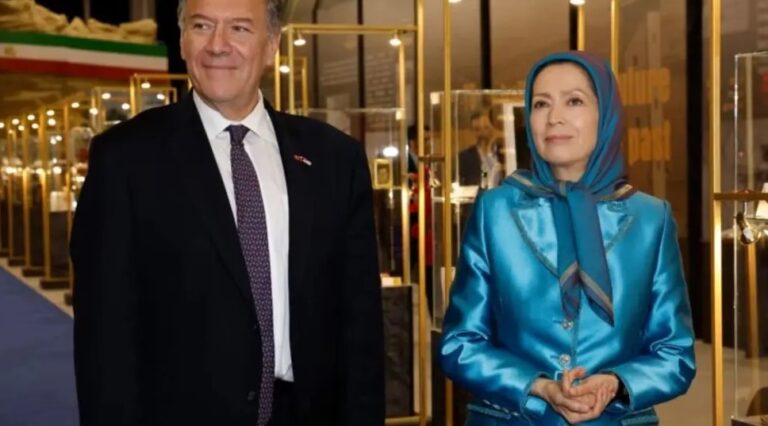
Am image of the MeK camp in Albania published by Fars depicting incoming missiles. July 27, 2022

The Mojahedin were a revolutionary group engaged in opposition to the monarchy in the 1970s and carried out armed attacks.

They fully backed Ayatollah Ruhollah Khomeini’s decision to set up the Islamic Republic in early 1979 after Shah Mohammad Reza Pahlavi left the country and Khomeini returned from exile.

However, tensions rose between the group and the clerical regime taking shape, which led to mutual violence.

Iranian IRGC arrest female artist as regime limits women freedoms

Sepideh Rashno, a student and artist, is still detained at Ward A-1 of the Iranian IRGC prison. After a fight on a city bus with a lady who harassed and abused her for wearing an inappropriate headscarf, security personnel detained Rashno on July 16. As the government has increased the regulation of the hijab, such events are becoming more common in public spaces.

Sepideh Rashno, a student activist and artist, is reportedly being kept at an Iranian IRGC detention facility until further legal action, according to HRANA, the news agency of Human Rights Activists.

She continues to be denied access to a lawyer and phone calls while incarcerated.
Rashno is currently facing an unknown set of charges.

On social media last week, a video of a woman bullying another and berating her for wearing an inappropriate hijab went viral. Iranian IRGC forces detained Khorramabad resident and artist Rashno after the video was released.

How important adherence to the Islamic code is for the government is shown by the Iranian regime’s encouragement of citizens to participate in its public enforcement as a religious responsibility.

A prominent hardliner has refuted reports of hijab patrols in Iran, claiming that the opposition is using rare incidents to engage in “psychological warfare” by drawing attention to them.

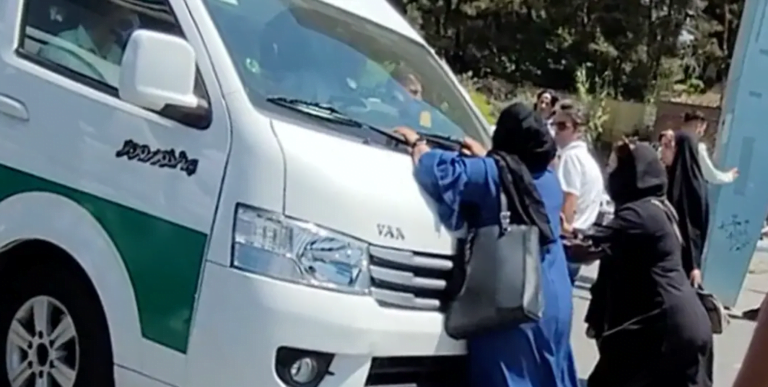
On July 19, an occurrence that stunned many Iranians occurred. A teenager who was in the street with her mother was detained by a patrol van. She threw her body onto the bonnet of the car as it attempted to move and propelled herself back at it. To terrify her into letting go, the van continued to move forward.

Iran’s satellite program is a growing threat – analysis

0

Iran’s growing confidence in space can be seen in the report that the IRGC is planning on launching not just one, but multiple satellite into space within the next year.

Iran intends to put another satellite into space, with the country’s Islamic Revolutionary Guard Corps (IRGC) aiming to take a role in the project, Iranian media have reported.

The reports show that the IRGC is seeking to take more of a role and command of the space program, as it has military elements to it.

According to reports, Iran doesn’t just plan to launch one satellite, but potentially plans on launching several in the next year alone.

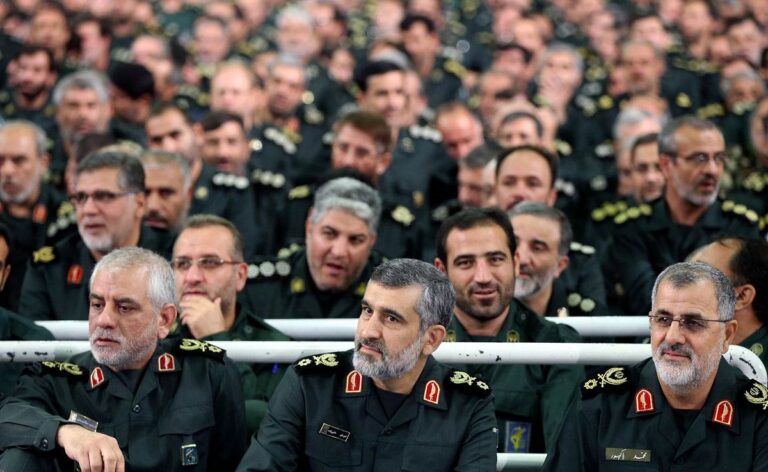
Commander of the IRGC Aerospace Force Amir Ali Hajizadeh announced these plans on Sunday, praising Iran’s drone and missile capabilities, showing that the various Iranian programs are interlinked.

Iran’s growing confidence in space

The reports appear to illustrate Iran’s growing confidence in space, and the ability to launch satellites is a point of pride for Iran.

It is a symbolic event, just as it is an event with possible military overtones that threatens the region.

The satellites themselves can be used for reconnaissance, and Iran’s launchers may have wider applications. The use of different types of Satellite Launch Vehicles is important.

Iran developed the Zuljanah SLV in recent years and has also used the Safir-2 SLV during a test in 2016.

In June of this year, Iran said it was preparing to use the Zuljanah solid-fuel satellite launch rocket. They also claimed to fire three “research” cargoes into space last December.

It’s important to recall that recent tests have often failed. The SLV that was tested in June apparently went through several failed tests even though Iran says the Suljanah can put a satellite weighing some 220kg into orbit.

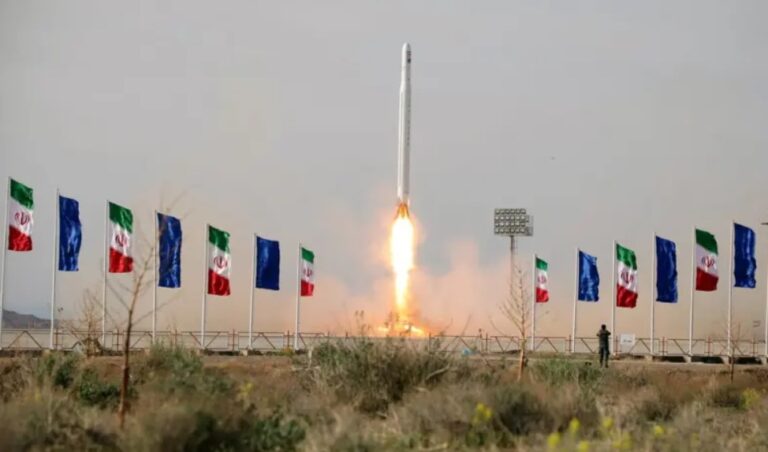
The IRGC launched two satellites into low-earth orbit (LEO) in the last several years: the Noor in April 2020 and the Noor 2 in March 2022.

Exclusive: Israeli Mossad Interrogated An IRGC Official Inside Iran

0

Israel’s Mossad captured a senior IRGC official on Iranian soil and interrogated him about weapons shipments to Iran’s proxies, Iran international has learned.

Iran International has obtained video footage of the interrogation in which a manintroducing himself as Yadollah Khedmati, deputy commander of the Revolutionary Guards (IRGC) Logistics, says he regrets his involvement in shipping weapons to Iran’s proxy groups in Syria, Iraq, Lebanon, and Yemen and urges other IRGC officials to avoid engagement in such activities.

According to a source, Khedmati served as the deputy of Brigadier General Ali Asghar Nowrouzi, the IRGC’s Logistics commander who is known as a close associate of the former commander of the IRGC’s Qods Force, Ghasem Soleimani. Soleimani was assassinated by the US in Baghdad in January 2020.

Khedmati also tells his interrogators about Nowrouzi’s connections with Fars Air Qeshm cargo airline. The airline has been accusedof transporting weapons for Hezbollah during the civil war in Syria.

The source who spoke to Iran International on condition of anonymity said Mossad agents had released Khedmati unharmed after the several-hour-long interrogation at an unspecified time and place.

Nowrouzi has been responsible for sending weapons to Iran’s proxy groups in the region including Syria as well as securing funds for the operations of the Qods Force through the IRGC’s Cooperatives Foundation of which he’s a board member, the source claimed.

On June 14th Iran’s state-run television (IRIB) in a report showed several men in prison outfits claiming they were recruited by a Mossad agent who went by the alias Sirous to abduct Iranian officials and carry out assassinations on Iranian soil on behalf of the Mossad.

The report called these individuals “thugs and hooligans” and claimed they were involved in a wide range of criminal activities including human and weapons trafficking before being recruited by Israeli agents.

Battle of the factions: How populists triumphed in Iran’s IRGC

0

Karl Marx famously complemented Hegel’s idea on the repetition of history: first as tragedy then as farce. Earlier in June, Ayatollah Khamenei, the Supreme Leader of Iran, reaffirmed Marx.

In a public speech commemorating the anniversary of the 1981 terror attack against the then dominant political party the Islamic Republic Party, which led to the deaths of dozens of senior politicians, including the head of the judiciary, several cabinet ministers, and dozens of MPs, Khamenei compared Iran’s critical internal and external situation now with that in the 1980s.

“The God of the 1980s is the same God of now,” he declared, “and all the divine rules are still in place.”

There are, in fact, many parallels between present day Iran and Iran in the 1980s, such as the dire economy, rising inequality, cultural fanaticism, the ‘brain drain’, international isolation, and internal suppression. But only a closer look can test Marx’s thesis.

Iran in the 1980s was led by an ailing yet hyper-charismatic Ayatollah Khomeini, whose popularity far exceeded the limits of conventional politicians.

He was more akin to a saint, who was followed by hearts rather than minds of the Iranians at the time.

The people who governed Iran were mostly Western-educated religious technocrats in their early thirties, who had abandoned their cosy lives in the US or Europe to return to Iran and serve the revolution.

As staunch revolutionaries with close ties to the Khomeini’s clerical disciples, they quickly dominated the Iranian political scene after Ayatollah Khomeini purged all their rivals, including the moderate nationalists and the radical leftists who were deemed insufficiently loyal to him.

The purge consequently opened cracks within the young revolutionaries, splitting them into centre-left and the centre-right, a split which, for the next three decades, shaped the internal and external dynamics of the Islamic Republic.

Iranian IRGC forces dual national hostages to falsely confess

0

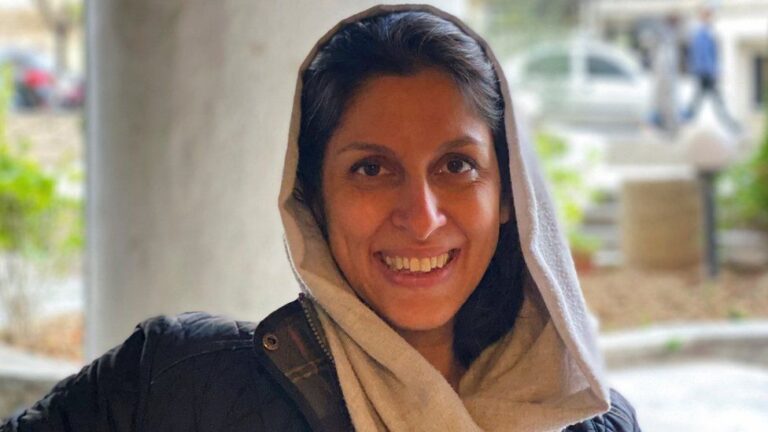
According to UK Middle East Minister Amanda Milling, the Islamic Revolutionary Guard Corps aka the Iranian IRGC forced Nazanin Zaghari-Ratcliffe, an Iranian-British dual citizen who was imprisoned in Iran for six years, to sign a fabricated confession before they would release her.

Although Tehran normally requires all detainees to sign a confession before they are released, even if it is fraudulent, Milling said that the UK officials in charge of the matter did not compel it.

In spite of her continuous denials of guilt throughout her six years in prison, Zaghari-Ratcliffe believes that while the UK Foreign Office was negotiating her release, Iranian demands were given in and she was persuaded to confess.

British officials were there when the confession was signed in March of this year, according to Milling’s testimony before Parliament, but they were just there to inform Zaghara-Ratcliffe of the demands made by the Iranian IRGC.

She claimed that she made the decision to sign the document “given the scenario Iran put Nazanin in at the airport.” “She wasn’t compelled to do anything by a UK official. Iran has a custom of making prisoners sign papers before being freed.

Zaghari-MP Ratcliffe’s Tulip Siddiq stated during the parliamentary session that the Iranian Revolutionary Guard had attempted to force Nazanin to write out and sign a document listing the crimes she had been falsely accused of, admitting guilt for them, pleading for mercy, and pledging not to sue or criticize the Iranian government for days prior to her release.

She was once more asked to do this by Iran at the Tehran airport on March 16 — the day she was finally permitted to fly back to the UK — but she tore up the piece of paper instead.

“She didn’t break and give Iran what they wanted until a UK official insisted that she sign it in order to board the plane that was waiting to take her home.

“Nazanin went home, but the toll this had on my constituents after six years in jail is unfathomable and unacceptable,” said the politician. She is terrified and worries about the effects on her family, her future, and other British nationals who are currently being held captive in Iran.

Mossad interrogates IRGC official behind militia weapon shipments

Israel’s Mossad has detained a senior IRGC official inside Iran and interrogated him regarding weapons transfers to Iran’s proxies across the region.

A video has surfaced of the interrogation where a man identifying himself as Yadollah Khedmati, deputy commander of the Revolutionary Guards (IRGC) Logistics, expresses regret for his role in delivering weapons to Iran’s proxies in Syria, Iraq, Lebanon, and Yemen, and exhorts other IRGC officials to refrain from taking part in similar activities.

Source: Brigadier General Ali Asghar Nowrouzi, the IRGC’s chief of logistics and a close friend of the late Ghasem Soleimani, the previous head of the Qods Force, appointed Khedmati as his deputy. In January 2020, the US murdered Soleimani in Baghdad.

Additionally, Khedmati informs his interrogators of Nowrouzi’s associations with the cargo airline Fars Air Qeshm. The airline has been charged with supplying Hezbollah with weapons during the Syrian Civil War.

The source added that Nowrouzi has overseen providing funding for the operations of the Qods Force through the IRGC’s Cooperatives Foundation, of which he is a board member, as well as supplying weaponry to Iran’s proxy groups throughout the region, including Syria.

Evidence of Israeli spies holding an IRGC agent inside Iran and recording confessions has now surfaced twice. Israeli media released a brief audio recording in May along with a picture of a guy identified as 52-year-old Iranian Mansour Rasouli. Rasouli claimed in the audio recording that the IRGC had dispatched him to Turkey to set up an operational network for the assassinations of an Israeli diplomat in Istanbul, a US general stationed in Germany, and a journalist in France.

IRIB, Sixth Force of Iran Regime’s IRGC is declining

0

Usually, the IRIB media is held in high regard in the modern world, considered the indicator of democracy and the freedom of speech in a country.

In most countries where democracy is established, the freedom and independence of the media play an important role in guiding and managing public opinion, especially the improvement of the thinking of future generations.

However, in Iran under the rule of the Iranian regime with reactionary thoughts, things are very different, and like in any other dictatorship the media is used as the regime’s propaganda apparatus.

It should be noted that the IRIB’s main duty is protecting the regime, in some cases even more than any other institution, in balance with the regime’s Revolutionary Force (IRGC).

Under the regime’s current constitution, this organization is one of the subsets of the regime’s leadership, the Velayat-e Faqih, parallel to other major organizations and mouthpieces of the regime like Kayhan and the IRGC.

This has made the regime’s media unrivaled, leaving no space for independent media to have the chance to grow.

Another main constant duty of IRIB is the concept of the sodoure enqelab (the export of revolution), which is one of the main clauses of the regime’s constitution.

The regime started its Arabic Service following its establishment in 1980. These days, the IRIB world service runs fourteen satellite TV channels, three internet TV channels, and thirty-two radio stations, of which several are broadcasting in Arabic.

When it comes to international security and peace, the Iranian regime’s propaganda machine is a serious security threat, while its Arabic-language media, encompasses more than two hundred entities. Domestically, however, the regime’s media is facing a dramatic decline in audiences.

On July 17, the state-run Khorasan daily published an article highlighting some miserable statistics about the decline in the IRIB’s audiences, which is proof of the people’s ongoing hatred of the regime.