Home Blog Page 312

How an Iranian misinformation campaign has been adopted and promoted by the Obama administration

0

Apr 20th, 2015

Hassan Dai, April 2015
 ObamaIran

Obama administration claims that Iranian nuclear program is supported by vast majority of Iranians and it has become a matter of national pride, therefore, the US can’t force Iran to stop enrichment. This claim is part of Iranian regime’s misinformation campaign that started in 2003 and includes a total ban on opposing the program, jailing the critics, holding state-organized rallies in support of program and fabricating fake public opinion polls in Iran for US audience. Majority of these polls are made by a Tehran-based center tied to security forces. These polls are publicized and promoted by pro-Tehran groups in Washington, many of them are close allies of the Obama administration.

 sign6

Labor Day rally in Tehran in May 2010, the sign reads: “we don’t want nuclear energy. We want a better life”

On April 2, 2015, Iran and 5+1 countries led by the US reached a framework agreement for resolving the dispute over Iran’s nuclear program. Based on the Fact Sheet released by the US Department of States, Iran is permitted to keep thousands of centrifuges and continue its enrichment activities. The opponents of the agreement criticize the Obama administration for abandoning the initial US position which was also endorsed by several UN Security Council resolutions demanding a total halt to enrichment activities in Iran.

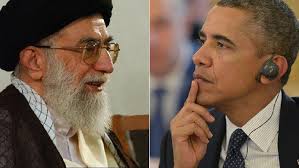
In response, the Obama administration claims that the Iranian people and the entire regime leadership are unified to defend the right to enrichment and therefore, the US cannot force Iran to abandon such a popular program that has become a matter of national pride. In an interview with New York Time’s reporter Thomas Friedman, president Obama declared:

“What we know is that this has become a matter of pride and nationalism for Iran. Even those who we consider moderates and reformers are supportive of some nuclear program inside of Iran… And given the fact that this is a country that withstood an eight-year war and a million people dead, they’ve shown themselves willing, I think, to endure hardship when they considered a point of national pride or, in some cases, national survival.”

Similarly, Robert Einhorn, a former diplomat and a prominent advocate of the Obama administration has recently explained the reason for accepting Iran’s enrichment program: “Banning enrichment and dismantling Iran’s existing enrichment facilities would indeed be the best negotiated outcome. But such an agreement is not attainable. Iran’s leaders have convinced the Iranian people that a ban on enrichment would deprive them of an inalienable right to pursue civil nuclear power as they see fit and impede their scientific advancement. Iranians across the political spectrum would prefer to forgo an agreement and muddle through under existing sanctions rather than accept what they would regard as a national humiliation.”

The claim that the majority of the Iranian people support the regime’s nuclear program or, a program that is largely unknown to the vast majority of Iranians has become an issue of national pride and the ridiculous allegation that the Iranians “prefer to forgo an agreement and muddle through under existing sanctions rather than accept the halt to enrichment”, are baseless claims and part of the Iranian regime’s campaign of misinformation to influence public opinion and decision makers in the West.

This campaign started in 2003, during the negotiations with European Troika It accelerated during the Obama administration and has been promoted by pro-Iran or pro-engagement groups, many of them close to the administration.

The misinformation campaign

In 2002, after Iran’s secret nuclear program was exposed, the international pressure forced Iran to enter negotiations with three European countries to restrict the nuclear program and halt enrichment activities. As leverage in the negotiations, the Iranian regime launched a well-organized campaign to convince Western governments that the majority of the Iranian people supported the nuclear program and saw it as a symbol of national pride, thus, the government’s hands were tied as they could not possibly be expected to forgo the popular demand and make broad concessions in the negotiations by dismantling the nuclear infrastructure, notably the enrichment activities.

This campaign that has continued since 2003, is based on several pillars:

Imposing a strict censorship on the media to prevent public debate and opposition to the nuclear program.

Holding allegedly popular rallies, conferences and events in defense of the nuclear program.

The fabrication of fake public opinion polls that allegedly reflect the genuine view of Iranian people who support the nuclear program and the regime’s policy. Since 2009, the majority of these “surveys” are made by a Tehran based center founded in 2009 during President Ahmadinejad government by Mohammad Marandi, a close associate of the Iranian Revolutionary Guards.

These “surveys” are released by the Iranian regime’s lobby and its partners in the US and are largely publicized by influential media outlets and think tanks that support a friendlier policy with Iran.

Media ban on nuclear program criticisms

In October 2006, Mehdi Mahdavi Azad the chief editor of Aftab News Agency who is affiliated with Hashemi Rafsanjani’s faction, wrote an important article and explained how the regime managed to control the public debate on the nuclear issue: “In the summer of 2003, we were suddenly faced with the prospect of a UN resolution against us. At that time, America was on an offensive mood because of its success in Afganistan and Iraq. The U.S. was not yet confronted with its difficulties in Iraq and could be very dangerous to us. Inside the country, the public opinion was not very good in respect to nuclear issue. We had not yet been able to control the media and some opposing voices could be heard. The public opinion was not yet convinced that the nuclear issue is a part of our national pride. Gradually, we were able to control the media and manage the crisis.” (October 2, 2006)

In fact, the regime imposed a tight censorship on the media and in 2005, “The High Council of National Security” issued a decree that forbid the media to publish and broadcast debate or opposition to its nuclear program. Here are few among many declarations by prominent political figures from the reformist camp who have denounced the official ban on public debate.

Mohamad Reza Khatami, the head of the “Islamic Participation Front,” the main reformist party, told ILNA press service in May 2006: “After the Participation Front published its views on the nuclear issue in February 2006, not only was it censored by the press, but we were officially warned that we should no longer make our views public or we would face some punitive actions against our party. We had no choice but to discuss it privately with politicians. We met with Rafsanjani, Nategh Nouri and even the National Security Council. Larijani did not even want to hear our views. (Emrooz, website, May, 14, 2006)

In December 2006, Mostafa Tajzadeh the former deputy interior minister in reformist government of Khatami and of the prominent reform leaders (political prisoner for the past six years) participated in a public debate in the University of Gorgan and complained about the ban on debate about nuclear issue: “The High National Security Council had unfortunately ordered the media and press not to discuss the nuclear issue. It is regrettable that such an important issue with such a large impact on our country’s fate should not be discussed. Today’s debate is the first of such public discussion and I strongly welcome it.

 Taj-censor

In another interview, Taj Zadeh told Asre-No magazine in April 2006: “We should oppose the passivism and silence on the nuclear issue. In fact, this silence is exactly what the totalitarians [Ahmadinejad’s faction] are looking for because they are publicizing the idea that the whole nation and all the political factions are supporting the regime’s nuclear policy. They are afraid of hearing any discarding voice because of its negative international impacts. It is clear that acquiring the nuclear technology is an Iranian and national right but the problem is how to obtain it. We oppose the actual policy and think that it is against our national interest as well as regional interests as well.

The Islamic Participation Front, the main reform organization published a statement in January 2007 and sharply criticized the official ban on debating the merits of the nuclear program: “Unfortunately, after the new government came to power, they started to reject any disaccording voice and even did not let us to publish our views about the nuclear issues. This view that no critic should be heard because it would weaken the regime’s confrontation with the West is wrong. This view has imposed a censorship on public media and does not serve our national interests. We should not forget that the Iranians also have other rights, which cannot be sacrificed for acquiring nuclear capabilities.” (Asre no, January 6, 2007)

Ebrahim Yazdi, the leader of Freedom Movement told Aftab News on January 22, 2007: “Our country is in danger due to the radical policies taken by our leaders especially on the nuclear issue. Since ordinary citizens and political groups are not authorized to criticize the regime’s policy in public, we should ask Khatami and Rafsanjani to intervene and voice their opinion as they do not have the same restrictions as the others have. On the nuclear issue, the regime views the people as outsiders and deprives them of any information. The regime is afraid of any opposition to its policies because it would weaken its position in the confrontation with the West.”

More recently, on June 11, 2013, a well-known political analyst close to former President Rafsananjani posted an article and asked the regime to end the censorship in the media regarding the nuclear issue. He wrote: “Unfortunately, the authorities have banned any opposition to its official policy on the nuclear issue. In the past, I have submitted my articles to newspapers but they have all been rejected because they were not in line with the official policy. When I protested to the editors, they declared that the government has strictly banned publication of any criticism of the nuclear program. As a result, the only kind of articles that are published in newspapers, are those supporting the program. This policy of censorship started in 2003 when Hassan Rouhani was the head of “High Council of National Security”

 ZibakalamA

The official censorship is enforced by legal means, pursuing and punishing those who brave the regime’s ban and dare to criticize the nuclear program. A good example is Zibakalam’s case who after the election of new President Hassan Rouhani, published two open letters in February 2014 and called the nuclear program a national disaster that brings nothing but harm to Iran. He was tried and sentenced to eighteen months in prison that was later commuted to an important monetary sanction.

Government organized rallies in support of the nuclear program

 sign6

In 2003, with the start of the nuclear negotiations, three European foreign ministers arrived in Tehran and the regime promptly mobilized its plain cloth Bassijis militia members to demonstrate in front of their residences to show “popular support for the nuclear program”. The alleged spontaneous demonstrators asked the Iranian negotiators to remain firm and not concede the Iranian people’s rights of keeping its program intact.

Since 2003, these state-organized rallies have become widespread and are designed to impress foreign journalists and politicians who visit the country. These demos are also designed to silence the Iranians who consider opposing the nuclear program in public. During President Ahmadinejad’s presidency, these rallies intensified, regular celebration events to glorify nuclear achievements were organized and the national day for nuclear technology was created.

The so-called public opinion polls

For the past several years, a number of Iranian public opinion polls in regard to the nuclear program have been released in the US. These are two distinct categories of polls, the first of which are those conducted from abroad by calling Iranians inside the country. Considering the repressive nature of the Iranian regime and the sensitivity of nuclear issue and the general understanding by the Iranians that opposing the regime’s nuclear policy will not remain unpunished, these “phone” polls are scientifically unreliable as the Iranians will not take the risk of endangering their own lives by expressing a negative opinions about the regime, its policies and nuclear program in phone conversations with strangers who call from overseas.

Many US organizations that initiate, finance and publicize these polls are aware of this bias but because they favor a friendlier policy with Iran, continue to use these polls as a tool to influence public opinion and shape US position on nuclear talks.

The second category of polls which are more publicized in US media and seem more effective, are those made by allegedly “independent” and “professional” centers in Iran that conduct personal interviews with Iranians across the country. All of these Iran-made polls are entirely regime-fabricated because no organization or center can conduct independent polls in Iran, notably on behalf of foreign clients and be able to contact Iranians freely unless such polling organization is affiliated with security institutions or the Revolutionary Guards. The only time that a relatively independent poll was conducted in Iran was in 2002 by two reformist journalists and pollsters, who were later tried and sentenced to pass years in prison because the result of their polls contradicted the official policy of the regime.

The majority of Iran-made polls are conducted by “University of Tehran Center for Public Opinion Research (UTCPOR)”, a center that was created by Ahmadinejad’s office to organize the fabrication of public opinion polls tailored for Western audiences. UTCPOR’s main partner in the US is “The Center for International and Security Studies at Maryland (CISSM)”. The polls are promoted and publicized by pro-Tehran groups in Washington.

The first Iran-made poll (2007)

In January 2007, the US-Iran program at the Washington based Search for Common Grounds (SFCG), in collaboration with “The Program on International Policy Attitudes (PIPA), a joint program of “the Center on Policy Attitudes” and the Center for International and Security Studies at Maryland (CISSM)” released the first public opinion poll conducted by their partners in Iran.

The SFCG’s top advisor who initiated the poll was former US diplomat William Miller who personally presented the result of the poll. Since 1997, Miller has been a leading board member of the “American Iranian Council” (AIC), a pro-Tehran advocacy organization in Washington. The internal documents of the pro-Iran lobby organization “National Iranian American Council (NIAC)”, released during a defamation lawsuit shows that Ambassador Miller was helping NIAC president Trita Parsi in 2001 to create NIAC as a lobby organization to fight sanctions against Iran.

 poll2007

The 2007 poll claimed that 76% of Iranians said they had an unfavorable opinion of the United States while 91% declared that it is very important for Iran to have a full-fuel-cycle nuclear program, which requires them to have the capacity to enrich uranium.

The detailed report of the survey mentioned that “an extensive poll was conducted in Iran with a randomly selected sample of one thousand Iranian adults from rural as well as urban areas. Professional Iranian interviewers with an independent Iranian survey research firm conducted face-to-face interviews in Iranian homes.” The report did not reveal the name of the alleged “independent” research center that was allowed by Iranian security institutions to conduct the poll in Iran but named Ebrahim Modseni as the Iranian investigator of the project.

In April 2008, a new poll was conducted by the same organization in Iran and was published in the US with similar results showing a large majority of Iranians approved Ahmedinejad’s government’s handling of the country. Mohseni was again named as the Iranian investigator of the project.

University of Tehran Center for Public Opinion Research (UTCPOR)

 Duo

Ebrahim Mohseni was a student at the University of Maryland in 2007 who went to Iran and worked under the supervision of Mohammad Marandi, a Tehran University professor to conduct the poll. The Iranian Foreign Ministry monitored the project. Marandi is a well-known hard line figure close to the Revolutionary Guards who usually appears on foreign news outlets to defend the Iranian regime’s position. In this video, Marandi appeared on CNN to defend the repression of the Iranian uprising in 2009.

Following the successful launch of the two polls in the US in 2007 and 2008, and the large media coverage that they received, President Ahmadinejad’s office dedicated more resources to the project and helped to create the “University of Tehran Center for Public Opinion Research (UTCPOR)” in 2009. The head of the center is Mohammad Marandi and the director of projects is Ebrahim Mohseni who is also tied to the Revolutionary Guards. Here is Mohseni’s talk with “Young Reporters’ Club” controlled by the Guards. Below is the flyer for Mohseni’s speech before the Bassiji student gathering on October 15, 2011. (Bassij is the para-military unit of the Revolutionary Guards)

Ebrahim Mohseni, keynote speaker at a Basiji student event in support of the “Occupy Wall Street Movement”

 74lnr523fvk1tiemuqe

Since 2009, UTCPOR has produced a dozen of polls for its partners in the US. Additionally, the center has also released domestically used polls designed to help the hardliners and Revolutionary Guards. For example, in 2014, the ultra-hardliners planned to impose a mandatory separation of men and women in working places and universities. They also envisaged to pass it into law in parliament. The plan created a social and media uproar but UTCPOR released a public opinion poll of Iranians that showed an overwhelming support for the plan.

Mohseni explained the result of his poll in an interview with “Tasnim News”, affiliated with the Revolutionary Guards and declared: “A majority of Iranians who answered our questions told that implementation of Islamic rule in Iran will help to reduce the social and economic problems in the country. 78% believed that the separation of men and women will improve work conditions in public offices and will strengthen the foundation of families. 64% of them preferred that women be given only jobs that are related to women.”

Public opinion polls: an insult to Iranian people

The polls that the Tehran-based center fabricates for its Western clients infallibly show a huge popular support for the nuclear program and the regime’s position in nuclear talks. The results of these polls contradict the most basic understandings about Iran and Iranian people. Even a moderately intelligent observer of Iranian politics will find these polls aberrant and unconceivable. However, these polls are widely publicized and promoted by some US organizations and think tanks that lobby for friendship and coexistence with the Iranian regime, many of whom are close to the Obama administration. Here are some examples of these aberrations:

In September 2009, after the controversial presidential election and in the midst of the popular uprising in Iran, the poll by the Tehran based center was released in the US claiming that 81% of Iranians considered Ahmadinejad as their legitimate president. While millions of Iranians were demonstrating against the rigged election, the poll found that 81% of people were satisfied with the electoral process. According to the poll: “Though Iran’s human rights record has been criticized by a multitude of international organizations, Iranians themselves hold it in higher regard. Seventy-one percent of Iranians consider themselves at least somewhat free “to express controversial political views, without fear of being harassed or punished.”

A 2012 survey conducted by the Tehran based center and presented during a public event in Washington, flirted with ridicule as it claimed that majority of Iranians prefer sanctions and even war over halting uranium enrichment. GENEIVE ABDO summarized this astonishing pol in her Foreign Policy article and wrote:

“Respondents were asked: “Would you favor or oppose an agreement whereby all current sanctions against Iran would be removed and Iran would continue its nuclear energy program, except that it would agree not to enrich uranium?” Fifty-nine percent were opposed to stopping enrichment and only 29 percent were in favor.

In another questionnaire, respondents were asked which statement is closer to their opinion: 1) “Iran should continue its nuclear enrichment activity even if it results in war;” or 2) “Iran should prevent a war from occurring even if it means suspending nuclear enrichment.” Fifty-five percent chose to continue enrichment, while 33 percent said Iran should prevent a war, even if it means suspending enrichment.”2012poll

 2012poll

Steven Kull (PIPA), Geneive Abdo (moderator), Colin H. Kahl, Center for a New American Security (CNAS) and Ebrahim Mohseni presenting their 2012 poll, DC, October, 17, 2012

In 2013 at the height of economic hardships and misery for the Iranian people, a poll conducted in Iran and presented by Trita Parsi and James Zogby claimed that “only 36% of Iranians say that sanctions have had an impact on their lives. This, or national pride, may be the reason why a majority of Iranians (96%) agree with the statement that “maintaining the right to advance a nuclear program is worth the price being paid in economic sanctions and international isolation.”

 2013

Trita Parsi of NIAC, Steven Kull of PIPA, Ebrahim Mohseni from Tehran-based UTCPOR present 2013 poll. July 2013

More amazingly, the result of these polls vary according to the regime’s position in nuclear talks. For example, in 2014, the center produced a poll for PIPA in Washington that suggested the Iranians know the details of negotiations and naturally support the regime’ position: “Asked about specific provisions, solid majorities indicate a readiness to consider, as part of a larger deal, Iran providing reassurances never to produce nuclear weapons, accepting more intrusive international inspections to assure Iranian compliance with the NPT, and limiting the level of uranium enrichment to the 5% level, for an agreed upon period of time as part of the comprehensive agreement currently being negotiated between Iran and P5+1 countries. On the other hand, a large majority rejects as unacceptable dismantling half of Iran’s existing centrifuges or imposing limits on nuclear research activities.”

The Tehran-based center founded by Ahmadinejad’s government has found receptive ears in Washington and doors have been opened to the Center’s director Mohseni who presents his aberrant claims in many prestigious think Tanks and institutions.

Source: Iranian American Forum

Iran Briefing | News Press Focus on Human Rights Violation by IRGC, Iran Human Rights

Mansour Haghighatpour; A Member of IRGC, Quds Force, and an MP

PersianTurkishAzeriKurdishArabic


Exclusive to Iran Briefing. The Islamic Revolutionary Guards Corps (IRGC) has evolved as a state within the state, which is consistently pursuing its objective of self-aggrandizement (politically and militarily) as well as expanding its power and influence over the Iranian society at large. With this objective in view, the IRGC tries to pick up menial and servile elements and recruits them as its agents. The IRGC aspires to acquire absolute power, with a view to impose its hegemony over the Iranian society, and become its nucleus and leading and guiding force. In this pursuit, it doesn’t even hesitate from exploiting the social service sector by way of creating a network of educational institutions, colleges, research centers and so on. Thus, the IRGC is on a lookout for servile persons who demonstrate the potential of dependence on (and subservience to) it, who could be inducted into such institutions and trained and deployed as operatives of this evil force.

Who is Mansour Haghighatpour?

Mansour Haghighatpour one of IRGC & Quds Force Members in Parliament

Mansour Haghighatpour is one of the notorious and powerful figures of the IRGC who, for many years, has been serving as a loyal and menial servant of the IRGC.  As a member of IRGC, he was appointed as the bodyguard of Hojjat Al-Islam Mir Naghi Ghazipour, the judge and the general prosecutor of the Islamic Revolutionary Court in Ardabil and Sarab at the same time during the early days of the Islamic Revolution. Hojjat Al-Islam Mir Naghi Ghazipour was notorious for the execution of many young activists in the City of Ardabil & Sarab, during 1980-1989.  Among those who were innocently executed from Ardabil were Abdollah Jalali, Zakaria Sirous, and Saeid Sadeghian.  He then was recruited as one of Quods Force notorious member targeting Iranians overseas mainly in Turkish speaking countries, and currently he is a member of parliament and the deputy director of National Security Committee.

Mansour Haghighatpour was born in 1959 in southern Tehran [1]. During his childhood, he was given religious education by his family. By the time he reached adulthood, he became a follower of Khomeini and, like his young cohorts, began to read and circulate Khomeini’s writings and the audiotapes of his speeches. Despite the fact that he was born and raised in Tehran, the IRGC fraudulently declared him to be a domicile of Ardabil and thus got him elected as a representative to the Majlis [The Islamic Consultative Assembly] from the constituency of Ardabil and thus arbitrarily imposed him upon the people of the region. He is now a representative in the Ninth Majlis and serves as the second deputy-head of its Committee on National Security and Foreign Policy. The Committee on National Security and Foreign Policy is one of the specialized subject committees of the Majlis which deals with matters assigned to it in the field of foreign policy and relations, internal public policy, local consultative bodies, municipalities, internal security, defense and external security, as well as registration of personal data of citizens. The majority of members of this committee belong to the parliamentary group named FraksiouniRahrawaniVilayat [The Group of the Followers of the Supreme Leader]. Of the 29 members of the National Security Committee, 20 belong to the parliamentary group of the Followers of the Supreme Leader, and an equal number belong variously to the IRGC, the Quds Brigade, and the Bassej [The Volunteers’ Force].

Career of Haghighatpour till the Capture of Iranian Radio & TV

Mansour Haghighatpour one of IRGC & Quds Force Members in Parliament

His activities began during the years 1977-1978 with his participation in religious meetings and distribution of the communiqués of Khomeini. During this time, his main work related to mobilizing the youth towards following Khomeini’s ideas. Sometime in 1978, he became an activist, and with the onset of the Khomeini revolution, he was given the responsibility of making arrangements at Bihisht-i-Zahra [central cemetery of Tehran], which at the time was the place where Khomeini delivered his speeches. All his friends were made members of the reception committee. The next step in his service of the newly established revolutionary regime came on 10-11 February 1979, when he played an active role in the capture of the Iranian Radio & TV and the cantonment of Bagh-i-Shah and the cantonment of Qila Marghi. With the consolidation of the Khomeini revolution, he was made a member of most of the committees formed at that time and ultimately, he was inducted into the IRGC in the year 1980, when he formally employed by the IRGC. He was thereafter attached to the central staff of the IRGC and was sent to Kurdistan and Azerbaijan provinces to play his role in the suppression of the ethnic groups demanding their basic human rights and freedom.

Haghighatpour’s Career as a Terrorist

Mansour Haghighatpour Collaborated in Torture & Killing of Ali Akbar Ghorbani in Istanbul, Turkey

After the appointment of the Sipahi Mansour Haghighatpour as the Commander of the Airports and National Aviation Security in the year 1986, his active role in arranging logistics of terroristic operations and abduction of opposition figures by the IRGC abroad, and bringing them back through Iranian airports, began. One year later, with the establishments of the “Ramadhan” and “Bilal” Camps (with the objective of organizing terroristic activities inside Iraq), Mansour was transferred to the Bilal Camp in the year 1988, and with the formation of the Quds Brigade thereafter, he was made the commander of the Quds Brigade, Unit 5000, entrusted with the responsibility of planning and launching terroristic operations like abduction and killing of the opponents of the Khomeini regime and members of the opposition who had submitted a request to the UN High Commissioner for Refugees seeking asylum in Turkey. One of the terroristic operations of this unit in 1993 was the abduction and killing of Ali Akbar Qurbani, a member of the Mojahiddeen-i-Khalq Organization (MKO). This terroristic operation, undertaken within the territory of Turkey, is considered to be one of the many operations planned and executed with the collaboration of the Intelligence Ministry and the Quds Brigade. The principal actors of this operation were Mansour Haghighatpour and Ali Akbarian (AKA Akbari).

His Deployment in Southern Iran for Suppression of Opponents
After the start of the Iraq-Iran war in 1980, he was sent to Darkhuwain, Salmaniah, and Maarad regions and was made responsible for the forces stationed on the Salmaniah line. By virtue of his good service rendered to the IRGC, and on the recommendation of the senior commanders of that time, he was given an additional responsibility in a unit named Mubarezah ba Munafiqueen [Combatants against the Traitors], which had the assignment of eliminating the groups opposed to the Islamic Republic. At the same time, he was appointed as the commander of the IRGC at Karaj.

During 1985, he was made the IRGC Commander for Airports and National Aviation Security. The responsibility of organization, training, and equipping of this unit was then transferred from the IRGC to him, as the Senior Commander of this unit.

Meanwhile, he attended the University of Tehran with a scholarship awarded by the IRGC and in due course obtained a B.A. degree in Sociology.

His Terroristic Mission in the Neighboring Countries

Mansour Haghighatpour's Activities in Turkish Speaking Countries
Mansour Haghighatpour’s Activities in Turkish Speaking Countries

During 1987, he was transferred to the Foreign Department of the IRGC and was entrusted with political and cultural research pertaining to the countries of Central Asia, South-west Asia, Caucasus, Turkey, Pakistan and other neighboring countries. Moreover, with the objective of promoting the so-called “Islamic” revolution in these countries, he established close contacts with the individuals and groups in this region. Two years later, he was appointed as Military Adviser to the Government of the Republic of Azerbaijan. In that capacity, he was supposed to provide military advice and training to the army of Azerbaijan. In the context of war over Qarabagh, a lot of defence cooperation and training took place between Iran and Azerbaijan, with the IRG playing a pivotal role. Meanwhile, after getting promoted to the rank of brigadier II, he attended the Military Staff College and comfortably obtained a M.A. degree in Defence Management.

His Interference with Internal Affairs of Azerbaijan Republic
Interference with the affairs of the Republic of Azerbaijan, suppression of the Turkish-origin people of the Azerbaijan province of Iran (who wish to preserve their cultural identity), and distortion and misrepresentation of the language, culture, and history of Azerbaijan, has always been part of the agenda of Mansour Haghighatpour. During the war between Azerbaijan and Armenia, he played a role in securing military information from Rahim Qaziov (the erstwhile defence minister) and Roshan Jawadov (a top-ranking military officer of Azerbaijan) and passing it to Armenia. Similarly, he provided logistic and military support from the IRGC to the Armenian forces in consolidating their occupation of Qarabagh.

Recently, in an interview given to the Qanun magazine, he claimed that 17 cities of the Caucasus belong to Iran. Lately, Siyaoush Nourozi, a representative of the ruling party in Azerbaijan parliament, has disclosed the espionage activity of Haghighatpour in Azerbaijan against Azerbaijan, and to the benefit of Armenia. According to the disclosures of the Azerbaijani representative, Haghighatpour travelled to that country early in the 1990’s on the pretext of providing aid to the Azerbaijan army. Later, it became known that he supplied military information to Armenia. According to Haghighatpour, the language of the Turkish-origin people of Azerbijan is the Azeri dialect, which is a branch of Farsi. For almost a century, the central government of Iran has pursued a policy of linguistic and cultural assimilation as well as all-out exploitation of the non-Persian nationalities of Iran. Haghighatpour’s statements are in line with these anti-democratic policies and programmes of the ruling regime in Iran.

A Votary of Daesh (ISIS)-Talibani Brand of Islam

Mansour Haghighatpour's Letter to an MP from Azerbaijan Republic Accusing him of being Anti-Islam
Mansour Haghighatpour’s Letter to an MP from Azerbaijan Republic Accusing him of being Anti-Islam

The Islamic ideology of Haghighatpour is not very much different from the Talibani-Daishi brand of Islam. His view of Muhammedan Islam is limited to certain superficial manifestations such as hijab, use of the Islamic calendar, holidays on days of birth and death of imams, the use of the Arabic alphabet, and sexual segregation!

In a letter addressed to Siyaoush Nourozov, an Azerbaijan representative, he writes:

“Mr Nouroz Khan: Some days ago we have celebrated the birthday of our Prophet. I know that this day has not been declared as official holiday in your country. If you are a true Muslim what action have you taken for celebration of this day in the Republic of Azerbaijan? What do you know about the Prophet? Do you know to what extent he paid attention to the dignity off human beings? Do you know what importance did he give to the hijab of women? Isn’t it the same hijab which you have prohibited formally in the secondary schools and informally in the whole of the Azerbaijani Republic? Was it not possible for you to have reacted to the anti-Islamic regulation issued by the education minister of your country and get it withdrawn? Was it not possible for you to get the prohibition of issue of identity certificates with Islamic dress annulled?

“Mr Nouroz Khan: How do you as a member of parliament feel about the lifting of the ban on homosexuality in your country?

“Aren’t you aware of what devastating consequences lie for you in this world and the after-world for your trampling upon the recognized norms of Islam in your quest for getting the membership of the European Union or any other international organization?”

“Mr Nouroz Khan: It was decided that we should meet on Nouroz, the first day of our national calendar. I’m afraid, with the help of the Gregorian calendar which they have given you in place of your national Islamic calendar, can you find out the Nouroz? Have you ever thought why did the Russians take away your Islamic calendar and the Quranic alphabet and give you the Gregorian calendar and the Cyrillic script? Do you enjoy any freedom in your country and in your parliament to speak in this regard? Don’t you know what great harm has been inflicted upon your history and culture by depriving you of your Islamic calendar and the Quranic script? Don’t you want to do something to compensate your loss by restoring your national Islamic calendar which is the same Hijri solar calendar? If you make the parliament in Baku to pass only this measure you would be doing great service to the Muslim people of Azerbaijan by facilitating the celebration of their national days in accordance with their own calendar.”

In Iraq, he oversees the Suppression of Kurds

Mansour Haghighatpour's Crushing Kurdish Activists in Kurdish Regions
Mansour Haghighatpour’s Crushing Kurdish Activists in Kurdish Regions

During the height of the uprising of the Shiites in Iraq, he formed a force to help the Shiites, and after some time he created the “SitadiKauthar” [Kauthar Centre] under the auspices of the IRGC, and was appointed the head of this organization. It was during the middle of 2004 that it was restructured and renamed as “Bazsazii-‘Atabati-‘Aliyyat wa PushtibaniyyiIraq” [Organization for Reconstruction of the Holy Sites and Aid to Iraq]. He has been carrying out his activities in Iraq and other countries of the region, like the Lebanon and Palestine, as the head of the ‘Atabat Organization under the overall supervision of Qasim Sulaimani, Commander-in-Chief of the Quds Brigade, in the garb of providing developmental, technical, social and cultural services to the campuses of the mausoleums of Imam Husain, Imam Ali, the two Imams named Askari, and the two Imams named Jawad. Within a short period of two years, he established a number of popular organizations in Iraq, which became the medium for movements of the IRGC forces to and from Iraq, whose real activities were concealed in the garb of personnel of these religious organizations. Mansour Haghighatpour created a large number of such organizations in the Kurdistan of Iraq, in the garb of commercial and construction companies, with a view to bring about a safe haven for the members of Sipah-i-Badr, Zulfiquar and Quds forces of the IRGC. In addition to providing the best accommodation and equipment to the foreign branches of the IRGC, he has penetrated into Iraqi Kurdish parties and gained their confidence, with a view to planning and carrying out strikes against the offices and centres of Iranian Kurdish opposition parties (such as Komilah and the Democrats) situated there and killing their members. He also founded more than 500 representative offices in this country and tens of foreign offices carrying these names with a provision of more than 800 billion Iranian rials allocated to implement the developmental projects of the ‘Atabat; but actually these sums are spent on underground activities of the IRGC such as terroristic attacks, interference in the internal affairs of the neighborhood and the region, and recruiting local Shiites into the IRGC.

His Anti-Racism and Anti-Turkish and Anti-Azeri Stance
Once again, he pursued an advanced military course at the university, with a scholarship from the IRGC, and successfully obtained a doctorate in Strategic Management. At the same time, the IRGC assigned him the duty of counteracting the movements of local nationalities and religious minorities struggling for their rights. For this purpose, he carried out tens of political, economic, social, and administrative research projects, all of them planned, financed, carried out and published through the IRGC. The most significant projects that Mansour carried out under the auspices of the IRGC include such topics as “An Inquiry into the Emergence of Pan-Turkism and Pan-Azerism”, “An Examination of the Wahhabi Political Thought”, “Studies in the Soft War”, and “A Strategy for Promoting Revolution in Rival Countries”, etc.

Mansour Haghighatpour who stopped Ardabil's Railroad Project
Mansour Haghighatpour who stopped Ardabil’s Railroad Project

In 2009, on the recommendation of the IRGC, he was appointed by the Interior Ministry as the Governor of the Province of Ardabil. During recent years, he has had teaching assignments in the Imam Husain University (affiliated to the IRGC), General Command Academy, and the Islamic Open University, and has had academic association with many universities at home in the fields of geopolitics, political geography of the neighboring countries, and strategic management, etc.

Although Mansour was born and raised in Tehran, the IRGC, by fraudulently declaring him as a domicile of Ardabil, has imposed him on the people of this province as their representative in the Majlids. He has blocked a number of development projects in this province—the most important one of them being the Edabil-Mianeh railway line. He has prevented the implementation of this project by citing the possibility of collapse of tunnels and bridges.

Defending Acid-throwers in Isfahan and Regarding Acid-throwing as a Minor Offense

Mansour Haghighatpour Supporting Militia Members in Acid Attacks Against Women

In 2014, in his capacity as a representative of Ardabil, expressing himself about the incidence of serial acid-throwing in Isfahan and apprehension of acid-throwers, he has raised an accusing finger at the media and held it guilty for the escape of acid-throwers by raising hue and cry over the matter. Asserting that acid-throwing was merely a minor offence, he said: “Acid-throwing is not a new phenomenon in the country. Such incidents have happened in Isfahan and other cities before. But the difference this time is that the media has magnified it. We should not put our national security in jeopardy over such a trivial offence.” Mansour is thus in perfect accord with the conservatives who are near to the supreme leader, and by his false and unrealistic statements, has many a time indirectly defended the acid-throwers who mostly belong to the IRGC and the Baseej.


Expunging Report on Sattar Bihishti’s Murder
In 2012, Mansour Haghighatpour regarded the murder of the blogger Sattar Bihishti as an insignificant event. Defending this crime and the murderer who was a security agent attached to the Cyber Police, he said: “The case of Sattar Bihishti need not be dealt with by the committee. If necessary, the concerned agencies shall take up this issue. At present, no report has been submitted to the National Security Committee.” As a matter of fact, when the report on the murder of Bihishti was presented, members of the National Security and Foreign Policy Committee (Haghighatpour being its deputy-head) had expunged portions of it because certain members had raised objection to them. During a later conversation, he ruled out the possibility of his death by torture and asserted that psychological shock over the impending arrest might have caused the death of Sattar Bihishti.

Jeopardizes Relations with Neighbors by Militant Approach
His undiplomatic and ideological approach towards the neighbors, particularly the countries of the Persian Gulf, has been responsible for tension and conflict in this area. Commenting on a visit of the Iranian deputy foreign minister to Saudi Arabia, he said: “Arabistan today is playing an adversarial role in Iraq, Syria, the Lebanon, Bahrain, and lately in the Yemen. The credit for the crimes committed by Daish goes to Arabistan. So in these matters, it is the Saudi office holders who should travel to Iran and seek an appointment for meeting.”

IRGC’s Adviser on Turkey, Azerbaijan and Turkmenistan Affairs

Mansour Haghighatpour's Activities in Turkish Speaking Countries
Mansour Haghighatpour’s Activities in Turkish Speaking Countries

He is one of the advisers of the supreme leader on affairs of the Turkish-speaking countries, and likewise he is a member of the special committee of the IRGC dealing with recruitment and deployment of spies for penetration into the institutions of Turkish-speaking countries. One of the pet methods of the IRGC, in which Haghighatpour specializes and has many years of expertise, is to penetrate the neighboring countries by way of launching development projects in the name of ‘Atabat and carrying subversive activities in the garb of promoting religious, cultural, commercial contacts as well as tourism.


His Past Assignments under IRGC Patronage

  1. In charge of security of the meeting place of Khomeini in Behesht-e-Zahra cemetery in 1979.
  2. Active in the IRGC unit posted in counties of Damavand and

Kermanshah, after the creation of the Construction Jihad Organization by a proclamation of Khomeini.

  1. Membership of the IRGC and participation in frontline operations.
  2. Commander of the IRGC unit at Karaj.
  3. Commander of the IRGC unit for the security of airports and civil aviation in the year 1985.
  4. In charge of political and cultural research into affairs of Central Asia, Southwest Asia, Caucasus, Turkey, Pakistan, and other neighbors.
  5. Military adviser to the Republic of Azerbaijan during the Qarabagh war.
  6. Governor of the Province of Ardabil during 2008-2010.
  7. Lecturer in strategic management in some state and private universities.

His Accomplishments with Assistance from IRGC

  1. Diploma in Physical Education.
  2. A. (Sociology), Tehran University.
  3. A (Defense Management), the General Staff College.
  4. Doctorate in Defense Studies and National Security (Strategic Management), Military College, Tehran.
  5. Lecturer at Imam Husain University (IRDC), General Staff College, the Islamic Open University, and member of faculties of different universities in geopolitics, strategic management, and geography of neighboring countries.

Israeli General: Iranian Officers Have Taken Over Battle against Syrian Rebels

0

JERUSALEM—Iranian officers who lead Shiite volunteers from Iran, Iraq, and Afghanistan have taken over the battle against rebels in southern Syria, within six miles of the Golan border, according to a reserve Israeli army general.

Gen. (res.) Israel Ziv, who led counter-terrorism efforts for the Israeli General Staff, wrote in Yediot Achronot Thursday that ten thousand volunteers have been flown in by Tehran to bolster the flagging efforts of the regular Syrian army and their Hezbollah allies from Lebanon in meeting an offensive by Sunni rebels pushing towards Damascus from near the Jordanian border.

IRGC
Israeli General: Iranian Officers Have Taken Over Battle against Syrian Rebels

“Iran is taking over the reins in Syria,” said Ziv. Members of the Iranian Revolutionary Guard Corps (IRGC) stay close to Syrian President Bashar al-Assad on the grounds that he needs protection, he said. “In fact, no military decision [in Syria] is made without [the IRGC].” He described Assad as “a puppet looking out at his lost land.”

The presence of Iranian advisers in Syria and Lebanon in recent years is well known but Ziv writes that there is now an entirely new dimension with Iranian officers leading combat troops within six miles of the Golan Heights, captured by Israel in the Six Day War. There has thus far been no direct clash with Israeli troops, but an Iranian general and five other Iranian military personnel, as well as six Hezbollah militiamen, were killed when an Israeli aircraft attacked vehicles reconnoitering the Golan border in January.

Ziv said the Iranian-led forces were displacing Syrian troops who had been deployed opposite the Golan since the 1973 Yom Kippur War and who kept the Golan line the most peaceful of Israel’s borders with Arab states.

The general said the steady erosion of Assad’s regime since the civil war began four years ago has made him increasingly dependent on Iranian financial and military assistance. What is happening near the Golan border, wrote Ziv, constitutes a strategic threat to Israel no less than that of Iran’s nuclear program.

The IRGC no longer has confidence in the efficacy of the Hezbollah fighters who were supposed to bear the brunt of the fighting in southern Syria, wrote Ziv. They have taken control of the fighting, with the Shiite volunteers. There has been no mention of direct intervention of Iranian combat troops.

The diminution of American presence in the area, wrote Ziv, has enabled Iran to cultivate its ambitions as a regional power. “The U.S. has been attacking [the Islamic State] but it has totally ignored the changes to the balance of forces in the area. It has in fact given backing to the Iranian takeover of Damascus in return for a shaky nuclear arms deal,” wrote the Israeli reserve general.

Iran is close to 1,000 miles from Israel and is separated from it by Iraq and Syria. Iran and Israel have never been at war with each other but have periodically engaged in clandestine operations against each other.

Source: Israeli General: Iranian Officers Have Taken Over Battle against Syrian Rebels

Iran Briefing | News Press Focus on Human Rights Violation by IRGC, Iran Human Rights

Iran’s military mastermind is ‘a more stately version of Osama bin Laden’

0
Iran’s military mastermind is ‘a more stately version of Osama bin Laden’ – The US-led fight against the Islamic State relies increasingly on Iran and its proxies, and that has created an uncomfortable de facto alliance with an Iranian military mastermind with American blood on his hands.


Iran, IRGC, IRGC Commander,  Iran Briefing, IranBriefing, Quds Force, Qassim Suleimani, Iran Revolutionary Guards Corps ,  Al Qaeda, Osama bin Laden,  Bashar Al-Assad,  Syria, US,  Islamic Republic of Iran,
Iran’s military mastermind is ‘a more stately version of Osama bin Laden’

Maj. Gen. Qassim Suleimani, the head of Iran’s Quds Force, the foreign arm of the Iran Revolutionary Guards Corps (IRGC), has been pictured on the frontlines for the past couple of months.

Most recently he has been seen in Tikrit, the hometown of Saddam Hussein now controlled by the Islamic State (also known as ISIS or ISIL), which is under siege by Iran-backed militias. US assistance is nowhere to be found.

“There’s just no way that the US military can actively support an offensive led by Suleimani,” Christopher Harmer, a former aviator in the United States Navy in the Persian Gulf who is now an analyst with the Institute for the Study of War, told Helene Cooper of The New York Times. “He’s a more stately version of Osama bin Laden.”

Nevertheless, the US military sees Iranian involvement as “a positive thing” — as long as Shia-Sunni tensions don’t get out of hand.

“This is the most overt conduct of Iranian support, in the form of artillery and other things,” Gen. Martin E. Dempsey, the chairman of the Joint Chiefs of Staff, told the Senate Armed Services Committee on Tuesday. “Frankly, it will only be a problem if it results in sectarianism.”

Ali Khedery, who served as a special assistant to five US ambassadors and a senior adviser to three heads of US Central Command between 2003 and 2009, notes that the “fundamental identity” of the Shia militias “is built around a sectarian narrative rather than loyalty to the state.”

During the Iraq War, Suleimani directed “a network of militant groups that killed hundreds of Americans in Iraq,” as detailed by Dexter Filkins in The New Yorker.

And Suleimani’s Iraqi allies — such as the powerful Badr militia led by commander Hadi al-Ameri (pictured above) — have allegedly burned down Sunni villages and used power drills on enemies.

Despite evidence that the US and Iraq already have a sectarianism problem, “American war planners have been closely monitoring Iran’s parallel war against the Islamic State … including conversations on radio frequencies that each side knows the other is monitoring,” according to The Times.

American warplanes have provided support for the so-called special groups over the past few months. Ameri told Eli Lake of Bloomberg that the US ambassador to Iraq offered airstrikes to support the Iraqi army and the Badr ground forces. Ameri added that Suleimani “advises us. He offers us information, we respect him very much.”

Lake notes that the overall situation “has placed the US in the strange position of deepening an alliance with the Islamic Republic of Iran for its war against Islamic extremists.”

Making the alliance even stranger is that Suleimani, who has run the Quds force since 1998, is actually connected to bin Laden through Iran’s dealings with Al Qaeda.

As Thomas Joscelyn reports, citing documents captured by the Navy SEALs who raided bin Laden’s safe house in Abbottabad, Pakistan, top Al Qaeda operative Yunis al Mauritani “asked bin Laden for permission to relocate to Iran in June 2010 as he plotted attacks around the world.”

In February 2014, the US Treasury accused Tehran of allowing senior Al Qaeda members in Iran to move Sunni fighters into Syria — even though those Sunni extremists were fighting to oust the regime of staunch Iranian ally Bashar Assad.

Source: Business Insider – Iran’s military mastermind is ‘a more stately version of Osama bin Laden’


Iran Briefing | News Press Focus on Human Rights Violation by IRGC, Iran Human Rights

Iran is exporting its Islamic Revolution into Syria, Iraq and Yemen just as it did in Lebanon

0
Iran is exporting its Islamic Revolution into Syria, Iraq and Yemen just as it did in Lebanon – At a rally last month on the occasion of the 36th anniversary of the Islamic Revolution in Iran, Revolutionary Guard’s Quds Force commander Qassem Soleimani gloated: “We are witnessing the export of the Islamic Revolution throughout the region. From Bahrain and Iraq to Syria, Yemen and North Africa.”


Iran, Iran Briefing, IranBriefing, IRGC, IRGC Commender, Quds Force , Qassem Soleimani , Basij paramilitary force, Basij, Hezbollah,  Lebanon, Syria, Iraq, Yemen, U.S., Hezbollah,  Ayatollah Khamenei, Houthis ,
Iran is exporting its Islamic Revolution into Syria, Iraq and Yemen just as it did in Lebanon

Although the subject of the “export of the Islamic Revolution” is often discussed, it’s seldom properly defined and understood.

Most people tend to focus on the “Islamic” in “Islamic Revolution.”

Thus, they look for the imposition of strict religious norms in society and for movement toward the establishment of an Islamic system of government.

However, when Iranian officials speak of exporting the revolution, they have a more comprehensive model and specific structures in mind that they look to clone abroad.

It’s these structures, now visible from Yemen to Lebanon, to which Soleimani was referring.

As the Iranian-backed Houthis marched on in Yemen, an Iranian site affiliated with the IRGC illustrated this point.

It did so by laying out Abdul Malik al-Houthi’s plan for securing the victory of the “revolution” in Yemen.

This strategy drew on critical elements of the Iranian revolutionary model.

Namely, the Iranian site underscored the role of “popular committees” in “protecting the revolution” and “strengthening the foundations of security” by going after those who “act against the revolution.”

These “popular committees,” the function of which is to control the streets and help consolidate the nascent revolution, recall the various revolutionary instruments in Iran, like the “revolutionary committees,” but also the Basij paramilitary force.

The latter organ, also known as the “people’s militia,” was formed in 1980 and is a hallmark of the Islamic Revolution. It is the template the Iranians are cloning in Syria, Iraq, and Yemen.

In remarks made last year, IRGC Brigadier General Hossein Hamedani stated that “by establishing the Basij, the third child of the revolution is being born in Iraq after it was mobilized in Syria and Lebanon.” Hamedani was referring to Iraq’s “Popular Mobilization Forces,” or hashd which is Arabic for basij.

These units, which are led by Abu Mahdi al-Muhandis — perhaps Qassem Soleimani’s closest lieutenant in Iraq and the head of the Kataib Hezbollah militia — form the second parallel structure to the Iraqi Security Forces, next to the IRGC-banner, Hezbollah-style militias.

“Popular committees” were likewise established in Syria in 2012, as was the “Popular Army” — both instruments modeled directly after the Basij, as openly acknowledged by Iran.

“We fundamentally believe in popular defense,” said the IRGC’s Hamedani. “When the people entered alongside the military in Syria, the situation turned in favor of the resistance.”

The juxtaposition of “the people”, “the military,” and “the resistance,” in that last sentence echoes the mantra of “the Army, the people, and the resistance,” which Hezbollah insists represents the foundation of security in Lebanon.

“The people” in this equation represent, in reality, “popular mobilization,” that is: the Basij. So, in successfully imposing this equation, Hezbollah has in fact only erected a fundamental structure of the Islamic Revolution.

This exported model of revolutionary organs acting parallel to the regular military, and at the same time determining its operations, was of course first implemented and perfected in Lebanon with Hezbollah.

Indeed, Ali Akbar Velayati, the foreign policy advisor to Iran’s supreme leader Ali Khamenei, recently expressed to a Houthi delegation in Tehran his desire to see the Ansar Allah group “play a role similar to Hezbollah in Lebanon.”

How so? By operating “alongside” the military. And this way, the army “sides with the people.”

This is the model that the revolutionary clique sought to clone abroad since the very birth of the Islamic Revolution in Iran. This is precisely how Hezbollah came to be—as an extension of revolutionary instruments that emerged in Iran between 1979-1981.

These instruments were followed by others, such as the numerous Iranian cultural and economic institutions that were copied in Lebanon, such as Construction Jihad.

Now, Construction Jihad is seemingly coming to Syria on the back of the Basij, as the IRGC’s Hamedani recently announced: “Construction Basij has been established in Syria.”

Soleimani’s boast, then, is not rhetorical. When he talks about exporting the Islamic Revolution, Soleimani is referring to a very specific template.

It’s the template that the Khomeinist revolutionaries first set up in Lebanon 36 years ago by cloning the various instruments that were burgeoning in Iran as the Islamic revolutionary regime consolidated its power.

As a result, Hezbollah remains the most comprehensive and developed export of the Iranian model. And it is in this sense that Hezbollah was and remains “the Islamic Revolution in Lebanon.”

Now the Islamic revolutionary model is being reproduced in Iraq, Syria and Yemen as well, by setting up those same structures.

The “Army, People (Basij), Resistance” formula is not a mere slogan. It’s an Iranian blueprint dating back to the birth of the Islamic Revolution. And that’s what’s now being copied across the region.


Source: Business Insider – Iran is exporting its Islamic Revolution into Syria, Iraq and Yemen just as it did in Lebanon


Iran Briefing | News Press Focus on Human Rights Violation by IRGC, Iran Human Rights

New Docs Reveal Osama bin Laden’s Secret Ties With Iran

0
New Docs Reveal Osama bin Laden’s Secret Ties With Iran – This week, prosecutors in New York introduced eight documents recovered in Osama bin Laden’s compound in Pakistan as evidence in the trial of a terrorism suspect. The U.S. government accuses Abid Naseer of taking part in an al Qaeda’s scheme to attack targets in Europe and New York City. And prosecutors say the documents are essential for understanding the scope of al Qaeda’s plotting.


New Docs Reveal Osama bin Laden’s Secret Ties With Iran, Osama bin Laden, Iran, IranBriefing, Iran Briefing, New York City, al Qaeda, U.S.,
New Docs Reveal Osama bin Laden’s Secret Ties With Iran

More than 1 million documents and files were captured by the Navy Seals who raided bin Laden’s safe house in Abbottabad, Pakistan in May 2011. One year later, in May 2012, the Obama administration released just 17 of them.

While there is some overlap between the files introduced as evidence in Brooklyn and those that were previously made public in 2012, much of what is in the trial exhibits had never been made public before.

The files do not support the view, promoted by some in the Obama administration, that bin Laden was in “comfortable retirement,” “sidelined,” or “a lion in winter” in the months leading up to his death. On the contrary, bin Laden is asked to give his order on a host of issues, ranging from the handling of money to the movement of terrorist operatives.

Some of the key revelations in the newly-released bin Laden files relate to al Qaeda’s dealings with Iran and presence in Afghanistan.

A top al Qaeda operative asked bin Laden for permission to relocate to Iran in June 2010 as he plotted attacks around the world. That operative, Yunis al Mauritani, was a senior member of al Qaeda’s so-called “external operations” team, and plotted to launch Mumbai-style attacks in Europe.

As THE WEEKLY STANDARD first reported, the al Qaeda cell selected to take part in al Mauritani’s plot transited through Iran and some of its members received safe haven there after the planned attacks were thwarted.

In the memo to bin Laden, a top al Qaeda manager wrote, “Sheikh Yunis is ready to move and travel.” The file continues: “The destination, in principle, is Iran, and he has with him 6 to 8 brothers that he chose. I told him we are waiting for final complete confirmation from you to move, and agree on this destination (Iran). His plan is: stay around three months in Iran to train the brothers there then start moving them and distributing them in the world for their missions and specialties. He explained those to you in his report and plan.”

Bin Laden’s reply is apparently not included in the documents.

Other intelligence recovered in the raid on the al Qaeda master’s home show that al Qaeda and Iran were at odds in some ways. Iran detained a number of senior al Qaeda leaders and members of Osama bin Laden’s family. Al Qaeda forced Iran to release some of them by kidnapping an Iranian diplomat in Pakistan. Some of the newly-released files provide hints of these disagreements as well, including a suggestion that one of bin Laden’s sons may complain about the jihadists’ treatment in Iran once he was freed.

The same June 2010 memo to bin Laden that includes Yunis al Mauritani’s request also includes a section on the al Qaeda leaders who had returned to Pakistan from Iran. One of them is Abu Anas al Libi, a bin Laden lieutenant who was captured in Tripoli in 2013. Upon being freed, al Libi was reassigned to al Qaeda’s security committee and asked to move to Libya to take part in the anti-Qaddafi revolution. Al Qaeda granted al Libi’s request.

Although Iran and al Qaeda have had significant differences, there is much intelligence showing that the two continue to collude.

During President Obama’s administration, the Treasury and State Departments have repeatedly exposed the formerly “secret deal” between the Iranian regime and al Qaeda that allows the terrorist organization to shuttle operatives around the globe. Some of those operatives included Yunis al Mauritani’s men.

The June 2010 memo to bin Laden indicates that al Qaeda had a significant presence in Afghanistan at the time.

“Our groups inside Afghanistan are the same as for every season for many years now,” bin Laden’s subordinate wrote. “We have groups in Bactria, Bactica, Khost, Zabul, Ghazni and Warduk in addition to the battalion in Nuristan and Kunz.” (Bactria and Bactica may be transliterated incorrectly and actually reference other provinces.)

“We have very strong military activity in Afghanistan, many special operations, and the Americans and NATO are being hit hard,” the memo continues.

The author, who is likely Atiyyah Abd al Rahman (later killed in a U.S. drone strike), says that al Qaeda had recently cooperated with the Haqqani Network in a major operation in Bagram. “We cooperated with Siraj Haqqani and other commander down there (Kabul/Bagram),” Rahman writes to bin Laden. Siraj’s father, Jalaluddin Haqqani, was one of bin Laden’s closest allies. The Haqqani network and al Qaeda have fought side-by-side for years and the Haqqanis continue to provide shelter for al Qaeda’s men in northern Pakistan.

Al Qaeda’s description of its own presence in Afghanistan is directly at odds with the assessments made by U.S. military and intelligence officials, who have portrayed the group as having only a small number of fighters and being geographically isolated.

Other revelations include the following:

Senior al Qaeda leaders discussed potential negotiations with Al Jazeera over the copyrights for the jihadists’ propaganda films and footage. Al Qaeda also wanted to play a significant role in an upcoming documentary produced by the channel.

Al Qaeda believed the British were ready to cut a deal to get out of Afghanistan. If al Qaeda left the Brits alone, one file contends, the UK was willing to pull out from the country.

Al Qaeda was in direct contact with Al Tayyib Agha, a Taliban leader who has served as Mullah Omar’s emissary. The U.S. government has held direct talks with Agha in an attempt to broker a peace deal in Afghanistan. The Taliban has rejected the goals of those talks, however.

Al Qaeda was monitoring the situation in Libya, and noted that the “brothers” in the Libyan Islamic Fighting Group (LIFG) were operating in Benghazi, Derna and elsewhere in eastern Libya. Members of the LIFG went on to help form Ansar al Sharia in Derna and other al Qaeda-linked groups, some of which took part in the September 11, 2012 Benghazi attack.

Bin Laden advised his subordinates that they should contact Abu Mohammad al Maqdisi, a well-known jihadist ideologue, to see if Maqdisi would agree to have one of his books shortened before being more widely disseminated. Bin Laden’s words show how much respect he had for Maqdisi. The Jordanians have routinely imprisoned Maqdisi, but recently let him out of detention so that he could denounce the Islamic State, which has emerged as al Qaeda’s rival. This shows how al Qaeda is using the Islamic State to portray itself as being more moderate.


Source: Defend Democracy – New Docs Reveal Osama bin Laden’s Secret Ties With Iran


Iran Briefing | News Press Focus on Human Rights Violation by IRGC, Iran Human Rights

Iraqi Shiite Militia Commanded by Designated Iranian Terrorists

0
Iraqi Shiite Militia Commanded by Designated Iranian Terrorists – Reuters reported on Tuesday about the significant role Iran has in arming, training, and commanding Shiite militias in Iraq.

Iraqi Shiite Militia Commanded by Designated Iranian Terrorists, Iran, IranBriefing, Iran Briefing, Iranian Terrorists, IRGC , IRGC Commander, Qassem Suleimani, Quds Force,  United States, Iraq, Syria, Shiite militia,
Iraqi Shiite Militia Commanded by Designated Iranian Terrorists

A secret branch of the Iraqi government known as the Popular Mobilization Committee (“Hashid Shaabi” in Arabic) serves as an umbrella group for Shiite paramilitary organizations. The group is run by Abu Mahdi al-Mohandis, who U.S. officials have accused of bombing the American and French embassies in Kuwait in 1983. Al-Mohandis is identified as a deputy of Qassem Suleimani, the head of the Islamic Revolutionary Guard Corps’ (IRGC) Quds Force, in Iraq. Suleimani is aUnited States State Department-designated terrorist and the Quds Force is a designated terrorist organization. Mohandis was designated as an individual posing a threat to the stability of Iraq by the United States Treasury Department for targeting American and coalition forces in Iraq.

A commander of the Badr Corps, a Shiite militia accused of severe human rights violations, was quoted saying that Suleimani “participates in the operation command center from the start of the battle to the end and the last thing (he) does is visit the battle’s wounded in the hospital.” Iran has supplied everything from tactical support to drones, electronic surveillance and radio communications to the Iraqi militias. There are billboards in Baghdad depicting IRGC Gen. Hamid Taghavi, who was killed in northern Iraq last December.

In an essay in The Daily Beast appearing in early February, Michael Weiss and Michael Pregent wrote about Iran’s increasing influence in Iraq, which “has resulted in a wave of sectarian bloodletting and dispossession…usually at the hands of Iranian-backed Shia militia groups…” The Iraqi Minister of the Interior is a member of the aforementioned Badr Corps. Shiite militias were responsible for hundreds of American casualties during the Iraq War. Eli Lake asserted in Bloomberg View that “On the front lines of Iraq’s war against Islamic State, it’s increasingly difficult to tell where the Iraqi army ends and the Iranian-supported Shiite militias begin.”

The long term problem of the tacit cooperation between the United States and the Iran-backed Shiite militias was summed up in a recent essay in Foreign Policy by Ali Khedery, the former adviser to five American ambassadors in Iraq, which highlighted the human rights abuses committed by the militias and Iraq’s military. Khedery expresses concern that the infiltration of the Iranian-backed militias is “eclipsing Iraqi institutions, and sowing the seeds of conflict for decades to come.”


Source: The Tower – Iraqi Shiite Militia Commanded by Designated Iranian Terrorists


Iran Briefing | News Press Focus on Human Rights Violation by IRGC, Iran Human Rights

Iran Behind Cyber-Attack on Adelson’s Sands Corporation

0
Iran Behind Cyber-Attack on Adelson’s Sands Corporation – The top U.S. intelligence official confirmed for the first time that Iran was behind a cyber attack against the Las Vegas Sands Corp. last year.


ran Behind Cyber-Attack on Adelson’s Sands Corp., Iran, IranBriefing, Iran Briefing, Cyber, Cyber Attack, IRGC, IRGC Cyber Attack, IRGC Cyber,  Cyber-Attack,  U.S. intelligence,  Hassan Rouhani,  nuclear program, Nuclear,
ran Behind Cyber-Attack on Adelson’s Sands Corp.

Identifying Iran as the perpetrator came more than a year after the Feb. 10, 2014, attack against the world’s largest gambling company, which crippled many of the computer systems that help run the $14 billion operation. Sands’ chairman and chief executive officer and top shareholder is billionaire Sheldon Adelson, a leading U.S. supporter of Israel and of Republican political candidates.

James Clapper, the director of national intelligence, told the Senate Armed Services Committee Thursday that the attack by Iran, followed by the hacking of Sony Corp. by North Korea in November, marked the first destructive cyber-assaults on the U.S. by nation-states. Iran’s role in the attack that crippled operations at several of Sands’ U.S. casinos was reported in December by Bloomberg Businessweek.

“While both of these nations have lesser technical capabilities in comparison to Russia and China, these destructive attacks demonstrate that Iran and North Korea are motivated and unpredictable cyber-actors,” Clapper said.

He also said the cyberthreat from Russia is “more severe than we have previously assessed,” without elaborating.

Computer attacks such as those by Iran and North Korea are more likely to threaten the U.S. in the future than a single massive assault crippling the country’s infrastructure, he said.


No ‘Cyber-Armageddon’

“Rather than a ‘cyber-Armageddon’ scenario that debilitates the entire U.S. infrastructure, we envision something different,” Clapper said in a report on global threats submitted to the Senate committee. “We foresee an ongoing series of low-to-moderate level cyber-attacks from a variety of sources over time, which will impose cumulative costs on U.S. economic competitiveness and national security.”

Clapper’s report marks a departure from past U.S. warnings about the type of Internet attacks that the country will face. Former Defense Secretary Leon Panetta warned in 2012 of a “cyber Pearl Harbor” that could paralyze the country.

Attacks may include not only hacking but “supply-chain operations to insert compromised hardware or software,” Clapper said. At the same time, detection has improved so that attackers can no longer assume that their identities will stay concealed, he said.


Arming Ukraine

At the hearing on worldwide threats, Clapper and the director of the Defense Intelligence Agency, Lieutenant General Vincent Stewart, clashed with the committee’s chairman, Republican Senator John McCain of Arizona, over whether to send defensive weapons to Ukraine in its battle against Russian-backed separatists.

Sending weapons to Ukraine “would not change the military balance of power and it would not get there quickly enough,” Stewart said.

McCain, who has advocated providing arms for months, said “it’s just incredible to believe” that weapons couldn’t be sent quickly or that such a move would provoke Russian President Vladimir Putin when he’s already achieving what he wants in Ukraine.

Findings in Clapper’s wide-ranging summary of a “Worldwide Threat Assessment of the U.S. Intelligence Community” were less optimistic than positions taken by other Obama administration officials.

On Iraq, where officials have said the U.S. has stopped the momentum of Islamic State extremists, Clapper described a stalemate.


Violent Extremists

Six months of air strikes by the U.S. and allies and limited ground operations have “largely stabilized” Iraq, with no side “able to muster the resources necessary” to meet its objectives, Clapper said.

On terrorism more broadly, Clapper said that “Sunni violent extremists are gaining momentum” and the number of groups “and safe havens is greater than at any other point in history.”

The threat to U.S. allies and partners will probably increase depending on extremists’ success in seizing and holding territory, he said.

Most groups “place a higher priority on local concerns than on attacking the so-called far enemy — the United States and the West,” Clapper said.

If Islamic State’s priority were to change, “radicalized Westerners who have fought in Syria and Iraq would provide a pool of operatives who potentially have access to the United States and other Western countries.”

As the U.S. seeks to negotiate an accord to halt Iran’s nuclear program, Clapper said Iran remains “an ongoing threat to U.S. national interests because of its support to the Assad regime in Syria, promulgation of anti-Israeli policies, development of advanced military capabilities and pursuit of its nuclear program.”

While Iranian President Hassan Rouhani has been described as relatively moderate, Clapper said he is “a longstanding member of the regime establishment” who “will not depart from Iran’s national security objectives.”


Source: Bloomberg – Iran Behind Cyber-Attack on Adelson’s Sands Corporation


Iran Briefing | News Press Focus on Human Rights Violation by IRGC, Iran Human Rights

4 Iranian Threats That Terrorize Saudi Arabia

0
4 Iranian Threats That Terrorize Saudi Arabia – The Middle East is experiencing unprecedented upheaval, and by all indications the region is likely to remain in turmoil for the foreseeable future. From Yemen to Bahrain to Syria and Lebanon, the sectarian agendas and geopolitical maneuverings of the two regional heavyweights – Iran and Saudi Arabia – will likely remain the key drivers fueling the regional fire.


4 Iranian Threats That Terrorize Saudi Arabia, Iran, IranBriefing, Iran Briefing, IRGC , IRGC Commander, Ayatollah Khamenei, Cyber, Cyber Attack, Cyber Threat , Middle East, Yemen , Bahrain , Syria , Lebanon,  U.S., Saudi Arabia, Persian Gulf, Mohammad Reza Pahlavi, United States, Missile power, Missile , Iranian ballistic missiles, Islamic Revolution Guards Corps,  nuclear talks , Nuclear ,  cyberspace
4 Iranian Threats That Terrorize Saudi Arabia

Despite the pledge by Iranian authorities to be committed to the principle ofvahdat-e Eslami (Islamic Unity), their perspective on Saudi Arabia, Iran’s chief Sunni rival, has always been one of religious suspicion and regional competition. To be fair to the Islamic Republic’s leaders, Iran’s troubles with the Saudis predate them by some time. Iran and Saudi Arabia have long been geopolitical rivals in the Persian Gulf, including during the reign of the Shah Mohammad Reza Pahlavi (1941-1979). The establishment of the Islamic Republic in 1979 only exacerbated tensions and in particular heightened sectarian differences. Tehran was busy seeking to export its revolutionary Shia ideology while the Saudis were increasingly bankrolling anti-Shia Sunni radical movements from the Indian subcontinent to the Levant.

When the United States removed Saddam Hussein, paving the way for the Shia to seize political power in Baghdad, the Saudis were both indignant and increasingly committed to stopping Iran and its Shia regional allies. This is where we are today. The most recent chapter in the Iranian-Saudi race for influence is unfolding on Riyadh’s doorsteps in Yemen, where the anti-Saudi Shia Houthi movement has seized the capital, Sana’a.

In the context of Iranian-Saudi competition, perceptions matter a lot, and help shape countermoves. While Tehran probably had very little to do with the latest events in Yemen, the Saudis are bound to see Iranian machinations at work. As the Saudis contemplate their next move against Tehran, here are four Iranian capabilities they should keep in mind.


Missile power

In December, the Iranian defense minister declared that Iran is now the fourth largest missile power in the world after the United States, Russia and China. This was rather boastful and no doubt an exaggeration but the fact that Iran has amassed a formidable offensive missile inventory is widely recognized. From the days of the Iran-Iraq War (1980-1988), when Iran suddenly found itself unable to purchase American spare parts for the largely U.S.-made military it had inherited from the Shah, planners in Tehran looked to missile production as a way of compensating for a dwindling air force and a shortage of strategic weapons.

To compensate, Tehran turned to the likes of China, North Korea, Syria and Libya, and thanks to years of reverse-engineering, a respectable missile production line was born. All of Saudi Arabia is today within range of Iranian ballistic missiles. Tehran has made it clear that if the Gulf Arab states ever provide the United States or Israel a platform from which to attack Iran, they would retaliate with a missile barrage on Gulf Arab cities.

The Iranian claim that the Sejjil – Iran’s first long-range solid-propellant missile – has a range of 2,000-2,500 kilometers is evidently not an exaggeration. Meanwhile, the Islamic Revolution Guards Corps (IRGC), the body in charge of the missile industry, continues to send mixed signals. At times, the IRGC pledges to continue its efforts to build missiles with ever-greater ranges. At other times, IRGC commanders have said that Iran’s strategic missile deterrence needs have been met and that the making of new intercontinental ballistic missiles is not on the agenda. Still, the IRGC and other Iranian leaders have fiercely insisted that Iran’s missile industry never come under international inspection as part of the ongoing nuclear talks between Iran and the P5+1.


Cyber

Saudi Arabia was arguably Iran’s first major cyber attack victim. In August 2012, Saudi Aramco came under a massive cyber attack that left a great number of the company’s computers destroyed. That was presumed to be an Iranian retaliation for a similar attack on Iran’s oil industry at hands of Iran’s foes, most likely the United States or Israel.

But the Saudis were apparently deemed a fitting target for Tehran’s retaliation. In the last decade, Iran’s cyber offensive capabilities have developed at a rapid rate and made pro-regime Iranian cyber warriors a key weapon of the Islamic Republic. The significance of cyberspace was elevated so much that in March 2012, Iran’s Supreme Leader Ayatollah Ali Khamenei issued a decree that established the Supreme Council of Cyberspace (SCC).

Source: The National Interest – 4 Iranian Threats That Terrorize Saudi Arabia


Iran Briefing | News Press Focus on Human Rights Violation by IRGC, Iran Human Rights

Expediency Council of the Islamic Republic of Iran & Their Ethnicities

0

Expediency Council of the Islamic Republic of Iran & Their Ethnicities (40% of Iranian Azerbaijani Turks are not represented in this Council at all, i.e. 0%!
مجمع تشخیص مصلحت نظام و درصد اقلیت های قومی

Distribution of Expediency Council of the Islamic Republic of Iran Based On Ethnicity مجمع تشخیص مصلحت  نظام و درصد اقلیت های قومی
Distribution of Expediency Council of the Islamic Republic of Iran Based On Ethnicity مجمع تشخیص مصلحت نظام و درصد اقلیت های قومی

Guardian Council of the Islamic Republic of Iran & Their Ethnicities (40% of Iranian Azerbaijani Turks are not represented in this Council at all, i.e. 0%!
اعضای شورای نگهبان و درصد اقلیتهای قومی

"Distribution of the Jurists of the Guardian Council by Ethnic Groups in Iran اعضای شورای نگهبان و درصد اقلیتهای قومی"

 Min 1:45