President Rouhani: Iran Speeds Up N. Progress – Iranian President Hassan Rouhani underlined that the country doesn’t take permission from anyone to make progress in different scientific and technological fields, and said Tehran has accelerated its peaceful nuclear activities.
“We have made highly important progress in the nuclear field, but the negotiations receive so much attraction and hue and cry that they overshadow these activities, otherwise, we are running at a higher speed,” Rouhani said, addressing a ceremony to commemorate the space technology day in Iran on Tuesday.
He underscored the country’s progress in different aerospace, genetics, medical and other scientific fields, and said, “We don’t and will not take permission from anyone to make progress in science and knowledge.”
He referred to the enemies’ attempts to seek excuses to pressure Iran and block the country’s scientific development, and said his government is and will continue efforts to defuse the enemies’ plots and show that their excuses and allegations are baseless.
His remarks came after Iran’s Supreme Leader Ayatollah Seyed Ali Khamenei underlined that the dispute over the country’s nuclear program is politicized, used as a pretext to put pressure on the Islamic Republic, slow down its scientific/technological progress, and contain its influence across the region and beyond.
According to Ayatollah Khamenei, even if Iran and the Group 5+1 (the US, Russia, China, Britain and France plus Germany) clinch an accord, the West will come up with new excuses to antagonize Tehran.
The 10th round of negotiations between Iran and the six world powers was held in Vienna from November 18 to 24, where the seven nations decided to extend the talks until July after they failed to strike an agreement.
The latest round of the nuclear talks between Iran and the six world powers was held in February.
Both Iran and the G5+1 negotiators have underlined that cutting a final deal before the July 10 deadline is possible.
Source: Fars News
Iran Briefing | News Press Focus on Human Rights Violation by IRGC, Iran Human Rights
Why defeating fundamentalism requires a democratic Iran – In the wake of a grim catalogue of atrocities carried out by Islamic State in Iraq and Syria, David Jones MP argues that defeating fundamentalism requires a democratic Iran
Why defeating fundamentalism requires a democratic Iran
The sudden and dramatic emergence of the self-styled Islamic State (IS) seemingly took the world by surprise when it quickly captured and ruthlessly subjugated broad areas of Iraq and Syria last year.
In truth, however, the rise of IS should have come as no surprise; its fundamentalist roots had taken hold in Iran 35 years before, when Ayatollah Khomeini usurped power after the popular revolution that overthrew the Shah.
As was the case in Tehran in 1979, IS’s current campaign is being waged by an anachronistic force that is engaged in a struggle for an alternative destiny to that which is aspired to by the majority of the modern Muslim world.
The phenomenon of fundamentalism, with all its associated savagery, neither rose accidentally nor expanded spontaneously.
It is only through the existence of a sponsoring regime in Iran that Islamic fundamentalism has been able to transform itself into a global threat.
The Qods Force, which was formed a quarter of a century ago by the Tehran regime’s Revolutionary Guard (IRGC), is Iran’s instrument for exporting fundamentalism.
Each of its nine corps has targeted a particular country or region.
Thus we see:
Shiite militias in Iraq, directed from Tehran, that are virtual mirror-images of IS and are equally disposed to carry out acts of almost unimaginable brutality;
The Hezbollah of Lebanon, dependent on the Qods Force, and whose financial and policy strings are pulled by Iran;
The Houthis of Yemen, who are seeking to take over the country and are sponsored by the Iranian regime; and
The murderous war against the Syrian people aimed at preserving Bashar Assad’s rule, and fundamentally commanded by the IRGC.
International sources estimate that Iran spends $1bn–$2bn every month to prop up the Syrian regime;
The Iranian mullahs’ regime, in essence, is the fountainhead of Islamic fundamentalism in terms of ideology, policy, money, weapons and logistical support.
Since 1979, it has provided a role model and inspired the growth of Islamist fundamentalism, both Shiite and Sunni, IS included.
Without that regime, there would be no intellectual, ideological, or political space, no dependable epicentre, for the emergence and growth of fundamentalist groups.
There is a baseless narrative that has been developed by those who favour appeasing the Iranian regime: that Sunni fundamentalism is somehow more dangerous than Shiite fundamentalism, and that the former can be defeated with the aid of the latter.
Therefore, goes the narrative, we must enlist the forces of Shiite fundamentalism, no matter the excesses that continue to be carried out in its name.
It is this narrative that informs the policy which has steered the world towards the current disaster, and risks the greater disaster of a nuclear-armed Iran.
It is true that Shiites and Sunnis have doctrinal differences; but today’s manifestations of fundamentalism, whether Shiite or Sunni, are in essence indistinguishable.
Both are characterised by misogyny and religious discrimination; both seek to impose belief through brutality; both rely on mediaeval law to justify the most inhumane forms of punishment; and both pursue the goal of a caliphate, which translates in practice into the cruellest of tyrannies.
To appease Tehran over its nuclear programme would ultimately be as perilous as to partner with it in the battle with IS.
The first would risk putting nuclear weapons in the hands of religious fundamentalists and hugely increase instability in the region.
The second, as Mrs Maryam Rajavi, the president of the opposition National Council of Resistance of Iran observed recently, would give looser rein to the Qods Force, making it an even more destructive weapon.
It is wholly naïve to believe that partnership with Iran in an attempt to stabilise the situation in Iraq, and thereby accord it international respectability, would somehow be an incentive for it to abandon its nuclear ambitions.
If the most pressing foreign policy objective today is to degrade and overcome fundamentalism, Western governments must begin with a realistic, hard-headed re-evaluation of their policy towards Iran.
They should not give succour to an oppressive, fundamentalist regime, nor should they provide it with legitimacy under the guise of diplomatic dialogue.
They should, rather, support the Iranian people and their aspiration for human rights, liberty, and rule of law.
That, ultimately, can only be brought about by democratic change, creating a new Iran, which, freed from theocratic rule, would ultimately be the best hope for stability in what is now a dangerously unstable region.
Omid Kokabee, in Letter from Prison, Accepts Prestigious Science Award – An acceptance speech by Omid Kokabee, written from his prison cell in Iran, was delivered at the Award Ceremony for the American Association for the Advancement of Science (AAAS) 2014 Freedom and Responsibly Award on February 13.
Omid Kokabee, in Letter from Prison, Accepts Prestigious Science Award
The gifted Iranian doctoral student of physics, who is being held as a prisoner of conscience at Evin Prison in Iran, is the first doctoral student to win the prestigious award. He was honored by AAAS “for his courageous stand and willingness to endure imprisonment rather than violate his moral stance that his scientific expertise not be used for destructive purposes and for his efforts to provide hope and education to fellow prisoners.”
The 32 year old scientist has been incarcerated in Evin Prison in Iran since January 2011, on falsified charges of espionage, for his refusal to work on military research projects in Iran.
In Kokabee’s speech, which was delivered by Professor Herb Berk of University at Texas Austin (where Kokabee had been studying before his arrest) at the award ceremony during AAAS Annual Meeting in San Jose, California on February 13, 2015, the imprisoned physicist wrote, “It is a great and precious honor” to receive the award.
Kokabee noted that it has been “a painful shock to be incarcerated for a long period, without any legal justification, against my home country’s national interests and in violation of international human rights’ principles,” and declared that he would take this opportunity to declare his “absolute innocence.”
In his speech he wrote, “I was only a scientific researcher. I was not involved in any political activities or held any political views. But they threatened to send me to prison for 10 years if I refused to cooperate in nuclear projects with certain organizations against my will,” and noted that “It is because of our moral and academic principles that we suffer the hardships of prison, rather than being part of an effort that makes the world suffer.”
In an eloquent defense of the moral obligations of scientists he wrote, “Scientists are responsible for their work and its impact on society and the future of humanity, just as a mother protects her child and feels responsible in raising her properly. Scientists have a responsibility to refuse cooperation in any project which is harmful to society.”
Kokabee also called for scientific and human rights groups to cooperate and expand their activities, and for the establishment of “a joint international organization that would create the largest network of scientists from around the world to train courageous, responsible and humanitarian scientists armed with moral principles. This group would make the public aware of the dangers of misusing scientific and technological advances. In addition, this organization would rise to the defense of scientists who face danger because they are upholding their humanitarian principles.”
Omid Kokabee was a post-doctoral physics student at the University of Texas at Austin at the time of his arrest on January 30, 2011, at Tehran’s International Airport, when he was leaving Iran after visiting family. He was kept in solitary confinement for over a month during his 15-month pre-trial detention without access to a lawyer. On May 14, 2012, he was sentenced to ten years in prison for “contact with enemy states” and other falsified charges. In an open letter from Evin Prison, Kokabee wrote in 2013 that his arrest followed his refusal to cooperate with security agents on a military research project. Despite an Iranian Supreme Court’s decision rejecting the legality of Kokabee’s conviction, an appeals court upheld his ten-year sentence. Kokabee suffers from heart palpitations, asthma, and kidney disease, but has been denied medical care outside the prison despite his repeated requests.
Kokabee was awarded the 2013 Andrei Sakharov Prize by the American Physical Society for “his courage in refusing to use his physics knowledge to work on projects that he deemed harmful to humanity, in the face of extreme physical and psychological pressure.” In an open letter published in the scientific publication Nature to Iran’s Supreme Leader Ali Khamenei on September 26, 2014, eighteen Nobel Peace laureates asked for the “immediate and unconditional” release of Kokabee. Since the letter was sent, thirty-one Noble Laureates have endorsed the letter. In December 2014, 161 doctoral students and graduates from universities around the world released an open letter demanding medical attention for Kokabee and calling for his release.
In announcing the award, the AAAS’s award selection panel noted, “It is uncommon that scientists risk their freedom in defense of the principle of scientific freedom for all scientists, and yet this 32-year old physicist, at the beginning of a promising career, has done just that.”
Even After Nuclear Deal, Iran Won’t Stop Supporting Terror – The Islamic Republic of Iran is motivated by a revolutionary ideology to support global terrorism, and is unlikely to moderate that support even after a successful nuclear deal with the West, according to experts who testified before a House Foreign Affairs Committee subcommittee hearing yesterday.
Even After Nuclear Deal, Iran Won’t Stop Supporting Terror
The experts were Frederick W. Kagan of the American Enterprise Institute, Ilan Berman of the American Foreign Policy Council, Tony Badran of the Foundation for Defense of Democracies, and Prof. Daniel L. Byman of Georgetown University.
In his written testimony, Berman identified the origins of Iran’s ideology.
Iran’s intimate relationship with terrorism is a function of the ideological worldview that continues to animate the present regime in Tehran.
That outlook can be traced back to the 1960s and 1970s, when the Islamic Republic’s founder, the Ayatollah Ruhollah Khomeini, languished in exile, first in Iraq and then in France. During that time, Khomeini became convinced of the need for Shi’ite empowerment and global Islamic revolution. As a result, the overthrow of Shah Mohammad Reza Pahlavi in 1979 was not seen simply as a domestic regime change. Rather, It was also viewed by Khomeini and his followers as the start of a political process that would usher in the dominance of Islam “in all the countries of the world.”
Accordingly, the preamble of the country’s 1979 constitution proclaimed that the Islamic Republic’s armed forces “will be responsible not only for safeguarding the borders, but also for accomplishing an ideological mission, that is, the Jihad for the sake of God, as well as for struggling to open the way for the sovereignty of the Word of God throughout the world.” Iran’s revolution, in other words, was intended from the start to be an export commodity.
Badran, in his testimony (.pdf), pointed out that Hezbollah is Iran’s primary external partner for exporting its revolution.
Since the beginning of the Islamic revolutionary regime in Iran, Hezbollah has enjoyed a privileged place in Iran’s regional strategy. Hezbollah was created as an extension of the ruling militant clerical clique and as the long arm of the Islamic Revolutionary Guard Corps (IRGC) in the Arab world.
Hezbollah is the first and to date most successful export of the Islamic revolution. From the early 1980’s to the present, Hezbollah has been a constant feature of Iranian overseas operations against the US and its allies. From the outset, the group’s progenitors in the IRGC sought to spawn and support militant movements in line with Iran’s interests and under its control. But Iran is separated from its Arab surroundings by ethnicity, language and sectarian affiliation. Which is why it invested heavily in Hezbollah. A 1984 statement by Iran’s ambassador to Beirut is instructive as to the importance Tehran attached to Hezbollah and Lebanon in its regional strategy: “an Islamic movement [in Lebanon] will result in Islamic movements throughout the Arab world.” Indeed, Hezbollah has been instrumental in helping Tehran develop Arab assets and spread its influence across the region. The ability to export its revolutionary model to willing Arab groups allowed Iran to embed itself in Arab societies and project influence, which otherwise would have been far more constrained.
Kagan argued in his testimony (.pdf) that a nuclear deal agreed to between Iran and the West would not cause Iran to moderate its worldview:
The Obama administration has repeatedly suggested that the current nuclear negotiations can be part of a larger effort at rapprochement with Iran, much to the consternation of our allies in the region. But the Iranian regime has repeated ad nauseam its unwillingness to engage in any such rapprochement and its refusal to see the negotiations in those terms, despite hints of a possible openness to a sort of temporary détente far removed from any actual reconciliation of interests. Anti-Americanism is a core element of the regime’s ideology. It is a critical justification for the regime’s concentration of power in its own hands, politically, economically, and socially. The supposed efforts of the United States and the West to undermine the Islamic Republic by exporting our culture and ideas to Iran’s people form a significant excuse the government uses to sustain one of the most sophisticated and draconian censorship regimes on the planet. Any serious rapprochement with the United States would badly undermine the regime’s justifications for this and many other oppressive activities it regards as essential to its survival, and it is almost impossible to imagine the current leadership embracing any such approach.
We must assume, therefore, that Tehran will continue to see the United States as a dangerous and aggressive enemy regardless of the outcome of the nuclear negotiations. Iran’s leaders will continue to believe that America is attempting to build an alliance of Arab states and Israel with the aim of containing Iran and eventually bringing down the current regime. Iran has held this view without alteration since the 1979 Revolution, and nothing that President Obama can do in the next two years is likely to change it. Iran will therefore continue to be an enemy state, preparing itself for either offensive or defensive war against the United States and its allies in the region, with or without a nuclear program.
Byman asserted in his testimony (.pdf) that allowing Iran to develop nuclear weapons would allow it to cause even more trouble in the Middle East.
An Iran with a nuclear weapon would be a more dangerous force in the region, and preventing this should be a priority for any U.S. administration. A nuclear weapon probably would embolden Iran. Currently, the threat of a U.S. conventional military response limits Iran’s aggressiveness, but a nuclear weapon would enable Iran to deter a U.S. conventional strike. Iran could then become more aggressive supporting Hizballah, various opposition forces to Arab regimes, Palestinian terrorist groups, and more extreme forces in Iraq. Iran could become more like Pakistan: after Islamabad acquired nuclear weapons, it gained a shield from India’s conventional superiority and became more aggressive in backing anti-India substate groups.
The picture that emerges from yesterday’s testimony is that Iran is committed ideologically to exporting its revolution by means of terror, and that a nuclear deal will not only fail to moderate Iran’s behavior, but actually make it more aggressive.
This maps shows how Iranian weaponry is making it to one of Africa’s most violent hotspots – The Sudan-South Sudan border region is one of Africa’s most persistent trouble-spots.
The Sudanese and South Sudanese governments allegedly support rebel movements that operate on the other country’s territory. The thorny and potentially explosive question of sovereignty over the oil-rich enclave of Abyei’s still hasn’t been resolved, even after South Sudan’s peaceful succession from Sudan in 2011.
Militias run rampant on either side of a disputed border. War is ongoing in South Korodfan and Blue Nile, and the conflict in nearby Darfur displaced over 457,000 people last year — and this is in addition to the devastating civil war in South Sudan that kicked off in late 2013.
Much of the weaponry that feeds this mess is Chinese and Sudanese in origin — which is not surprising, considering China’s economic and political interests in an oil-rich part of the world and Sudan’s region-leading domestic arms industry.
But there’s plenty of Iranian weaponry making its way around the conflict area as well, as the map below demonstrates. (SAF refers to the Sudanese Armed Forces. The SPLM-N is an anti-government militia in Sudan whose arsenal largely consists of arms looted from the SAF. The Olony, Athor, and Yau Yau groups are all anti-government militias operating in South Sudan, and there’s evidence that they have received assistance from Sudan as well.)
Most of these weapons were likely in the possession of the regime in Khartoum at some point. As the Small Arms Survey report notes, “Iran’s role in Sudan’s defence industry is primarily ideological.” They are both regimes founded by revolutionary Islamist governments. And they’re both countries under international sanctions, which gives them added incentive to cooperate.
Iran also reaps a strategic dividend from their ties with Sudan. Their warships have docked at Sudan’s Red Sea ports, and the relationship is a rare instance of Iran building close ties with a Sunni Muslim government, or with a state outside of the Middle East.
Recently, Qassem Suleimani, the head of external operations for Iran’s powerful Revolutionary Guards, explained Iran’s expansionist ambitions and may even have hinted at its relationship with Sudan’s Islamist regime:
General Soleimani: we can see the signs of exporting our revolution to Bahrain,Iraq, Syria, Yemen and north of Africa. – Rohollah Faghihi (@FaghihiRohollah) February 12, 2015
In return for being an Iranina client, the ever-embattled regime in Khartoum receives crucial Iranian help in setting up and operating its domestic arms capacity. And it gets plenty of weapons, too. The Small Arms Survey sites UN sources that report Iran was responsible for “13 per cent of Khartoum’s self-reported arms imports from 2001 to 2012.”
The SAS report details which of these weapons have made their way to the war-torn border area. Iranian light machine guns, RPG launchers, mortar tubes, and landmines — which are curiously based on Israeli designs according to SAS, meaning that at least some of Iran’s arsenal is reverse-engineered from weapons built by one of Tehran’s chief geopolitical foes — have been found in the region.
And Iran may not have wanted international monitors to know that it was providing certain types of weaponry to Sudan. “Unlike Iranian RPG launchers found in other conflict arenas, these launchers usually do not bear any markings, rendering the origin difficult to ascertain,” the report states. “Since these features are distinctly Iranian, however, the launchers are probably Iranian-produced.”
Then there are the unmanned aerial vehicles. Sudan and Iran signed a military cooperation agreement in 2007 that allowed Khartoum to purchase an unspecified number of Iranian Ababil-3 drones. There’s evidence that 3 to 5 of these drones were used for surveillance in Darfur — a place where the Sudanese regime has committed grave human rights abuses — starting in 2008. Anti-regime fighters also shot down a Sudanese drone with a registration sticker from the “Iran Aviation Manufacturing Ind Co.” in March of 2014, according to the SAS report.
It’s probable that a military with the fairly limited capabilities of Sudan’s required Iranian training and expertise in order to operate its Ababil-3s. Even if it’s less of a factor than in Syria, Iraq, and Yemen, Iranian influence in Sudan is still helping to drive a hugely destructive network of conflicts.
Human Rights in Iran: Marginalized and Sanitized – As P5+1 proceeds, it is important to appreciate that the prevention of a “nuclear breakout” capability is inextricably intertwined with the Iranian regime’s ongoing massive repression of human rights.
Human Rights in Iran
Indeed, negotiations proceed while human rights violations in Iran continue unabated — and have even intensified — under the “moderate” President Rouhani. Iran’s massive repression of the human rights of its own people should inform our approach to the nuclear negotiations. Simply put, Iran’s assault on the human rights of its own people should engage the nuclear negotiating front.
First, the prospect of a rights violating regime seeking to possess nuclear weapons itself warrants concern.
Second, the reality of Iran’s repressive treatment of its citizens — and blatant breaches of its international law obligations in this regard — should cause us to question the veracity of any commitments made by the regime in the context of the nuclear negotiations.
What follows is an overview of some of the more serious human rights violations that continue in Iran — and the corresponding Iranian defiance of its international commitments — underpinned by an ongoing culture of impunity.
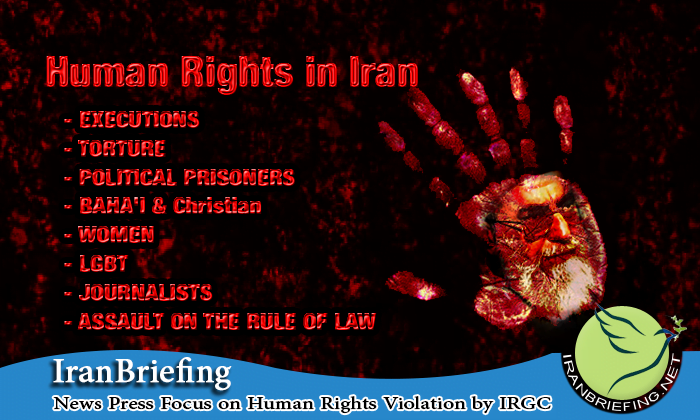
1. A DRAMATIC INCREASE IN WANTON EXECUTIONS
Iran not only executes more people per-capita than any other state but the execution rate has actually escalated under President Rouhani, with the UN General Assembly expressing concern about the “alarmingly high frequency” of executions. At present, Iran now executes a person every eight hours, with death sentences carried out for overbroad crimes such as “corruption on earth” and “enmity with God.” Iran has already executed more than 80 people in the first month of January 2015 alone — the largest rate of executions of any month on record.
Indeed, under the new Islamic Penal Code, there are 80 offenses that can result in a death sentence, with many of those executed being activists for ethnic and religious minorities arrested on trumped up charges.
As well, the true number may very well be higher, as many are carried out in secret. While Rouhani continues to preside over a massive execution binge, the regime continues to deny Dr. Ahmed Shaheed, the UN Special Rapporteur on the Situation of Human Rights in Iran, access to the country.
These wanton executions — including the targeting of political prisoners and the attending culture of impunity — must end.
2. CULTURE OF IMPUNITY
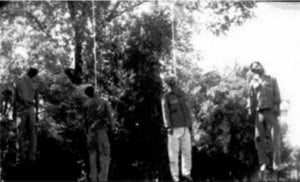
2015 marks the 27th year since the Iranian regime’s 1988 Prison Massacre, where then-Supreme Leader Ayatollah Ruhollah Khomeini ordered the executions of thousands of dissidents, purging opposition to the regime. These victims were denied any semblance of due process with their guilt proclaimed by religious decree. Twenty-seven years later, the Iranian regime not only continues to suppress evidence of the massacre – while rebuking family requests seeking information surrounding the execution and burial of the victims – but continues to provide political and financial rewards to the perpetrators.
Indeed, Rouhani himself continues to indulge a culture of impunity, rewarding and promoting the perpetrators of grave abuses. His own Justice Minister, Mostafa Pour-Mohammadi, played a leading role in the 1988 Prison Massacre, presiding over the Evin Prison Death Committee that was responsible for selecting victims — a scandalous example of the prevailing culture of impunity. As well, after political prisoners at Evin Prison’s notorious Ward 350 were brutally beaten in April 2014, the responsible prison official — Gholamhossein Esmaili – was promoted to head the Tehran Justice Department. Simply put, human rights violators are protected and even rewarded, with Rouhani’s rhetoric of moderation ringing increasingly hollow.
As documented by the “International Campaign for Human Rights in Iran”, nine government ministries that are under the direct authority of the President are themselves responsible for ongoing human rights abuses. These include: the Ministry of Culture and Guidance, which continues to engage in the suppression of “subversive views”; the Ministry of Intelligence, which engages in the arbitrary and indefinite detention of human rights defenders in secret locations using torture and other inhuman and degrading treatment to extract coerced confessions; and the Ministry of the Interior, which continues to engage in the suppression of peaceful gatherings by routinely denying permits for peaceful assembly.
3. TORTURE
Under Rouhani’s presidency, authorities have continued to use torture to intimidate detainees and coerce confessions to justify trumped-up charges, while the general culture of impunity prevails. As documented by Dr. Shaheed, methods of torture include: whipping and assault; sexual torture including rape; and psychological torture such as prolonged solitary confinement.
In his latest report, Dr. Shaheed details the widespread and systematic use of both physical and psychological torture — in particular to elicit confessions. The Iranian refugees who provided testimony for the report described torture, abuse and ill-treatment including prolonged solitary confinement, mock executions, threatened rapes, severe beatings, electroshocks, and the use of suspension and pressure positions.
4. POLITICAL PRISONERS
Iran continues to imprison human rights defenders, students, journalists, bloggers, lawyers, artists, trade unionists, members of the political opposition, and civil society leaders generally. While Rouhani has freed some high profile political prisoners at opportune moments — such as prior to a UN General Assembly appearance — the tactical freeing of individual prisoners does not constitute systemic change in this regard. Indeed, the continued imprisonment of U.S.-Iranian journalist Jason Rezaian is but one example of the regime’s ongoing repression of free speech and free press, while the house arrest of 2009 Presidential candidates Mir Hossein Mousavi and Medi Karoubi has entered its fourth year.
Human rights defenders and their families are harassed and imprisoned as part of a concerted strategy to silence dissent. Even those who have been released — such as celebrated human rights lawyer and former political prisoner Nasrin Sotoudeh — continue to be closely surveilled and exemplify this routine harassment and intimidation.
Since her release on September 18, 2013, Sotoudeh has continued to be the victim of intimidation including “judicial harassment.” Her family’s home has been raided and looted by authorities; her law license was suspended in October 2014 by the Tehran Bar Association; and she continues to be the victim of arbitrary detention for acts of public expression, such as her arrest during a sit-in outside the Tehran Bar Association while calling for judicial independence in Iran.
The intermittent release of some high-profile prisoners — and promises to release others — must not deflect attention away from the Iranian regime’s continuing arbitrary detentions — with more than 900 political prisoners who continue to languish behind bars.
5. PERSECUTION OF BAHA’I
International observers have repeatedly recognized the systematic and widespread persecution of Iran’s Baha’i religious minority, who are singled out for particularly cruel and unusual treatment by the regime. This includes the dramatic increase in state-sanctioned incitement to hatred; the alarming increase in arrests targeting Baha’i; violent attacks that continue to go unpunished; and the constant threat of raids, arrests, detention, and imprisonment characteristic of Iran’s persecution of the Baha’i over the last decade. Some 130 individuals have been detained as of December 2014, many of whom have been prevented from retaining legal counsel to defend themselves.
The most prominent of these prisoners of conscience are the Baha’i Seven — known as the “Yaran-i-Iran” — who have been arbitrarily imprisoned since 2008 on various false charges ranging from espionage to “propaganda activities against the regime” and organizing “an illegal administration”. These seven religious leaders have been punished for the practice of their faith, a right guaranteed under international and Iranian law, which is tantamount to putting the Baha’i community as a whole on trial.
The continuation of the systematic and widespread persecution of Iran’s Baha’i community finds expression in recent statements by influential clerics. “We never say that Baha’is have the right to education [they] don’t even have citizenship rights” declared Ayatollah Mohammad Mousavi Bojnourdi to the Fars News agency. Such incitement invariably leads to violence and discrimination. As described by Dian Alaei, the Baha’i community representative to the UN, ” . . . Baha’i youths cannot attend university; Baha’i cemeteries are demolished with bulldozers, and Baha’i shops are locked up when their owners close during official Baha’i holidays”.
6. PERSECUTION OF OTHER RELIGIOUS AND ETHNIC MINORITIES
The Iranian regime continues to target and incite hatred and violence against religious and ethnic minorities, violating their civil, political, social, religious, economic, cultural, linguistic, and educational rights. Among other abuses, minority schools and houses of worship have been closed or destroyed, restrictions have been imposed on both the public and private use of minority languages, and members of minority groups — such as the Baloch, Kurds, Ahwazi Arabs, and Christians — have been imprisoned on spurious charges such as “spreading corruption on earth”.
Indeed, as described in Dr. Shaheed’s report, the Iranian regime has continued to target cultural rights activists form the Arab minority community, including the executions of Hasehm Sha’abni, Hadi Rashedi, Ali Chebeishat, and Khaled Mousavi.
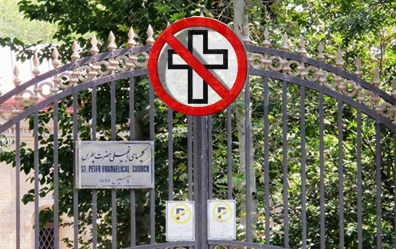
Incitement against Gonabadi Dervishes continues, with members of the Dervish community imprisoned as infidels, and with the arbitrary arrest and detention of Sufi Muslims, Sunni Muslims, and Evangelical Christians and their defenders. The continued detention of Christian pastors such as the eight-year sentence of American Pastor Saeed Abedini on charges of threatening national security for spreading his Christian faith is a case study. The regime also systematically represses religious worship by Protestant Christians, some 50 of whom are currently detained.
Religious minorities have also been forced into underground worship, and private home churches are routinely raided. Dr. Shaheed reports that during the past three years, authorities have closed officially licensed churches and arrested converts to Christianity, subjecting them to intense physical and psychological abuse, including the threat of execution.
In December, Pastor Victor Beth Tarmez, a former leader of the Tehran Pentecostal Assyrian Church, was arrested along with two guests at his home during a Christmas party. While the specific charges are unclear, witnesses report that the security agents stated at the time of the raid that the arrests were being carried out for an “illegal gathering”.
7. PERSECUTION OF WOMEN
Despite Article 20 of the Iranian constitution purporting to protect gender equality, Iranian women face widespread and systematic discrimination in many areas of life. For example, under the Iranian Civil Code, women are unable to leave the country without their husband’s consent; non-consensual sexual relations in marriage are allowed with an increasing incidence of child, early, and forced marriage. Indeed, recent research by the Iran Student Correspondents Association reports more than 41 000 registered marriages among underage children.
Iranian women are also barred from marrying a foreign national without special permission from the Government; men are expressly defined by law as the “head of the family” such that male authority over women is legally mandated; and a husband can legally prohibit his wife from engaging in an occupation or technical profession that is “incompatible with family’s interests” or with his “dignity”. Since the Islamic Revolution, increasingly harsh restrictions have been placed on the freedom of women to participate in public gatherings along with men, such as sporting events. Although banned from attending such events in Iran, many turned out for the Asian Cup in Australia. The response by the head of the moral committee of the Iranian Football Federation was to issue a warning to Iranian national team members that they should avoid taking photographs with female fans and that the regime will be “obliged to take action” if the “players don’t respect” these rules.
On January 12, female musician Harir Shariarzadeh was forced off stage by authorities during a concert. There are reports that an “unwritten law” has been imposed by hardliners of the Ministry of Culture and Islamic Guidance, and which has prevented at least 13 female musicians from performing live.
Iranian women are not only victims of discrimination but also of violence — in particular acid attacks targeting those who disobey Islamic dress code by improperly wearing the hijab — has become increasingly acceptable, with media coverage frequently overlooking and minimizing these incidents while religious leaders blame the victims.
In Iranian prisons, female prisoners suffer horrific sexual abuse. For example, former political prisoner Marina Nemat recently wrote that when she was arrested at age 16, she was tortured and “raped over and over again in solitary confinement in Evin Prison” to coerce a false confession. Canadian-Iranian journalist Zahra Kazemi was similarly raped and tortured in Evin prison in 2003 before being murdered. Rouhani and his government must be held to account for the continued persecution and violation of the rights of Iranian women in mocking denial of their undertakings to promote gender equality.
8. PERSECUTION OF LESBIAN AND GAY PEOPLE
Iranian law criminalizes same-sex relations and allows the courts wide discretion in determining sentences, which can include corporal and capital punishment. As Dr. Shaheed has reported, many LGBT Iranians are victims of discrimination and violence, but do not report their victimization to the authorities out of fear that they will themselves be charged with a criminal offense.
Rouhani should publicly condemn the criminalization of same-sex relations and end discrimination on the basis of sexual orientation and gender identity.
9. THE PERSECUTION OF JOURNALISTS AND THE ASSAULT ON FREE SPEECH
While the Iranian regime continues to espouse principles of free speech and free press, any rhetorical commitment is mocked by reality. Indeed, Amnesty International has reported a “sharp rise in arrests, prosecutions and imprisonment of independent journalists in Iran [that] signals the authorities’ utter determination to crush hopes for increased freedom . . . .” In addition, the regime has increasingly confiscated satellite dishes and continues to restrict open internet access. While internet censorship has prevailed in Iran since the 2009 Green Protests – and while there are reports of reform — the targeting of open internet access continues.
Indeed, as described in the recent report “Internet in Chains: The Front Line of State Repression in Iran” — released by the International Campaign for Human Rights in Iran — the Iranian national police force includes a designated cybercrime unit which is tasked with monitoring the online activities of civil and political activists. Established in 2011, the Iranian Cyber Police were responsible for the investigation and ultimately the arrest of Sattar Bahesti, who was tortured and died in custody. According to the report, the cyber police continue to pressure internet providers to provide them with evidence of online political activism.
In a recent statement, a senior IRGC official, Mostafa Alizadeh, acknowledged that the regime “is monitoring” and “has intelligence control over” all social networks in the country. He further acknowledged a massive crackdown against “obscene” comments on Facebook, stating that the IRGC has identified 350 offensive facebook pages managed by 36 individuals.
Censorship in Iran is not limited to the internet, but extends also to the traditional print media. The regime continues to shutter newspapers deemed unacceptably critical of the regime or seen as questioning tenets of Shiite Islam. For example, the reformist newspaper Ebtekar was closed for “spreading lies” after it reported that Evin Prison Chief Esmaili’s promotion had been connected to the Evin prison assault over which he presided.
A glaring example of the regime’s widespread and systematic censorship of free and independent expression was the arrest in May of seven young men and women who had created a homemade dance video set to the song “Happy”. The video — widespread on the internet — was swiftly condemned by Iranian authorities as being “vulgar” and against “public chastity”. Indeed, following the trial the director was sentenced to one-year imprisonment and 91 lashes while the other six participants were sentenced to six months imprisonment and 91 lashes. While the sentences in this high profile case were suspended for a period of three years, the effect of the verdict and sentences will be the chilling of independent expression and free speech.
The start of 2015 was marked by yet another wave of arrests targeting journalists — including blogger Saeed Pourheydar, who has written for many reformist publications — further establishing the regime as a global leader in repressing freedom of expression. Indeed, reports have identified some 40 imprisoned journalists, making Iran one of the worst violators in this regard.
The international community must demand accountability and action from the Iranian regime, which must cease and desist from its criminalization of dissent and its accompanying culture of impunity.
10. ASSAULT ON THE RULE OF LAW AND THE INDEPENDENCE OF THE JUDICIARY
The Iranian legal system is characterized more by the assault on the rule of law — or law by theocratic rule — while lacking any semblance of independence for the judiciary and the legal profession. Indeed, the system is designed to enable and enforce the regime’s massive human rights violations, including revoking the law licenses of outspoken human rights defenders who have represented political prisoners — such as Nasrin Sotoudeh.
Moreover, a culture of impunity pervades the Iranian judiciary, which, as Dr. Shaheed observed in his recent report, remains subject to the “undue influence of the security apparatus”. In its Declaration submitted to the 2014 Universal Periodic Review, the human rights monitoring group International Campaign for Human Rights in Iran noted the “pervasive denial of due process” in Iranian courts; routine arrests, searches, and confiscations made without a warrant; the holding of detainees at unknown locations and without access to counsel; and the denial of information about charges or trial procedures. Indeed, the Declaration noted that trials are frequently “brief, with little or no evidence presented other than ‘confessions’ that have been elicited under torture”.
Dr. Shaheed further notes that the excessive use of capital punishment has been “compounded by the frequency of reports alleging violations of national and international fair trial standards”.
Human rights lawyers engaged in the defense of clients who have been arbitrarily detained or otherwise prosecuted for political crimes have been publicly accused by the head of Iran’s judiciary — Larijani — of damaging the government’s reputation. Indeed, this type of ongoing intimidation, harassment and arbitrary detention of human rights lawyers — such as Mohammad Mostafaei, Shirin Ebadi, and Shadi Sadr — constitutes a standing violation of Iran’s international legal obligations under the UN Basic Principles on the Role of Lawyers, which provide that lawyers must be allowed to carry out their work “without intimidation, hindrance, harassment or improper interference.”
11. IRAN AND THE UN UNIVERSAL PERIODIC REVIEW
The UN Human Rights Council recently concluded its second Universal Periodic Review (UPR) of Iran, which built on the 123 recommendations from February 2010 that Iran had accepted in order to “fully comply with its international human rights obligations”. The past four years have demonstrated that the Iranian government, rather than implement the recommendations made in the first UPR, has continued its massive violations of human rights in breach of its own undertakings.
The recommendations Iran pledged to fulfill in the first UPR — but which it has systematically violated – include allowing “freedom of expression, freedom of the media and of assembly”; “bringing its national legislation into conformity with international obligations on women’s rights”; “taking further steps to eliminate torture and other forms of ill treatment; ensuring an effective and impartial judicial system”; and “investigat[ing] and prosecut[ing] all those, including Government officials and paramilitary members, suspected of having mistreated, tortured or killed anyone”.
The international community must hold the Iranian government to account for its failure to meet its own human rights obligations and undertakings in the Universal Periodic Review.
12. INCITEMENT TO HATE AND GENOCIDE
The Iranian regime continues to engage in the persistent and pervasive incitement to hate and even genocide. Throughout the years, high-ranking government officials and religious leaders have called for the destruction of Israel, with the 21st-century beginning with Supreme Leader Khamenei calling for “the annihilation of the Jewish State”. The Supreme Leader has continued to incite hatred and violence against the Jewish people and the Jewish State, declaring recently, yet again, that Israel is a cancer and that the “barbaric” Zionists have “no cure but to be annihilated”.
While Rouhani has softened his tone for international consumption, he nonetheless presides over a regime that disseminates a bigoted ideology of anti-Jewish hatred and hatred against religious minorities like the Baha’i. Indeed, this virulent incitement to hate and violence originates with the Supreme Leader — who himself continues the hateful legacy of his predecessor Ayatollah Ruhollah Khomeini.
Indeed, in a clear instance of incitement to hate, Rouhani declared before an audience of thousands at the Quds Day rally — where protesters displayed placards calling for “death to Israel” — that the “Islamic world must unite in unison to declare this day one of . . . hatred . . . against Israel”. As well, the regime’s use of Quds day, and since, to foster anti-Jewish vitriol must be viewed against the backdrop of its ongoing support for international terrorism targeting Jews and Israelis as documented in testimony before the U.S. Congress, Canadian Parliament and the like. Recently, the Supreme Leader has continued with his rhetoric of dehumanization, referring to Israel as the “wolfish, murderous infidel”, while declaring the Zionist regime “illegitimate from its birth” and calling for Israel’s destruction.
Supreme Leader Khamenei has also launched a new social media campaign that has come to be known as “We Love Fighting Israel”, replete with its own Twitter hashtag: “#FightingtheZionists”. It is indeed ironic that such incitement to hate has now gone viral given the regime’s massive repression of social media and other forms of public expression.
Incitement to hatred of and violence against other religious minorities in Iran is also widespread, including Dervish Muslims — who are described by religious leaders as “infidels and Wahhabists” — and the Baha’i — who have been accused, inter alia, of spying for foreign governments and are portrayed in state-controlled media as political subversives. Simply put, the regime’s systematic incitement to hate constitutes a standing and ongoing violation of international law.
CONCLUSION
The importance of achieving a principled nuclear agreement is clear but one can neither ignore nor sanitize the rights-violating Iranian regime and threats posed by the culture of impunity that continue unabated under Rouhani’s presidency, despite his promises of reform, transparency, and commitment to protect human rights.
Iran’s IRGC Intensifies Crackdown on Facebook Users with 12 Arrests and 24 Summonses – An IRGC cyberspace specialist, Mostafa Alizadeh, announced in a statement on Iranian state television on February 1, that 12 Iranian Facebook users have been arrested on charges of “spreading corruption, and [carrying out a] mission to change family lifestyles.” He added that 24 other citizens were summoned to answer questions about their Facebook activities.
Iran’s IRGC Intensifies Crackdown on Facebook Users with 12 Arrests and 24 Summonses
Alizadeh said that since September 2014, the IRGC has intensified its review of Facebook pages, and that 350 Facebook pages managed by 36 individuals had been identified and 130 of them deleted from Facebook.
The IRGC cyberspace specialist threatened citizens who are members of Facebook by saying that the IRGC was monitoring all social networks, “and those who think this space is safe for them, must cease their activities.”
One day earlier, on January 31, a press release by the Center for Investigation of Organized Cyber Crimes, a subsidiary of the IRGC Cyber Defense Command, was published that stated several Facebook users had been arrested in a surveillance project by the IRGC named “Operation Spider” that is aimed at identifying and rooting out Facebook pages and activities that spread “corruption” and western-inspired lifestyles.
The IRGC specialist referred to these pages’ promotion of “pornographic and immoral” content, which aims to “reduce sensitivity about sacred elements of religion.” Examples of the “immoral” content on these pages, according to Alizadeh, included photos taken at Iranian weddings.
Referring to alleged “jokes about the sacred” on these Facebook pages, he added, “The mission of these pages is to complain and whine about any issue that happens in the country in a joke format. Anti-revolutionary networks take advantage of this whining, and they use it as a tool for mass distribution of rumors.”
Alizadeh said that the all the detainees are male, they are from various provinces, and their average age is 25.
Last year, the IRGC arrested and prosecuted eight Facebook users on charges of “assembly and collusion against national security,” “propaganda against the stage,” “insulting the sacred,” “insulting Heads of Branches,” and “insulting individuals.” Soheil Arabi, another Facebook user, has been sentenced to death for insulting the Prophet on Facebook.
Iran hardliners’ inflexible stance – The Revolutionary Guards’ effort is part of the factional infighting between the radicals and moderates over the nuclear issue After Hezbollah’s January 18 retaliatory attacks against Israel forces, Hassan Nasrallah, the group’s leader, retreated from further confrontation with Tel Aviv. “We don’t want a war,” he remarked. Nevertheless, contrary to expectations, Iranian Revolutionary Guard Corps (IRGC) commanders and hardliners in the country intensified their threats against Israel and even suggested that a war was on the horizon. At a January 30 conference titled ‘Jihad Will Continue’, Mohammad Ali Jafari, the IRGC’s top commander, told reporters that the Israelis “should await a stronger response not only around their borders, but anywhere in the world where Zionist Israelis are”.
Several other IRGC commanders and news outlets with ties to the IRGC took the same threatening position, with Jafari’s deputy warning that “Iran has prepared itself for a war with world powers and the Israelis are much smaller than that”.
Considering that these threats come after what the Iranians have called a “great victory for Hezbollah”, one may wonder what explains this aggressive posture.
There could be three explanations.
Iran hardliners’ inflexible stance
First, it is possible that these threats are for domestic consumption, targeting an Iranian audience, primarily conservatives, to mask Tehran’s lack of a response to the Israeli attack. This could be a plausible hypothesis because Iran does not want to risk a full-fledged war with Israel unless it is absolutely necessary and the survival of the system is in danger. To Iran, the current circumstances — the death of one of its generals, especially after Israel’s denial of any knowledge of the general’s presence in the Hezbollah convoy in Syria — do not justify a war with Israel. Even if the Israeli explanation lacks muster, its statement implicitly expresses regret in an effort to de-escalate the situation.
One should remember that in 1998, the Taliban, sworn enemies of the Shiites, attacked the Iranian consulate in Mazar-e-Sharif, capturing and killing nine Iranians, eight of them diplomats. Following the incident, Iran amassed 100,000 troops on the Afghanistan border. The members of the Supreme National Security Council (SNSC), including the mellow president Mohammad Khatami, overwhelmingly voted for attacking Afghanistan.
The Supreme Leader would in a vast majority of cases follow the decisions made by the majority of the SNSC, despite his authority, based on Article 176 of the Iranian Constitution, to veto its decisions. This time, however, he vetoed the SNSC majority decision, and the attack was called off.
It is important to note that Iran’s leader did not support the IRGC position. His anti-Israel position is well known, but he did not issue a statement that Iran would take its own revenge, regardless of Hezbollah.
The second explanation may be tied to a classic good-cop, bad-cop approach: Negotiators may reason before their P5+1 (US, Britain, France, Russia, China + Germany) counterparts, specifically the Americans, that they should work with them or, if negotiations are withdrawn, the West would have to deal with a group of people who embrace war with the West and Israel.
This can also be viewed as a reaction to Benjamin Netanyahu’s clear interference in US foreign policy — a policy now backed by a Republican-dominated Congress that is defying the Obama administration’s strategy to bring Iran’s nuclear crisis to an end.
However, the fact that hardliners refuse any nuclear compromise with the US makes this hypothesis less plausible and the third argument more so. They firmly believe that unless the Iranians make a huge concession, it is very unlikely that there will be an agreement.
The third explanation, which is contrary to the second, is that the IRGC hopes to deepen existing antagonism between both Iran and Israel, and Iran and the US. The goal of the latter is to weaken Obama’s conciliatory, problem-solving position towards Tehran in the face of American hawks on Iran who are pro-Israel. Simply put, the IRGC’s effort is part of the factional infighting between the radicals and moderates over the nuclear issue, and is a clear manifestation of domestic politics influencing foreign policy.
Iranian President Hassan Rouhani and his team’s worldview is that Iran cannot live in isolation and constant confrontation. They believe in a world where interdependence necessitates interaction and oppose the realist view that military power is the country’s principle national interest. In December 2014, Foreign Minister Mohammad Javad Zarif commented that Iran has become more secure by pursuing negotiations. The IRGC chief commander, Jafari, criticised Zarif’s position, highlighting “the Islamic Republic’s defence and security capabilities” as the reason for “the failure of the hegemonic powers” in the region and as a support behind the diplomatic apparatus, not the other way round.
On another occasion, Jafari remarked: “We should not seek dignity in [satisfying our] enemy.” He added, “Rejecting bullying and [adhering to] our religious beliefs are elements of power — not the economy and oil.”
In another effort by the hardliners to obstruct a compromise with the US, in last week’s Friday prayer in Tehran, Ahmad Jannati, the influential cleric who chairs Iran’s Guardian Council, said: “The solution to our economic problems is a ‘resistance economy’, not relationship with America. I don’t know why they think that America should provide their food and water.”
Zarif’s stroll with US Secretary of State John Kerry in Geneva stoked swift opposition amongst conservatives. Ayatollah Ahmad Alamolhoda, the Friday prayer leader in Mashhad, pointed to the walk and said: “The leader allowed negotiations [with America], not friendship.”
In a glaring move underscoring Ayatollah Khamenei’s pessimism towards the talks and his opposition to Zarif’s walk, the website of Iran’s leader posted a Zarif-Kerry picture walking in downtown Geneva titled ‘Imaginary Points’. It was referencing Khamenei’s statement that “I am not against [nuclear] negotiations. They can negotiate as long as they want, but I believe that we should rely on real points of hope, not hollow and imaginary ones.”
Waning Public Support for Tehran’s Nuclear Aspirations – Iran’s regime is at odds with itself over the costs and benefits of its controversial nuclear program. Nowhere is this more apparent than in the back and forth between President Hassan Rouhani, on the one hand, and the Islamic Revolutionary Guards Corps (IRGC) and Supreme Leader Ali Khamenei, on the other.
Waning Public Support for Tehran’s Nuclear Aspirations
Addressing the “Iran’s Economy” conference on January 4, Rouhani discussed the causal relationship between the nuclear negotiations and sanctions relief, and the government’s ability to improve the living standards of the Iranian public. Controversially, Rouhani emphasized: “our ideals are not dependent on the [number of] centrifuges,” signaling his readiness to give the P5+1 concessions in return for sanctions relief. Rouhani even threatened to “discuss the issue with the people” and organize a referendum should his nuclear diplomacy face domestic opposition, in order “to solve important affairs of the state.”
Rouhani’s call for a plebiscite on the nuclear issue must not be taken literally. The Supreme Leader is certain to nix the move, and nothing in Rouhani’s past record suggests he is a believer in democracy. However, the mere fact that Rouhani uses the word plebiscite reflects the president’s reading of the Iranian street: the Iranian public may no longer be willing to pay the price of sanctions for the regime’s nuclear ambitions. Rouhani has chosen, for the time being, to ride the popular wave, and shelve the nuclear ambitions – for a short while.
Rouhani’s threat was not lost to the domestic opposition. On January 5, Gholamreza Sadeqian, editor of Javan, an unofficial mouthpiece of the IRGC, celebrated Iran’s centrifuges as “touchstones of the country’s progress in the scientific and technological fields, both of which are among the ideals of the revolution.”
On January 7, Khamenei too reacted to Rouhani’s speech: “There are those who unwisely deny the [regime’s] scientific progress … Do not ruin this progress with unseasoned and faulty statements. Do not create doubt in the minds of the nation.”
While the debate highlights significant divisions in Iran at a key juncture in the nuclear talks, and perhaps even waning public support for the Islamic Republic’s nuclear program, there is no indication that Supreme Leader Khamenei and the IRGC will adjust their nuclear ambitions. This does not bode well for successful nuclear negotiations.
Rouhani, a Nuclear Deal and the IRGC – Even in the unlikely event that Iranian President Hassan Rouhani and his negotiating team reach a nuclear agreement with international negotiators, its implementation may well fall to the Islamic Revolutionary Guard Corps (IRGC).
Rouhani, a Nuclear Deal and the IRGC
For decades, the IRGC has expanded its influence in Iran’s parliament and national-security apparatus, and the next president may even come from its ranks. The IRGC’s vociferous opposition to nuclear concessions and improving ties with the West raises serious questions over whether future Iranian governments will uphold any nuclear deal that the current one signs.
Rouhani is fighting a two-front war. Abroad, he is engaged in diplomatic arm-wrestling with the P5+1 international negotiators, seeking to pocket maximal gains for Iran while minimizing Tehran’s concessions. Meanwhile, Rouhani’s cabinet is torn between public demands for jobs and human rights, the creeping infiltration of the IRGC, and Supreme Leader Ali Khamenei’s dogged attempts to maintain the status quo at all costs.
The Iranian president is well aware of the IRGC machinations against his cabinet, and warned the public in August 2014: “The saboteurs … have left the think tanks and are now in the operations room.” Three months later, a news outlet close to the Green Movement released a account of the IRGC Intelligence Organization’s moves against Rouhani. According to the report, the Guards already have a shadow government in place that is engaged in psychological operations and inciting the mob against the government.
In the wake of those reports, fifteen parliamentarians summoned Intelligence Minister Hojjat al-Eslam Mahmoud Alavi to explain how the information had reached “the counterrevolutionary press,” and to help determine the appropriate punishment for whomever responsible. Meanwhile, the exposed IRGC plot against Rouhani’s cabinet has unsurprisingly gone unpunished.
While Khamenei may use the rivalry between Rouhani and the IRGC to maintain the factional balance of power, there is no doubt that Rouhani is merely a tenant at the presidential palace and not its owner. In two years or six (depending on whether he is re-elected), he will be replaced as president, and his successor – like his predecessor Mahmoud Ahmadinejad – is likely to be recruited from the ranks of IRGC veterans.
Rouhani is one man, whereas the IRGC is an institution which has struck ever-deeper roots since the 1979 revolution, and whose influence within the various arms of the regime shows no signs of abating. Should negotiators find a way to close the remaining gaps and reach a nuclear agreement with Iran, they must remember that it is not Rouhani but the Guards who will likely be given the task of its implementation or dismissal.






 upreme Leader Ayatollah Ruhollah Khomeini