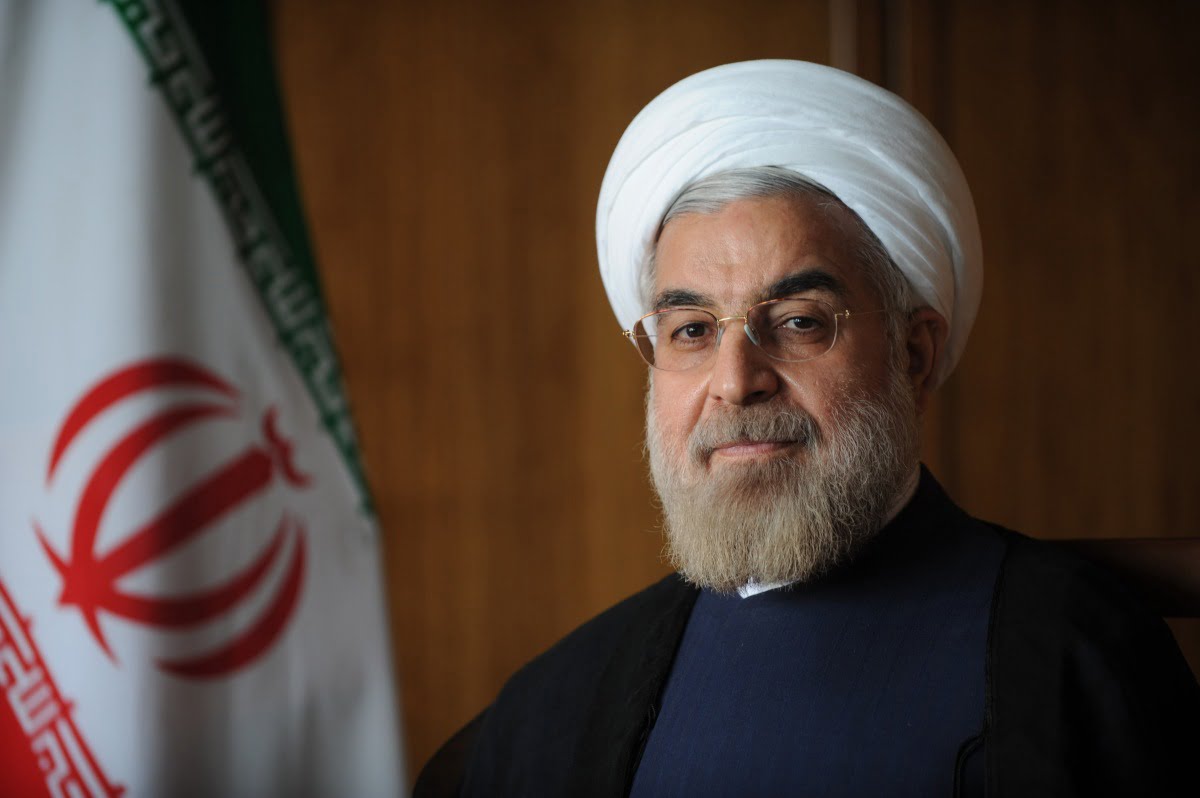
Iran Warns of Israel Attack If US Hits Assad – Iranian Deputy Foreign Minister Hossein Amir Abdollahian on Saturday warned the US that if America and its coalition tries to topple Syrian President Bashar Assad, Israel will be attacked, reports Associated Press.
In fact, this is not the first time Abdollahian has made such a warning against deposing Iran’s ally Assad; last September he likewise said a US strike on Syria would lead to attacks on Israel by “some groups and movements that have formed over the past two or three years.”
Hossein Amir Abdollahian – Iran Warns of Israel Attack If US Hits Assad
The statements are viewed by many as a thinly veiled threat by the Islamic regime, which has repeatedly threatened to annihilate Israel – just over a week ago for the Hajj pilgrimage Iranian Supreme Leader Ayatollah Ali Khamenei called for Muslim unity for Israel’s annihilation.
Iran has been actively pursuing those statements by continuing its nuclear program. A mass explosion occurred at Iran’s secret Parchin nuclear facility last Sunday – a site Iran has admitted has been used to test exploding bridge wires used as a nuclear bomb detonator. Iran has also supplied rockets to its terror proxies Hamas and Hezbollah to use against Israel.
On another front, Abdollahian confirmed that Iran and the US have been in contact over the fight against Islamic State (ISIS) terrorists in Iraq and Syria, reports Associated Press.
The comments are the first time a senior Iranian official has confirmed Iranian and American discussion regarding how to fight the ISIS threat.
US Secretary of State John Kerry last month backtracked on his position about Iran’s participation in joining the coalition fighting ISIS, after first not inviting Iran to a coalition meeting and then saying in an interview that he would be open to military cooperation.
Israel has warned against a rapprochement between the US and Iran over ISIS, with Prime Minister Binyamin Netanyahu in his recent US trip warningIran is “making bombs. That’s what they’re trying to do. That’s what they’re whole program is about, making bombs.”
Reporters Without Borders published a statement on October 9 were it referred to the arrest of 12 individuals in Iran on charges of using social networks and advised the netizens in Iran to be careful when using these networks.
Can Iranian regime obstruct youth’s access to internet and social networks ?
In the recent weeks, a great wave of SMS messages in the social media that ridicule the founder of the Islamic Republic Khomeini, as well as other leaders of this regime, was followed by swift reaction on part of regime’s security and intelligence commanders. In public and private statements, regime’s officials called for the filtering, repression and apprehension of social network netizens.
For example, Kamal Hadifar, the Chief of FTA (cyber-police), announced on September 12 that “private messages in the social networks such as viber and whatsapp are controlled by this police”.
On September 21, the revolutionary guards commander in Sarallah District of city of Shiraz reported on the arrest of 11 on the charge of “production and republishing insulting material” against Khomeini in the social networks and phones. Esmaeil Mohebbipour told ISNA News Agency that these individuals had been identified and arrested after the monitoring of social networks such as whatsapp, line, viber, tango and telegram on mobile phones.
On October 2, the Head of mullahs’ Judiciary Sadeq Larijani called these SMS messages “criminal text” and added that the judiciary system is obliged to confront it.
It is notable that the foremost communication company for internet services in Iran is owned and controlled by the revolutionary guards (IRGC) and it scrupulously monitors the communications inside the country.
The opposition and dissent of the youth with the culture and laws governing Iran is such that despite all the restrictions and suppression, they extensively voice their opinions on the internet and in the social networks or use these communications to obtain information.
According to official statistics, 67% of the Iranian people use the internet and of these, 70%, especially the youth, use anti-filtering devices that are illegal to circumvent filtering and censorship by the regime. Only 30% that include government employees and officials or merchants affiliated with the regime use the internet in its official form.
Hezbollah attack on Har Dov ordered by Iran following explosion at nuclear facility – According to unnamed sources in Washington, Iran ordered its Lebanese proxy Hezbollah to carry out Tuesday’s attack on Israeli forces patrolling the Israel-Lebanon border following an alleged attack on the Parchin nuclear facility in Iran “by a foreign state,” the Kuwaiti newspaper al-Rai reported on Friday.
Hezbollah planted and detonated two bombs in the Har Dov region along the Lebanese-Israeli border on Tuesday, with one device injuring two IDF soldiers. A second blast tore through the same area about 30 minutes later, but failed to cause injuries or damages.
Hezbollah attack on Har Dov ordered by Iran following explosion at nuclear facility – (photo credit:REUTERS)
Satellite images taken of Iran’s Parchin military compound after a blast reportedly tore through it show “damage consistent with an attack” at the site, according to an earlier report by the Israel Defense website on Thursday.
According to the report by Ronen Solomon, the images form evidence that “refutes the denials of the Iranian government” and prove that the explosion at Parchin – which has been linked by Western intelligence to nuclear missile fuse trials – “indeed occurred inside the military compound.”
The images “clearly show damage consistent with an attack against bunkers in a central locality within the military research complex at the Parchin military compound,” the report added.
The images show Parchin before and after the October 5 explosion, and expose significant damage to the site, with a number of structures missing in the photograph taken after the reported blast.
Israel Defense said the damage occurred at the center of the Parchin compound, “adjacent to another installation where, according to intelligence sources, the trials being conducted involve controlled detonation of fuses intended to serve as triggers for nuclear devices.”
It noted that a whole series of structures that look like bunkers disappeared after the blast, and that testing units were wiped “off the face of the Earth.” According to Israel Defense, the images were taken by the French Pleiades satellite on the morning of October 7.
The satellite captured what appear to be emergency response vehicles at the site.
On Thursday, a US security institute also said it located via satellite imagery a section of a sprawling Iranian military complex where it said an explosion or fire might have taken place earlier this week.
The semi-official ISNA news agency also reported that an explosion occurred at a military base near Tehran, killing two people.
“Unfortunately, two workers were killed,” the defense organization’s spokesman was quoted as saying.
The Saham opposition website reported that a huge explosion occurred at the large facility in Parchin, located 30 km. southeast of Tehran.
According to the report, the powerful explosion blew out the windows of buildings located up to 15 km.
away from the base, and eyewitnesses could observe the blast from a distance.
Parchin is a controversial military base where Israel and the International Atomic Energy Agency suspect the Islamic Republic is attempting to develop a nuclear explosive device.
IAEA inspectors have not been permitted to enter the site since 2005.
Being the highest political, spiritual, religious and divine authority and leader, Ayatollah Khamenei has ruled the Islamic Republic for more than two decades. He has enjoyed considerable power over the executive, legislative, and judiciary branches of the government as well as the economy and media.
What kind of supreme leader would the IRGC select?
The condition of Iran’s supreme leader has always been considered a crucial matter of national security in the Islamic Republic. There have been rumors about Khamenei’s health conditions for several years. Khamenei’s latest surgery on his prostate prompted some high official Iranian leaders including Hassan Rouhani and Mahmoud Ahmadinejad to visit him at the hospital, an unprecedented move.
The media blitz, which has become exceptional about Ayatollah Khameneni’s health, raises several questions such as what political, social, or economic changes might occur if Iran’s supreme leader dies? Who is a credible candidate to succeed him in having the final say in the Islamic Republic’s domestic and foreign affairs?
Iran’s political system has always been marked by unpredictability. In order to address these questions and project the possible scenarios, it is crucial to shed light on the power relations and political structure in Iran. According to Iran’s constitution, several crucial political bodies will play a role in deciding who would succeed Ayatollah Khamenei. But, in reality one particular organization, which does not have constitutional authority in this matter, enjoys more political and economic power over the others.
The constitution: Significant political bodies
Based on the constitution of the Islamic Republic, the Assembly of Experts (Majles-e Khobregan Rahbari) has the authority, and will be designated to appoint a new supreme leader.
According to the constitution, “In the event of the death, resignation, or dismissal of the leader, the (Assembly of) Experts shall take steps within the shortest possible time for the appointment of the new leader.”
The Assembly of Experts has 86 members and though they are elected by Iranian people, the turn out vote has always been low because the Guardian Council- another crucial political institution- supervises the elections, approves and vets candidates for the Assembly of Experts, Majlis (Parliament) and the president. On the other hand, the 12 members of the Guardian Council are directly or indirectly selected by the supreme leader.
“The condition of Iran’s supreme leader has always been considered a crucial matter of national security in the Islamic Republic”
In case the appointment of the supreme leader takes some time, other crucial players will include the Expediency Council (chaired by Akbar Hashemi Rafsanjani), president (currently Hassan Rouhani), head of the judiciary (currently Sadeq Larijani), and one of the six jurists from the Guardian Council, who will temporarily fulfill the function of the supreme leader.
The reality: The most crucial player
When it comes to the appointment of a new supreme leader, one of the most critical institutions, which is not mentioned in the constitution, is Iran’s Revolutionary Guard Corps (IRGC). The elites and senior officials of the IRGC will have the final say in the appointment of a new supreme leader for several reasons.
First of all, economically speaking, the IRGC has a monopoly over some of the most crucial financial sectors and is considered to be the state’s economic generator. Secondly, the IRGC has control over the future of Iran’s nuclear program. Finally, militarily speaking Iran’s Revolutionary Guard Corps has enjoyed significant power, through Khamenei’s support, to suppress domestic oppositions and operate in other countries in the region to advance Iran’s foreign policies objectives.
In fact, it would be unrealistic to argue that IRGC leaders have not already put together a list of candidates that they desire. Nevertheless, it is crucial point out that even within the IRGC, there are differences of opinions about the prospective supreme leader. Some officials of the IRGC might prefer an individual who holds countless détentes with the West, particularly the United States, pursues Iran’s nuclear program without compromises, while others might prefer an individual with a softer position.
Nevertheless, IRGC leaders will likely unite their voice and make the appointment of a new Supreme Leader a smooth process. This is in order to prevent a political crisis and an environment for opposition or disaffected Iranian youth to spark an uprising.
What kind of supreme leader would the IRGC select?
The IRGC elites are looking for an individual whom they can control, not vice versa. A low profile cleric who totally supports IRGC activities, political and economic monopoly, and objectives such as advancing Iran’s nuclear program and promoting Iran’s regional hegemonic ambitions. The last thing the IRGC is searching for is a supreme leader who would challenge their authority and power.
Some might think that candidates such as Mahmoud Hashemi Shahroudi (a member of the IRGC and former Chief of the Judiciary), Mojtaba Khamenei (the supreme leader’s second son), Akbar Hashemi Rafsanjani, Muhammad Taqi Mesbah-Yazdi (a conservative cleric), Muhammad Reza Mahdavi Kani (a conservative cleric and chairman of the Assembly of Experts), and Muhammad Yazdi (former chief of the judiciary), appear to be qualified figures to replace Ayatollah Khamenei.
Nevertheless, it is less likely that any of these qualified figures would be a possible choice for the senior cadre of IRGC. These individuals are too influential and powerful, enjoying their own social and political base. In other words, they might pose a great challenge to the rule and autonomy of IRGC leaders and even the Guardian Council and Expediency Council.
The next supreme leader: Someone who resembles Khamenei
When Khamenei replaced the former supreme leader and founder of the Islamic Republic, Khomeini, in 1989, he was among the least qualified candidates in comparison to influential people such as Ayatollah Montazeri. His divine authority, legitimacy and credibility were heavily questioned by the high level clerics in the city of Qom.
Khamenei was not even a Marja’ or Mujtahed, capable of issuing fatwa. He was also considered a weak supreme leader by some, lacking charisma, in comparison to Khomeini. Although Iran’s constitution emphasized the religious authority and qualification of a Supreme Leader, Khamenei’s appointment seemed to be a political move rather than a religious one.
Although Khamenei was weak at the beginning, he was unexpectedly successful and managed to marginalize high level clerics who opposed him, creating his own inner circle and foreign policy office and making a robust alliance with the IRGC in order to control the opposition. As times passed, his views also altered, becoming more in favor of reaching nuclear capabilities and more anti-American. In other words, he created a political structure which is a combination of military dictatorship and theocracy.
Some might argue that the position of supreme leader might be abolished altogether if Khamenei dies. Nevertheless, the foundational basis of the Islamic Republic is anchored in the concept of the Velayate Faqhih, which was advanced by the Ayatollah Khomeini. As a result, such a scenario is not feasible.
Finally, IRGC leaders are most likely looking for a candidate who is not a powerful or influential figure, resembling Iran’s supreme leader at the beginning years of his rule. The IRGC will select a person who grants them free rein in political and economic affairs, ratcheting up IRGC’s leverage over other political and economic institutions. This candidate can be from a lesser-known cleric in the Islamic Republic.
As IRGC leaders gain more political and economic leverage and influence, Iran will likely move towards military dictatorship in my view.
Iran’s Emergence as a Cyber Power – Iran is a country of 80 million people, educated and dynamic. It sits astride a crucial part of the world. It cannot be sanctioned and pressed down forever. It is the last great civilization to sit outside the global order.
Fareed Zakari As international scrutiny remains focused on the Islamic Republic of Iran’s nuclear program, a capability is developing in the shadows inside Iran that could pose an even greater threat to the United States. The 2010 National Security Strategy discusses Iran in the context of its nuclear program, support of terrorism,its influence in regional activities, and its internal problems. There was no mention of Iran’s cyber capability or of that ability to pose a threat to U.S. interests. This is understandable, considering Iran has not been a major concern in the cyber realm.Furthermore, Russia and China’s cyber activities have justifiably garnered a majority of attention and been widely reported in the media over the past decade.Iran’s cyber capabilities have been considered third-tier at best. That is rapidly changing. This report discusses the growing cyber capability of Iran and why it poses a new threat to U.S. national interests.
Iran in a Cyber Context
. Just as computing power grows exponentially each year, so can an adversary’s cyber capabilities. When one considers the origins of world-class cyber threats to theUnited States, two countries immediately come to mind—Russia and China. Yet with its growing cyber capabilities and intent to use them, Iran is rapidly striving to earn a position among the ranks of this nefariously elite group. For decades, the U.S.Government has publicly acknowledged concern over Iran’s efforts to develop a nuclear program to counter U.S. military capabilities. Recently, the 2014 Quadrennial Defense Review stated that, “Over the past 5 years, a top Administration priority in the Middle East has been preventing Iran from acquiring a nuclear weapon.”
This focus on Iran’s nuclear ambitions has distracted many from Iran’s other developing capability. In the last few years, Iran’s cyber proficiency has garnered the attention of a select few government officials and private industry leaders. In late-2011, the executive chairman of Google stated, “TheIranians are unusually talented in cyber war for some reason we don’t fully understand.”
Stopping a cyber adversary from disrupting activity or stealing intellectual property has been the primary concern of government and private sector organizations, but in the military and intelligence communities, there are other concerns about Iran. Few countries (or non state actors) can come close to matching or opposing U.S.military capabilities without taking an asymmetric warfare approach. As U.S.-led sanctions and international isolation impact Iran, the regime continues to seek ways to counter this threat and send a message. “The past year [2012] has seen theIranian regime evolve significantly in its exploitation of cyberspace as a tool of internal repression…Iran has also demonstrated a growing ability to hold Western targets at risk in cyberspace, amplifying a new dimension in asymmetric conflict.”
In the global community, few countries are on par with the cyber capabilities of theUnited States, Russia, and China. The ability to attack another country or target an adversary’s leaders, population, or infrastructure via the cyber domain, causing significant harm, disability, or damage to key facilities such as electric power grids or financial institutions has been the province of an elite group of countries. Iran,considered a third tier cyber power compared to the United States, is rapidly becoming a world-class cyber threat. During a recent subcommittee hearing, U.S.Representative Peter Hoekstra (R-Michigan) stated that, “Iran has boosted its cyber capabilities in a surprisingly short amount of time and possesses the ability to launch successful cyber attacks on American financial markets and its infrastructure.”
Iran’s Cyber Evolution
. Any mention of the Islamic Republic of Iran immediately invokes thoughts of veiled nuclear programs and support for terrorism, as well as ways (primarily military) to counter these threats. However, understanding Iran’s perspective is vital to knowing what is behind its cyber development. First and foremost in importance to the Islamic Republic is its regime survival, followed by its right to a nuclear program and other national interests. Prior to 2009, much of Iran’s cyber efforts were focused internally on countering government dissidence. The influentialIranian Revolutionary Guard Corp (IRGC) proposed the development of an IranianCyber Army in 2005 to combat internal threats. It sought out professional hackers through voluntary means or by using blackmail and threats to boost its ranks. Although the 2007 Russian cyber attacks against the government websites of Estonia and Georgia may have been the first such shots in cyberspace, the Stuxnet attack that targeted Iran’s nuclear infrastructure was the catalyst that changed the entire dynamic of Iranian cyber development. Publicly revealed in July 2010, it is considered the most advanced cyber weapon of its kind to date. Stuxnet insidiously compromised centrifuge operations at the Natanz nuclear power plant critical toIran’s uranium enrichment efforts, causing delays to Iran’s nuclear program.Ironically, Stuxnet also served as the watershed event that spurred the IslamicRepublic to make Iran’s cyber capability a priority. From an Iranian perspective,Stuxnet was like the famous bifurcated sword called Dhu al-Fiqar or Zolfaqar inPersian that, among Shia Muslims, is believed to have been given by the Islamic prophet Muhammad on his death bed to his son-in-law Ali as his successor. Stuxnet confirmed that the Islamic Republic’s interests were under attack, but it also served as the forcing function needed to formalize and expand its cyber capability.
In early March 2012, Supreme Leader of Iran Ayatollah Ali Khameni publicly announced to state media the creation by decree of a new Supreme Council of Cyberspace charged “to oversee the defense of the Islamic Republic’s computer networks and develop new ways of infiltrating or attacking the computer networks of its enemies.”
It included heads of intelligence, militia, security, media chiefs, and the IRGC. It has its own budget and offices along with the power to enact laws. Additionally, the IRGC stated that a secure internal network for high-level command and control called “Basir” (Persian for perceptive) was created to counter outside threats to online activities.
However, it is clear from its actions against opposition influences and dissident groups that the regime continues internal censorship and monitoring as well. Furthermore, Reporters Without Borders, in its2012 annual report of countries that restrict internet access, filter content, and imprison bloggers, “ranked Iran the number one enemy of the Internet…ahead of 11other countries—including Saudi Arabia, Bahrain, Syria, China, and Belarus.”
Today, Iran as a cyber power is the elephant in the room that everyone is finally beginning to notice. The Iranian government was originally believed to have budgeted approximately $76 million annually to its fledgling cyber force. However,in late-2011, Iran invested at least $1 billion dollars in cyber technology,infrastructure, and expertise.
In March 2012, the IRGC claimed it had recruited around 120,000 personnel over the past 3 years to combat “a soft cyber war againstIran.”
In early-2013, an IRGC general publically claimed Iran had the “fourth biggest cyber power among the world’s cyber armies.”
Regardless of the numbers,the fact is that Iran’s cyber capability continues to mature. The IRGC has its ownCyber Defense Command which recruits and trains cyber warriors to spy on dissidents on the internet and spread Iranian government propaganda.
Iran’s Emergence as a Cyber Power
The IRGC also now owns and controls Iran’s largest communication company and manages the skilled cyber technicians and specialists of Iran’s Cyber Army trained to hack into opposition websites and conduct other types of offensive cyber operations. On the law enforcement side, the FETA police (in Persian it literally means Police of theSpace of Creating and Exchanging Information) handle typical internet crimes as well as more opaque enforcement activities such as political and security crimes.There are other Iranian organizations and companies recruited and/or affiliated with Iran’s cyber capabilities, either knowingly or by loose association. On February 12, 2013, during a discussion about Iran’s cyber development at theCenter for National Security at Fordham Law, former Iranian Ambassador and visiting current research scholar at Princeton University Seyed Hossein Mousavianstated, “The U.S., or Israel, or the Europeans, or all of them together, started war…Iran decided to establish a cyber army, and today, after 4 or 5 years, Iran has one of the most powerful cyber armies in the world…it’s exaggerating the present capabilities but it’s working toward the future.”
While Iran’s overall cyber capabilities may be inflated there is little doubt it is serious about becoming a dominant future cyber power. That future may be closer than initially anticipated.General William Shelton, head of the U.S. Air Force Space Command, said “Iran’s developing ability to launch cyber attacks will make it a force to be reckoned with.Iran poses a risk because of the potential capabilities that they will develop over the years and the potential threat that will represent to the U.S.”
Iran’s Cyber Capability as a Threat
. While Iran has not yet graduated to full membership as a world-class cyber power on par with the United States, China, and Russia, “it is the intensity, variety,and destructiveness of Iran-linked cyber intrusions over the past 5 years” that has accelerated its ranking as a cyber threat.
The evolution of Iranian cyber capability did not just occur overnight or in a vacuum. It was cultivated over the years in a crucible of real-world activity and consolidated in lessons learned from dealing with internal attacks against the government by dissidents, external attacks against its nuclear infrastructure, and through efforts to create and educate its own technical force. What Iran currently lacks in technological know-how, it more than makes up for in ambition. To reinforce this point and show Iran’s intent, the commander of Iran’s information technology and communication department of the General Staff of the Iranian Armed Forces stated that “one of the options on the table of the U.S.and its allies is a cyber war against Iran…but we are fully prepared to fight cyber warfare.”
The sophistication of attacks like Stuxnet proved successful in delaying Iran’s nuclear program development, but it also served as an opening salvo in the escalation of cyber warfare. “Iran represents a qualitatively different cyber actor…they’re not stealing our intellectual property en masse like China, or using cyberspace as a black market like the Russians do…what Iran does use cyber for,including elevating its retaliatory capabilities abroad, makes it a serious threat.”
Iran understands it cannot match the United States and its allies directly and therefore must strengthen its asymmetric toolset to counterbalance this gap. So as not to rely exclusively on foreign technology, in late December 2013, the IRGC publically revealed indigenously developed cyber defense products including secure:cell phones; operating system; navigation system; telecommunications optical transmission system; anti-malware; cyber threats recognition and identification system; security operations center; a high-speed and high-capacity firewall and a soft ware firewall. Although the technology is likely not as advanced as U.S.equipment, this proves that the Islamic Republic is tenaciously working to address its concerns and close the gap. Iran is actively seeking increased offensive cyber capabilities that could also increase its asymmetric position. It has shown its ability to use cyber attacks to infiltrate and take down targets. In 2011, it infiltrated a Dutch company and stole digital certificates for secure communications that it later used internally to hack Iranian citizens’ communications and email. In 2012, Iran was suspected of launching malware that wreaked havoc on 30,000 computers at the Saudi oil company Aramco. This attack was followed later in the year by another against Qatari energy company, RasGas. In late-2012, a significant Distributed Denial of Service (DDOS) attack was executed against websites of major U.S. banks. Iran was suspected, but what was even more disconcerting to the United States, was the magnitude of traffic flow which was greater than anything previously seen from aDDOS attack up to that point. This indicated a remarkable degree of sophistication.
In late-2013, Iran’s infiltration of the U.S. Navy’s internet network garnered much attention because it indicated Iran’s capability had advanced. It not only showed Iran could get into a U.S. Department of Defense system, but it highlighted the ability to stay in it for several months. An example of this improved knowledge was initially suggested back in May 2012 when Morteza Rezaei, anIranian cyber engineer with NEDA Industrial Group in Tehran, published his analysis of how to defend against Stuxnet.
What was more disturbing was he wrote it in Control Global , a U.S. publication, to show just how far Iran’s cyber knowledge had come. Iran is no doubt working hard to elevate its standing as a world-class cyber power. It is taking full advantage of U.S. foreign policy issues to foster relationships with U.S. adversaries such as China and Russia that will help advance Iran’s cyber capabilities. General Martin Dempsey, Chairman of the Joint Chiefs of Staff, stated in an interview in January 2013 that, “there are reports that destructive cyber tool shave been used against Iran…whoever’s using those can’t assume that they’re the only smart people in the world.”
Maybe a more imminent U.S. concern regardingIran should be the danger the Islamic Republic poses if it becomes a world-class cyber power. All indications show this is likely to happen sooner than later.
The fantasy of normal ties with Iran – Many suggest Iran is ready to switch from decades of anti-Americanism to cooperation in taming the monster of ISIS. This revives the “Iran is the solution” fantasy that has tempted some pundits since the 1980s.
Last month in New York, Iranian President Hassan Rouhani, hosted a number of former US officials, lobbyists and fixers who promote that concept.
Hassan Rouhani – The fantasy of normal ties with Iran
Unless Washington helps him get a deal on the nuclear issue, Rouhani told his guests, his faction can’t normalize ties with the United States.
If we regard Iran as a nation, there is no reason it shouldn’t have correct relations with the United States. Decades of opinion polls show that a majority of Iranians have a good opinion of America.
But Iran today suffers from a split personality: It is both a nation and, as the Islamic Republic, also a messianic cause.
And the Islamic Republic of Iran, far from being part of the solution, is at the root of the conflict tearing the Middle East apart.
It has built Shiite militias in Lebanon, Syria and Iraq, not to mention Afghanistan, with the aim of “exporting” its Khomeinist ideology.
The mullahs’ quest for an empire has provoked violent reaction from Sunni Arabs and enabled terrorist outfits such as al Qaeda in its many versions, including ISIS, to find a new audience and a narrative of victimhood.
As long as Iran remains a “cause,” it can’t normalize relations with anybody, let alone America. Coexistence among nations is not the same as that among causes.
How could Rouhani or anybody else normalize with any nation when Iran itself is not normal?
Iran today has two systems of justice, revolutionary-Islamic and ordinary, two or three parallel armies, several legal or para-legal legislatures and a jumble of political and police authorities.
What normal country has three former presidents who can’t obtain passports to travel abroad? And dozens of former high officials in jail, plus while an ex-prime minister and a former speaker of parliament under house arrest without charge?
Since Rouhani became president, more than 1,700 people have been executed in murky circumstances; dozens of journalists and scores of human-rights activists have been thrown into prison and many newspapers shut down. Some normality.
The list of the Islamic Republic’s problems with other countries, including its neighbors, is thicker than the Tehran phone book. A few examples:
It has severed diplomatic ties with 22 nations, half of them Muslim-majority countries, and has seen its diplomats expelled from countries as far apart as Argentina and Australia.
Directly or via agents, it has seized hostages from some 30 nations, including South Korea and Italy, not to mention America.
It has assassinated 117 people in 20 nations, from the Philippines to Turkey to Germany.
After 20 years of negotiations, it rejects a legal framework for the Caspian Sea. All other nations on the sea — Azerbaijan, Kazakhstan, Russia and Turkmenistan — have agreed on a formula.
Having torn up pre-revolution agreements on sharing border-river waters with Afghanistan, Iraq and Turkmenistan, the Islamic Republic refuses new accords.
It has rejected action with Iraq to reopen the Shat al-Arab waterway and allow Basra (in Iraq) and Khorramshahr (in Iran) to resume functioning as major ports.
It refuses to implement a pre-revolution agreement with Kuwait on offshore oilfields, threatening military action if “the other side” signs contracts with foreign companies.
Establishing normal relations requires compromise and the recognition of other nations’ legitimacy. Yet the Islamic Republic deems no other UN member, including the 56 Muslim-majority countries, truly legitimate.
As long as Iran remains a cause, not even “Supreme Guide” Ali Khamenei can normalize ties with America or anyone else. Even if Rouhani signs something to ease sanctions, it will be an act of makr, aka “tricking the Infidel.” Allah himself is called the best of all tricksters.”
Reyhaneh Jabbari could escape execution? – An Iranian woman facing a death sentence in a murder case that some have labeled a miscarriage of justice may be spared the gallows, Iranian judicial officials said.
Authorities were seeking consent from the family of the victim to vacate the capital judgment against Reyhaneh Jabbari, according to an Iranian judiciary spokesman, Gholam Hussein Mohseni Ezhei, who made the comments Monday at his weekly news conference.
Reyhaneh Jabbari could escape execution?
Meanwhile, the semi-official Iranian Students News Agency quoted the nation’s justice minister, Mustafa Pourmohammadi, as saying that the hanging of Reyhaneh Jabbari would be put off for at least 40 days.
Observers said the comments likely meant that Iranian authorities had decided to commute the death sentence for Reyhaneh Jabbari, whose case has been widely circulated on various social media forums. It was not clear if Reyhaneh Jabbari could face more prison time if spared execution.
Fears that her execution was imminent were raised late last month when she was moved to another prison, but then quickly returned to her original lockup.
Reyhaneh Jabbari was arrested in 2007 and sentenced to death in 2009 for the murder of Morteza Abdolali Sarbandi, a doctor and former Intelligence Ministry employee, according to a report by Human Rights Watch. The New York-based rights watchdog has called on Iranian authorities to cancel the execution.
The case against her is murky, defense lawyers say. Reyhaneh Jabbari admitted stabbing Sarbandi in the neck, but said that he had attempted to assault her sexually, Human Rights Watch said. She also asserted that a “third person” may have been responsible for the death, according to Human Rights Watch.
Her lawyers have contended that the case was not properly investigated and that Jabbari did not receive a fair trial.
In April 2014, Human Rights Watch said, Iran’s judiciary halted Jabbari’s execution to review the conviction and death sentence.
Reached via cellphone, Jabbari’s attorney, Parisa Ghanbari, said, “God willing, I will get a pardon from the victim’s family and save her life.”
A friend of Reyhaneh Jabbari described the prisoner as “very depressed and hopeless.”
In another controversial legal case in Iran, Yeganeh Salehi, a jailed Iranian journalist, has been released on bail, her family said Monday. She and her husband, Jason Rezaian, Tehran correspondent for the Washington Post, were arrested in July and had been held without formal charges.
Rezaian, who holds both Iranian and U.S. citizenship, remained in jail. Media freedom groups have called on Iranian authorities to release the couple and other journalists jailed in Iran.
SENIOR IRGC OFFICIAL CONFIRMS HAMEDANI IS SYRIAN FIELD COMMANDER – For the first time a senior commander of the Iranian regime’s Revolutionary Guards Corp has confirmed that Brig. Gen. Hossein Hamedani is leading the IRGC’s field operations in Syria.
IRGC Brig. Gen. Mohsen Kazemeini, the commander of Tehran’s IRGC also acknowledged the direct role played by the Iranian regime in the formation of suppressive a paramilitary forces in Syria fighting for Bashar al-Assad.
He said that the Iranian regime has played a fundamental role in “the formation of a Basij group called Jaish al-Watan” and “Syria, Brig. Gen. Hamedani was able to do the work in formation of this force”.
Speaking to the Basij Force veterans on October 2, Kazemeini warned that they should not be “taken off guard” as a result of the threat by the Iranian opposition.
“The current developments in our region are historically extraordinary and we therefore need to study and review them”, said Brigadier General Mohsen Kazemeini.
He referred to the threat the Iranian regime is facing from Iranian opposition and said that “these groups have existed since the onset of the [anti-monarchial] revolution to this day dealing blows to the Islamic Republic and have always been present in their full capacity”.
Kazemeini warned: “This is important; we must pay attention to it; and we should not be taken off guard.”
He described the current developments in the region and the formation of an international coalition against ISIS as an “unprecedented development in history.”
“Iraq and Syria are the frontlines of Iran’s defense and we should not overlook them and ignore developments in these countries”, he said adding the United States does not want the Iranian regime to “play a central role in the Middle East region”.
Having a blast in Iran – Parchin – Two people were killed in an explosion at a defense ministry plant east of Tehran (Parchin) for the production of explosives, Iran’s state news agency IRNA reported Monday.
The Defense Industries Organization, quoted by IRNA, said the fire broke out at the plant on Sunday night but it gave no further details.
Having a blast in Iran – Parchin
The BBC, citing a report from the semi-official Iranian Students News Agency (ISNA), reported on Monday that the incident happened in an “explosive materials production unit” at the site south-east of the capital Tehran.
According to ISNA the blast was so powerful it shattered windows up to 12 kilometers away and the glare from the explosion lit up the night sky.
Several arms facilities and military bases are located east of the Iranian capital, including Parchin. UN nuclear inspectors have been seeking to visit the site to answer concerns about Iran’s atomic program.
The base lies at the centre of allegations of past Iranian research into sophisticated explosives that can be used to detonate a nuclear warhead.
Tehran, which has denied inspectors access to Parchin since 2005, insists its nuclear program is for purely civilian uses. Israel and the West fear Iran is seeking to attain nuclear weapons.
In August Iran reiterated that it will not allow IAEA inspectors to visit the site.
Nuclear experts from the IAEA were due to hold talks Tuesday in Tehran to try and resolve outstanding issues regarding Iran’s disputed atomic program.
The IRNA news agency said the visitors were expected in the capital on Monday night ahead of talks with Iranian officials.
IAEA inspectors have been given access to a string of declared nuclear sites as part of an interim nuclear deal reached with the major powers last November. Access to Parchin was not agreed under the terms of that accord but the IAEA has been seeking to visit the base as part of its mission to answer all concerns about Iran’s nuclear program, past and present.
Iranian-British woman goes on hunger strike in Tehran prison – An Iranian-British woman has gone on hunger strike in prison in Tehran to protest against her arrest for trying to watch a men’s volleyball game, the opposition website Kalame reported on Sunday.
Ghoncheh Ghavami’s incarceration has angered Iranian women who say they are still waiting for the greater freedom promised by Hassan Rouhani when he was elected president last year.
Iranian-British woman goes on hunger strike in Tehran prison
Ghavami, 25, was arrested on 20 June outside Tehran’s Azadi Stadium, where she was taking part in a demonstration demanding that women be allowed inside to watch Iran playing Italy in an international league match.
Iranian women in the Islamic Republic are banned from watching certain male sports events such as football and volleyball.
Ghavami was released soon after, but then re-arrested days later when she was called back to reclaim items that had been confiscated when she was first detained.
The human rights group Amnesty International says she has been held at the Evin prison, which has a reputation for brutality, and has spent time in solitary confinement.
Kalame said she had been on hunger strike for five days.
“Ghoncheh Ghavami has gone on hunger strike following her arrest for trying to see a men’s volleyball match”
Britain has expressed dismay at her detention, which came just before the arrest in July of Jason Rezaian, an Iranian-American reporter for the Washington Post, and his wife, Yeganeh Salehi, who had worked as a correspondent for the Emirati English-language daily the National. They are being held without charge. Iran does not recognise dual citizenship and treats dual nationals as Iranians.