A Kurdish civilian was killed by IRGC forces – IRGC forces opened fire on a number of Carrier man and killed Pedram Mohammadi, 19, at the scene.
A Kurdish civilian was killed by IRGC forces
According to the report of Human Rights Activists News Agency (HRANA), on Monday, 29th September, Revolutionary Guard’s “Border Guard troops” at the border checkpoint, called Jaleh, in Bayngan region of “Markheyl” opened fire towards a group of Carriers men, Kolbaran.
A 19-year-old young man, Pedarm Mohammadi son of Anoshirvan, from Serias village was killed instantly and four others who were with him were detained.
A local source identified those four people as following: Reykot Mohammadi, Arash Hosseini, Shirzad Hosseini and Horman Hosseini.
Kolbaran (carriers) are a group of edgy workers who have to earn their living expenses by carrying goods. They mostly work in the provinces of West Azerbaijan, Kurdistan and Kermanshah. They are perforce to carry these items and sell them for a meager wages. They transport these foreign goods outside of the official customs.
Lebanon needs assistance from Iran – Lebanon must seriously consider Iran’s offer of support to the Lebanese Army, a Hezbollah lawmaker urged Saturday, pointing out the country’s dire need for arms.
Hezbollah: Lebanon needs assistance from Iran
“We should not listen to the conditions placed on us by some countries including the United States,” MP Nawaf Musawi, from the Hezbollah-aligned Loyalty to the Resistance bloc, said during a ceremony in the south Lebanon city of Tyre.
“We call on the Lebanese and the Lebanese government to work seriously and in a responsible manner with the proposal from the Islamic Republic of Iran to assist the Lebanese Army.”
Earlier this week, Ali Shamkhani, secretary of Iran’s Supreme National Security Council, said his country would make a donation to the Lebanese Army to help the military fight the threat of terror.
“The donation comprises equipment that would help the Army in its heroic confrontations against this evil terrorism,” Shamkhani said after meeting with Prime Minister Tammam Salam.
Musawi expressed hope that the government “would study the matter very seriously and make a decision because the Army is in need of appropriate weapons to face the takfiri groups,” referring to ISIS and the Nusra Front.
The two groups, jihadist militants that are dominant players in the Syrian civil war, invaded the Lebanese border town of Arsal in August, taking more than 30 soldiers and policemen hostage before being driven out by the Army. The surprise attack, the worst spillover of violence yet from the more than 3-year-old Syrian civil war, raised tensions to the breaking point inLebanon and has prompted a wave of international support for the country’s woefully underequipped Army.
“Hezbollah lawmaker urged Saturday, pointing out the Lebanon needs assistance from Iran”
While the Syrian rebels have cited Hezbollah’s involvement in the Syrian civil war as the impetus for their attacks on Lebanon, Musawi held to the resistance party’s stance that it had engaged on the side of Syrian President Bashar Assad to prevent the jihadists from threatening the Lebanese.
“There are no guarantees to prevent the takfiri forces from coming to Lebanon except to commit to arms and be ready for confrontation along the Lebanese border with Syria,” he said. “This is why our mission expanded. Just we were concerned with the Zionist enemy, we have become concerned as well with the takfiri enemy.”
“And we have defeated them everywhere we confronted them.”
Khamenei Calls for Muslim Unity for Israel’s ‘Annihilation’ – Iranian Supreme Leader Ayatollah Ali Khamenei on Friday used his annual message to Hajj pilgrims heading to Mecca to insult Israel and call for its “annihilation.”
The speech comes ahead of Eid al-Adha on Friday, the Muslim holiday celebrating Abraham’s “sacrifice of Ishmael” in an appropriation of the original Torah story, and like his speech for Eid al-Fitr in July was replete with unfounded barbs hurled against the Jewish state.
Khamenei Calls for Muslim Unity for Israel’s ‘Annihilation’
“The conspiring enemy is aiming to stoke the fire of a civil strife among Muslims, to misdirect the motivation for resistance and jihad and to secure the Zionist regime and the servants of Arrogance (America – ed.) – who are the real enemies,” said Khamenei referencing the bloody conflicts rocking the Muslim world.
Calling for Muslim unity against Israel, the same Friday that Arab MK Ibrahim Sarsour (Ra’am-Ta’al) called for the establishment of the “United Islamic States” and bashed Israel as being “crueler than ISIS (Islamic State).”
Khamenei likewise accused Israel of having “no limit or boundaries regarding viciousness, cruelty, and trampling underfoot all human standards and ethnics. Crimes, genocide, mass destruction, the killing of children, women and the homeless…they take pride in.”
The statement is ironic given Iran’s horrific human rights history; just this Monday it was reported that an Iranian psychologist was executed for “heresy” after eight years in prison, and on Wednesday Iran was to execute a woman who defended herself from rape.
Khamenei continued “contrary to the idiotic dreams of power and stability for this regime that the filthy officials of the Zionist regime dream, day-by-day this regime has moved closer to implosion and annihilation.”
In response, Khamenei called for the Islamic Jihad and Hamas terrorist groups in Gaza to “reinvigorate their endeavor, determination and resolve…Muslim nations should require their governments to lend real and serious support to Palestine.”
Iran supplied Hamas with rockets used in its recent terror war on Israel, and is continuing to develop its nuclear program even while engaged in nuclear talks with world powers.
Khamenei back in January publicly revealed that the negotiations with the US about Iran’s nuclear program are merely a tactic to stall international pressure and gain time to continue nuclear development.
Arab countries criticize Iranian-linked forces in Yemen – In an emergency meeting of Gulf Cooperation Council, Saudi Arabia, the United Arab Emirates (UAE), Oman, Bahrain, Kuwait and Qatar issued a statement demanding return of state authority in Yemen and criticized the rebels with ties to the Iranian regime, Reuters reported.
GCC interior ministers expressed deep concern about what it termed threats to the Yemeni government and its institutions and the theft of the “properties and capabilities” of the Yemeni people.
Arab countries criticize Iranian-linked forces in Yemen
After the meeting late on Wednesday in the Saudi Arabian Red Sea port of Jeddah GCC states said they would not “stand idly” in front of foreign intervention however did not identify any foreign power.
The statement said: “Yemeni and GCC security is indivisible,” and demanded the return of official buildings to state control and the return of all looted weapons, military equipment and money.
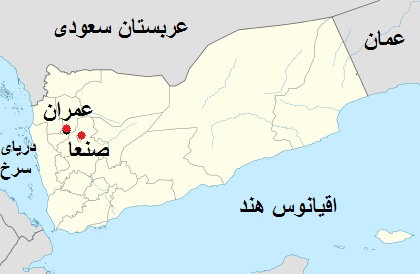
Fighters from al-Houthi group seized Sanaa on Sept. 21 making them effectively the power brokers in the country.
Witnesses said that since Sept 21., armed Houthi tribesmen have been patrolling the streets, operating checkpoints and controlling access to several central government buildings.
Citing intelligence sources in Yemen, Asharq Al-Awsat reported on September 30, the forces in the coutry with links to the Iranian regime and Lebanese Hezbollah, are supporting Houthi rebels to boost their control of Yemen’s capital Sana’a, Arabic language daily Asharq Al-Awsat reported citing intelligence source in the country.
The daily quoted an intelligence source as saying:“Elements affiliated with Iran’s Islamic Revolutionary Guard Corps and Hezbollah, who were training Houthis in the north of Yemen, are currently present in the capital Sana’a.”
According to the source who requested anonymity because he was not permitted to brief the media members of IRGC and Hezbollah are helping the rebels implement their political and military agenda in the country, the source said.
Last week, the central government and Houthis signed a deal under the auspices of the UN to form a new government and introduce several economic reforms.
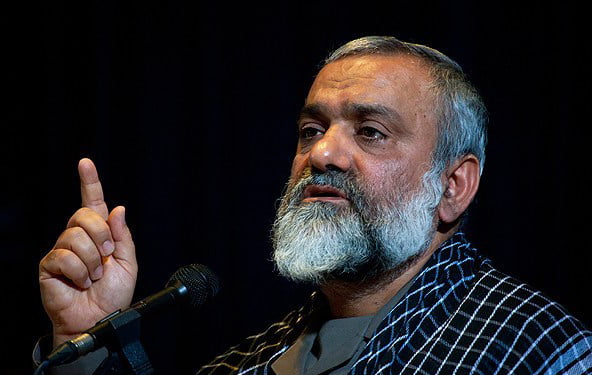
Basij Commander Reiterates Arming West Bank – Commander of Iran’s Basij (volunteer) force Brigadier General Mohammad Reza Naqdi lauded the Palestinian resistance movements, Hamas and Islamic Jihad, for their recent victory in the Gaza war against Israel, and pledged again that Iran would arm resistance groups in the West Bank.
“Their arming will be done,” Naqdi said on Wednesday, adding, “Everything will be done in their proper times.”
Also in August, General Naqdi announced that arming the Palestinian resistance groups in the West Bank has already started.
Basij Commander Reiterates Arming West Bank
“Arming the West Bank has started and weapons will be supplied to the people of this region,” Naqdi told FNA on the sidelines of the closing ceremony of a forum of Basiji university professors in Tehran at the time.
He underlined that arming the West Bank would lead to the annihilation of the Zionist regime.
Stressing the need for Israel to return the Palestinian lands to their real owners, Naqdi said, “The Zionists should know that the next war won’t be confined to the present borders and the Mujahedeen will push them back.”
He also revealed that many of the equipment and possibilities used by the Palestinians in their recent defense against Israel were the products of the Islamic Republic of Iran, and added that Tehran has also trained them on how to use such technologies to defend themselves.
Senior Iranian military officials warned in August that they would accelerate arming the Palestinians in the West Bank in response to the recent aggression made by an Israeli spy drone which was downed before it could reach Natanz nuclear enrichment facility in Central Iran.
“We will accelerate arming the West Bank and we think that we are entitled to give any response (to the recent aggression) which we deem appropriate,” Commander of the Islamic Revolution Guards Corps (IRGC) Aerospace Force Brigadier General Amir Ali Hajizadeh said, elaborating on the IRGC’s possible response to Israel’s recent aggression against Iran.
“The Armed Forces, including the IRGC and the Army, are fully prepared to trace and intercept (hostile flying objects) and if such moves are repeated, the aggressors will receive our crushing response,” he warned.
The IRGC Aerospace Force shot down an Israeli spy drone near Natanz nuclear enrichment facility in the Central parts of Iran in August.
“A pilotless Israeli spy plane was shot down after it was traced and intercepted by the IRGC Aerospace Force,” a statement by the IRGC’s Public Relations Department announced.
According to the statement, the Israeli pilotless aircraft was a radar-evading, stealth drone with the mission to spy on Iran’s enrichment activities by flying over Natanz nuclear enrichment plant.
The IRGC also pointed out in its statement that the Israeli hostile aircraft has been targeted by a surface-to-air missile.
“This mischievous attempt once again made the adventurous nature of the Zionist regime more evident and added another black page to the dark record of this fake and warmongering regime, which is full of crimes and wickedness,” the statement added.
The IRGC further warned that it “reserves the right of response and retaliation for itself”.
Iranian officials had also earlier underscored the necessity for arming the Palestinians in the West Bank, saying that the move would lead to Israel’s collapse.
“The continued war in Gaza will accelerate arming the West Bank and annihilation of the occupiers,” Deputy Chief of Staff of the Iranian Armed Forces Brigadier General Massoud Jazzayeri said in Tehran in August.
“The holy Quds occupiers’ fear from arming the people and the resistance movement in the West Bank shows how deeply Tel Aviv is vulnerable to the start of a new phase of (Palestinians’) fight and resistance,” he added.
Jazzayeri said during the past decade and after the Zionist regime’s defeats in the 33-day, 8-day and 22-day wars in Lebanon and Gaza and the recent war against the Palestinians, the world public opinion has become aware of this bitter reality that the usurper Israeli regime is a cancerous tumor.
Hezbollah chief meets top Iranian official IRGC – Hezbollah Secretary-General Hassan Nasrallah has met with Ali Shamkhani, secretary of Iran’s Supreme National Security Council, the Lebanese movement said Tuesday.
In a statement, Hezbollah said the two sides had discussed political and security developments in the Middle East region.
Hezbollah chief meets top Iranian official
Earlier Tuesday, Shamkhani held talks with Lebanese Prime Minister Tammam Salam in Beirut.
Following the talks, the Iranian official said Iran had offered military aid to the Lebanese army to help the latter combat “extremism and terror” on the border with Syria.
“Given Lebanon’s role in confronting extremist terrorism in border areas [with Syria], Iran has decided to offer military equipment to the Lebanese army as a token of friendship and appreciation,” he said.
The Iranian equipment, he said, would allow the Lebanese army to “fight terror” efficiently on the border with Syria.
The aid will be formally offered at an upcoming visit to Iran by Lebanese Defense Minister Samir Mouqbel, Shamkhani said, adding that Beirut had “welcomed” the Iranian largesse.
Lebanon has been drawn further into the Syrian quagmire since militants from the Al-Qaeda-linked Al-Nusra Front and the Islamic State of Iraq and the Levant (ISIL) – two of the main militant groups fighting the Syrian regime – clashed with the Lebanese army last month in the border town of Arsal.
Along with killing 17 Lebanese troops, the two groups managed to kidnap several Lebanese soldiers, later conditioning their release on the freeing of Islamist prisoners held in Lebanese jails and the withdrawal of Hezbollah fighters from Syria.
Lebanon’s Shiite Hezbollah group has fought alongside the Syrian regime since 2011.
Tehran is also a main ally of Syria’s Bashar al-Assad regime.
In January, Saudi Arabia, a longstanding foe of Iran, offered $3 billion to arm the Lebanese military with French weapons with a view to “strengthening the army’s capacities.”
Last month, a former Lebanese prime minister announced that Riyadh had pledged an additional $1 billion to support the Lebanese army’s “war on terror.”
Iran executes Mohsen Amir-Aslani for heresy – Mohsen Amir-Aslani a 37-year-old man has been executed in Iran after being found guilty of heresy and insulting prophet Jonah, according to human rights activists.
Mohsen Amir-Aslani was arrested nine years ago for his activities which the authorities deemed were heretical. He was engaged in psychotherapy but also led sessions reading and reciting the Qur’an and providing his own interpretations of the Islamic holy book, his family said.
Iran executes Mohsen Amir-Aslani for heresy
Mohsen Amir-Aslani was hanged last week for making “innovations in the religion” and “spreading corruption on earth”, but human rights activists said he was a prisoner of conscience who was put to death because of his religious beliefs. He had interpreted Jonah’s story in the Qur’an as a symbolic tale.
Iran’s judiciary, which was responsible for the handling of Mohsen Amir-Aslani case, has since denied that Amir-Aslani’s execution was linked to his religious beliefs.
Instead, the authorities allege that he had illicit sexual relationships with a number of people who participated in his sessions and the type of activities he was involved in did not follow an official interpretation of the religion. It was not clear if Amir-Aslani had official permission to conduct his sessions.
“Mohsen Amir-Aslani held sessions in his own house dedicated to reciting the Qur’an and interpreting it. He had his own understandings [of the religion] and had published his views in the form of a booklet and made it available to his fans,” an unnamed source told the New York-based group, the International Campaign for Human Rights in Iran (ICHRI).
According to the source, Iran’s ministry of intelligence was behind of Mohsen Amir-Aslani arrest. “Mohsen Amir-Aslani was initially held for making innovations in Islam and providing his own interpretations of the Qur’an but later he was accused of insulting prophet Jonah and also faced accusations of having sex outside marriage,” the source said. “They alleged that he had sexual relationships with a group of the people who participated in his classes.”
Iran’s judiciary has presented little evidence in public relating to the allegations of illicit sexual activities. The judge who presided over Mohsen Amir-Aslani case, Abolghassem Salavati, is known in Iran for leading numerous unfair trials, including many that resulted in execution.
Mohsen Amir-Aslani convicted of insulting prophet Jonah and making ‘innovations in religion’ through interpretations of Qur’an
Amir-Aslani’s wife, Leila, told the opposition website Roozonline that she was hoping a high court would strike down his conviction but his sentence was eventually upheld. She told Roozonline that his conviction stemmed from his religious views and no evidence was presented to back up the charges related to his alleged sexual activities.
Iranian authorities are sensitive towards those practising Islam in ways not conforming to the official line. In recent years, several members of Iran’s Gonabadi dervishes religious minority have been arrested and are currently serving lengthy prison terms.
Amnesty said last week that a group of nine Gonabadi dervishes were on hunger strike in protest at their treatment in prison. They were Mostafa Abdi, Reza Entesari, Hamidreza Moradi and Kasra Nouri, as well as the five lawyers representing them who have also been jailed: Amir Eslami, Farshid Yadollahi, Mostafa Daneshjoo, Afshin Karampour and Omid Behrouzi.
“The men were mostly detained in September 2011, during a wave of arrests of Gonabadi dervishes. They were all held in prolonged solitary confinement, without access to their lawyers and families, and were sentenced, after two years and following grossly unfair trials, to jail on various trumped-up charges,” Amnesty said. “The men are prisoners of conscience, imprisoned solely for practising their faith and defending the human rights of dervishes through their legitimate activities as journalists and lawyers.”
In Iran, Gonabadi dervishes face persecution, discrimination, harassment, arbitrary arrests and attacks on their prayer houses, Amnesty said.
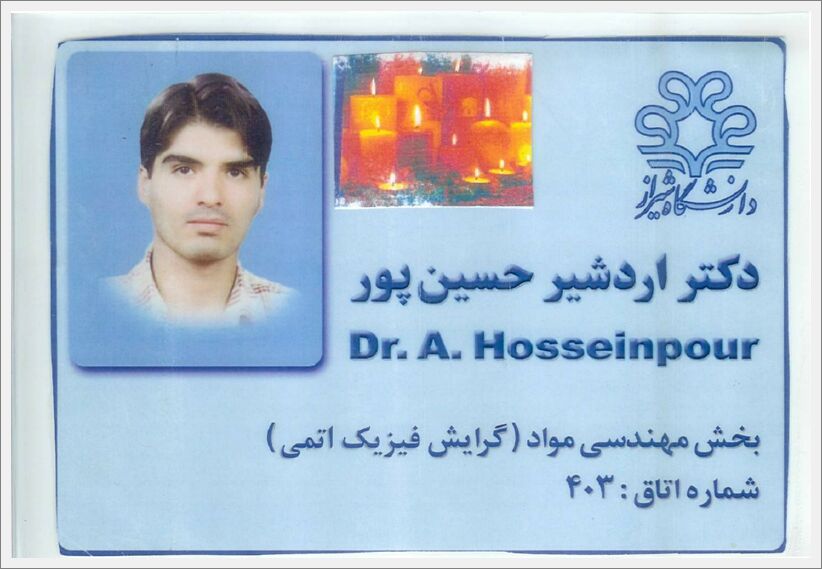
Iran accused of assassinating its own nuclear scientist – Mahboobeh Hosseinpour, the sister of an Iranian nuclear scientist alleged to have been assassinated by Israel, has claimed that her brother was actually killed by the Iranian Revolutionary Guard (IRGC) because he would not cooperate with the regime’s demand that he help create nuclear weapons.
“Western countries have long held suspicions regarding [Iran’s] nuclear weapon ambitions and Mrs. Mahboobeh Hosseinpour’s claims could help support these suspicions,” Dr. Iman Foroutan, chairman of Iranian opposition group The New Iran, said in a statement last week.
Iran accused of assassinating its own nuclear scientist
Mahboobeh said that her brother, Dr. Ardeshir Hosseinpour, was approached in 2004 by special agents of the IRGC on behalf of Iran’s Supreme Leader Ayatollah Ali Khamenei, who wanted to enlist Hosseinpour’s services for a project aimed at increasing uranium enrichment for developing nuclear weapons. As part of the project, he would also be tasked with teaching and supervising Russian and North Korean scientists.
“He was offered a two star rank in the revolutionary guard and ownership of factories,” Mahboobeh told the Middle East news source The Media Line in an interview from her home in Turkey.
She said that her brother refused to work in Iranian nuclear projects, believing they would prove harmful to both the country’s economy and the international community. She alleged that his refusals led to Khamenei ordering his assassination by IRGC agents in January 2007.
Following Dr. Hosseinpour’s mysterious death, there were conflicting reports as to the cause, with media sources originally claiming he was “gassed.” Later, US private intelligence reported that he had died of radioactive poisoning and that sources close to Israeli intelligence had confirmed that he was targeted by Mossad.
As a matter of policy, Israel neither confirms nor denies reported assassinations, and Iranian officials vehemently denied that Dr. Hosseinpour had been assassinated.
Gholamreza Aghazadeh, then Iranian vice president and head of the country’s Atomic Energy Organization, told the semi-official Fars News Agency that Iran’s “nuclear experts, thank God, are sound and safe,” and even went as far as to deny that Hosseinpour had worked for him.
“Ardeshir Hosseinpour’s sister says he was killed after refusing to help build nuke; Israel initially blamed in his death”
However, Mahboobeh claimed that her brother “was the sole individual with the top credentials required for uranium enrichment in Iran,” according a press release by The New Iran.
Iranian journalist Dr. Alireza Nourizadeh supported Mahboobeh’s allegations.
He told The Media Line that the assassination was ordered “because of an email communication [Dr. Hosseinpour] had with me about the sensitivities of his work. They were aware of it, even if they did not have the content.”
Mahboobeh further supported her allegations by recounting conversations with her brother’s widow, Sara Araghi, who said that she had seen a DVD with detailed instructions for building, as well as neutralizing, a nuclear weapon “12 times more powerful” than the one dropped on Hiroshima.
Araghi, Mahboobeh related, said she removed the DVD from her husband’s office the day of his assassination, but that it was later stolen by a family member.
This is not the first time the Iranian opposition has charged that Iran assassinated its own nuclear scientists.
In May 2012, Dubai-based news channel Al-Arabiya, quoting Iranian opposition sources, reported that Tehran had executed a man for being an Israeli spy as cover for having assassinated its own nuclear scientist Masoud Ali Mohammadi in a car bombing in January 2010.
Iran’s Basij announces donation efforts for Gaza – According to the head of Iran’s Basij forcesor, Commander Mohammad Reza Naghdi, relief and donation efforts have commenced for the reconstruction of Gaza after the 50-day war with Israel. A number of other Iranian commanders have also made statements about help from the Islamic Republic to Palestinian groups.
At a Sept. 28 press conference, Naghdi announced that a people’s committee for the liberation of Jerusalem would be formed soon, adding, “In consideration of the brutal attack of the occupying regime of Quds on the people of Gaza, and the closeness of the Day for the Assistance of Palestinian Children, we had consultations with friends at Imam Khomeini Relief Foundation and it was decided to begin the reconstruction help for Gaza.”
Iran’s Basij announces donation efforts for Gaza
He did not offer specifics on the reconstruction efforts other than, “The Imam Khomeini Relief Foundation and Basij Organization have cooperated to prepare 40,000 Basij bases, mosques and hosseinyas [religious centers] for the reconstruction of Gaza.”
Naghdi added that help from the Iranian people should come in the form of cash donations rather than material donations because the lack of cooperation with Israel and neighboring countries made those types of donations more difficult.
Naghdi said that collection efforts would take place Oct. 1-3 and asked the national media to help spread the message, saying that they have the “prime responsibility in helping the people of Gaza” and should not let the “blood of Palestinian martyrs go to waste.”
The Imam Khomeini Relief Foundation was started in 1979 as a charity organization to help poor families in Iran and across the world. It receives both government funding and private donations, and its blue-and-yellow charity boxes were at one time ubiquitous on Iranian streets.
During the latest Israel-Gaza war, which started in early July and killed 2,100 Palestinians, mostly civilians, and 72 Israelis, mostly military, Iran’s Supreme Leader Ayatollah Ali Khamenei said that there are only two solutions to end the fighting: hold a referendum, or “The West Bank should be armed like Gaza.” Various Iranian officials have made statements in support of these statements.
“Iran’s Basij announces donation efforts for Gaza”
Naghdi had previously held a ceremony for hunters and villagers to donate their rifles to Palestinians. When asked about them at the press conference, Naghdi said that some of the arms had already been delivered and others would be delivered soon.
Deputy Chief of Staff of the Iranian Armed Forces Gen. Gholam Ali Rashid said that some of Iran’s commanders had a physical presence “advising the Palestinian resistance,” and that Iranian advisers were also helping Lebanon’s Hezbollah and the Iraqi military.
In an interview with Tasnim News Agency, General Amir Ali Hajizadeh, the head of the Revolutionary Guard Corps’ Aerospace Force, said, “We are pursuing equipping the West Bank according the statements of the supreme leader because it is the demand of the commander-in-chief.”
Barbarism of Iranian militias based in Iraq, Syria being seriously overlooked – The US’s deadly strike on the al-Qaida-linked Khorasan group leader Mohsin al-Fadhli shone a spotlight on Iran’s nefarious activities in Syria and Iraq.
According to the SITE monitoring service on Sunday, a jihadi’s Twitter feed confirmed Fadhli’s death. This is the same Fadhli who oversaw Iran’s al-Qaida- based network and received protection from Iran’s regime as part of a clandestine agreement between Tehran and the Sunni terrorist entity.
Barbarism of Iranian militias based in Iraq, Syria being seriously overlooked
While Obama’s coalition with European and Arab countries to battle the Sunni terrorist organization Islamic State has largely dominated the headlines and policy debates, Iran’s Shi’ite proxies have replicated the same form of barbarism as the Islamic State.
In a Skype interview with The Jerusalem Post, Phillip Smyth, a leading researcher on Iranian proxies affiliated with the University of Maryland, said there are more than 50 Shi’ite groups operating in Iraq. By his estimate, Iran and its militias are responsible for the murders of at least 100 US service personnel and as many as 1,000 American soldiers since 2003, Smyth noted in his September Foreign Policy article “All the Ayatollah’s Men” that Iranian- affiliated or inspired Shi’ite organizations mirror the ghastly tactics of Islamic State. He wrote of “armed men posing with severed heads, massacres of mosque-goers during Friday prayers, massive reliance on transnational jihadists.”
Human rights groups accused the Shi’ite militias in coordination with the Iraqi state of the massacre of at least 255 Sunni prisoners in six Iraqi towns and villages in the month beginning June 9.
Smyth cited the “summary executions” of five American soldiers in Karbala, Iraq, in January 2007, in which Iranian Revolutionary Guard Corps and a top Hezbollah operative are believed by US officials to have carried out the terrorist attack.
The senior Hezbollah commander Ali Musa Daqduq was captured in March 2007 by US forces. Iraq’s pro-Iranian government released him in 2012 over the vehement opposition of the Obama administration.
Critics slammed the Obama administration at the time for failing to both block the release of Daqduq and prosecute him for terrorism.
Daqduq is back with Hezbollah – Iran’s strategic partner – in Lebanon.
All of this helps to explain why Robert Caruso, a US former Defense Department official and expert on Iran’s military operations, argues against “strategically, politically and operationally cooperating with Iran.”
Julie Lenarz, the executive director of the London-based Human Security Centre, told the Post, “The Islamic State is mainly a product of the brutal war in Syria and Iran and its terrorist proxy Hezbollah has been a crucial lifeline for the Assad regime. To suggest cooperating with them would mean joining forces with the very same actor that is partly responsible for the rise of Islamic State in the first place. Iran is part of the problem and not the solution in the fight against Islamic fundamentalism.”
Lenarz warned about Western cooperation with Iran and its militias, saying “Instead of Sunni extremism we would just be looking at Shi’ite extremism.
Consider the brutal persecution of Christians and Kurds in Iran or the promise to annihilate Jews, and it becomes crystal clear that Iran and Hezbollah pose just as much of a threat to the region’s minorities as Sunni terrorist groups such as Islamic State.”
The destabilizing role of Iran in the heart of the Middle East was echoed in US commentaries.
Writing on the Fox News website, Gary Schmitt and David Adesnik, from the Washington- based American Enterprise Institute, argued “Iranian support for Bashar al-Assad’s regime left many in Syria with a choice between a grisly death and submission to the Islamic State. And in Baghdad, Iranian influence encouraged the very sectarianism stoked by former Iraqi prime minister Nouri al-Maliki and, in turn, made many Iraqi Sunnis open to siding with ISIS.”
Taken together, the mainstreaming of Assad’s regime and the Islamic Republic of Iran compounds the widening bloodbath in the Middle East.