Home Blog Page 330

Cyber activists arrested by IRGC

0
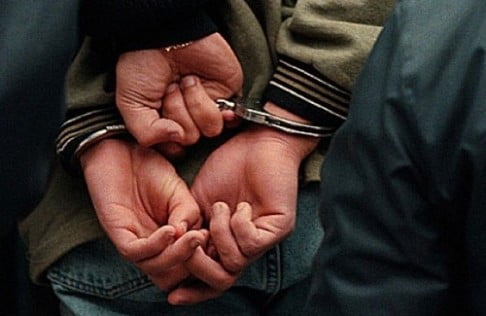
Cyber activists – In the wake of the continued crackdown on Internet freedom, a number of Cyber activists who were arrested by the Revolutionary Guards for their activities on social media and messaging outlets have been identified.


According to CHRR, Omid Moghadam, Kourosh Najdad, Habib Dehghani, Mehdi Ghanbari and Hadi Ghanbari are among 11 individuals active on Facebook and social networks recently detained in Fars province. There is no news on the situation of these activists who were arrested by IRGC forces.
Iran cyber activists, Iran, Iran Briefing, IranBriefing, Cyber, Arrests, IRGC, Military Forces, Viber, WhatsApp, Tango, Hassan Rouhani, FATA police force
A number of Cyber activists Arrested by IRGC

Habib Dehghani and Hadi Ghanbari were detained on September 13th; Omid Moghadam and Mehdi Ghanbari were detained a few days later on September 15th in Fars province. Omid Moghadam and Mehdi Ghanbari were forcefully and violently abducted after being presented with false papers.

Reports indicate that while their families and friends were threatened to remain silent about the arrests, the homes and workplaces of all the detainees were extensively searched during violent raids.

Recently officials of the judiciary, intelligence and military forces of the Islamic Republic including Revolutionary Guard Esmail Mohebbipour, commander of Sarallah Shiraz; Revolutionary Guard commander Hossein Ashtari; and Prosecutor General and first deputy of the judiciary Gholam-Hossein Mohseni-Ejei, announced the arrests of a number of cyber activists and social activists on the charge of “insulting Ayatollah Khomeini” and warned that social media networks would be blocked.

Following the recent arrests of 11 social network activists, Esmail Mohebbipour, IRGC commander from Sarallah Shiraz accused foreign entities and opponents of the regime of facilitating access to social media networks such as Facebook in Iran. He accused the detainees of spreading offensive content on messaging services such as Viber, WhatsApp, Line, Tango, and Telegram, and of being in possession of satellite equipment in their homes. Per the commander, the accused have confessed to insulting the founder of the Islamic Republic, and their cases have been forwarded to the Ministry of Justice for judicial proceedings.

Previously Hossein Ashtari, commander of the Revolutionary Guards and acting Chief of Police said “we have evidence that will be announced soon compiled by the FATA police force working along with the cyber police and intelligence units – of blasphemous content, insulting the holy and the Holy Imam (Ayatollah Khomeini) on mobile messaging services such as Viber.”

In July of this year, eight Facebook activists were handed harsh prison and lashing sentences totaling 127 years behind bars for various charges including acting against national security, blasphemy, spreading lies, insulting sacred symbols, and insulting the country’s supreme leader. On September 21st, one day after a warning letter by prosecutor Mohseni-Ejei demanding that Internet outlets be filtered, the aforementioned 11 individuals were arrested for activities on mobile messaging services.

“A number of Cyber activists who were arrested by the Revolutionary Guards for their activities on social media and messaging outlets have been identified.

In the letter Iran’s top Prosecutor and first deputy of the judiciary said that messaging services such as Viber, WhatsApp and Tango were managed by foreign entities that are hostile to the Islamic Republic. He gave the Minister of Communications and Information Technology Mahmoud Vaezi one month to “take immediate action and make necessary technical preparations for closing and controlling information” on social networks such as Viber, WhatsApp and Tango. He warned that if the one-month ultimatum was not heeded, the judiciary would take on the appropriate measures in line with its inherent duties towards controlling the social networks.

The United Nations in a report issued on September 14th on the human rights situation in Iran addressed the country’s deplorable situation concerning freedom of information. The report stated that despite President Rouhani’s pledges, “restrictions on freedom of expression continue to affect many areas of life.”

On September 23rd, Reporters without Borders published a report coinciding with the arrival of Iran’s President Rouhani in New York for the 69th United Nations General Assembly, demanding that he be questioned about media freedom in Iran. The report states that Iran continues to be one of the world’s five biggest prisons for journalists. According to the Reporters without Borders 2014 World Press Freedom Index, “Iran is one of the world’s most repressive countries as regards freedom of information. It is ranked 173rd of 180 countries.”


Source: Iran cyber activists

Iranian military said ‘in the field’ advising Palestinian resistance

0
Iranian military personnel are in the field giving advice to the Palestinian resistance movement, the Iraqi army and Hezbollah, a senior Iranian military official said Saturday.


“Some of our commanders are in the field to give military advice to the Iraqi army, Lebanon’s Hezbollah and the Palestinian resistance movement,” Deputy Chief of Staff of the Iranian Armed Forces Major General Gholam Ali Rashid told the semi-official Iranian news outlet Fars.

Iranian military said ‘in the field’ advising ‘Palestinian resistance’, Iran, IranBriefing, Iran Briefing, IRGC, IRGC Commander, Gholam Ali Rashid, Mohammad Reza Naqdi, Basij, Hezbollah, Palestine, Iraq, Qatar, Iraq, War, Syria, Bashar Assad, ISIL
IRGC Commander : Iranian military said ‘in the field’ advising ‘Palestinian resistance’

it was unclear whether Rashid meant that military personnel were in the Palestinian territories. Hamas’s political bureau is based in Qatar, and its fighters have been known to train in other countries.

In August, Iranian Basij militia chief Mohammad Reza Naqdi said Tehran was stepping up efforts to arm West Bank Palestinians for battle against Israel. It was one of several warnings after an Israeli drone was reportedly shot down over Iran.

While Iran has provided Hamas with weapons and technology to build rockets, there have been no reports of Iranian soldiers among armed fighters in the Gaza Strip or West Bank.

If Iranian army officials are in the field in Iraq, this would be the first official confirmation. While the Times of London reported in June that Tehran had sent a team of 150 elite Revolutionary Guard troops to aide Iraq’s faltering government against the onslaught of the Islamic State jihadist group, Foreign Ministry Spokeswoman Marziyeh Afkham rejected reports last month of an Iranian military presence.

Iran has reportedly been in discussions with the US to join a coalition to aid Iraq against IS, but has publicly refused to take part unless its involvement is tied to easing sanctions placed on Tehran by the West over its nuclear program. The US has said the issues must remain separate.

Hezbollah is considering an Iranian proxy organization, but it is unclear whether Rashid also meant to confirm that military officials are also advising Hezbollah fighters on the ground in Lebanon or Syria, where they have been helping regime forces battle against both jihadist and moderate opposition forces.

Iran has officially denied having a military presence in Syria, but there have been numerous reports of Iranian Revolutionary Guard Corps commanders being killed in Syria over the past year.

As recently as May, a Syrian activist said he had positively identified a man whose decapitated head had appeared in a photo as IRGC Col. Mohammad Eskandari. The Iranian news agency ABNA also reported that Eskandari died in Syrian fighting, according to news and analysis website EA Worldview.

Eskandari had previously been quoted telling Iranian media that 42 divisions and 138 battalions of the elite IRGC were fighting in Syria, to bolster forces loyal to Assad.

In November, Iran’s semiofficial Mehr news agency reported that IRGC commander Mohammad Jamalhad been killed by “terrorists,” which is the term used by Iran and the Syrian regime for opposition forces.

Iran is one of Syrian President Bashar Assad’s main allies. Tehran has provided his government with military and political backing for years and has kept up its support since the uprising there began in March 2011.


Source : Iranian military said ‘in the field’ advising Palestinian resistance

Yemen frees members of Iran Revolutionary Guards-sources

0
Yemen freed at least three suspected Iranian Revolutionary Guard members on Thursday who had been held for months over alleged ties to a Shi’ite Muslim insurgent group that has seized control of much of the capital Sanaa, a senior official said.

 
The takeover by the Shi’ite Houthi rebels came hours before a power-sharing accord was signed with other political parties providing for the creation of a new government.

Yemen frees members of Iran Revolutionary Guards-sources, Iran, IRGC, Yemen, Arab Country, Iran Revolutionary Guards, Hezbollah, Abd-Rabbu Mansour Hadi
Yemen frees members of Iran Revolutionary Guards-sources

That effectively made the Houthis the main power brokers in Yemen, a U.S.-allied country whose political, tribal and sectarian turmoil poses risks to No. 1 oil exporter Saudi Arabia next door.

It was not immediately clear why the release, which the official said was originally part of a deal to stem the Houthi advance on Sanaa, went ahead. But it suggested the Shi’ite group was now dictating terms in the capital.

The release of the Iranians came a day after Yemen freed two suspected members of Lebanon’s Hezbollah group, the official said. They had been held for two to three years in the southern port city of Aden where they had been captured on suspicion of planning to provide military training to the Houthis, he said.

Oman, which maintains good ties with Iran and had helped free Iranians held in the West in the past, helped in the release, the official said.

“The Iranians were freed and handed over to the Omani mediators,” the official, who declined to be identified, told Reuters. He said the men were freed in Aden.

Another Yemeni source confirmed that President Abd-Rabbu Mansour Hadi personally ordered the release on Omani mediation. No comment was immediately available from Omani or Iranian officials.

Several Arab newspapers, including the London-based al-Quds al-Arabi, had reported that the suspected Hezbollah and Revolutionary Guard members were detained earlier this year on suspicion of spying and providing training and logistical support for the Houthis.


Source : Yemen frees members of Iran Revolutionary Guards-sources

If The US Wants A Nuclear Deal, It Needs To Fully Enforce Its Sanctions Against Iran’s Revolutionary Guards

Nuclear negotiations with Iran are now in their final stretch. But serious gaps remain. If a final agreement is not reached by the November 24 deadline, another extension of the interim deal might be possible and there is a real risk that Iran may seek to stretch that deal indefinitely — along with the modest sanctions relief if offers. All the while, Iran’s scientists can improve enrichment technology and its operating centrifuges can stockpile more low-enriched uranium.
IRGC, U.S., Military, Nuclear,  Bonyad-e Ta’avon Sepah, Sanction, Sanctions Against Iran's Revolutionary Guards
Sanctions Against Iran’s Revolutionary Guards

How can the United States and its European allies keep their negotiation leverage intact under such circumstances?

The answer is to continue to implement existing sanctions as much as possible — a step explicitly allowed in the interim agreement signed in Geneva in November of 2013. The United States and the European Union could aggressively target Iran’s Revolutionary Guards, or IRGC, along with its vast business empire.

Efforts to curtail the IRGC using the existing sanctions regime would not undermine negotiations. To the contrary, it would put the negotiating process’s domestic detractors on the defensive.

For months, Iran watchers have been documenting a power struggle inside Iran between the IRGC and President Hassan Rouhani. Though there is reason to believe that Rouhani’s team is not as moderate as some claim, the clash with the IRGC is real. The IRGC is the faction inside Iran’s regime that is most vociferously opposed to Rouhani’s efforts to reach a nuclear compromise with the international community.

All the while, the IRGC continue to be the regime’s main conduit for nuclear proliferation, missile technology procurement, and terror financing and support abroad. This includes defending the murderous Syrian dictator Bashar al-Assad and providing Hamas with the long range rockets — and the ability to produce short range rockets — in their fight against Israel.

So far, both the Obama administration and the European Union have been reluctant to enforce sanctions to their utmost possible degree, for fear or upsetting their Iranian counterparts during sensitive negotiations and jeopardizing the prospects of a final nuclear deal.

The addition, in late August, of Iranian entities and front companies — none affiliated to the IRGC — to the US Treasury Department’s sanctions list drew the ire of Iran’s president Hassan Rouhani, who openly accused the United States of undercutting chances for a nuclear deal. Iran’s negotiator, deputy Foreign Minister Abbas Araghchi, condemned the move and explicitly threatened an Iranian walkout should Treasury sanction any additional Iranian entities.

Araghchi’s angry reaction, coupled with Mr Rouhani’s candid public admission that Iran routinely seeks to bypass sanctions, should prove the conventional wisdom wrong: new listings hurt Iran and keep pressure on its economy.

They signal that Iran will not be open for business until a nuclear deal is satisfactorily concluded. And new listings that target Iran’s hardliners would make it clear that those opposed to compromise or actively bent on undermining its prospects stand to pay for such a posture.

Both the Obama administration and its European allies seem unfazed by the prospect of losing leverage: they insist that economic concessions under the interim agreement — a combination of suspending some sanctions and refraining from introducing new ones — have given little leeway to Iran’s crippled economy. Yet there are worrying signs that time will erode the sanctions’ effects on Iran, thus diminishing the West’s bargaining chips at the negotiating table.

The IRGC has also exploited the last nine months of sanctions relief to build economic resilience so that Iran’s economy would be well-positioned to weather the storm that would follow a full return to a pre-Geneva sanctions regime. Even if talks drag on, a recovering economy will enable Iran to resist painful concessions.

This trend needs to be offset. The IRGC offers a target-rich environment for sanctions’ implementation, including 42 companies publicly traded on the Tehran Stock Exchange and 218 smaller companies directly controlled by the three main IRGC holding companies, with a grand total of 1,073 managers who should be subject to travel bans and asset freezes.

First in line should be companies owned by the sanctioned IRGC Cooperative Foundation, or Bonyad-e Ta’avon Sepah.

Its chairman, Brigadier General Morteza Rezaei, is the former head of IRGC intelligence for a decade and former deputy commander in chief of the IRGC. He’s a man with past direct involvement in terror activities. The Foundation’s chief financial officer, Mr Morteza Bahmanyar, is the head of the budget planning department at the sanctioned Aerospace Industries Organization, a Ministry of Defense company in charge of Iran’s ballistic missile program.

The board also includes IRGC financial mastermind Masoud Mehrdadi (not sanctioned), an economist educated at Emam Hossein university, the IRGC defense college. He sits on the board of many IRGC entities, such as the U.S.-sanctioned Ansar Bank.

The IRGC Cooperative Foundation’s senior leaders illustrate the confluence of shady finance, support for terrorism, and proliferation.

And yet, most of the companies they control on the Tehran Stock Exchange, such as the Bahman Investment (68 percent IRGC ownership) and the Mobile Communication Company of Iran (90 percent IRGC ownership), are not sanctioned.

Why wait until late November to blacklist them?

The West’s message to Iran should be clear: pressure will not be let off just for talking, and there will be no discounts on a nuclear deal.

Sanctioning the IRGC economic empire does not violate the interim deal with Iran and it will weaken those inside Iran who are most likely to oppose a deal and seek to sabotage it. At the same time, it keeps Western leverage afloat. What are we waiting for?


Source : If The US Wants A Nuclear Deal, It Needs To Fully Enforce Its Sanctions Against Iran’s Revolutionary Guards

Viber Company Refutes Tapping Claims by Iranian Officials

0
International Campaign for Human Rights in Iran Following statements by Iran’s Cyber Police Chief about his force’s ability to monitor messages on Viber, the instant messaging service for cellphones, a Viber Company representative told the International Campaign for Human Rights in Iran that the application’s communications are encrypted and as such it is not possible for third parties to monitor messages.
Viber Company Refutes Tapping Claims by Iranian Officials, Iran, Viber, Iran Briefing, IranBriefing, Ayatollah Khomeini, Daneshjoo News Agency
Viber Company Refutes Tapping Claims by Iranian Officials

“All text messages sent through Viber on its supported platforms are encrypted. Media messages, such as photos and videos, are encrypted on Viber for iOS, Viber for Android, Viber for Windows 8 and Viber for Windows Phone 8,” a member of the Viber Company support team wrote in response to a query by the Campaign.

Reacting to a wave of jokes targeting Ayatollah Khomeini, the founder of the Islamic Republic of Iran, Commander Seyed Kamal Hadianfar told reporters last week that “You should know from the cases the Iranian Cyber Police has pursued and concluded that personal messages on Viber, WhatsApp, etc. can be controlled by the Cyber Police.”

Iran Newspaper wrote on September 17, 2014 that under certain circumstances, Viber conversations could be monitored by Iranian government agencies. In the piece entitled, “Are Viber and WhatsApp really monitored easily?” the paper quoted a “computer expert” named Mani Haghshenas who stated, “It is possible for users to use Internet networks that shut down certain security protocols and disallow Viber to encrypt messages, and, ultimately, a network such as Viber would prefer to switch to a normal message transmission mode, in order to avoid permanent nonoperation of its application for some of its users. The country’s filtering systems may sometimes block and disable the security and communication protection capabilities of an application, and in order to continue its operation, such applications may automatically have to provide their services to their users without encryption, and such circumstances would assist the governments to control and tap communications.”

This statement essentially argues that if the government blocks the SSL protocol, it can tap Viber communications. In January 2014, the Fars News Agency announced that the Communication Infrastructure Organization, which is under the authority of the Communications Ministry and is responsible for the technical aspects of Internet blocking, has provided the technical capabilities for restricting and blocking security protocols such as SSL whenever needed.

However, the Viber Company clearly refuted such a possibility. “We have no reason to believe that the SSL process is being blocked. Viber runs based on a process in which, if SSL was blocked, we would be aware. Viber uses a proprietary encryption method. This means that even if SSL was blocked, the messages that are sent via Viber would still be protected and encrypted,” wrote a member of the company’s support team.

The issue of restricting and blocking users’ access to Viber has been repeatedly discussed by judicial officials. In a letter addressed to the Ministry of Communications and Information Technology, the Iranian Judiciary demanded blocking of Viber, WhatsApp, and Tango. All three cell phone applications have become increasingly popular among Iranian users for phone conversations and communications inside and outside the country.

Iranian authorities have also reported efforts to create an application similar to Viber inside Iran. Daneshjoo News Agency quoted Mohsen Torabi, Project Manager for Iran’s localized chat software, Zoobi, who said that the software will be ready for utilization in a month. This is part of a larger effort to develop all information technology infrastructure domestically, so that the Iranian authorities will be able to control Internet access and monitor content as well.

Earlier, Abdolsamad Khorramabadi, Secretariat for the Work Group to Determine Instances of Criminal Content on the Internet, had announced on April 4, 2014 that the government’s decision to block Viber and similar applications has been postponed until replacement local applications are developed and utilized.


Source : Viber Company Refutes Tapping Claims by Iranian Officials

Iran leading fight against ISIL terrorists

0
Iran leading fight against ISIL terrorists – A senior Iranian military commander has hailed the Islamic Republic’s key role in the Middle East, emphasizing that Iran is the main force fighting against ISIL militants.


Iran leading fight against ISIL terrorists, Iran, Iran Briefing, IranBriefing, Rahim-Safavi, IRGC, IRGC Commander, ISIL, Syria, ISIS, Iraq, Fight, War,
Iran leading fight against ISIL terrorists

“The Islamic Republic of Iran, as a powerful country, is the main pivot of the fight against ISIL terrorists,” Major General Yahya Rahim-Safavi, an adviser to Leader of the Islamic Revolution Ayatollah Seyyed Ali Khamenei, said on Friday.

He added that terrorists and ISIL militants seek to weaken Muslim states and guarantee the survival and security of the Israeli regime by attacking and spreading insecurity in those states.

Rahim-Safavi also criticized the so-called international coalition led by the US against ISIL terrorists, noting that the United States, by means of such an alliance, is trying to increase the number of its military bases in the Middle East, justify its military presence in the region and make more money from weapons sales.

Rahim-Safavi pointed to Washington’s military involvement in regional crises, stressing that supporters of terrorists, the United States in particular, are not eligible to assemble an anti-terror coalition, and that the US intervention in the regional affairs will certainly deteriorate the crises in Iraq and Syria.

The US and its Arab allies began pounding ISIL positions in Syria on Tuesday, following a similar and ongoing campaign in Iraq, where the ISIL is also carrying out terrorist activities.

On Thursday, the so-called Syrian Observatory for Human Rights, which is close to Syrian opposition groups, said at least five civilians, including one child, had been killed in the US-led airstrikes on ISIL positions in northeastern Hasakeh.

The ISIL terrorists currently control parts of Syria and Iraq. They have carried out heinous crimes in the two countries, including mass executions and beheadings of people.


Source : Iran leading fight against ISIL terrorists

Human rights and the Baha’i question absent from President Rouhani’s UN speech

0
Iranian President Hassan Rouhani’s speech to the United Nations today failed to address a number of fundamental human rights issues in Iran, including the reason for Iran’s continued unjust persecution of Baha’is.
Human rights and the Baha’i question absent from President Rouhani’s UN speech, IranBriefing, Iran Briefing, Iran, Hassan Rouhani, U.N., Baha’i, Ban Ki-moon, Political
Human rights and the Baha’i question absent from President Rouhani’s UN speech

“A year ago, President Rouhani came to office making numerous promises to improve the human rights situation in Iran, including a pledge to end religious discrimination,” said Bani Dugal, the principal representative of the Baha’i International Community to the United Nations.

“Sadly, he has failed to fulfill these promises, and his lack of any mention of human rights in his speech today at the United Nations only serves to underscore this.”

Earlier this month, UN Secretary-General Ban Ki-moon issued his annual report on human rights in Iran, saying likewise that the human rights promises of President Rouhani have gone largely unfulfilled.

“Despite President Rouhani’s signals of greater openness to freedom of expression, association and peaceful assembly, the Government has failed to put in place an enabling and safe environment that is conducive to free expression”, said Mr. Ban.

“Religious minorities such as Baha’is and Christians face violations entrenched in law and in practice. Harassment, home raids and incitement to hatred are reportedly commonly applied by the authorities to suppress the Baha’i community,” he also said.

Ms. Dugal added that “the litmus test for Iran’s sincerity in addressing human rights is how it treats the minority Baha’i religious community, which is well-known all over the world for its commitment to peace and poses no threat to the government.

“Yet more than 100 Baha’is remain in prison, and thousands are deprived of access to higher education or discriminated against in the economic sphere, all as a matter of government policy. New tactics are used to increase the deniability of such discrimination.”

Ms. Dugal noted that President Rouhani spoke about the various “delusions” that are inflaming extremism and hatred against Iran.

“However, Iran has spread its own delusional ideas about the Baha’i Faith. During President Rouhani’s tenure, government-sponsored, anti-Baha’i propaganda has actually increased,” she said, noting that during the first six months of 2014, incidents of anti-Baha’i propaganda in government-run media increased by a factor of 10, from 55 in January to 565 in June.

Ms. Dugal said the absence of any reference by President Rouhani to a plan for improving Iran’s human rights record requires the world to ask of him a series of hard questions.

“First, when will Iran live up to the human rights it has agreed to protect under the International Covenant on Civil and Political Rights, which includes freedom of assembly, protections for due process, and freedom of religion?

“Second, when will the government stop its systematic persecution of Iranian Baha’is, who wish to work for the betterment of their country? How, in this era, can such a peaceful segment of society be denied this opportunity?”


Source : Human rights and the Baha’i question absent from President Rouhani’s UN speech

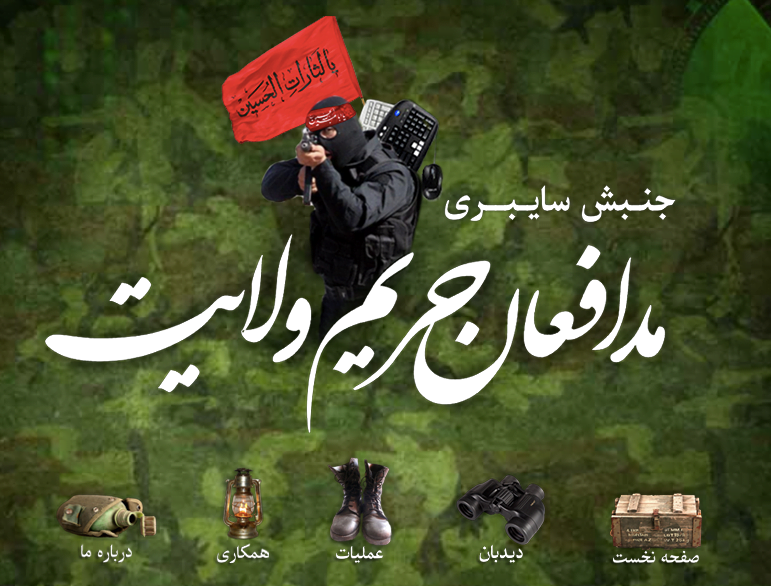
Protected: IRGC Call on Hackers for Action

0

This content is password protected. To view it please enter your password below:

IRGC defends Iraqi Kurdistan against ISIL

0
Iran’s IRGC defends Iraqi Kurdistan against ISIL – A senior Islamic Revolutionary Guard Corps (IRGC) commander says that, if it was not for Iran’s help, the Iraqi Kurdish region would have been occupied by the Islamic State group (ISIL).
Iran's IRGC defends Iraqi Kurdistan against ISIL, Iran, IRGC, IRGC Commander, ISIL, Iraq, Syria, Bashar Asad, ISIS, Iraqi Kurdish, Ghasem Soleimani, War, U.S.,
Iran’s IRGC defends Iraqi Kurdistan against ISIL

“General Ghasem Soleimani, commander of the Revolutionary Guard’s Quds Force himself with only 70 people prevented the ISIL from occupying the city of Erbil,” Commander of the IRGC Aerospace Force Brigadier General Amir Ali Hajizadeh said, Iran’s Tasnim news agency reported Sept. 24.

Iran supplied the Iraqi administration with military advice and organized the volunteer Iraqi fighters against the ISIL, Hajizadeh stressed.

The Iranian commander also criticized the U.S. air strikes against the ISIL, calling it “a game.”

“They bombard civilian people, rather than striking the ISIL,” he claimed.

Iranian officials have repeatedly rejected reports about the presence of Iranian military forces in Iraq.

Some Iraqi Kurdish media have underscored the significant role of Iranian forces in fighting against the ISIL. The media reports say Iranian forces have a decisive presence on the battlefield of the fight.

The Quds Force, the external-operations arm of the IRGC, has been involved for years in training Iraqi Shiite militias. It has also long worked with Hezbollah in Lebanon and has been reportedly helping Syrian President Bashar Assad in the fight against the opposition in that country’s civil war.


Source: Iran’s IRGC defends Iraqi Kurdistan against ISIL

Saudi-Iranian meeting fails to resolve issues

0

No positive developments came from the much-anticipated Saudi-Iranian meeting in New York over the weekend, which was the culmination of several attempts by regional powers to establish a better relationship between Tehran and Riyadh. The meeting between Saudi Foreign Minister Prince Saud al-Faisal and his Iranian counterpart Mohammad Javad Zarif tackled the latest developments in the region, sources familiar with the talks said.

Saudi-Iranian meeting fails to resolve issues, Iran, Saudi Arabia, Politic, U.S., Yemen, Mohammad Javad Zarif , Hezbollah, Lebanon, U.N
Saudi-Iranian meeting fails to resolve issues

The meeting happened as Shiite Houthi rebels, who are believed to be supported by Iran, took control of key institutions in the Yemeni capital. This action has triggered clashes between the rebels and the army-backed Sunni militiamen belonging to the influential Islah Party.

The sources said that the recent developments in the Sunni-dominated country had revealed Iran’s real intentions, namely to consolidate its power in the region, partly in response to Saudi Arabia’s inclusion in the international coalition against ISIS, and Tehran’s exclusion.

Last week, the Houthis consolidated their control over strongholds and key institutions in Sanaa, after refusing to see Yemen divided into a six-region federation.

The sources see parallels with the events of May 2008 in Lebanon, when Hezbollah took over many areas of West Beirut. The clashes turned into street fighting between allies of Hezbollah and of the March 14 bloc.

Hezbollah came out on top in the confrontation, much as it appears that the Houthi rebels are going to come out on top in the events in Yemen.

Over the weekend a U.N.-brokered peace agreement was signed between the clashing groups in Yemen, a deal that the sources considered similar to the 2008 Doha agreement that may have prevented sectarian clashes in Lebanon from turning into another civil war.

This caused the sources to dismiss reports saying that the Saudi-Iranian meeting had resulted in a comprehensive agreement over the Yemeni situation.

According the sources, the New York meeting didn’t tackle the developments in Yemen. The Saudi-Iranian meeting was limited to regional issues that are of interest to both countries.

Additionally, based on diplomatic information they acquired, the sources said the meeting did not have any implications for Lebanon.

Lebanon, according to the sources, is not the top priority of the two countries, since time is needed to prepare the right circumstances to settle the country’s issues, the main one being the issue of the presidency.

“Saudi-Iranian meeting fails to resolve issues”

Since May 25, Lebanon has been without a head of state, and Parliament has failed to convene numerous times due to the lack of a quorum.

Despite regional developments, communication between key parties inside Lebanon has been heightened, with a view to finding a solution to the presidency issue.

Trilateral contacts between Finance Minister Ali Hassan Khalil, Health Minister Wael Abu Faour and the head of Former Prime Minister Saad Hariri’s office, Nader Hariri, are ongoing. The latest meeting was held in the last 48 hours.

The meetings have been focusing on finding common ground between the Future Movement and the Shiite parties – Hezbollah and the Amal Movement – over the issues of Parliament’s extension and the holding of legislative sessions.

Speaker Nabih Berri has expressed his disagreement with the idea of extending Parliament’s current term, unless it gains back its legislative authority.

Berri believes that there is no point in extending the term of an inactive Parliament that cannot pass laws.

However, the Future Movement will settle for Parliament’s being able to pass laws related to urgent issues. The movement is basing its decision on the Constitution, which says the Parliament should meet constantly to elect a new head of state if a president has not been elected.

Time is passing without any tangible progress being made, and Nov. 22, the date set for the parliamentary elections, is looming. Analysts fear that this time, an extension will not take place.

“This means that Parliament’s rule would be dissolved. The Constitution is very precise in this regard,” an analyst explained.

According to the Constitution, when Parliament’s term ends, this automatically means that the government resigns and works as a caretaker government with limited jurisdiction until a new government can take over.

“Hence, Lebanon is facing the prospect of a presidential and parliamentary vacuum and a resigned government,” the analyst said.

This issue can’t be solved until all political factions convene and discuss a way to revive constitutional institutions.

“Time is limited and this is adding pressures on Lebanese leaders,” a political source said. The source added that there were no guarantees for Lebanon, given the security situation along the borders.

“The fear increases not only for the institutions but also for the Lebanese entity,” the source said.


Source : Saudi-Iranian meeting fails to resolve issues