Home Blog Page 331

ISIL Never Dares to Threaten Iran

0

ISIL Never Dares to Threaten Iran – A senior border guard commander on Saturday emphasized his forces’ full preparedness to defend Iran’s Western borders, and said the Islamic State of Iraq and the Levant (ISIL) terrorist group doesn’t dare to attack the country.

ISIL Never Dares to Threaten Iran, IRGC, Iran, Iran Briefing, IranBriefing, General Kiumars Sheikhi, ISIL, Iranian Interior Ministry, Iran's border, General Zolfaqari, Hassan Rouhani, ISIS, Iraq
A senior border guard commander on Saturday emphasized that ISIL Never Dares to Threaten Iran

“There is no problem at the country’s borders and Iranian borders enjoy full security,” Commander of the Western province of Kermanshah’s Border Guards Brigadier General Kiumars Sheikhi told FNA on Saturday.

He downplayed the military power of the terrorist groups, specially the ISIL, in the region, and said the foreign media have attempted to exaggerate their power.

“The ISIL doesn’t dare to approach the Islamic Republic of Iran’s borders and is too small to make a move against us,” Sheikhi underlined.

“The Iranian military and Law Enforcement forces are prepared to give a crushing response to any threatening move against the security of our bordering areas,” he added.

Meantime, Kermanshah deputy Governor-General for Political and Security Affairs Ayatollah Razmi announced today that any ISIL move against Iran will be responded “in the depth of 60 km”, but he did not mention if he meant before or after crossing the border.

In relevant remarks in August, Iranian Interior Ministry Spokesman Hossein Ali Amiri reiterated full control over the country’s borders, and said the terrorists active in Iraq, including the ISIL, did not dare to pose a threat to Iran.

“Given the regional conditions, good measures have been planned for the common borders with the neighboring countries, specially Iraq,” Amiri said.

“A senior border guard commander on Saturday emphasized that ISIL Never Dares to Threaten Iran”

Stressing the good and secure conditions at Iran’s borders, he underlined that no specific threat was posed to the country’s borders.

Amiri said Iran’s border was not under the threat of the ISIL, and added, “This lack of concern doesn’t mean a lack of vigilance as the current conditions necessitate us to be precise and vigilant.”

A month earlier in June, Commander of the Iranian Border Guards Units General Hossein Zolfaqari announced that his forces had intensified security measures along the country’s Western borders with Iraq in a bid to prepare for any unexpected conditions.

“All the possible outcomes for any type of activity along the country’s Western borders have been studied and we are prepared for confronting any possible conditions,” General Zolfaqari said.

He noted that some Iraqi citizens might look for a safe haven in Iran due to inclement conditions in their country, “and we have offered some proposals to the officials in this regard”.

Also in June, Iranian President Hassan Rouhani warned of Iran’s tough confrontation with the ISIL or any other terrorist group which might come close to the Iranian borders, and said, “If a terrorist group approaches our borders, we will definitely confront it, because our duty is defending our territorial integrity and national interests.”

Yet, Rouhani rejected alleged reports on the deployment of Iranian troops in Iraq, but said Tehran was ready to help its Western neighbor in its war on terrorists based on the international laws if requested by Baghdad.

“We, as the Islamic Republic, are Iraq’s friend and neighbor and have good relations with the Iraqi government and nation,” Rouhani told reporters in a press conference in Tehran.

“If the Iraqi government wants help, we will study it; of course no demand has yet been raised until today but we are ready for help within the framework of the international laws and at the request of the Iraqi nation,” he added.

“Of course, we should know that help and assistance is one issue, and interference and entrance (into the battlefield) is another. If the Iraqi government demands us we will help them, but the entrance of the Iranian troops (onto the scene of battles in Iraq) has never been considered,” the president said.

Human Rights in Iran not improved

0

Human Rights in Iran not improved – Hassan Rouhani’s promises of greater freedoms in Iran have not resulted in any major improvements regarding human rights and freedom of expression, the U.N. chief said in a new report on Iran.

Human Rights in Iran not improved, Iran, Iran Briefing, IranBriefing, Human Rights, Iran Human Rights, Hassan Rouhani, Executions, Journalist
Human Rights in Iran not improved

U.N. Secretary-General Ban Ki-moon’s annual report to the General Assembly on human rights in Iran, obtained by Reuters on Friday, also expressed alarm at the reported recent increase in executions in Iran.

The report said: the promises made by Hassan Rouhani “have not yet led to significant improvements, and restrictions on freedom of expression continue to affect many areas of life.”

“Journalists and other media personnel are frequently summoned or detained by the judiciary or face harassment and attacks by security forces,” Ban Ki-moon’s report said.
“Discrimination against ethnic and religious minorities reportedly persists both in law and in practice,” and Rouhani has not delivered on is related to Internet censorship the report said.

“It is noteworthy that, while such sites as Twitter and Facebook are blocked for most Iranians, the leadership increasingly uses social media to broadcast messages,” he said.
Ban’s report also raises concerns about the increase in the number of executions last year.

“U.N.: Under Rouhani human rights in Iran not improved”

He also criticized Tehran for carrying out death sentences on juveniles. “According to information gathered from reliable sources, more than 160 juveniles are currently on death row and at least two have been executed in recent months for crimes that they committed when they were younger than 18,” Ban’s report said.

Under so-called ‘moderate’ Hassan Rouhani the country has faced highest number of executions in a year compared to any Iranian regime’s president for the past 25 years.

No Time to Forget Iran’s Terrorism

0

No Time to Forget Iran’s Terrorism – To confront America’s enemies, the Obama administration needs to relentlessly confront al-Qaeda, the Islamic State, and the most potent sponsor of state-sponsored terrorism: the Islamic Republic of Iran.

No Time to Forget Iran’s Terrorism, Iran, IranBriefing, Iran Briefing, U.S., America, Enemy, ISIS, Syria, Iraq, Hezbollah, ISIL, Obama, Islamic Revolution, nuclear-weapons
No Time to Forget Iran’s Terrorism

It is worth recalling that prior to September 11, 2001, Iran’s terror apparatus, which includes Syria and Hezbollah, was responsible for the deaths of more Americans than any other terrorist entity.​

Writing over at the Lebanese news outlet NOW, Hanin Ghaddar makes a compelling case against an alliance with Iran, Syria, and Hezbollah in her article titled “To prevent a new ISIS, stop Iran” with the subtitle “The US should fight ISIS, but without ignoring Iran’s role in Syria.”

Ghaddar’s pressing point is that one cannot decouple Iran/Hezbollah/Syria from the Islamic State.

Obama’s strategy to launch attacks against the Islamic State proves part of the maxim true: War can kill all things except bad ideas. While it is a prudent move to dismantle the Islamic State, Obama appears to be flirting with a kind of silent alliance with Iran and its strategic partner, the Lebanese terrorist organization Hezbollah.

As my Foundation for Defense of Democracies colleague Bill Roggio wrote:

The US air campaign to help Iraqi and Kurdish forces break the Islamic State’s siege of Amerli benefited the Hezbollah Brigades, a Shia militia that is supported by Iran and is listed by the US government as a Specially Designated Global Terrorist group. The Hezbollah Brigades is the second Shia militia involved in killing US soldiers to have taken advantage of US airpower to gain territory.

In 2007, the Hezbollah member Ali Mussa Daqduq played a crucial role in the murders of five American soldiers in Iraq. Iraq’s pro-Iran government in 2012 released Daqduq over the objections of the Obama administration. He is now in Lebanon. Moreover, Hezbollah was responsible for the killing of 241 U.S. Marines in Beirut in 1983.

All of this helps to explain the disturbing neglect by the Obama administration toward the terror of Hezbollah and its Iranian sponsor.

Iran’s war against the U.S. continues unabated since the Islamic Revolution of 1979. Iran’s regime currently holds at least four Americans in their penitentiaries for such “crimes” as being a Christian and working as a news reporter for theWashington Post.

With Iran’s drive to become a nuclear-weapons power — and Obama’s limping from behind strategy to stop the Shi’ite Islamic Republic — the Sunni Islamic State might actually look like a junior-varsity squad compared to a nuclear-armed Iran.

Iran: Radical group gears up to begin morality patrols

Radical group gears up to begin morality patrols – A radical Iranian pressure group has reaffirmed its vow to patrol Tehran’s streets to enforce Islamic norms in the face of disapproval from government officials, in what may become the next showdown between President Hassan Rouhani and his conservative opponents.

Iran: Radical group gears up to begin morality patrols, morality patrols, Iran, IranBriefing, Iran Briefing, Tehran, Ansar e-Hezbollah, Islamic Republic, Abdul-Hamid Mohtasham, Iran’s Interior Ministry, Hassan rouhani
Iran: Radical group gears up to begin morality patrols

The move comes amid growing tensions between Rouhani and conservative hardliners, who have grown increasingly dissatisfied with the president’s stance on the nuclear talks and his attempts to promote more freedom of expression in the Islamic Republic. The growing conservative backlash recently claimed the scalp of Rouhani’s Minister of Higher Education, Reza Farraji-Dana, who was impeached by conservatives in parliament in August after attempting to reinstate students expelled from university for political activism.

The group behind the move is Ansar e-Hezbollah. The group’s leader had earlier written an article claiming that “tolerance has promoted corruption in society and spread problems in the country. This must be demolished.”

Ansar e-Hezbollah is a radical Shi’ite movement that serves the most ideologically extreme segments of the clerical establishment by exerting pressure—and at times even resorting to physical violence—against liberals and perceived domestic enemies of the Islamic Republic.

Ansar e-Hezbollah became notorious during the 1990s when its members were accused of attacking cinemas and burning bookstores distributing films and books that had been approved by government censors but which the organization considered inappropriate. The group, which first appeared during the term of pragmatist president Akbar Hashemi Rafsanjani, continued its activities under reformist Mohammad Khatami, but subsequently became largely dormant under arch-conservative President Mahmoud Ahmadinejad.

Its re-emergence under Rouhani is a clear sign of the growing tensions between the radical faction and moderates.

Earlier this year, Ansar-e Hezbollah has announced that its members intend to carry out motorbike patrols in public places to “promote virtue and prevent vice,” including seeking to enforce Islamic dress code on Tehran’s female population.
Following a meeting earlier this week, the group reaffirmed its determination to launch the patrols.

“Iran: Radical group gears up to begin morality patrols”

Ansar e-Hezbollah Secretary-General Abdul-Hamid Mohtasham said: “Tehran will see an increasing number of missions to change the current balance in the country. We should tip the scale in favor of virtuous people [and] not the corrupt.”

Despite the tensions between Rouhani and his conservative opponents, Ansar e-Hezbollah’s pronouncements were criticized in Iran’s parliament, with some conservative legislators branding its plans “anarchy and interference in legal matters.”

In response to Ansar-e Hezbollah’s initial announcements, Iranian Interior Ministry spokesman Rouhollah Jomei said: “Any activities of this kind require a permit from the Interior Ministry, and [the Ministry] has not received any requests to issue a permit for Ansar-e Hezbollah’s activities.”

In response, the group released a statement saying they did not need any government approval to carry out their mission.

Iran’s Interior Minister Abdolreza Rahmani Fazli had earlier confirmed that Ansar-e Hezbollah must obtain legal permits before they can carry out any patrols.

Iran’s Interior Ministry also warned about the establishment of morality councils at local mosques. “Such councils should be aware that their activities must correlate religious principles and that they will be held responsible for their activities,” an Interior Ministry statement said.

US, Israel Main Patrons of ISIL

0

US, Israel Main Patrons of ISIL – Commander of Iran’s Basij (volunteer) force Brigadier General Mohammad Reza Naqdi lashed out at the US and Israel for sponsoring the Islamic State of Iraq and the Levant (ISIL).

Iran, Iranbriefing, Iran Briefing, IRGC, IRGC Commander, General Mohammad Reza Naqdi , U.S., Israel, ISIL, Iranian Armed Forces, Terrorist, al-Qaeda, General Massoud Jazayeri, Syria
Basij Commander: US, Israel Main Patrons of ISIL

“The criminal US created, equipped and armed the ISIL terrorist group with the help of the wicked Britain and the child-killing Zionist regime as well the petrodollars of oil-rich countries and they ordered it (ISIL) to carry out crimes and large-scale massacre of Shiites and Sunnis and disrupt their tranquility on the pretext of a sectarian Sunni war on Shiites,” General Naqdi said, addressing a gathering of thousands of Basijis in Lorestan province.

He noted that the western countries wanted to introduce a tainted image of Islam to the world by displaying horrible crimes and savage wickedness against children, women and innocent people with extreme brutality and savagery in a bid to harness the huge waves of Islamism and tendency for Islam in the world, specially the western countries.

General Naqdi reiterated that the arrogant powers have created the ISIL and every now and then they attack the terrorists to portray that they are fighting terrorism while the American, British and Israeli military advisors are supporting them in the battlefield.

“The outcome of the actions of this terrorist current in Syria was unprecedented as it caused people’s high turnout in that country’s presidential election, which set as yet another example of the inefficiency of weapons and the victory of the resistance movement against the global arrogance,” he added.

Also, in similar remarks in August General Naqdi took the US and certain European states responsible for providing logistics for the terrorist ISIL to find an alibi to boost its buildup in the region.

“American’s intangible presence in the region has been a major cause for the creation of the terrorist ISIL group,” Naqdi said, addressing people in a city near Tehran last month.

He also condemned the US Congress for approving an aid budget for the ISIL, and said, “The European countries, including France, arm the ISIL and the US and the West’s attempts are not aimed at any goal but getting closer to Iran” borders.

On Monday, Deputy Chief of Staff of the Iranian Armed Forces Brigadier General Massoud Jazayeri warned of the enemies’ plots to spread Islamophobia, and said the terrorist groups in the region have been created by the spy agencies of the US and its allies.

“Commander of Iran’s Basij (volunteer) force Brigadier General Mohammad Reza Naqdi: US, Israel Main Patrons of ISIL”

“The world public opinion is aware that the phenomena such as the al-Nusrah Front, the ISIL, al-Qaeda and other terrorist groups in the region, have been created by the intelligence services of the US and the White House’s allies and have a mission to defame the dear Islam to prevent the people’s conversion to the real Islam and to spread Islamophobia and weaken the regional resistance front,” General Massoud Jazayeri said.

He referred to the US attempts to stir chaos in the region and its support for the terrorists, and said, “The vigilant and resistant people in Iraq and Syria should force their enemies, specially the Americans, to understand that they won’t allow the White House to create new poles in their countries through lies and deception.”

Enemies unable to disturb security of Iran’s aviation industry

0

Enemies unable to disturb security of Iran’s aviation industry – Lieutenant Commander of the Islamic Revolution Guards Corps Brigadier General Hossein Salami praised the IRGC’s performance in safeguarding security of Iranian flights, saying that enemies have repeatedly failed in disturbing the security of Iran’s aviation industry.

General Hossein Salami: Enemies unable to disturb security of Iran's aviation industry, Iran, IranBriefing, Iran briefing, IRGC, IRGC Commander, International Civil Aviation Organization, Enemy,
General Hossein Salami: Enemies unable to disturb security of Iran’s aviation industry

“The IRGC’s desirable performance in different fields, including safeguarding the security of the country’s aviation industry, has caused the enemies to admit that they don’t have a specified strategy and have reached a strategic deadlock vis-à-vis the Islamic Republic of Iran,” Salami said, addressing a ceremony in Tehran on Wednesday.

“Any flight means a new mission and is of vital importance (for the IRGC flight guards unit) and therefore, we should always be vigilant and keep ourselves updated in training and equipment although our human resources are of prior importance,” he added.

After the International Civil Aviation Organization (ICAO)’s request and its emphasis on the security of Iran’s airspace, Iran declared in August its readiness to admit passing flights which intend to change their route and use Iran’s aerial space.

“General Hossein Salami: Enemies unable to disturb security of Iran’s aviation industry”

Iran announced in August that the number of foreign airliners using Iranian airspace has considerably increased after airline companies shifted their flight routes from Ukraine and Iraq to Iran due to unrests in the two states.

“The number of passing flights through Iranian airspace rose by 100 percent last week, while we had estimated (just) a 30-percent increase by the end of the current Iranian year (will end March 20, 2015),” Managing-Director of Iran’s Airport Company Mohammad Ilkhani said.

Ghonche Ghavami imprisoned for two months for trying to watch men’s volleyball game

0

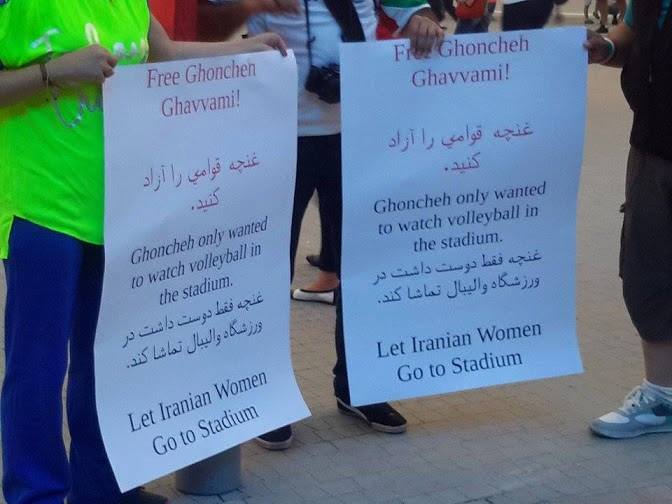
British-Iranian woman Ghonche Ghavami imprisoned for two months for trying to watch men’s volleyball game in Tehran

British-Iranian woman Ghonche Ghavami imprisoned for two months for trying to watch men's volleyball game in Tehran, Iran, IranBriefing, Iran Briefing, Human Rights, Iran Human Rights, Jail, Arrested, volleyball, Ghonche Ghavami Shahla Sherekat, Zanane Emrooz, Women, Hassan Rouhani, Ayatollah Khomeini
British-Iranian woman Ghonche Ghavami imprisoned for two months for trying to watch men’s volleyball game in Tehran

Ghoncheh Ghavami, 25, was arrested along with more than a dozen women as they tried to enter a stadium where the Iranian national men’s team was playing Italy on 20 June.

She was released from custody but when she went back to collect her belongings days later, she was arrested a second time and transferred to Tehran’s notorious Evin jail, which is known for holding political prisoners and journalists.

Miss Ghavami’s brother, 28-year-old Iman Ghavami, said she rang her family in tears saying she had been put in solitary confinement for 41 days.

“[The family] can barely hold themselves together,” he told ITV News.

“They are torn apart – not just my parents but my grandparents, my uncles, everybody.”

Miss Ghavami, a budding lawyer who studied in London, has dual Iranian and British nationality.

British-Iranian woman Ghonche Ghavami imprisoned for two months for trying to watch men's volleyball game in Tehran, Iran, IranBriefing, Iran Briefing, Human Rights, Iran Human Rights, Jail, Arrested, volleyball, Ghonche Ghavami Shahla Sherekat, Zanane Emrooz, Women, Hassan Rouhani, Ayatollah Khomeini
Ghoncheh Ghavami was arrested for trying to watch a volleyball game in Tehran

A Facebook campaign to free her has started, garnering almost 9,000 “likes” and lead to protests at other Iranian volleyball matches.

The Foreign and Commonwealth Office said it was “aware of reports” of her imprisonment and was looking into them but its diplomatic powers are limited in Iran.

She had been protesting with other female rights activists at the Azadi Stadium, which means “freedom”, against a ban on women watching male sports.

The law was introduced after the 1979 Islamic Revolution as mixed crowds enjoying games, where men are not considered fully dressed, was deemed un-Islamic.

“In the current conditions, the mixing of men and women in stadiums is not in the public interest,” said Iran’s head of police, Esmail Ahmadi Moghadam, according to the Fars news agency.

“The stance taken by religious scholars and the supreme leader remains unchanged, and as the enforcer of law, we cannot allow women to enter stadiums.”

The ban, which extends to female journalists, has been lifted in exceptional circumstances but hardliners have said it is needed to protect women from “lewd behaviour”.

Foreign women who have travelled to Iran to watch volleyball matches have been permitted inside venues in the past but only when displaying their passport.

Shahla Sherekat, the editor of a monthly women’s magazine Zanane Emrooz (Today’s Women) had published a report on the sports stadium law and was called before Iran’s Press Court after hardliners accused her of promoting feminism and un-Islamic values.

Human rights activists in Iran had hoped the election of moderate President Hassan Rouhani would lead to more liberal laws and moves towards equality but the religious establishment under Ayatollah Khomeini holds huge power.

West Not Qualified to Speak about Iran’s Human Rights

0

West Not Qualified to Speak about Iran’s Human Rights – Deputy Chief of Staff of the Iranian Armed Forces Brigadier General Massoud Jazayeri said given the western states’ black record of human rights violations in different parts of the world,and West not qualified to speak of the situation of human rights in Iran.

West Not Qualified to Speak about Iran's Human Rights, Iran, IranBriefing, Iran Briefing, IRGC, IRGC Commander, U.S., Israel, Human Rights, Iran Human Rights, Sadeq Amoli Larijani,
General Massoud Jazayeri: West Not Qualified to Speak about Iran’s Human Rights

“The crimes and killings which have happened in the past years with the direct presence and partnership of the European states and the US are so painful and inhumane that the West’s dialogue on human rights has been turned into a historical tragedy,” Jazayeri said on Wednesday.

“At present, the EU influenced by the US and international Zionism is pressuring and harming millions of people in Africa, Asia and other parts of the world by imposing food and medicine sanctions and cultural and political offenses,” he added.

Stressing that Iran will not allow the West to speak about its human rights situation, Jazayeri said the European states that allow the killing of people, promotion of moral corruption and decadence, including the spread of illegitimate relationships and homosexuality, all in opposition to God’s words cannot express a view about respect for human rights.

Iran has always lashed out at the western countries for using human rights issues as a tool and pretext for pressurizing independent states to conceal their own crimes and wrong deeds.

In relevant remarks in December 2012, Iranian Judiciary Chief Sadeq Amoli Larijani lambasted the West’s double-standard policies and stances on human rights issues, and said the hegemonic powers used human rights as an instrument to pressure independent states.

“West Not Qualified to Speak about Iran’s Human Rights”

“Unfortunately, the westerners have a completely double-standard look at human rights issues and use them as a tool against the countries which don’t depend on them,” Amoli Larijani said in a meeting with Sri Lankan Justice Minister Rauff Hakeem in Tehran at the time.

He said despite the double-standard views of the West about human rights, the Eastern states have a proper and humane view and “the human rights issue enjoys an exalted position in the Eastern countries”.

Iran, Assad and Hezbollah are using Christian persecution by ISIS to hijack the minorities

0

Iran, Assad and Hezbollah are using Christian persecution by ISIS to hijack the minorities – On September 9, 2014, a conference organized by the newly formed group “In Defense of Christians” (IDC), will be addressing the issue of “persecution of Christians in the Middle East at the hands of ISIS.” The event is very well funded as all guests from overseas have been offered tickets and lodging, and a sophisticated outreach has been mobilizing Mideast Christian churches in the United States over the past few months to participate in great numbers.

Iran, Assad and Hezbollah are using Christian persecution by ISIS to hijack the minorities, Iran, Syria, ISIS, ISIL, Christian, IranBriefing, Iran Briefing, Iraq, Kurdistan, Iranian Christian, Egypt, Lebanon, Hezbollah, Middle East
Iran, Assad and Hezbollah are using Christian persecution by ISIS to hijack the minorities

More than 400,000 Christians are refugees in Kurdistan with no immediate hope for a return home. Scores of Christians have been killed, raped, and kidnapped by the Jihadists of ISIS. Christians of Iraq and Syria—and before there, in Egypt—have been under persecution and submitted to violence for the past few years. In short, the cause is a good one,  However, while the narrative of IDC is directed at ISIS violence, the conference,  is profiting  the Iranian and Syrian regimes and Hezbollah. Here are the facts

The conference  is ignoring the oppression by the Iranian regime against its own Christian community, particularly thePersian Christians. Many Americans are aware of the horrific jailing in Iran of Pastor Saeed Abidini whose only crime was his conversion to Christianity. With countless other pastors and activists assassinated, tortured, and jailed for years, an “In Defense of Christians” conference in Washington should at a minimum invite Iranian Christian dissidents and victims to testify about the Ayatollahs regime’s brutality against the community. Obviously, there are Christians who work with the Khomeinist regime inasmuch as there were French collaborating with the Nazis in WWII or “official churches” under the Soviet Bloc.Free Iranian Christians have not been seen at the IDC meetings.

The Assad regime’s massive brutality against Lebanon’s Christian community during the war of 1975-1990 has nowhere been cited at the conference. Neither is the torture, jailing and assassinations of hundreds of Christian citizens, politicians and journalists under Syrian occupation between 1990 and 2005 included. Two Christian presidents, many ministers, members of parliament, and students were killed by the Assad regime, but the conference has ignored this tragedy and no speaker is slated to address the issue. In addition, the Christians who are opposing Bashar Assad were not invited to speak while those who claim he protects them are omnipresent.

Hezbollah, a violent pro-Iranian organization on the U.S. terror list that has eliminated, kidnapped and threatened Lebanese Christians (as well as members from other communities) will not be condemned. Victims of its violence and terror are not scheduled to speak.

Last week, Iraqi Christians accompanied by Middle East Christian NGOs lodged a demand at the United Nations to form their own internationally protected zone in the north and form their own local defense force under UN supervision. The forces behind the IDC conference want these same Christians to become a unit within the Iranian influenced Iraqi Army which will be a recipe for disaster.

The most significant missing piece of all is the Copts of egypt the largest Christian community in the Middle East .  Coptic Solidarity was contacted but was asked to toe the line of the conference, which CS  has refused to do. Instead IDC invited a woman involved in orphanage activities to  speak.

The World Maronite Union, which has been active around the world to free Lebanon from Syria’s occupation and disarm Hezbollah, is not on the invitation list either. No Middle East Christians opposed to Iran, Assad and Hezbollah will be speaking.

An emotional feature of the IDC event is the appearance of five Levantine Patriarchs  . But the seats of these Patriarchates are in Iranian-dominated capitals, in Baghdad, Damascus and Beirut. The spiritual leaders  can lament ISIS barbaric acts but not Tehran-Damascus regimes.

The keynote speaker, Jim Zogby, President of the Arab American Institute, has been the arch-foe of Christian minorities in Washington for years. A long-time critic of Lebanese Christians, he has for decades rejected the rights of  minorities to set themselves apart from Arab nationalism. Even in this conference he ignores the ethnic identity of Aramaic and Copts and insists on calling all the minorities—“Arab Christians.” Zogby has been an ally of the anti-Israel Arab lobby and of the Islamist Council on American Islamic Relations (CAIR) and continues to defend the totalitarian regime of Assad. How can a Middle East Christian conference trust its ideological message  to the head of the anti-minorities lobby in the United States?

Another troubling, information, according to a previous similar conference held in Beirut, is that IDC’s gathering will be most likely taken next year to Jerusalem for a copycat event. No one, however, should expect the Iranian backed network to befriend Israel. Just the opposite: expect Israel bashing and Hamas praising.

But what is the impetus behind such an event? Based on analysis and on the above facts, Iran and Syria’s regimes are taking advantage of the world’s attention on ISIS’s horrors to seize political control of the Levantine Christian communities, and use them in the region as a tool of propaganda. Iran and Syria want to buy their legitimization as partners in the war against ISISby claiming that they are protecting the Christians, IDC is unwittingly playing the role of a Trojan horse for Tehran and Damascus, allowing them to manipulate the American Christian community in order to gain its support for a partnership with Assad and normalization with the Mullahs.

With such heavy problems, this event cannot be identified as Middle East Christian conference. In fact it has become a Dhimmi conference at the service of Iran, Assad and Hezbollah.

Iran’s Quiet Military Build Up

0

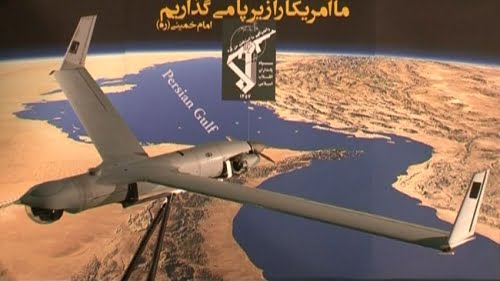
Iran’s Quiet Military Build Up – The Islamic Republic and the Ayatollahs have mastered a new tactic and strategy to achieve their ideological, geopolitical, hegemonic and strategic objectives: speak softly on the international arena, while quietly building up weapons and arm more militia groups.

Iran's Quiet Military Build Up, Iran, Iran Briefing, IranBriefing, IRGC, IRGC  Commander, Ayatollah, Missiles, IRGC-QF, Military , Iranian Military
Iran’s Quiet Military Build Up

While Iran’s state media outlets and Iranian officials had previously boasted about their military accomplishments, drone capabilities, nuclear technology, and power periodically, they have recently toned down their language and publicity. But does that mean the ruling Ayatollahs have given up on their nuclear ambitions to build a nuclear bomb and stopped their military operations and interference in other states?

In fact, a recent report reveals that the Islamic Republic continues to pursue the same geopolitical and strategic policies in order to achieve its objectives. 

Iran has not substantively changed its national security and military strategies over the past year; however, Tehran has adjusted some of its tactics to achieve its enduring objectives. President Hasan Ruhani’s international message of moderation and pragmatism is intended to support these objectives: to preserve the Supreme Leader’s rule, counter Western influence, and establish Iran as the dominant regional power. Supreme Leader Ali Khamenei remains unchallenged atop Iran’s power structure as both the political-spiritual guide and the commander in chief of the armed forces.

Those who believe that the Islamic Republic is going to change its fundamental ideological, military, strategic, and hegemonic ambitions, are fooling themselves and they are not cognizant of the major pillars upon which this Islamist regime is founded upon. More recently, the Iranian Revolutionary Guard Corps-Quds Force (IRGC-QF) has covertly, tremendously increased its political and military influence in several countries in the region including in Iraq and Syria. Iranian leaders have also intensified their ties with Hezbollah and ratcheted up their arms delivery to Hamas. In addition, the Iranian military is delivering weapons to Judea and Samaria in order to ensure “the annihilation of the Zionist regime.”

According to the classified Pentagon assessment, IRGC-QF has built up its capabilities to carry out a terrorist attack in foreign countries as well:

Iran’s covert activities appear to be continuing unabated in countries such as Syria and Iraq. Despite Iran’s public denials, for example, other information suggests Iran is increasingly involved, along with Lebanese Hizballah, in the Syria conflict. The Islamic Revolutionary Guard Corps-Qods Force (IRGC-QF) remains a key tool of Iran’s foreign policy and power projection, in Syria and beyond. IRGC-QF has continued efforts to improve its access within foreign countries and its ability to conduct terrorist attacks.

When it comes to Iran’s nuclear defiance, long-range missiles, and technological nuclear capabilities, Iran has not given up on its ambition to build a nuclear bomb,  even after the nuclear interim deal between the Islamic Republic and the P5+1 (China, France, Russia, the United Kingdom, the United States, plus Germany) was reached.

Iran continues to develop technological capabilities that could be applicable to nuclear weapons and long-range missiles, which could be adapted to deliver nuclear weapons, should Iran’s leadership decide to do so. On 24 November, 2013, Iran agreed to a Joint Plan of Action (JPA) with the permanent members of the UN Security Council plus Germany (P5+ 1) that included enhanced monitoring of lran’ s nuclear facilities and a six-month halt to enrichment activities over 5 percent and further advances on the IR-40 Heavy Water Research Reactor. In public statements, some Iranian officials have minimized the JPA’s impact on the nuclear program.

In addition, while Iranian leaders and the Mullahs previously publicly threatened the world claiming that they would block or cause damage to the Strait of Hormuz, Tehran’s recent toning down of threats does not necessarily mean that the Ayatollah and ruling clerics have changed their strategy and goals.

The Strait of Hormuz is considered to be one of the most crucial strategic spots for global and international trade.  Approximately 20 percent of the world’s petroleum, and (nearly 35% of the total petroleum traded through sea), passes through the Strait. Any interference or military attacks on the Strait of Hormuz would skyrocket the price of oil and petroleum around the world, affecting the life of every citizen. The approximate price of a gallon of petrol in the gas stations ($4) can double or even climb to $10 a gallon.

Iranian leaders are increasing their abilities in “lethal symmetric and asymmetric weapon systems” as well as “anti-access and area denial (A2AD) capabilities” in order to strengthen control over the Strait of Hormuz. As the Pentagon assessment says,

Iran continues to develop its anti-access and area denial (A2AD) capabilities to control the Strait of Hormuz and its approaches. Tehran is quietly fielding increasingly lethal symmetric and asymmetric weapon systems, including more advanced naval mines, small but capable submarines, coastal defense cruise missile batteries, attack craft, and anti-ship ballistic missiles.

The Obama administration needs to act more decisively and quickly before it is too late. If the Islamic Republic continues to build up its military and nuclear capabilities quietly, covertly and without pressure from global powers, it will impose tremendous geopolitical, strategic and economic repercussions for the world. At that point, Iran would be like North Korea, but with the additional capabilities to impact the world economy negatively, as well as play a role in arming more terrorist groups in the region. While recent assessments show that the Ayatollahs are using a different tactic – speak softly, but build up larger weapons and nuclear capabilities covertly — the Obama administration appears to still be hesitant in taking a decisive and robust stance towards the Iranian regime.