NCRI – The wheels of atrocity and brutality ceaselessly spin in the religious fascism ruling Iran. On a daily basis, Iranians see in their streets and squares bodies hanged from cranes, amputation of fingers by guillotine… Just a glimpse at the dossier of the criminals ruling Iran, whom the Iranians call the godfather of ISIS, in a time span of two weeks, is as follows:
At least 40 prisoners executed in 2 weeks
On Tuesday, September 2, a young prisoner by the name of Mohsen D was hanged in public in Mahmoudabad (northern Iran). A day prior, at dawn, the outraged people of Mahmoudabad disrupted the scene of regime’s henchmen attempting to execute this young man. The officers of the suppressive forces were coerced to stop the execution out of fear that the protest would spread. The “Iran” state daily wrote: “3000 people who roared, shouted and resorted to physical action by attacking the security cordon caused the execution to be cancelled.”
On the next day, the vicious mullahs brought in a large number of intelligence agents and security forces and through adopting unparalleled security provisions, publicly hanged this young prisoner. (Fars News Agency, affiliated with Revolutionary Guards – September 2)
On September 1, at least 10 prisoners in Ghezel Hessar Prison in Karaj were collectively hanged. It has been said that those executed were the prisoners who were active in the recent riot in this prison.
On August 26 and 28, thirteen prisoners, in two groups of eight and five, were executed in the central prison of Bandar Abbas.
On August 23, 27 and 28, at least five prisoners were hanged in the central prison of Zahedan. Morad Shaybak, 35, was executed on August 27 after spending 12 years in prison. Nourollah Barahouei and Alireza Shahbakhsh, together with a female prisoner who was his relative, were collectively hanged on August 23.
On August 27, one prisoner was hanged in the central prison of Saq’qez.
On August 26, five prisoners, including a woman, were executed in Shahab Prison of Kerman. Likewise, on August 19, another prisoner was also executed in this prison.
On August 26, the state-run newspaper of Khorasan reported the execution of one prisoner in Mashhad Prison.
On August 24, the state-run media reported the public execution of two prisoners in the cities of Sari (northern Iran) and Borazjan (southern Iran). The mullahs’ regime published images of this anti-human act in order to intensify the atmosphere of fear. (IRGC news agency of Fars and Asr Iran Website)
On August 21, one prisoner, 50, who was a retired bank employee, was publicly hanged in Qazvin. (Mehr state news agency – August 23)
On August 19, one prisoner was executed in public (in Motahari Square) in Khoy Township.
Meanwhile, a man who had been executed 19 years ago and had miraculously survived and his death sentence canceled, has been once again sentenced to death by the mullahs’ judiciary in a process that is even inconsistent with the regime’s own laws.
On August 19, four fingers of the right hand of a prisoner charged with robbery were publicly amputated with guillotine in Abarkuh Township in Yazd Province. (ISNA state news agency – August 22)
The spread of the wave of executions in different cities throughout the country which has reached 1000 executions since Hassan Rouhani took office, has added to people’s abhorrence for this brutal punishment.
Closing the eyes to the catastrophic situation of human rights in Iran, under whatever excuse, has had no result other than emboldening the criminals ruling Iran.
The Iranian Resistance once again underscores the necessity of referring the dossier of the Iranian regime’s violation of human rights to the UN Security Council.
IRGC Influence in the foreign and domestic Iranian policy – The Revolutionary Guards were created after the revolution to act as a counterbalance to the Iranian military, which Ayatollah Khomeini (the leader of the revolution) did not yet trust. Their mandate was literally to “guard the revolution”, which, as you can probably tell, is quite broad and ill-defined. At the time of the revolution, the organisation was young and inexperienced, but highly ideological and motivated, so it played a key role in crushing any opposition to the revolution and supporting Khomeini’s overall ambitions.
IRGC Influence in the foreign and domestic Iranian policy
This support carried through to the war with Iraq in 1980, which really helped define the Guards as we know them today. While Iran’s military was in disarray from the revolution and subsequent purges, the Guards mobilised in the millions to fight on the front lines and push back invading Iraqi forces. It was a highly charged time; a blur of revolutionary fever and nationalistic sentiment.
Whether or not one supports the Guards, it cannot be denied that they sacrificed their hearts and souls for the ‘sacred defence’ (what Iranians call the war with Iraq). Hundreds of thousands of young Guards members died in the eight-year war; many more were left debilitated and mentally scarred. The war also triggered a fundamental split in the core ideals of the revolution – something I’ll refer back to later.
Anyway, by 1988 the war had ended, and post-war Iran found itself isolated and in desperate need of reconstruction. The new president, Hashemi Rafsanjani, turned to the Guards – who by now were much more organised and experienced, but lacking purpose – to help rebuild Iran’s infrastructure and economy. This was part gesture, to thank the Guards for their sacrifices, and part necessity, since Iran had no major allies and was economically devastated by the war.
The decision by Rafsanjani to involve the IRGC influence in the Iranian economy laid the foundations for the political and economic influence of the Guards today.
Throughout Rafsanjani’s presidency, the Guards slowly consolidated their influence through their involvement in the economy. But it was not until nine years later that their influence became explicit. In 1997, a new president, Mohammad Khatami, was elected on a platform of moderation and reform. Rafsanjani had been viewed as a stabilising force for Iran; a person to recover Iran from the revolution and war. Khatami, on the other hand, was more evolutionary – someone who wanted to drag Iran forward, kicking and screaming, into the modern world. This immediately caused concern within the more conservative elements of the system, in particular the Guards.
“IRGC Influence in the foreign and domestic Iranian policy”
In 1999, protests broke out across Iran after the closure of a reformist newspaper that was closely aligned to Khatami (the judiciary, which comprised of hardline opponents to Khatami, was responsible for the closure). The protests were particularly strong among universities and student groups – core constituencies of the reformist movement. Within days, Iranian security forces and the Basij clamped down on the protests, killing a number of people and committing some pretty horrendous crimes.
The problem for Khatami was that he was under intense pressure from hardliners to disown the protests, given that the protests posed an existential threat to the governing system. In particular, a letter was sent to Khatami, signed by a number of top Guards commanders, threatening to overthrow him should he not support the crackdown. This was arguably the first time that the Guards stepped into the political limelight and exercised their political weight. Coming as a shock to Khatami, he panicked and eventually disowned the protests.
Although his reputation was heavily tarnished by his handling of the situation in 1999, Khatami was re-elected in 2001. In fact, during both his elections, he received over 70% of the votes, sending shivers down the hardliners’ spine. Fearing that the reformist movement was too popular, and seeing how the protests in 1999 rocked the foundations of the ruling system, they turned on Khatami and effectively made him a lame duck until his term ended in 2005.
The 2005 presidential elections were the second time that the Guards dipped themselves into the political process. Rafsanjani, seeing what had happened to Khatami, and concerned about the influence of the hardliners, declared himself a candidate for the presidency. However, it was a relative unknown who eventually won – Mahmoud Ahmadinejad.
Immediately after the elections, Rafsanjani claimed that the Guards had manipulated the vote to allow Ahmadinejad to take power. Facing a backlash from the rest of the establishment, however, he backed down and eventually withdrew his protest.
It’s important to note that Ahmadinejad came from the same cohort of Guards who fought on the front-lines during the war with Iraq. He was the manifestation of what I said earlier about the war and its effect on the core ideals of the revolution: the Guards, having been caught up in revolutionary fever and nationalistic sentiment caused by the war, had developed their own sense of revolutionary identity, one distinct to that of the ruling clerics. In fact, many Guards members actually despised the clerical class, in particular Rafsanjani, whom they blamed for prematurely ending the war with Iraq (which they genuinely believed they were close to winning). They also saw the clerical class as corrupt and greedy.
Ahmadinejad was the first non-clerical president of post-revolution Iran. During his time in power, he completely re-shaped the political landscape of Iran, filling various political bodies with his allies from the Guards. This trend became even more prominent after Ahmadinejad’s re-election in 2009, which was heavily disputed and led to months of unrest.
Moderate forces, backed by Rafsanjani and Khatami, contested the 2009 elections via their favoured candidate, Mirhossein Mousavi. In the lead up to the elections, it was evidently clear that Mousavi had huge support among the population, if not the majority. At the same time, discontent was growing among the Guards, who were becoming more and more vocal about their opposition to a potential Mousavi victory. Eventually, it was announced that not only had Ahmadinejad won, but he had won with a landslide. Chaos ensued, and months of violent protests led to an intense crackdown, as the Guards deployed all their political, economic, and even military capital to protect Ahmadinejad’s victory.
This victory came at a cost, however (or a gain, if you look at it from the Guards’ perspective). By the end of Ahmadinejad’s second term in 2013, Guards members held key positions in government, including the ministry of oil. Something like 15% of parliamentary members were from the Guards. Ahmadeinajd also began handing out huge government contracts to Guards-affiliated companies via Iran’s supposed economic “privatisation” scheme. With his reckless rhetoric resulting in more and more international sanctions, Ahmadinejad also relied heavily upon the Guards to bypass economic restrictions. The Guards controlled a vast number of airports, sea ports, and land routes to smuggle goods in an out of the country. They also controlled a number of key financial institutions, allowing them to launder money and continue their financial support of proxies in the region.
The Guards effectively declared their intentions in the 2009 elections, and went on to display their might throughout Ahmadinejad’s reign. By the end of 2013, they were by far the biggest political and economic bloc in Iran’s byzantine governing system.
And so we reach today. It’s important to note that the moderates, again backed by Rafsanjani and Khatami, pushed back against the Guards in the 2013 elections, resulting in the victory of Hassan Rouhani, who continues to be Iran’s president today. The moderates took advantage of a number of dynamics to achieve their success: ever more restrictive economic sanctions threatening to completely destroy Iran’s economy; growing discontent among the population about corruption and international isolation; Ayatollah Khamenei’s (Iran’s supreme leader) own fears about the Guards’ power and their resentment of clerical rule; and of course the various regional wars, which have preoccupied the Guards and forced them to re-direct their political, economic, and military capital away from internal affairs.
To conclude, the Guards continue to dominate Iran’s economy, and they retain a huge amount of political influence. But various dynamics have checked their influence, and opened a door for moderate to take back some power. Where this leads in the future, however, is uncertain.
Former Secretary of State Henry Kissinger said that Iran is a bigger problem than ISIS.
In an interview with NPR that was released on Saturday, Kissinger explained that because Iran has a stronger footing in the Middle East, it has a greater opportunity to create an empire.
Henry Kissinger: Iran is a bigger problem than ISIS
“The borders of the settlement of 1919-’20 are essentially collapsing,” he said. “That gives Iran a very powerful level from a strategic point of view. I consider Iran a bigger problem than ISIS. ISIS is a group of adventurers with a very aggressive ideology. But they have to conquer more and more territory before they can became a strategic, permanent reality. I think a conflict with ISIS — important as it is — is more manageable than a confrontation with Iran.
The Kissinger interview comes just a day after the BBC reported that Iran’s Supreme Leader had ordered his military to cooperate with the U.S. in the fight against ISIS forces. CNN had a similar report.
“Iran is a bigger problem than ISIS”
Kissinger’s warning about Iran is unsurprising given his past skepticism about its nuclear program. On Friday, nuclear talks went south after Iran failed to provide key information on its past nuclear work by an agreed-upon deadline.
Earlier this week, ISIS drew international fury when it released a video allegedly showing the beheading of an American journalist. Kissinger told NPR that he would “strongly favor a strong attack on ISIS” in response.
Christian Converts in Iran Continue to Be Charged With Capital Offenses – A British based human rights organization has received reports that two more Iranian Christians from the Church of Iran denomination have been charged with “Mofsed-e-filarz,” translated as “spreading corruption on earth.”
Christian Converts in Iran Continue to Be Charged With Capital Offenses
According to a news release from Christian Solidarity Worldwide (CSW), Pastor Matthias Haghnejad, who was recently charged with “Moharebeh,” or “enmity against God,” has now been charged with the more serious crime of “Mofsed-e-filarz.”
Another Christian, Silas Rabbani is also facing the same charge.
CSA said Pastor Behnam Irani had been handed this new allegation as part of 18 new charges against him.
Sources claim that all three men, who are being held separately in Ghezal Hesar Prison in Karaj, have been pressured into confessing that they are “spies.”
There is particular concern about Haghnejad’s safety, CSW reported. He is believed to be in a “dangerous situation,” as the authorities appear to be targeting him actively.
The new charges against Haghnejad, Rabbani and Irani are part of what CSW called a “worrying escalation in Iran’s campaign against converts to Christianity,” who have previously been charged with “action against the state,” “action against the order” or other national security crimes.
Although the new Islamic Penal Code, which came into effect in 2013, prohibits capital punishment for “Moharebeh” in cases not involving the use of a weapon, the charge is regularly used against political activists from ethnic minority communities.
Christian Converts in Iran Continue to Be Charged With Capital Offenses
An ongoing spike in executions under the Rouhani presidency has seen eight men executed for “Moharebeh” this year, including Ahwazi Arab poet and cultural rights activist Hashem Shaabani and his colleague Hadi Rashedi.
CSW said those accused of this crime usually complain of having been tortured to give false confessions, the denial of access to legal assistance, and unfair trials conducted without witnesses.
CSW’s Chief Executive Mervyn Thomas said in the news release, “The new charges against Pastors Haghnejad and Irani and Mr. Rabbani are tantamount to an indictment of Christianity itself and CSW is growing increasingly alarmed by what is a clear escalation in Iran’s campaign against Persian Christians under the Rouhani presidency and by what is effectively an attempt to gain an apostasy conviction by other means.”
He added, “It is vital that the ongoing human rights crisis in the country is not neglected as members of the international community increasingly partner with Iran to counter the threat posed by ISIS.”
Christian Solidarity Worldwide works for religious freedom through advocacy and human rights, in the pursuit of justice.
Save political prisoners – NCRI -The Iranian Resistance calls for saving the lives of seven political prisoners on hunger strike, especially Mr. Karim Moussazadeh who has gone on hunger strike since 28 days ago and urges all international bodies and human rights organizations to take effective measures to save their lives and to look into their demands.
Save political prisoners on hunger strike
Karim Moussazadeh, 33, is a Kurdish political prisoner sent to Bandar Abbas on exile and he has gone on a hunger strike since August 9 to protest the conditions in exile and the anti-human actions of the torturers, including deprivation of medical care. The unbearable heat in Bandar Abbas, especially in this deadly location of exile, has aggravated the pressures on this prisoner.
Meanwhile, three political prisoners by the names of Khaled Hardani and Farhang and Shahram Pour-Mansouri who since August 30 have staged a hunger strike are suffering from feebleness, hypotension and headaches. They are protesting intolerable pressures imposed on them by the prison torturers. On August 30, Bahraini, head of the Intelligence Ministry in Gohardasht Prison and one of the most vicious elements of regime’s intelligence, intended to deceive these three prisoners and transfer them to an unknown location, but with the solidarity from their cellmates, they refused to go.
“Iranian Resistance calls to save political prisoners on hunger strike”
Khaled Hardani suffers from acute digestive problem and due to being denied medical care for a long time his condition has deteriorated. Presently, the interrogators of the intelligence ministry intend to transfer him to an unknown location to increase the pressures on him.
Since August 31, Mr. Farshid Yadollahi, the imprisoned lawyer of Gonabadi dervishes who is in Evin Prison, has gone on hunger strike to protest the fact that he is being constantly moved around and also the intensified pressures against the imprisoned dervishes. Messrs. Hamidreza Moradi and Afshin Karampour, two imprisoned dervishes, have gone on a hunger strike since September 4 in solidarity with Mr. Yadollahi.
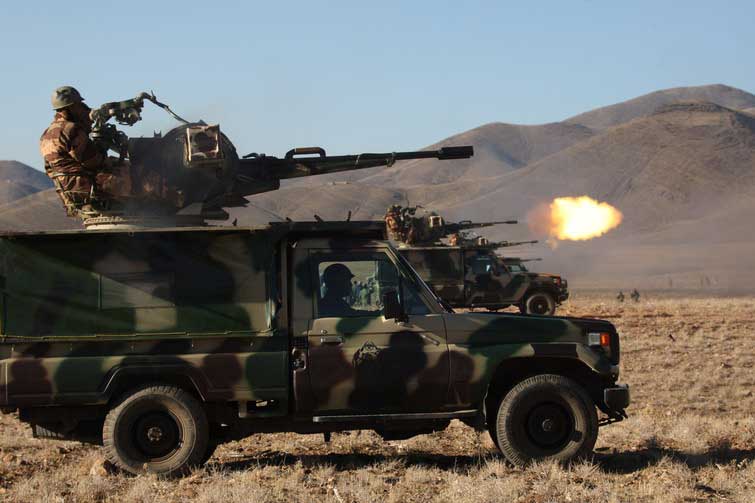
Iran Army, IRGC to Hold Joint Drills Soon – Iran’s Ground Force Commander Brigadier General Ahmad Reza Pourdastan announced on Sunday that the Army and the Islamic Revolution Guards Corps (IRGC) plan to stage joint maneuvers in Southeastern Iran in the near future.
General Ahmad Reza Pourdastan : Iran Army, IRGC to Hold Joint Drills Soon
“A joint military exercise by the Army and the IRGC will be held in the second half of the current Iranian year (September 23, 2014- March 20, 2015),” General Pourdastan told reporters on Sunday.
He noted that the Army-IRGC joint military maneuvers will be held in an area coverring 25,000 sqare kilometers from the Northern parts of Sistan and Balouchestan province in Southeastern Iran to the coasts of the Sea of Oman down the same province.
Tehran has repeatedly stated that its military might poses no threat to other countries, reiterating that its defense doctrine is based on deterrence.
The last Army-IRGC joint drills were conducted in November 2013 and were codenamed Modafe’an-e Aseman-e Velayat 4 (Defenders of the Velayat Skies 4). The exercises were carried out in Northeastern, Southeastern, Southern and Central Iran.
Iran’s Army and IRGC hold regular wargames to practice combat tactics and also test new home-made military tools, equipment and weapons in action.
“Iran Army, IRGC to Hold Joint Drills Soon”
The Iranian Army has recently test-fired different types of newly-developed missiles and torpedoes and tested a large number of its home-made weapons, tools and equipments, including submarines, military ships, artillery, choppers, aircraft, UAVs and air defense and electronic systems, during massive military drills.
Defense analysts and military observers say that Iran’s wargames and its advancements in weapons production have proved as a deterrent factor, specially at a time of heightened threats by the US and Israel.
Yet, Iranian officials have always stressed that the country’s military and arms programs serve defensive purposes and should not be perceived as a threat to any other country.
Iran backs US military coordination over ISIL – According to sources close to the Iranian government, Supreme Leader Grand Ayatollah Ali Khamenei has agreed to allow the Iranian military to coordinate with the US to combat the Islamic State of Iraq and Syria (ISIL).
Iran backs US military coordination over ISIL
Although a number of international media outlets quickly picked up the report regarding future US-Iranian military coordination, this was quickly and routinely denied by Iranian foreign ministry spokeswoman Marziyeh Afkham.
Recent success in pushing back ISIL from Amerli in northern Iraq has been attributed to nuanced cooperation between US Air Force and Kurdish Peshmerga ground forces, backed by Iraqi military units which have been receiving support from Iranian officers in Iraq.
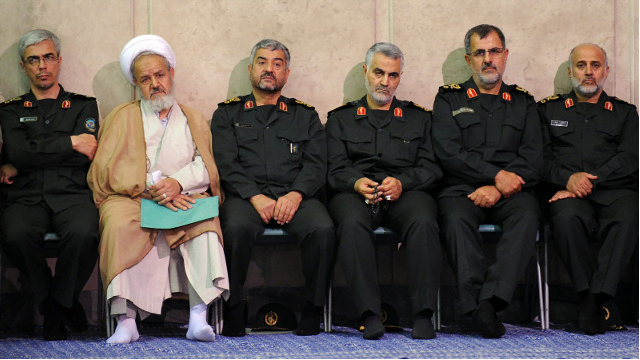
Iranian Revolutionary Guard Corps (IRGC) Quds Force commander Gen. Qassem Suleimani has reportedly been given the go-ahead to establish links with US military officials to facilitate coordination in the fight against ISIL.
“CNN’s Christiane Amanpour says Iraqi President Fuad Masoum confirmed US-Iranian coordination, although Iranian Foreign Ministry has since denied this”
CNN journalist Christiane Amanpour told BBC Persian that Iraqi President Fuad Masoum had confirmed to her that military coordination between Iran and the US is now taking place in Iraq.
Iranian Foreign Minister Mohammed Javad Zarif implicitly confirmed that Tehran is providing arms to Iraqi and Kurdish forces to confront ISIL during a visit to Iraq last month. However Iranian Chief of Staff Gen. Hassan Firouzabadi subsequently came out to deny this.
Ambiguity and vagueness is a long-standing part of Iran’s foreign policy towards the region, including denying reports that are known to be accurate. The denial of coordination with the US is important for Iran’s clerical establishment which is seeking to burnish its anti-American image before domestic and regional public opinion.
However, regional security concerns and heavy international sanctions means that Tehran could be pursuing a more pragmatic foreign policy with a view to gradual coordination with Washington. Although ISIL represents a threat to both the US and Iran, any mutual coordination between the two parties would have to take place in secrecy.
In a press conference last month, Iranian President Hassan Rouhani told reporters that Tehran would “consider working alongside the US to combat the current crisis if the Iraqi government requests so”.
Ten-Year Ban on Nasrin Sotoudeh’s Legal Practice Overruled: Prominent Human Rights Lawyer Returns to Law
Prominent Human Rights Lawyer Returns to Law
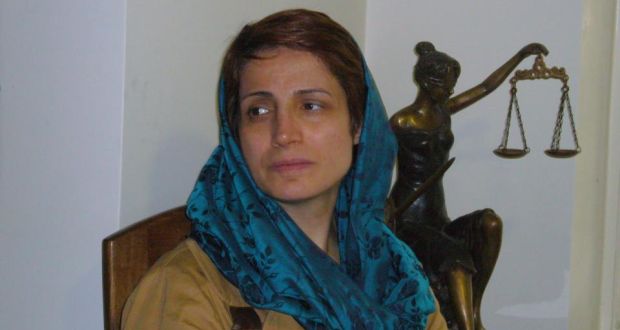
A Lawyers’ Court at the Tehran Bar Association has determined that human rights lawyer Nasrin Sotoudeh is able to continue her legal practice, according to an August 30, 2014 status update on her husband Reza Khandan’s Facebook page.
According to Khandan, the Lawyers’ Court denied the Tehran Prosecutor’s Office request for the suspension of Sotoudeh’s license to practice, and stated in a ruling that, “In the opinion of the Lawyer’s Court, Ms. Sotoudeh’s temporary suspension was unwarranted and will be overruled. According to this ruling Ms. Sotoudeh can continue her profession as a lawyer.
Reza Khandan wrote that Sotoudeh appeared at a hearing at the Lawyers’ Court on Sunday, August 24, 2014, and she was formally served with the Court’s ruling on August 30. The plaintiffs in the case were the Tehran Deputy Prosecutor and the Evin Prison Court Supervisor, who had requested the suspension of Sotoudeh’s license to practice law.
Prominent lawyer and human rights defender Nasrin Sotoudeh was arrested on September 4, 2010. A lower court sentenced her to 11 years in prison, a 20-year ban on her legal practice, and a 20-year ban on foreign travel, on charges of “acting against national security,” “propaganda against the state,” and “membership in the Human Rights Defenders Center.” An appeals court reduced her sentence to six years in prison and a 10-year ban on her legal practice.
“Ten-Year Ban on Nasrin Sotoudeh’s Legal Practice Overruled: Prominent Human Rights Lawyer Returns to Law”
After almost three years in prison, Nasrin Sotoudeh was released on September 18, 2013. During her imprisonment, Ms. Sotoudeh embarked on numerous hunger strikes to protest her ill-treatment in prison and the abuse of other political prisoners.
Upon release, Nasrin Sotoudeh objected to the ruling by the Tehran Revolutionary Court to suspend her license to practice law, asserting the Court’s lack of jurisdiction over this matter. She subsequently renewed her license and announced that she would continue her legal practice. However, judges have refused to allow her to appear in court to represent her clients. Human rights lawyer Giti Pourfazel told ISNA on August 29 that Judge Salavati did not allow Nasrin Sotoudeh to enter Branch 15 of Tehran Revolutionary Court in a case she co-represented with Sotoudeh.
The targeted persecution of human rights defenders has been a routine practice in Iran, particularly after the disputed 2009 presidential election in the country.
More Crushing Responses Awaiting Israel – Iran’s Defense Minister Brigadier General Hossein Dehqan warned the Zionist regime to expect more humiliating responses from the Islamic Republic.
Iran’s Defense Minister: More Crushing Responses Awaiting Israel
General Dehqan described the Iranian forces’ recent downing of an Israeli spy drone as a overwhelming reaction from Iran and underlined that Tel Aviv should expect more crushing responses (in case on any aggression).
The Islamic Revolution Guards Corps (IRGC) Aerospace Force on August 24 tracked and shot down a radar-evading stealth Israeli drone which was intending to penetrate the airspace over Natanz nuclear zone.
The intruding “Hermes” unmanned aerial vehicle (UAV) was intercepted by a surface-to-air missile.
The Elbit Systems Hermes 450 is an Israeli medium size multi-payload UAV, designed for tactical long endurance missions.
“Iran’s Defense Minister: More Crushing Responses Awaiting Israel”
The Iranian Foreign Ministry strongly condemned the intrusion as “violation of territorial integrity and sovereignty” of the Islamic Republic.
Senior Iranian commanders have also underscored that Tehran’s reaction to violation of its airspace by the Israeli drone will not be necessarily diplomatic, but that Tel Aviv will get a practical response.
HRANA News Agency – Soliman Mihandoost, 25, Hormozagani citizen was directly shot and instantly killed by police, when he was returning from fishing.
young Iranian fisherman murdered by police
According to the report of Human Rights Activists News Agency (HRANA), Soliman Mihandoost, the 25 years old inhabitant of Kalmatly village, was murdered by direct shot from police forces when he was returning from fishing.
One of his relative said to HRANA’s reporter, “Soliman Mihandoost had departed his boat and was on his way to home. Near the port he was shot by police forces, on August 6”.
He was insisting that “police forces were suspicious that he is a petrol smuggler and shot him without any warning”.
According to received reports, the family of Mihandoost has sued the police and jurisdiction authorities implicitly confirmed the fault of police, but nobody has been arrested yet regarding the case.
During last week, Mohammad Ourangi and Mohammad Eisayi, two other Hormozgani citizens who were under 25, were killed by police in similar way.