Home Blog Page 333

Al-Qaeda, ISIL Created by West, Regional Proxies

0

Al-Qaeda, ISIL Created by West – Supreme Leader of the Islamic Revolution Ayatollah Seyed Ali Khamenei underlined that the terrorist groups such as al-Qaeda and the Islamic State in Iraq and the Levant (ISIL) have been fabricated by the West and its regional proxies.

“Although, the Western countries, particularly the US, claim that they have nothing to do with these groups (al-Qaeda and ISIL), there is ample evidence suggesting that these movements have been fabricated by Western powers and their regional elements,” said Ayatollah Khamenei in a meeting with members of Iran’s Assembly of Experts on Thursday.

Al-Qaeda, ISIL Created by West, Ayatollah Seyed Ali Khamenei, IRGC, Iran, IranBriefing, Iran Briefing, Islamic Revolution, U.S., Israel, Region, World War II, Palestine, Gaza, democracy, Al-Qaeda, ISIL
Ayatollah Seyed Ali Khamenei: Al-Qaeda, ISIL Created by West

He also slammed the West’s double standards towards issues such as democracy and human rights and said nobody believes the West’s slogans chanted in support such values.

Ayatollah Khamenei said pointed to the West and especially the US support for staging coups against democratically-elected governments and said Washington alone has toppled 50 governments in the aftermath of World War II.

He also said using violence and force against independent nations as well as propping up terrorist organizations and launching military invasions against countries such as Iraq and Afghanistan have already undermined the rudiments of the Western system.

Ayatollah Khamenei also praised Palestinian resistance movements for firmly standing up to the Israeli military during its aggression against the Gaza Strip and described Palestinians’ military achievements against Israel as a “miracle.”

The Leader added that Palestinians had in fact managed to bring the Zionist regime, the symbol of Western power in the region, down to its knees.

“Ayatollah Seyed Ali Khamenei: Al-Qaeda, ISIL Created by West”

He also described deepening moral crisis in the Western societies including the prevalence of nihilism and mental insecurity especially among the youths, and the decline of the family, as yet another symptom of the decline of the Western world order.

Leader of the Islamic Revolution said a new world order is being shaped, noting that Iran needs to get more powerful to play an effective role in the process.

Iran Ballistic Missiles Destroy Any Possible Threat

0

Iran Ballistic Missiles Destroy Any Possible Threat

Iranian Deputy Defense Minister Brigadier General Amir Hatami said the country’s ballistic missiles with maximum precision striking capability can target and destroy any point of threat on land or at sea.

Deputy Defense Minister: Iran Ballistic Missiles Destroy Any Possible Threat, Amir Hatami, IRGC, Iran, IranBriefing, Iran Briefing, Iran Ballistic Missiles, Iranian Navy, Iranian Air Force, military ships, artillery, choppers, aircraft, UAVs, IRGC Commander
Deputy Defense Minister: Iran Ballistic Missiles Destroy Any Possible Threat

“The ballistic missiles of the Islamic Republic of Iran’s Armed Forces are now equipped with pinpoint precision capability in very good ranges both on land and at sea and this means might and power with the message that we can destroy any point of threat on land and at sea and push the enemy far away from the Islamic Republic of Iran’s borders,” Gen. Hatami said, addressing a ceremony held to mark the national Government Week in Tehran on Wednesday.

He praised Iranian experts’ industrious efforts, saying after the country went under sanctions and “the enemies prevented the Armed Forces’ access to long-range and high-altitude air defense shields, the defense industries’ experts have been designing and building all the needed air defense systems of the country for short, mid and long ranges and altitudes, relying on domestic knowledge”.

The General also pointed to Iran’s progress in naval fields, and said all the Iranian Navy’s needed tools, weapons and systems, including vessels and submarines in different classes which are equipped with various electronic warfare and advanced missile and anti-air defense systems, are built domestically.

He also pointed to the Iranian Air Force advancements, and said all the hi-tech equipment needed by the country are designed, built and repaired by Iranian experts, including the manufacture of advanced and well-quipped drones for various purposes.

Iranian Deputy Defense Minister: Iran Ballistic Missiles Destroy Any Possible Threat

In recent years, Iran has made great achievements in the defense sector and gained self-sufficiency in manufacturing essential military hardware and defense systems.

The Iranian Army has recently test-fired different types of newly-developed missiles and torpedoes and tested a large number of its home-made weapons, tools and equipments, including submarines, military ships, artillery, choppers, aircraft, UAVs and air defense and electronic systems, during massive military drills.

Defense analysts and military observers say that Iran’s wargames and its advancements in weapons production have proved as a deterrent factor, specially at a time of heightened threats by the US and Israel.

Yet, Iranian officials have always stressed that the country’s military and arms programs serve defensive purposes and should not be perceived as a threat to any other country.

Iranian IRGC-QF commander in Iraq

0

Iranian IRGC-QF commander in Iraq – Photo depicting Iranian IRGC-QF commander Maj. Gen. Soleimani near Amerli, Iraq appears …

Iranian IRGC-QF commander in Iraq, Iran, Iran Briefing, IranBriefing, IRGC, IRGC Commander, Iraq, U.S., IRGC-QF
Iranian IRGC-QF commander in Iraq

Photo depicting IRGC-QF Maj. Gen. Soleimani has emerged on social media claiming to have been taken near Amerli, Iraq. Unidentified person at his side appears equipped with American-type M4 carbine, so the photo could have been taken in Iraq

Source : Iranian IRGC-QF commander in Iraq

Saudi Arabia beheads Iranian national

0

Saudi Arabia has executed an Iranian and three Syrians after being handed down the death penalty for drug trafficking.

Saudi Arabia beheads Iranian national, Saudi Arabia, Iran, IranBriefing, Iran Briefing, Human Rights, UN, Executed, Iranian, Syria, Syrian,
Saudi Arabia beheads Iranian national

The convicts, sentenced to death for trying to import hashish into the Saudi kingdom, were decapitated by sword in northern and eastern Saudi Arabia on Tuesday.

The Iranian convict was identified as Raza Abbas Fadhil Aderisawi, who was beheaded in the east of the country.

The Syrian nationals, who were executed in the northern region of al-Jawf, were identified as Hamoud Fayez Hassoun, Hassan Taha Musalamani, and Youssef Abdullah al-Halqi.

Tuesday’s executions raise the number of people decapitated by sword in Saudi Arabia over the past four weeks alone to 30.

At least 45 people have been sentenced to death in Saudi Arabia this year. The Saudi regime carries out capital punishments mostly by beheading.

Saudi Arabia, with one of the highest rates of executions in the world, has frequently been criticized by human rights organizations.

“Any execution is appalling, but executions for crimes such as drug smuggling or sorcery that result in no loss of life are particularly egregious,” said Sarah Leah Whitson of Human Rights Watch.

Saudi Arabia, ruled by a hereditary royal system, enjoys full support of its close ally the United States.

In July, UN High Commissioner for Human Rights Navi Pillay censured Saudi Arabia for harassing human rights activists under a failed judicial system.

Behnam Irani an Iranian pastor faces 18 new charges

0

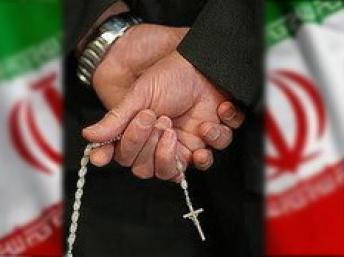
Behnam Irani an Iranian pastor convicted of crimes against national security is facing 18 new charges, including one for a capital crime, Christian Solidarity Worldwide (CSW) reports.

Behnam Irani an Iranian pastor faces 18 new charges, Iran, IranBriefing, Iran Briefing, Pastor, Arrested, Jail, Christian, Iranian Pastor, Iranian Christian, Human Rights, Iran Human Rights, Mervyn Thomas, Prison
Behnam Irani an Iranian pastor faces 18 new charges

Pastor Behnam Irani is now being accused of “Mofsed-e-filarz”, which means “spreading corruption on Earth,” and is being held in solitary confinement.

An Iranian native, Irani was first arrested in December 2006 – four years after he became a pastor.

Behnam Irani was sentenced in 2011 to six years in prison for action against the state.

In June he was removed temporarily from prison and held by the Iranian Ministry of Intelligence and Security where he faced intense interrogation.

His latest charges are of great concern according to human rights advocates, with CSW reporting that they “appear to be part of a surge in repression under the Rouhani presidency targeting religious and ethnic minorities.”

In addition, at least five Christians were arrested in the central Iranian city of Isfahan this week, and had their Bibles, computers and mobile phones confiscated.

Chief Executive of CSW Mervyn Thomas said the organisation is “deeply concerned” by Pastor Behnam’s newest charges.

“Such charges [as spreading corruption] are tantamount to an indictment of Christianity itself and mark a renewed escalation in Iran’s campaign against Persian Christians under the Rouhani presidency,” Thomas explained.

He has urged the Iranian government to promote freedom of religion and belief, and to release those “unjustly detained on account of their faith”.

Iran has a long history of human rights abuses and violence is rapidly escalating across the country specially in religion and political, propelled by laws which allow the legal persecution of minority communities.

UN Human Rights Experts Urge Iran To Protect Baha’i Cemetery

0

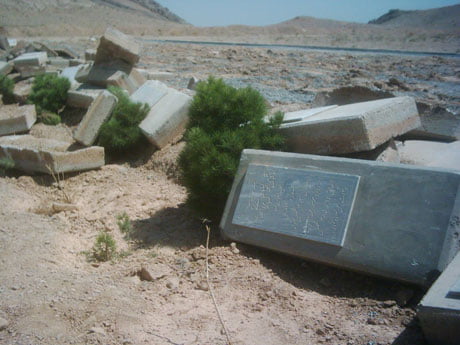
UN Human Rights Experts Urge Iran To Protect Baha’i Cemetery – Three UN experts on human rights in Iran, freedom of religion, and minority issues have urged the government of Iran to stop the destruction of a Baha’i cemetery by Revolutionary Guards.

UN Human Rights Experts Urge Iran To Protect Baha'i Cemetery, UN Human Rights, Iran, Baha'i Cemetery, Baha'i, religion, Revolutionary Guards, Shiraz, UN, IRGC
UN Human Rights Experts Urge Iran To Protect Baha’i Cemetery

The Revolutionary Guards are reported to have put up signs detailing plans to build a cultural and sports center on the site of the Baha’i cemetery in Shiraz, the capital of Fars Province. Remains that were disinterred during initial excavations in April are said to have been placed in a nearby trench.

Heiner Bielefeldt, UN Special Rapporteur on freedom of religion, said in a statement on September 4 that “attacks on cemeteries are unacceptable” and a “deliberate violation” of religious freedom.

The Special Rapporteur on minority issues, Rita Izsak, urged the government to take concrete steps to protect Baha’i and other religious minorities in Iran.

Read more about Baha’i cemetery

Iran will respond firmly to any threat in future

0

 Iran will respond firmly to any threat in future – A senior military advisor to the Supreme Leader said on Tuesday that Iran will give firm and immediate response to any possible military threat in the future.

Yahya Rahim-Safavi: Iran will respond firmly to any threat in future, IRGC, IGC Commander, Yahya Rahim-Safavi, Israel, U.S., Ayatollah Seyyed Ali Khamenei,
Yahya Rahim-Safavi, Iran will respond firmly to any threat in future

Major General Yahya Rahim-Safavi pointed to the recent shooting down of an Israeli drone and said the action bears the message of the IRGC Aerospace Force’s “dignity” and “full preparedness”.

On August 24, the IRGC Aerospace Force shot down the Israeli spy drone before it could reach the Natanz nuclear enrichment facility in central Iran.

Rahim-Safavi, the former commander of the Islamic Revolution Guards Corps, went on to say that Iran is the most influential country in Western Asia and the U.S. is forced to give “concessions” to “the powerful Iran”.

Elsewhere in his remarks, he said that understanding of strategic issues, regional developments and the fact that the U.S. power has been diminished in the Mideast should be prioritized by the IRGC.

He also stated that Ayatollah Seyyed Ali Khamenei, as the powerful leader of the Islamic world, stands against the U.S. and Israel.

Fatwa against Internet by Iranian cleric

0

Fatwa against Internet by Iranian cleric – A prominent hard-line Iranian cleric has denounced high-speed mobile Internet and 3G services as “immoral and unlawful.”

Makarem-Shirazi, Internet 3G allow men and women to speak to each other without oversight., Iran, IranBirefing, Iran Briefing, Fatwa, Cyberspace, Hassan Rouhani, 3G mobile, 3G technology, social media, Iranian cleric
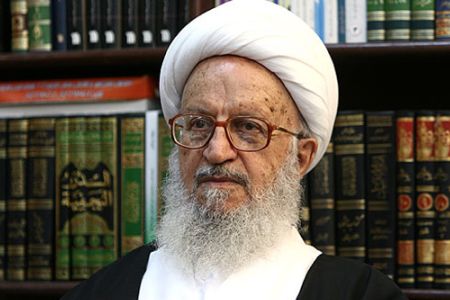
Fatwa against the Internet by Iranian cleric Ayatollah Makarem-Shirazi

Last week, Grand Ayatollah Nasser Makarem-Shirazi said 3G mobile services are against sharia law and violate “human and moral norms.”

He cautioned Iran’s information ministry against providing 3G mobile service before the technology is “purified” of its “negative features” to ensure “moral and psychological security” for users.

“The Western technology is like muddy and unsanitary water,” the senior conservative cleric told Tehran Times on Sunday. “Water is the lifeblood, but when it gets murky and unsanitary it must be purified.”

Makarem-Shirazi isn’t against all technology. After all, the guy has a Web site where followers can ask for religious rulings, as one group of activists did in this case.

In the past he’s passed judgment on a variety of subjects, such as the morality of pet food advertisements — devotion to the animals would result in “evil outcomes,” he warned.

Iran’s conservative clerics would rather leave the Internet to the Supreme Council of Cyberspace, which was set up in 2012 to censor what Iranian eyes can see online. The Council’s concerns? Political opposition groups, Web sites that promote Western culture and Satan worship, the ability to share naughty photos, use of social media by protesters and other digital-age evils.

On Monday, Iran’s President Hassan Rouhani, who campaigned on the promise of better Internet access, stood by the Web. “We cannot close the gates of the world to our younger generation,” he said in a televised meeting with conservative clerics. “If we do not move towards the new generation of mobile today and resist it, we will have to do it tomorrow. If not, the day after tomorrow.”

Makarem-Shirazi, Internet 3G allow men and women to speak to each other without oversight., Iran, IranBirefing, Iran Briefing, Fatwa, Cyberspace, Hassan Rouhani, 3G mobile, 3G technology, social media, Iranian cleric
Makarem-Shirazi, Internet 3G allow men and women to speak to each other without oversight.

The fatwa isn’t binding on the administration, but illustrates the opposition the centrist government is up against given that conservatives occupy key positions in judicial, intelligence and security branches and the conservative majority in Parliament.

The debate over the Internet has gotten heated since Iran’s government awarded 3G licenses to three mobile broadband companies. After the first license was issued earlier this year, Makarem-Shirazi and three other ayatollahs expressed concern that 3G technology would “jeopardize public chastity” and allow men and women to speak to each other without oversight.

Sudan expels Iranian diplomats and closes cultural centres

0

Sudan expels Iranian diplomats

Sudan has closed all Iranian cultural centres in the country and expelled the cultural attache and other diplomats, a government source has said, without giving an explanation for the move.

Sudan expels Iranian diplomats and closes cultural centres, Sudan president Omar al-Bashir, Iran, IranBriefing, Iran Briefing, Iranian Diplomats, U.S., Middle East, air defences, Saudi Arabia, Red Sea, UN, Islam, Muslim,
Sudan expels Iranian diplomats and closes cultural centres

Sudanese media speculated that the expulsions were linked to government concerns that Iranian officials were promoting Shia Islam in the largely Sunni country, but there was no confirmation from authorities.

Sudan, isolated by UN and western sanctions partly linked to its conflict in Darfur, has sought allies and donors across the sectarian divides in the Middle East and further afield.

That has often left it balancing competing interests and loyalties in the complex web of regional rivalries.

The country’s president, Omar al-Bashir, seized power in 1989 in a bloodless coup backed by Sunni Islamists.

Sudan rejected an Iranian offer to set up air defences on its Red Sea coast after a 2012 air strike that Khartoum blamed on Israel – fearing it would upset Tehran’s regional rival, the Sunni superpower Saudi Arabia, Sudan’s foreign minister said in May.

“Sudan expels Iranian diplomats and closes cultural centres”

But Sudan, where many people follow the traditional Sufi branch of Islam, has also received delegations from senior Iranian politicians.

Saudi Arabia, a key US ally in the region, has been competing with Iran for influence in the Middle East. The rivalry has in effect divided the region into two camps, with countries either allied to Saudi Arabia or to Iran.

“The Sudanese government ordered the closure of Iranian cultural centres in Sudan, and asked the cultural attache and the diplomats working in office at the Iranian cultural attache to leave Sudan within 72 hours,” the government source told Reuters.

Cyber attack is Most Dangerous Threat to Iran

0

Cyber attack is Most Dangerous Threat to Iran – Head of Iran’s Civil Defense Organization Brigadier General Gholam Reza Jalali warned on Wednesday that the most Most Dangerous Threat to Iran is Cyber Warfare.

Cyber attack is Most Dangerous Threat to Iran, Iran, IranBriefing, Iran Briefing, Enemy, General Gholam Reza Jalali, Ayatollah Khamenei, Defense Minister, Cyber warfare, Civil Defense Organization, cyber defense, Cyber, U.S., cyber threats
General Gholam Reza Jalali: Cyber attack is Most Dangerous Threat to Iran

“Cyber warfare is as serious as conventional military warfare and its destruction power necessitates paying attention to cyber needs and requirements,” General Jalali said, addressing a specialized civil defense conference in the Northwestern West-Azarbaijan province on Wednesday.

He noted that the enemy’s number one threat comes through the Cyber space and other technological fields which are rated as the second.

The head of Iran’s Civil Defense Organization recalled the recent statements of Iran’s Supreme Leader Ayatollah Seyed Ali Khamenei about the importance of civil defense and its influence on improving the country’s immunity to threats.

General Jalali said that immunity (as highlighted by Ayatollah Khamenei) means that if the enemy takes a measure against the country, the effects of that threat on the country should be nullified.

He underlined that immunity is tantamount to reducing the level of vulnerability, boosting the country’s level of stability and facilitating crisis management.

The head of Iran’s Civil Defense Organization reiterated that the Iranian nation’s preparedness to confront enemy’s conventional war threats has been enhanced to the extent that the US officials have acknowledged now that their country cannot launch ground military attacks on Iran, and said the same should be done in area of cyber threats.

“The civil defense wants to strengthen the internal components of national power to such a level by reducing the vulnerability level in such a way that threats can be defused in case they are posed,” General Jalali said.

Early in May, General Jalali underlined his organization’s full preparedness to defend Iran against any possible cyber attacks by the enemy states, and informed that Iran plans to make use of an indigenous cyber defense system in near future.

Speaking at the second national conference on cyber defense, Jalali underlined the necessity for nationwide preparedness against enemies’ cyber threats.

Jalali noted that Iran should consider developing a smart domestic cyber defense model as a top priority.

In June, Deputy Head of Civil Defense Organization Brigadier General Gholam Ali Heidari said his organization enjoys state-of-the-art equipment and experienced experts to defend Iran against enemies’ cyber attacks.

General Heidari said that reducing vulnerability, promoting deterrence and national strength are among the strategic principles outlined by Iran’s Supreme Leader.

“Iran has achieved remarkable progress in civil defense field to which the Constitution attaches major importance,” General Heidari underscored.

He pointed out that threats posed to the country “are not always military and the country should maintain its immunity against biological and cyber threats”.

Describing cyber attacks as one of the enemies’ strategies to strike a blow to the Islamic Revolution of Iran, General Heidari noted that over 1,000 cyber attacks “are carried out against the country’s sensitive centers which are neutralized through the vigilance of the Iranian experts”.

He further added that, fortunately, Iran is of the forerunners to counter cyber attacks, as it is among top five states to thwart the threats.